
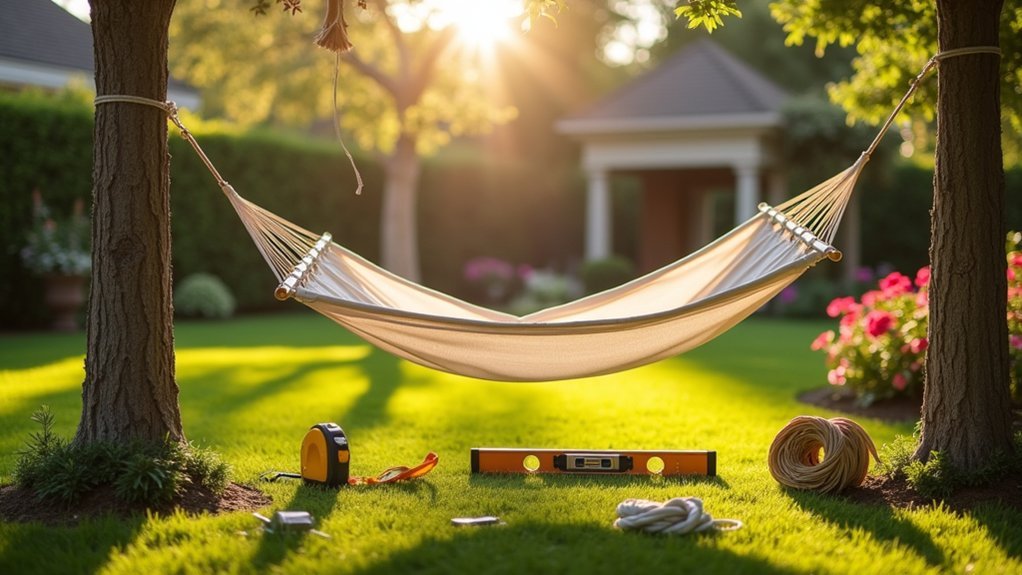
For perfect yard hammock installation, select healthy trees at least 6 inches thick or use 6×6 treated posts set in concrete. Hang your hammock 18 inches above ground with a 30-degree strap angle. Keep supports 15.5 feet apart and use tree-saver straps at least 0.75 inches wide. Position hammocks 200 feet from water sources on established sites. Always check hardware before use and respect weight limits. These essential tips will transform your outdoor relaxation experience.
Finding the Perfect Hammock Location in Your Yard
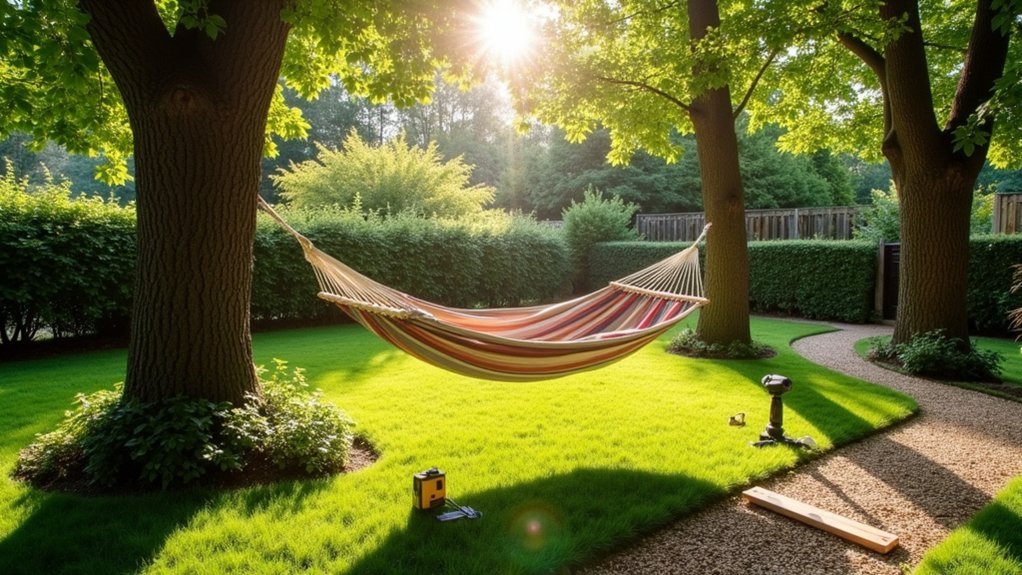
Where you place your hammock can make all the difference between a relaxing retreat and a frustrating experience. Look for spots with established vegetation that won’t be damaged by foot traffic, and stay clear of sensitive plants and wildlife areas.
Position your hammock at least 200 feet from water sources to prevent erosion. Identify two healthy trees or sturdy posts approximately 15.5 feet apart—about 2-3 feet longer than your hammock’s length. This spacing allows for proper hanging tension without damaging your supports.
When setting up, aim for your hammock to hang about 18 inches off the ground with suspension straps at a 30-degree angle. This height and angle combination provides the optimal balance of comfort and safety, letting you easily enter and exit while ensuring proper weight distribution.
Selecting the Right Hammock Style for Your Space
How you lounge outdoors depends largely on which hammock style matches your yard’s unique characteristics. Rope hammocks made of cotton or polyester offer a stretchier, body-contouring experience, while fabric options provide durability with minimal maintenance.
If you’re short on permanent anchor points, consider hammocks with stands—they come as complete kits ready for instant relaxation anywhere in your yard. For adventure seekers or those with limited space, camping hammocks offer lightweight versatility.
When measuring your installation area, remember that spreader-bar hammocks need a hanging distance about 12 inches longer than the hammock itself. For hammocks without spreader bars, allow at least two-thirds of the hammock length, but no more than 24 inches extra, between your anchor points.
Measuring the Optimal Distance Between Support Points

You’ll need to space your hammock supports differently depending on whether you’re using a spreader-bar or traditional hammock design.
For spreader-bar models, aim for a distance roughly equal to the hammock length, while non-spreader hammocks require only two-thirds of their length as minimum spacing.
Finding the perfect balance between distance and hanging height ensures your hammock hangs with just the right amount of sag for maximum comfort.
Distance by Hammock Type
Determining the perfect distance between support points can make all the difference between a comfortable, safe hammock experience and an uncomfortable or unstable one.
The ideal spacing varies significantly depending on your hammock style.
For spreader-bar hammocks, the hanging distance should equal the overall hammock length. However, when actually installing, aim to have supports about 12 inches longer than the hammock itself, excluding chains or ropes. For example, a 13-foot hammock works best with support points approximately 14 feet apart.
Brazilian-style hammocks (non-spreader) require different measurements. Set supports at minimum two-thirds of the hammock’s total length, with a maximum of 24 inches beyond this minimum distance.
Regardless of style, ensure your hammock sits about 18 inches off the ground with suspension lines creating at least a 25-degree angle.
Height and Angle Balance
When measuring for your hammock installation, the precise balance of height and angle creates the difference between supreme comfort and potential discomfort. Aim for support points 6-8 feet above the ground, with Brazilian styles typically hanging slightly lower.
For spreader-bar hammocks, set hanging points at hammock length plus 12 inches. Without spreaders, use at least two-thirds of the hammock length between supports, with a maximum of 24 inches beyond this minimum.
The ideal suspension angle is 30 degrees from the ground, providing optimal stability and comfort. When attaching chains or ropes, pull them firmly until the hammock sits adjacent to the ground and feels taut. If you notice excessive looseness after initial setup, tighten the suspension further to maintain proper support and balance.
Installing Secure Posts for Freestanding Hammock Support
Why settle for a temporary hammock setup when you can create a permanent, sturdy foundation with properly installed posts? Select treated 6×6 posts that are 8 feet long and set them in quick-setting cement for optimal stability. Dig holes about one-third the post height (2.5 feet deep) with width 2-3 times the post diameter.
Invest in permanence—treated 6×6 posts set in cement create the solid foundation your hammock sanctuary deserves.
For best results:
- Add 4 inches of gravel at the bottom of each hole before positioning your post
- Pour water until the hole is quarter full before adding fast-setting cement—it’ll stabilize in just 20 minutes
- After backfilling with soil, let the cement cure for 5-6 hours, then apply stain to the exposed post for protection and visual appeal
Tree Selection and Protection for Hammock Hanging
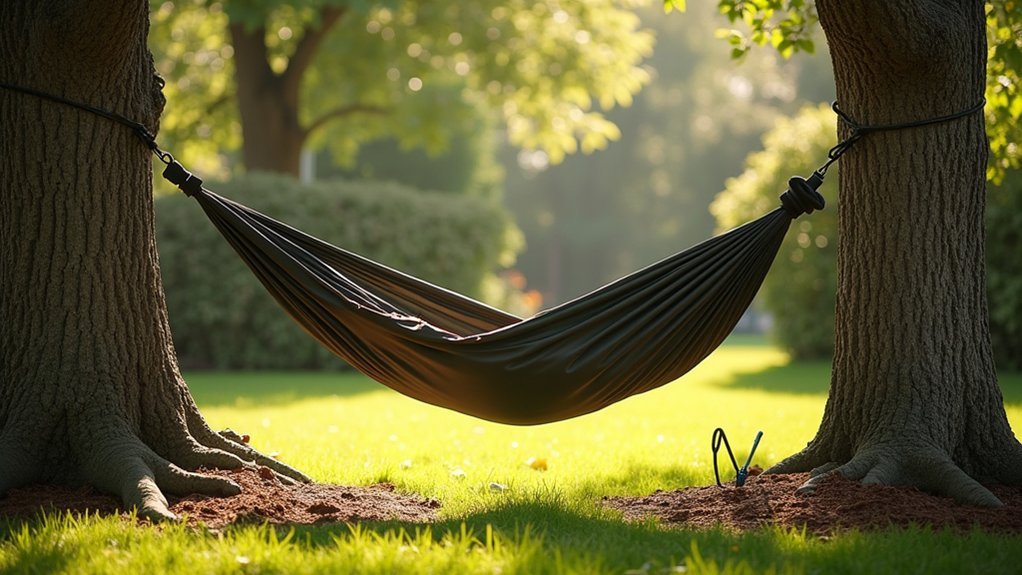
While posts provide reliable hammock support, mature trees offer a natural, aesthetically pleasing alternative. Choose only healthy specimens with trunks measuring at least 6 inches in diameter and free from dead branches.
Always prioritize both your safety and tree health with these guidelines:
| Selection Criteria | Protection Measures |
|---|---|
| 6″+ trunk diameter | Use tree saver straps (≥0.75″) |
| No dead branches | Never use rope directly on bark |
| Healthy bark | Limit one hammock per tree |
| Stable root system | Remove setup when not in use |
| Safe surroundings | Avoid fragile habitat areas |
Before installation, scan the area for hazards like wasp nests or poison ivy. Following leave-no-trace principles ensures you’ll enjoy your hammock for years while preserving the trees that support it.
Getting the Ideal Hanging Angle and Height
Setting up your hammock at a 30-degree angle between the suspension and ground creates the optimal tension for comfortable lounging. You’ll want to keep the bottom of your hammock no higher than 18 inches off the ground, making it easy to get in and out safely. For the most comfortable sleep position, try lying at a slight 10-15 degree diagonal across the centerline rather than perfectly straight.
The 30-Degree Rule
The 30-degree angle between your hammock suspension and the ground represents the golden rule of hammock hanging for maximum comfort. This angle ensures proper sag, distributing your weight evenly across the fabric while creating that perfect curved cradle for your body.
To achieve this optimal setup:
- Measure your hanging distance carefully – for spreader-bar hammocks, space anchor points at the hammock length plus 12 inches; for non-spreader designs, use at least two-thirds of the hammock length
- Position the hammock bottom approximately 18 inches off the ground for easy entry and exit
- Incorporate a slight 10-15 degree tilt away from the centerline for a more horizontal sleeping position
You’ll know you’ve got it right when your hammock forms a gentle curve without excessive sag or uncomfortable tightness.
Heights for Maximum Comfort
Achieving perfect hammock height involves more than just hanging it between two points. For most installations, aim to mount your hanging hardware 6-8 feet off the ground, then adjust from there.
When properly hung, your hammock should rest about 18 inches above the ground—just right for easy entry and exit.
For spreader bar hammocks, space your anchor points roughly 12 inches beyond your hammock’s total length.
Without spreader bars, use the two-thirds rule: minimum distance should be at least two-thirds of the hammock’s length, with flexibility to extend up to 24 inches more.
Remember that Brazilian-style fabric hammocks typically hang lower than their spreader bar counterparts.
For optimal sleeping comfort, adjust your setup to maintain a 10-15 degree angle from the centerline, creating a nearly horizontal lounging position.
Hardware and Attachment Options for Safety
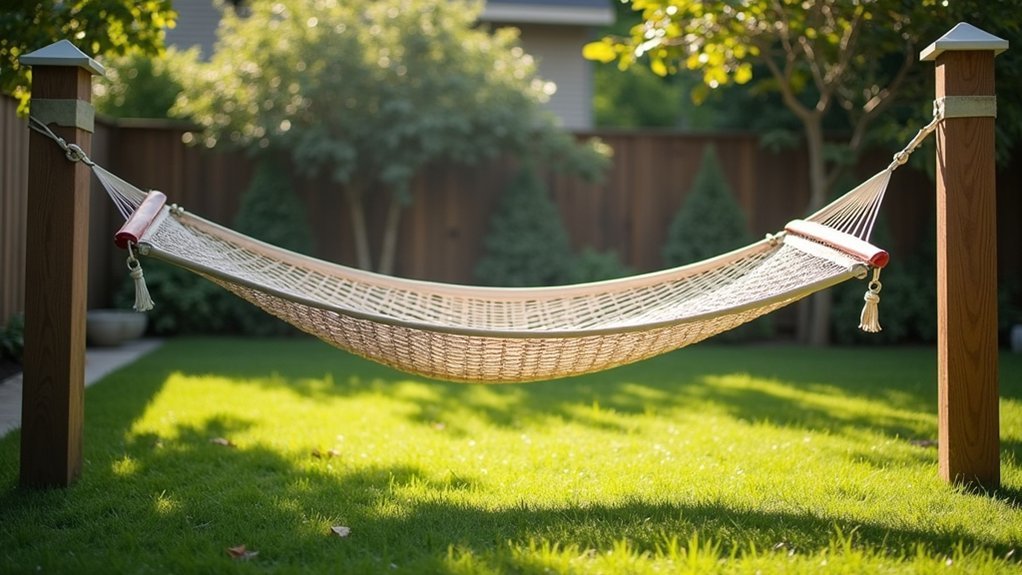
Properly securing your hammock isn’t just about comfort—it’s about safety. Always select heavy-duty hardware designed specifically for hammocks, including wide tree straps (at least 0.75 inches) to protect bark and distribute weight evenly. Choose trees with a minimum 6-inch diameter or 4×4 posts, avoiding damaged or unhealthy wood.
- Attachment essentials: Use tree saver straps with carabiners rated for your weight, ensuring they’re firmly secured but not over-tightened.
- Proper setup technique: Maintain approximately a 30-degree angle when hanging to prevent flipping while reducing stress on anchor points.
- Safety checks: Inspect hardware for twists before each use, never attach multiple hammocks to a single tree, and verify all components are correctly installed.
Preventing Ground Damage With Proper Setup Techniques
While securing your hammock safely protects you, proper setup techniques safeguard the environment beneath it. One of hammocking’s greatest benefits is minimal ground disturbance, as you’ll need little to no clearing compared to tent camping.
Always use tree saver straps at least 0.75 inches wide to distribute pressure and prevent bark damage. Position your hammock about 18 inches off the ground for both easy access and reduced impact on the soil below.
For optimal stability and environmental protection, maintain a 30-degree angle between your straps and the ground. This angle ensures proper tension while minimizing stress on attachment points.
When selecting your spot, follow Leave No Trace principles by choosing established sites and avoiding sensitive vegetation. Your careful setup preserves both your yard’s ecosystem and your hammocking experience.
Weather-Proofing Your Hammock Installation
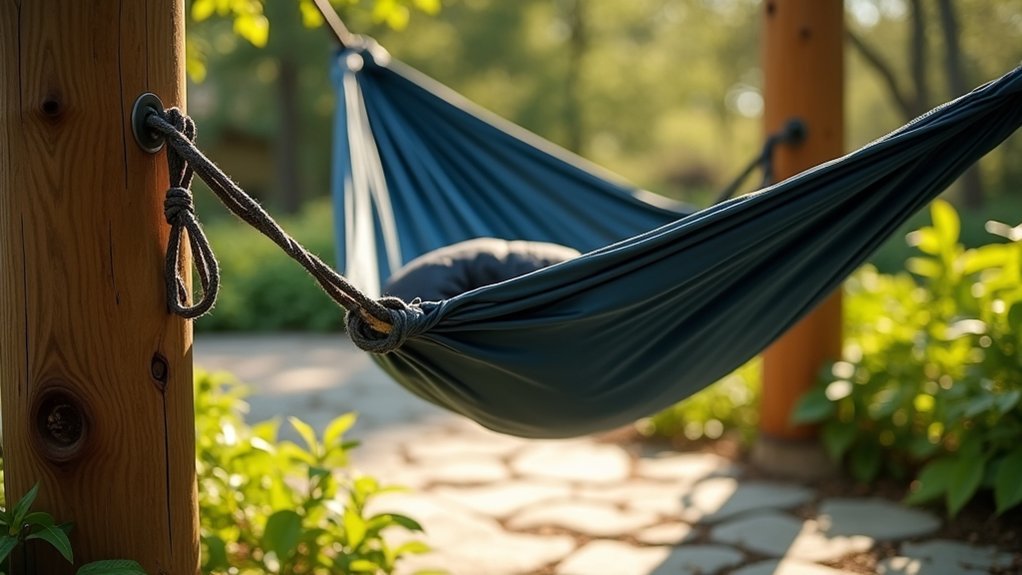
Weather-proofing your hammock installation guarantees years of comfortable outdoor relaxation, regardless of the elements. Select weather-resistant hardware and outdoor-rated ropes or straps to prevent corrosion and UV damage. For wooden supports, apply exterior-grade sealant to protect against moisture and cracking.
- Seasonal Protection – Choose hammocks rated for all-season use and store fabric components indoors during severe weather to extend their lifespan.
- Sun Defense – Install a protective canopy in areas with intense sun exposure to minimize fabric fading and material deterioration.
- Maintenance Schedule – Inspect your setup after storms or high winds, checking for loosened connections and signs of corrosion before using your hammock again.
Don’t forget to tighten connections regularly to maintain stability and safety throughout changing weather conditions.
Child and Pet Safety Considerations for Yard Hammocks
Safety should be a top priority when your hammock installation also serves families with children and pets. Never leave young children unattended in hammocks and always maintain adult supervision during use. Infants should never be placed in hammocks, and playground-style activities should be discouraged.
Always respect your hammock’s maximum weight capacity to prevent dangerous breakage. Install your hammock at a proper angle (over 25 degrees) with the bottom hanging approximately 18 inches above ground for safe entry and exit.
Protect trees by using straps at least 0.75 inches wide and avoid attaching multiple hammocks to a single tree, which reduces entanglement risks for children and pets. Make regular inspections of all hardware, chains, and mounting points part of your maintenance routine to prevent collapse that could harm curious kids or pets.
Frequently Asked Questions
How to Hang a Hammock in Your Yard?
Choose trees 6+ inches in diameter, use wide tree straps at a 30-degree angle, and hang your hammock 18 inches off the ground. You’ll want spacing of two-thirds your hammock’s length.
Should I Use 4X4 or 6X6 Posts for Hammock?
While 4×4 posts are the minimum required, 6×6 posts offer superior strength and stability for your hammock, especially for larger individuals or if you’ll use it frequently.
How Far Apart Do Poles Need to Be for a Hammock in the Backyard?
You’ll need to place your hammock poles about 2-3 feet longer than your hammock’s length, typically around 15.5 feet apart for standard hammocks. This provides proper tensioning.
How High Should Your Hammock Be off the Ground?
You’ll want to hang your hammock 18 inches off the ground for spreader-bar types. For Brazilian hammocks without spreader bars, aim for 6-8 feet high with a 10-15 degree sleep angle.


Leave a Reply