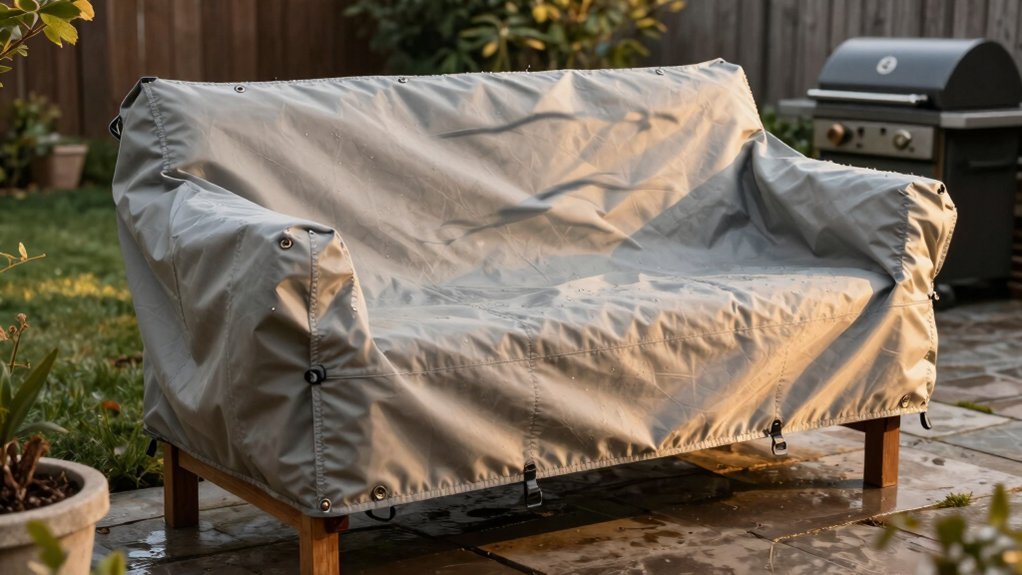
When choosing heavy duty outdoor bench covers, look for 600D polyester or 18 oz PVC-coated fabric with UV-resistant treatments. Measure your bench precisely, allowing just 4 inches of extra space for a secure fit. Ensure the cover includes taped seams, reinforced hems, and proper tie-downs like adjustable straps or drawcords. Select colors that complement your garden design while maintaining functionality. The right combination of materials and features will protect your investment through all seasons.
Understanding Waterproof Fabric Technologies

When selecting a heavy-duty outdoor bench cover, understanding waterproof fabric technologies is essential for protecting your furniture investment.
Look for covers made from 18 oz PVC-coated fabric or 600D polyester with waterproof coating—these materials effectively block rain while maintaining durability.
Invest in 18 oz PVC-coated fabric or 600D polyester covers for maximum protection and long-lasting outdoor bench defense.
The best covers combine UV-resistant treatments that prevent fading and fabric breakdown from sun exposure. You’ll want features like taped seams, reinforced hems, and PVC coatings for enhanced water resistance and tear strength.
Don’t overlook breathability—quality covers balance waterproofing with moisture vapor release to prevent mold and mildew buildup underneath.
For reliable performance in windy conditions, choose covers with secure tie-downs, drawstrings, grommets, or adjustable straps that maintain a tight, watertight fit around your bench.
Measuring for the Perfect Bench Cover Fit
You’ll need to measure your bench’s width, depth, and height with precision, aiming for a cover with no more than 4 inches of extra space to prevent wind issues.
Custom sizing options from vendors like Covers & All can accommodate unusual shapes or curved benches that standard covers won’t fit properly.
Don’t forget to check for secure tie-downs, grommets, and adjustable straps that will keep your cover firmly in place during windy conditions.
Dimension Essentials
Why do so many outdoor bench covers end up flapping in the wind or collecting pools of water? The answer lies in improper measurements. You’ll need precise dimensions with about 4 inches of extra allowance to prevent these common issues while ensuring proper air circulation.
| Measurement Type | Common Mistake | Better Approach |
|---|---|---|
| Length | Forgetting armrests | Measure end-to-end completely |
| Width | Exact measurements | Add 4″ for movement allowance |
| Height | Too loose coverage | Match to bench profile exactly |
When measuring, consider your bench’s specific shape—whether straight, curved, or a glider. Check that your finished cover doesn’t touch the ground, as this prevents moisture buildup. For benches with storage compartments or distinctive back/arm profiles, opt for custom-fit covers that follow these contours precisely to prevent wind from getting underneath.
Secure Fit Techniques
Finding the perfect bench cover fit involves more than basic measurements—it requires strategic securing methods to combat nature’s elements. Always measure width, depth, and height with approximately 4 inches of extra clearance to ensure ease of application while maintaining snugness.
For benches with irregular shapes or unique angles, opt for made-to-order or custom-fit covers that extend fully from the back to the legs. Check that your selected cover features 360° drawcords, adjustable straps, or grommets—these mechanisms prevent wind displacement and maintain tightness throughout changing weather conditions.
Verify the cover’s ground-to-ground or seating-area coverage specifications to ensure proper airflow underneath while preventing mold formation. The best covers use heavy-duty fabrics like 18 oz PVC-coated material or 600D polyester with reinforced seams for maximum durability against seasonal challenges.
UV Protection Features to Prevent Fading
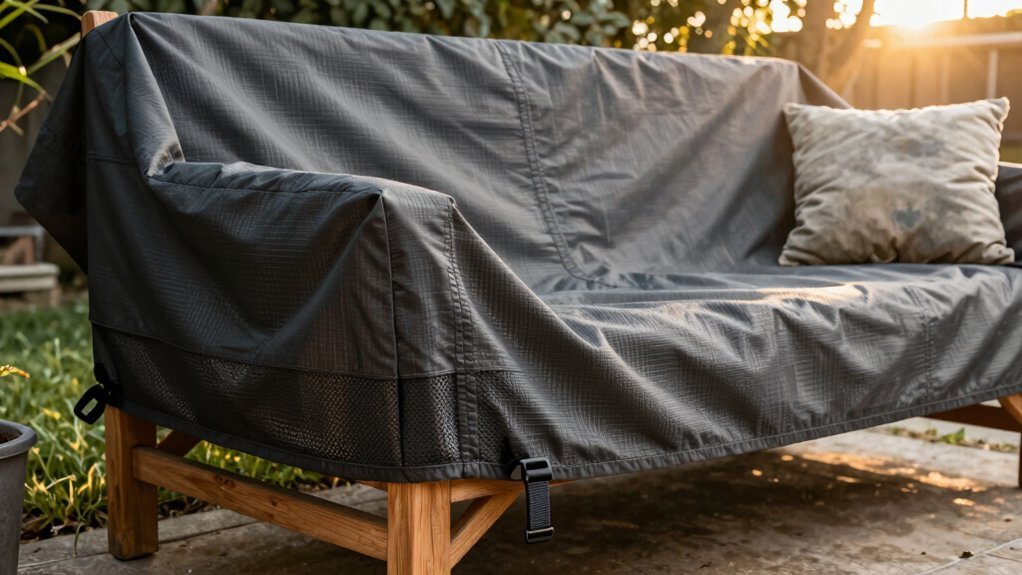
When investing in outdoor bench covers, UV protection stands as perhaps the most critical feature for long-term durability. Look for covers manufactured with UV-stabilized polymers or specialized coatings that shield against the sun’s damaging rays. These protective elements prevent color fading, brittleness, and material breakdown that typically occur with extended sun exposure.
| Protection Level | Expected Lifespan | Best For |
|---|---|---|
| Basic UV | 1-3 years | Seasonal use |
| Enhanced UV | 3-5 years | Regular exposure |
| Premium UV | 5-10 years | Full sun locations |
| Commercial Grade | 10+ years | Extreme conditions |
Premium covers often combine UV resistance with waterproofing capabilities, providing comprehensive protection against all weather elements. When comparing options, check for specific UV rating claims and warranty periods that back up a manufacturer’s durability promises.
Securing Mechanisms: Straps, Ties and Fasteners
Even the most durable bench cover won’t provide adequate protection if it can’t stay in place during adverse weather conditions. Quality covers feature integrated tie-down systems that prevent wind displacement while reducing water intrusion. Look for designs with rustproof metal grommets spaced at 6″, 12″, or 24″ intervals for versatile anchoring options.
The most effective securing mechanisms include:
- Adjustable straps and heavy-duty buckles – Provide customizable tension and prevent tearing during storms
- 360° drawcords or full-length drawstrings – Create snug, wind-resistant seals around irregular bench shapes
- Elastic hems with reinforced clips – Offer quick installation while maintaining tension in varying conditions
Properly secured covers not only stay in place during high winds but also extend the cover’s lifespan by controlling moisture penetration and preventing unnecessary wear.
Material Thickness and Durability Ratings

Understanding material thickness specifications helps you identify truly heavy-duty bench covers among the many options marketed as “durable.” Professional-grade covers typically feature 18 oz PVC-coated fabrics or 600D polyester that delivers superior waterproofing and tear resistance compared to standard retail alternatives.
When evaluating durability ratings, look for materials advertised as 100% waterproof with UV-resistant properties. These features ensure your cover won’t deteriorate after prolonged sun exposure or repeated rain cycles. Premium covers incorporate reinforced seams and grommets that significantly enhance wind resistance and overall longevity.
The thickness measurement (like 18 oz) directly correlates with the cover’s ability to withstand tears and abrasions from wind-blown debris. You’ll get the best protection by selecting covers that balance substantial material weight with practical features like tie-downs for secure installation during storms.
Ventilation Systems to Prevent Moisture Buildup
Why do ventilation systems matter in heavy-duty bench covers? Even waterproof covers need proper airflow to prevent trapped moisture from causing mildew and mold damage. Your outdoor furniture needs to breathe while staying protected from the elements.
When selecting a cover with effective ventilation, look for:
- Strategic vent placement – Properly positioned air vents or mesh panels allow humidity to escape while blocking rain penetration
- Balanced design features – Well-designed flaps or grommets provide continuous airflow without compromising wind resistance
- Condensation prevention – Covers with air-door sections, perforated panels, and zipper-free construction minimize moisture collection points
The best ventilation systems create a microclimate that keeps your bench dry from both external precipitation and internal humidity—extending the life of both cover and furniture.
Color Options and Aesthetic Considerations

When selecting bench covers for your outdoor space, you’ll find various color options that can complement your garden design while enhancing its visual appeal.
The UV-resistant fabrics won’t just look attractive initially but will maintain their vibrant hues despite prolonged sun exposure, with 18 oz PVC-coated materials offering superior fade resistance.
Consider how visibility factors into your aesthetic choices, as covers with contrasting ties or custom logos can become stylish focal points rather than merely functional items.
Matching Garden Design
How elegantly your bench cover complements your garden can transform the entire outdoor space from merely functional to visually stunning. Your cover should harmonize with your garden’s overall style—whether rural, modern, or classic. Consider how the color will interact with surrounding planters, cushions, and outdoor décor elements.
When selecting covers that match your garden design, focus on:
- Style Alignment – Choose materials and colors that reflect your garden’s character (traditional gardens pair well with neutral tones, while contemporary spaces can handle bolder colors)
- Functional Zoning – Use color strategically to define areas (lighter tones for relaxation zones, darker for dining areas)
- Visual Cohesion – Select year-round aesthetic fabrics that maintain their appearance despite seasonal changes
This thoughtful integration creates a unified outdoor environment that feels intentionally designed rather than pieced together.
Material and Fade Resistance
The durability of your bench cover’s appearance depends critically on its material quality and fade resistance properties. Look for fabrics specifically labeled as UV-resistant or UV-stabilized to prevent color dulling from prolonged sun exposure. This is especially important if your bench sits in direct sunlight.
For optimal protection, choose 100% waterproof materials that prevent moisture intrusion, which can cause staining and accelerate color degradation. Higher fabric weights and abrasion resistance will maintain color integrity even in dusty, windy conditions.
The 2024 edition lines offer versatile color options including beige, grey, and other complementary hues to match your outdoor décor. When comparing products, check warranty terms related to color fastness—a 10-year warranty typically indicates manufacturer confidence in fade resistance quality.
Stylish Visibility Options
Beyond fade resistance, selecting the right color for your bench cover serves both practical and aesthetic purposes. You’ll find a wide spectrum of color options designed to complement your outdoor décor while maintaining visibility and style. UV-resistant fabrics ensure your chosen color won’t fade quickly, preserving your investment’s appearance for years.
Consider these key aesthetic factors when selecting your bench cover:
- Color coordination – Choose shades that match existing furniture or create intentional contrast with your outdoor space
- Personalization options – Add names or logos for a custom touch that enhances visual appeal
- Finish selection – Opt for 18 oz PVC-coated or 1000 Denier polyester finishes that maintain color integrity through seasonal changes
The right combination of practical features (tie-downs, grommets, adjustable straps) with your preferred style creates covers that are both functional and visually appealing.
Seasonal Storage and Maintenance Requirements

Properly maintaining your heavy duty bench cover requires strategic seasonal care to maximize its lifespan. Inspect your covers seasonally for damage and repair small tears immediately to prevent further deterioration. When not in use, store covers in cool, dry locations after ensuring they’re completely dry to prevent mildew growth.
| Season | Maintenance Task | Storage Consideration |
|---|---|---|
| Spring | Clean per manufacturer guidelines | Store in dry location if unused |
| Summer | Check for UV damage | Use during storms to protect furniture |
| Winter | Remove snow accumulation | Cover during harsh weather events |
Always follow cleaning instructions, avoiding harsh chemicals that can damage waterproof coatings. High-quality materials like 18 oz PVC-coated or 600D polyester fabrics offer superior protection against sun, rain, and abrasion, but still require proper care to maintain their protective qualities year-round.
Frequently Asked Questions
What Is the Most Durable Material for Outdoor Furniture Covers?
The most durable material is 18 oz PVC-coated 1000 Denier polyester. You’ll get superior weather resistance and tear strength, with UV protection to prevent fading and sun damage.
What Is the Most Durable Material for Outdoor Benches?
For outdoor benches themselves, you’ll want teak, aluminum, or powder-coated steel. Teak provides natural weather resistance, while metal options offer strength and won’t deteriorate when exposed to elements.
What Material Is Best for Outdoor Cushion Covers?
For outdoor cushion covers, you’ll want solution-dyed polyester with PVC coating or heavy-duty 600D polyester. They’re waterproof, UV-resistant, and durable while remaining breathable to prevent mildew buildup.
What Material Is Most Weather Resistant for Patio Furniture?
PVC-coated heavy-duty fabrics offer superior weather resistance for your patio furniture. You’ll also find 600D polyester with vinyl/PVC coatings provides excellent protection against all elements year-round.

Leave a Reply