
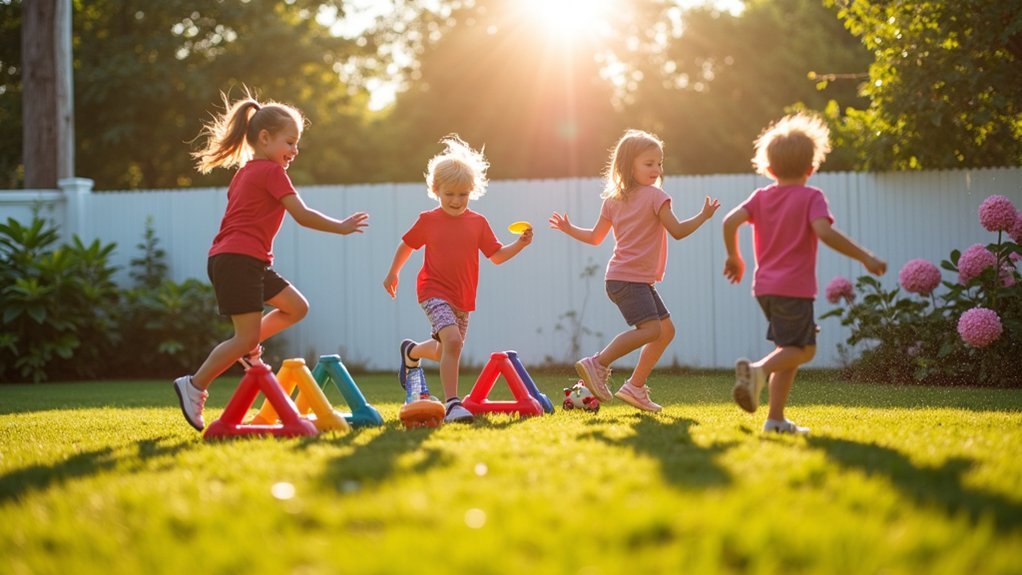
The seven best high energy backyard games for hyperactive kids are obstacle course relay races, capture the flag, tag game variations, sprinkler dodgeball, scavenger hunts, backyard soccer and kickball tournaments, and jump rope challenges with double Dutch competitions. These activities channel explosive energy into structured physical challenges that build coordination, teamwork, and endurance. You’ll find creative variations and setup tips below that’ll transform your backyard into the ultimate energy-burning playground.
Obstacle Course Relay Races to Burn Maximum Energy
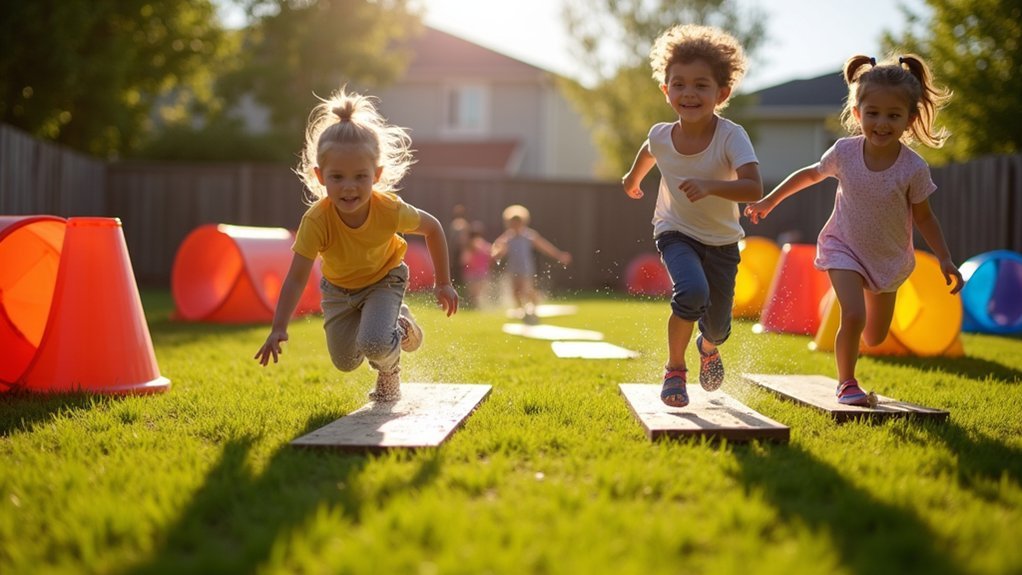
When your hyperactive child has energy to spare, a backyard obstacle course relay race offers the perfect solution. You’ll transform your yard into an adventure zone that channels boundless energy into purposeful movement.
Transform endless energy into adventure with a backyard obstacle course that turns chaos into purposeful play.
Set up stations using items you already own: hula hoops for jumping through, pool noodles for weaving around, and buckets for ball tosses. Create crawling tunnels with blankets draped over chairs and balance beams using wooden planks on the ground.
Divide kids into teams and watch the magic happen. They’ll sprint, climb, crawl, and leap their way through each challenge. Time each team to spark friendly competition.
You can increase difficulty by adding jumping jacks between stations or requiring backward movement. Switch up the course layout weekly to maintain excitement and engagement.
Capture the Flag With Exciting Backyard Variations
You can transform the classic game of Capture the Flag into an unforgettable backyard adventure with creative variations that keep hyperactive kids engaged for hours.
Try a glow-in-the-dark night version using LED bracelets and illuminated flags to add mystery and excitement after sunset.
For larger groups, set up multiple flag team battles where three or four teams compete simultaneously, increasing the strategic complexity and burning even more energy.
Glow-in-the-Dark Night Version
Once the sun sets, capture the flag transforms into a thrilling adventure that’ll burn off even the most stubborn energy reserves. You’ll need glow sticks, LED bracelets, and luminescent tape to mark boundaries and team territories. Give each child a glow necklace to identify their team—green versus blue works perfectly.
Hide two glowing flags at opposite ends of your yard. The darkness adds an extra layer of strategy as kids crouch behind bushes and sprint through shadows. They’ll develop stealth skills while getting an incredible workout.
For safety, clear the playing area of obstacles before nightfall and establish clear boundary markers with solar pathway lights. You can also give referees flashlights to monitor gameplay. This version keeps hyperactive kids engaged well past their usual bedtime energy crash.
Multiple Flag Team Battles
Daytime or nighttime, adding multiple flags takes this classic game to a whole new level of chaos. You’ll divide players into three or four teams, each defending their own territory while trying to capture opponents’ flags. This variation keeps everyone constantly moving since threats come from multiple directions.
| Team Setup | Strategy Tip |
|---|---|
| 3 teams | Form temporary alliances |
| 4 teams | Assign dedicated defenders |
| 5+ flags per team | Create decoy flag locations |
| Timed rounds | Award points for each capture |
You can scatter multiple flags throughout each territory, forcing raiders to make quick decisions. Kids burn tremendous energy sprinting between zones, dodging taggers, and coordinating with teammates. The unpredictable nature of multi-team battles guarantees your hyperactive child stays fully engaged throughout every round.
Tag Games That Keep Kids Running Non-Stop

When you’re looking for ways to burn off your child’s endless energy, few activities match the effectiveness of classic tag games. These simple yet exhilarating games require no equipment and can occupy kids for hours.
Freeze tag adds an exciting twist where tagged players must stand frozen until a teammate unfreezes them. This variation keeps everyone constantly moving as they dodge the tagger while rescuing frozen friends.
Blob tag creates hilarious chaos. When you’re tagged, you join hands with the tagger, forming an ever-growing blob that chases remaining players. Kids love watching the blob grow unwieldy as it stumbles across the yard.
Shadow tag works best on sunny days. Instead of touching players, the tagger steps on their shadows. You’ll watch your kids sprint, jump, and twist to protect their shadows.
Sprinkler Dodgeball for Wet and Wild Fun
You’ll want to position your sprinklers strategically across the yard to create unpredictable water zones that keep players on their toes.
Teach your kids to throw soft, foam balls underhand or at waist level to make sure everyone stays safe while getting soaked.
Between rounds, let the sprinklers do double duty as a cool-down station where players can catch their breath and beat the heat.
Setting Up the Sprinklers
Transform your backyard into a splash zone by strategically positioning sprinklers throughout the playing field.
Place oscillating sprinklers at the corners to create unpredictable water patterns that keep players guessing.
You’ll want to space them about 15 feet apart for maximum coverage without creating soggy dead zones.
Connect your sprinklers to a central hose splitter so you can control water flow from one location.
Adjust the spray intensity to a moderate level—strong enough to add excitement but gentle enough for safe play.
Before the game starts, test your setup and mark any slippery spots with cones.
You can add rotating sprinkler heads in the center for extra chaos.
Make sure all connections are secure to prevent tripping hazards during intense dodgeball matches.
Safe Dodgeball Throwing Techniques
Once your sprinkler setup creates the perfect splash zone, it’s time to focus on throwing techniques that keep the game fun and injury-free.
Teach kids to throw underhand or sidearm rather than overhead fastballs. This naturally limits power while still delivering satisfying throws. Aim for targets below the shoulders—hitting someone in the legs or torso stings less than a face shot.
Use soft foam balls or lightweight rubber balls that absorb water. Avoid anything hard or heavy that could cause bruises. You’ll want balls that slow down when wet, adding an extra safety buffer.
Establish a “no headshots” rule and enforce it consistently. If a player intentionally aims high, they sit out one round. This teaches self-control while keeping everyone safe and keen to play again.
Cooling Off Between Rounds
Hyperactive kids rarely want to stop playing, but brief cooldown breaks prevent overheating and keep energy levels sustainable throughout your game session. Set up a sprinkler station at the edge of your play area where kids can dash through cool water between rounds.
Turn cooldown time into part of the fun by challenging players to run through the sprinkler three times before rejoining the game. You can also position misting fans near the sidelines for quick refreshment without completely soaking participants.
Keep water bottles readily accessible and encourage kids to hydrate during these breaks. A two-minute cooldown every fifteen minutes works well for most children. Watch for signs of exhaustion like flushed faces or heavy breathing, and extend rest periods when needed. These strategic pauses keep your sprinkler dodgeball game going strong.
Scavenger Hunts That Channel Boundless Energy
Scavenger hunts tap into a hyperactive child’s natural drive to move, explore, and conquer challenges. You’ll watch your kid sprint across the yard, crouch behind bushes, and climb over obstacles while hunting for hidden treasures. This activity burns energy while sharpening focus and problem-solving skills.
Create hunts that keep them moving constantly. Hide items at varying heights and distances to maximize physical engagement.
| Hunt Type | Energy Level |
|---|---|
| Color Hunt | High |
| Nature Collection | Moderate-High |
| Clue-Based Trail | Very High |
| Timed Challenge | Extreme |
You can adjust difficulty based on your child’s age and attention span. Add competitive elements by timing rounds or creating teams to amplify excitement and motivation.
Backyard Soccer and Kickball Tournaments

Kicking a ball across the yard releases pent-up energy like few other activities can. You’ll find that soccer and kickball tournaments give hyperactive kids the physical outlet they crave while teaching teamwork and sportsmanship.
Set up simple goals using cones or lawn chairs and divide kids into teams. Kickball works great for mixed ages since the rules are straightforward and everyone gets a turn.
Quick setup tips:
- Use soft, lightweight balls to prevent injuries and broken windows
- Mark boundaries with chalk, rope, or garden hoses
- Keep teams small (3-4 players) for maximum movement
- Rotate positions frequently to maintain engagement
- Set short game times (10-15 minutes) to keep energy high
These tournaments transform restless energy into healthy competition and lasting memories.
Jump Rope Challenges and Double Dutch Competitions
Jumping rope transforms excess energy into rhythm and coordination, making it one of the most effective activities for kids who can’t sit still.
You’ll watch your child develop timing, balance, and endurance while burning through boundless energy. Start with basic challenges like counting consecutive jumps or timing how long they can keep going.
Once your kids master single rope, introduce Double Dutch for an exciting upgrade. Two turners spin ropes in opposite directions while jumpers navigate the complex patterns.
You can organize neighborhood competitions with categories for speed, endurance, and trick variety. Create a point system for different moves—criss-crosses, high knees, or partner jumps. The competitive element keeps hyperactive kids engaged while the constant movement provides the physical outlet they desperately need.
Frequently Asked Questions
How Long Should Hyperactive Kids Play Outdoor Games Before Taking a Break?
You should let hyperactive kids play for 20-30 minutes before offering a short break. Watch for signs of fatigue or frustration, and you’ll know when they need to rest and rehydrate.
What Age Range Are These High Energy Backyard Games Most Appropriate For?
You’ll find most high-energy backyard games work best for kids aged 4 to 12. Younger children enjoy simpler activities, while older kids can handle more complex rules and competitive elements.
Are These Games Safe for Children With ADHD or Sensory Processing Disorders?
You’ll find these games generally safe for children with ADHD or sensory processing disorders. However, you should monitor individual reactions, provide breaks when needed, and modify activities to accommodate each child’s specific sensory sensitivities.
How Many Children Are Needed to Play Most of These Backyard Games?
You’ll need at least two to four children for most backyard games, though many activities work great with just one child. You can easily adapt relay races, obstacle courses, and tag games for any group size.
What Time of Day Is Best for High Energy Outdoor Activities?
You’ll get the best results scheduling high energy outdoor activities in the morning or late afternoon. During these cooler periods, you’ll avoid peak sun exposure and help kids burn energy without overheating.



Leave a Reply