
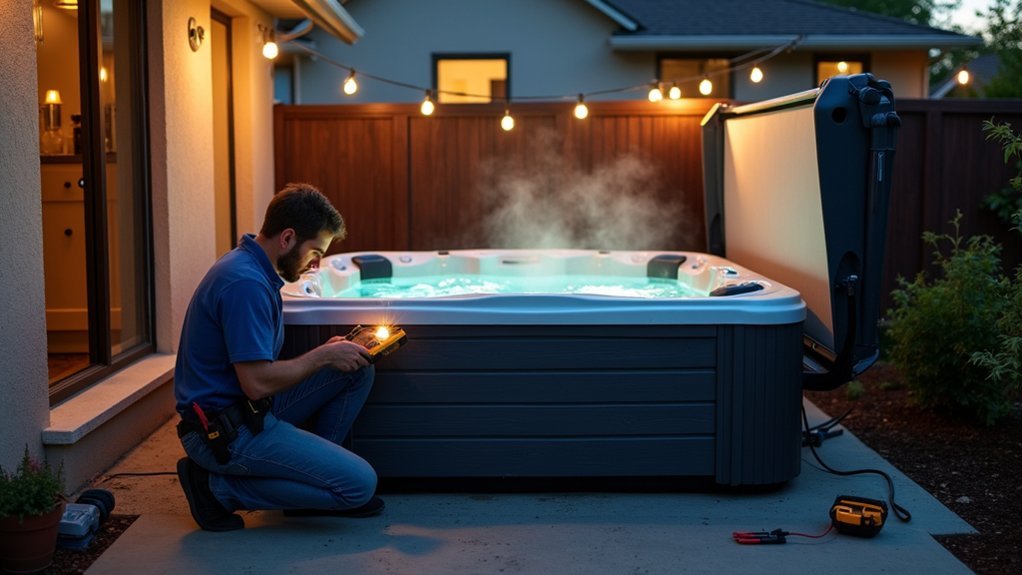
When installing a hot tub, you’ll need to follow five essential electrical safety tips. First, hire a licensed electrician who specializes in spa installations. You must use a dedicated 240-volt circuit with the proper 40–60 amp breaker. Always install GFCI protection that trips at 5 milliamps or less. Keep all electrical outlets at least 6 feet from the water’s edge. Finally, make sure you’re using the correct wire gauge for your spa’s voltage and amperage requirements—details that can prevent dangerous overheating issues.
Hire a Licensed Electrician for Your Hot Tub Installation
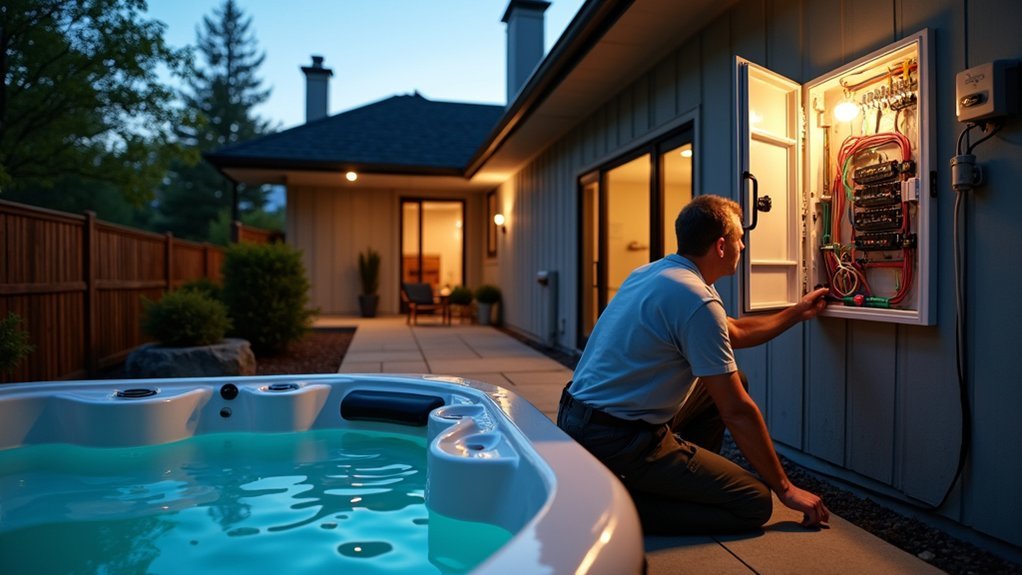
When you’re ready to install a hot tub, don’t attempt the electrical work yourself—hire a licensed electrician who specializes in spa installations. Hot tubs require dedicated 240-volt circuits, proper grounding, and GFCI protection that must meet strict electrical codes. A qualified professional understands these requirements and guarantees your installation passes inspection.
Licensed electricians carry insurance and provide warranties on their work, protecting you from liability if something goes wrong. They’ll also assess your home’s electrical panel capacity and determine if upgrades are necessary before installation begins.
Improper wiring creates serious risks, including electrical shock, electrocution, and fire hazards. The money you save by cutting corners isn’t worth endangering your family. Always verify your electrician’s credentials, check references, and confirm they’ve completed hot tub installations before hiring them.
Understand the Dedicated Circuit Requirements for Hot Tubs
Because hot tubs demand significant electrical power, they require a dedicated circuit that serves no other appliances or outlets in your home. This prevents overloading and reduces fire risks.
Here’s what you need to know about dedicated circuit requirements:
- Most hot tubs require 220-240 volt circuits with 40-60 amp breakers
- You’ll need appropriately sized wiring, typically 6 or 8 gauge copper
- The circuit must include a GFCI breaker for shock protection
- Your electrical panel must have capacity to support the additional load
- Local codes may specify minimum distances between the disconnect and the tub
Don’t attempt to run your hot tub on an existing circuit or use extension cords. These shortcuts create serious electrical hazards.
Always verify your specific model’s requirements before installation begins.
Install a Ground Fault Circuit Interrupter (GFCI) for Protection

Although we mentioned GFCI protection briefly in the previous section, this critical safety device deserves a closer look because it’s your primary defense against electrical shock around water. A GFCI monitors electrical current flowing through a circuit and instantly cuts power when it detects an imbalance—typically within 1/40th of a second.
| GFCI Type | Best Application |
|---|---|
| Breaker-mounted | Hot tub dedicated circuits |
| Receptacle-style | Outdoor outlets near spa |
You’ll need a Class A GFCI that trips at 5 milliamps or less. Install it at the main panel or in a subpanel located at least 5 feet from the hot tub. Test your GFCI monthly by pressing the “test” button and verifying the power cuts off immediately.
Maintain Proper Distance Between Electrical Components and Water
Beyond GFCI protection, keeping electrical components at safe distances from your hot tub prevents accidental contact between electricity and water. The National Electrical Code establishes specific clearance requirements you must follow.
The National Electrical Code sets specific clearance requirements to keep electrical components safely distanced from your hot tub.
Here are the essential distance requirements to maintain:
- Keep all electrical outlets at least 6 feet away from the hot tub’s edge
- Position the disconnect panel between 5 and 50 feet from the spa
- Install overhead power lines at least 22.5 feet above the water surface
- Place light fixtures and ceiling fans at least 12 feet above the waterline
- Maintain a 5-foot clearance for any switches not part of the listed spa assembly
You should never use extension cords or portable electrical devices near your hot tub, as these create dangerous shock hazards.
Ensure Correct Wire Gauge and Voltage for Your Hot Tub Model
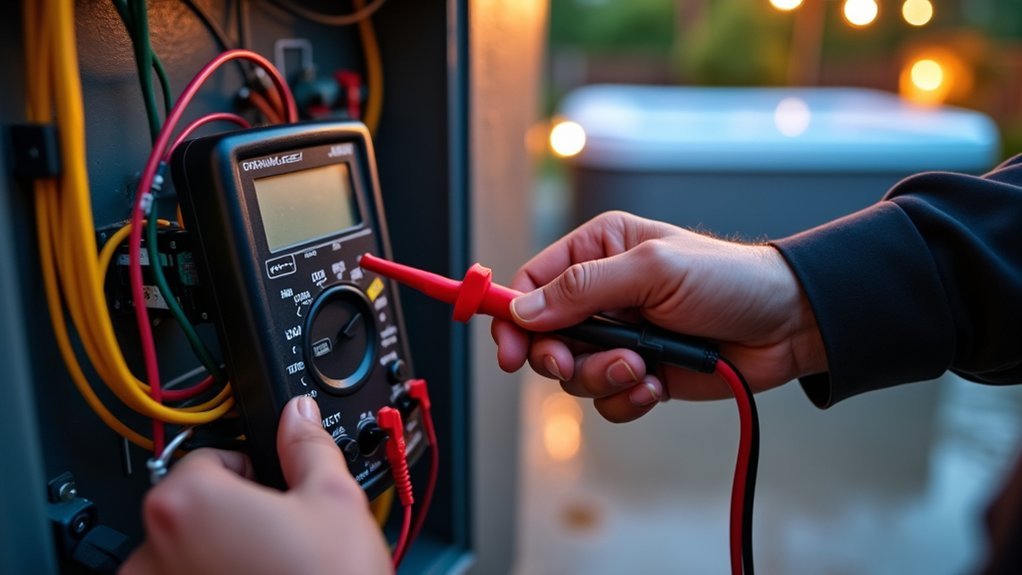
Proper spacing protects you from immediate hazards, but using the correct wire gauge and voltage guarantees your hot tub’s electrical system can handle its power demands safely over time. Most hot tubs require either 120V or 240V circuits, and using undersized wiring creates dangerous overheating risks.
Check your owner’s manual for exact specifications before purchasing materials. Here’s a quick reference:
| Voltage | Typical Wire Gauge |
|---|---|
| 120V | 12 AWG |
| 240V | 6 AWG |
You’ll void your warranty and risk electrical fires if you don’t match these requirements. Always verify amperage ratings too—a 50-amp hot tub needs different wiring than a 30-amp model. When you’re uncertain, consult a licensed electrician who can assess your specific setup and local code requirements.
Frequently Asked Questions
Can I Use an Extension Cord to Power My Hot Tub Temporarily?
You shouldn’t use an extension cord to power your hot tub. It’s a serious fire and electrocution hazard. You’ll need a dedicated circuit with proper wiring installed by a licensed electrician for safe operation.
How Often Should I Have My Hot Tub’s Electrical System Professionally Inspected?
You should have your hot tub’s electrical system professionally inspected annually. If you’re using it heavily or notice any issues like tripping breakers or flickering lights, schedule an inspection sooner to make certain everything’s working safely.
What Permits Are Required Before Installing Electrical Components for a Hot Tub?
You’ll need an electrical permit from your local building department before installing hot tub wiring. Contact your municipality directly, as requirements vary by location. A licensed electrician typically handles permit applications for you.
Is It Safe to Install a Hot Tub Under Overhead Power Lines?
You shouldn’t install a hot tub under overhead power lines. It’s extremely dangerous because water and electricity create electrocution risks. You’ll need to maintain safe clearance distances as required by local electrical codes and regulations.
How Do I Properly Winterize My Hot Tub’s Electrical Connections?
You should turn off the breaker, disconnect power at the GFCI, inspect connections for corrosion, apply dielectric grease to terminals, and cover the electrical panel with a weatherproof enclosure to protect against moisture and freezing temperatures.




Leave a Reply