
Keeping your hot tub water balanced means monitoring a few key chemical levels that work together. You’ll want to maintain pH between 7.2–7.8, total alkalinity at 80–120 ppm, and calcium hardness around 150–250 ppm. Choose chlorine or bromine as your sanitizer, test the water two to three times weekly, and shock weekly to eliminate contaminants. Understanding how these basics connect will help you prevent common problems and enjoy crystal-clear water.
Understanding Ph Levels and Why They Matter
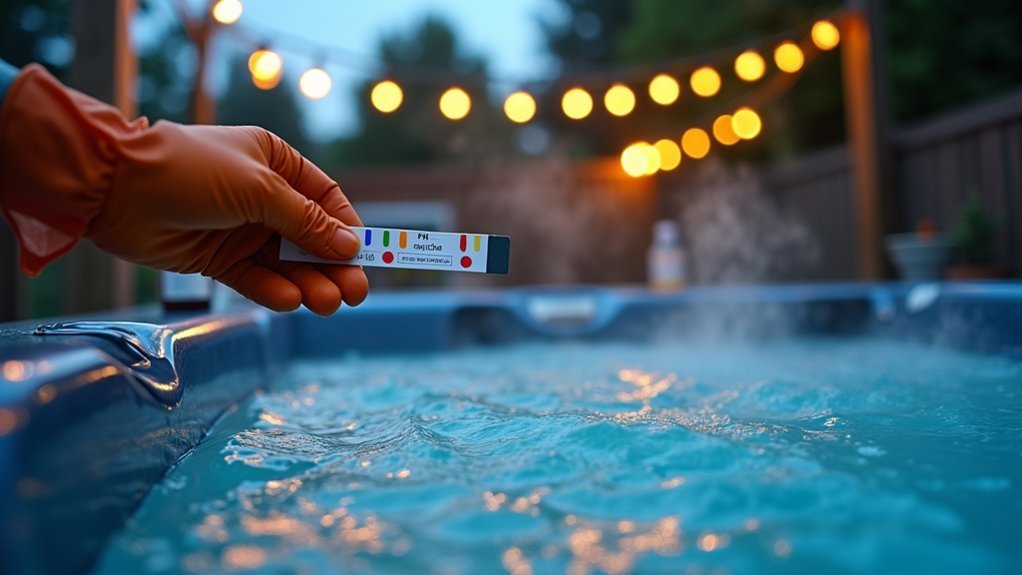
When you’re maintaining your hot tub, pH levels deserve your immediate attention. The pH scale runs from 0 to 14, measuring how acidic or alkaline your water is. You’ll want to keep your hot tub between 7.2 and 7.8 for ideal conditions.
If your pH drops too low, the acidic water will corrode your equipment, damage seals, and irritate your skin and eyes. High pH creates its own problems—cloudy water, scale buildup on surfaces, and reduced sanitizer effectiveness.
Test your water at least twice weekly using test strips or a digital meter. When adjustments are needed, add pH increaser or decreaser in small amounts. Always wait a few hours between doses and retest before making additional changes.
Total Alkalinity and Its Role in Water Balance
While pH gets most of the attention, total alkalinity acts as your water’s behind-the-scenes stabilizer. Think of it as a buffer that prevents your pH from swinging wildly between tests. When your alkalinity sits in the proper range of 80-120 ppm, you’ll spend less time making constant adjustments.
Total alkalinity is your water’s silent guardian—keeping pH stable so you’re not constantly chasing chemical corrections.
Low alkalinity causes pH to bounce unpredictably, while high levels make pH stubbornly difficult to change. You’ll want to test alkalinity weekly and adjust it before tackling pH issues.
- Use sodium bicarbonate to raise alkalinity when levels drop below 80 ppm
- Add muriatic acid or sodium bisulfate to lower alkalinity above 120 ppm
- Always adjust alkalinity first since it directly impacts how stable your pH remains
Sanitizers: Choosing Between Chlorine and Bromine
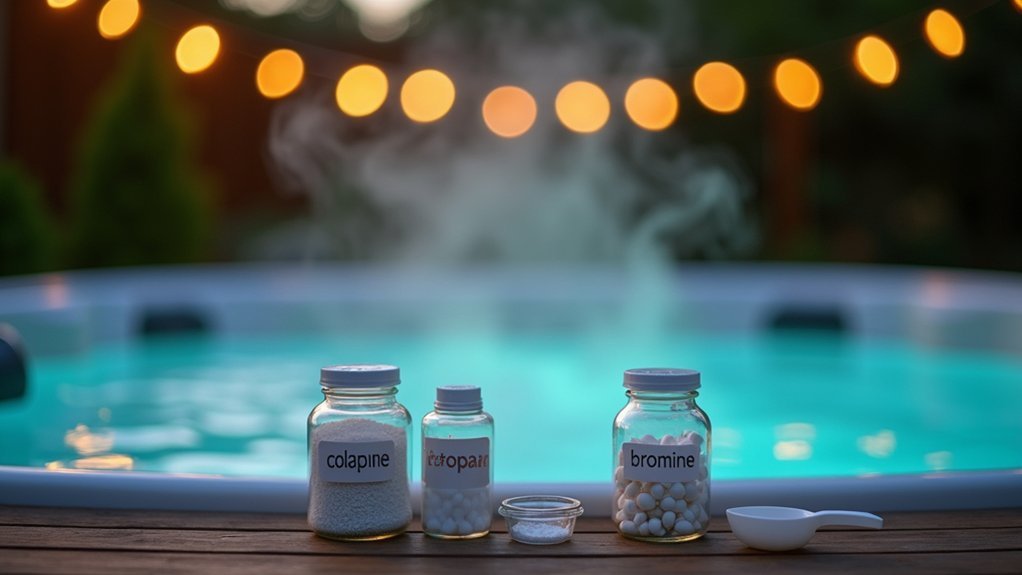
Every hot tub owner eventually faces the chlorine versus bromine decision, and your choice affects everything from maintenance routines to how your skin feels after a soak.
Chlorine works fast and costs less upfront. It’s effective at killing bacteria but breaks down quickly in hot water and produces a stronger odor. You’ll need to add it more frequently.
Bromine remains stable at higher temperatures, making it ideal for hot tubs. It’s gentler on skin and eyes, produces less smell, and continues working even after combining with contaminants.
However, it costs more and dissolves slower.
Consider your priorities: If you’re budget-conscious and don’t mind frequent additions, choose chlorine. If you want lower maintenance and have sensitive skin, bromine’s your better option. Both sanitizers keep your water safe when properly maintained.
Testing Your Hot Tub Water Regularly
You’ve selected your sanitizer, but keeping your water safe requires consistent monitoring through regular testing.
Testing your hot tub water at least two to three times per week helps you catch chemical imbalances before they cause skin irritation, cloudy water, or equipment damage.
You’ll need reliable testing tools—such as test strips or liquid test kits—to accurately measure pH, alkalinity, and sanitizer levels.
Why Testing Matters
Testing your hot tub water at least twice a week helps you catch chemical imbalances before they become serious problems. When you stay on top of testing, you’ll prevent costly damage to your hot tub’s equipment and surfaces.
Unbalanced water creates an environment where bacteria thrive, potentially causing skin irritation, rashes, and infections. Poor water chemistry also leads to cloudy water, unpleasant odors, and scale buildup that clogs your jets and filters.
Regular testing saves you money and hassle by:
- Protecting your investment – Balanced water extends the life of your pumps, heater, and shell
- Ensuring safe soaking – Proper sanitizer levels eliminate harmful pathogens
- Reducing chemical costs – Small adjustments cost less than correcting major imbalances
Don’t skip your testing routine.
Recommended Testing Frequency
At minimum, you should test your hot tub water twice per week using test strips or a liquid test kit. However, certain situations call for more frequent testing to keep your water safe and balanced.
| Situation | Testing Frequency |
|---|---|
| Normal use | Twice per week |
| Heavy use or parties | Before and after each use |
| After adding chemicals | 15-30 minutes after treatment |
| Following a water problem | Daily until resolved |
| After refilling | Before first use |
You’ll want to test more often during periods of increased bather load or extreme weather. Keep a log of your results to track patterns and catch potential issues early. Consistent testing prevents costly damage to your equipment and guarantees a safe soaking experience every time.
Essential Testing Tools
Getting started with water testing requires the right tools in your arsenal. You’ll find several options available, each offering different levels of accuracy and convenience for monitoring your hot tub’s chemical balance.
Your essential testing toolkit includes:
- Test strips – These affordable, easy-to-use strips provide quick readings for pH, alkalinity, and sanitizer levels within seconds
- Liquid test kits – These deliver more precise measurements using reagent drops and color comparison charts for accurate results
- Digital testers – These electronic devices offer the highest accuracy and eliminate guesswork from color matching
Start with basic test strips if you’re new to hot tub maintenance. As you become more comfortable with water chemistry, consider upgrading to liquid kits or digital testers for enhanced precision.
Calcium Hardness and Preventing Scale Buildup
Calcium hardness measures the amount of dissolved calcium in your hot tub water, and keeping it within the ideal range of 175-250 ppm prevents both scale buildup and equipment corrosion.
When calcium levels run too high, you’ll notice crusty white deposits forming on surfaces, jets, and heating elements that reduce efficiency and damage components. You can prevent scale by testing regularly, using a scale inhibitor product, and diluting hard water with softer water when necessary.
Understanding Calcium Hardness Levels
While pH and sanitizer levels often get the most attention from hot tub owners, calcium hardness plays an equally critical role in protecting your investment.
This measurement indicates the amount of dissolved calcium in your water, and maintaining proper levels prevents damage to your hot tub’s components.
You should keep calcium hardness between 150-250 parts per million (ppm).
When levels fall outside this range, problems arise quickly.
Key points about calcium hardness:
- Low calcium causes water to become corrosive, damaging your heater, pump seals, and shell surface
- High calcium creates scale deposits that clog jets, reduce efficiency, and leave rough, white buildup
- Test your water weekly using test strips or a liquid kit to catch imbalances early
Balancing calcium hardness extends your equipment’s lifespan markedly.
Scale Prevention Methods
Regularly preventing scale buildup requires a proactive approach that goes beyond simply monitoring your calcium hardness levels.
You’ll want to maintain your pH between 7.2 and 7.8, as higher levels accelerate scale formation. Test your water weekly and adjust accordingly.
If you’re dealing with hard water, consider using a pre-filter when filling your hot tub. This removes excess minerals before they enter your system.
You can also add a scale inhibitor product to your maintenance routine, which prevents calcium from bonding to surfaces.
When scale does appear, don’t ignore it. Clean your hot tub’s surfaces with a dedicated descaling solution and flush your plumbing lines quarterly.
You should also wipe down the waterline regularly to prevent mineral deposits from hardening.
Balancing Hard Water
Your hot tub’s calcium hardness level plays a critical role in protecting both your equipment and your soaking experience.
When calcium levels drop too low, water becomes aggressive and corrodes metal components, heaters, and seals. Conversely, excessive calcium causes cloudy water and stubborn scale deposits on surfaces.
You’ll want to maintain calcium hardness between 150-250 ppm for peak results. Test your water weekly and adjust accordingly.
- Low calcium: Add a calcium hardness increaser gradually, following product directions
- High calcium: Partially drain and refill with softer water, or use a scale prevention product
- Prevention: Install a pre-filter when filling to remove excess minerals from your source water
Regular monitoring prevents costly damage and keeps your hot tub running efficiently for years.
Shocking Your Hot Tub for Crystal Clear Water
Even the most diligently maintained hot tub needs a periodic shock treatment to break down contaminants that regular sanitizers can’t handle. Shocking oxidizes organic compounds like body oils, lotions, and sweat that accumulate despite routine chlorine or bromine levels. You should shock your hot tub weekly or after heavy use.
Choose between chlorine-based shock for powerful sanitation or non-chlorine shock for quicker re-entry times. To shock effectively, remove your cover, add the recommended dose directly to the water, and run your jets for 20 minutes. Keep the cover off to allow gases to escape.
Wait until sanitizer levels drop below 5 ppm before soaking again. Regular shocking prevents cloudy water, eliminates odors, and restores your sanitizer’s effectiveness for consistently clean, inviting water.
Managing Total Dissolved Solids
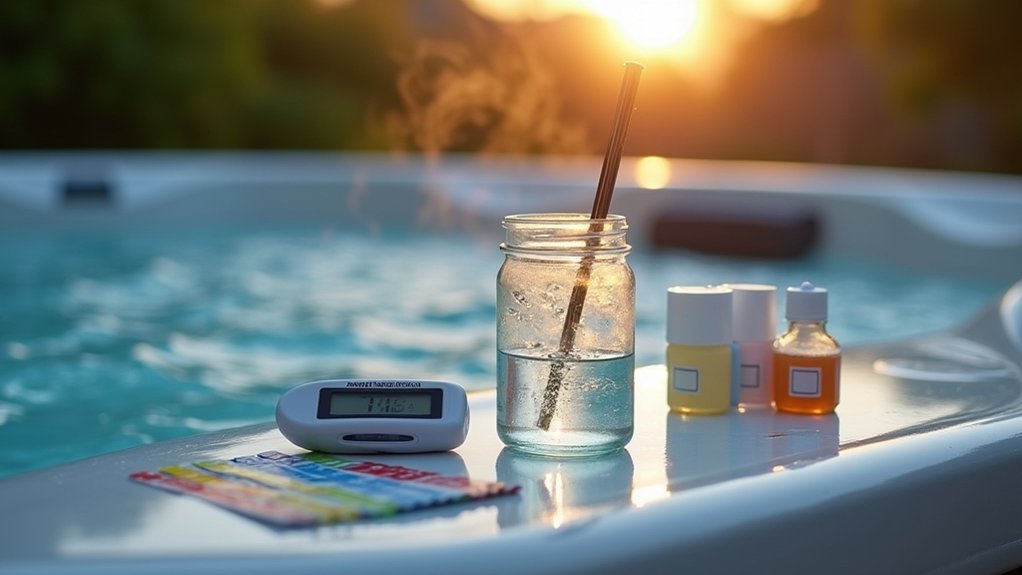
Beyond the sanitizers and pH adjusters you add to your hot tub, dissolved minerals, chemicals, and organic compounds gradually accumulate in the water over time.
These total dissolved solids (TDS) include everything from body oils and lotions to calcium and treatment chemicals. When TDS levels climb too high, your sanitizers become less effective, and water clarity suffers.
You should test your TDS levels monthly using test strips or a digital meter. Most hot tubs function best with TDS under 1,500 ppm above your source water’s baseline reading.
- Drain and refill your hot tub every 3-4 months to reset TDS levels
- Shower before soaking to reduce oils, lotions, and contaminants entering the water
- Use quality chemicals sparingly to minimize unnecessary dissolved solid buildup
Balancing Cyanuric Acid in Outdoor Hot Tubs
If you’re using chlorine in an outdoor hot tub, you’ll need to understand cyanuric acid (CYA) and its role as a chlorine stabilizer.
Maintaining CYA within the ideal range protects your sanitizer from UV degradation while ensuring it remains effective at killing bacteria.
Learning how to test and safely adjust your CYA levels will help you keep your outdoor hot tub water balanced and properly sanitized.
What Is Cyanuric Acid?
Sunlight acts as chlorine’s worst enemy, breaking down sanitizer in your outdoor hot tub before it can do its job.
Cyanuric acid, often called stabilizer or conditioner, shields chlorine molecules from UV degradation. Think of it as sunscreen for your sanitizer.
When you add cyanuric acid to your outdoor hot tub, you’re extending chlorine’s effectiveness significantly.
Without it, you’ll burn through sanitizer quickly and struggle to maintain safe water conditions.
Key facts about cyanuric acid:
- It bonds with free chlorine to create a protective barrier against sunlight
- You’ll only need it for outdoor tubs using chlorine-based sanitizers
- It doesn’t evaporate or break down, so levels accumulate over time
Keep your cyanuric acid between 30-50 ppm for ideal protection without reducing chlorine’s sanitizing power.
Ideal CYA Level Range
Finding the sweet spot for cyanuric acid levels requires careful attention to your specific hot tub setup. For outdoor hot tubs exposed to direct sunlight, you’ll want to maintain CYA levels between 30-50 ppm. This range protects your chlorine from UV degradation without reducing its sanitizing power.
Don’t exceed 50 ppm in your hot tub. Unlike pools, hot tubs operate at higher temperatures, which already stress your sanitizer. Excessive CYA locks up chlorine, making it ineffective against bacteria and contaminants.
Test your CYA levels monthly using test strips or a liquid kit. If levels climb too high, you’ll need to drain and refill a portion of your water—there’s no chemical that removes cyanuric acid.
Indoor hot tubs typically don’t need CYA since they’re not exposed to sunlight.
Adjusting CYA Levels Safely
Getting your CYA levels right takes patience and a measured approach.
Since CYA doesn’t evaporate or break down easily, you’ll need to dilute your water if levels climb too high. Drain 20-30% of your hot tub and refill with fresh water to lower concentrations gradually.
When CYA runs low, add stabilizer in small increments. Dissolve it in warm water first, then pour it near your return jets for even distribution. Wait 24 hours between additions and retest before adding more.
Key tips for safe CYA adjustment:
- Never add more than 10 ppm of stabilizer at once
- Test your water weekly during adjustment periods
- Keep detailed logs of additions and test results
You’ll maintain better control by making small, consistent changes rather than dramatic corrections.
Common Water Chemistry Problems and Quick Fixes
Even when you’re diligent about testing and maintenance, water chemistry problems can still catch you off guard. Cloudy water typically signals poor filtration or unbalanced sanitizer levels—run your jets for 20 minutes and check your chlorine or bromine readings. Green or murky water indicates algae growth, requiring immediate shock treatment and thorough filter cleaning.
If you notice foam forming on the surface, you’re dealing with body oils, lotions, or detergent residue from swimsuits. Add a foam reducer for quick relief, then drain and refill if the problem persists. Scale buildup along the waterline means your calcium hardness is too high—use a scale preventer and consider partial water replacement.
For skin irritation, check pH and sanitizer levels immediately, as imbalances are usually the culprit.
Essential Chemical Testing Kits and Tools for Beginners
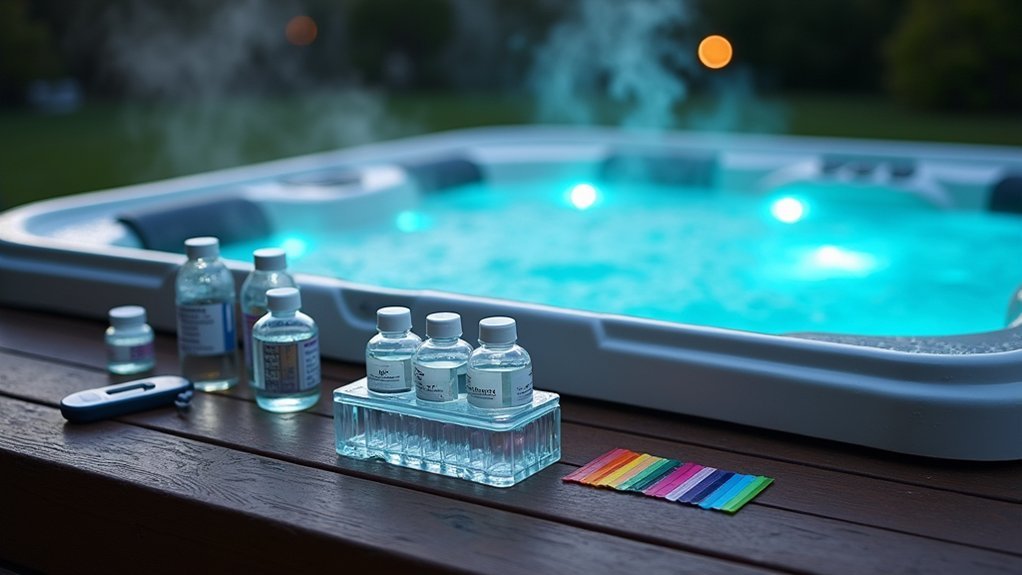
Every hot tub owner needs reliable testing tools to maintain safe, balanced water. You’ll find several options available, ranging from simple test strips to advanced digital meters. As a beginner, start with affordable tools that give you accurate readings without overwhelming complexity.
Test strips offer the quickest method for checking multiple parameters at once. Simply dip a strip into your water, wait the recommended time, and compare colors to the included chart. Liquid test kits provide more precise readings and work well when you need to fine-tune your chemistry.
- Test strips: Measure pH, alkalinity, chlorine, and bromine in seconds
- Liquid drop test kits: Deliver accurate readings for specific chemical levels
- Digital testers: Provide instant, precise pH and sanitizer measurements
Frequently Asked Questions
How Often Should I Completely Drain and Refill My Hot Tub Water?
You should drain and refill your hot tub every 3-4 months with regular use. If you’re using it heavily or notice cloudy water that won’t clear, you’ll want to change it sooner.
Can I Use My Hot Tub While Waiting for Chemicals to Balance?
You shouldn’t use your hot tub until chemicals balance properly. Wait at least 20-30 minutes after adding chemicals, then retest the water. Unbalanced water can irritate your skin, eyes, and damage your tub’s components.
What Temperature Should I Keep My Hot Tub at for Optimal Chemistry?
You should keep your hot tub between 100-102°F for peak chemistry. Higher temperatures accelerate chemical breakdown and evaporation, making it harder to maintain balance. You’ll use fewer chemicals and save money at moderate temperatures.
Are Natural or Chemical-Free Hot Tub Alternatives Safe and Effective?
You can use mineral systems or saltwater alternatives, but they’re not completely chemical-free. They reduce chemical needs but still require some sanitizer. They’re effective when you maintain proper balance and monitor water quality regularly.
How Long After Adding Chemicals Is It Safe to Use My Hot Tub?
You should wait 20-30 minutes after adding most chemicals before entering your hot tub. However, after shocking the water, you’ll need to wait until chlorine levels drop below 5 ppm—typically 24 hours.




Leave a Reply