
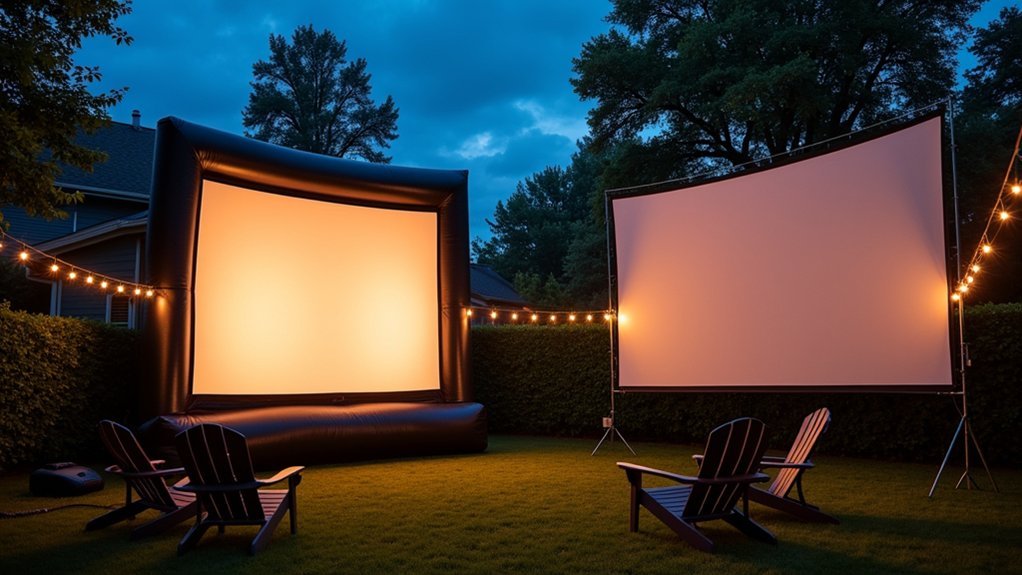
When you’re choosing between inflatable and fixed outdoor movie screens, you’ll find key differences in portability, setup time, image quality, and long-term costs. Inflatable screens pack down small and set up in 15–30 minutes, while fixed screens require hours of installation but offer superior wind resistance up to 50–75 mph. You’ll also notice fixed screens last 15–25 years compared to inflatables’ 3–7 year lifespan. Understanding these distinctions will help you make the right choice for your needs.
Portability and Storage Requirements
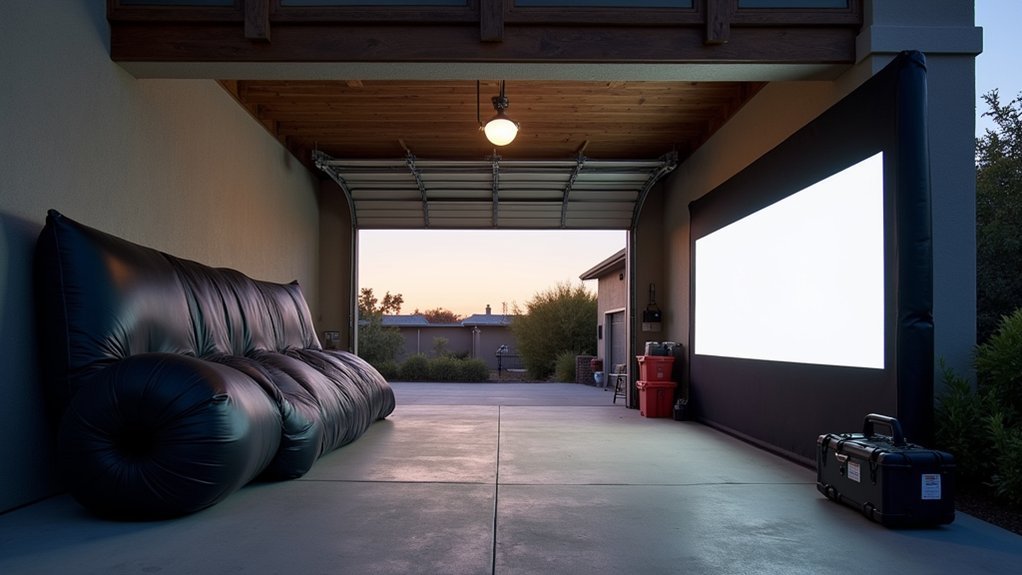
When it comes to moving your outdoor movie setup from place to place, inflatable and fixed screens couldn’t be more different.
Inflatable screens offer superior portability. You can deflate them, fold them into a compact carrying bag, and transport them in your car’s trunk. They’re ideal if you host movie nights at various locations or need to store your equipment in limited space.
Inflatable screens pack down small and go anywhere—perfect for movie lovers who refuse to stay in one place.
Fixed screens present a different challenge. They’re designed for permanent installation and require dedicated storage space when not in use. You’ll need a garage, shed, or large closet to accommodate the frame and screen material.
Consider your lifestyle before choosing. If you value flexibility and minimal storage demands, go inflatable. If you’ve got a permanent backyard setup and ample storage, fixed screens work well.
Setup Time and Labor Needed
When you’re planning an outdoor movie event, setup time can make or break your timeline. Inflatable screens typically take 10-15 minutes to deploy with a blower, while fixed screens require hours of assembly and potentially professional installation with mounting hardware.
You’ll need just one or two people to set up an inflatable screen, but fixed installations often demand a larger crew with specialized tools and construction experience.
Inflatable Screen Setup Speed
Setting up an inflatable movie screen typically takes between 10 and 30 minutes, depending on the screen’s size and your familiarity with the equipment.
You’ll need to unroll the screen, connect the blower fan, and wait for inflation to complete. Most screens reach full inflation within 5 to 10 minutes once the fan starts running.
You can handle setup alone for smaller screens, though larger models benefit from a second person to help position and secure the frame.
You’ll also need to stake down the base or attach sandbags to prevent movement during your event.
The straightforward process requires no tools or technical expertise.
After a few setups, you’ll develop a routine that gets your screen ready in minimal time with consistent results.
Fixed Screen Installation Requirements
Unlike inflatable screens that you can set up in minutes, fixed movie screens require a more substantial time investment and often professional assistance. You’ll need to account for structural mounting, electrical connections, and precise alignment to achieve optimal viewing quality.
| Installation Factor | DIY Approach | Professional Installation |
|---|---|---|
| Time Required | 4-8 hours | 2-4 hours |
| Skill Level | Advanced | Expert |
| Tools Needed | Extensive | Provided |
| Labor Cost | $0 | $200-$500 |
You’ll typically need a drill, level, stud finder, and mounting hardware at minimum. Permanent installations demand careful planning since you’re committing to a single location. If you’re mounting a large screen, you should hire professionals to ensure safety and proper tensioning of the screen material.
Crew Size Comparison
Beyond installation complexity, the number of people you’ll need differs dramatically between inflatable and fixed screen setups.
Inflatable screens require minimal labor. You can typically set up a standard inflatable screen with just one or two people. The process involves unrolling the screen, connecting the blower, and waiting for inflation. Most setups take 15 to 30 minutes from start to finish.
Fixed screens demand more hands on deck. You’ll need three to six crew members depending on the screen’s size and mounting system. The installation involves heavy lifting, ladder work, and precise alignment.
Expect the process to consume several hours or even a full day.
When calculating event costs, factor in these labor differences. Inflatable screens reduce your staffing expenses markedly while speeding up your overall timeline.
Image Quality and Viewing Experience
When you’re projecting a movie outdoors, the screen surface plays a vital role in determining picture quality. Fixed screens typically deliver superior image quality because they maintain consistent tension across the viewing surface, eliminating wrinkles and distortions that can affect your viewing experience.
Inflatable screens can present challenges that impact image quality:
- Surface rippling from wind gusts creates temporary distortions during playback
- Uneven inflation causes subtle curves that affect focus uniformity
- Material stretching over time reduces reflectivity and sharpness
You’ll notice fixed screens provide a flatter, more stable surface that maintains ideal reflectivity. However, high-quality inflatable screens with proper tensioning systems can minimize these issues significantly.
If image quality is your top priority, fixed screens offer the most reliable performance for serious outdoor cinema setups.
Weather Resistance and Durability
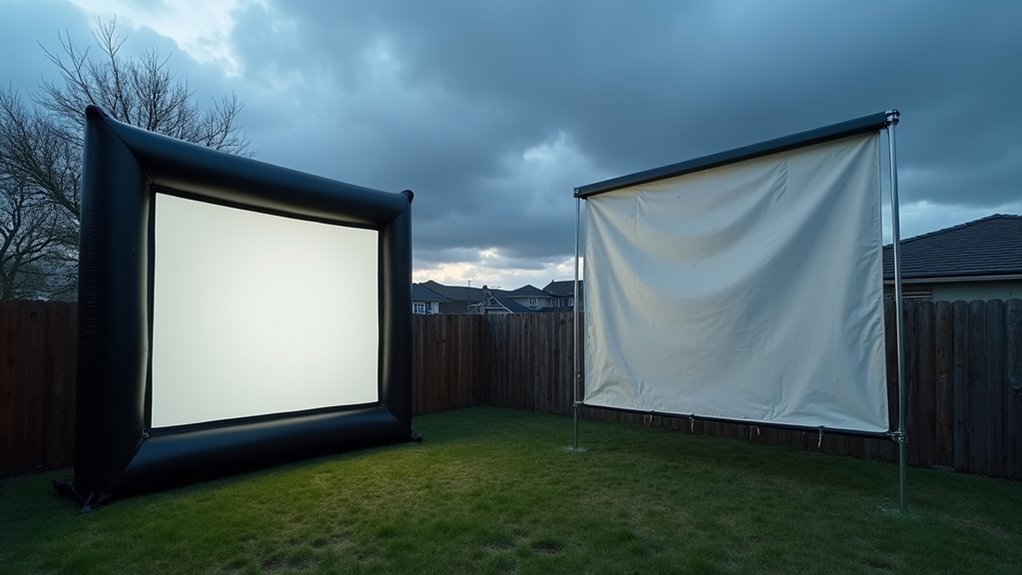
When you’re investing in an outdoor movie screen, you’ll want to take into account how it handles Mother Nature’s challenges. Inflatable screens can struggle with wind loads and require deflation during storms, while fixed screens typically offer superior structural stability but may still need protective measures against rain and moisture damage.
You should also evaluate how each screen type’s materials hold up over years of UV exposure and temperature fluctuations, as long-term degradation directly impacts your replacement timeline and overall costs.
Wind Load Performance
Although both screen types face outdoor weather challenges, their wind load performance differs dramatically due to their fundamental construction.
Inflatable screens act like sails when wind picks up. You’ll need to deflate them quickly when gusts exceed 15-20 mph to prevent damage or dangerous situations. Their air-filled frames simply can’t withstand sustained pressure.
Fixed screens offer superior wind resistance through rigid engineering. Here’s what you should know:
- Structural ratings – Fixed frames typically handle winds up to 50-75 mph depending on installation quality
- Anchoring systems – Permanent footings distribute wind forces into the ground effectively
- Material tension – Properly stretched screen surfaces reduce flapping and stress points
You’ll find fixed screens remain operational in conditions that would sideline any inflatable setup, making them ideal for unpredictable climates.
Rain and Moisture Handling
Rain rarely stops outdoor movie events, but it quickly reveals the differences between inflatable and fixed screen technologies.
Inflatable screens typically use water-resistant PVC or polyester materials that shed moisture effectively. You’ll find that rainwater beads up and rolls off these surfaces, allowing projection to continue during light showers.
Fixed screens present more challenges with moisture. Their rigid frames often use tensioned fabric that can absorb water, causing sagging and image distortion. You’ll need to treat these surfaces with waterproof coatings regularly to maintain performance.
After events, inflatable screens require thorough drying before storage to prevent mold growth. Fixed screens benefit from permanent installations with drainage considerations. If you’re hosting events in rainy climates, inflatable options offer easier maintenance, while properly treated fixed screens provide long-term durability.
Long-Term Material Degradation
Beyond immediate weather concerns, both screen types face gradual material breakdown from years of environmental exposure. UV radiation, temperature fluctuations, and humidity cycles all take their toll on screen materials over time.
Inflatable screens typically show degradation through:
- Vinyl brittleness – PVC materials crack and lose flexibility after prolonged sun exposure
- Seam weakening – Heat-welded joints become vulnerable to air leaks
- Fabric yellowing – White projection surfaces discolor, affecting image quality
Fixed screens experience different challenges. Their rigid frames may corrode or warp, while permanently mounted fabric stretches and sags.
However, you’ll often find fixed installations last longer since they’re designed for continuous outdoor use.
You can extend either screen type’s lifespan through proper UV-protective coatings and seasonal maintenance routines.
Initial Purchase Cost Comparison
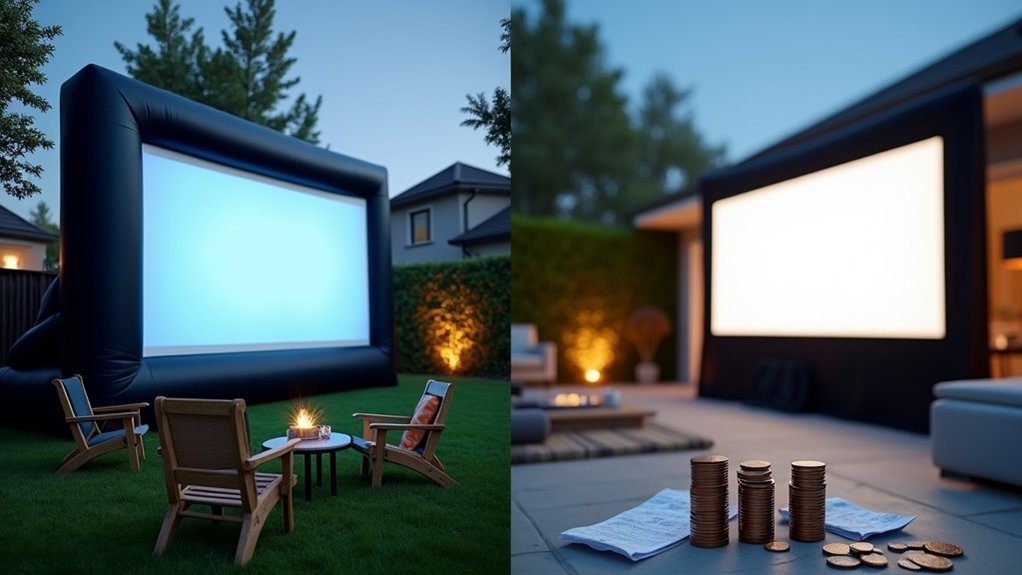
When you’re shopping for an outdoor movie screen, the price gap between inflatable and fixed options can vary dramatically based on size and quality. Entry-level inflatable screens start around $100-$300 for basic backyard models, while commercial-grade inflatables range from $500-$3,000. You’ll find they include the screen material, frame, and blower fan in one package.
Fixed screens demand a higher upfront investment. Budget aluminum frame options begin at $200-$500, but professional permanent installations can cost $1,000-$10,000 or more. You’re paying for durable materials, mounting hardware, and often professional installation fees.
Consider your usage frequency before deciding. If you’re hosting occasional movie nights, an inflatable’s lower cost makes sense. However, if you’re running a commercial venue, a fixed screen’s durability often justifies the steeper initial expense.
Space Requirements for Installation
When you’re planning your outdoor movie setup, you’ll need to contemplate how much space each screen type demands.
Inflatable screens require storage room for the deflated unit, blower, and accessories, while fixed screens maintain a permanent footprint in your yard or venue.
You’ll also need to account for adequate clearance around your setup area to guarantee safe installation and prime viewing angles.
Inflatable Screen Storage Needs
Inflatable movie screens fold down into surprisingly compact packages, making storage a breeze compared to their fully deployed size. You’ll find that most units compress to about 10-15% of their inflated dimensions, fitting neatly into carrying bags or storage cases.
When planning your storage space, consider these key factors:
- Climate control – Store your screen in a dry, temperature-stable environment to prevent mold and material degradation
- Weight capacity – Larger screens with blowers can weigh 50-200 pounds, requiring sturdy shelving or floor space
- Accessibility – Position your equipment where you can easily retrieve it for events
You’ll need minimal square footage—typically a closet, garage corner, or storage unit works perfectly for housing your deflated screen setup.
Fixed Screen Footprint
Unlike their inflatable counterparts that disappear into storage bags, fixed movie screens demand permanent real estate in your space. You’ll need to dedicate a wall or construct a freestanding frame structure that remains visible year-round.
When planning your installation, measure carefully. A 120-inch diagonal screen requires approximately 9 feet of horizontal wall space and 6 feet vertically. Add another 12-18 inches on each side for frame mounting hardware and proper viewing margins.
You must also consider depth. Wall-mounted screens project 2-4 inches from the surface, while freestanding frames need 18-24 inches of floor depth for stability. Don’t forget clearance zones—you’ll want at least 3 feet in front for maintenance access and to prevent accidental contact during gatherings.
Setup Area Clearance
Beyond the screen’s physical footprint, you’ll need substantial clearance around your setup area to guarantee safe and efficient installation.
Inflatable screens demand more surrounding space than fixed alternatives. You’ll need room for the blower unit, guy wires, and sandbags that anchor the structure. During inflation, the screen expands outward before rising to full height, requiring temporary clearance you won’t need afterward.
Consider these clearance requirements:
- Inflatable screens: Allow 6-10 feet on all sides for anchoring systems and safe blower operation
- Fixed frame screens: Require only 2-3 feet clearance for assembly and maintenance access
- Both types: Need overhead clearance from tree branches and power lines
Fixed screens offer a distinct advantage in tight spaces where every foot matters for your audience seating arrangement.
Long-Term Maintenance Considerations
When you’re investing in an outdoor movie screen, understanding the long-term maintenance demands of each type will help you budget both time and money effectively.
Inflatable screens require regular inspection of seams, valves, and fabric for wear. You’ll need to clean and fully dry the material before storage to prevent mold growth. The blower motor also needs periodic maintenance.
Fixed screens demand less frequent attention but still require care. You should check mounting hardware for rust or loosening and clean the screen surface seasonally.
| Inflatable Screens | Fixed Screens |
|---|---|
| Replace blower every 3-5 years | Inspect anchors annually |
| Patch punctures as needed | Repaint frame every 5-7 years |
| Store properly between uses | Weather-resistant coating touch-ups |
Both options benefit from protective covers during off-seasons.
Versatility for Different Event Types
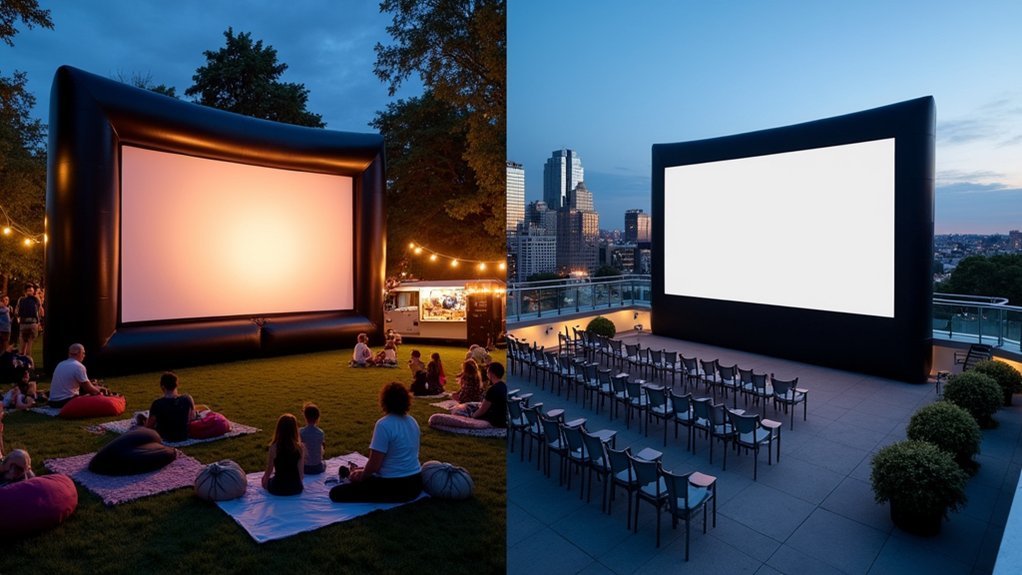
How well does each screen type adapt to various event settings? Inflatable screens excel in flexibility, allowing you to host outdoor movie nights in parks, backyards, or parking lots with minimal setup constraints. You can transport them between locations and adjust positioning based on crowd size.
Fixed screens offer superior performance for dedicated venues but limit your event options to one location. Consider these key versatility factors:
- Portability: Inflatable screens travel easily; fixed screens remain stationary
- Venue compatibility: Inflatables work on grass, concrete, or sand; fixed screens require permanent mounting surfaces
- Event scaling: You can choose different inflatable sizes per event; fixed screens offer consistent dimensions only
Your event variety ultimately determines which option serves you best.
Wind Stability and Safety Factors
While both screen types face challenges in windy conditions, they handle gusts quite differently.
Inflatable screens rely on continuous air pressure to maintain their shape, making them susceptible to distortion or collapse during strong winds. Most manufacturers recommend deflating these screens when winds exceed 15-20 mph.
Fixed screens offer superior wind resistance due to their rigid framework and tensioned material. You’ll find they remain stable in conditions that would compromise an inflatable setup. However, you must make certain proper anchoring and guy-wire installation to prevent tipping.
Safety considerations extend beyond wind. Inflatable screens require constant monitoring of blower function and air pressure. Fixed screens demand secure mounting and regular hardware inspections.
You should always check local weather forecasts before outdoor screenings and establish clear protocols for emergency takedown procedures.
Lifespan and Replacement Frequency
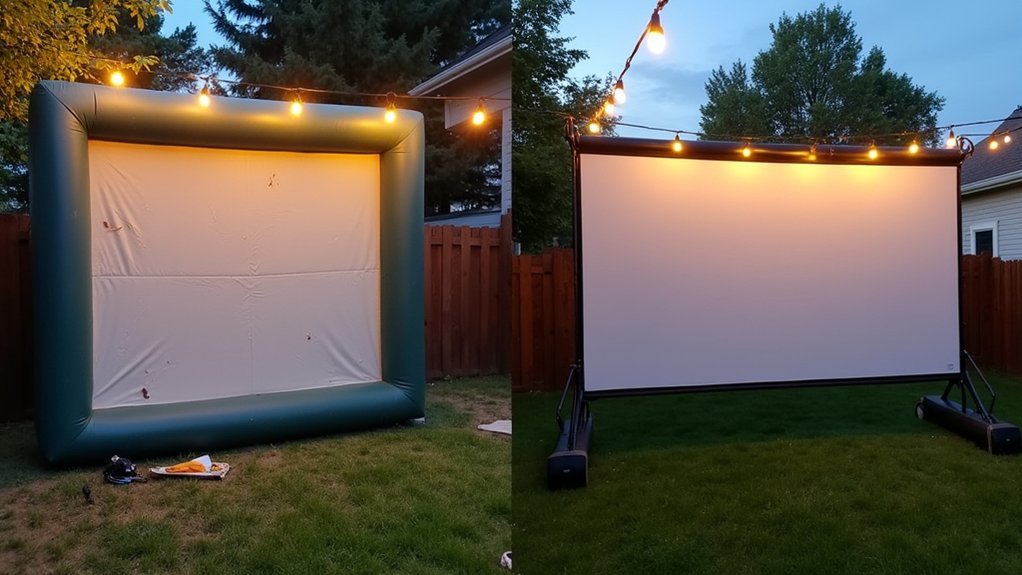
Because outdoor screens face constant exposure to UV rays, moisture, and temperature fluctuations, their materials degrade over time regardless of which type you choose.
Inflatable screens typically last 3-7 years with proper care. Their vinyl surfaces eventually crack, and seams weaken from repeated inflation cycles. You’ll likely replace the screen fabric before the frame fails.
Fixed screens offer substantially longer lifespans:
- Aluminum frames last 15-25 years with minimal maintenance
- Screen surfaces need replacement every 8-12 years
- Hardware components require inspection annually
You’ll spend more upfront on fixed installations, but you’ll replace them far less often.
Inflatable screens demand more frequent replacement, which adds up over time. Consider your long-term budget and how often you’re willing to handle replacements when making your decision.
Frequently Asked Questions
Can Inflatable Movie Screens Be Repaired if They Get Punctured?
Yes, you can repair punctured inflatable movie screens. You’ll find patch kits work well for small holes, and you can apply them yourself. For larger tears, you’d want professional repair services.
What Power Source Is Needed to Operate an Inflatable Movie Screen?
You’ll need a standard electrical outlet to power the continuous-flow blower that keeps your inflatable movie screen upright. Most blowers run on 110-120V household current, so you can use any nearby outdoor outlet.
Are There Noise Concerns From Inflatable Screen Blowers During Movies?
Yes, you’ll notice blower noise with inflatable screens since they run continuously during your movie. You can minimize disruption by positioning the blower away from seating areas or using longer inflation hoses.
Which Screen Type Works Better for Daytime Outdoor Movie Events?
You’ll get better results with fixed screens for daytime events. They’re typically made with higher-gain materials that reflect more light, giving you brighter images that compete better against sunlight than inflatable alternatives.
Can I Rent Movie Screens Before Deciding Which Type to Purchase?
Yes, you can rent both inflatable and fixed movie screens from many rental companies. You’ll get hands-on experience with each type, helping you determine which best suits your specific outdoor event needs before committing to a purchase.


Leave a Reply