
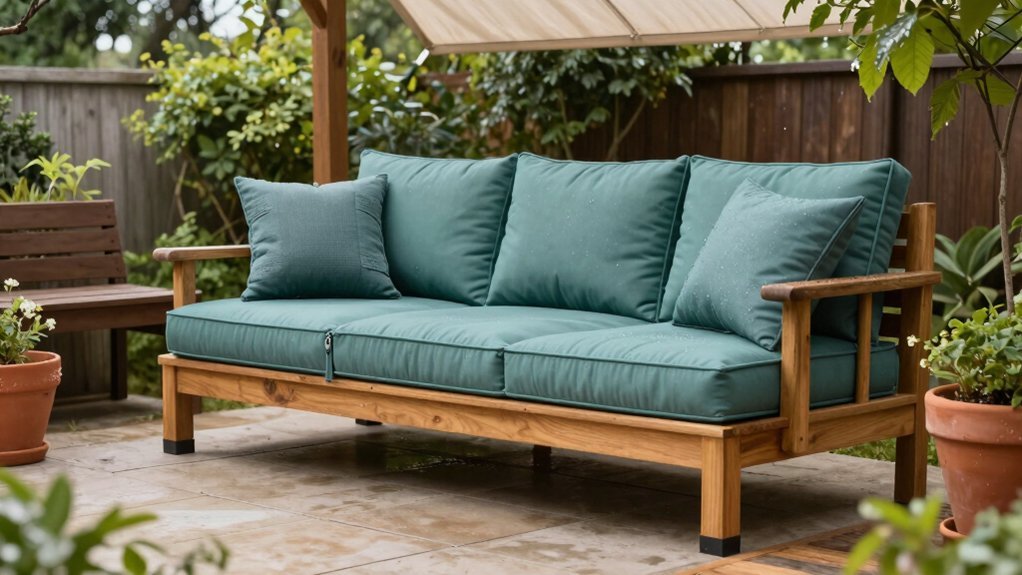
To combat humidity in outdoor cushions, select open-cell quick-drying foam paired with solution-dyed acrylic fabrics like Sunbrella. Install ventilation features such as mesh bottoms and grommets, while applying waterproofing treatments seasonally. Use moisture-wicking underlayments, maintain regular cleaning routines, and incorporate UV-resistant zippers and thread. Implement proper drainage systems and elevate cushions during storage. These strategies will transform your soggy seating into long-lasting, comfortable outdoor spaces.
Select Quick-Drying Foam With Open-Cell Structure
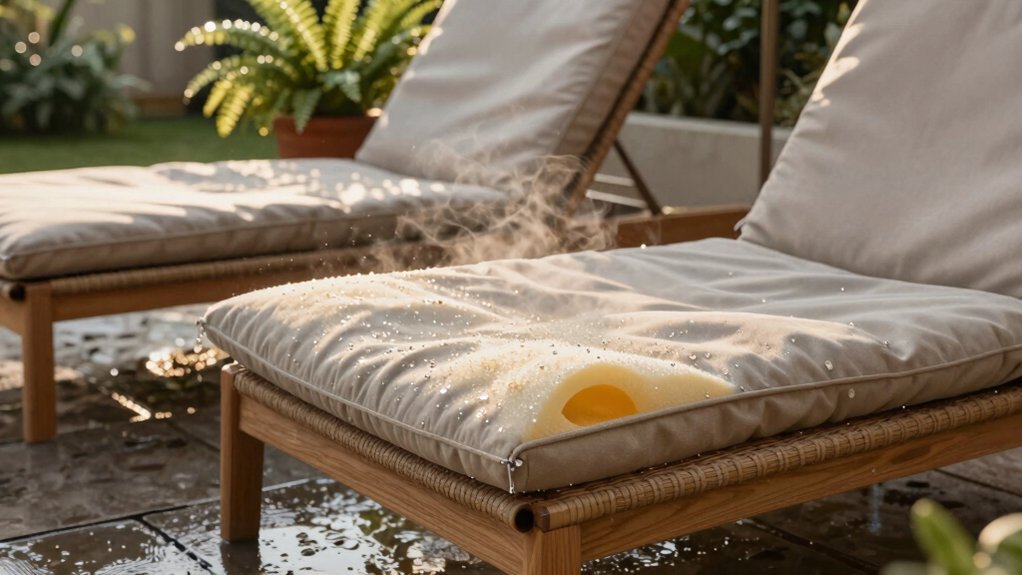
When selecting outdoor cushions that can withstand moisture, the foundation of your choice should be quick-drying foam with an open-cell structure. This design allows water to flow through easily rather than pooling, significantly reducing drying time after rain.
Consider CushionRite Dry Fast antimicrobial foam for year-round outdoor seating. Its specialized structure provides excellent drainage while resisting mold and mildew—common problems in humid environments. Water passes through the foam’s network instead of remaining trapped, preventing that unpleasant soggy feeling.
You can customize this foam in various thicknesses and sizes to fit your specific outdoor furniture. For optimal moisture resistance, pair Dry Fast foam with breathable fabrics and proper underlayment. This combination creates a complete drainage system that keeps your cushions comfortable even in challenging weather conditions.
Choose Solution-Dyed Acrylic Fabrics for Maximum Durability
Why do professional designers consistently choose solution-dyed acrylic fabrics for outdoor cushions? The secret lies in their construction—color is embedded within the fiber itself, not merely applied to the surface. This engineering marvel ensures your cushions maintain vibrant colors despite relentless sun exposure and humidity.
Unlike traditional fabrics, solution-dyed acrylics offer:
- Superior UV resistance that prevents fading, maintaining color realism for years
- Enhanced water repellency that works with your quick-drying foam to resist moisture damage
- Color stability that won’t bleed when exposed to cleaning solutions or persistent humidity
Look for trusted brands like Sunbrella, Outdura, SunRite, or Covington when selecting your outdoor fabric. You’ll enjoy cushions that look fresh and vibrant season after season, even in the most challenging humid environments.
Install Ventilation Features for Enhanced Airflow
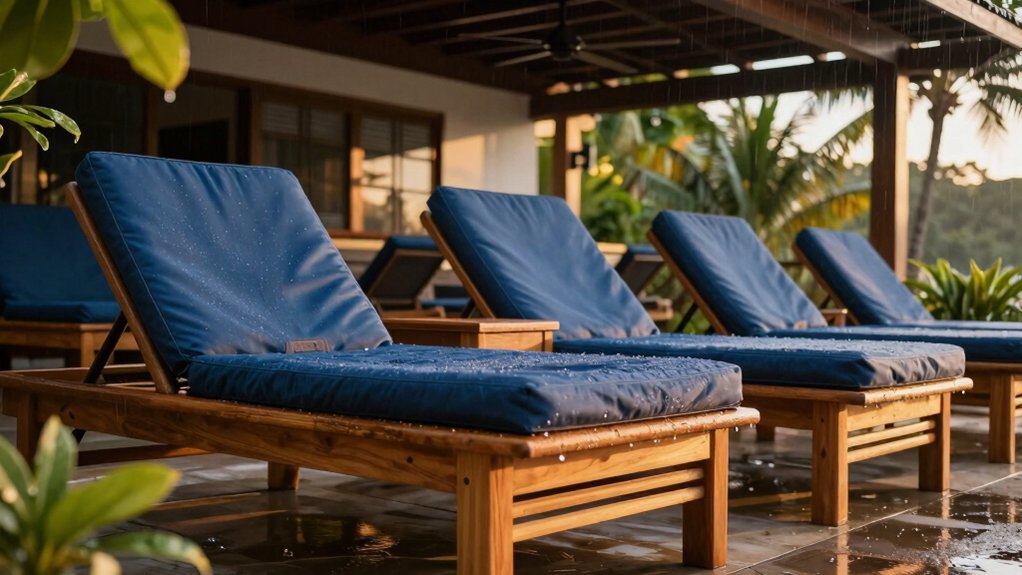
How effectively your outdoor cushions combat humidity depends largely on proper airflow. Start by installing Phifertex mesh fabric at the cushion bottom to create drainage channels that prevent moisture accumulation. This simple addition substantially improves air circulation through your cushions.
Add vent grommets or a mesh zipper plaque to enhance cross-ventilation, allowing moisture to escape quickly after rainfall. These strategic openings work best when paired with breathable performance fabrics like Sunbrella or Outdura that resist water while permitting air movement.
Don’t let your cushions sit flat on surfaces. Elevate them slightly or use weatherproof covers that create a gap around the cushions. Place them in sunny, breezy locations and regularly rotate them to maximize exposure to air movement, facilitating faster evaporation and preventing humidity buildup.
Apply High-Quality Waterproofing Treatments Seasonally
You’ll find two main options when waterproofing outdoor cushions: silicone-based sprays that offer excellent water repellency at a lower price point, or fluoropolymer formulations that provide superior long-term protection against both moisture and UV damage.
For maximum effectiveness, apply your chosen treatment when cushions are completely dry and clean, ideally on a mild day with low humidity and temperatures between 50-70°F.
Schedule your waterproofing applications strategically—once at the beginning of outdoor season, again mid-summer if cushions see heavy use, and before storing them away for winter.
Silicone-Based vs. Fluoropolymer Sprays
When protecting your outdoor cushions from humidity, choosing between silicone-based and fluoropolymer sprays significantly impacts long-term performance. Silicone options create a flexible water-repellent barrier that works well for light rain, but they may degrade faster on porous materials exposed to UV rays.
For superior humidity protection, consider fluoropolymer treatments, which offer:
- Longer-lasting water resistance requiring fewer reapplications
- Enhanced breathability that maintains fabric comfort
- Better stain protection for outdoor environments
While silicone treatments might alter fabric feel, fluoropolymers typically preserve the original texture. Your choice should depend on your specific fabric type, sun exposure levels, and desired drying speed. Remember that fluoropolymers generally provide stronger, more durable humidity resistance for outdoor cushions subjected to regular weather challenges.
Timing Waterproofing Applications
Beyond selecting the right waterproofing formula, proper timing of your application schedule dramatically impacts how well your outdoor cushions withstand humidity challenges.
For optimal protection, establish a seasonal maintenance routine. Apply treatments at least once annually, ideally before periods of heaviest humidity or rainfall. After deep cleaning your cushions, always reapply protection since cleaning strips away previous waterproofing layers.
Before application, ensure cushions are completely clean and dry to prevent trapping moisture or dirt beneath the protective barrier. Apply in a well-ventilated area, allowing the first coat to dry completely before adding a second layer to high-exposure items.
Test effectiveness by sprinkling water on treated surfaces—proper beading indicates sufficient protection, while absorption signals you need another application.
Implement Strategic Cushion Storage During Wet Periods
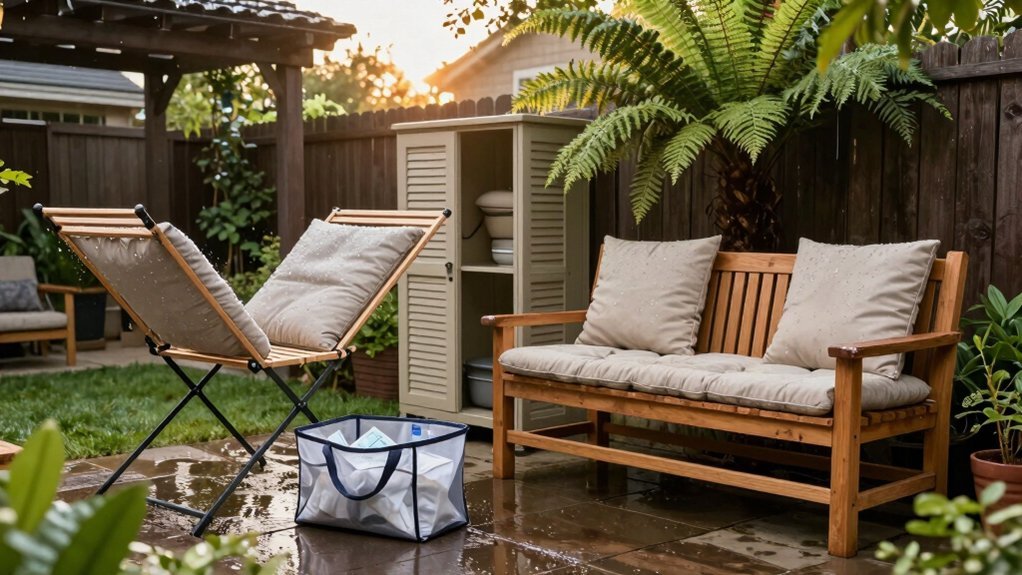
Elevate your outdoor cushion storage boxes on bricks to create a moisture barrier that prevents ground dampness from seeping into your cushions.
Line your storage containers with moisture-wicking materials like cedar chips or silica packets to absorb excess humidity during prolonged wet weather.
You’ll maximize cushion lifespan by implementing a seasonal rotation strategy that brings the most vulnerable pieces indoors during extreme weather while maintaining others in properly ventilated outdoor storage.
Elevated Storage Prevents Mold
During rainy seasons or humid weather, proper storage becomes critical to extending the life of your outdoor cushions. Elevating your storage boxes off the ground creates a barrier against ground moisture that can cause condensation inside the container. This simple step dramatically reduces mold and algae risks that typically develop when cushions sit in damp conditions.
- Place bricks or similar supports under each corner of your storage box to improve airflow underneath
- Add DampRid containers inside storage boxes to absorb excess moisture and maintain lower humidity levels
- Consider vacuum-sealing cushions before placing them in elevated storage to provide an extra layer of moisture protection
This elevation strategy minimizes condensation caused by temperature fluctuations and keeps your cushions fresh and ready for use when sunny days return.
Moisture-Wicking Box Liners
While elevation keeps your storage boxes off damp ground, the interior environment still matters tremendously. Adding moisture-wicking box liners creates an essential defense against humidity damage by drawing moisture away from your cushion foam toward the liner’s exterior.
Choose breathable liners with effective moisture-transport properties to prevent condensation buildup. For maximum protection, pair these liners with elevated, vented storage solutions like brick platforms or risers that promote airflow underneath containers.
Look for water-resistant, tear-strength fabrics specifically designed for outdoor use that resist mold and mildew growth. Don’t forget to regularly inspect your liners, especially after heavy rainfall or when cushions have been stored for extended periods. Replace any liners showing signs of deterioration to maintain their moisture-control effectiveness and keep your cushions dry throughout wet seasons.
Seasonal Rotation Strategy
When should you adjust your cushion storage approach? The seasonal humidity patterns in your area should guide your rotation strategy. During high-humidity months, elevate your deck boxes off the ground to prevent condensation from ground moisture contact, which can lead to mold growth in your cushions.
- Place DampRid containers inside your storage units during particularly humid seasons to actively control moisture levels
- Consider vacuum-sealing cushions when storing for extended periods, which both saves space and reduces air moisture exposure
- Position cushions upright when drying after rain, leveraging gravity and airflow in sunny, windy locations for faster drying
For maximum protection, implement regular rotation schedules and add inner plastic liners during off-season storage to minimize condensation exposure.
Position Cushions for Optimal Air Circulation
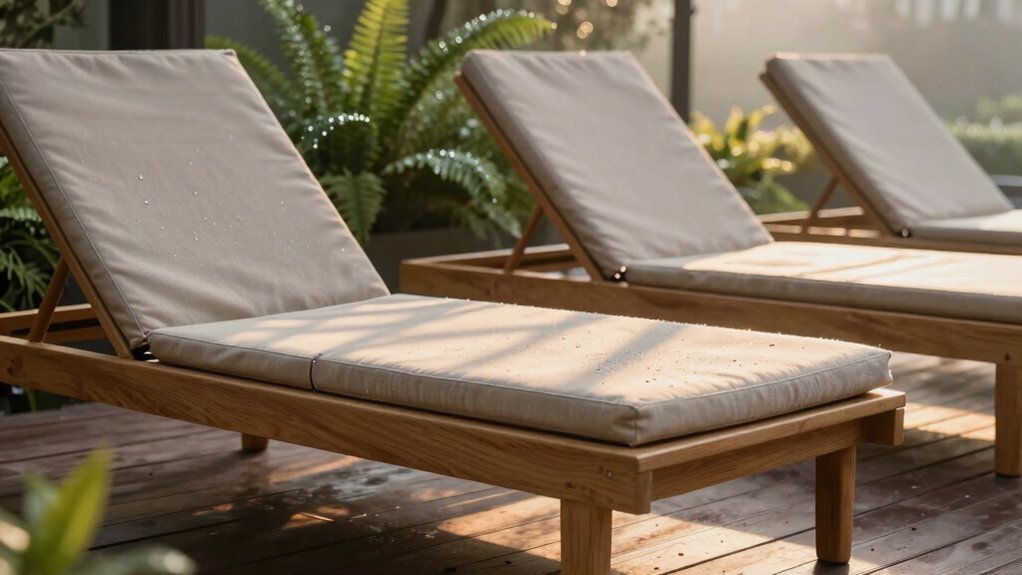
Proper positioning makes all the difference when drying wet outdoor cushions. First, remove them completely from your furniture to ensure air can circulate around all sides. Shake vigorously to expel as much water as possible before arranging them upright, which allows gravity to naturally drain excess moisture.
Place your cushions in locations with maximum sun exposure and natural breeze. When cushions are thoroughly soaked, use your body weight to press out additional water before positioning them for drying. This simple step significantly reduces drying time.
Remember to rotate cushions regularly throughout the drying process, ensuring all sides receive equal sun and airflow. This methodical approach prevents moisture from becoming trapped in corners or seams, helping your outdoor cushions dry completely and preventing mildew development.
Use Moisture-Wicking Underlayment Materials
Beneath your favorite outdoor cushions lies a critical yet often overlooked defense against humidity: moisture-wicking underlayment materials. Phifertex mesh and similar cushion underlinings provide pathways for water drainage while preventing moisture from becoming trapped in your cushions. When paired with Dry Fast foam, these materials maintain quick-drying properties while efficiently transferring moisture away from the core.
For maximum effectiveness:
- Combine underlayment with breathable, solution-dyed outdoor fabrics to allow trapped humidity to escape
- Elevate your deck boxes and incorporate vents or mesh plaques to enhance airflow around the wicking materials
- Check underlayment integrity seasonally and ensure cushions dry completely after exposure to moisture
This multilayered approach creates a comprehensive moisture management system that extends the life of your outdoor cushions while preventing mold development.
Maintain Regular Cleaning Routines for Mold Prevention
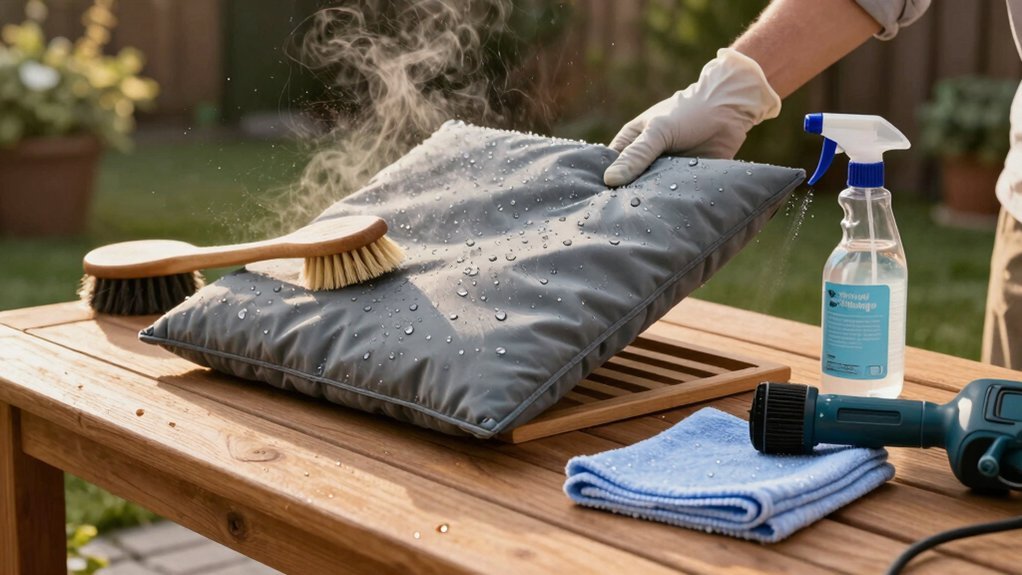
Maintaining a consistent cleaning schedule forms the cornerstone of effective mold prevention for humidity-resistant outdoor cushions. Vacuum regularly to remove dirt and debris that harbor mold spores, significantly boosting your cushions’ humidity resistance.
Perform annual spot cleaning with mild soap solutions, ensuring cushions dry completely before storage. For stubborn stains, use bleach solutions only according to fabric guidelines, then restore water repellency by reapplying 303 Fabric Guard.
During high-humidity periods, store cushions indoors or under breathable protective covers to minimize mold risk. Don’t forget to apply weatherproof sprays at least once yearly to maintain effective moisture barriers. This maintenance routine creates multiple layers of protection against humidity damage, extending the life of your outdoor cushions.
Incorporate UV-Resistant Thread and Zippers
When selecting materials for your outdoor cushions, you’ll want to use UV-protected polyester threads (Tex 70 or Tex 90) that resist sun damage while preventing moisture wicking through seams.
Choose zippers with UV-resistant molded teeth, such as #5 size from Lenzip or YKK, ensuring they’ve a non-wicking finish to minimize water absorption in humid conditions.
Pairing these specialized components with weatherproof fabrics creates a comprehensive defense system against moisture intrusion at vulnerable connection points.
Marine-Grade Thread Benefits
Why do even the finest outdoor cushions fail prematurely? Often, it’s the thread that gives out first, not the fabric. Marine-grade thread offers superior protection against humidity and UV exposure that regular thread simply can’t match.
When selecting thread for your outdoor cushions, look for:
- Tex 70 or Tex 90 UV-resistant polyester with non-wicking finish to prevent moisture absorption
- Thread specifically designed to maintain colorfastness under intense sun exposure
- Products labeled as marine-grade, which provide watertight seam performance
Corrosion-Proof Zipper Selection
The longevity of outdoor cushions depends not only on quality fabric and thread but also on durable zippers that resist corrosion. For humidity-resistant applications, choose UV-resistant molded-tooth zippers from reputable manufacturers like YKK or Lenzip.
Select #5 size zippers with a continuous chain and single pull slider for optimal weather resistance. These specifications ensure your cushions remain functional despite constant exposure to moisture and sun.
Pair your zipper selection with proper Tex 70 or Tex 90 polyester thread to prevent moisture wicking. Look for zippers with non-wicking finishes to minimize water absorption and reduce mold risk.
During installation, ensure proper venting and avoid spraying protective treatments directly on zipper components, as this can compromise their built-in corrosion resistance.
Create Proper Drainage Systems Within Cushion Design
How effectively your outdoor cushions handle moisture ultimately determines their longevity in humid environments. Incorporating proper drainage elements into your cushion design prevents water accumulation that leads to mold and mildew growth.
Add Phifertex mesh fabric to cushion bottoms to improve water flow and reduce moisture retention. For optimal results, use open-cell foam like CushionRite Dry Fast that allows water to pass through rather than becoming trapped inside.
- Wrap foam in polyester batting with light adhesive to maintain quick-drying properties while preserving a soft feel
- Install vent grommets or mesh zipper plaques to enhance airflow throughout the cushion
- Elevate cushion storage boxes to prevent ground moisture from seeping into your cushions when not in use
Frequently Asked Questions
How to Keep Outdoor Cushions Dry From Dew?
Elevate your cushions off the ground, use DampRid in storage boxes, ensure good ventilation, add Phifertex mesh underneath, and store them in breathable covers when not in use.
How to Make Outdoor Cushions Water Resistant?
Choose Sunbrella or Outdura fabrics, apply 303 Fabric Guard regularly, install drainage mesh, and use quick-dry CushionRite foam. You’ll also want proper venting with mesh zippers or grommets.
Should I Scotchgard My Patio Cushions?
Yes, you should Scotchgard your patio cushions. It’ll effectively repel moisture, extend their lifespan, and maintain appearance. Apply it seasonally after cleaning for consistent water-repellent protection against humidity damage.
How Do Outdoor Cushions Not Get Moldy?
Outdoor cushions avoid mold by using quick-drying foam, water-repellent fabrics, ventilation features, and protective coatings. You’ll need to store them properly and reapply treatments annually for best results.

Leave a Reply