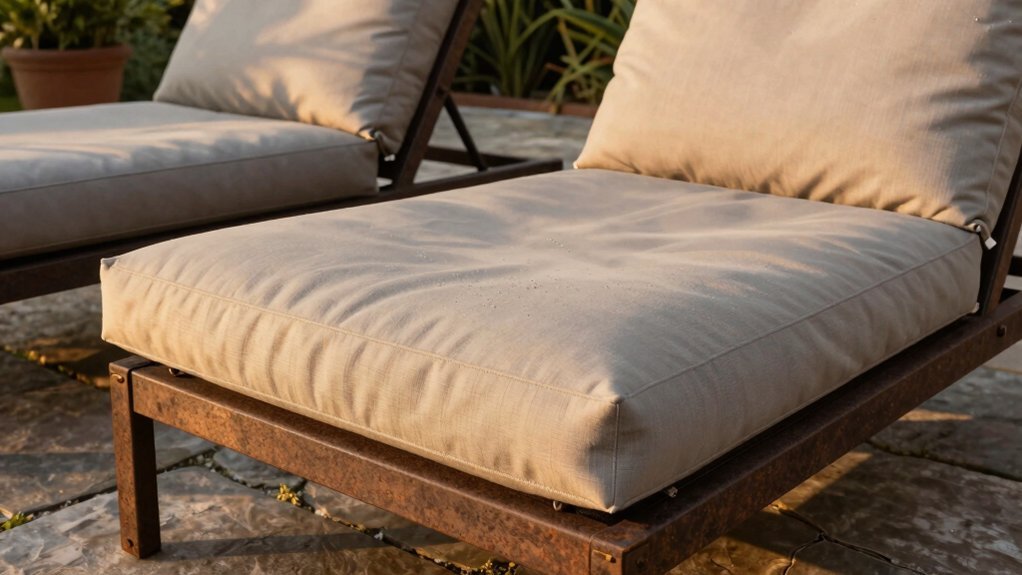
Quality outdoor cushions keep their shape due to high-density foam cores (28-40+ pounds per cubic foot) that resist compression. They feature open-cell technology like QuickDry foam that drains water quickly, preventing moisture damage. Dacron wrapping adds comfort while maintaining structure, and antimicrobial treatments fight mildew that could weaken the cushion. UV-resistant fabrics and reinforced stitching further protect against sagging. The secret lies in how these premium materials work together against the elements.
Premium Foam Technology: The Foundation of Lasting Shape
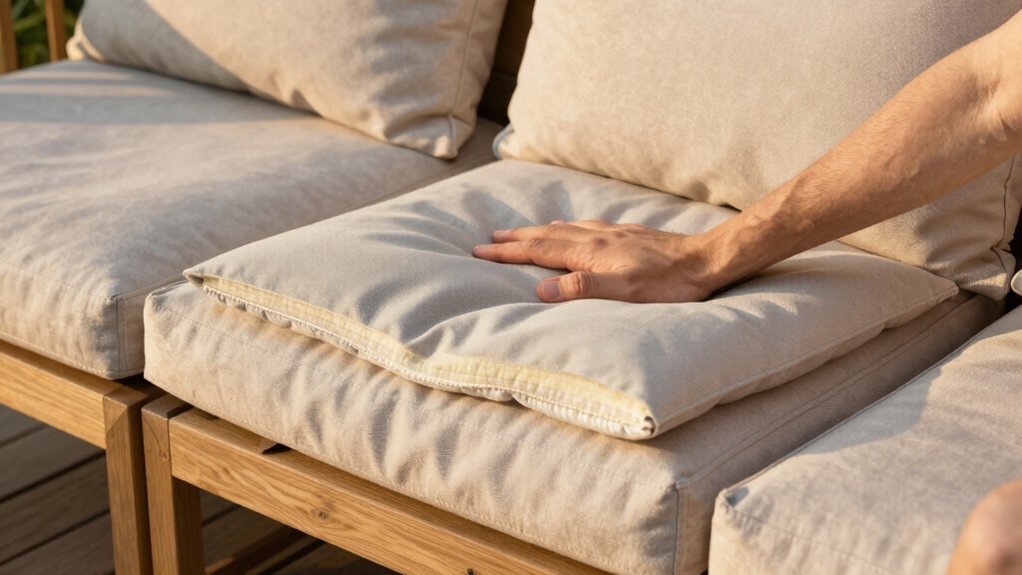
What makes quality outdoor cushions maintain their pristine appearance season after season? The secret lies in premium foam technology. When you invest in cushions with open-cell foams like QuickDry®, you’re getting materials specifically engineered to drain water quickly and promote consistent airflow. This technology prevents the sagging that typically occurs after rain or regular use.
High-density foam cores provide the critical structural support your cushions need, resisting compression even with daily use. The addition of Dacron wrap creates a protective buffer between the foam and fabric, preserving those crisp, defined edges that give your cushions their tailored look. For maximum longevity, look for antimicrobial-treated foams that fight moisture-related deterioration, ensuring your cushions maintain their thickness and shape throughout multiple outdoor seasons.
Moisture-Resistant Core Materials That Combat Sagging
The most effective outdoor cushions contain sophisticated moisture-resistant core materials specifically designed to combat the number one enemy of cushion longevity: water absorption. When cushion cores absorb moisture, they collapse under weight, creating that frustrating permanent sag you’ll notice after rainy seasons.
| Core Material | Performance Benefit |
|---|---|
| Open-cell QuickDry Foam | Drains rapidly, reducing post-rain weight |
| Closed-cell Foam | Completely repels water, maintains buoyancy |
| Dacron® Wrapped Foam | Adds plush feel while protecting inner core |
| PET Foam with Wrap | Combines quick-drying with structural integrity |
| Moisture-Resistant Fillers | Prevent internal compression from humidity |
You’ll find these specialized materials work together to maintain your cushion’s shape regardless of weather conditions. Unlike standard indoor cushions, these moisture-resistant cores quickly return to form after exposure, eliminating the sagging that ruins both comfort and appearance.
The Science of Reticulation in Outdoor Cushion Longevity
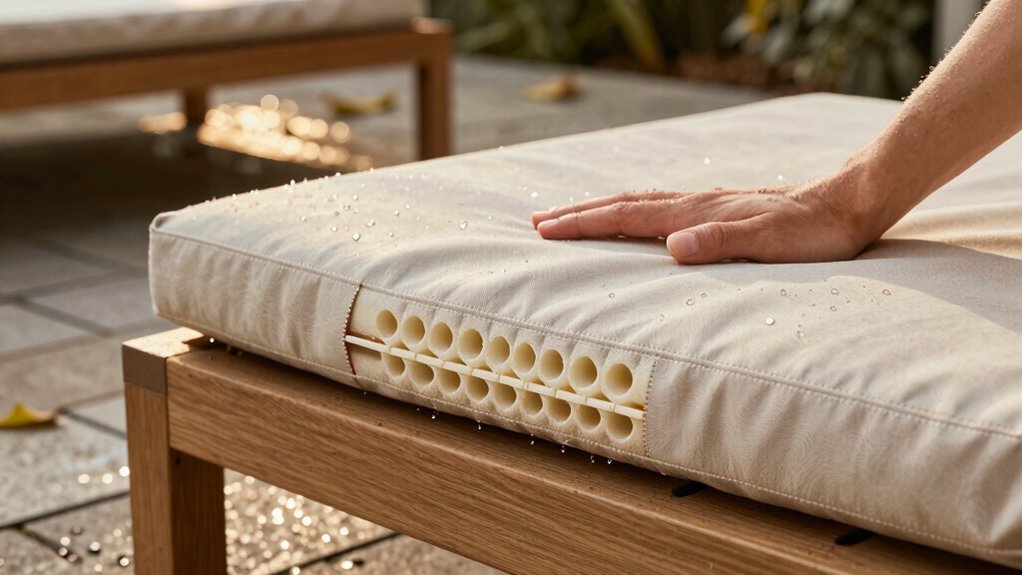
You’ll find that properly reticulated outdoor cushions maintain their shape longer because the interconnected channel network allows water to drain and air to circulate freely after rain.
QuickDry and Hydro-Blast reticulation technologies refine the foam’s internal cell structure, creating resilient cushions that bounce back to their original form even after heavy use.
When shopping for outdoor furniture, look for cushions with open-cell reticulated foam treated with antimicrobial agents to prevent the sagging and mildew issues common in lesser-quality options.
Cell Structure Matters
Beneath the surface of every quality outdoor cushion lies a complex cellular network that determines how well it maintains its shape over time. The difference between cushions that sag after a season and those that retain their form for years comes down to cell structure design.
Open-cell foams feature interconnected pores that allow rapid moisture drainage and air circulation, preventing the sogginess that can permanently deform your cushions. Products like Urecel’s QuickDry combine this open-cell structure with antimicrobial technology to maintain firmness despite exposure to elements.
For complete moisture resistance, closed-cell foams excel by blocking water penetration entirely, preserving buoyancy and shape during rainy conditions. Many manufacturers enhance durability through processes like Hydro-Blast Reticulation, which strengthens the cellular walls, while Dacron wraps distribute pressure evenly across the surface.
Weatherproofing Foam Technology
Modern weatherproofing innovations have revolutionized outdoor cushion technology, with reticulation processes standing at the forefront of durability enhancements. Hydro-Blast reticulation creates interlocking cell structures that maintain resilience even after repeated compression.
| Technology | Benefit | Application |
|---|---|---|
| QuickDry Foam | Rapid evaporation | Rainy climates |
| Uregard Treatment | Antimicrobial protection | High humidity areas |
| Closed-cell Foam | Water repellence & buoyancy | Poolside furniture |
You’ll find Urecel’s QuickDry® foam particularly effective with its open-cell design that allows moisture to escape quickly. When wrapped in Dacron, these cushions gain an extra layer of protection while maintaining a plush feel. The protective wrap preserves edges and contours that would otherwise deteriorate with exposure. Closed-cell options provide superior performance where water contact is frequent, preventing absorption that could otherwise compromise your cushion’s ability to bounce back.
Protective Wrapping Techniques for Enhanced Durability
Your cushion’s longevity depends greatly on what’s between the foam core and outer fabric. Dacron wrapping protects the inner foam from moisture while distributing pressure evenly to maintain those crisp, defined edges you’ll love for seasons to come. Weather-resistant cover layers work alongside these protective wraps to shield your investment from sun damage and unexpected rain showers.
Dacron Wrap Benefits
Most outdoor cushion manufacturers now incorporate a Dacron wrap as a critical protective layer between the foam core and outer fabric. This plush barrier considerably extends your cushions’ lifespan while enhancing comfort.
You’ll appreciate how Dacron wrap distributes weight more evenly across the cushion surface, preventing the premature compression that causes sagging. It effectively shields the inner foam from the friction that occurs during normal use, reducing wear on both the core and fabric.
Even if your cushion’s foam has minor irregularities, you won’t notice them through the Dacron layer, which creates a smoother, more uniform surface feel. For high-traffic outdoor furniture, this protective wrap is particularly valuable—it’s a simple addition that dramatically improves your cushions’ ability to maintain their original shape season after season.
Weather-Resistant Cover Layers
While Dacron wrap safeguards the interior of your cushion, the exterior needs equal protection against nature’s elements. Weather-resistant cover layers form your cushions’ first line of defense, preventing moisture, UV rays, and stains from degrading the inner foam structure.
These protective layers use UV-stabilized and solution-dyed fabrics that maintain their color integrity despite prolonged sun exposure. When you choose cushions with reinforced seams and UV-resistant stitching, you’re investing in products that resist distortion and maintain their geometric integrity even under outdoor stress.
Look for removable covers in your outdoor cushions—they’re not just convenient for cleaning but crucial for preservation. Regular maintenance of these covers prevents material breakdown that would otherwise compromise your cushion’s shape and extend its useful life significantly.
How Antimicrobial Treatments Preserve Cushion Structure
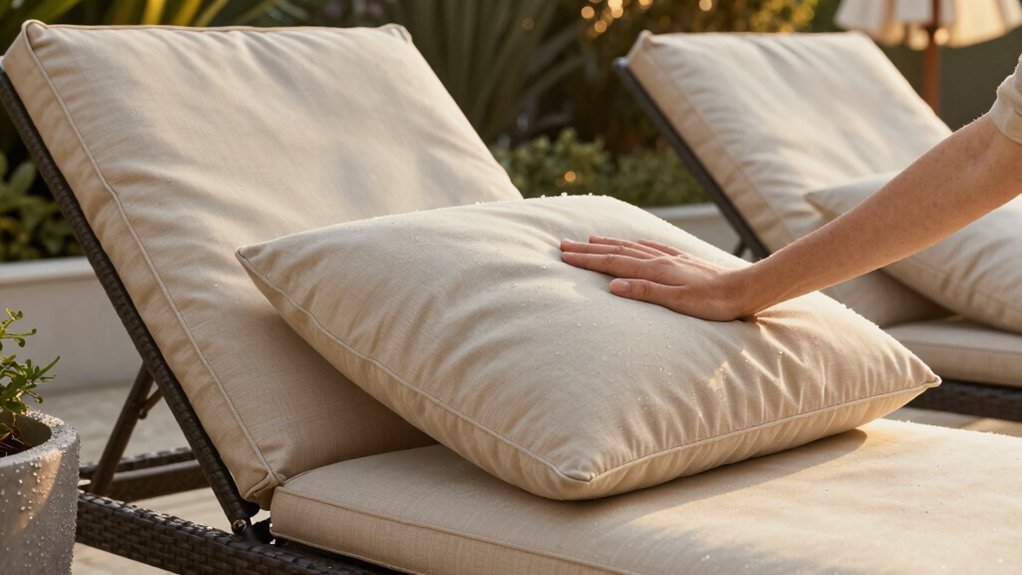
The hidden defenders of your outdoor cushions, antimicrobial treatments play a essential role in maintaining structural integrity against nature’s persistent threats. These specialized formulations inhibit fungal growth during crucial drying periods, preventing the moisture damage that typically loosens foam and fabric fibers over time.
When integrated into open-cell or QuickDry foams—or applied directly to fabric surfaces—these treatments actively suppress mold and mildew that would otherwise compromise cushion rigidity. The protection works at a microscopic level, deterring microbial breakdown that typically weakens seams and structural components.
You’ll notice fewer odors too—a benefit that extends beyond comfort to signal your cushions aren’t experiencing material fatigue. This consistent protection ensures your outdoor seating maintains resilience through humidity fluctuations and seasonal changes.
Density Matters: The Connection Between Firmness and Shape Retention
When selecting outdoor cushions, you’ll find that higher-density foam cores provide superior shape retention by resisting the permanent compression that occurs with repeated use.
The density-softness spectrum isn’t a simple trade-off, as quality cushions offer both comfort and resilience through specialized foam compression ratings that balance support with softness.
Your cushions won’t sag or flatten prematurely if you choose materials with compression ratings appropriate for your expected usage patterns, typically ranging from 1.8 to 2.5 pounds per cubic foot for outdoor applications.
Foam Compression Rating
How quickly will your outdoor cushions flatten under regular use? The answer lies in their compression rating, not just how firm they feel when new. While you might prefer a softer seat, what truly determines longevity is the foam’s density rating—its ability to resist permanent deformation over time.
High-density foams paired with Dacron wraps provide the ideal combination: resilient cores that maintain their shape while edges remain cushioned. For outdoor settings, quick-dry open-cell foams offer additional benefits, preventing moisture from breaking down the material’s internal structure during weather exposure.
When shopping for replacement cushions, look beyond initial comfort. Memory foams or high-density polyurethane cores with compression ratings of 2.0 or higher will maintain their contours through seasons of use, delivering better value despite higher upfront costs.
Density vs. Softness Spectrum
Many shoppers confuse softness with quality when selecting outdoor cushions, but density—not plushness—actually determines how well your seating will maintain its shape. While a cushion might feel wonderfully soft initially, only high-density foam (28-40+ pounds per cubic foot) will resist compression and maintain its geometry over time.
You’ll find the most durable outdoor cushions balance comfort with proper structural support. Their firmer density prevents the permanent indentations and sagging that occur when lower-density foams break down under repeated use.
If you prefer a softer feel, look for high-density cores wrapped with Dacron, which adds plushness without sacrificing longevity. Remember that proper thickness (4-5.5 inches finished) works with density to ensure your cushions retain their shape through seasons of outdoor enjoyment.
Manufacturing Methods That Prevent Compression Over Time
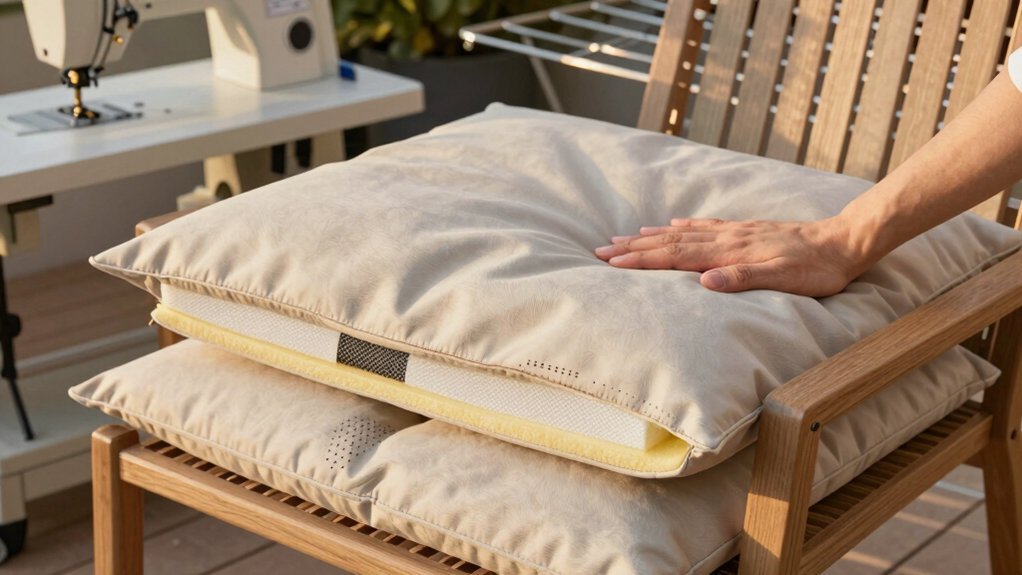
Why do some outdoor cushions maintain their shape after years of use while others quickly flatten into uncomfortable pancakes? The secret lies in specialized manufacturing techniques designed to combat the elements and daily use.
Premium cushions often feature Dacron wrapping around high-density foam cores (1.8–2.2 lb/ft³ or higher), creating a pressure-distributing outer layer that maintains comfort while protecting the core. Structural reinforcements like boxed edges and double-stitching prevent the dreaded edge collapse that ruins appearance and comfort.
The difference between luxury and disappointment often comes down to hidden details like Dacron-wrapped foam and reinforced edges.
- You’ll never again feel the frustration of sinking into a collapsed cushion after investing in quality
- Your guests will admire your patio’s pristine appearance years after purchase
- You can relax knowing your outdoor living space remains comfortable through seasons of use
Moisture management through venting channels and quick-dry foams with antimicrobial additives prevents the mildew that leads to premature deterioration.
Weather-Resistant Fabrics and Their Role in Maintaining Form
When selecting outdoor cushions, the fabric covering them plays just as essential a role in maintaining shape as the internal materials. Solution-dyed acrylic fabrics resist fading and color transfer, preserving the cushion’s aesthetic while protecting its structure.
| Fabric Feature | Benefit to Shape Retention |
|---|---|
| UV Protection | Prevents deterioration that leads to sagging |
| Water Repellency | Minimizes moisture absorption that causes warping |
| Tight Weave | Reduces stretching under weight and use |
You’ll find that removable covers provide practical advantages too—they allow for regular cleaning and quick replacement of worn surfaces without disturbing the cushion core. Mildew-resistant treatments ensure your cushions dry quickly after exposure to rain, preventing the weight of trapped moisture from permanently deforming your outdoor seating.
Proper Cushion Construction: Stitching, Seams, and Support
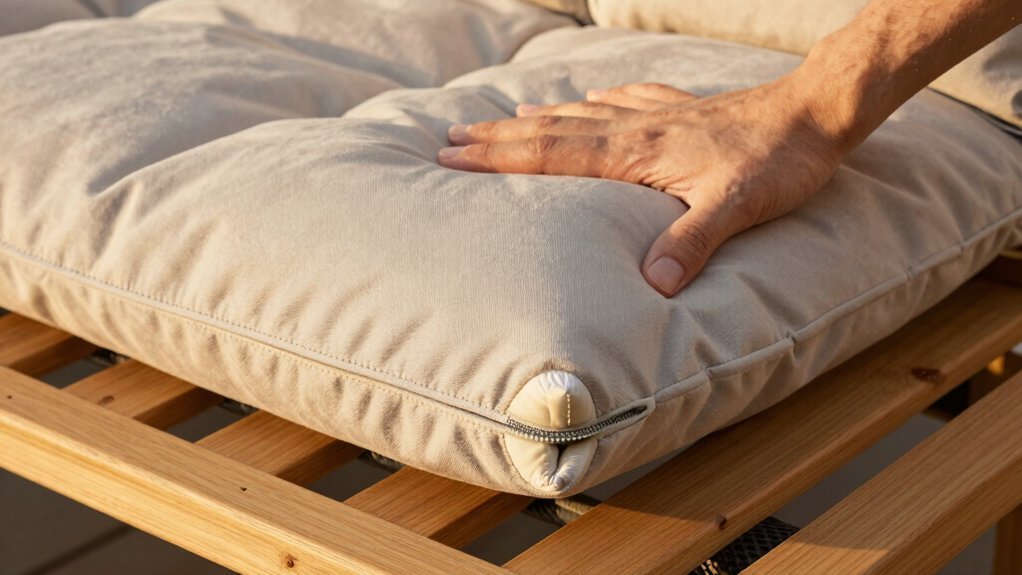
The structural integrity of outdoor cushions hinges considerably on how they’re constructed and assembled. When examining quality cushions, you’ll notice reinforced seams and durable stitching that resist stretching even after years of use. The best outdoor cushions incorporate boxed edges with tight weave density, providing consistent boundary support that maintains shape.
High-quality cushions feature:
- Hidden zippers and secure attachment points that prevent embarrassing slippage when guests sit down
- Dense foam cores wrapped in materials like Dacron that eliminate that cheap “hollow” feeling lesser cushions develop
- Strategic venting channels and double-stitching that ensure your investment won’t collapse after the first rainstorm
These construction elements work together to maintain contour and form through countless cleaning cycles and seasonal exposures.
Balancing Plushness and Resilience for Long-Term Performance
Finding the perfect balance between comfort and durability represents perhaps the most critical challenge for outdoor cushion manufacturers. The solution lies in strategic layering—high-density foam cores provide the essential structural integrity that prevents compression and sagging over years of use.
When wrapped in Dacron, these cores gain a plush, inviting feel while maintaining their shape. You’ll want cushions at least 4 inches thick (preferably 5.5+ inches) to resist deformation and edge bulging. Quick-dry, open-cell foam constructions add practical value by rapidly draining moisture that would otherwise promote mold growth and cushion deformation.
For optimal performance, ensure your cushions fit precisely on your furniture—proper measurements prevent gaps that stress materials and compromise shape retention. This delicate balance between plushness and resilience is what distinguishes quality outdoor cushions that maintain their form season after season.
Frequently Asked Questions
What’s the Average Lifespan of Outdoor Cushions?
Quality outdoor cushions typically last 3-5 years, but you’ll get 7-10 years from premium options if you’re diligent about maintenance and storage during off-seasons.
What Is the Best Filling for Cushions to Keep Shape?
You’ll want high-density foam (5+ lbs per cubic foot) wrapped in Dacron. It resists compression, maintains support, and rebounds effectively after use even in outdoor conditions.
What Are the Longest Lasting Outdoor Cushions?
You’ll find the longest lasting outdoor cushions contain high-density foam cores (2.0-2.8 lb/ft³), QuickDry technology, solution-dyed acrylic fabrics like Sunbrella, and marine-grade construction with reinforced stitching.
How to Prevent Outdoor Cushions From Molding?
You’ll prevent mold by choosing quick-dry foams with antimicrobial agents, using water-resistant fabrics like Sunbrella, ensuring good drainage, cleaning regularly, and storing cushions in dry locations when not used.

Leave a Reply