
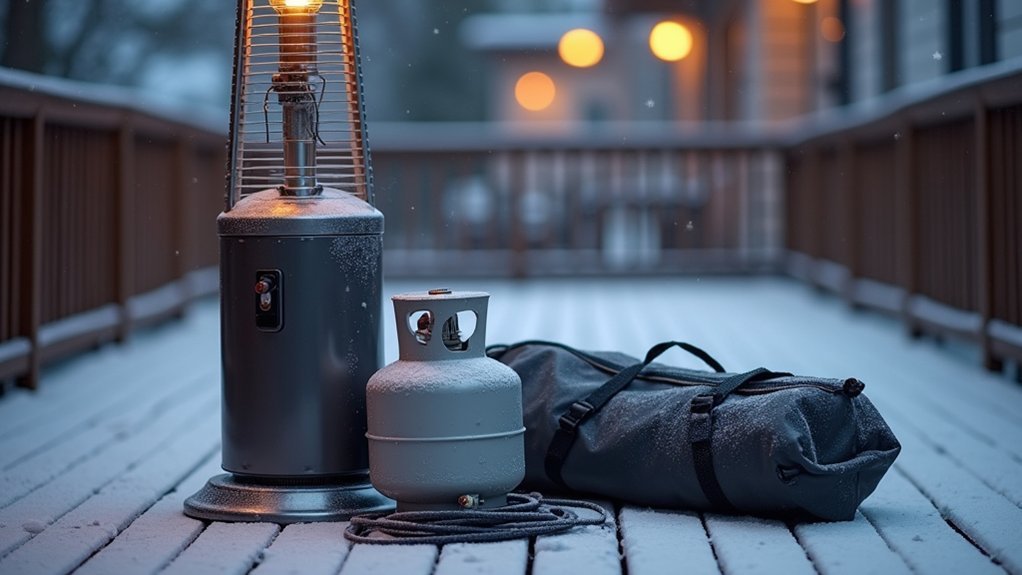
For proper winter storage of patio heaters, thoroughly clean all components, disconnect fuel lines, and remove the reflector shield. Apply a thin layer of stainless steel cleaner to prevent corrosion, and cover with a weather-resistant cover if stored outdoors. Elevate the heater to prevent ground moisture contact, inspect for damage, and lubricate wheels. Address rust spots immediately, and create a spring startup checklist. These simple steps will ensure your heater stays in prime condition for many seasons.
Thoroughly Clean All Components Before Storage
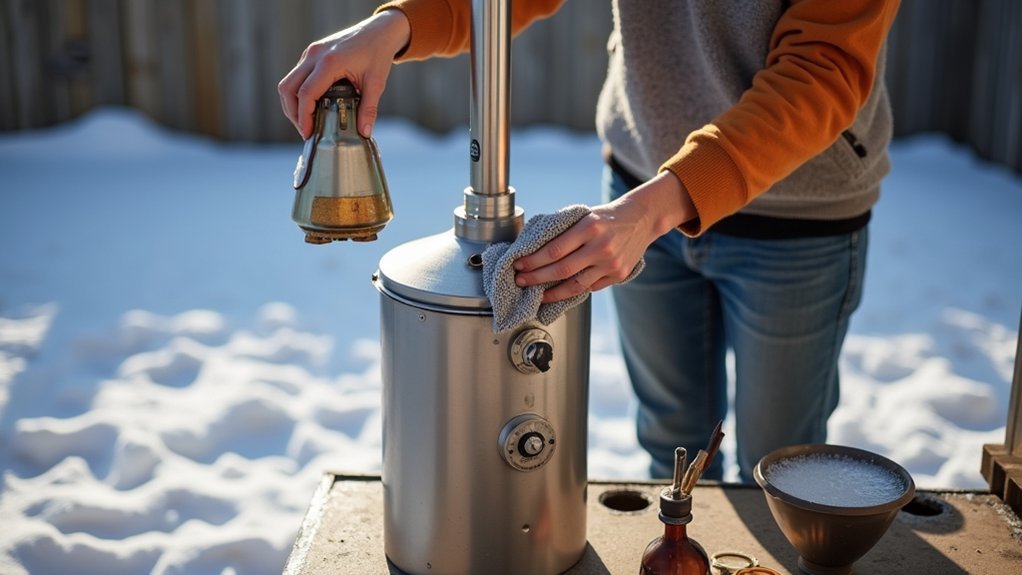
Cleanliness stands as the foundation of proper patio heater maintenance before winter storage. Start by wiping down the exterior to remove accumulated dust and soot, paying special attention to the burner area where residue can build up.
For heaters with stainless steel finishes, use a specialized stainless steel cleaner with a soft rag. Avoid abrasive scrubbers that can damage polished surfaces.
Next, check the pilot tube, thermocouple, and burner orifice for corrosion or blockages that might obstruct flame paths. Clear burner ports with a pipe cleaner or compressed air to remove any nests or debris.
Before finalizing storage, ensure you’ve thoroughly dried all gas control valves and ports. Removing moisture prevents corrosion during the off-season and ensures your heater will function properly when spring arrives.
Disconnect and Secure Fuel Lines Properly
While a clean heater is ready for storage, the fuel system requires specific attention to prevent hazards. Always turn off the propane supply completely and disconnect the gas line from both the tank and the top burner connection before storing your patio heater.
Carefully inspect the fuel line for any signs of kinks, wear, leaks, or corrosion. Replace damaged sections immediately to prevent dangerous gas leaks during storage. Before disconnecting, apply gas leak detecting spray to verify all connections, regulator, and hose fittings are secure.
Store your heater with the propane tank fully disconnected in a cool, well-ventilated area away from heat sources or ignition points. When reconnecting next season, remember to purge air from the system by opening the tank valve while depressing the control knob.
Remove and Store the Reflector Shield Separately
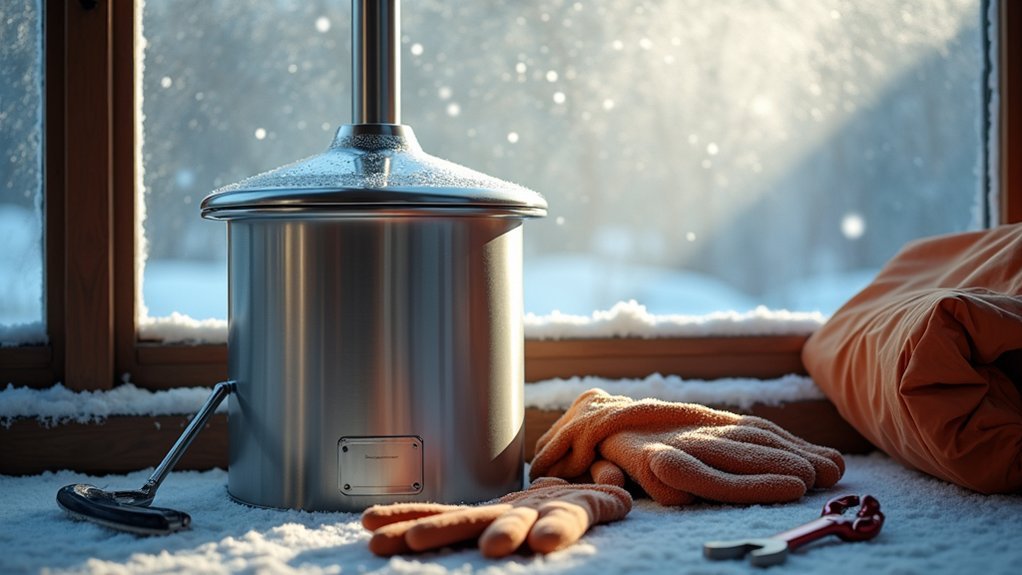
The reflector shield, often the most awkward component of your patio heater, should be removed and stored separately before winter storage. Unscrew the wing nuts securing the reflector and carefully lift it off. This simple step reduces your heater’s footprint to just 46 cm, making it much easier to store in tight spaces.
| Reflector Shield | Storage Guidelines |
|---|---|
| Removal Process | Unscrew wing nuts and lift off |
| Storage Location | Dry, sheltered area |
| Protection | Keep away from moisture to prevent corrosion |
| Spring Setup | Reinstall and test functionality |
Store the reflector in a dry location to prevent corrosion while keeping your covered heater in its compact form. When spring arrives, you’ll appreciate having preserved both components properly—just reattach the reflector and perform a quick function check before your first use.
Protect Metal Surfaces From Moisture and Corrosion
Protect your patio heater’s metal surfaces by applying a thin layer of stainless steel cleaner or petroleum jelly after thorough cleaning and drying.
You’ll want to invest in a weather-resistant cover that creates a protective barrier against moisture while storing your heater in a sheltered location away from wind and precipitation.
Remember to wipe brushed stainless steel in the direction of the grain to prevent micro-scratches that can trap moisture and accelerate corrosion.
Rust Prevention Methods
How effectively you protect your patio heater from rust during winter storage can notably extend its lifespan. Metal components are particularly vulnerable to moisture exposure during the cold months when temperature fluctuations increase condensation risk.
To safeguard your investment:
- Store your heater in a dry indoor location or sheltered area protected from wind and rain
- Apply a dedicated stainless steel cleaner or protective coating to create a moisture barrier
- Remove the reflector and other detachable metal parts to store separately
- Use a full-length, weather-resistant cover when outdoor storage is unavoidable
- Inspect for existing rust spots and treat immediately with rust remover and touch-up paint
These preventative measures help maintain your heater’s appearance and functionality, saving you replacement costs in the long run.
Weather Barrier Solutions
Why do many patio heaters fail prematurely? The culprit is almost always moisture infiltration leading to corrosion. Creating effective weather barriers is your best defense against this silent destroyer.
| Barrier Method | Application | Benefit |
|---|---|---|
| Weather-resistant covers | Wrap entire unit when not in use | Shields metal from precipitation and humidity |
| Elevation solutions | Place on blocks or dedicated stands | Prevents ground moisture contact |
| Indoor storage | Relocate to garage or shed | Eliminates exposure to elements |
Before covering your heater, remove the reflector and other vulnerable metal components. Always thoroughly dry all surfaces to prevent trapping moisture inside the cover. For seasonal storage, consider disassembling critical parts and storing them separately in climate-controlled spaces. This extra effort will dramatically extend your heater’s lifespan.
Inspect for Damage and Plan Winter Repairs
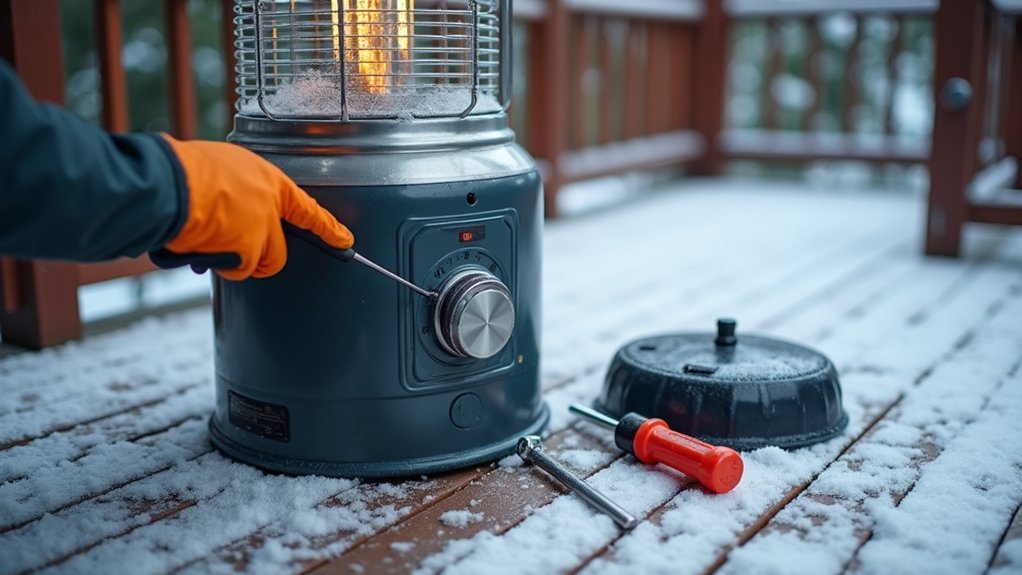
Before storing your patio heater, inspect it thoroughly for rust spots that can spread during winter months, applying anti-corrosion spray to affected areas.
Check for cracked heat shields, reflectors, and base components which you’ll want to order replacements for while parts are still available.
Evaluate your burner assembly by examining the pilot light, fuel lines, and regulator connections for wear that could worsen during storage.
Rust Prevention Tactics
Corrosion poses a significant threat to your patio heater during winter storage, making thorough inspection a critical maintenance step. Check all metal surfaces carefully, particularly burners, supports, and exterior panels where moisture can accumulate.
For effective rust prevention:
- Treat minor rust spots with non-abrasive cleaners before applying protective coating or touch-up paint designed for outdoor metals
- Replace severely corroded components like brackets and bolts rather than attempting repairs on compromised parts
- Remove exposed steel components or use protective covers to minimize moisture contact
- Apply a thin coat of rust-inhibiting oil to metal connections and moving parts
- Consider professional inspection if you discover extensive rust on gas lines or burner assemblies
Addressing corrosion before winter storage extends your heater’s lifespan and ensures it’s ready for next season.
Cracked Component Checks
Rust isn’t the only threat to your patio heater during winter storage; checking for cracked components is equally important to preserve functionality. Inspect your heater’s visible parts including burner housing, reflector, and gas controls for damage that could worsen during storage.
Examine propane hoses and regulators for wear, kinks, or corrosion, replacing damaged parts immediately to prevent dangerous gas leaks. Don’t overlook the pilot tube and thermocouple—corrosion or cracks here can lead to frustrating ignition problems come spring.
| Component | What to Check | Action Needed |
|---|---|---|
| Burner Housing | Cracks, warping | Replace if damaged |
| Propane Hose | Wear, kinks | Replace worn hoses |
| Thermocouple | Corrosion, bends | Clean or replace |
| Ceramic Parts | Hairline fractures | Plan winter repairs |
| Gas Valves | Seal integrity | Professional inspection |
Burner Assembly Evaluation
The heart of your patio heater—its burner assembly—demands thorough evaluation before winter hibernation. Examine the entire assembly for corrosion, cracks, or bent components that could compromise next season’s performance.
- Clear burner ports of dust and spider nests using a non-abrasive tool to restore proper gas flow
- Check that the thermocouple and pilot assembly align correctly with the burner to prevent startup issues
- Inspect the emitter screen and orifice for debris, removing blockages with a soft brush or compressed air
- Document any damaged parts you discover during inspection
- Contact your local dealer about replacement parts during the off-season, ensuring you’ll have compatible components ready for spring reassembly
This pre-storage assessment prevents frustrating startup failures and ensures your heater will be ready when outdoor entertaining resumes.
Choose the Ideal Indoor Storage Location
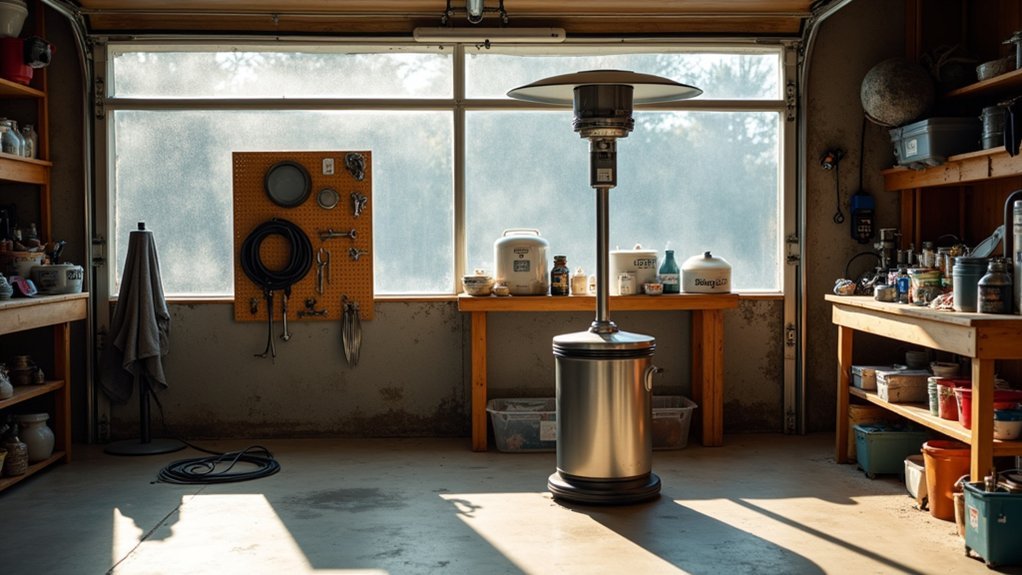
Where you store your patio heater during winter months can substantially impact its longevity and performance. Select a cool, dry, and well-ventilated indoor space away from direct sunlight and heat sources. Ensure there’s enough room to accommodate your heater’s dimensions, including any detachable parts, with space to rotate or adjust as needed.
The storage area should have a stable, flat floor surface to prevent tipping hazards. Avoid moisture-prone locations that could cause rust and corrosion—consider using a climate-controlled area or dehumidifier if necessary.
Always store your propane tank separately from the heater. Keep it upright in a well-ventilated area away from your living spaces. This separation isn’t just for storage convenience—it’s a crucial safety measure that protects both your equipment and your home.
Properly Cover Your Patio Heater If Stored Outdoors
While indoor storage is ideal, sometimes it’s simply not an option due to space constraints. If you must store your patio heater outdoors during winter, proper coverage is essential to prevent damage and extend your heater’s lifespan.
- Invest in a weather-resistant cover specifically designed for your heater model to protect against wind, rain, and dust
- Remove the reflector first if your model’s instructions recommend it for winter storage
- Elevate your heater on a stable platform to prevent ground moisture contact and rust development
- Disconnect and turn off the propane tank completely, storing it upright in a cool, ventilated area away from the heater
- Position your covered heater in a sheltered location and check periodically for cover damage or moisture buildup
Maintain Wheels and Moving Parts for Next Season
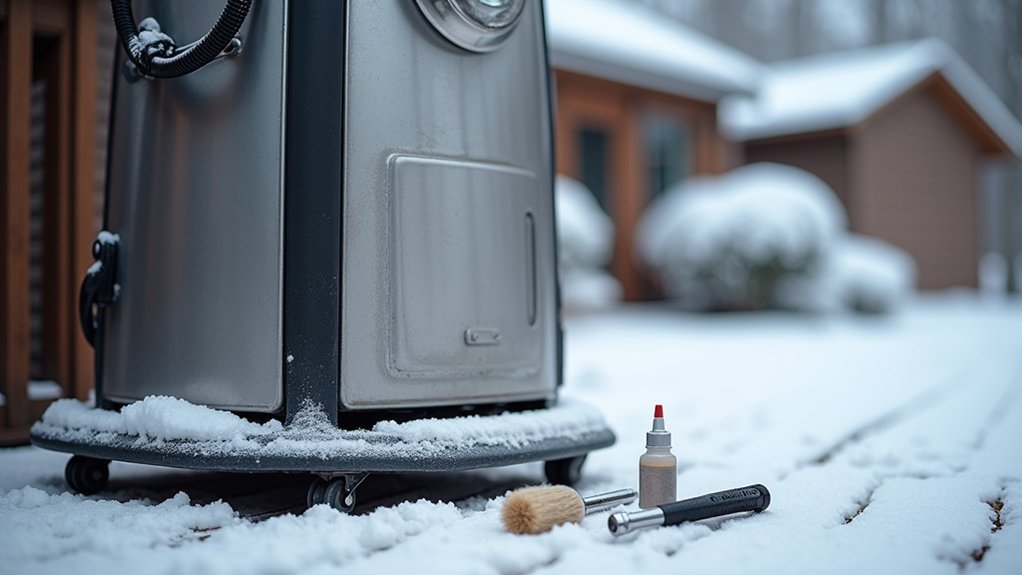
Properly functioning wheels and moving parts are essential for safe, convenient patio heater operation when spring arrives. Lubricate all wheel joints annually and check for wear and loose bolts to ensure smooth movement when you’re ready to use your heater again.
Inspect your caster wheels carefully for cracks or flat spots, replacing any damaged components before the next season. During storage, elevate your heater off the ground to prevent rust formation and reduce moisture exposure to critical moving parts.
After winter storage, verify that wheels rotate freely without debris lodged in axles or housings. If you’ll move your heater frequently, consider using a dolly or installing locking casters to prevent it from rolling accidentally. These simple maintenance steps will extend your heater’s lifespan and ensure it’s ready when warmer weather returns.
Address Rust Spots Before They Spread
You’ll need to carefully inspect your patio heater for rust spots before storage, especially in areas where moisture collects like brackets and feet. Treat any surface rust immediately with a soft brush and apply a rust-inhibiting primer to prevent further corrosion during the winter months. For stainless steel heaters, use specialized cleaners to remove watermarks and corrosion traces before covering and storing in a dry location.
Spot Treatment Techniques
Why wait until rust has compromised your patio heater’s integrity when early intervention can save you time and money? For stainless steel models, prompt treatment prevents rust from spreading and maintains your heater’s appearance and functionality.
- Remove rust spots on stainless steel with appropriate cleaner, avoiding scourers on polished surfaces
- Sand peppering or pitting rust with fine-grit paper before applying a protective coating
- Inspect and treat corrosion under moisture traps using a mild abrasive brush
- After treatment, wipe down thoroughly with a clean, dry cloth
- Store in a sheltered location and perform periodic checks during winter to catch new rust early
Remember to use sealants designed specifically for outdoor metal applications, ensuring your heater remains protected throughout its storage period.
Prevention With Primers
Rust spots that go untreated during winter storage can rapidly deteriorate into serious structural damage by spring.
Before storing your patio heater, apply a rust-preventive primer to any exposed metal areas to halt oxidation in its tracks.
Start by lightly sanding rusted spots until smooth, then wipe away all dust and debris.
Choose a primer specifically formulated for metal that’s compatible with your heater’s finish—whether it’s stainless or coated steel—to ensure proper adhesion.
Follow the manufacturer’s curing instructions completely before applying any topcoat or moving the unit to storage.
After transporting your heater to its winter home, perform one final inspection and touch up any new primer-less spots that might’ve appeared during the move.
This extra step prevents rust from spreading during those long off-season months.
Create a Spring Startup Checklist for Easy Recommissioning
After winter hibernation, your patio heater needs a systematic approach to return to service safely and efficiently. When spring arrives, follow these steps to ensure your heater is ready for those cool evening gatherings:
- Inspect propane connections by applying soapy water to the tank valve and regulator to detect leaks, and check the hose for kinks or corrosion
- Verify the pilot flame and thermocouple alignment to ensure proper ignition and continuous operation
- Clean exterior surfaces, burners, and orifice thoroughly, removing soot buildup and drying all components before use
- Reconnect gas lines, test for leaks, and purge air from the system by opening the propane tank while depressing the control knob
- Conduct a comprehensive parts inspection including hose, cylinder, reflector, and ignition components—schedule professional service if you notice wear or damage
Frequently Asked Questions
How Do You Store Patio Heaters?
Disconnect propane tank and store separately. Remove reflector if possible. Use a weather-resistant cover. Keep heaters indoors on elevated surfaces. Before reusing, check all components and connections.
Is It Okay to Leave Patio Furniture Out in the Winter?
It’s not ideal to leave patio furniture out in winter. You’ll extend its life by storing it indoors, using covers, and removing cushions to prevent rust, warping and moisture damage.
How to Maintain a Patio Heater?
Check your pilot tube, thermocouple, and orifice regularly. Inspect LPG hoses for wear and leaks. Clear blocked burner ports with non-abrasive tools. Purge air when reconnecting gas lines.
Can Storage Heaters Be Left on All the Time?
No, you shouldn’t leave storage heaters on continuously. When not in use, power them off and disconnect from gas or electrical supply to ensure safety and extend their lifespan.



Leave a Reply