
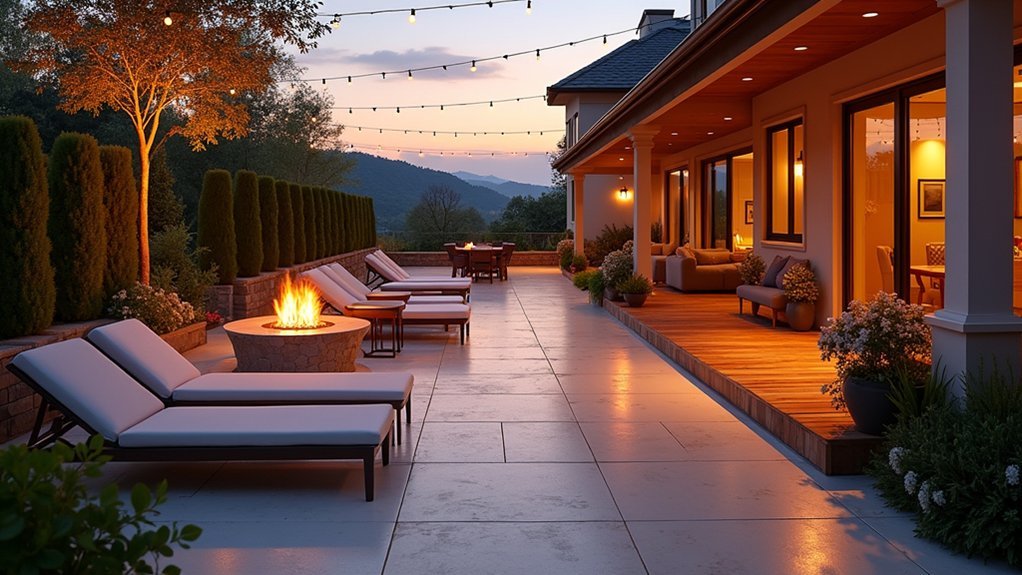
To heat expansive patios effectively, map activity zones where guests linger and prioritize those areas. Create primary zones with higher BTU outputs (40,000-70,000) near seating clusters and secondary zones for walkways. Install perimeter heating to define boundaries while preserving open central areas. Position fire features as social anchors, and deploy ceiling-mounted heaters in covered sections. Use thermal barriers like screens or plantings between zones. Implement multi-zone controls to activate only occupied areas. These strategic approaches will transform your cold patio into distinct comfort zones.
Map Your Patio’s Activity Hubs for Heat Allocation
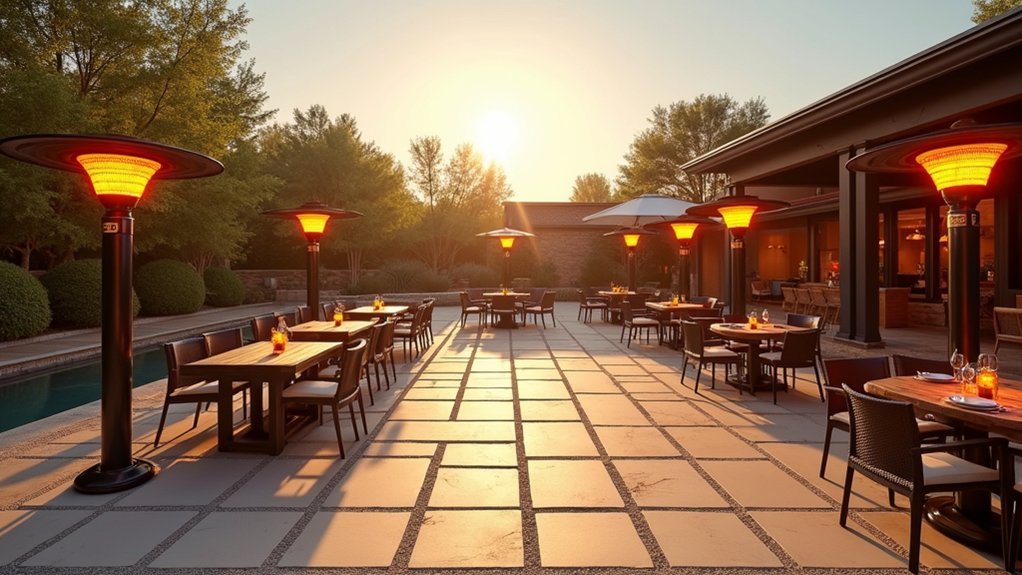
How effectively you position your heating elements can make the difference between a cozy winter gathering and guests huddling for warmth. Start by identifying where people naturally congregate on your patio—seating clusters, dining areas, and social zones deserve priority heating.
For spaces where guests linger, install higher BTU options like gas fire pits (30,000–150,000 BTU) or commercial-grade infrared heaters (22,000–60,000 BTU). Position these heat sources to warm seated guests within a 6–10 foot radius without overheating walkways.
Create distinct climate zones with separate controls—perhaps wall-mounted infrared panels for the conversation area and a statement fire pit for the dining zone. Don’t forget wind protection; pergolas, curtains, or screened enclosures dramatically improve heat retention in your newly mapped comfort zones.
Define Primary and Secondary Warming Zones
With your patio heating zones mapped, it’s time to establish a clear hierarchy within your outdoor heating plan.
Designate primary warming zones in areas closest to seating arrangements where people naturally gather. These zones require powerful heat sources like gas fireplaces (10,000-70,000 BTU) or fire features that provide radiant heat with minimal wind interference.
Create secondary warming zones for peripheral seating and walkways using lower-output heaters or ceiling-mounted infrared units (22,000-60,000 BTU) for consistent ambient warmth. These areas might experience occasional use but still need comfortable temperatures.
Implement zone-specific controls to optimize energy consumption—maximize output where guests congregate while reducing heat in unused areas. For secondary zones susceptible to heat loss, add wind protection through pergolas, curtains, or strategic layouts that redirect and contain warmth.
Create Thermal Barriers Between Outdoor Sections
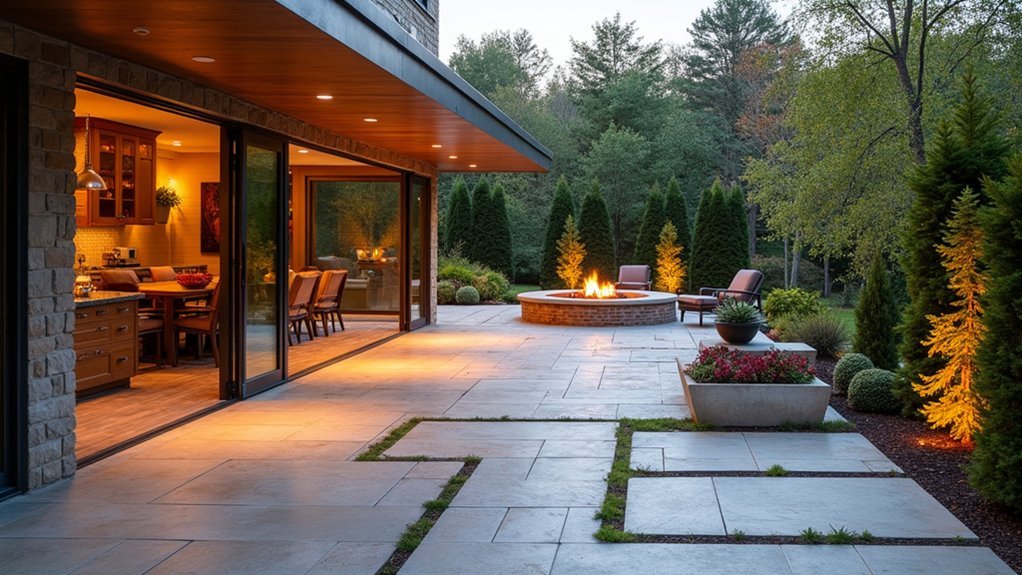
Create effective thermal boundaries between your patio zones by installing retractable wind screens, privacy partitions, or flexible plexiglass dividers to trap heated air within designated areas. You’ll maximize heating efficiency when you position natural elements like potted evergreens or bamboo plantings strategically along zone perimeters to block crosswinds while maintaining your outdoor aesthetic. These physical barriers work with your heating system to maintain distinct temperature zones, preventing valuable warmth from escaping into unused sections of your expansive patio.
Strategic Buffer Placement
Why let precious heat escape when strategic buffers can dramatically improve your patio’s thermal efficiency? By positioning elements that create distinct microclimates, you’ll maintain comfortable temperatures while reducing energy consumption across your outdoor living space.
- Install decorative screens or planter boxes between dining and lounge areas to prevent cold air migration while adding aesthetic appeal
- Position heat sources behind intervening elements like plantings or partial walls that absorb and gradually release thermal energy
- Use retractable windbreaks or fabric curtains as flexible buffers that can be adjusted based on weather conditions and occupancy patterns
These strategic placements create thermal barriers that prevent drafts from compromising comfort zones, ensuring your guests enjoy consistent warmth regardless of which part of your expansive patio they’re using.
Natural Shield Integration
Nearly every outdoor heating challenge stems from inadequate protection against the elements. When designing your expansive patio, incorporate architectural features like pergolas, privacy screens, and strategic plantings to create effective thermal barriers that minimize heat loss.
Position your heat sources behind these natural windbreaks to dramatically improve efficiency. Your radiant heaters—whether electric, gas, or fire pits—will deliver consistent warmth to seated areas while consuming less energy. For maximum flexibility, consider adding retractable enclosures or curtains adjacent to heating zones, which trap heat during cooler periods but can be opened when temperatures rise.
This approach requires thoughtful planning: analyze your site layout and identify prevailing wind patterns before finalizing placement. By aligning your thermal barriers with strategic heating zones, you’ll extend your outdoor season without wastefully heating unoccupied spaces.
Calculate BTU Requirements for Each Patio Zone
Determining precisely how much heating power your patio zones require stands as the cornerstone of an effective outdoor heating strategy. You’ll need to measure each zone’s dimensions and factor in the desired temperature increase for comfortable outdoor enjoyment. Don’t overlook environmental considerations that substantially impact heating efficiency.
- Measure and multiply – Calculate square footage of each zone, then apply 25-35 BTUs per square foot for basic heating needs (higher for exposed areas, lower for sheltered spaces)
- Account for heat loss factors – Add 15-25% more BTUs for areas with high ceilings, 30-40% for windy locations, and reduce by 10-20% for enclosed spaces
- Match heater types to zones – Select radiant heaters for targeted comfort in dining areas and higher-output systems for gathering spaces
Deploy Ceiling-Mounted Heaters for Covered Areas
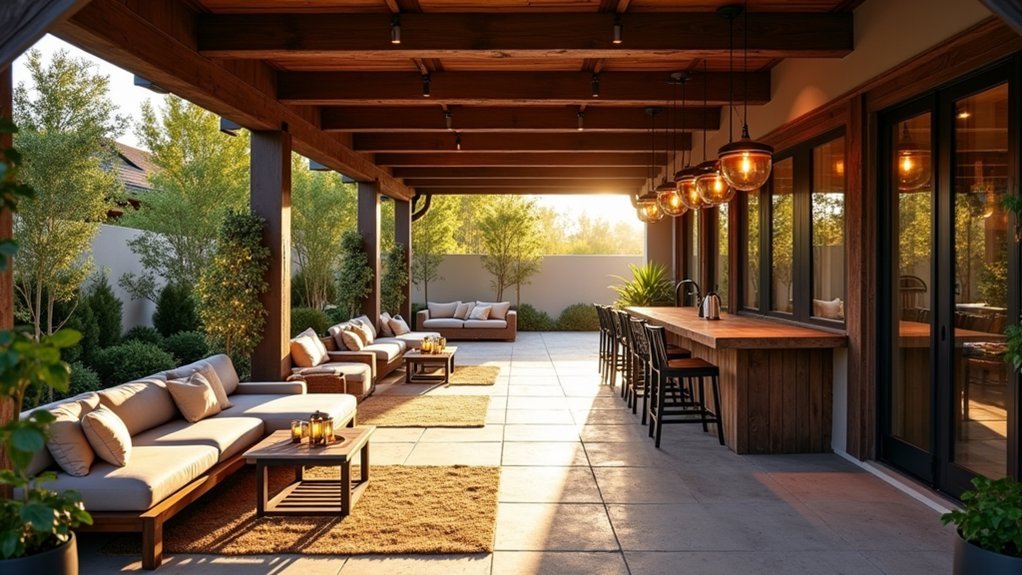
When configuring your covered outdoor areas, ceiling-mounted heaters deliver exceptional performance while preserving valuable floor and wall space. These unobtrusive units provide targeted warmth exactly where you need it—directly above seating or dining zones—without creating obstacles for guests to navigate around.
Install these heaters on ceilings or high walls in pergolas, covered patios, or outdoor rooms to create comfortable temperature zones without sacrificing your design aesthetic. They’ll eliminate tripping hazards associated with freestanding units while directing heat precisely where it’s needed.
As part of your comprehensive heating strategy, ceiling-mounted options work seamlessly with other heater types to ensure complete comfort. You’ll appreciate their low maintenance requirements and how easily they integrate with existing lighting or architectural elements, creating an efficient, space-saving solution for your covered outdoor areas.
Integrate Portable Heat Sources for Flexible Zoning
Strategic placement of portable heat sources transforms your expansive patio into a versatile, year-round entertainment space. Freestanding patio heaters delivering up to 40,000 BTUs can create comfort zones with a 20-25 foot diameter, while gas fire pits serve as both visual focal points and functional warmth sources that you can reposition as needed.
- Combine propane-powered options for immediate high-heat areas with electric infrared heaters for energy-efficient zones requiring sustained warmth
- Create modular heating arrangements that adapt to changing guest numbers without sacrificing valuable floor space
- Use infrared technology to heat people and objects directly rather than wasting energy warming outdoor air, especially effective in wind-protected areas
Install Perimeter Heating for Edge Protection
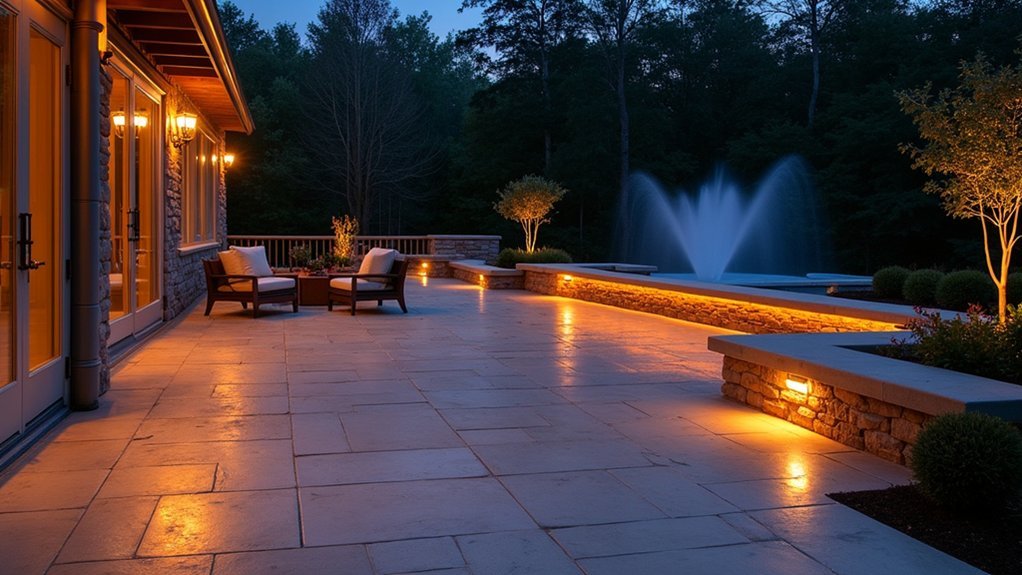
Beyond portable heating solutions, perimeter heating stands as a sophisticated approach to outdoor comfort management. By targeting edge zones first, you’ll protect guests along seating borders where drafts and exposure are greatest.
Install wall-mounted or ceiling-mounted infrared heaters along your patio’s boundaries to deliver direct warmth without circulating cold outside air. This strategic placement creates a warmer microclimate around outer edges, reducing overall heat loss while using less energy for the same comfort level.
Radiant edge systems effectively extend your patio’s usable time by warming outer aisles, walkways, and pergola boundaries without conditioning the entire space. For maximum effectiveness, coordinate your perimeter heating with fire pits or patio heaters to maintain comfortable edge zones while preserving open central areas.
Position Fire Features as Zone Anchors
Fire features serve as natural gathering points in any outdoor space, but how effectively are you using them to structure your patio’s heating strategy? By positioning gas fire pits or outdoor fireplaces as zone anchors, you’ll create defined gathering areas that radiate warmth across adjacent seating. Unlike wood-burning options, gas features offer instant heat with consistent output.
Transform your patio into a comfort zone by strategically anchoring gas fire features at the heart of your outdoor living space.
- Center your fire feature within conversation areas, ensuring proper clearance while maximizing social interaction and heat distribution
- Create layered warmth zones by combining your fire anchor with supplemental heating sources like infrared heaters for targeted comfort
- Design seating arrangements around the fire feature that encourage face-to-face interaction while allowing everyone to benefit from the radiant heat
Establish Heat Control Systems for Multi-Zone Management
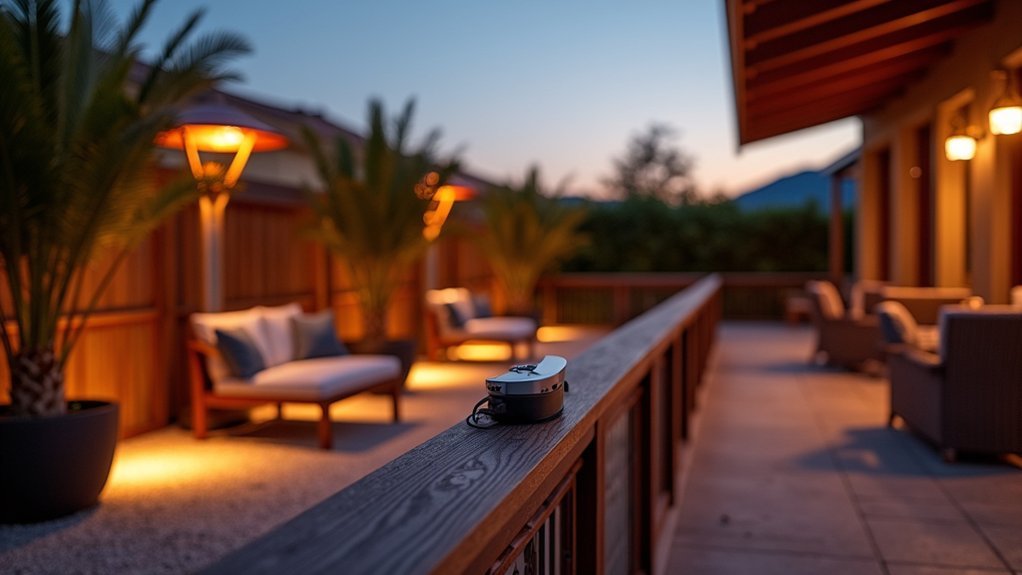
When managing multiple heating zones across an expansive patio, intelligent control systems become the backbone of your outdoor comfort strategy. Install programmable thermostats that coordinate between zones, allowing you to schedule gradual pre-heating before guests arrive and automatic setbacks when areas empty.
You’ll maximize efficiency by programming your controls to activate only the zones currently in use. Pair each zone’s control system with its heating requirements—radiant heaters in high-traffic areas can run on motion sensors, while fire features in gathering spaces might benefit from manual controls for ambiance adjustments.
Consider smart controls that respond to both occupancy patterns and weather conditions. When a sheltered zone maintains heat effectively, your system can reduce output there while increasing warmth in windier, more exposed sections that experience greater heat loss.
Layer Complementary Heating Methods Within Zones
Maximize your outdoor comfort by layering multiple heating technologies that work in harmony rather than relying on a single heat source. You’ll create a more resilient and efficient system when you combine overhead radiant heaters for ambient warmth with targeted infrared options that heat people and objects directly. This strategic pairing allows you to distribute warmth effectively throughout your patio zones while minimizing energy waste in areas with fluctuating occupancy.
Combining Different Heat Sources
Creating a comfortable outdoor living experience requires strategic layering of complementary heating methods throughout your patio zones. Combine ceiling-mounted infrared heaters in high-use seating areas with fire pits for ambient warmth in surrounding spaces. This zoned approach maximizes comfort while optimizing fuel consumption.
- Pair freestanding propane heaters (covering 20-25 feet per unit) with wall-mounted options to maintain open floor space while ensuring consistent coverage across larger areas.
- Layer different BTU outputs strategically—use table-top or overhead infrared heaters (22,000-60,000 BTU) for targeted comfort zones, while incorporating gas fire pits (30,000-150,000 BTU) as social focal points.
- Match fuel types to specific zones—electric infrared for covered, low-cost operation; propane for portable, high-output needs; and gas fire features for consistent ambient heating across defined areas.
Strategic Warmth Distribution
How effectively you distribute warmth across your expansive patio can transform seasonal outdoor spaces into year-round living areas. By layering complementary heating methods within zones, you’ll create comfort that extends throughout the entire area.
Combine radiant electric heaters with gas fire pits to cover larger areas efficiently. In covered portions, install infrared patio heaters that target people and objects directly, minimizing energy waste in open-air sections.
Allocate high-output sources (40,000-70,000 BTU) to primary seating areas while using lower BTU options in transitional spaces. Ceiling or wall-mounted units save valuable floor space and allow precise directional heating.
For maximum efficiency, pair your heat sources with shade curtains or partial enclosures to retain warmth and create distinct comfort zones that work together cohesively.
Frequently Asked Questions
What Is the Most Efficient Way to Heat a Large Space?
You’ll heat large spaces most efficiently by using zoned heating with infrared patio heaters targeting only occupied areas and combining high-output core heating with secondary peripheral heat sources.
What Is the Most Efficient Way to Heat a Patio?
Use infrared patio heaters for targeted warmth. You’ll get the most efficiency by combining zone-specific heating with wind barriers like pergolas, focusing heat directly on people rather than warming air.
What Is the Best Heating Option for a Sunroom?
You’ll want ceiling or wall-mounted infrared heaters for your sunroom. They’re space-efficient, directly warm people rather than air, and can be strategically zoned to target seating areas.
How to Heat an Outdoor Patio in Winter?
Create zoned heating with propane heaters for large areas and infrared options under covered sections. You’ll maximize comfort by combining fire pits with mounted electric heaters for targeted warmth.

Leave a Reply