
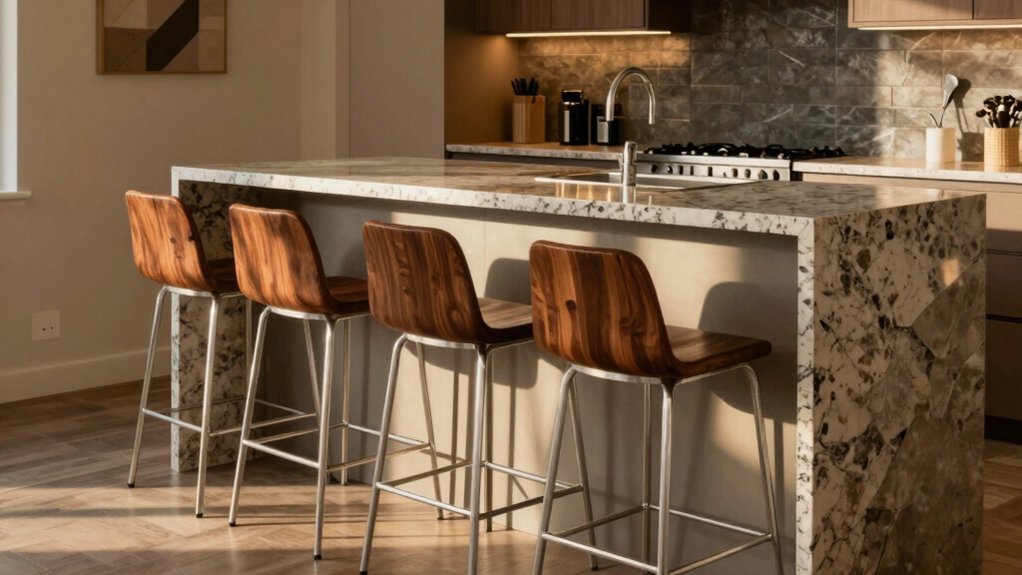
You’ll want to match your bar seating height—whether 29-30 inches for bar-height counters or 23-28 inches for standard counters—with the right configuration and design details. Prioritize comfort with 12-14 inches of clearance between seat and counter, and space stools 10-15 inches apart. Choose durable upholstery like leather or vinyl that withstands kitchen use. Coordinate your stool finishes with cabinetry and hardware to create visual cohesion. There’s quite a bit more to consider when designing your ideal bar setup.
Understanding Bar Height Versus Counter Height Seating

When you’re planning kitchen seating, the height of your counter and stools matters more than you might think. Bar height counters sit 41-43 inches high and pair with 29-30 inch stools, creating an elevated dining experience that works well as a room divider and conceals clutter below. Counter height seating uses a standard 35-40 inch counter with 23-28 inch stools, offering easier accessibility for everyone.
Your choice directly impacts functionality and comfort. Bar height suits those seeking style and visual separation, but it’s less accessible for wheelchair users or aging-in-place needs. Counter height prioritizes inclusivity and everyday usability. You might also consider mixing both heights—pairing them strategically adds visual interest while creating functional zones throughout your kitchen.
The Social Dynamics of Kitchen Seating Arrangements
You’ll find that your kitchen transforms into a genuine social hub when you strategically position seating to encourage conversation and connection.
By creating flexible zones—such as curved banquettes anchoring your island, informal countertop perches, and cozy break-out nooks—you’re not just adding chairs; you’re designing spaces where guests naturally gather and linger.
The layout you choose directly shapes how people interact, whether they’re casually dining, collaborating on meal prep, or simply enjoying each other’s company while you cook.
Kitchen as Social Hub
The kitchen’s role as the heart of modern entertaining hinges on thoughtful seating arrangements that naturally draw people together. You’ll notice guests gravitate toward the island, drawn by aromas, drinks, and the natural gathering space you’ve created. L-shaped or curved layouts foster genuine conversation between you and your guests, breaking down the barrier between cook and company. Two-in-one arrangements—combining extended island surfaces with built-in banquettes—maximize flow while maintaining flexibility. Banquettes offer fixed, space-efficient seating with hidden storage, while pairing them with movable chairs lets you adapt to your crowd. Strategic accent seating and break-out nooks sustain interaction throughout your kitchen, transforming it into an intimate social hub where everyone feels included and engaged.
Flexible Seating Zones
How do you balance hosting a dinner party with prepping a meal? Flexible seating zones solve this challenge by creating distinct activity areas that don’t compete for space.
Island seating works best when you combine multiple options—banquettes paired with bar stools or chairs. This mix accommodates different gathering styles: guests can perch at the counter while you cook, then transition to banquette seating for relaxed conversation. Curved banquettes maximize seating capacity without blocking workflow, letting you move freely between prep and socializing.
Plan your seating arrangement early by mapping activity zones: cooking, dining, and conversing. This intentional layout ensures your kitchen adapts seamlessly to various gatherings, whether you’re hosting intimate dinners or casual weeknight meals. Your guests stay engaged without interfering with meal preparation.
Curved and Radius Counters for Enhanced Interaction
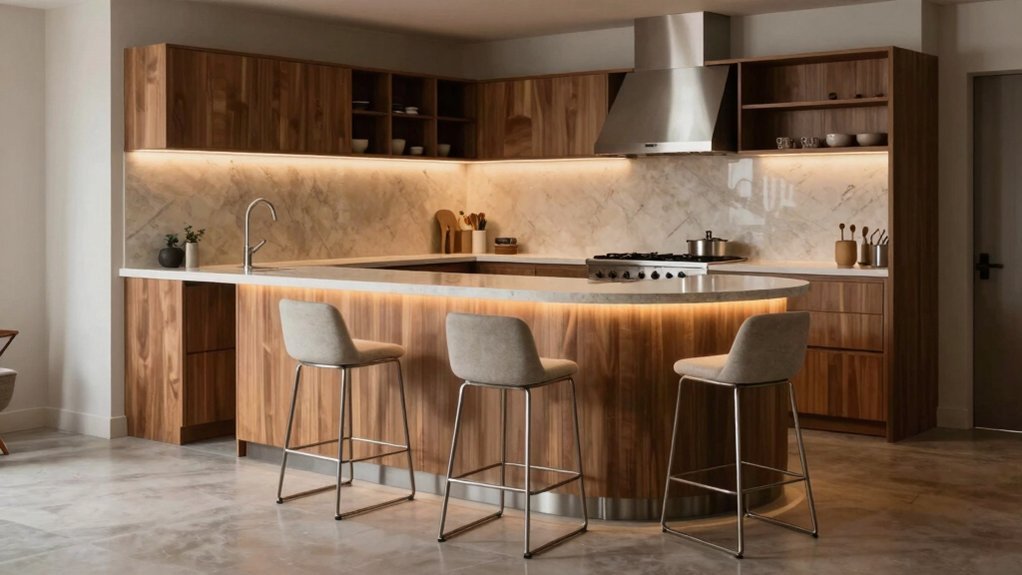
Want to foster genuine connection while cooking? Curved and radius counters transform your kitchen into an interactive hub. You’ll create a semi-circle design that naturally promotes eye contact and conversation among diners, making everyone feel included in the experience.
These configurations maximize seating without compromising prep space or movement. You’ll pair curved dining bars with round or oval tables to maintain aesthetic cohesion and improve flow between cooking and dining zones. Guests engage directly with you while preparing meals, breaking down the barrier between cook and diner.
| Design Feature | Benefit | Result |
|---|---|---|
| Semi-circle layout | Enhanced eye contact | Stronger connections |
| Curved counter | Inclusive seating | All guests involved |
| Optimal spacing | Unobstructed movement | Functional kitchen |
You’ll discover that radius countertops aren’t just functional—they’re social game-changers that elevate your kitchen’s atmosphere.
Cantilever Designs and Space Optimization
Ever wondered how to maximize seating without sacrificing kitchen functionality? Cantilever designs offer the perfect solution by extending your counter beyond its supports, creating natural seating space while reducing clutter.
When you choose an overhang bar, you’re optimizing your layout with several advantages:
- Knee clearance that accommodates backless stools and improves comfort in open-concept spaces
- Zone separation between dining and work areas while maintaining visual flow with your island
- Structural reliability when post-supported overhangs match your kitchen’s existing décor
A cantilevered counter intelligently transforms underutilized space into functional seating. You’ll find that these designs work exceptionally well in smaller kitchens where every inch counts. By eliminating bulky support posts from the seating area, you create an unobstructed, inviting atmosphere that encourages conversation and connection.
Built-In Nook Seating and Banquette Solutions
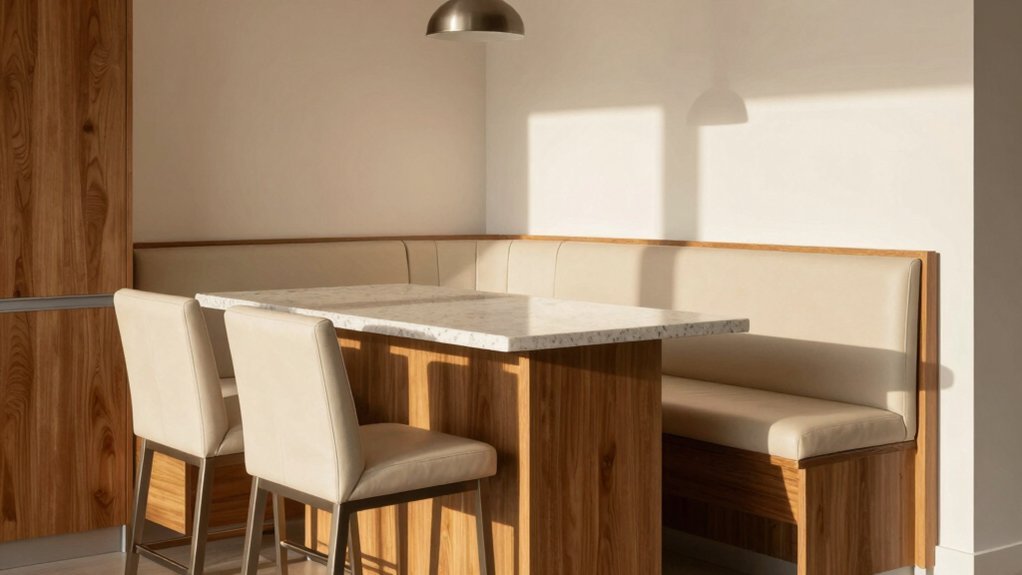
Looking to combine seating and storage in one smart solution? Built-in banquettes deliver exactly that. You can position them at island ends, behind islands, or within L-shaped configurations. Curved designs work best—they maximize prep space and improve kitchen flow while creating a cohesive look.
Pairing curved banquettes with round or oval tables enhances sociability and makes your space feel more spacious. You’ll gain substantial seating with hidden storage underneath, though remember that built-in seating isn’t movable like chairs.
These integrated solutions transform your kitchen into a two-in-one dining area, saving valuable space across various kitchen sizes. For longevity, select durable upholstery and modular configurations that adapt as your needs evolve. You’re investing in functionality and style simultaneously.
Waterfall Edges and Visual Impact
How do you elevate a kitchen island from functional to architectural statement? Consider waterfall edges—they’re a game-changer for modern kitchen design.
Waterfall countertops create a seamless, continuous line that visually extends your counter down to the base, transforming your island into a gallery-worthy feature. When you pair this technique with elevated or cantilevered bar tops, you’re layering depth and dimension into your space.
Here’s what waterfall edges deliver:
- Visual continuity that reinforces a cohesive, flowing silhouette, especially with curved island designs
- Architectural detail that adds premium feel and distinguishes your kitchen as intentionally designed
- Practical elegance that conceals clutter while creating a reinforced sense of permanence for integrated seating areas
This edge detail transforms utilitarian bar seating into a design-forward kitchen focal point.
Selecting the Right Stool Style for Your Kitchen
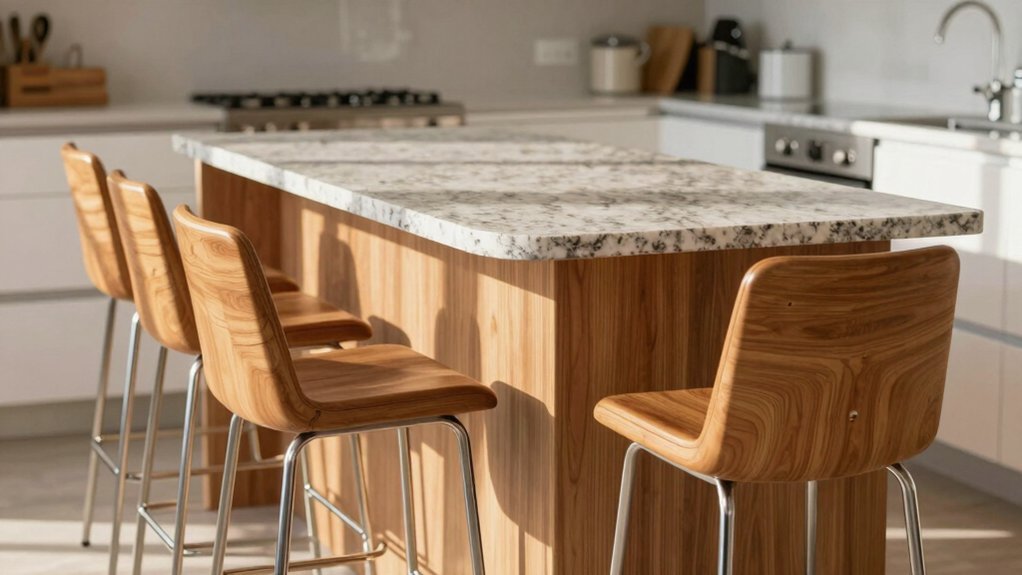
You’ll want to balance height and comfort fit by choosing stools that match your countertop while providing adequate knee clearance underneath. Your material and durability choice matters greatly since kitchen stools face daily wear, spills, and frequent use—so opt for easy-to-clean upholstery and sturdy construction. Finally, ensure your stool’s design cohesion with your space by selecting styles that complement your kitchen’s aesthetic without clashing with existing décor.
Height and Comfort Fit
The right stool height can make or break your kitchen’s functionality and comfort. You’ll want to match your seating to your counter dimensions for proper legroom and sightlines.
Consider these key measurements:
- Bar-height counters (41-43 inches) pair with 29-30 inch stools, creating a comfortable 12-14 inch gap
- Standard counters (35-40 inches) work best with 23-28 inch counter-height stools, offering easier access
- Seat depth (45-50 cm) ensures stability and comfort for extended use
Beyond measurements, prioritize durability and upholstery quality—you’re investing in furniture that’ll evolve with your space for years. If you’ve got kids or mobility concerns, counter-height seating provides better accessibility. Remember to maintain ample walkways around your seating to keep your kitchen functional and safe.
Material and Durability Choice
What makes a stool truly last through years of daily use? You’ll want to prioritize durable materials that withstand kitchen wear and tear. Leather, vinyl, and 100% cotton upholstery resist stains and spills while maintaining their appearance. These fabrics handle frequent cleaning without deteriorating, unlike delicate textiles that fade quickly.
Beyond upholstery, you should consider modular designs that adapt as your kitchen evolves. Modular stools let you reconfigure seating arrangements, replace worn components, or adjust heights without replacing entire pieces. This flexibility saves money long-term and accommodates changing household needs.
Quality construction matters equally. Look for reinforced frames, sturdy legs, and secure fasteners. Investing in well-made stools now prevents wobbling, cracking, or cushion breakdown later. You’ll enjoy reliable seating that maintains comfort and aesthetics for years.
Design Cohesion With Space
How does your bar seating anchor—or clash with—your kitchen’s visual identity? Your stool selection directly impacts whether your space feels unified or disjointed.
Consider these design strategies:
- Color coordination: Match or contrast your stools with existing bar, cabinet, and backsplash colors to strengthen visual cohesion
- Intentional distinction: Decide whether your bar mirrors your kitchen palette or deliberately diverges to create purposeful separation
- Lighting integration: Use pendant lights above bar seating to unify the aesthetic and establish mood across both zones
The 29–30 inch stool height pairs perfectly with 41–43 inch counters, creating proper proportions that enhance your kitchen’s overall balance. When you align stool style with your existing design elements, you transform bar seating from a functional afterthought into a cohesive design statement.
Material Durability and Upholstery Considerations
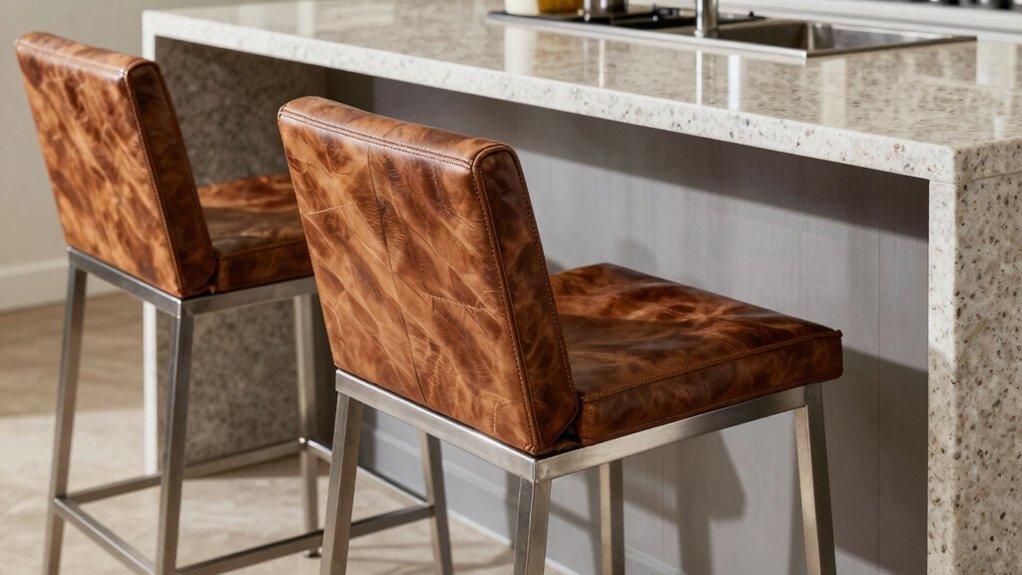
When you’re investing in bar seating for your kitchen, durability should drive your material choices. You’ll want upholstery that evolves with your lifestyle—leather, vinyl, and 100% cotton withstand years of use while tolerating spills and cleanups effortlessly.
| Material | Best For |
|---|---|
| Leather | High-traffic areas; premium aesthetics |
| Vinyl | Easy maintenance; budget-friendly |
| 100% Cotton | Breathability; natural appeal |
| Wood Frames | Structural integrity; reinforced corners |
| Metal Legs | Stability; modern aesthetics |
Prioritize seating with durable frame joinery and reinforced corners designed for daily kitchen wear. Modular options let you reconfigure pieces over time, reducing replacement needs. Finally, coordinate your upholstery color and finish with cabinets, islands, and lighting to create visual cohesion while maximizing your investment’s longevity and performance.
Spacing and Ergonomic Guidelines for Comfort
Getting the right stool height makes all the difference in kitchen comfort and functionality. You’ll want to match your stools to your counter or bar height precisely—counter height seating uses 23–28 inch stools for standard 35–40 inch countertops, while bar height requires 29–30 inch stools for 41–43 inch bars. This 6-inch difference ensures proper legroom and back support.
Consider these spacing essentials:
- Leave 10–15 inches between stools for comfortable movement and dining
- Position stools 12 inches from the counter edge for adequate knee clearance
- Allow 24–30 inches of counter space per person for eating and working
You can strategically mix heights to create visual interest and functional separation. Tucking stools under low counters maximizes your space, making even compact kitchens feel more open and functional.
Integrating Bar Seating With Overall Kitchen Design
You’ll create a unified kitchen by coordinating your bar seating’s upholstery, hardware, and lighting with your overall color palette and finishes. Thoughtful placement of architectural elements like pillars or overhangs lets you define distinct zones—cooking, dining, and social—while maintaining visual continuity through consistent materials and design choices. Strategic positioning of built-in seating or island overhangs preserves workflow between these areas without sacrificing the cohesive aesthetic you’re building.
Cohesive Aesthetics and Materials
How can bar seating enhance rather than interrupt your kitchen’s visual flow? You’ll achieve cohesion by coordinating materials and finishes throughout your space. Match your stools’ upholstery, wood tones, and hardware to your cabinetry and island surfaces. This creates a unified aesthetic that ties dining and cooking zones seamlessly together.
Consider these design elements:
- Wood coordination: Use matching oak veneer joinery or complementary wood species across seating, cabinetry, and structural elements
- Hardware consistency: Select identical or coordinated handles and fixtures for stools, cabinets, and lighting fixtures
- Finish alignment: Ensure stool upholstery and finishes echo your overall kitchen palette without clashing
Selecting durable, modular pieces supports evolving needs while maintaining visual harmony. When your bar seating aligns with your kitchen’s design language, it becomes an integrated feature rather than an afterthought.
Flow Between Zones
While cohesive materials create visual unity, strategic placement of bar seating actively shapes how people move and interact within your kitchen. Bar height counters function as natural room dividers in open-concept spaces, defining the bar area without isolating your kitchen from adjacent zones. You can enhance flow by mixing counter heights—pairing 23–28 inch seating with 29–30 inch bar stools—which creates functional separation and visual interest while supporting flexible use for cooking, dining, and socializing. Islands serve dual purposes by offering both bar seating and prep space, with overhangs that accommodate backless stools while reducing spills. Consider curved or radius configurations to improve sightlines and foster inclusive seating, encouraging natural conversation around your island.
Room Division and Zoning With Elevated Counters
Want to separate your kitchen from the living area without sacrificing openness? Elevated counters provide the perfect solution. They act as natural room dividers while maintaining conversation flow between cooks and guests—you’ll keep sight lines open while clearly defining zones.
Consider these design approaches:
- Cantilevered bars with waterfall edges create visual separation and layered countertop aesthetics
- Island extensions in U-shaped or two-sided configurations maximize function while delineating spaces
- Architectural elements like pillars or built-in overhangs establish boundaries within cohesive open-concept layouts
Bar-height stools at 29–30 inches paired with 41–43 inch counter heights optimize visibility and interaction. This height differential naturally discourages foot traffic through work zones while encouraging comfortable seating on the living side. You’ll achieve functional separation without closing off your kitchen entirely.
Flexible Seating Configurations for Entertaining
What’s the key to hosting comfortably without sacrificing kitchen functionality? Flexible seating configurations that blend multiple styles and heights.
You’ll want to combine banquettes with chairs to create casual dining spaces that adapt to various activities—from cooking prep to socializing. This mix accommodates different guest needs while maintaining kitchen flow.
Consider incorporating both bar-height stools (29–30 inches) and counter-height seating (23–28 inches) for versatility. L-shaped or curved island layouts naturally enhance inclusivity, drawing people together around your prep area.
Built-in or modular seating, including curved banquettes and corner nooks, maximizes capacity without blocking walkways. You can even integrate storage beneath cushioned seats.
Two-in-one setups—like islands with extended dining surfaces—save valuable space while seamlessly connecting kitchen and dining zones, letting you entertain efficiently.
Hardware and Color Coordination Across Seating Elements
How you coordinate hardware and color across your bar seating directly impacts your kitchen’s visual cohesion. You’ll want to match your bar hardware, stool finishes, and cabinet tones to create a unified aesthetic that elevates your space’s sophistication.
Bar hardware and stool finishes should align with cabinetry to create a cohesive, sophisticated kitchen aesthetic.
Consider these strategic choices:
- Cabinet-to-Hardware Alignment: Match hardware colors with your cabinetry and island to maintain consistent aesthetics across all seating surfaces
- Backsplash Integration: Ensure your bar finish and stool colors complement your backsplash to reinforce unified design throughout the kitchen
- Accent Elements: Use lighting fixtures and hardware as intentional accents that tie the bar area to your overall kitchen, enhancing the high-end feel
Strategic color coordination between these elements establishes visual balance and transforms your bar into a polished, intentional design feature rather than a disconnected afterthought.
Frequently Asked Questions
How to Choose Bar Stools for Kitchen?
You’ll choose bar stools by matching the seat height to your counter—typically 29–30 inches for 41–43 inch counters. You should also coordinate the stool style with your kitchen’s aesthetic and verify there’s adequate legroom and footrest support for comfort.
How to Match Bar Stools to Kitchen?
You’ll match bar stools by coordinating their style with your kitchen’s aesthetic, aligning colors with your bar or cabinetry, and ensuring they complement adjoining elements. Consider darker stools for visual contrast or lighter options to brighten your space.
What Type of Bar Stool Is the Most Comfortable?
You’ll find swivel stools with back support most comfortable for extended sitting. Choose ones with padded upholstery, sturdy joints, and proper seat depth (45–50 cm). They’re ideal for kitchen bars where you’re conversing while cooking.
What Kind of Stool Is Best for a Kitchen Island?
You’ll find counter-height stools work best for kitchen islands since they’re 23–28 inches tall, matching standard 35–40 inch counters perfectly. They’re accessible, comfortable, and let you maintain easy conversation while keeping your space functional and inviting.


Leave a Reply