
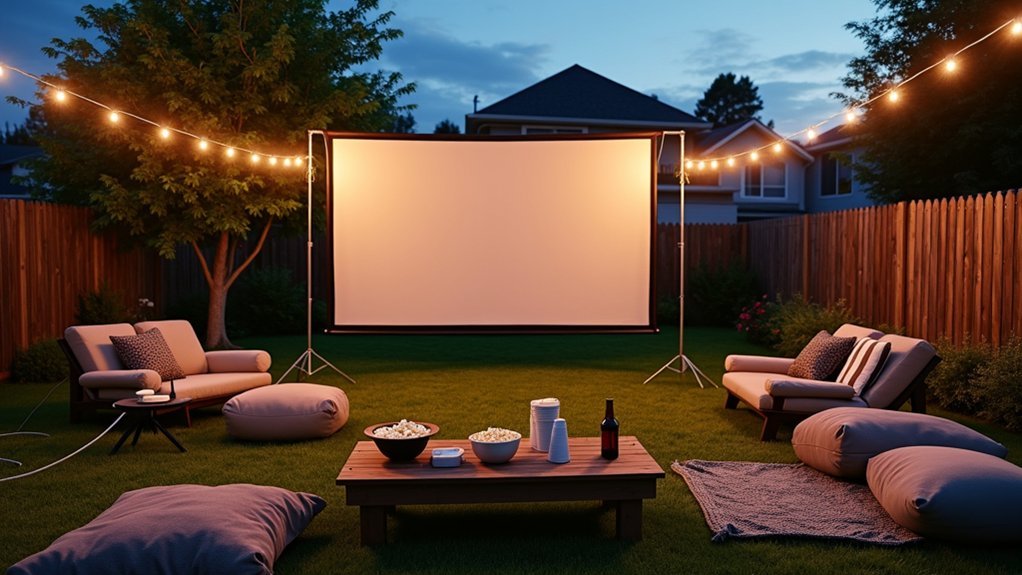
Planning your backyard movie night early helps you secure high-quality projectors, screens, and sound systems before rental companies book out—especially during busy summer months. You’ll have time to monitor weather patterns, set backup dates, and send invitations at least two weeks ahead for proper RSVPs. Early planning also lets you test all equipment, arrange safe power setups, and coordinate with neighbors about noise. The sections below cover each essential step to make your outdoor screening unforgettable.
Securing the Best Outdoor Movie Equipment Rentals
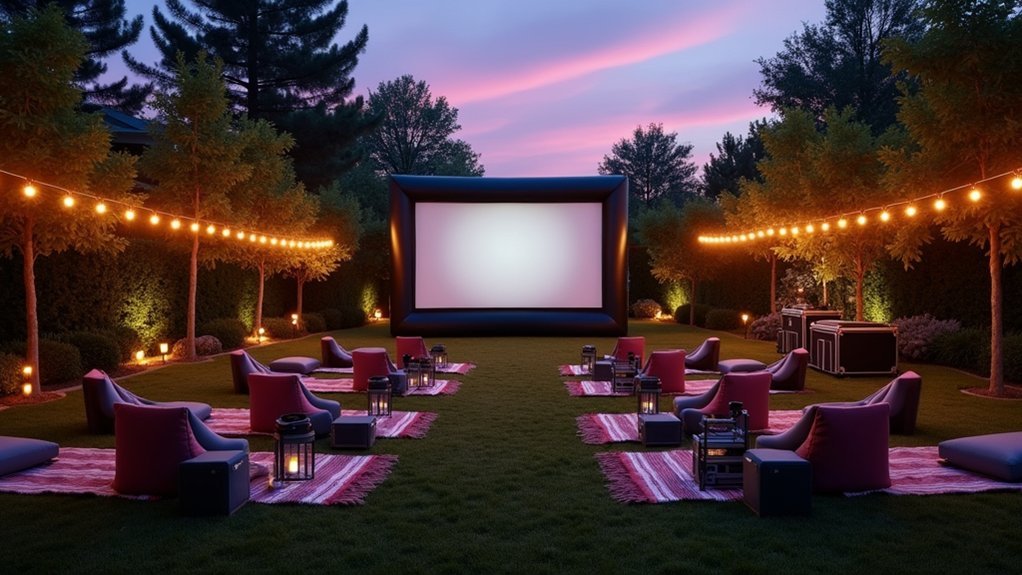
When you’re gearing up for a backyard movie night, finding reliable equipment rentals can make or break your event. Popular rental companies book out weeks in advance, especially during summer months. By planning early, you’ll secure high-quality projectors, screens, and sound systems before they’re gone.
Start by researching local rental providers and comparing their packages. Look for companies offering delivery, setup, and technical support. You’ll want to confirm screen sizes work for your yard dimensions and that projector brightness suits outdoor conditions.
Don’t wait until the last minute. Late planners often settle for inferior equipment or pay premium rush fees. Book at least three weeks ahead to lock in your preferred date and equipment. This gives you time to test everything and arrange backup options if needed.
Checking Weather Forecasts and Backup Date Options
You’ll want to start monitoring weekly weather patterns at least seven days before your planned movie night to catch any approaching storms or unfavorable conditions.
Having two or three alternative screening dates ready gives you flexibility if Mother Nature doesn’t cooperate with your first choice.
Consider identifying an indoor backup location—like a garage, basement, or living room—so your guests won’t leave disappointed if the weather takes an unexpected turn.
Monitor Weekly Weather Patterns
Regularly checking weather forecasts about a week before your planned movie night gives you time to adjust if conditions look unfavorable. You can spot incoming rain systems, temperature drops, or wind patterns that might disrupt your outdoor viewing experience.
Start monitoring forecasts seven days out, then check daily as your event approaches. Pay attention to precipitation chances, cloud cover predictions, and expected wind speeds. Even a 30% rain chance warrants having your backup date ready.
You should also track humidity levels, since high moisture can affect your equipment and make guests uncomfortable. Temperature forecasts help you decide whether to provide blankets or fans. By staying informed about weekly weather patterns, you maintain control over your planning and avoid last-minute scrambles that could derail your movie night.
Schedule Alternative Screening Dates
Because weather can shift unexpectedly despite careful monitoring, you’ll want to identify two or three alternative dates before sending invitations. Select backup nights within the same week or the following weekend to maintain guest interest and availability.
When choosing alternatives, check extended forecasts for each potential date. Look for evenings with low precipitation chances and comfortable temperatures. Avoid selecting dates that conflict with major local events or holidays that might reduce attendance.
Communicate your backup plan clearly on invitations. Include your primary date prominently, then list alternatives with a note explaining you’ll confirm the final date 48 hours in advance.
This approach gives guests time to adjust their schedules while protecting your event from cancellation. You’ll reduce stress knowing you have reliable options ready.
Indoor Backup Plan Options
Having a solid indoor backup plan guarantees your movie night happens regardless of what the sky decides to do.
Identify a room in your home that can accommodate your guests comfortably, whether it’s a living room, basement, or garage space.
You’ll want to test your projector or TV setup indoors before the event.
Check that you have enough seating, blankets, and floor cushions ready to move inside quickly.
Keep your snacks and drinks in portable containers for easy transport.
Communicate your backup plan to guests when sending invitations.
Let them know you’ll make the call at least two hours before showtime based on weather conditions.
This gives everyone time to adjust their expectations and arrive prepared for either setting.
Choosing the Perfect Screen Size for Your Backyard Space
Before you purchase or rent a screen, grab a tape measure and map out your available space. The distance between your screen and seating area directly impacts what size works best—too large and viewers in front will strain their necks, too small and those in back won’t catch the details.
You’ll also want to position your screen so it doesn’t blast light directly into your neighbor’s windows, keeping the peace while you enjoy your show.
Measure Your Yard First
When it comes to selecting the right screen size, your backyard’s dimensions will dictate what works best. Grab a tape measure and map out your available space before purchasing or renting equipment. You’ll need to account for the screen itself, projector placement distance, and seating arrangements.
Consider the distance between your planned screen location and where guests will sit. A general rule: viewers should sit approximately two times the screen’s diagonal measurement away for ideal viewing. If your yard spans 30 feet, you have flexibility for larger screens. Smaller spaces work better with compact 100-inch options.
Don’t forget vertical clearance. Check for tree branches, power lines, or overhangs that might obstruct your setup. Mark boundaries with stakes or string to visualize the final arrangement before committing to specific equipment sizes.
Screen-to-Seating Distance Matters
Now that you’ve mapped out your yard’s dimensions, the screen-to-seating distance becomes your next key calculation. The general rule places viewers at a distance two to three times the screen’s diagonal measurement. A 120-inch screen works best when guests sit 20 to 30 feet away.
Position your seating too close, and viewers strain their necks looking up. Set chairs too far back, and you’ll lose image detail and audio clarity. Consider your yard’s natural slope—a gentle incline creates tiered seating without extra equipment.
Don’t forget about ambient light sources. Streetlights, neighbor’s porches, and your own home’s windows affect visibility. You’ll want your screen positioned where these distractions hit at angles rather than directly behind your audience’s sightline.
Consider Neighbor Sightlines
Your neighbors’ windows and outdoor living spaces deserve consideration as you finalize screen placement. A bright, flickering screen can become an unwanted distraction for those trying to sleep or relax next door. Position your screen to face away from neighboring homes whenever possible.
Think about these key factors when evaluating sightlines:
- Angle the screen toward your home rather than toward property lines
- Use natural barriers like fences, hedges, or trees to block light spillage
- Choose a screen size that doesn’t tower above your fence line
- Consider your neighbors’ bedroom window locations
- Plan earlier showtime slots to wrap up at reasonable hours
You’ll maintain good relationships while still enjoying outdoor cinema. A quick conversation with neighbors about your movie night plans also goes a long way.
Sending Invitations and Tracking Guest Responses
Once you’ve settled on a date and time for your backyard movie night, it’s time to reach out to your guests and get headcounts rolling in. Send invitations at least two weeks ahead so attendees can plan accordingly.
Digital invitations make tracking responses simple. Use platforms that allow guests to RSVP directly, eliminating the need for follow-up calls.
| Invitation Method | Best For |
|---|---|
| Text message | Close friends and family |
| Email evite | Larger gatherings |
| Social media event | Casual community screenings |
| Paper invitations | Formal themed nights |
You’ll want accurate numbers for seating arrangements, snacks, and beverages. Set an RSVP deadline five days before the event, giving yourself time to adjust plans based on confirmed attendance.
Testing Audio and Visual Equipment Before the Event
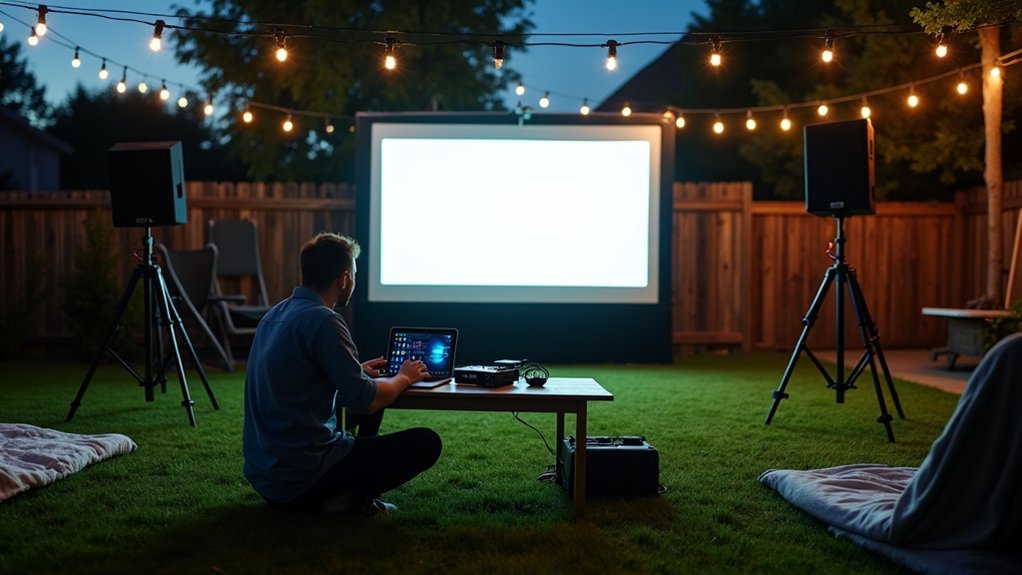
Before your guests arrive, you’ll want to run through your equipment to catch any issues early.
Start by checking your speaker sound quality at various volume levels to make certain clear audio reaches every corner of your backyard.
Next, test your projector brightness levels during the actual time you’ll be showing the movie, since ambient light conditions change throughout the evening.
Check Speaker Sound Quality
Testing your speakers well ahead of showtime guarantees you won’t scramble to fix audio issues while guests wait impatiently. Play various audio clips at different volume levels to identify distortion, crackling, or dead zones in your yard. Walk around the viewing area to make sure sound reaches every seat clearly.
Before your event, verify these essential speaker checkpoints:
- Test bass and treble balance at your planned viewing distance
- Check all cable connections for secure, corrosion-free contact
- Confirm Bluetooth or wireless connections remain stable throughout a full movie length
- Identify and eliminate feedback or echo problems caused by nearby surfaces
- Make certain volume reaches adequate levels without straining the speakers
You’ll catch problems early when you dedicate time to thorough audio testing, making your movie night seamless and enjoyable.
Test Projector Brightness Levels
Your projector’s brightness can make or break your outdoor movie experience, so you’ll want to evaluate it under actual nighttime conditions before guests arrive.
Set up your projector once darkness falls and project an image onto your screen or surface. Check for washed-out colors, dim sections, or competing ambient light from street lamps and porch lights.
Adjust your projector’s brightness and contrast settings until the image appears crisp and vibrant. If your projector struggles against ambient light, consider repositioning it closer to the screen or adding blackout curtains to nearby windows. You should also test different lumens settings if your model offers them.
Don’t forget to play actual movie footage rather than static images—movement reveals problems that still pictures hide.
Planning Your Seating Arrangement and Comfort Setup
Once you’ve sorted out your screen and projector, it’s time to focus on where everyone will sit during the show. Comfortable seating transforms a simple movie viewing into a memorable experience. You’ll want to arrange your space so every guest has a clear sightline to the screen without straining their necks.
Thoughtful seating arrangements turn your backyard into a true outdoor cinema where every guest feels like a VIP.
Consider these essential comfort elements:
- Blankets and outdoor cushions for ground seating
- Lawn chairs positioned at proper viewing angles
- Bean bags for kids and casual loungers
- Side tables for snacks and drinks within reach
- Portable heaters or fans depending on the weather
Don’t forget to test your arrangement before guests arrive. Sit in each spot yourself to check viewing angles and comfort levels. This preparation guarantees everyone enjoys the feature presentation.
Selecting Movies That Appeal to Your Audience
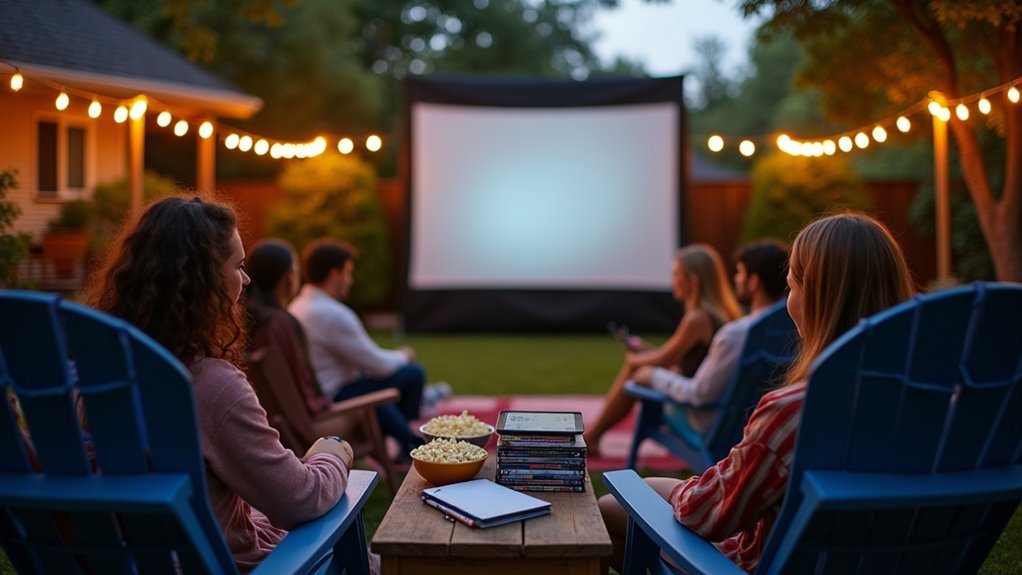
With your seating arranged and comfort items ready, the real magic of movie night comes down to what you’ll actually watch. Consider your audience’s ages, interests, and the overall vibe you want to create.
| Audience Type | Best Movie Choices |
|---|---|
| Young Families | Animated classics, adventure films |
| Teenagers | Action movies, comedies |
| Adults Only | Thrillers, romantic comedies |
| Mixed Ages | Family-friendly blockbusters |
You’ll want to select two or three backup options in case your first choice doesn’t land well. Poll your guests beforehand through a quick text or group chat to gauge preferences. This prevents the dreaded twenty-minute scrolling session while everyone waits. Match your film’s runtime to your timeline—shorter movies work better for groups with young children.
Coordinating Snacks and Refreshments for Your Guests
After you’ve locked in your movie selection, it’s time to plan the snacks that’ll keep everyone satisfied throughout the show. You’ll want to prepare everything beforehand so you’re not running back inside during the best scenes.
Planning your snacks ahead means more time enjoying the movie and less time missing the action.
Consider these crowd-pleasing options:
- Classic buttered popcorn in individual bags or bowls
- Candy boxes reminiscent of theater concessions
- Hot dogs or sliders for heartier appetites
- Chilled beverages in a cooler within arm’s reach
- Fresh fruit or veggie cups for lighter snacking
Set up a self-serve station near the seating area so guests can grab refills without disrupting others. Don’t forget napkins and small trash bags for easy cleanup.
When you coordinate your refreshments early, you’ll spend the evening relaxing with your guests instead of scrambling in the kitchen.
Setting Up Proper Lighting for Safety and Ambiance
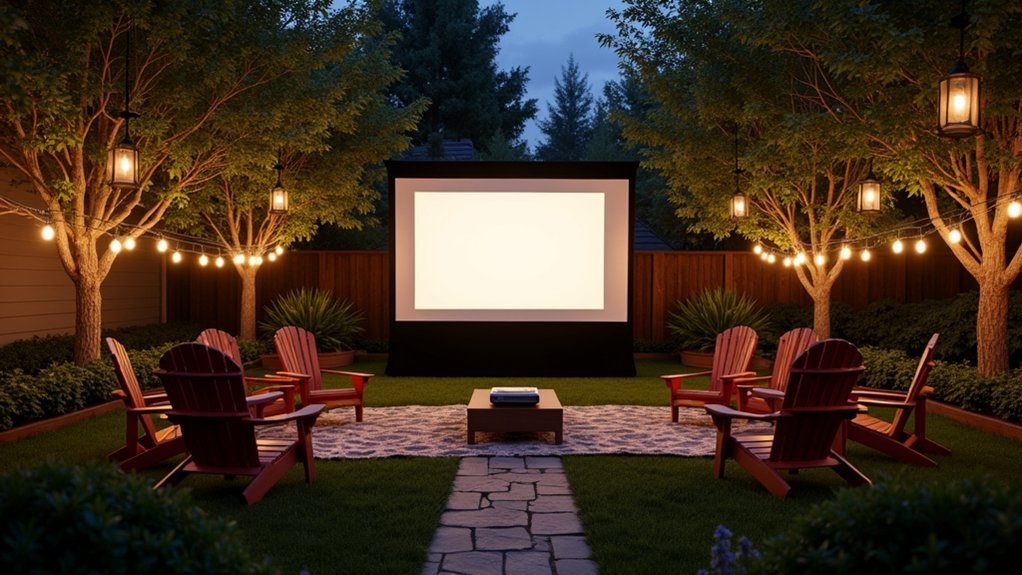
Transform your backyard into a cinematic escape by strategically placing lights that guide guests safely while creating the perfect movie-watching atmosphere.
You’ll want to install pathway lights along walkways to prevent trips and falls in the dark.
Position solar-powered stake lights or LED lanterns near seating areas, steps, and any obstacles.
String lights draped along fences or trees add warmth without competing with your projector screen.
Choose dimmable options so you can lower brightness once the film starts.
Keep lights behind your audience to avoid screen glare.
Battery-operated candles on tables provide soft illumination for snack areas.
Don’t forget to light the route to bathrooms and exits.
Planning your lighting setup early guarantees you’ll have all necessary fixtures ready for a seamless, enchanting evening.
Arranging Power Sources and Extension Cord Placement
Once you’ve mapped out your lighting plan, you’ll need to figure out how to power everything—from your projector and speakers to those string lights and any portable heaters or fans.
Start by identifying your nearest outdoor outlets and measuring distances to each piece of equipment. You’ll want to use outdoor-rated extension cords that can handle your total wattage requirements.
Keep these safety tips in mind when arranging your power setup:
- Use heavy-duty, weather-resistant extension cords rated for outdoor use
- Secure cords along fence lines or under rugs to prevent tripping hazards
- Avoid daisy-chaining multiple extension cords together
- Keep all connections elevated and away from wet grass
- Use a surge protector to safeguard your expensive equipment
Planning your power layout early prevents last-minute scrambling and keeps guests safe.
Creating a Bug-Free Viewing Environment
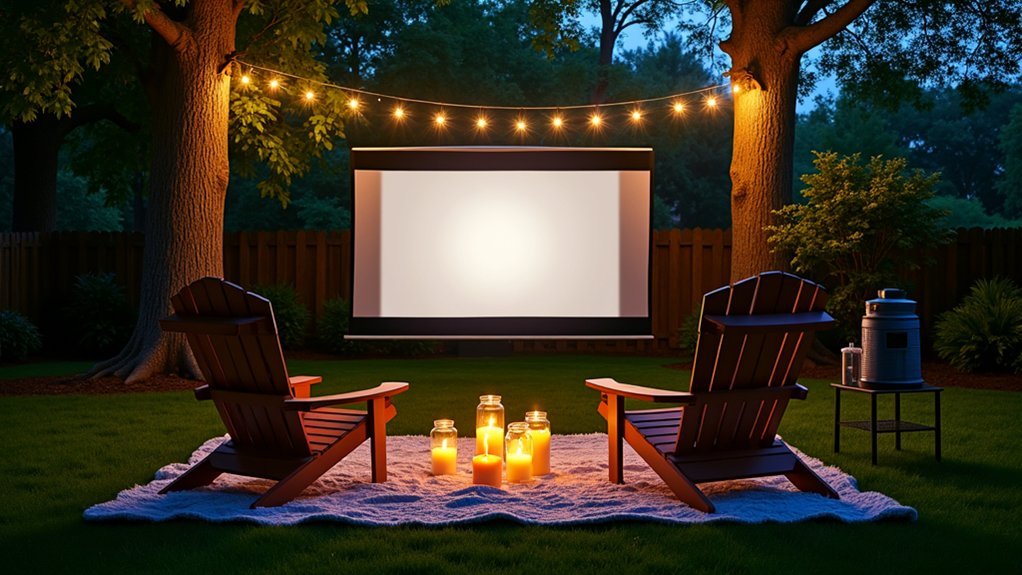
Nothing ruins a backyard movie night faster than swatting mosquitoes while trying to watch your favorite film. You’ll want to establish your bug defense strategy well before guests arrive.
Start by eliminating standing water near your viewing area, as it attracts mosquitoes. Set up citronella candles or torches around the perimeter at least 30 minutes before showtime.
| Bug Deterrent | Best Placement |
|---|---|
| Citronella candles | Every 6-8 feet around seating |
| Bug zappers | 15+ feet from viewers |
| Oscillating fans | Behind seating areas |
| Essential oil diffusers | Near blankets and chairs |
| Screen tent | Over primary seating zone |
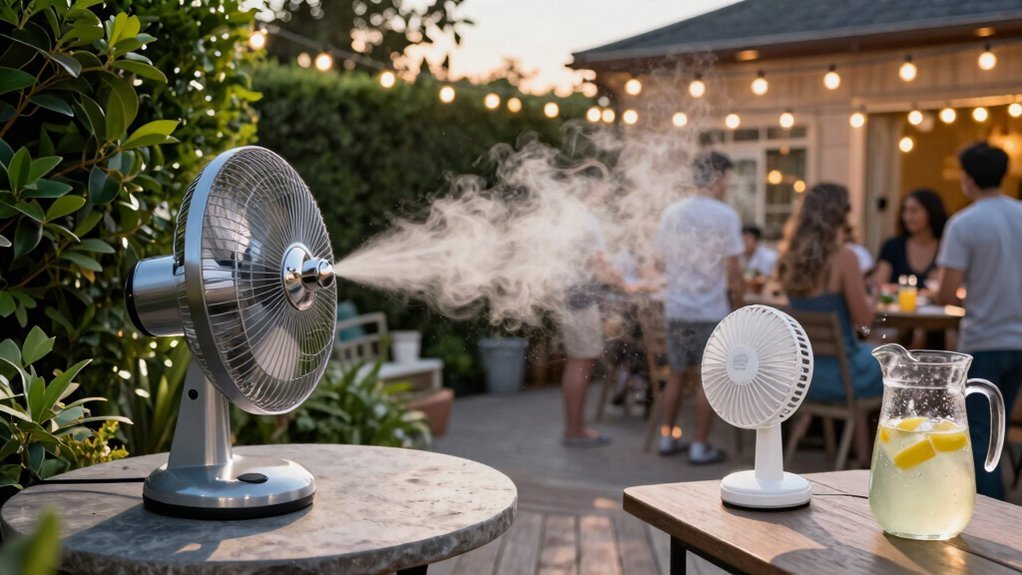
Consider providing guests with individual bug spray bottles. You can also position oscillating fans strategically, since mosquitoes struggle to fly in moving air.
Preparing Entertainment for Early Arrivals
Guests who show up early shouldn’t be left standing around awkwardly while you’re still setting up the projector and arranging seating.
You’ll want simple activities that require minimal supervision and keep everyone engaged.
Set up a designated area with low-maintenance entertainment options that work well in outdoor settings.
This gives you freedom to handle last-minute preparations without neglecting your guests.
Consider these easy pre-movie activities:
- Lawn games like cornhole, bocce ball, or giant Jenga
- A playlist of movie soundtracks playing through outdoor speakers
- A DIY popcorn bar where guests can customize their toppings
- Trivia cards related to the night’s featured film
- Glow sticks or bracelets for kids to play with as dusk approaches
These options create a relaxed atmosphere while building anticipation for the main event.
Establishing Neighborhood Noise Considerations and Timing
While you’re excited about hosting an outdoor movie night, your neighbors might not share that enthusiasm if booming sound effects echo through the subdivision at midnight. You’ll want to check local noise ordinances before setting your start time. Most communities restrict loud outdoor activities after 10 PM on weekdays.
| Consideration | Recommended Action |
|---|---|
| Start Time | Begin at dusk, typically 8-9 PM |
| Volume Levels | Keep speakers below 70 decibels |
| Advance Notice | Inform neighbors 48 hours ahead |
Talk to adjacent neighbors beforehand and consider inviting them. This simple courtesy prevents complaints and builds community goodwill. Position your speakers to direct sound toward your seating area rather than neighboring properties. You’ll create an enjoyable experience without straining relationships.
Frequently Asked Questions
What Happens if My Outdoor Movie Equipment Gets Damaged During the Event?
If your outdoor movie equipment gets damaged during the event, you’ll need to check your homeowner’s insurance or rental agreement coverage. You should document the damage immediately and contact your equipment provider or insurance company right away.
How Do I Handle Uninvited Guests Who Show up to My Backyard Movie Night?
You can politely welcome uninvited guests if you’ve got extra seating, or kindly explain it’s a private gathering. Set clear expectations beforehand by specifying “invite only” on your invitations to prevent awkward situations.
Are There Copyright Laws I Should Know About When Screening Movies Publicly?
Yes, you need to take into account copyright laws. If you’re charging admission or showing films to the public beyond family and friends, you’ll typically need a public performance license to avoid legal issues.
What Age Ratings Should I Consider When Children Are Attending the Event?
You should check movie ratings like G for all ages, PG for general audiences with parental guidance, and PG-13 for older kids. Always consider your youngest guests when selecting films.
How Far in Advance Should I Book Professional Outdoor Movie Rental Services?
You should book professional outdoor movie rental services 2-4 weeks in advance. During peak summer months or holiday weekends, you’ll want to reserve even earlier—ideally 4-6 weeks out—to secure your preferred date.

Leave a Reply