
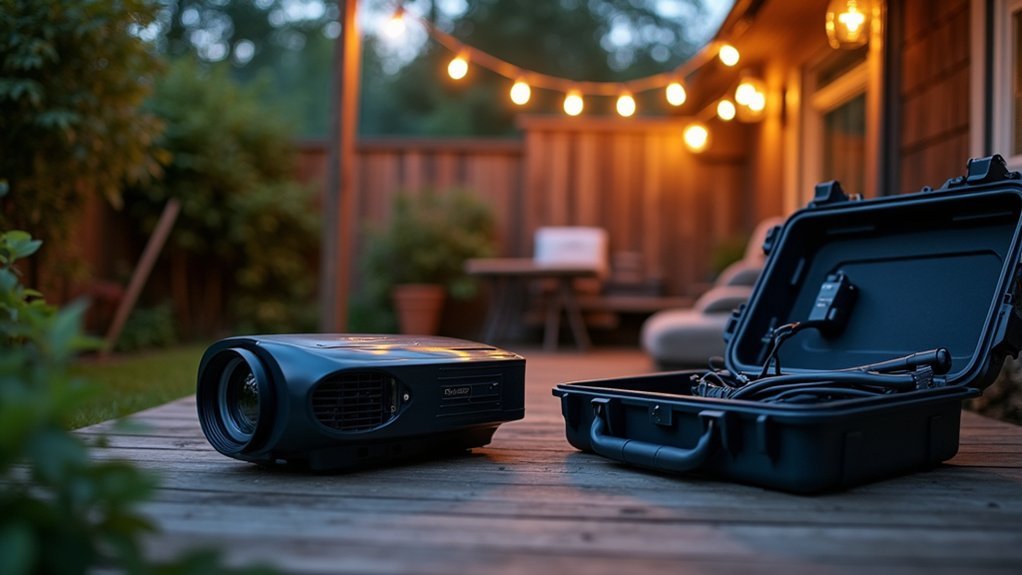
You’ll need a protective case, climate control, and proper prep to keep your outdoor projector safe between movie nights. Store it in a hard-shell case with foam inserts for impact protection, and add silica gel packs to absorb moisture. Always let your projector cool for 30 minutes before sealing it away, and keep storage temperatures between 50–80°F with humidity at 30–50%. Below, you’ll find detailed strategies for each protection method.
Understanding the Risks of Improper Projector Storage
When you invest in an outdoor movie projector, proper storage becomes essential to protecting that investment. Exposure to moisture, dust, and temperature extremes can quickly damage sensitive optical components and internal electronics.
Humidity poses one of the greatest threats to your projector. Moisture seeps into the lens assembly and circuit boards, causing corrosion and mold growth that degrades image quality permanently.
Moisture is your projector’s silent enemy—seeping into lenses and circuits to cause irreversible corrosion and mold damage.
Dust accumulation clogs ventilation systems, leading to overheating and premature bulb failure.
Temperature fluctuations create additional problems. Storing your projector in unheated garages or sheds subjects it to condensation cycles that damage internal components. Extreme heat warps plastic housings and deteriorates adhesives holding optical elements in place.
You’ll also risk physical damage from impacts, pests, and UV exposure without adequate protective storage solutions.
Choosing the Right Protective Case for Your Outdoor Projector
When you’re selecting a protective case for your outdoor projector, you’ll need to weigh the benefits of hard cases versus soft cases based on your specific usage needs.
Weather-resistant materials like water-repellent nylon, sealed plastic, or aluminum provide vital protection against the elements during transport and storage.
You’ll also want to make sure proper sizing and fit, as a case that’s too large allows damaging movement while one that’s too tight can put pressure on sensitive components.
Hard Vs Soft Cases
Selecting the right protective case for your outdoor movie projector comes down to one fundamental choice: hard shell or soft-sided construction. Each option offers distinct advantages depending on your storage needs and usage patterns.
| Feature | Hard Cases | Soft Cases |
|---|---|---|
| Impact Protection | Superior | Moderate |
| Weight | Heavier | Lightweight |
| Storage Flexibility | Fixed shape | Compressible |
| Price Range | $50-200+ | $20-80 |
| Best For | Travel/rough handling | Home storage |
Hard cases excel when you’re transporting equipment frequently or storing it in areas where impacts are likely. They’re built to withstand drops and compression. Soft cases work better if you’re prioritizing portability and have controlled storage environments. Consider your specific circumstances before investing.
Weather-Resistant Material Options
Beyond the structural choice between hard and soft cases, the materials protecting your projector from moisture, humidity, and temperature swings matter just as much. You’ll encounter several proven options when shopping for weather-resistant cases.
Ballistic nylon offers excellent tear resistance and water repellency at a moderate price point. It’s lightweight yet durable enough to handle rough transport conditions. For maximum protection, look for cases featuring TPU (thermoplastic polyurethane) coatings, which create an impermeable barrier against rain and humidity.
Silicone-lined interiors prevent condensation from reaching sensitive electronics during temperature fluctuations. If you’re storing your projector in uncontrolled environments like sheds or garages, consider cases with built-in desiccant pockets that absorb ambient moisture.
Don’t overlook UV-resistant materials if your storage area receives direct sunlight—prolonged exposure degrades standard plastics and fabrics quickly.
Sizing and Fit Considerations
A case that’s too large lets your projector shift during transport, risking internal damage from impacts, while one that’s too tight makes insertion and removal a frustrating struggle. You need measurements that match your specific model, including any protruding lens housings or adjustment knobs.
Before purchasing, measure your projector’s length, width, and height at its widest points. Add one to two inches on each side for protective padding. Don’t forget to account for accessories you’ll store alongside it—remote controls, cables, and lens caps need space too.
Check whether your projector has a detachable lens. If so, consider whether you’ll store it attached or separately. Many cases feature customizable foam inserts that you can cut to create a perfect, snug compartment for your exact equipment configuration.
Climate-Controlled Storage Options for Sensitive Equipment
When storing your outdoor movie projector long-term, you’ll want to contemplate climate-controlled options that protect sensitive electronic components. Temperature-regulated storage units maintain consistent conditions year-round, preventing the thermal stress that can damage LCD panels and internal circuitry.
You should also prioritize humidity control solutions, as excess moisture leads to lens fog, mold growth, and corrosion that can permanently ruin your equipment.
Temperature-Regulated Storage Units
Protecting your outdoor movie projector from extreme temperatures requires more than tossing it in a garage or shed.
Temperature-regulated storage units maintain consistent conditions between 55-80°F year-round, preventing the thermal stress that damages LCD panels, DLP chips, and internal electronics.
You’ll find these units at self-storage facilities, though you can also create a temperature-controlled space at home.
Consider converting a closet with a small HVAC vent or installing a portable climate control unit in your storage area.
When selecting a unit, verify it offers both heating and cooling capabilities.
Some facilities only provide cooling, leaving your equipment vulnerable during winter months.
Check that humidity controls accompany temperature regulation, as moisture poses equal threats to your projector’s optical components and circuitry.
Humidity Control Solutions
Maintaining proper humidity levels requires dedicated equipment beyond what most temperature-controlled units provide. You’ll want to keep your projector’s environment between 30-50% relative humidity to prevent internal condensation and lens damage.
| Solution | Best For | Maintenance Level |
|---|---|---|
| Silica gel packets | Short-term storage | Replace monthly |
| Electric dehumidifiers | Dedicated storage rooms | Weekly water drainage |
| Desiccant containers | Sealed cases | Check bi-weekly |
You can combine multiple approaches for maximum protection. Place silica gel packets directly in your projector case while running a dehumidifier in your storage space. Install a hygrometer to monitor conditions remotely. If you’re storing equipment in naturally humid climates, consider investing in a sealed storage container with built-in moisture absorption systems.
Dust and Debris Prevention Strategies
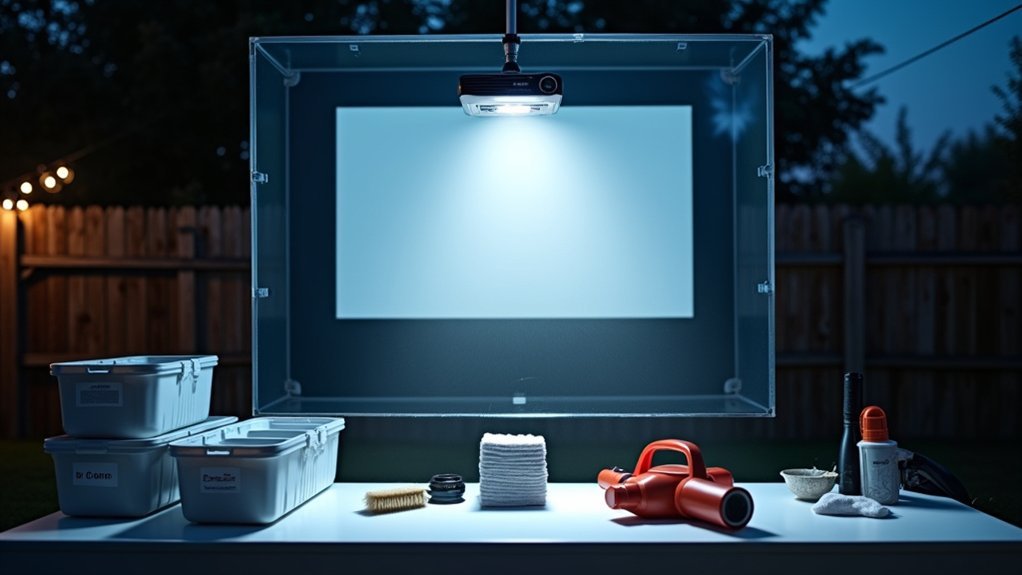
Dust particles can silently wreak havoc on your outdoor movie projector’s internal components, clogging ventilation systems and settling on delicate optical lenses. You’ll want to invest in a quality dust cover specifically designed for your projector model. These covers create a protective barrier during storage periods between movie nights.
Store your projector in a sealed hard case with foam padding when not in use. Before each storage session, use a soft microfiber cloth to wipe down exterior surfaces and a bulb air blower to remove particles from vents. Never use compressed air, as it can force debris deeper into the unit.
Consider adding silica gel packets inside your storage case to absorb moisture while keeping the environment clean. Regular maintenance prevents costly repairs and extends your projector’s lifespan.
Moisture and Humidity Management Solutions
Protecting your outdoor projector from moisture damage requires proactive humidity control measures.
You’ll want to place silica gel desiccant packs inside your storage case to absorb excess moisture and prevent condensation from forming on sensitive optical components. For long-term protection, consider investing in climate-controlled storage options that maintain consistent temperature and humidity levels year-round.
Silica Gel Desiccant Packs
Silica gel desiccant packs consistently rank among the most effective and affordable tools for protecting your outdoor movie projector from moisture damage during storage. These small packets absorb excess humidity, preventing condensation that can destroy sensitive optical components and electronic circuits.
You’ll want to place multiple packs around your projector inside its storage container. Replace them every few months or when they change color, indicating saturation.
| Pack Size | Coverage Area | Replacement Cost |
|---|---|---|
| 5 grams | Small cases | $0.15-0.25 each |
| 25 grams | Medium bins | $0.50-0.75 each |
| 50 grams | Large containers | $1.00-1.50 each |
Don’t underestimate moisture’s destructive power. A few dollars spent on silica gel packs can save you hundreds in projector repairs or replacement costs.
Climate-Controlled Storage Options
When silica gel packs aren’t enough to combat persistent humidity issues, climate-controlled storage becomes your best defense against moisture damage. These storage solutions maintain consistent temperature and humidity levels year-round, protecting your projector’s sensitive electronics and optical components from condensation and corrosion.
You have several options to take into account. Dedicated climate-controlled storage units keep humidity between 30-50%, ideal for electronic equipment. If you’re storing at home, a dehumidifier in your storage area works effectively. Portable mini dehumidifiers designed for closets and cabinets offer affordable protection for smaller spaces.
Temperature stability matters just as much as humidity control. Rapid temperature fluctuations cause condensation inside your projector’s housing. Choose a location that maintains temperatures between 50-80°F, avoiding garages, attics, and outdoor sheds where conditions fluctuate dramatically.
Portable Storage Containers for Backyard Projectors
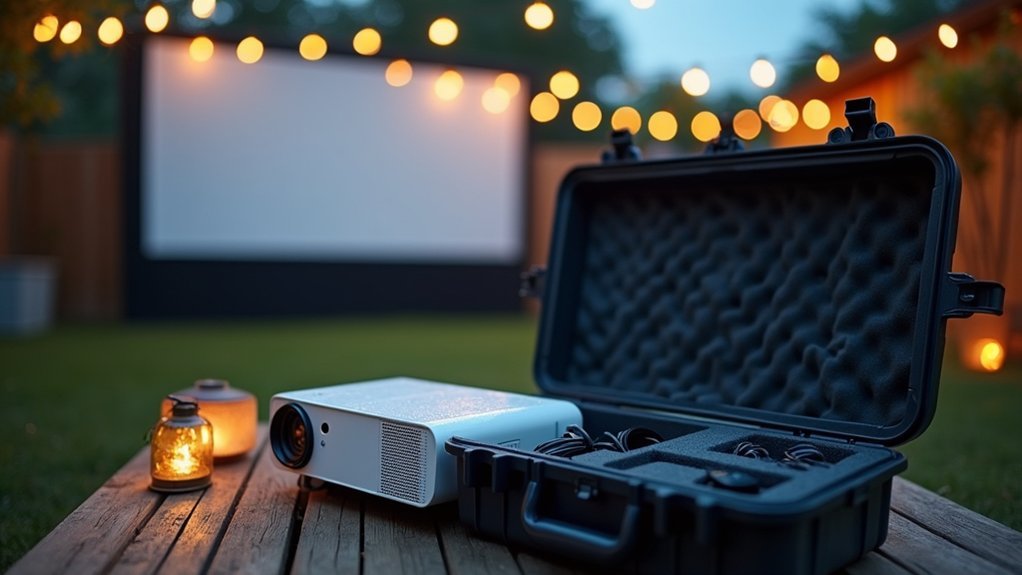
A quality storage container keeps your backyard projector safe from dust, moisture, and accidental bumps between movie nights. Look for hard-shell cases with customizable foam inserts that cradle your specific projector model. These cases absorb shock during transport and prevent internal components from shifting.
You’ll find excellent options in pelican-style cases designed for electronics. Choose containers with pressure-release valves if you’re storing in areas with temperature fluctuations. Waterproof seals protect against unexpected rain or morning dew if you accidentally leave the case outside.
Consider containers with compartments for cables, remotes, and lens caps. Soft-lined interior pockets prevent scratches on your projector’s surface. Wheeled options make moving heavier equipment easier across your yard. Always make certain your projector cools completely before sealing it inside any container to prevent condensation damage.
Wall-Mounted Cabinets for Permanent Outdoor Setups
For homeowners who’ve committed to a dedicated outdoor theater space, wall-mounted cabinets offer the ultimate protection and convenience. These permanent fixtures keep your projector secure, dry, and ready for instant movie nights without hauling equipment back and forth.
When selecting a wall-mounted cabinet, prioritize weather-resistant materials like marine-grade stainless steel, powder-coated aluminum, or UV-stabilized polymer. Your cabinet needs proper ventilation to prevent heat buildup and moisture accumulation, so look for designs with louvered panels or built-in fans.
Position your cabinet under an eave or covered patio area for added protection. Install it at the correct height and angle for your screen setup, and consider models with lockable doors to deter theft. Many cabinets include cable management systems that keep connections organized and protected from the elements.
Weatherproof Enclosures for Year-Round Protection
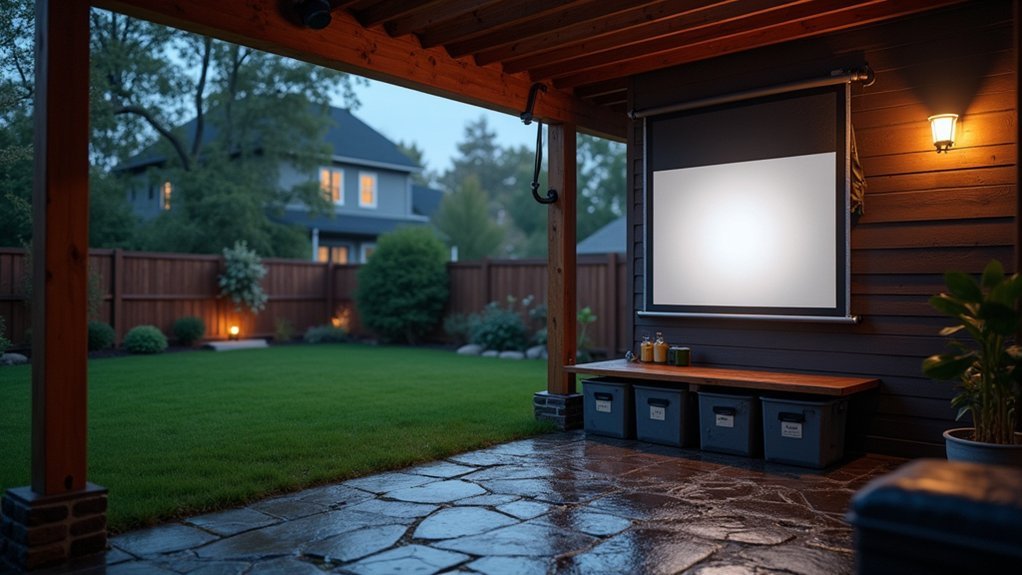
Outdoor projectors frequently face harsh conditions that can destroy sensitive electronics in a single season. Weatherproof enclosures offer your equipment protection against rain, snow, humidity, and extreme temperatures without requiring you to move the projector indoors.
You’ll find enclosures made from marine-grade aluminum, powder-coated steel, or UV-resistant polymers. These materials resist corrosion and maintain structural integrity through temperature fluctuations. Look for models with IP65 or higher ratings, which guarantee protection against dust infiltration and water jets from any direction.
Quality enclosures include ventilation systems with filtered intake ports to prevent overheating during operation. Many feature lockable access panels, integrated cable management, and mounting brackets compatible with standard ceiling or wall installations.
Some premium options include thermostatically controlled heaters for cold climates and automatic lens covers that seal when you power down.
DIY Storage Solutions on a Budget
Building your own projector storage doesn’t have to drain your wallet when you think outside the box. Repurpose a sturdy plastic cooler by adding foam padding inside—it provides excellent insulation and moisture protection for under $30.
You can also convert a weatherproof deck box into a dedicated projector home with custom-cut foam inserts.
For minimal investment, line a wooden crate with waterproof material and install a simple latch. Alternatively, use PVC pipe to construct a sealed tube enclosure that’s completely customizable to your projector’s dimensions.
Don’t overlook thrift store finds like hard-shell suitcases or tool boxes. Add silica gel packets to absorb moisture and attach small hooks inside for cable organization. These budget-friendly options protect your equipment effectively without expensive commercial solutions.
Organizing Cables and Accessories Alongside Your Projector
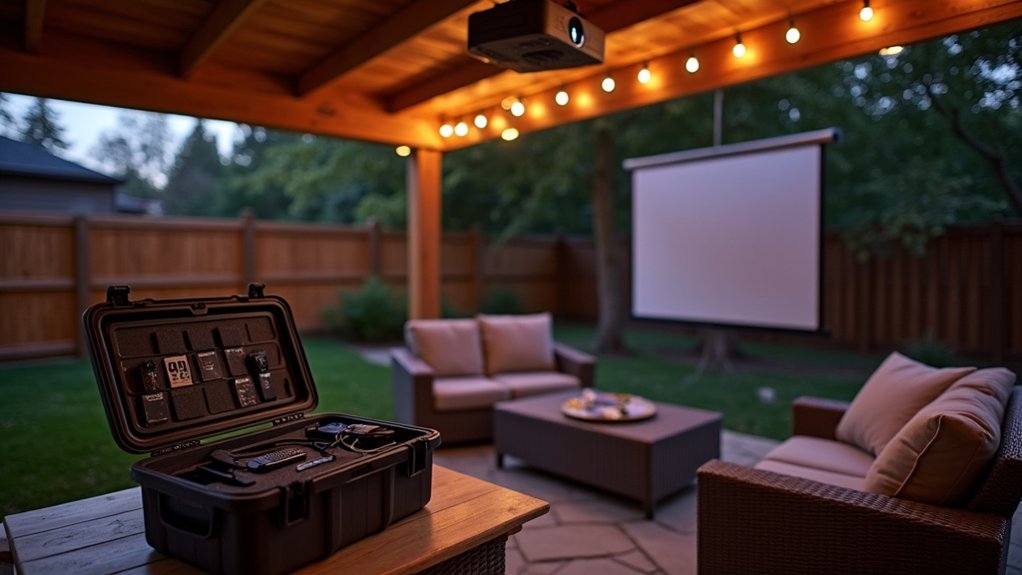
Keeping your cables and accessories neatly sorted alongside your projector cuts down setup time and prevents frustrating tangles when movie night arrives.
Use labeled zippered pouches or small compartmentalized containers to separate HDMI cables, power cords, and audio connectors. Velcro cable ties work better than twist ties because they’re reusable and won’t damage wire insulation.
Store remote controls, lens caps, and adapters in a dedicated mesh pocket within your projector case.
This keeps small items visible and accessible without digging through tangled cords.
Consider a cable roll-up organizer that hangs inside your storage container’s lid.
You’ll maximize space while keeping everything within reach.
Always coil cables loosely in figure-eight patterns to prevent internal wire damage and extend their lifespan markedly.
Temperature Considerations for Long-Term Storage
Storing your outdoor projector in extreme temperatures can permanently damage its internal components and shorten its lifespan. You’ll want to avoid garages, attics, and outdoor sheds where temperatures fluctuate dramatically throughout the year.
| Temperature Range | Storage Suitability | Risk Level |
|---|---|---|
| 32°F – 75°F | Ideal | Low |
| 75°F – 95°F | Acceptable | Moderate |
| Below 32°F or Above 95°F | Avoid | High |
Keep your projector in a climate-controlled space like a closet or interior room. Cold temperatures can cause LCD panels to crack, while excessive heat degrades lamp components and warps plastic housings. Before use after storage, let your projector acclimate to room temperature for 30 minutes to prevent condensation from forming inside the unit.
Security Measures to Prevent Theft and Damage
Beyond protecting your projector from environmental hazards, you’ll also need to safeguard it against theft and intentional damage. High-quality projectors represent significant investments that attract thieves, especially when stored in garages or outdoor sheds.
Projectors are valuable investments—don’t let thieves walk away with yours by neglecting basic security measures.
Install a lockable storage cabinet or case specifically designed for electronics. Choose models with reinforced steel construction and tamper-resistant locks. For added protection, anchor the cabinet to the floor or wall using security bolts.
Consider installing motion-activated cameras and alarms in your storage area. These deterrents discourage potential thieves and provide evidence if theft occurs.
Don’t overlook insurance coverage. Document your projector’s serial number, purchase date, and value. Store receipts and photos in a separate location.
Finally, avoid advertising your equipment. Keep storage areas private and resist discussing expensive gear with strangers.
Maintenance Tips Before Storing Your Projector
Before you tuck your outdoor projector away for storage, you’ll want to perform essential maintenance that prevents costly repairs and extends your equipment’s lifespan.
Start by cleaning the lens with a microfiber cloth and specialized lens cleaner.
Remove dust from air vents using compressed air, ensuring you don’t blow debris deeper into the unit.
Check and clean or replace the air filter according to your manufacturer’s guidelines.
Inspect all cables for fraying or damage, and wipe down the projector’s exterior with a dry cloth.
Allow the unit to cool completely before storing—never pack it while warm.
Document your current settings and update the firmware if needed.
Finally, remove any batteries from the remote control to prevent corrosion.
These simple steps protect your investment during storage periods.
Frequently Asked Questions
Can I Store My Outdoor Projector in the Same Case as My Laptop?
You can store your projector with your laptop if there’s enough padding between them. However, you’ll get better protection using a dedicated projector case that prevents scratches and provides proper ventilation for residual heat.
How Often Should I Replace the Storage Case for My Projector?
You don’t need to replace your projector’s storage case on a set schedule. Replace it when you notice worn padding, broken latches, torn seams, or compromised water resistance that could leave your equipment unprotected.
What Insurance Options Cover Outdoor Projector Damage During Storage?
You can protect your outdoor projector through homeowner’s or renter’s insurance, which typically covers electronics. You’ll also find specialized electronics insurance policies and extended warranty plans that specifically cover storage-related damage.
Are There Projector Storage Solutions That Include Built-In Charging Capabilities?
Yes, you’ll find projector storage cases with built-in charging ports and cable management systems. Some hardshell cases feature integrated power banks, so you can charge your projector while it’s safely stored between outdoor movie nights.
Which Projector Brands Offer Compatible Proprietary Storage Accessories for Their Models?
You’ll find proprietary storage accessories from brands like Epson, BenQ, and Optoma, which offer custom carrying cases designed for their specific models. Sony and JVC also provide dedicated storage solutions that fit their projectors perfectly.


Leave a Reply