
Outdoor projectors need 2000+ lumens because you’re battling light sources you can’t control. Streetlights, porch lights, neighboring windows, and even moonlight compete with your projected image. Unlike indoor setups where you can create total darkness, outdoor environments always have some ambient light washing out your screen. Higher lumen counts overpower these competing light sources, preserving your color saturation and contrast. Your screen size and throw distance also play pivotal roles in determining exactly how much brightness you’ll actually need.
Understanding Lumens and How They Measure Projector Brightness
When you’re shopping for an outdoor projector, lumens become your most critical specification to understand. A lumen measures the total amount of visible light a projector emits. Think of it as the raw power behind your image’s brightness.
Unlike indoor settings where you control ambient light, outdoor environments work against you. Streetlights, porch lights, and even moonlight compete with your projected image. Higher lumen counts push through this interference.
Projector manufacturers rate lumens under ideal laboratory conditions. Real-world performance typically falls 10-20% below these ratings. That’s why you need buffer room in your specifications.
ANSI lumens provide the most standardized measurement across brands. When comparing projectors, stick to this metric for accurate assessments. Don’t confuse marketing terms like “peak lumens” with actual sustained brightness output.
How Ambient Light Affects Your Backyard Movie Experience
Ambient light works against your outdoor projector in ways you mightn’t expect. Every light source in your environment competes with your projected image. Street lamps, porch lights, neighboring windows, and even moonlight wash out your picture by adding brightness to the screen surface.
Your projector creates images by projecting light onto a surface. When ambient light hits that same surface, it reduces the contrast between bright and dark areas of your image. Colors appear faded, blacks look gray, and details disappear into a hazy mess.
The problem intensifies during twilight hours when you’re enthusiastic to start your movie. Even after sunset, residual daylight lingers for 30-60 minutes. You’ll need sufficient lumens to overcome these competing light sources.
The Difference Between Indoor and Outdoor Projection Requirements
Understanding how ambient light impacts your image helps explain why outdoor projection demands far more brightness than indoor setups. When you’re inside, you control the environment—close the blinds, dim the lights, and you’ve created ideal viewing conditions. Outdoors, you’re competing against uncontrollable light sources.
| Factor | Indoor | Outdoor |
|---|---|---|
| Ambient Light Control | Full control | Limited/none |
| Recommended Lumens | 1000-1500 | 2000-3500+ |
| Screen Reflectivity Needs | Standard | High-gain preferred |
| prime Viewing Time | Anytime | After sunset |
Even after dark, streetlights, porch lights, and moonlight create ambient interference you don’t face indoors. Your projector must overpower these competing light sources to deliver a watchable image. That’s why outdoor setups require roughly double the brightness of their indoor counterparts.
Screen Size and Throw Distance Impact on Brightness Needs
Beyond ambient light considerations, your screen size and throw distance directly determine how much brightness you’ll actually need. When you increase your screen size, you’re spreading the same light output across a larger surface area. This dilutes the perceived brightness markedly.
A projector displaying on a 100-inch screen appears noticeably brighter than the same unit on a 150-inch screen. You’re essentially stretching fewer lumens across more square footage. For outdoor setups where 120-inch screens are common, you’ll need extra brightness to compensate.
Throw distance matters too. The farther your projector sits from the screen, the more light dissipates before reaching the surface. Longer throws require higher lumen counts to maintain image quality. Calculate your specific setup requirements before purchasing to make certain adequate brightness for your outdoor viewing experience.
Comparing Projector Performance at Different Lumen Levels
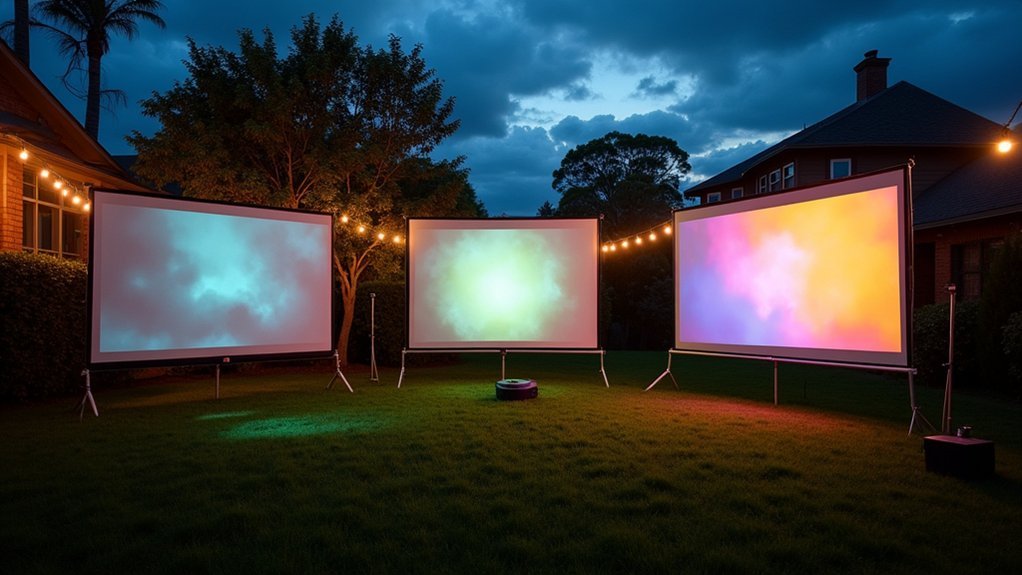
When you’re shopping for an outdoor projector, lumen ratings serve as your primary brightness benchmark. A 1000-lumen projector works fine in completely dark rooms but washes out instantly under streetlights or a full moon. You’ll notice text becomes unreadable and colors lose their vibrancy.
Step up to 1500 lumens, and you’ll handle dim twilight conditions reasonably well. However, any ambient light from nearby windows or passing cars still degrades your image quality noticeably.
At 2000+ lumens, you’ll finally achieve the visibility threshold outdoor viewing demands. Your images remain crisp even when neighbors have porch lights on or cars drive past. Colors stay saturated, blacks maintain depth, and you won’t strain to see details. For gatherings that start before complete darkness, this range proves essential for enjoyable viewing.
Timing Your Outdoor Movie Nights for Optimal Visibility
Even the brightest projector can’t compete with direct sunlight, so timing becomes just as important as your equipment specifications.
Plan your screenings to begin at least 30 minutes after sunset when ambient light drops considerably. During summer months, this might mean starting at 9:00 PM or later, while winter screenings can begin earlier.
Check your local sunset times and factor in twilight duration.
Civil twilight—the period when the sun sits just below the horizon—still produces enough light to wash out your image. You’ll want full darkness for the best results.
If you’re keen to start earlier, position your screen in a shaded area facing away from the western sky. Trees, buildings, or fences can block lingering sunlight and give you a head start on your movie night.
Additional Factors That Influence Outdoor Projector Brightness
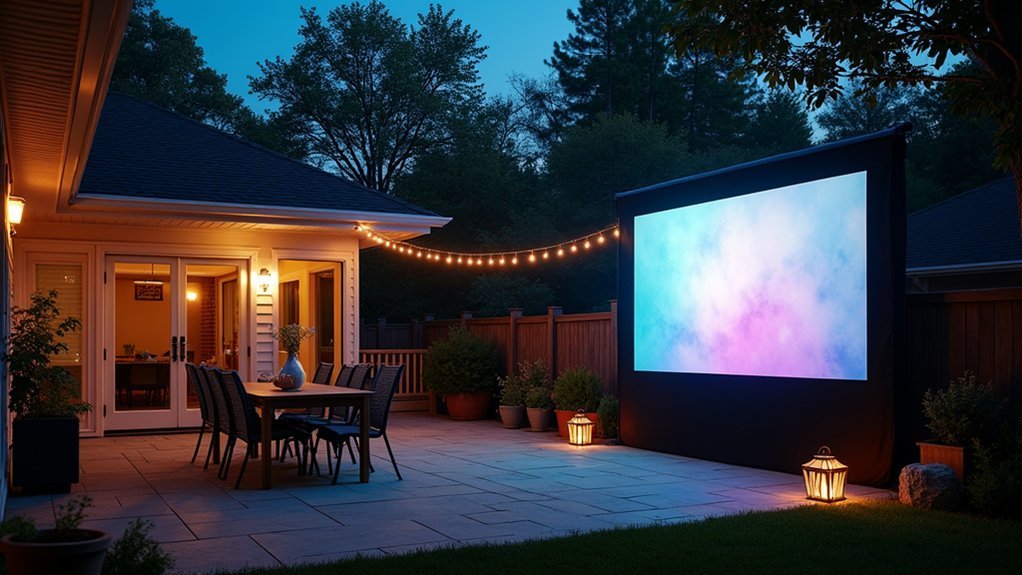
While lumen count matters most when shopping for an outdoor projector, several other factors determine how bright your image actually appears on screen.
| Factor | Impact on Brightness |
|---|---|
| Screen material | Reflective screens boost perceived brightness by 30-50% |
| Ambient light | Streetlights and porch lights wash out your image |
| Projection distance | Longer throws spread light thinner, reducing intensity |
You’ll also want to contemplate your projector’s contrast ratio. Higher contrast makes images appear more vivid, even at identical lumen ratings. The lens quality affects light transmission too—cheaper optics lose brightness before it reaches your screen.
Don’t overlook your screen size either. Projecting onto a massive 150-inch surface requires markedly more lumens than a modest 100-inch setup to maintain the same brightness level.
Choosing the Right Lumen Count for Your Backyard Setup
When selecting the ideal lumen count for your backyard projector, you’ll need to evaluate two critical factors: your screen size and the ambient light conditions in your outdoor space.
Larger screens require more lumens to maintain image brightness and clarity across the entire viewing surface. You’ll also want to account for competing light sources like street lamps, porch lights, and even moonlight that can wash out your projected image.
Screen Size Considerations
Because screen size directly impacts how bright your projected image appears, you’ll need to factor in your desired viewing area when selecting a projector’s lumen count. Larger screens spread light across more surface area, reducing overall brightness and image clarity.
Here’s how screen size affects your lumen requirements:
- 100-inch screens require a minimum of 2,000 lumens for adequate visibility during twilight hours.
- 120-inch screens demand at least 2,500 lumens to maintain sharp contrast and color accuracy.
- 150-inch screens need 3,000+ lumens to prevent washed-out images in any ambient light conditions.
You should also consider your typical seating distance. Viewers sitting farther back won’t notice minor brightness deficiencies as easily as those positioned closer.
Match your screen dimensions to your projector’s capabilities for ideal outdoor viewing results.
Ambient Light Factors
Screen size matters, but ambient light conditions in your backyard will ultimately determine whether your projector delivers a watchable image or a washed-out disappointment.
Your outdoor space faces multiple light sources that indoor setups avoid. Street lamps, porch lights, neighboring windows, and even moonlight compete directly with your projected image. During twilight hours, residual sunlight creates enough ambient brightness to overpower projectors under 2000 lumens.
You’ll need to assess your specific environment. Trees and fences provide natural light blocking, while open yards expose screens to more interference. Light-colored walls and surfaces reflect ambient light back onto your screen, further degrading contrast.
Consider your typical viewing time. Early evening screenings demand higher lumen counts than late-night movies. Testing your setup during actual viewing conditions reveals whether you’ve chosen adequate brightness.
Frequently Asked Questions
Can I Use a Regular Indoor Projector Outside if I Add a Brighter Bulb?
You can’t simply swap bulbs in most projectors since they’re designed for specific lamps. You’re better off purchasing a projector rated for higher lumens or using a portable outdoor model built for brighter environments.
How Long Do High-Lumen Projector Bulbs Typically Last Before Needing Replacement?
You’ll typically get 2,000 to 5,000 hours from high-lumen projector bulbs before they need replacing. Your usage habits matter—running at maximum brightness consistently will shorten lifespan, while eco-mode settings can extend it considerably.
Will a 2000+ Lumen Projector Overheat During Hot Summer Evenings Outdoors?
You won’t typically experience overheating issues with quality 2000+ lumen projectors outdoors. They’re designed with cooling systems that handle warm conditions. Just make sure you don’t block vents and allow proper airflow around your device.
Are Laser Projectors Better Than LED Projectors for Outdoor Movie Nights?
Laser projectors typically outperform LED models for outdoor movie nights because they deliver brighter output, maintain color accuracy longer, and offer extended lifespan. You’ll also appreciate their instant on/off capability and better performance in ambient light.
Do I Need Special Weatherproof Cables for Connecting My Outdoor Projector Setup?
You don’t necessarily need weatherproof cables for temporary setups, but you should use outdoor-rated extension cords and HDMI cables with protective covers. For permanent installations, you’ll want weather-resistant connections to prevent moisture damage.

Leave a Reply