
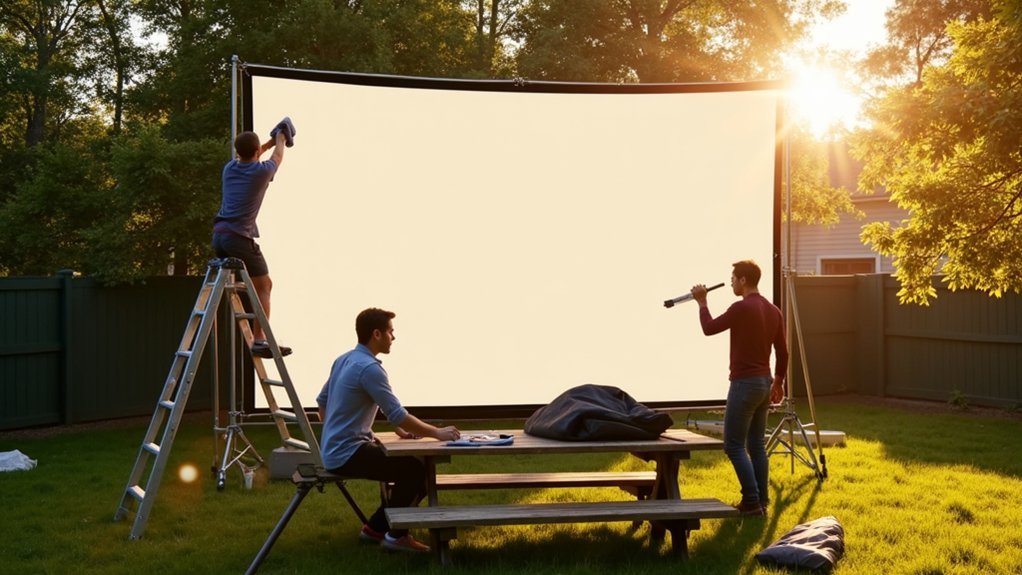
You’ll extend your outdoor projector screen’s life by following five essential maintenance practices. Brush off dust and debris before each use with a soft-bristled brush or microfiber cloth. Clean stains using mild soap and distilled water, then let the surface dry completely before storage. Store your screen in a cool, dry location inside a breathable bag. Protect it from wind and moisture during use, and repair small tears immediately. Each tip below covers the specific techniques you’ll need.
Remove Dust and Debris Before Each Use
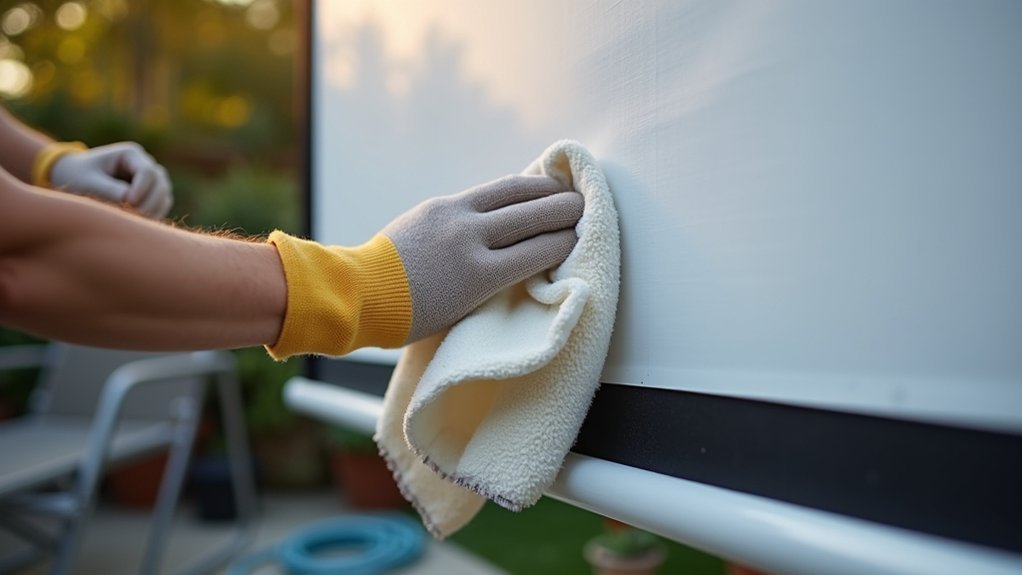
Before each movie night or outdoor gathering, you’ll want to give your projector screen a thorough once-over to clear away any accumulated dust, pollen, or debris. Start by using a soft-bristled brush or microfiber cloth to gently sweep the surface from top to bottom. This prevents particles from scratching the screen material during cleaning.
For stubborn debris, use a can of compressed air held at a safe distance to dislodge stuck particles without touching the surface. Pay special attention to corners and edges where dust tends to collect. If your screen has a frame, wipe it down separately to prevent transfer onto the viewing surface. This quick pre-use inspection takes just minutes but markedly extends your screen’s lifespan and guarantees crisp, clear image quality every time.
Clean Stains With Gentle Solutions and Soft Cloths
Sometimes dust removal isn’t enough, and you’ll need to tackle actual stains from bird droppings, food splatters, or drink spills. Mix a mild soap solution with distilled water and apply it using a microfiber cloth. Work gently in circular motions to lift the stain without damaging the screen’s reflective coating.
| Solution Type | Best For |
|---|---|
| Mild dish soap + water | Food and drink spills |
| Distilled water only | Light marks and smudges |
| Isopropyl alcohol (diluted) | Sticky residue |
| Screen-specific cleaner | Stubborn stains |
| White vinegar solution | Bird droppings |
Never use abrasive materials, ammonia-based cleaners, or rough paper towels. These can scratch the surface or strip away protective coatings. Always let the screen dry completely before rolling or folding it for storage.
Store Your Screen Properly Between Screenings
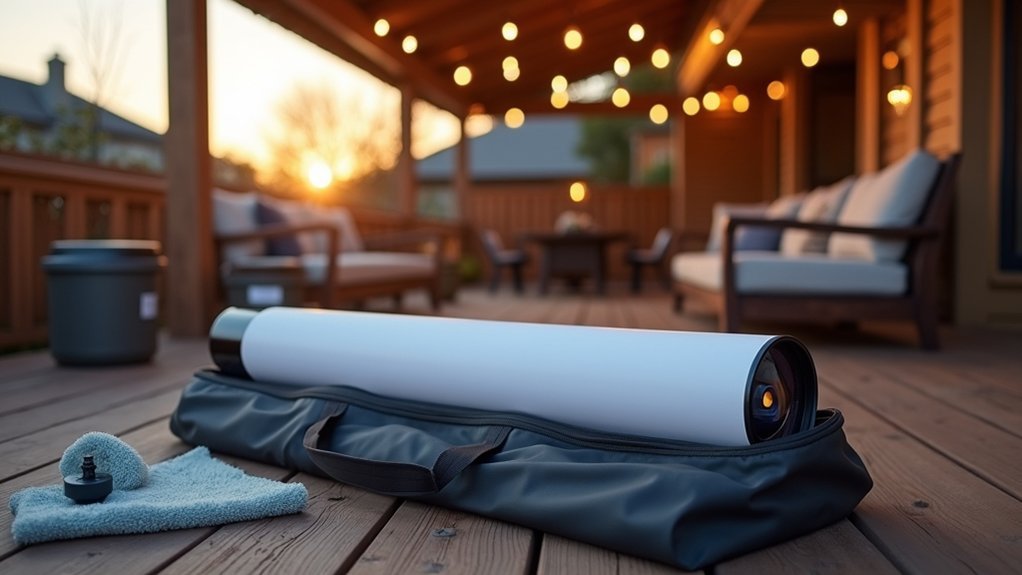
After you’ve cleaned your outdoor projector screen, how you store it makes all the difference in its lifespan. Roll your screen loosely rather than folding it to prevent permanent creases that distort your image. Always make certain the surface is completely dry before storing to prevent mold and mildew growth.
Choose a cool, dry location away from direct sunlight and extreme temperature fluctuations. A climate-controlled garage, closet, or basement works well. Store your screen in its original carrying case or a breathable fabric bag to protect it from dust and debris.
Keep the screen upright or horizontally flat—never lean it against walls at an angle. This prevents warping and maintains the screen’s tension. Position it away from sharp objects that could puncture or scratch the viewing surface.
Protect Your Screen From Weather Damage
While storing your screen correctly preserves it indoors, you’ll also need to shield it from the elements during outdoor use. Wind poses the biggest threat, so anchor your screen securely with stakes, sandbags, or weighted bases. Position it in sheltered areas when possible.
Never leave your screen outside overnight, even during dry spells. Morning dew deposits moisture that promotes mold growth and material degradation. If unexpected rain arrives mid-screening, pack up immediately rather than waiting it out.
UV rays cause fabric to fade and weaken over time. Schedule viewings for evening hours when sunlight won’t beat down on the material. Consider screens with UV-resistant coatings for added protection. Check weather forecasts before each outdoor movie night to avoid preventable damage.
Inspect and Repair Minor Tears Promptly
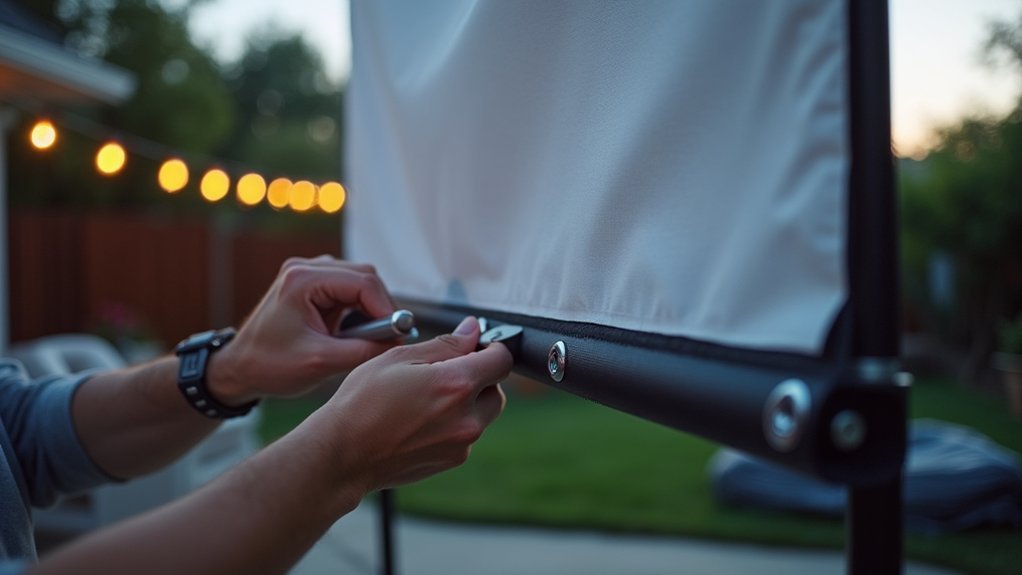
Even small tears can quickly become major problems if you don’t address them right away. Make it a habit to inspect your outdoor projector screen before and after each use. Run your fingers along the surface to detect any snags or punctures that mightn’t be immediately visible.
When you find minor damage, act fast. For small tears, apply screen repair tape designed specifically for projection surfaces. This specialized tape maintains image quality while preventing further spreading. For slightly larger tears, use a patch kit that matches your screen material.
Don’t attempt DIY fixes on significant damage—you’ll likely make things worse. Instead, contact the manufacturer about professional repair options. Regular inspection takes just minutes but saves you from costly full replacements down the road.
Frequently Asked Questions
How Often Should I Replace My Outdoor Projector Screen for Optimal Performance?
You should replace your outdoor projector screen every 5-10 years, depending on usage and exposure to elements. If you notice fading, tears, or image quality degradation, it’s time to invest in a new one.
Can I Use My Outdoor Projector Screen in Freezing Temperatures?
You can use most outdoor projector screens in freezing temperatures, but you’ll want to check your manufacturer’s specifications first. Cold weather can make some screen materials brittle, so handle yours carefully during setup.
What’s the Best Way to Transport an Outdoor Projector Screen Safely?
You’ll want to roll your screen loosely rather than folding it to prevent creases. Store it in a padded carrying case, keep it away from sharp objects, and avoid placing heavy items on top during transport.
Are Certain Screen Materials Better for Daytime Outdoor Viewing?
Yes, you’ll get better daytime viewing with ambient light rejecting (ALR) screens. They’re designed to reject sunlight while reflecting projector light toward you, giving you brighter, more vibrant images even in direct sunlight.
How Do I Prevent Insects From Damaging My Outdoor Projector Screen?
You’ll want to store your screen indoors when not in use and apply insect-repellent sprays around the viewing area. Don’t leave lights on near the screen, as they’ll attract bugs during nighttime showings.


Leave a Reply