
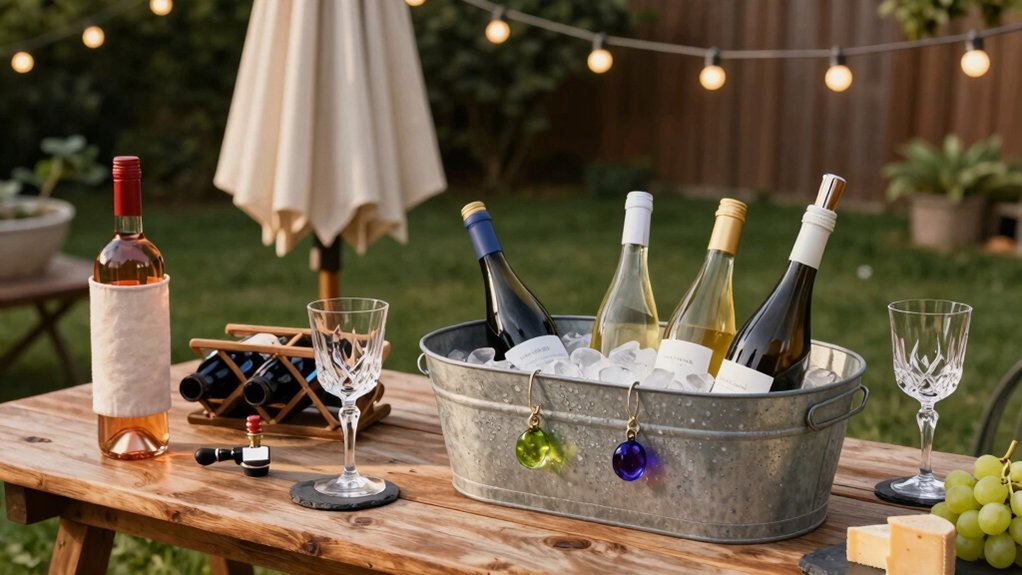
Keep your wines perfect outdoors by serving at ideal temperatures (40-50°F for whites, 55-65°F for reds) in vacuum-insulated chillers. Minimize oxygen exposure with preservation tools like vacuum pumps or specialized stoppers. Place bottles in shaded areas away from UV rays and vibration sources. Consider when to decant—just before serving for reds, rarely for whites. Organize your service area with dedicated zones for preparation, serving, and storage. These simple strategies will transform your backyard wine experience.
Serving at the Perfect Temperature: The Goldilocks Zone
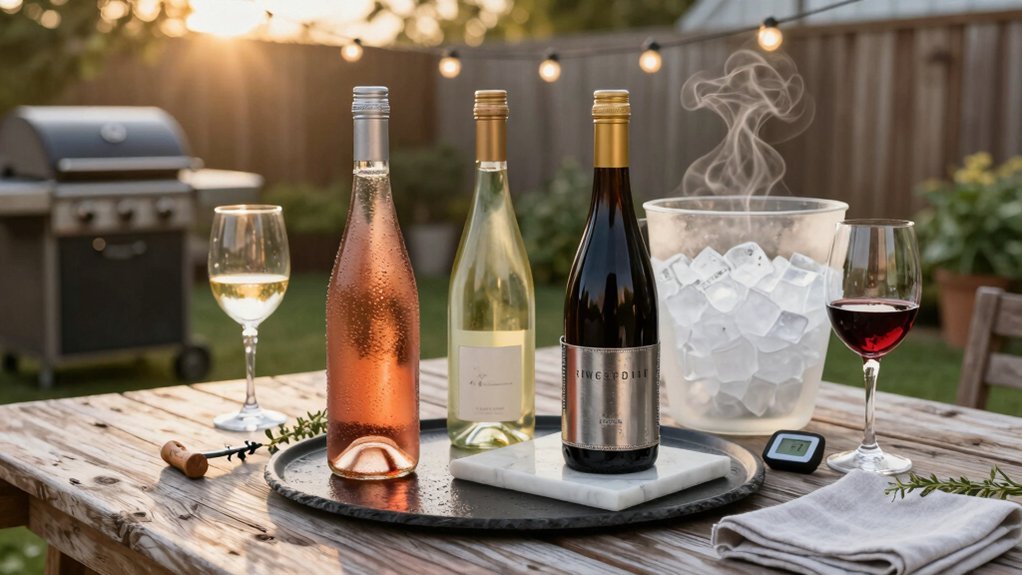
Why does temperature matter so much when serving wine outdoors? It’s about preserving the winemaker’s intent. White and sparkling wines shine at 40-50°F, while reds reveal their complex aromas at a warmer 55-65°F. These aren’t arbitrary numbers—they’re the sweet spot where flavors and aromas reach their peak expression.
When entertaining outside, heat can quickly compromise your perfect pour. Invest in vacuum-insulated chillers like Vinglacé that maintain target temperatures without imparting metallic flavors. For whites and sparklings, insulated carafes eliminate frequent trips to the refrigerator.
Proper temperature control isn’t just about wine preservation—it ensures your guests experience accurate flavor profiles and enhances food pairings. Your light bites will shine alongside wines served in their ideal temperature range, creating a harmonious backyard tasting experience.
Minimizing Air Exposure: Preservation Tools and Techniques
How quickly can oxygen transform your carefully selected wine from vibrant to vinegary? Once you’ve uncorked a bottle during your backyard gathering, the clock starts ticking. Fortunately, several preservation tools can extend your wine’s freshness.
- Vacuum Systems: Wine Saver Concerto removes air with a reusable stopper and pump, slowing oxidation in opened bottles.
- Needle-Through-Cork: Coravin Eleven lets you pour without removing the cork, preserving the remaining wine indefinitely.
- Simple Stoppers: Avina Locking Wine Stopper provides an effective seal without complicated mechanics.
- Preservation Carafes: Savino Connoisseur keeps wine fresh for up to a week by creating a protective barrier between wine and air.
Choose the method that fits your entertaining style, but remember that even the best preservation systems work better when you store wine in cooler temperatures.
Strategic Bottle Placement: Light, Heat, and Vibration Control
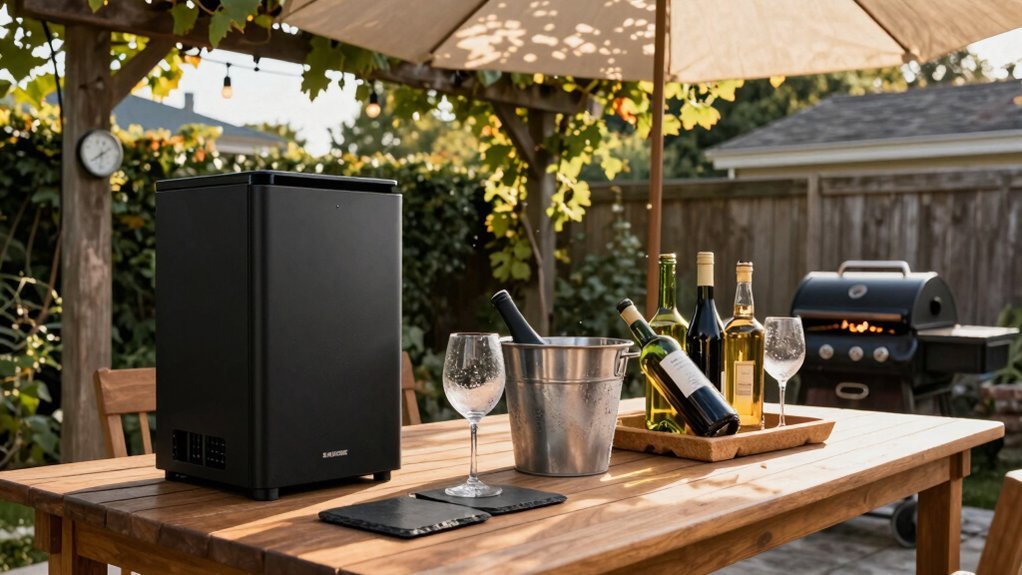
Even the best preservation techniques won’t save your wine if it’s baking under the summer sun. When entertaining outdoors, position your wine service area in a shaded spot to protect bottles from harmful UV rays that accelerate chemical reactions and degrade flavors.
Invest in a dedicated wine cooler for backyard gatherings to maintain the ideal temperature range of 50-59°F. This preserves delicate tertiary aromas while preventing premature aging. If you’re serving bottles throughout the day, keep them horizontally in your cooler to ensure the cork stays moist and prevents air intrusion.
Set up your serving station away from speakers, pool equipment, or high-traffic areas. Constant vibration disrupts sediment and speeds up oxidation. With strategic placement, you’ll maximize both enjoyment and longevity of your wines.
Decanting Decisions: When and How for Outdoor Settings
When should you decant wine for outdoor gatherings? Choose your approach based on wine type and weather conditions. Young, tannic reds benefit most from decanting (30 minutes to 2 hours), while whites need only 15-30 minutes. For outdoor events, timing is crucial—decant just before serving to prevent temperature fluctuations and ensure the wine reaches its optimal bouquet when poured.
- Pre-chill your decanter if serving in hot weather and keep the wine away from direct sunlight
- Select wide-bowl decanters for wines needing rapid aeration, narrow-neck options for controlled exposure
- Consider wine age carefully—young reds improve with decanting while older vintages may be damaged
- Skip decanting for sparkling wines, which typically lose their effervescence when decanted
Organization Systems: Maintaining Wine Quality Throughout Your Event
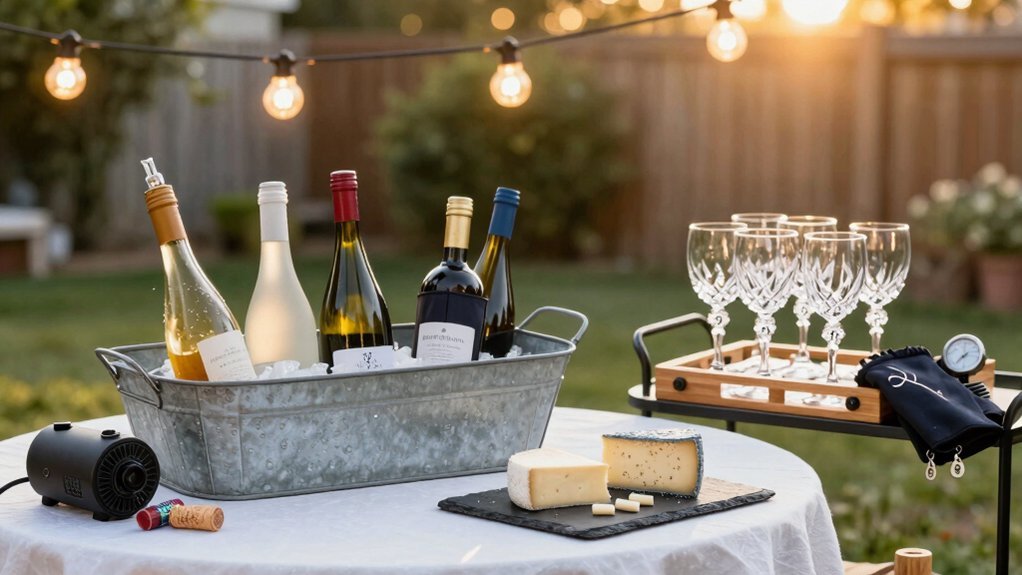
Why do perfectly selected wines sometimes disappoint halfway through your backyard gathering? Often, it’s not the wine selection but how you’ve organized your service system. Creating dedicated zones for preparation, service, and restocking helps maintain wine quality from first pour to last.
| Zone Type | Temperature Control | Essential Equipment |
|---|---|---|
| Prep Area | 50-59°F constant | Thermometers, hygrometers |
| Service Station | Vacuum-insulated chillers | Proper stoppers, shade protection |
| Storage | Side-positioned bottles | Moisture-controlled environment |
| Restocking | Minimal movement | Backup cooling options |
Position your service area away from direct sunlight with easy access to water. For opened bottles, use quality stoppers and refrigerate between pours to slow oxidation. Monitor humidity levels around 70% to keep corks from drying out, ensuring your final glass tastes as intended.
Frequently Asked Questions
How Long Can Opened Wine Last in Summer Heat?
You shouldn’t leave opened wine in summer heat for more than 1-2 hours. It’ll spoil quickly as temperatures rise, affecting taste and quality considerably.
Can I Freeze Leftover Wine for Cooking Later?
Yes, you can freeze leftover wine for cooking! Pour it into ice cube trays or small containers. It’ll keep for 4-6 months and works perfectly in sauces and stews.
Do Wine Preservers Work Differently for Red Versus White Wines?
Yes, wine preservers work similarly for both red and white wines, though you’ll typically store whites in the fridge after preservation while keeping reds at room temperature.
What’s the Fastest Way to Chill Wine Without Diluting It?
You’ll chill wine fastest by wrapping the bottle in a wet towel and placing it in the freezer for 20 minutes or using an ice bucket with salt.
Are Screw-Cap Wines Better for Outdoor Serving Than Corked Bottles?
Yes, screw-cap wines are better for outdoor serving. You won’t need corkscrews, they’re quicker to open, and they’ll maintain freshness longer if you don’t finish the bottle immediately.


Leave a Reply