
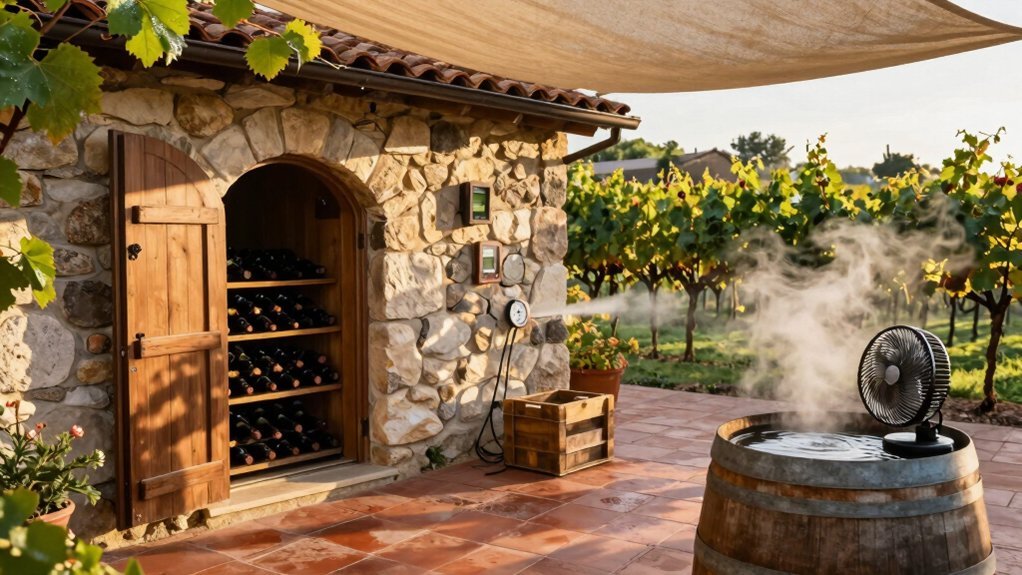
To control humidity in outdoor wine storage, maintain levels between 60-70% using a weatherproof shelter with proper insulation and vapor barriers. Install hygrometers at bottle level for real-time monitoring, and use dehumidifiers during muggy summers and humidifiers in dry winters. Ensure adequate ventilation with strategic openings that create natural airflow while preventing direct moisture exposure. Smart sensors with remote monitoring capabilities give you peace of mind while protecting your valuable collection from cork damage.
Understanding the Challenges of Outdoor Humidity for Wine
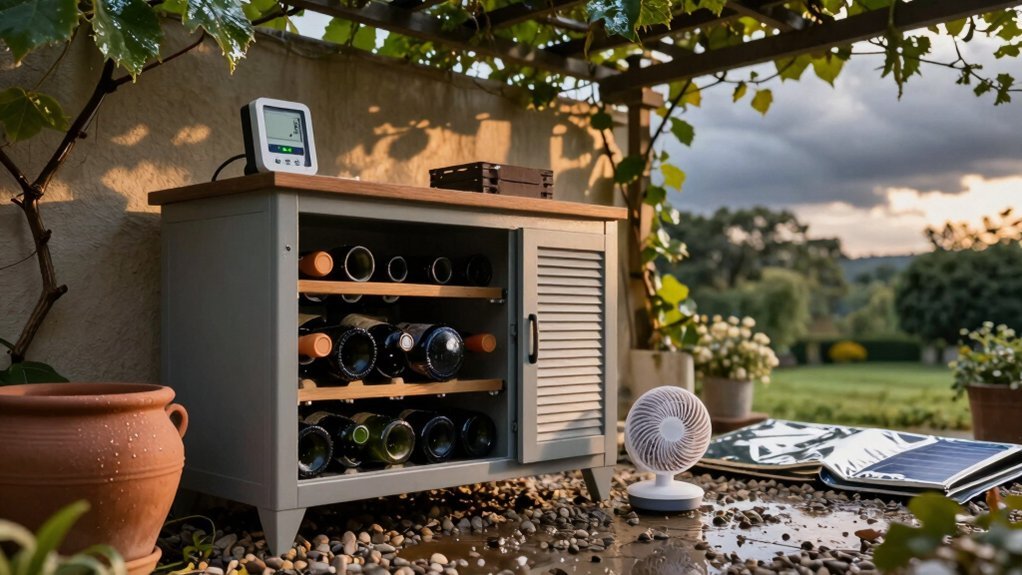
Why does storing wine outdoors pose unique humidity challenges? Unlike controlled indoor environments, outdoor humidity fluctuates dramatically with weather patterns and seasonal changes, typically ranging from 30% to 90%. This inconsistency compromises cork integrity and increases cork taint risk in long-term storage.
When humidity exceeds 75%, you’ll face mold growth on labels and increased moisture penetration through imperfect seals. Conversely, humidity below 50% dries corks and accelerates evaporation, causing ullage and harmful oxygen exposure.
You’ll also contend with dew point variations that create condensation on bottles during cool nights or foggy mornings. Temperature fluctuations compound these problems, as rapid changes stress seals and disrupt the delicate cork-wine microclimate more severely than stable indoor conditions would.
Sheltered Storage: Creating a Protected Environment
How can you create a suitable outdoor wine storage environment when Mother Nature refuses to cooperate? The solution lies in building a properly sheltered storage area with weatherproof roofing and walls that minimize temperature and humidity fluctuations. You’ll need to incorporate vapor barriers on warm-side insulation to prevent condensation from forming around your precious bottles.
For wine that thrives despite the elements, build shelter with strategic weatherproofing and vapor barriers to maintain perfect bottle conditions.
- Design with protection in mind – position your shelter to reduce wind-driven rain exposure while maintaining gentle airflow that won’t disturb bottles
- Implement proper drainage and waterproof footings to prevent ground moisture from rising into your storage area
- Choose materials specifically rated for high humidity and outdoor conditions, then maintain them regularly to prevent mold growth and structural issues
Natural Ventilation Strategies for Humidity Balance
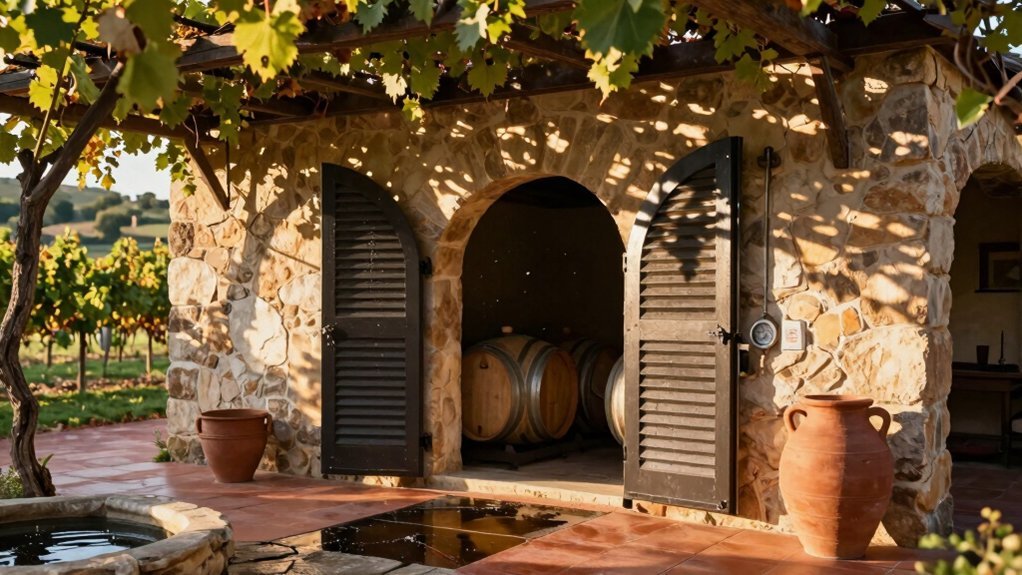
Natural airflow forms the backbone of effective humidity control in outdoor wine storage, allowing you to balance moisture levels without relying on energy-intensive mechanical systems. Position openings strategically at different heights—lower vents to admit cooler, drier air and upper vents to release warm, moist air. This creates a chimney effect that continuously refreshes your cellar’s atmosphere.
Size your passive vents proportionally to your storage space and align them with prevailing winds for optimal air exchange without creating harmful drafts. Choose wine racks with adequate spacing and perforated shelving to ensure air circulates freely around each bottle, preventing humidity pockets from forming.
Don’t overlook your landscaping choices—thoughtful exterior plantings and shading can significantly reduce heat gain and minimize condensation inside your wine storage area.
Monitoring Tools for Outdoor Wine Storage
Properly monitoring humidity in your outdoor wine storage is as crucial as the storage structure itself. Invest in digital hygrometers that offer real-time readings and data logging capabilities to track humidity patterns over time. Position dual-sensor models strategically to capture microclimates between bottle depth and cabinet exteriors.
Effective humidity monitoring isn’t optional—it’s the protective shield between your wine collection and environmental threats.
For effective monitoring, consider these crucial approaches:
- Set up smart alerts that notify you when relative humidity drifts outside the ideal 60%-70% range
- Monitor dew point readings alongside humidity to anticipate condensation issues before they affect bottle seals
- Pair humidity sensors with temperature monitors to assess the combined risk factors for cork damage and wine evaporation
Don’t rely on occasional manual checks—continuous monitoring gives you actionable data to make timely adjustments and protect your wine investment.
Seasonal Adjustments to Maintain Ideal Moisture Levels
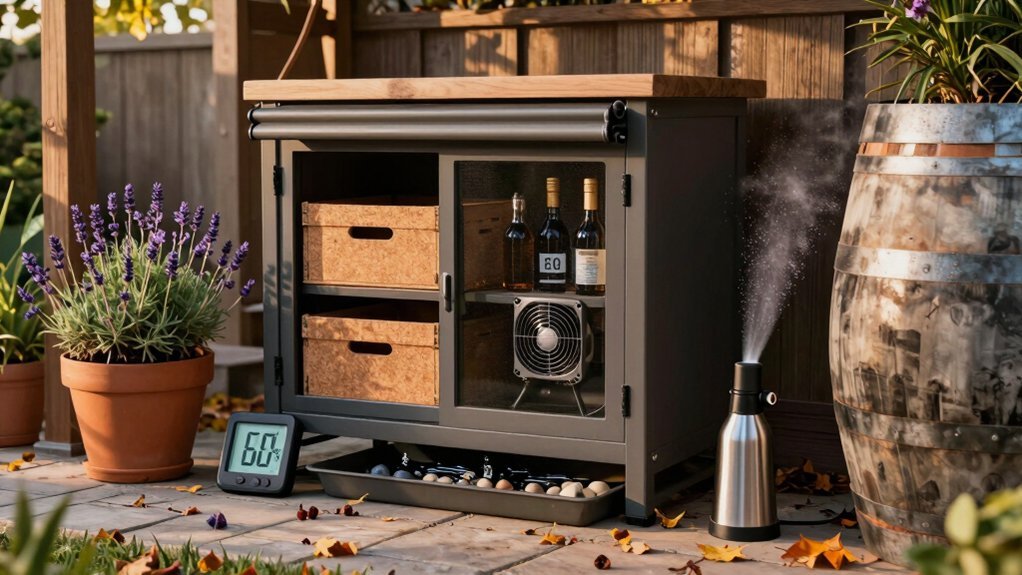
When outdoor temperatures fluctuate with the changing seasons, your wine storage’s humidity levels require strategic adjustments to maintain that critical 60-70% sweet spot.
During dry winter months, increase humidity using a controlled misting system to reach 60-70% RH.
Conversely, in muggy summers, employ dehumidification to keep levels below 75% RH to prevent mold growth.
Place a hygrometer at bottle level to monitor real-time conditions and make prompt adjustments as outdoor humidity shifts with weather changes.
Install vapor barriers and proper insulation to buffer against seasonal swings.
Don’t rely solely on passive airflow—invest in a climate-control system that automatically adjusts to seasonal trends.
Schedule maintenance each season to recalibrate your humidity control settings based on your region’s specific climate patterns.
Preventing Cork Damage in Fluctuating Outdoor Conditions
You’ll need to watch for warning signs of humidity-damaged corks, including visible mold, seepage around the seal, or labels that show water damage.
Install a reliable humidity monitoring system with remote alerts to catch dangerous fluctuations before they compromise your collection.
Placing multiple weatherproof hygrometers at different heights in your outdoor storage area will create a comprehensive humidity map that reveals problematic microclimates.
Corked Wine Warning Signs
Detecting the subtle effects of outdoor humidity fluctuations on your wine corks requires vigilant observation. Your bottles may be suffering from improper humidity even when they appear normal at first glance.
Watch for these telltale indicators that outdoor conditions have compromised your cork’s integrity:
- Cork fragments in wine – Small pieces of crumbling cork floating in your bottle indicate dryness from prolonged exposure to humidity below 50%
- Musty or oxidized aromas – These off-putting scents develop when compromised corks allow excess oxygen to enter the bottle
- Increased ullage – The space between wine and cork growing larger suggests cork shrinkage from temperature fluctuations combined with low nighttime humidity
Maintaining 60-70% relative humidity in an insulated, climate-stable outdoor enclosure will preserve cork elasticity and protect your collection.
Humidity Monitoring Systems
How effectively can your outdoor wine storage protect delicate corks without proper humidity monitoring? Not very. A digital hygrometer with dual sensors is essential for tracking real-time humidity differences between your storage area and the external environment, helping you detect dangerous microclimates before they damage your collection.
Aim for 60%–70% relative humidity inside your storage enclosure. Pair your monitoring system with an automatic humidification/dehumidification unit that maintains conditions within a ±5% range, preventing both drying and swelling of corks. The combination of sealed enclosures with vapor barriers and closed-cell foam insulation provides the foundation for stable conditions.
Don’t forget to log daily RH readings. This practice helps you identify persistent problems and adjust your ventilation or barrier systems before cork integrity is compromised.
Weatherproofing Materials and Construction Techniques
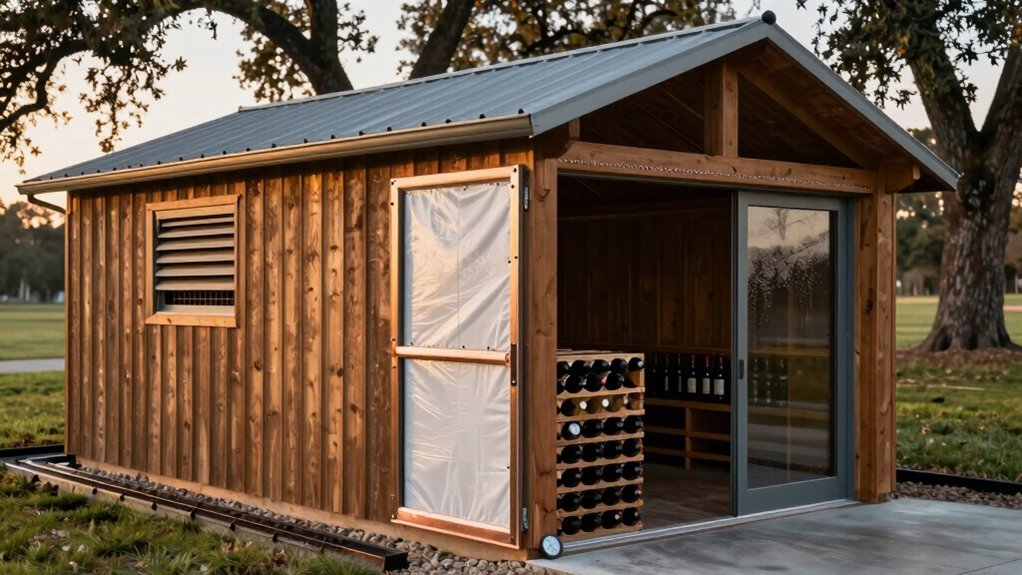
When building outdoor wine storage, you’ll want to select moisture-resistant materials like pressure-treated lumber, concrete, and gasketed doors to prevent mold growth and water damage.
Seal all construction joints with weather-stripping and quality caulk to eliminate air leaks that could introduce unwanted humidity into your wine environment.
Your vapor barrier should be installed on the warm side of high-density closed-cell foam insulation, creating an effective moisture shield that maintains ideal storage conditions despite outdoor weather fluctuations.
Moisture-Resistant Building Materials
Why do so many outdoor wine storage projects fail? Often, it’s because builders choose materials that can’t withstand the relentless assault of moisture. Selecting the right moisture-resistant materials is crucial for long-term success.
When building your outdoor wine storage, prioritize these moisture-fighting materials:
- Closed-cell spray foams with climate-appropriate R-values that resist water absorption and maintain insulation properties even in humid conditions
- Cementitious backer boards for interior surfaces that won’t deteriorate when exposed to moisture fluctuations
- Fiber-cement or vinyl cladding for exteriors, paired with ANSI-rated plywood treated with marine varnish for structural elements
Don’t forget to install a continuous 6-8 mil vapor barrier on the warm side of insulation to prevent damaging condensation within your walls.
Sealed Construction Joints
Perfectly sealed construction joints separate successful outdoor wine storage from expensive failures. For brick or concrete elements, apply a continuous bead of low-odor, paintable sealant with backer rod to accommodate expansion and contraction without cracking.
Choose weatherproofing materials specifically rated for outdoor exposure—silicone or polyurethane sealants that resist UV damage, moisture penetration, and temperature cycling. Where walls meet foundations, install a 6-12 mil plastic vapor barrier or foam backer to prevent groundwater vapor from entering your storage space.
Detail all joints with flexible flashing and elastic caulk appropriate for your site’s temperature range, ensuring watertight yet breathable interfaces. Don’t neglect maintenance—inspect joint sealants twice yearly and plan to reseal every 3-5 years or after significant weather events.
Smart Technology Solutions for Remote Humidity Management
The modern wine enthusiast no longer needs to physically check outdoor storage conditions daily. Smart hygrometers pair with your smartphone, providing real-time relative humidity alerts while dual-sensor devices measure both RH and temperature to calculate dew point—crucial for preventing condensation in outdoor environments.
For comprehensive humidity management, consider these technology solutions:
- Wi-Fi-enabled climate controllers – Integrate with cooling and dehumidification units to make automatic adjustments based on sensor readings
- Remote dashboards – Monitor 24/7 humidity trends and receive push notifications when conditions fall outside the ideal 60-70% range
- Automation routines – Program systems to trigger appropriate equipment (humidifiers, dehumidifiers, or ventilation) when outdoor conditions change
These smart technologies maintain stable microclimates for your wine collection while offering convenience through remote monitoring.
Frequently Asked Questions
How to Lower Humidity in a Wine Cellar?
Use a specialized wine cellar dehumidifier, improve insulation, install humidity-controlled cooling, enhance airflow with proper venting, and monitor levels with digital hygrometers that alert you to changes.
How to Reduce Humidity in Storage?
Install a dehumidifier with a hygrostat, seal all gaps with weatherstripping, use vapor barriers, guarantee proper ventilation, and monitor humidity levels with digital sensors that alert you when levels rise too high.
How to Control Humidity in a Cellar?
Install vapor barriers and closed-cell insulation. Use a climate control system with humidity regulation. Monitor with digital hygrometers, maintain 60-70% humidity, and seal all gaps. Service your equipment regularly.
Are Wine Cellars Humidity Controlled?
Yes, wine cellars are humidity controlled. You’ll find most maintain 60-70% humidity using dedicated systems with hygrometers or smart sensors to protect corks and prevent excessive evaporation.


Leave a Reply