
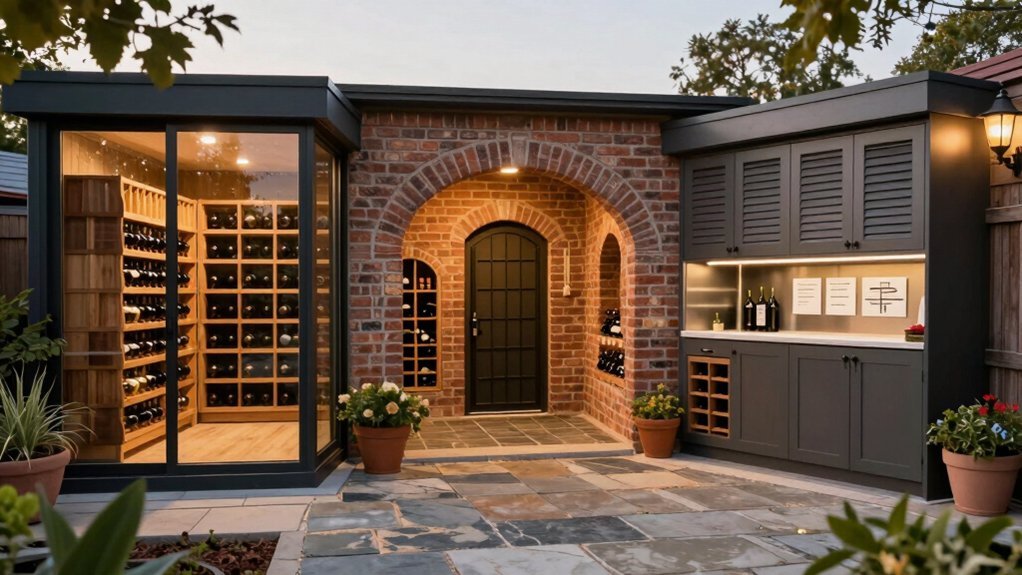
The 3 best patio wine cellar construction methods include climate-controlled enclosures with R-19 wall and R-30 ceiling insulation, underground extensions using 2×6 framing with vapor barriers, and modular prefabricated vaults that offer quick installation. You’ll need continuous moisture protection and proper sealing throughout any design. For optimal wine preservation, maintain temperatures between 55-58°F using closed-cell foam insulation and airtight seals. These approaches protect your collection while creating an accessible entertaining space.
Climate-Controlled Patio Enclosure Systems
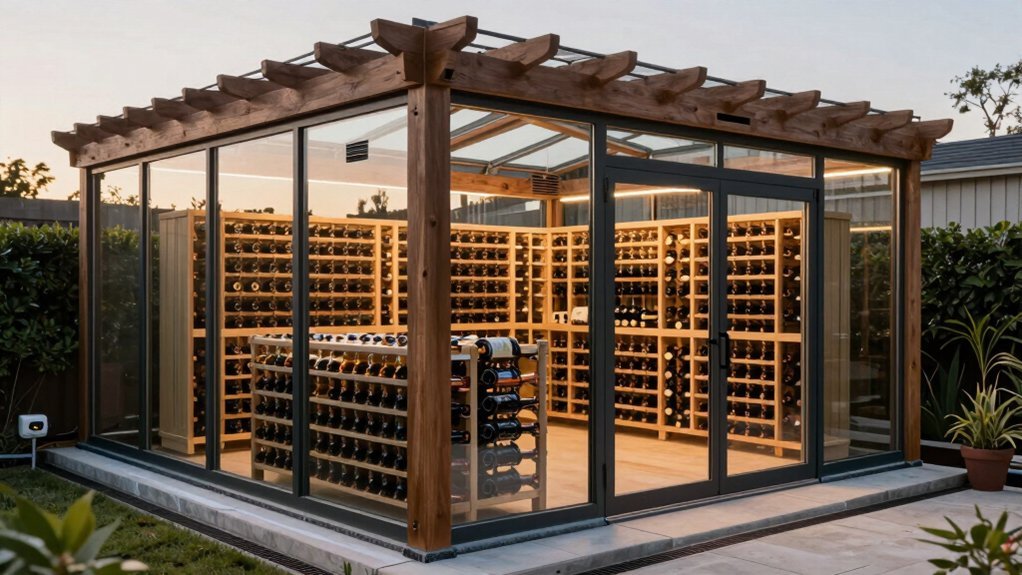
How effectively you insulate and seal your patio wine cellar will determine its long-term success. Start with a continuous vapor barrier throughout your enclosure to prevent moisture intrusion, then install closed-cell foam insulation rated R-19 for walls and R-30 for ceilings.
Frame your structure using 2×6 studs to accommodate sufficient insulation depth. This thicker framing provides the thermal resistance needed to maintain the ideal 55–58°F storage temperature, even during extreme weather conditions.
Ensure all seams and joints create an air-tight seal to prevent temperature fluctuations. Install moisture-resistant green board for wall surfaces and properly seal all penetrations. This thorough approach to climate control minimizes cooling loads and protects your wine collection from harmful temperature swings that can damage corks and accelerate aging.
Insulated Underground Cellar Extensions
Why settle for above-ground storage when you can leverage the natural cooling properties of earth? Underground extensions require strategic insulation—use 2×6 framing for exterior walls and 2×10 ceiling joists to accommodate R-30 insulation. Closed-cell foam serves triple duty as moisture, vapor, and air barrier.
| Construction Element | Recommendation |
|---|---|
| Wall Framing | 2×6 minimum |
| Ceiling Joists | 2×10 for R-30 |
| Insulation Type | Closed-cell foam |
| Vapor Barrier | Warm side only |
| Floor Treatment | Penetrating sealer |
Seal concrete floors after full curing (28 days) to prevent moisture penetration. Select proper cellar doors—solid wood or LVL with weather stripping for an airtight seal. If using glass, ensure it’s dual-pane and tempered to maintain your extension’s stable climate conditions.
Modular Prefabricated Outdoor Wine Vaults
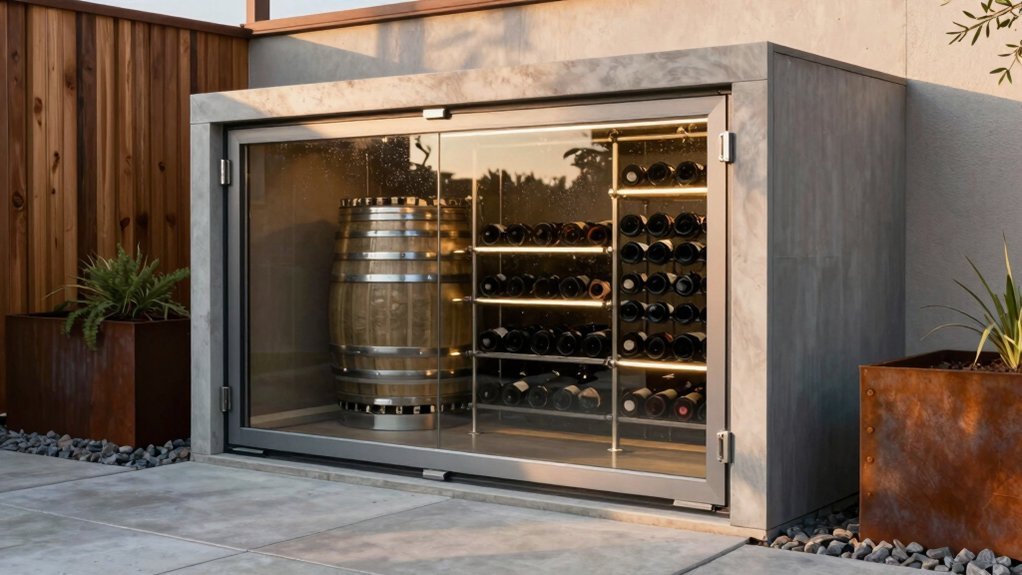
For those seeking wine storage without excavation challenges, modular prefabricated outdoor wine vaults offer compelling advantages. These ready-to-assemble solutions feature pre-built panels that bolt together quickly, dramatically reducing construction time compared to traditional builds. Their integrated insulation, vapor barriers, and sealed doors work together to combat humidity and temperature fluctuations common in outdoor environments.
- Quick Installation – Simply level the area, connect the modules, and apply weatherproof sealants to create a functional wine storage space in days rather than weeks
- Customizable Capacity – Configurable racking systems let you maximize bottle storage based on your collection size
- Climate Control Options – Many units accommodate self-contained cooling systems specifically engineered for outdoor conditions
Local code compliance may require professional assistance for electrical connections and drainage integration, but you’ll avoid the major excavation headaches of underground options.
Frequently Asked Questions
What Is the Best Flooring for a Wine Cellar?
Sealed concrete offers the best wine cellar flooring option. You’ll want to avoid carpet due to moisture issues. Stone-coated floors or humidity-resistant hardwood with tongue-and-groove construction are excellent alternatives.
What Is the R Value of Wine Cellar Insulation?
For your wine cellar, you’ll need R-19 for interior walls and up to R-30 for ceilings or exterior/basement walls. Closed-cell spray foam can reduce these requirements by improving airtightness.
How to Construct a Wine Cellar?
Frame with 2×6 studs, install vapor barriers and R-19 wall insulation, add climate control maintaining 55-60°F with 60-70% humidity, and build wine racks that angle bottles properly.
What Is the Best Vapor Barrier for a Wine Cellar?
Closed-cell spray foam insulation is your best vapor barrier option. It provides insulation and moisture protection in one application. If you’re using rigid foam boards, seal joints meticulously with vapor-barrier tape.


Leave a Reply