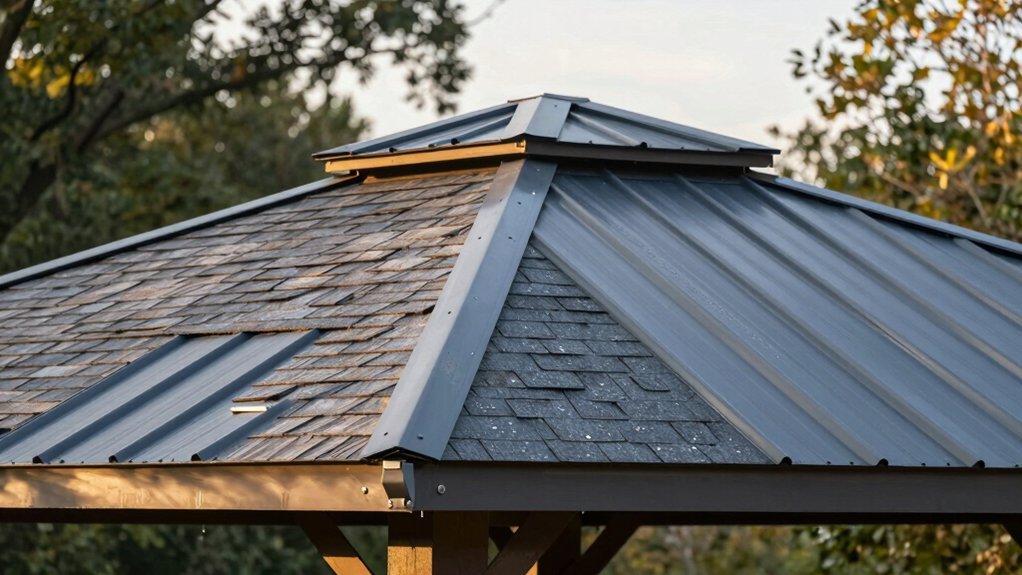
If you want pavilion roof materials that last, standing-seam metal tops the list with 30 to 50 years of durability and maintenance, plus strong wind and hail resistance. Slate offers 75 to 100 years, but it’s heavy and needs reinforced framing. Cedar shakes look natural and can reach 30 to 50 years with upkeep, while synthetic shingles run 40 to 50. Clay and concrete tiles and roofs sit 40 to 75 years. More to compare.
Metal Roofing for Pavilions: Standing Seam Durability
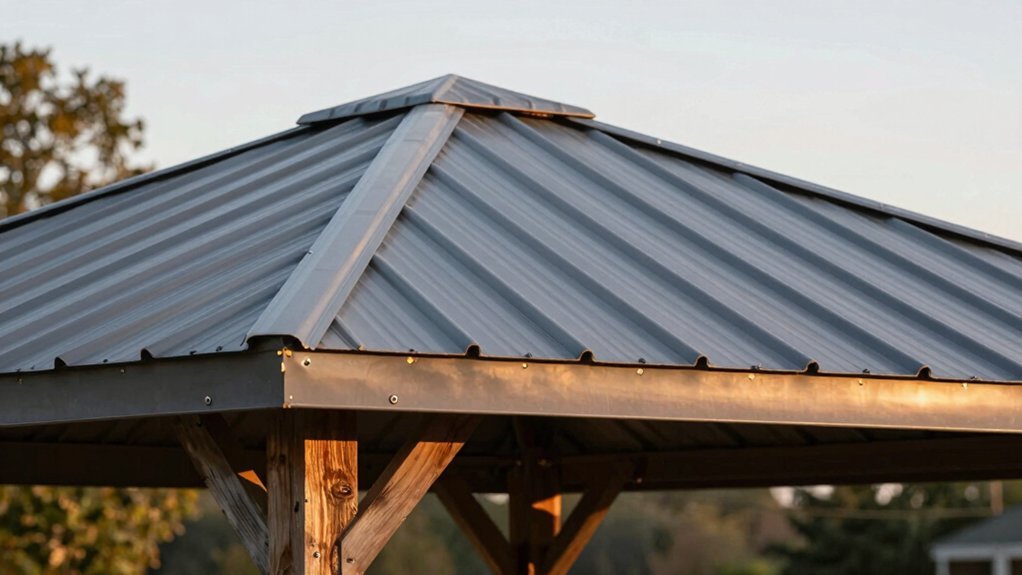
Want a roof you can rely on through kite winds and hail? Standing seam metal roofing for pavilions delivers long durability you can feel. You’re choosing a material that lasts about 30 years, with ideal conditions pushing toward 50. The finish, a Kynar 500 painted coating, typically carries a 30-year warranty for color and protection, so you won’t repaint every season. It resists wind and hail far better than many alternatives, and you’ll notice low maintenance as a real benefit. Yes, it can be pricey, and oil canning may occur, but overall strength and weather resistance keep ongoing costs down. Expect costs around $12 to $15 per square foot, reflecting solid value. This choice prioritizes durability, longevity, and predictable budgeting for your pavilion today.
Slate Tile Advantages and Limitations for Outdoor Structures
Slate tiles deliver top-tier durability for outdoor structures, lasting many decades, but their heavy weight can demand structural upgrades. Installation is slow and requires skilled trades, and repairs after damage are more limited and costly than with lighter options. Weigh the durability and weight against installation and repair limits to decide if slate fits your pavilion project.
Durability and Weight Considerations
Ultimately, slate tile lasts 75 to 100 years, making it one of the longest-lasting non-metal options for pavilions, but its extreme weight requires heavier framing and careful structural design. You’ll gain exceptional durability and curb appeal, yet you face higher upfront costs and design scrutiny. Because slate has no material warranty, any failure is handled as repair rather than replacement, which influences maintenance planning. The trade-off is clear: you get long life with notable weight and expense, demanding precise engineering and budgeting. Consider these points:
- Durable, long lifespan with minimal maintenance compared to metals.
- Heavy installation requires reinforced framing and experienced workmanship.
- Higher material and labor costs affect overall value over time.
With slate, durability comes with strategic planning and patience.
Installation and Repair Limits
How long can you trust slate tile on a pavilion, and what does that mean for installation and repairs? Slate roofs can last 75 to 100 years, giving you exceptional longevity, but their weight demands extra framing and structural reinforcement. If your structure isn’t updated, installation may fail under load. The quality of the initial install matters most: improper nailing and misalignment can crack tiles, cause leaks, or shorten life. Slate’s brittleness and cost slow repairs; when damage occurs, you’ll face longer downtimes and higher labor bills. Repairs require skilled workmanship to preserve performance, so you should budget for professional slate specialists. Prepared installations and planned maintenance help you maximize that century-plus lifespan with fewer disruption and safer outdoor spaces for years of reliable shelter.
Cedar Shake Shingles: Aesthetic Appeal vs. Maintenance
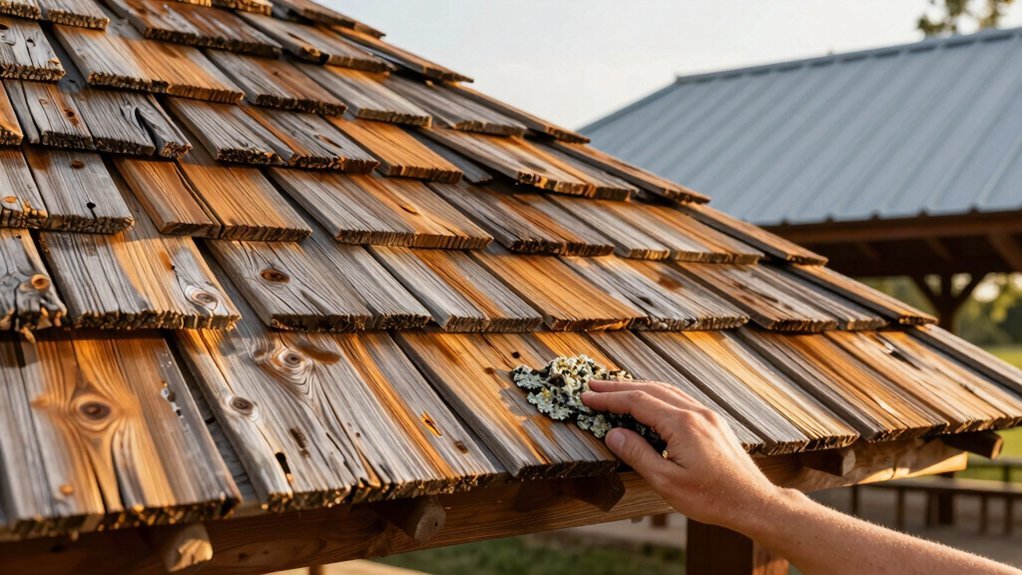
Honestly, cedar shake shingles give a natural, rustic look that boosts a pavilion’s curb appeal, but they demand regular upkeep to keep that beauty properly. You’ll get 30 years of life, up to 50 in favorable climates, but longevity depends on installation quality. They require ongoing cleaning, sealing, and resealing to prevent rot, splitting, and color fading, plus protection against moisture and insects in humid areas. Performance is best in dry, well-ventilated conditions; in moisture-prone environs, you’ll face greater risk and more maintenance. Remember, cedar shakes come without a material warranty, so your care plan and climate largely determine how long they last. 1) Cleaning, sealing, and resealing to prevent rot. 2) Professional installation and site ventilation. 3) Regular inspections for damage and wear.
Synthetic Shingles and Their Weather Resilience
Synthetic shingles stand up to the weather, offering about 40–50 years of life and often outperforming standard asphalt while still trailing some high-end metals in certain climates. You get better impact resistance with Class 4 ratings and reduced cracking versus natural materials, plus eco-friendly composition and strong curb appeal. Warranties vary widely, typically 30–50 years, and depend on proper installation and UV exposure.
In many climates, they resist hail and temperature extremes well, but long-term durability still hinges on correct underlayment and ventilation. Drawbacks include a newer market with less long-term field data and a higher upfront cost compared with standard asphalt shingles. Climate, installation quality, and maintenance influence performance more than material choice alone. Assess your local conditions and installer expertise before committing.
Luxury Asphalt Shingles: Longevity in Outdoor Use
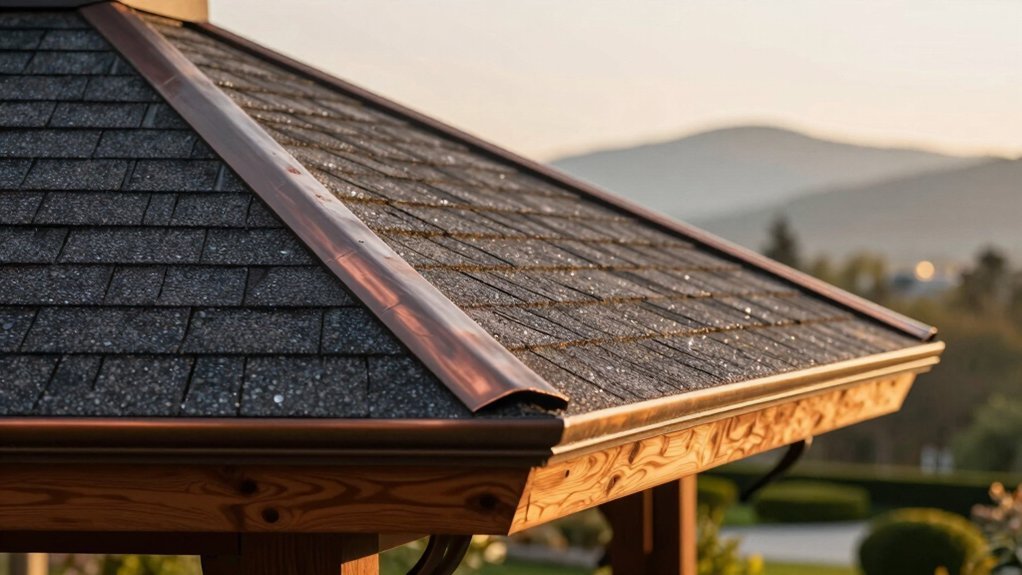
Luxury asphalt shingles typically last about 30 years, with a 30-year prorated warranty and an optional 50-year enhanced non-prorated warranty when you install them as part of a full roof system. You’ll get durability and curb appeal, but installation quality and climate really shape their life. Harsh conditions or improper flashing can shorten their service life, so you’ll want proper detailing and guidance from pros.
Luxury asphalt shingles last ~30 years with strong warranties; proper installation and climate matter.
Compared to metal or slate, they usually don’t reach the top lifespan, yet they cost less upfront for pavilions. At around $8.00 per square foot, they balance durability with sensible expense. Consider these factors:
- Install quality and flashing
- Local climate and exposure
- Full roof-system benefits and warranties
Choose carefully to maximize value and outdoor longevity overall.
Clay and Concrete Tile: Heavy-Duty Options for Warm Climates
Why choose clay or concrete tiles for a pavilion in warm climates?
Because they’re among the longest-lasting options, with clay tiles enduring forty to sixty years or more, and some installations exceeding fifty years with proper maintenance.
Concrete tiles offer similar longevity, typically forty to seventy-five years, depending on quality and installation.
Both materials are heavy and require reinforced framing, which raises initial costs but enhances durability over time.
They resist weathering, UV exposure, and hail impacts better than asphalt, making them well-suited for hot, sunny environments.
Maintenance focuses on preventing cracks, promptly addressing broken tiles, and keeping underlayment and flashing intact to preserve lifespan and performance.
You gain lasting value overall.
Cool Roofs and Light-Colored Finishes to Extend Lifespan
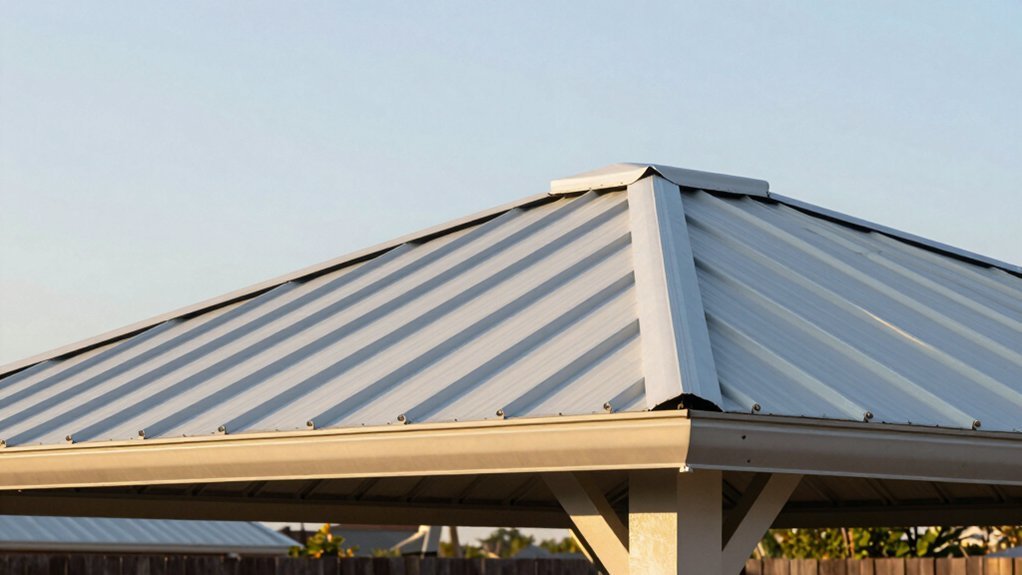
As you gear your pavilion for hot climates, choosing cool roof finishes can noticeably extend its lifespan. Light-colored or cool roof finishes reflect more sunlight, reducing roof temperatures and slowing thermal aging of pavilion roofing materials. Cool roofs with high reflectance can lower surface temperatures by 20–40°F (11–22°C) in hot climates, extending membrane and shingle lifespans.
1) Reflect light to cut heat, 2) Apply reflective coatings to defer UV damage, 3) Opt white or light gray finishes for longevity. Light-colored asphalt shingles and metal roofs typically exhibit less heat-related deterioration than dark finishes, contributing to longer service life in sunny regions. Reflective coatings or cool roof paints applied to pavilion surfaces can defer degradation from UV exposure and heat cycling. Longevity endures in heat.
Underlayment and Flashing Essentials for Long-Lasting Protection
How can you guarantee long-lasting protection for your pavilion roof? Start with durable underlayments like synthetic felt or ice-and-water shield to resist moisture and ice damming, especially in harsh climates. Use high-quality underlayment rated for your material—60-mil or thicker for metal—to boost tear resistance. Install a continuous, properly nailed layer with correct slope to minimize pooling and wear. Don’t forget to inspect and replace damaged flashing at valleys, penetrations, and transitions to prevent leaks.
| Underlayment choice | Benefit | Why it matters |
|---|---|---|
| Synthetic felt | Moisture protection | Reduces intrusion and mold risk |
| Ice-and-water shield | Ice dam resistance | Guards against edge leaks in cold |
| Metal-specific underlayment | Tear resistance | Handles sharp edges and expansions |
| Continuous installation | Drainage efficiency | Prevents pooling and wear |
Regular checks keep everything performing at peak for years.
Installation Quality: Critical Factor in Pavilion Longevity
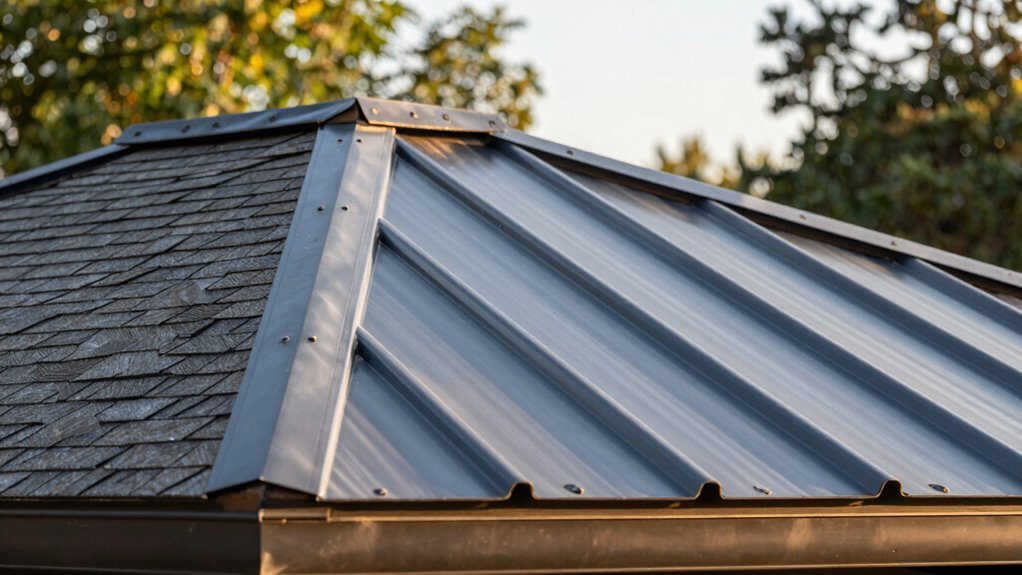
Your pavilion’s longevity hinges on installation quality. When you cut corners on flashing, ventilation, or sealing, you undermine the roof’s structural integrity and shorten its service life. Experienced professionals are essential to ensure correct installation, since workmanship directly influences wind uplift resistance and long-term durability. Initial cost savings from cheaper installations often lead to higher long-term repair costs or premature replacement due to improper methods or missing components. Correct installation must align with the chosen material and the pavilion’s design to optimize performance under local climate and weather stresses. The integrity of underlayment and flashing installed during construction significantly affects moisture protection and overall lifespan of the pavilion roof system.
1) Hire experienced pros
2) Match installation to material and design
3) Avoid cheap shortcuts
Wind and Impact Resistance Considerations for Outdoor Roofs
Start by weighing wind resistance metrics and impact resistance ratings for each material you consider. You’ll compare uplift performance, leakage risk, and resistance to hail or debris based on standardized tests and field results. This sets a clear baseline for choosing pavilion roofs that stay secure and durable in storms.
Wind Resistance Metrics
When evaluating wind resistance for pavilion roofs, you’ll want to look at both wind uplift ratings and impact performance from standardized tests. Metal pavilion roofs, especially standing seam, offer the strongest wind resistance when fastened and flashed. Slate and clay tile excel with installation but require reinforced structure, and debris or lift can occur in storms if not secured. Asphalt shingles are more vulnerable to uplift unless you use high-wind warranties with reinforced underlayment and flashing. Cedar shakes resist moderate winds but can suffer wind-driven damage if not correctly fastened and maintained. Impact-resistant options improve wind-driven impact resistance and reduce hail-related damage.
- Metal roofs with standing seam, fasteners, and flashing
- High-wind asphalt with reinforced underlayment
- Class 4 metal for impact resistance
Impact Resistance Ratings
Impact resistance ratings for pavilion roofs combine wind uplift scores and hail tests, guiding you toward durable options. You assess metals and slate highest resistance, while asphalt lags for you. Standing seam metal roofs provide strong wind resistance and Class 4 impact performance, contributing to pavilion longevity in severe weather. Slate tiles deliver exceptional impact resistance but are heavy, requiring structural support to maintain durability under wind and hail stresses. Clay or concrete tile roofs offer good impact resistance, yet weight and roof framing requirements affect long-term performance in high-wind areas. For wood, cedar, or vinyl roofs, resistance depends on underlayment and fasteners; reinforce and secure.
| Material | Wind/Uplift | Hail |
|---|---|---|
| Metal | High | Class 4 |
| Slate | Very High | Very High |
| Clay/Concrete | Moderate-High | Moderate-High |
| Wood/Vinyl | Variable | Variable |
Climate-Specific Material Choices for Backyard Structures
In climates with high humidity and heavy rainfall, you’ll want pavilion roofs that resist water damage, so metal and slate options outperform wood-based roofs that can rot without ongoing maintenance. You’re choosing materials based on sun exposure, cold snaps, and wind, which shape longevity. Metal stands out in sun and freeze-thaw cycles, while asphalt shingles fade under UV. In cold regions, metal or slate resist cracking better than wood shingles. For gusty areas, metal delivers wind resistance, unlike clay or slate in conditions. Your color and coating choices matter, with light-colored enamel reducing heat gain and tailoring performance to your climate.
- Favor metal or slate in damp, hot, or windy zones
- Use light enamel to curb heat
- Match material to freeze-thaw and wind patterns
Maintenance Practices to Maximize Pavilion Roof Lifespan
To maximize your pavilion roof lifespan, you’ll start with regular roof inspections and prompt repairs to catch issues early. You’ll clean gutters regularly to prevent moisture buildup that can cause wood rot. Make sure you have adequate ventilation and insulation to manage moisture and temperature for long-term performance.
Regular Roof Inspections
How often should you inspect your pavilion roof, and what should you look for during those checks? Regular inspections should occur at least twice a year, preferably spring and fall, to catch weather damage, debris, and wear before it progresses. During each check, visually assess shingles or panels for curling, cracking, or missing pieces, and inspect flashing, underlayment, and vent seals for leaks and wear.
Clean debris from gutters and roof surfaces to prevent pooling and reduce moss or algae growth that can degrade materials. After major storms, assess for hidden damage that could shorten lifespan. Document findings with photos and schedule timely repairs to stay proactive.
- Inspect after storms to catch issues early.
- Keep concise records with dates.
- Repair promptly to extend longevity.
Clean Gutters Regularly
Regular gutter cleaning prevents debris buildup that traps moisture against pavilion roof edges, accelerating rot and corrosion, especially under wood or cedar components. You should remove leaves, dust, and pine needles at least twice per year to cut organics that promote mold growth and wood decay near rooflines. Make sure downspouts are clear and direct water away from fascia to minimize intrusion that can degrade roofing materials over time. Clean carefully from the ground or with proper ladders or guardrails to avoid damaging shingles, shakes, or metal panels during maintenance. Integrate gutter checks with routine roof inspections so you can spot early edge deterioration that shortens your pavilion roof lifespan. Regular upkeep saves cost and extends performance across seasons for decades with proper care.
Adequate Ventilation and Insulation
After keeping gutters clear, ensure your pavilion roof has proper attic-like ventilation to regulate moisture and heat, which cuts condensation and wood rot that shorten roof life. You’ll also want well-sealed insulation around roof assemblies to minimize temperature swings that cause materials to warp or degrade faster. Continuous soffit and ridge vents boost airflow, preventing heat buildup that accelerates aging of shingles and warping of underlayment. Regular inspections of vents, flashing, and insulation gaps stop leaks that threaten longevity. Use vapor barriers and high-quality underlayment matched to your roof type to further reduce moisture intrusion.
- Schedule regular vent inspections to sleep easier.
- Seal insulation gaps to prevent thermal surprises.
- Install high-quality underlayment to shield against moisture.
Together, these steps extend your pavilion’s roof life.
Frequently Asked Questions
What Is the Longest Lasting Roof Material?
Metal roofs last the longest, typically 40–80 years depending on material and conditions. If you want longevity, choose metal; slate often reaches 75–100 years, but metal usually outlasts other options in real-world conditions for you.
What Is the Best Material for a Pavilion?
Metal roofing is the best material for a pavilion because it’s durable, low maintenance, and costs less over time than alternatives; choose standing-seam for longevity, waterproofing, and a modern look that resists climate and wear.
What Is the Longest Lasting Flat Roof Material?
Slate tiles are the longest lasting flat roof material, typically lasting 75 to 100 years with proper support and maintenance. You’ll need sturdy framing, occasional repairs, and careful installation to reach the full lifespan overall.
What Is the Downside of a Rubber Roof?
Downside? Rubber roofs can degrade from UV and ozone unless you apply reflective coatings, and it’s prone to puncture at vents or seams, demanding maintenance for leaks, moisture, and temperature-related wear, which raises upkeep costs.

Leave a Reply