You’ll get the best pellet grill temperature control with PID controllers, which maintain precision within 5-10 degrees by continuously adjusting fuel feed rates. Digital control panels offer superior accuracy over analog gauges, while WiFi connectivity enables remote monitoring through smartphone apps. Large hopper capacity guarantees consistent pellet flow, and quality insulation materials like double-walled construction retain heat effectively. Advanced models include automated cooking programs and weather compensation features that adjust for external temperature changes, giving you complete control over your grilling experience.
PID Temperature Controllers: The Gold Standard for Precision

When you’re serious about achieving restaurant-quality results from your pellet grill, PID temperature controllers represent the pinnacle of precision cooking technology.
These advanced systems utilize three key variables—Proportional, Integral, and Derivative—to deliver precise control over your cooking environment. By continuously measuring actual temperature and adjusting fuel feed accordingly, PID temperature control maintains stable temperature with minimal fluctuations.
What sets these controllers apart is their ability to anticipate external factors like wind or heat loss, ensuring faster stabilization and consistent temperatures throughout your cook.
Many modern PID-equipped grills feature WiFi connectivity, enabling remote monitoring via smartphone apps. This technology greatly improves food quality by maintaining even smoke distribution, which is essential for ideal flavor development in your smoked meats.
Digital Control Panels Vs Analog Temperature Gauges
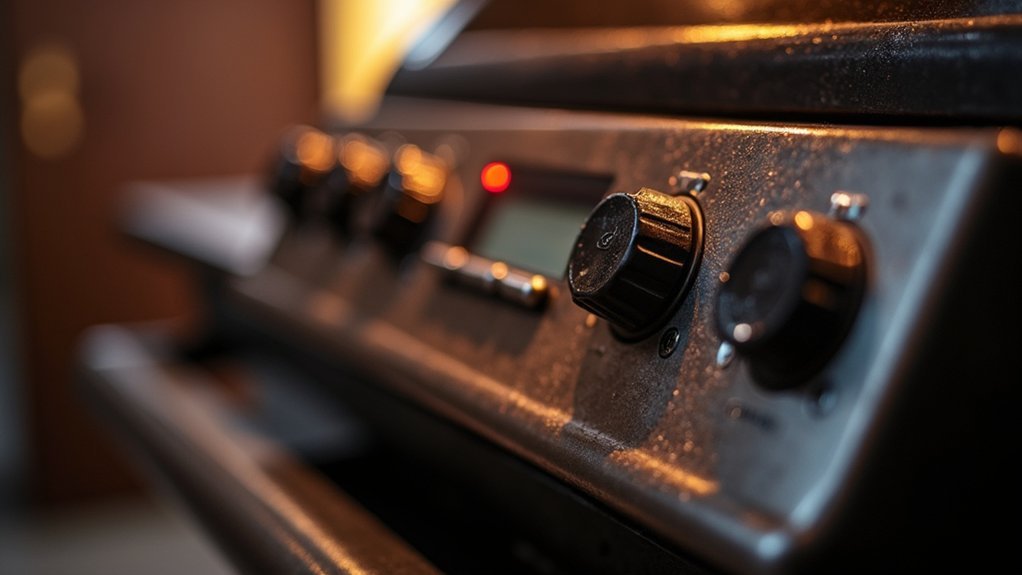
When you’re choosing between digital control panels and analog temperature gauges, you’ll find that digital systems offer considerably better precision temperature control through exact degree settings rather than rough dial estimates.
Digital panels also provide remote monitoring capabilities via smartphone apps, letting you track your cook from anywhere in your home.
Most importantly, digital controllers maintain heat consistency far better than analog gauges, which often struggle with temperature swings that can ruin long smoking sessions.
Precision Temperature Control
Although pellet grills share the same basic cooking principle, the type of temperature control system dramatically affects your cooking results.
Digital control panels equipped with PID technology deliver exceptional precision by continuously monitoring and adjusting fuel feed rates. This advanced temperature control system maintains consistent heat within 1-2°F, eliminating the frustrating temperature swings that plague analog gauges.
Your wood pellet grills benefit tremendously from this precision, especially when smoking delicate cuts like brisket.
Digital controllers provide real-time temperature readings and accommodate meat probe connections for accurate internal monitoring. Unlike basic analog systems that offer rough estimates, digital panels give you complete control over your cooking environment.
This precision guarantees perfectly cooked results every time, transforming your outdoor cooking experience from guesswork into reliable, restaurant-quality performance.
Remote Monitoring Capabilities
Nothing beats the convenience of monitoring your pellet grill from anywhere in your home or yard.
Digital control panels equipped with WiFi and Bluetooth capabilities let you track grill temperature remotely through smartphone apps, while analog gauges require you to stay nearby for constant monitoring.
Advanced technology like PID controllers work seamlessly with these remote monitoring systems, automatically adjusting pellet feed and fan speed based on real-time data you receive on your phone.
You’ll get instant alerts when temperatures fluctuate or when your meat reaches target doneness.
This remote access transforms your grilling experience, allowing you to multitask without sacrificing precision.
Analog systems simply can’t match this level of connectivity and convenience.
Heat Consistency Maintenance
Since maintaining consistent heat determines the success of your barbecue, digital control panels deliver superior temperature stability compared to analog gauges.
Your PID controller stands as the key difference, actively monitoring internal temperature and making real-time adjustments to pellet feed rates. This technology eliminates the frustrating temperature swings that plague analog systems, where simple dials can’t respond quickly to heat fluctuations.
When you’re cooking low and slow, reliable pellet distribution becomes essential for even heat.
Digital panels control the timing of pellet delivery precisely, ensuring consistent smoke produced throughout your cook. Analog gauges simply can’t match this level of precision, often resulting in uneven heat distribution that compromises your food quality and cooking experience.
WiFi and Bluetooth Connectivity for Remote Monitoring
You can monitor your pellet grill’s temperature from anywhere in your home using WiFi and Bluetooth connectivity features.
These wireless connections let you track cooking progress through smartphone apps that display real-time temperature readings and send alerts when your food reaches target temperatures.
You’ll gain complete control over your grill’s settings remotely, allowing you to adjust temperatures, set timers, and receive notifications without leaving your couch.
Remote Temperature Monitoring
While traditional grilling requires constant attention and manual temperature checks, modern pellet grills with WiFi and Bluetooth connectivity transform your cooking experience by letting you monitor and control temperatures remotely from your smartphone.
Remote temperature monitoring through smart technology enables real-time temperature tracking and adjustments without being physically present at your grill.
Top models like the Woodwind Pro 36 and Grilla Grills Silverbac feature WiFi connectivity that sends notifications and alerts directly to your device.
Bluetooth connectivity offers quick temperature adjustments for multitasking convenience.
Advanced grills like the Rec Tec Flagship 1100 provide internal temperature readings and precision cooking capabilities, maintaining consistent temperatures throughout long smoking sessions while reducing overcooking risks.
App-Based Control Features
App-based control features take remote temperature monitoring to the next level by providing extensive grill management through dedicated smartphone applications.
WiFi connectivity enables you to control your pellet grill from anywhere, while smart technology delivers real-time temperature readings and notifications about pellet levels.
Key app-based control capabilities include:
- Temperature presets and cooking timers – Customize settings for specific recipes and receive alerts when cooking phases complete
- PID temperature control integration – High-end models like the Rec Tec Flagship 1100 use WiFi to enhance temperature accuracy and minimize fluctuations
- Real-time monitoring and alerts – Track cooking progress remotely and get notified when adjustments or pellet refills are needed
These app-based control features eliminate constant supervision while ensuring ideal cooking conditions throughout your grilling session.
Meat Probe Integration and Multi-Point Temperature Tracking

When precision matters most in barbecue, meat probe integration transforms your pellet grill into a sophisticated monitoring system that tracks internal temperatures without disrupting the cooking process.
You’ll monitor multiple cuts simultaneously through multi-point temperature tracking, keeping tabs on different meats while maintaining ideal cooking chamber temperature. Digital temperature displays show both ambient and probe readings, letting you make precise adjustments without guesswork.
WiFi connectivity elevates your control further, enabling remote monitoring through smartphone apps while you handle other tasks.
High-end models feature multiple probe ports, so you can track various dishes and guarantee each reaches your desired doneness. This technology eliminates constant lid-lifting, preserving heat and moisture while delivering consistently perfect results across all your barbecue creations.
Hopper Design and Pellet Feed Rate Control Systems
Your pellet grill’s hopper capacity directly affects how long you can cook without interruptions, with larger hoppers supporting extended smoking sessions that can last 12-20 hours.
The auger feed mechanism serves as the backbone of temperature control, automatically delivering pellets from the hopper to the burn pot at precisely timed intervals.
When pellet flow remains consistent through proper auger design and feed rate calibration, you’ll achieve steady temperatures and avoid the frustrating temperature swings that can ruin long cooks.
Hopper Capacity Impact
Most pellet grills feature hoppers ranging from 10 to 25 pounds, and this capacity directly determines how long you can cook without interruption.
Your pellet grill’s hopper capacity greatly impacts temperature management effectiveness. Larger hoppers like the Pit Boss Mahogany’s 21-pound capacity let you maintain consistent cooking temperature for extended sessions without refills.
Here’s how hopper capacity affects your grilling experience:
- Extended cooking sessions – Larger hoppers support long smoking sessions without pellet interruptions.
- Consistent pellet feed rate – More pellets guarantee steady fuel delivery to maintain target temperatures.
- Reduced temperature fluctuations – Continuous pellet supply prevents spikes and drops during cooking.
Your pellet grill needs robust feed rate control systems working with adequate hopper capacity.
Models like the Rec Tec Flagship 1100 demonstrate how larger hoppers enhance temperature stability for serious barbecue enthusiasts.
Auger Feed Mechanisms
The auger feed mechanism serves as your pellet grill’s heartbeat, precisely controlling pellet delivery from hopper to burn pot to maintain target temperatures. This system adjusts pellet feed rate by varying auger speed, directly influencing heat and smoke production.
When you need consistent temperature during long cooks, the auger’s steady wood pellets delivery becomes critical for ideal results.
Advanced models offer programmable feed rates that you can customize based on specific cooking requirements. This programmable capability provides finer control over temperature fluctuations throughout your grilling process.
The auger’s precision determines whether your burn pot receives the exact amount of fuel needed, making it essential for achieving stable temperatures. Without proper auger function, maintaining your desired cooking temperature becomes nearly impossible.
Pellet Flow Consistency
While auger mechanisms control pellet delivery timing, hopper design fundamentally determines how smoothly those pellets flow toward the auger system.
You’ll find that larger hopper capacities reduce refill frequency during extended cooking sessions, maintaining consistent pellet flow without interruption.
Your pellet feed rate control system directly impacts temperature stability and cooking efficiency.
Here’s what affects pellet flow consistency:
- Adjustable feed rate controls that regulate pellet delivery to maintain your desired temperature
- Advanced PID controllers with sensors that automatically adjust feed rates based on temperature readings
- Efficient auger system design that guarantees reliable pellet transport from hopper to burn pot
When your auger system operates efficiently with consistent pellet flow, you’ll achieve reliable controlled burns.
This consistency becomes essential for low-and-slow cooking methods where temperature fluctuations can compromise your results.
Auger Motor Quality and Speed Adjustment Features
At the heart of every pellet grill’s temperature control system lies the auger motor, an essential component that determines how consistently your grill maintains heat throughout extended cooking sessions.
High-quality auger motors deliver superior pellet delivery precision, directly impacting your grill’s temperature stability during long cooks. You’ll find that premium motors handle varying feed rates effortlessly, allowing precise adjustments that maintain your desired cooking temperature.
Speed adjustment features give you control over pellet feeding rates, which proves vital for managing temperature fluctuations.
Well-designed auger systems minimize jams and clogs, ensuring steady pellet flow and preventing sudden temperature drops.
Advanced grills offer programmable feed rates that you can customize based on specific cooking needs, greatly enhancing your overall cooking performance and temperature control capabilities.
Insulation and Heat Retention Construction Materials

Beyond motor performance, your pellet grill’s construction materials form the foundation of superior temperature control and heat retention capabilities.
The materials you choose directly impact insulation effectiveness and minimize temperature fluctuations during cooking sessions.
Quality construction materials deliver exceptional cooking efficiency through these key features:
- Cold-rolled steel or stainless steel walls – Thicker materials provide superior insulation and reduce heat loss considerably.
- Double-walled construction – Traps heat more effectively between layers, especially beneficial during long smoking sessions.
- High-temperature paint and porcelain coatings – Protect against weather elements while contributing to better heat retention across cooking surfaces.
When you invest in grills featuring robust construction materials, you’ll experience more consistent temperatures and improved fuel efficiency throughout your cooking sessions.
Fan Systems and Airflow Management Technology
When your pellet grill’s fan systems operate efficiently, it creates the precise airflow patterns that maintain consistent temperatures throughout your cooking chamber.
These systems work with airflow management technology like adjustable dampers to control oxygen flow, directly impacting combustion efficiency and temperature stability.
Modern pellet grills feature variable speed fans that automatically adjust based on your temperature settings, maintaining desired heat levels with minimal fluctuation.
This automated adjustment delivers quicker heating times and superior cooking performance, especially during low and slow sessions.
Effective airflow management eliminates hot and cold spots within your grill, ensuring uniform cooking and enhanced flavor profiles.
You’ll experience more predictable results when your fan system properly circulates heat and smoke throughout the entire cooking chamber.
Temperature Range Capabilities and Heat Distribution

Since pellet grills offer an impressive temperature range spanning from 180°F to 500°F, you’ll discover remarkable versatility that transforms a single cooking appliance into multiple culinary tools.
This wide spectrum enables everything from low-and-slow smoking to high-heat searing on the same cooking surface.
Your grill’s heat distribution benefits from three key technological advances:
- PID controller integration – Advanced models maintain consistent temperatures by automatically adjusting pellet feed rates with minimal fluctuation.
- Fan-driven air circulation – Hot air moves evenly across the entire cooking surface, eliminating cold spots.
- Insulated construction – Heat retention technology guarantees consistent temperatures even during harsh weather conditions.
A larger pellet hopper capacity of 20-22 pounds supports extended cooking sessions, providing sustained fuel supply for maintaining your desired temperature range throughout long smoking or grilling sessions.
Smart App Features and Automated Cooking Programs
Modern pellet grills elevate your cooking experience through sophisticated smartphone apps that put complete grill control at your fingertips.
These smart app features enable remote temperature monitoring, letting you adjust settings from anywhere while maintaining perfect cooking conditions. Automated cooking programs streamline your grilling by pre-setting temperatures and durations for specific recipes, ensuring consistent results without constant supervision.
Advanced models integrate PID technology within their apps, maintaining stable temperatures and improving cooking efficiency.
Recipe integration guides you through step-by-step processes while automatically adjusting temperatures based on your selected dish. Notifications and alerts keep you informed about food progress and pellet levels, preventing overcooking and fuel shortages.
This technology transforms pellet grilling into a convenient, precise cooking method.
Weather Protection and External Temperature Compensation

Although outdoor cooking exposes your pellet grill to unpredictable weather conditions, advanced weather protection features guarantee you’ll maintain consistent cooking temperatures regardless of external factors.
Modern pellet grills combat external temperature challenges through sophisticated engineering. Insulated construction and dual-walled designs provide superior heat retention, preventing temperature drops during cold weather sessions.
High-end models feature PID controllers that automatically adjust pellet feed rates when detecting external temperature changes, ensuring stable cooking conditions.
Key weather protection strategies include:
- Wind barriers and covers – Reduce wind chill impact and protect against direct weather exposure
- Strategic grill placement – Position in sheltered areas away from harsh elements
- Dual-walled insulation – Maintains internal heat despite external fluctuations
These features markedly enhance cooking efficiency, allowing you to achieve consistent results year-round regardless of weather conditions.
Backup Power Options and Battery-Operated Controllers
Beyond environmental challenges, power reliability becomes another critical factor in maintaining ideal pellet grill performance. Backup power options guarantee you won’t lose temperature control during outages or when cooking in remote locations.
Battery-operated controllers equipped with rechargeable battery packs let you maintain precise temperature monitoring even without electrical access, making them perfect for camping and tailgating adventures.
These systems enhance mobility by eliminating dependence on power outlets while preserving advanced temperature management capabilities. You’ll enjoy remote monitoring and adjustments through battery-powered controllers, greatly improving your grilling experience.
Models like the Z Grills Cruiser feature built-in batteries for ultimate portability. Battery life varies by model, with some offering hours of continuous operation, so you’ll want to take into account your planned cooking duration when selecting a grill.
Frequently Asked Questions
How Does a Pellet Grill Control Temperature?
Your pellet grill’s digital controller regulates temperature by automatically feeding wood pellets through an electric auger into the burn pot while adjusting fan speed to maintain your desired heat level.
How to Get the Most Smoke From a Pellet Grill?
You’ll maximize smoke by using premium pellets, cooking at 180-190°F, activating smoke boost features, and experimenting with pellet blends. Choose grills with PID controllers for precise temperature control and consistent pellet feeding.
Why Does My Pellet Grill Get Hotter Than the Set Temperature?
Your pellet grill runs hotter than set because of inconsistent auger feeding, environmental factors like wind, PID controller calibration issues, dirty firepots restricting airflow, or poor-quality pellets burning too hot.
Where Is the Hottest Spot on a Pellet Grill?
The hottest spot’s directly above your fire pot where flames concentrate most intensely. You’ll find temperatures can vary 25-50°F across your grill’s surface, so use an infrared thermometer for precise readings.