
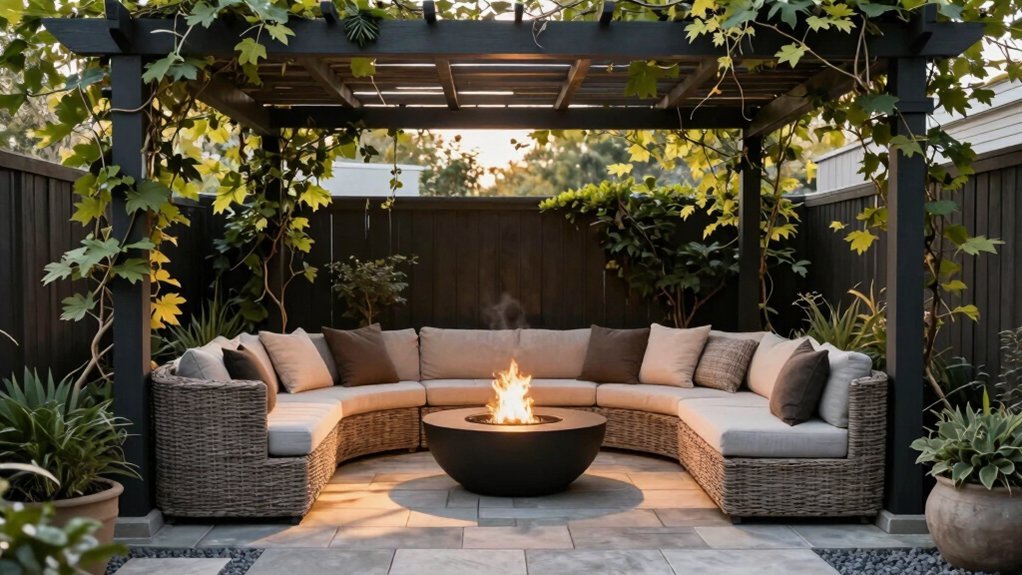
You’ll craft a welcoming outdoor gathering space by pairing a pergola with a fire pit—mixing shade with warmth for year-round entertaining. Consider five style options: rustic retreat with cedar and Adirondack chairs, modern farmhouse with white vinyl and gas fires, coastal escape with blue accents, rustic luxe with leather seating, or Southwest vibe with string lights. Place your fire pit away from wind, guarantee proper clearance under open roofs, and define seating zones with stone or concrete. The right layout, materials, and heat source transform your backyard into an outdoor room—discover how to customize each element for your space.
Why Pergolas and Fire Pits Are a Perfect Pair
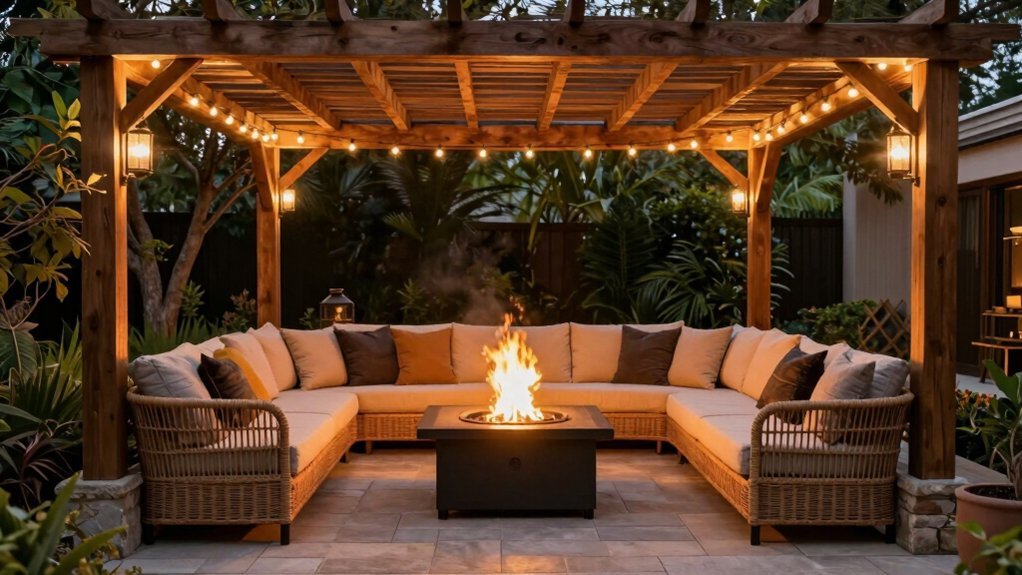
When you’re designing an outdoor living space, pairing a pergola with a fire pit creates a natural gathering hub that balances comfort and function. The pergola provides essential shade and architectural structure, while the fire pit offers warmth and establishes a focal point that anchors your entire outdoor area. Together, they transform a basic backyard into an inviting destination you’ll use year-round.
This combination works because each element complements the other’s strengths. You get protection from the sun during warm months and a cozy heat source when temperatures drop. The pergola frames the fire pit visually, creating defined boundaries for your seating zone. This pairing also encourages conversation and connection, making your outdoor space feel intentionally designed rather than haphazardly arranged.
Design Inspiration: Five Style Options for Your Space
How do you want your outdoor space to feel? Your answer determines which style suits you best.
If you crave warmth and tradition, Rustic Escape delivers with cedar pergolas and wood-burning fire pits surrounded by flagstone and Adirondack chairs.
Rustic Escape delivers warmth and tradition with cedar pergolas, wood-burning fire pits, flagstone, and classic Adirondack chairs.
Prefer contemporary elegance? Modern Farmhouse combines white vinyl pergolas with gas fire pits in concrete settings, accented by matte black lanterns.
Craving coastal vibes? Coastal Retreat features Arcadian pergolas with low-profile gas fire bowls and blue-and-white cushions.
For sophisticated rustic luxury, Rustic Luxe pairs walnut pergolas with square black steel fire tables and leather seating.
Finally, Southwest Style brings desert warmth through Santa Fe pergolas, terra cotta fire bowls, and string lights.
Each option transforms your backyard into a distinct outdoor room reflecting your personal aesthetic and lifestyle preferences.
Essential Safety Considerations for Fire Pit Installations
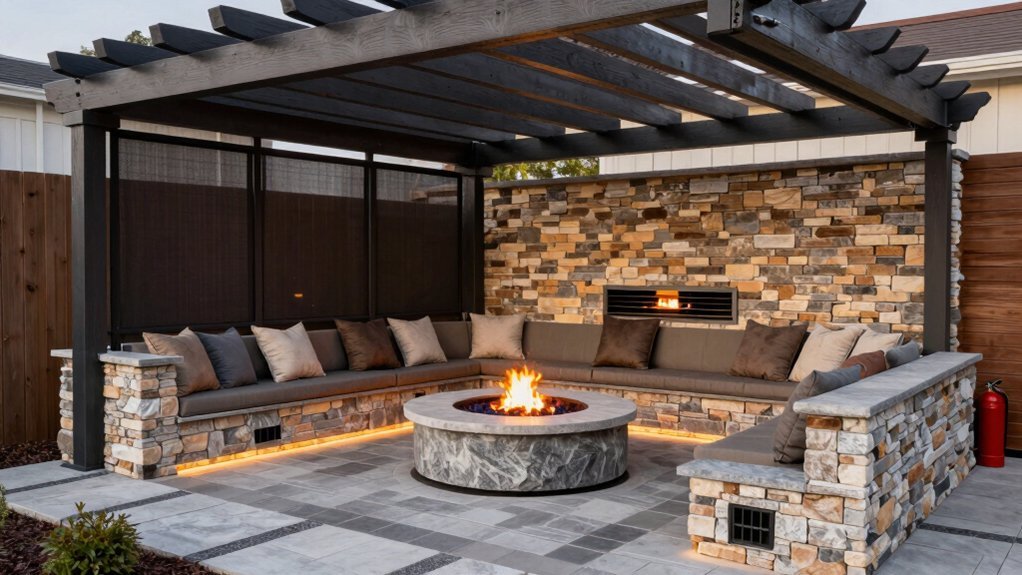
Once you’ve selected your ideal style, safety planning becomes your next priority. You’ll need to check local fire codes and permits before installing your pit, as regulations vary by location and may restrict certain heat sources.
Position your fire pit away from windy areas and limit it to roughly one-third of your patio space to minimize smoke drift. Choose your heat source carefully: gas pits offer controlled burning with minimal smoke, while wood-burning options require robust ventilation and ash management planning.
For open-roof pergolas, ensure adequate clearance above your pit to manage heat, smoke, and flames safely. If you’re considering a built-in design, plan ventilation strategically. Size matters too—select from small (24–30 inches) to extra-large (60+ inches) based on your space and usage needs.
Selecting the Right Materials and Heat Sources
Why does your pergola’s design matter when choosing a fire pit? Your structure’s openness directly impacts which heat source works best. Open-roof pergolas need gas or propane options for superior ventilation control, while enclosed designs accommodate wood-burning features with proper clearance.
Your pergola’s openness determines your ideal heat source—open roofs require gas or propane for ventilation control.
You’ll find three primary heat sources: wood-burning delivers authentic aroma and crackling ambiance, gas/propane provides reliable control regardless of weather, and electric or infrared options offer year-round flexibility and mood lighting.
Material selection equally matters. You should pair stone, concrete, or steel pits with paver patios and cobblestone surfaces to create durable, heat-resistant foundations. These materials withstand high temperatures while establishing visual contrast around your seating walls.
Match your heat source to your pergola’s openness, climate conditions, and local fire codes for optimal safety and efficiency.
Creating Functional Layouts in Compact Areas
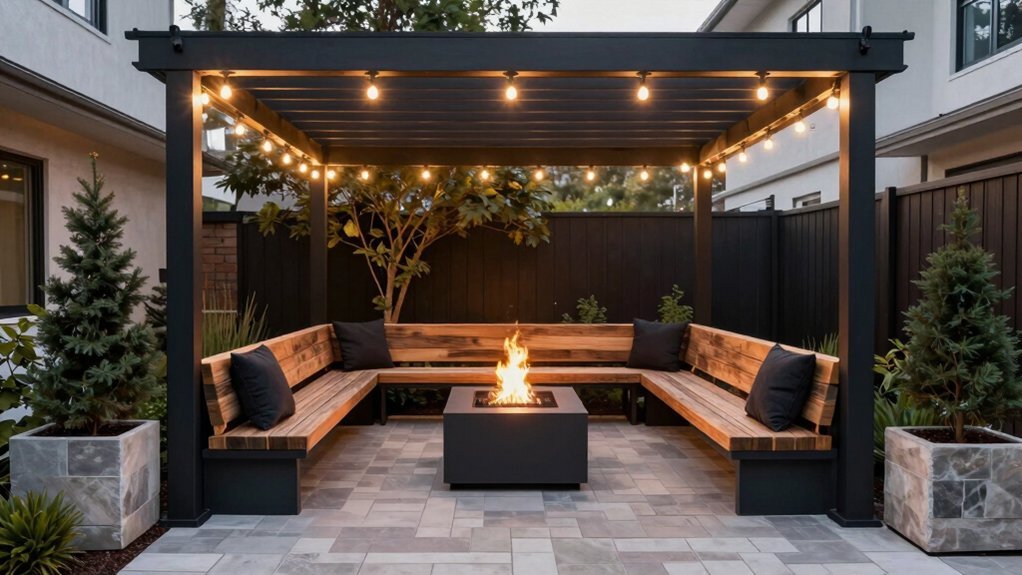
When you’re working with a compact patio—say 20′ x 16’—cramming every element together defeats the purpose of creating an inviting outdoor room. Instead, you’ll want to separate distinct zones using strategic placement and materials.
Position your fire pit as a focal point with dedicated seating nearby, rather than integrating everything into one bench. Keep your kitchen or bar area minimal, prioritizing counter space over bulk to preserve open seating zones.
Consider pairing a pergola with your fire pit, using cobblestone or other materials to define each area visually. Incorporate circulation corridors between zones to maintain air flow and prevent that suffocating cramped feeling.
Scale-drawn 3D views help you verify proportions before committing to construction, ensuring your layout feels spacious and comfortable.
Year-Round Comfort: Heating and Weather Solutions
How do you keep your pergola fire pit retreat comfortable as seasons shift?
You’ll want to layer heating solutions strategically. Closed-roof louvers seal in warmth during cooler months, while infrared heaters deliver year-round efficiency by warming surfaces and people directly. Adjustable roofs let you manage ventilation and smoke when fires run hot.
| Solution | Season | Benefit |
|---|---|---|
| Sealed louvers | Winter | Heat retention |
| Infrared heaters | Year-round | Energy efficiency |
| Adjustable roof | All seasons | Ventilation control |
| Fire pit | Fall/Winter | Direct warmth |
| Fireproof furniture | All seasons | Safety + durability |
Smart spacing prevents heat from concentrating dangerously. Choose fire-resistant materials and fireproof furniture near flames. This approach ensures your seating area remains comfortable and safe regardless of weather, extending your outdoor season considerably.
Professional Installation vs. DIY Approaches
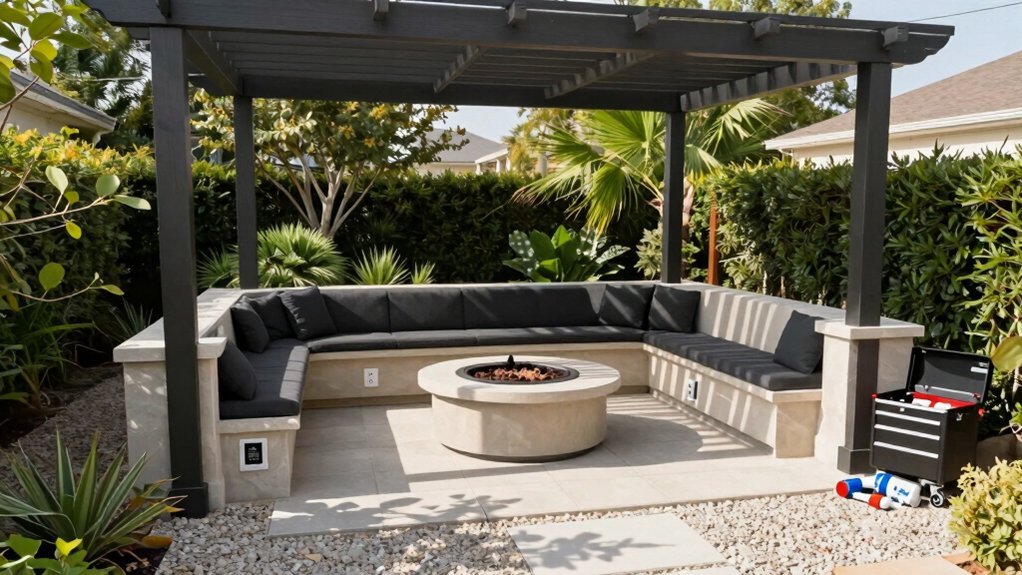
You’ll want to weigh whether you’re hiring professionals for permits and safety clearances or tackling a DIY build with flexible design choices and lower labor costs. Consider your skill level and available time against the complexity of fire pit placement, pergola structural requirements, and local code compliance. A professional installation handles the technical risks upfront, while a DIY approach lets you customize materials and layouts if you’re willing to manage the learning curve.
When to Hire Professionals
Should your pergola fire pit project include professional installation, or can you tackle it yourself? You’ll want professional help when dealing with gas or propane fire features, especially near pergola structures. Installers ensure proper clearances, drainage, and ventilation—critical safety factors you shouldn’t overlook. Built-in fire pits with integrated seating walls and planters also benefit from expert installation, guaranteeing structural integrity and cohesive design.
However, you can handle DIY projects using detailed guides and material lists for simpler setups. Stone or cedar pergolas with pavers and basic seating arrangements work well for hands-on builders. Consider your skill level, local building codes, and the project’s complexity. When in doubt, hire professionals—especially for heat sources and permanent structures that require precision installation.
DIY Project Feasibility Assessment
Before committing to either path, assess your skills, timeline, and comfort with local building codes. You’ll need to evaluate whether you can handle structural work, obtain permits independently, and ensure proper clearances and ventilation for your heat source.
| Factor | DIY | Professional |
|---|---|---|
| Timeline | Longer, self-paced | Faster, managed schedule |
| Permits | You obtain | Contractor handles |
| Cost | Lower labor | Higher, includes expertise |
| Safety codes | Your responsibility | Guaranteed compliance |
DIY works well if you’re handy and patient. Pergola kits with step-by-step guides, itemized material lists, and 3D visuals simplify planning. However, if you’re unfamiliar with gas/electric installations or local regulations, professional installation eliminates guesswork and ensures your fire pit meets all safety requirements.
Cost-Benefit Analysis Comparison
When deciding between professional installation and DIY approaches, weighing upfront costs against long-term value becomes essential.
Professional installation demands higher initial investment but delivers substantial returns:
- Permits and compliance: Professionals handle permits and code adherence, eliminating expensive violations
- Warranty protection: You’re covered if issues arise, reducing future repair costs
- Expert guidance: Site assessment and engineered plans prevent costly mistakes
- Maintenance support: Post-install guidance extends your project’s lifespan
DIY kits offer predictable costs with documented materials lists, yet you’ll shoulder excavation, drainage, and code responsibilities. If you’re unfamiliar with local fire regulations or drainage requirements, mistakes become expensive.
Consider a hybrid approach: you handle installation while hiring professionals for consultation on safety and layout. This balances cost savings against expert validation, protecting your investment without paying full labor costs.
Frequently Asked Questions
How to Make a Fire Pit Seating Area?
You’ll create a fire pit seating area by installing a central fire pit (24-60 inches), surrounding it with stone benches or built-in seating, and adding a pergola overhead. You should pair these with pavers or cobblestone, ensuring proper ventilation and spacing to avoid crowding.
Is It Safe to Have a Fire Pit Under a Pergola?
Yes, you can safely have a fire pit under a pergola if you’re careful. You’ll need proper ventilation, adequate clearance from combustibles, a compliant fire source, and local permit approval. You must maintain safe distances from seating and ensure easy escape routes.
How to Arrange Patio Furniture Around a Fire Pit?
You’ll arrange furniture in a circle or horseshoe around your fire pit, positioning seating 6–10 ft away. You should create clear walking paths, vary seating heights with benches and chairs, and ensure materials complement your patio’s design for visual cohesion.
How Big Should the Seating Area Be Around a Fire Pit?
You should aim for a 20′ x 16′ comfortable footprint around your fire pit to avoid cramming. This balanced space lets you move freely, prevents crowding, and accommodates seating plus accessories without feeling cramped in your backyard gathering zone.



Leave a Reply