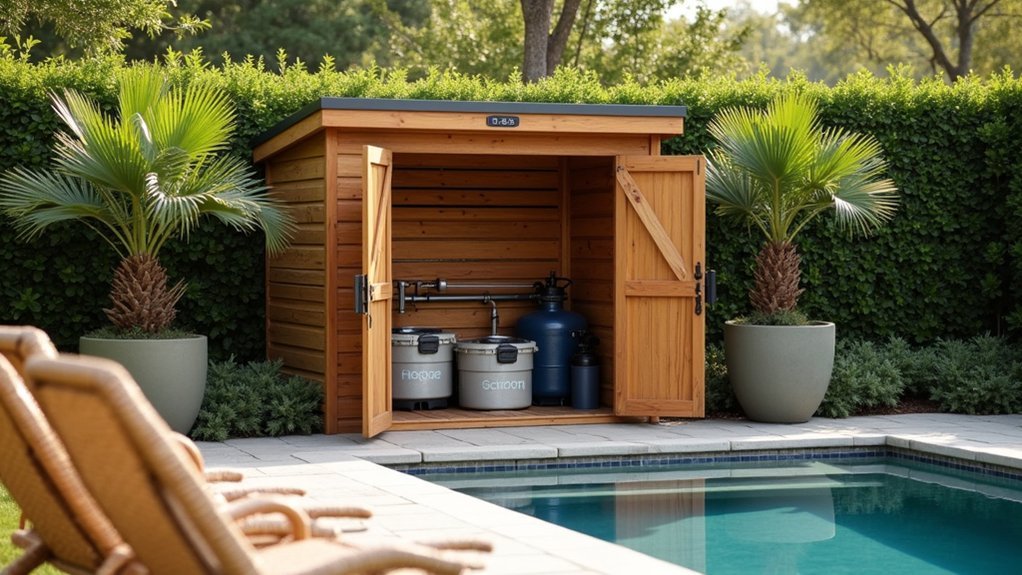
You can hide unsightly pool equipment by choosing a shed design that matches your home’s architectural style and using complementary materials and colors. Install proper ventilation with louvered vents on opposite walls to protect your pumps and filters. Organize the interior with adjustable shelving, pegboards, and clear bins for chemicals. Add screening plants like boxwood or arborvitae around the shed, and make sure you’ve got easy access for maintenance. These strategies will transform your backyard’s appearance.
Choose a Shed Design That Blends With Your Landscape
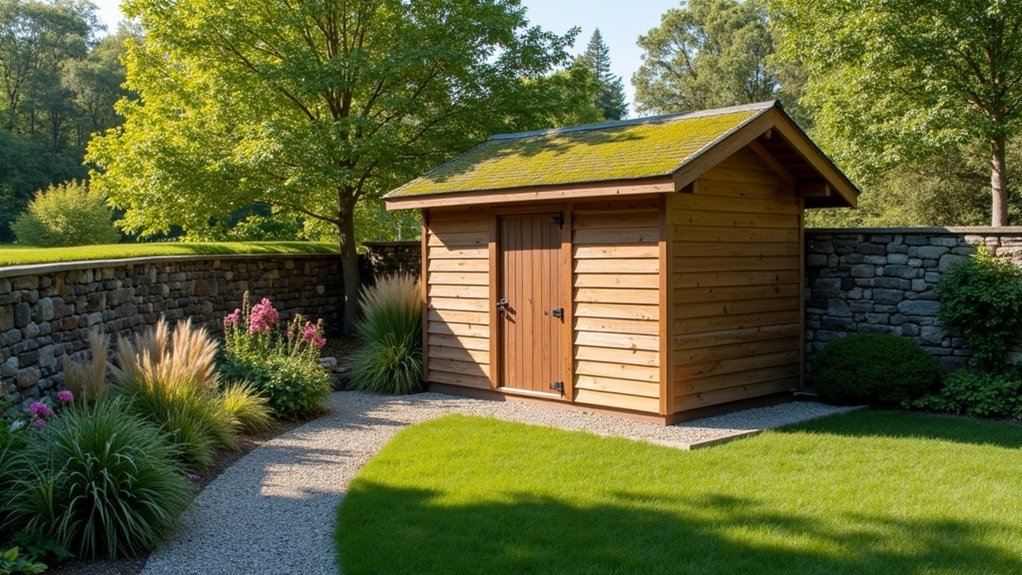
When you’re selecting a shed to house your pool equipment, the structure shouldn’t stick out like an eyesore in your backyard. Think about materials and colors that complement your home’s exterior and existing landscaping. A cedar shed works beautifully in natural settings, while painted options can match your house’s trim or siding.
Think about architectural style too. If your home features clean, modern lines, skip the rustic barn-door look. Instead, opt for a sleek, contemporary design with minimal hardware.
You’ll also want to think about scale. A massive shed overwhelms a small yard, while a tiny structure looks out of place in sprawling landscapes. Take measurements and visualize placement before purchasing. Strategic positioning near existing trees, fences, or garden beds helps your equipment shed disappear into the scenery seamlessly.
Install Proper Ventilation for Pool Pumps and Filters
Your shed’s appearance matters, but what’s happening inside matters even more. Pool pumps and filters generate significant heat during operation, and without adequate airflow, you’re risking equipment failure and potential fire hazards.
Install louvered vents on opposite walls to create cross-ventilation. Position one vent low and another high to take advantage of natural heat rising. For sheds housing larger equipment, consider adding an exhaust fan with a thermostat that activates when temperatures climb too high.
Don’t forget about chlorine gas ventilation if you’re storing chemicals alongside equipment. These fumes corrode metal components and pose health risks in enclosed spaces. Keep chemical storage separate or make certain your ventilation system handles both heat and fumes effectively. Proper airflow extends equipment life and keeps your investment protected.
Organize Equipment With Smart Shelving and Storage Solutions
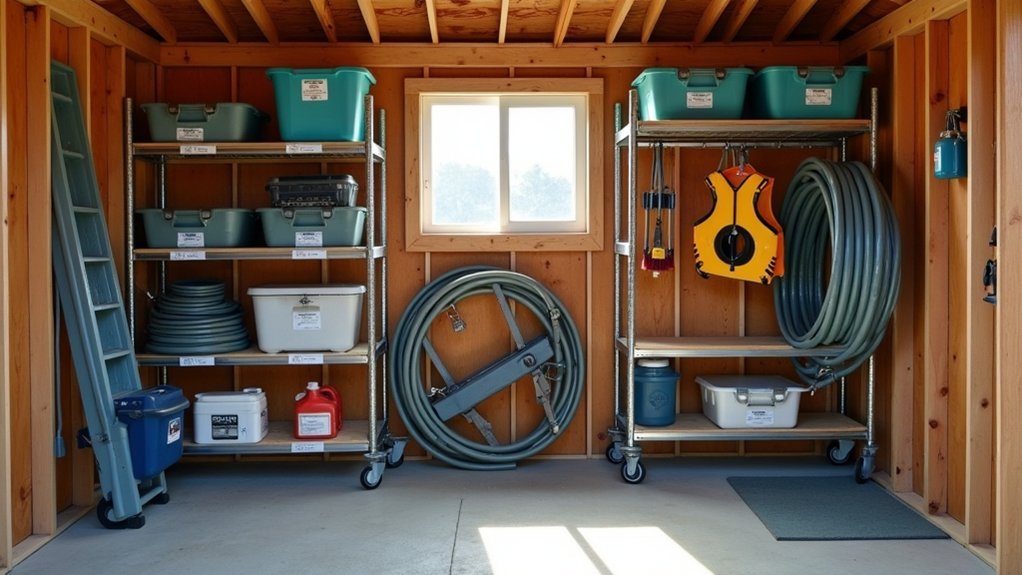
Smart shelving transforms a cramped equipment shed into an organized workspace where you can quickly find what you need. You’ll maximize every square foot by mounting adjustable wall shelves at varying heights to accommodate different-sized containers and supplies.
Strategic shelving turns cluttered storage into functional space where every tool has its place.
Consider these essential storage solutions for your pool equipment shed:
- Wall-mounted pegboards – Hang nets, brushes, and testing kits within arm’s reach
- Clear plastic bins – Store chemicals separately and label each container for quick identification
- Heavy-duty hooks – Keep pool hoses coiled and off the floor to prevent tripping hazards
- Rolling utility carts – Move supplies easily between your shed and pool area
You’ll also want to install overhead storage racks for seasonal items like winter covers and rarely used accessories.
Add Screening Plants and Lattice for Natural Camouflage
Blending your equipment shed into the landscape doesn’t require expensive renovations—strategic plantings and lattice panels can disguise even the most utilitarian structure.
Choose fast-growing evergreen shrubs like boxwood, privet, or arborvitae to create year-round coverage. Position plants 18-24 inches from the shed walls to allow airflow and maintenance access. For quicker results, install wooden or vinyl lattice panels and train climbing vines such as jasmine, clematis, or bougainvillea along them.
You’ll want to make certain plantings don’t block ventilation openings or impede equipment access. Consider ornamental grasses for softer screening that sways naturally in the breeze. Combine multiple heights—tall shrubs at corners, medium plants along sides, and low groundcover at the base—to create layered concealment that looks intentional rather than like you’re hiding something.
Ensure Easy Access for Maintenance and Repairs
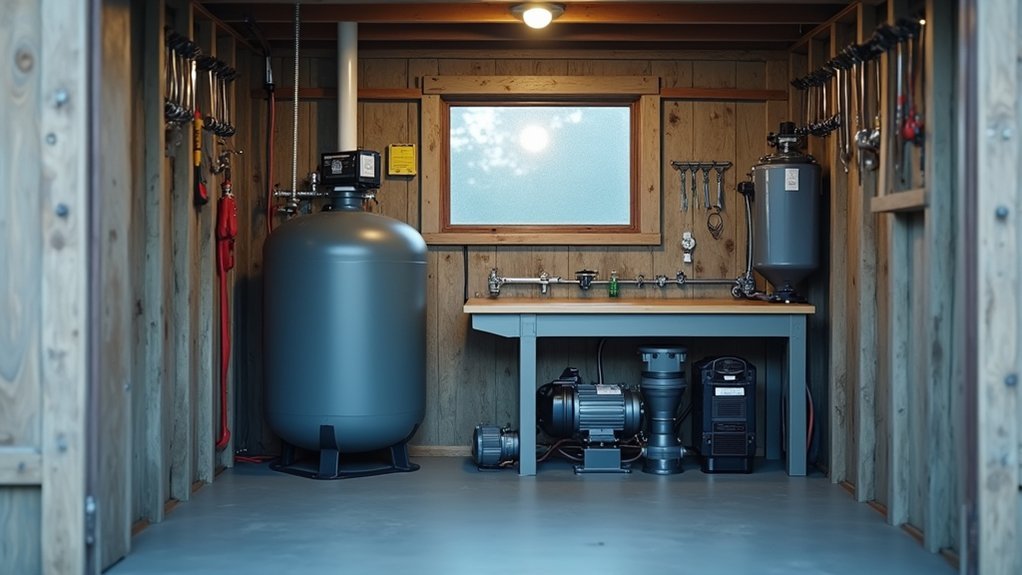
While screening plants and lattice add visual appeal, they shouldn’t turn routine maintenance into an obstacle course. You’ll need to balance aesthetics with functionality to keep your pool equipment running smoothly.
Here’s how to maintain easy access:
- Install removable lattice panels – Use hinges or clips so you can quickly detach sections without damaging your plants or structures.
- Create a clear pathway – Leave at least three feet of clearance around equipment for technicians to work comfortably.
- Choose slow-growing plants – Select varieties that won’t constantly encroach on access points or require frequent trimming.
- Add a service door – Build a dedicated entry point into your shed design that’s wide enough for equipment replacement.
Planning for accessibility now prevents costly headaches during emergency repairs later.
Frequently Asked Questions
What Permits Are Required to Build a Pool Equipment Shed?
You’ll typically need a building permit and possibly electrical and plumbing permits for your pool equipment shed. Check with your local building department, as requirements vary by municipality and shed size.
How Far Should the Shed Be Located From the Pool?
You should position your shed at least 5 feet from the pool’s edge for safety and accessibility. Check your local codes, as some areas require 10 feet or more from the water.
What Is the Average Cost to Build a Pool Equipment Storage Shed?
You’ll typically spend between $1,500 and $5,000 to build a pool equipment storage shed. Your final cost depends on size, materials, and whether you’re hiring a contractor or tackling it yourself.
Can I Store Pool Chemicals Safely Inside the Equipment Shed?
You can store pool chemicals in your equipment shed, but you’ll need proper ventilation, separate storage bins, and climate control. Keep chemicals away from equipment, and never store acids and chlorine together.
What Size Shed Do I Need for My Pool Equipment?
You’ll typically need a 4×6 or 6×8 foot shed for standard pool equipment. Consider your pump, filter, heater, and chlorinator sizes, then add 2-3 feet of clearance around each component for maintenance access.

Leave a Reply