
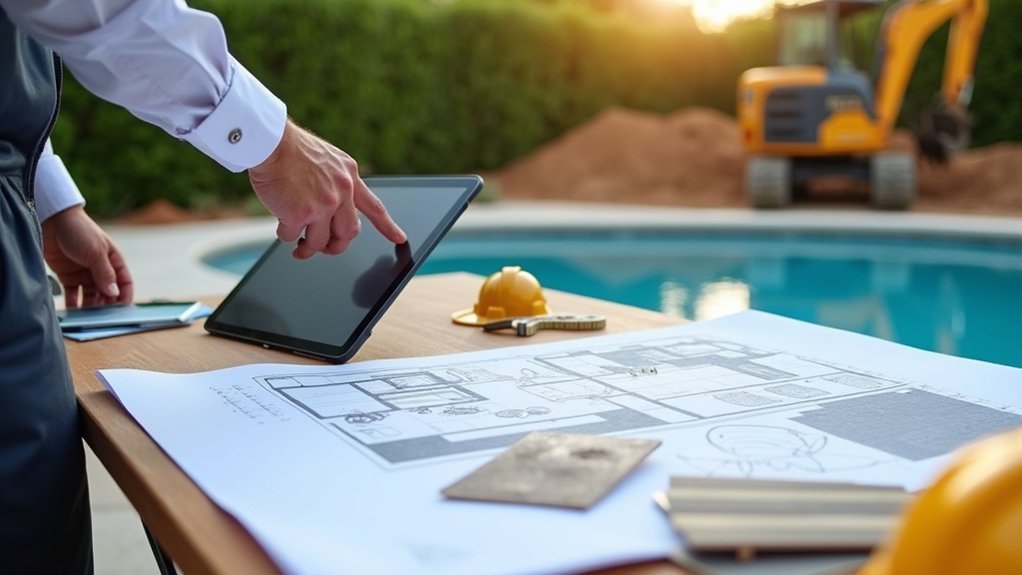
Before breaking ground on your pool house, you’ll need to nail down five critical planning elements. Start by defining your primary purpose—whether it’s a changing area, entertainment hub, or guest quarters—since this drives your square footage and electrical needs. You’ll also want to evaluate your site’s sun exposure, map out utility connections, choose moisture-resistant materials, and secure proper permits early. Each of these steps plays a crucial role in your project’s success.
Determine Your Pool House Purpose and Functionality
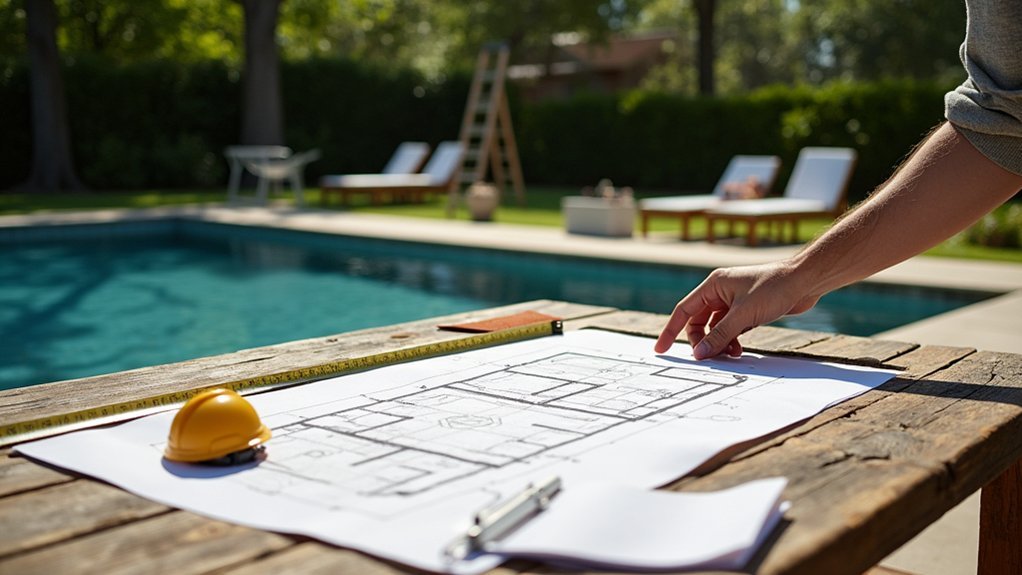
Before you break ground on your pool house project, you’ll need to nail down exactly how you plan to use the space. Will it serve as a simple changing area with a bathroom, or do you envision a full entertainment hub with a kitchen and lounge?
Consider your lifestyle and hosting habits. If you frequently throw pool parties, prioritize bar space, seating areas, and storage for towels and supplies. For a more private retreat, focus on comfort features like a shower, climate control, and relaxation zones.
Think about year-round functionality too. You might want the structure to double as a home gym, guest quarters, or hobby room during off-season months. Defining these purposes early shapes every subsequent decision, from square footage to electrical requirements.
Choose the Right Location and Size for Your Property
Once you’ve defined your pool house’s purpose, you’ll need to pinpoint the ideal spot on your property and determine the right footprint.
Consider sun exposure, prevailing winds, and sightlines from your main residence. Position the structure close enough to the pool for convenience but far enough to allow adequate deck space. Check local zoning regulations for setback requirements from property lines, which typically range from five to fifteen feet.
Size depends on your intended use and budget. A basic changing room might require just 100 square feet, while a full entertainment space with bathroom and kitchenette could need 400 square feet or more.
Survey your available land carefully, accounting for existing landscaping, drainage patterns, and underground utilities before finalizing your location and dimensions.
Plan Essential Utilities and Plumbing Requirements
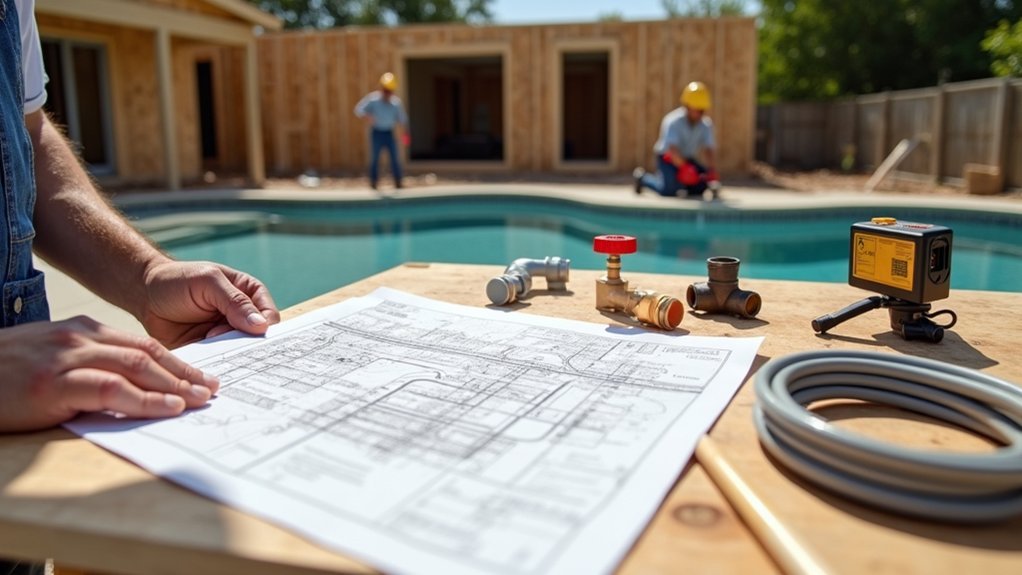
While your pool house design takes shape on paper, you’ll need to map out the utility infrastructure that brings it to life.
Consider your electrical needs first—lighting, outlets, HVAC systems, and any appliances require adequate amperage. You’ll likely need a dedicated subpanel connected to your main electrical service.
For plumbing, determine whether you want a bathroom, outdoor shower, wet bar, or kitchenette. Each fixture requires proper water supply lines and drainage connections.
Running these lines from your home increases costs markedly based on distance, so factor this into your location decision.
Don’t overlook gas lines if you’re planning a fireplace, grill, or heater. Hire licensed professionals to handle permits and installations.
Underground utility trenching should happen before any foundation work begins to avoid costly retrofitting later.
Select Materials That Complement Your Outdoor Space
In harmony with your existing landscape and architecture, the materials you choose for your pool house will determine its visual impact and longevity. You’ll want to select options that withstand moisture, chlorine exposure, and UV rays while matching your home’s aesthetic.
Consider these material options for a cohesive outdoor design:
- Natural stone or pavers that echo your pool deck’s surface
- Cedar or teak wood for warm, weather-resistant siding
- Stucco finishes that match your main residence
- Composite decking for low-maintenance flooring
- Aluminum or vinyl windows that resist corrosion
Don’t overlook your roof materials either. Metal roofing offers durability, while clay tiles add Mediterranean charm.
Match hardware finishes to your pool’s railings and fixtures to create visual continuity throughout your outdoor living space.
Navigate Building Permits and Local Zoning Regulations
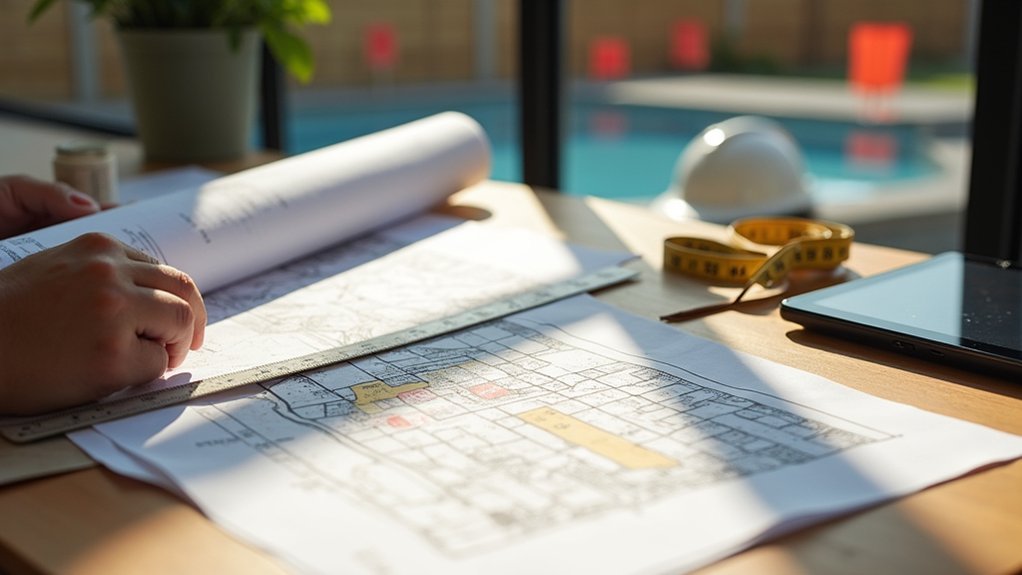
Before you break ground on your pool house project, you’ll need to secure the proper building permits and understand your local zoning regulations. Contact your local building department early to determine which permits apply to your construction. Requirements vary by municipality, so don’t assume what worked for a neighbor applies to your property.
Zoning regulations dictate where you can place your pool house, how tall it can be, and how close it can sit to property lines. Review setback requirements carefully, as violations can result in costly demolition orders or fines. Many areas also restrict the total square footage of accessory structures relative to your lot size.
Submit detailed construction plans with your permit application. Include electrical, plumbing, and structural specifications to prevent delays during the review process.
Frequently Asked Questions
How Much Does It Cost to Build a Pool House?
You’ll typically spend between $20,000 and $80,000 to build a pool house. Your final cost depends on size, materials, plumbing, electrical work, and whether you’re adding a bathroom or kitchen.
How Long Does Pool House Construction Typically Take to Complete?
You can expect your pool house construction to take between 3 to 6 months, depending on its size and complexity. Custom designs, permits, and weather delays might extend your timeline beyond this range.
Should I Hire a Contractor or Build the Pool House Myself?
You should hire a contractor if you lack construction experience, permits knowledge, or time. However, you’ll save money building it yourself if you’re skilled in framing, electrical, and plumbing work.
What Insurance Coverage Do I Need for My Pool House?
You’ll need to add your pool house to your homeowner’s insurance policy. Contact your insurer about extending your dwelling coverage, liability protection, and considering additional coverage for any amenities like plumbing or electrical systems.
How Do I Maintain and Winterize My Pool House Properly?
You should drain all water lines, insulate exposed pipes, and shut off the water supply before winter. Clean gutters, inspect the roof, seal gaps, and consider a space heater to prevent freezing damage.


Leave a Reply