
You can save 15%–30% on your pool waterfall installation by scheduling the project during fall or early winter when contractors compete for work. Start by comparing natural stone, artificial rock, and concrete options to match your budget. Get at least three itemized quotes to evaluate materials, labor, and warranties side by side. Don’t overlook DIY kits ranging from $200 to $2,000 for simpler projects. Understanding long-term pump and maintenance costs will help you plan even smarter.
Research Material Options and Their Price Points
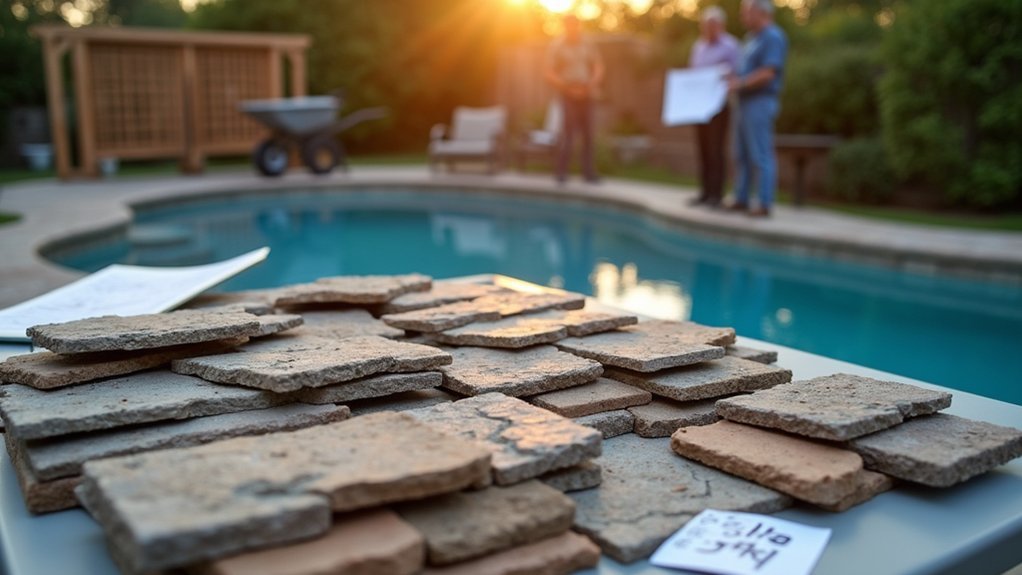
When you’re planning a pool waterfall installation, understanding the cost differences between materials can save you thousands of dollars. Natural stone like flagstone or slate typically costs $50-$150 per square foot installed, while artificial rock formations range from $30-$80 per square foot.
You’ll find that concrete offers the most budget-friendly option at $20-$50 per square foot, though it requires more maintenance over time. Stainless steel spillways provide a modern aesthetic and run $500-$2,000 depending on width and design complexity.
Don’t overlook the hidden costs associated with each material. Natural stone requires specialized labor, increasing installation expenses by 25-40%. Concrete may need resealing every few years. Compare warranties, expected lifespans, and maintenance requirements before committing. Request quotes from multiple suppliers to make certain you’re getting competitive pricing.
Compare Quotes From Multiple Pool Contractors
Reaching out to at least three pool contractors helps you gauge fair market pricing and identify who offers the best value for your waterfall project. Don’t simply choose the lowest bid—evaluate what each quote includes and the contractor’s reputation.
Getting multiple quotes isn’t just about finding the lowest price—it’s about finding the best value for your investment.
When comparing quotes, examine these key factors:
- Itemized costs for materials, labor, permits, and equipment
- Timeline estimates and availability for project completion
- Warranty coverage on both workmanship and materials
- References and portfolio of completed waterfall installations
- Insurance and licensing verification for your state
Ask each contractor to explain any price differences you notice. A higher quote might include premium materials or extended warranties that justify the cost. Request written estimates so you can compare details side by side before making your final decision.
Consider DIY-Friendly Waterfall Kit Alternatives
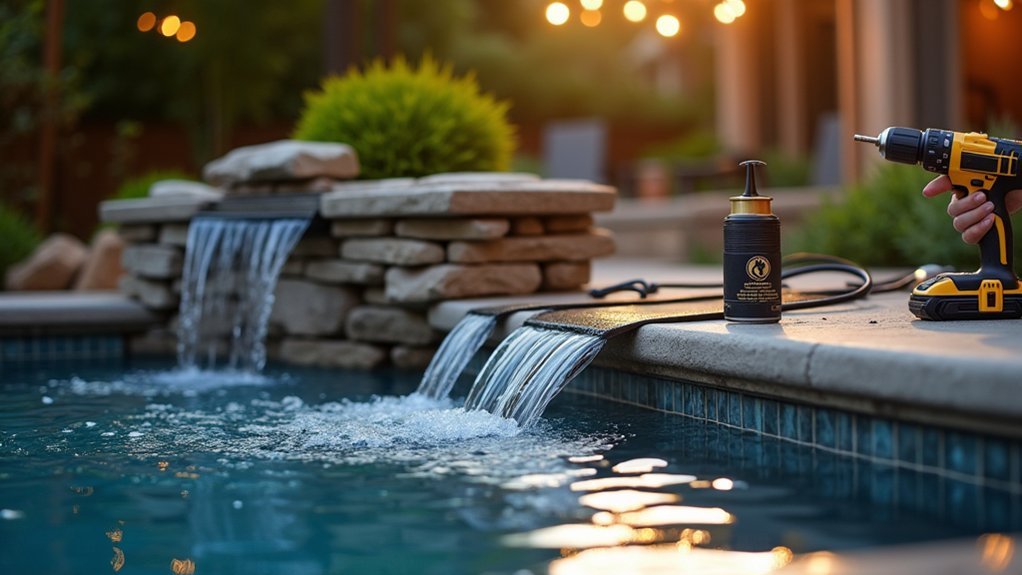
Professional installation isn’t your only option if contractor quotes exceed your budget. DIY waterfall kits offer a cost-effective alternative that can save you thousands on labor costs. These pre-designed systems come with pumps, tubing, and stackable rock formations that simplify the installation process.
You’ll find kits ranging from $200 for basic spillway designs to $2,000 for elaborate multi-tier options. Most include step-by-step instructions and require only basic tools. Before purchasing, assess your comfort level with electrical connections and plumbing modifications.
Popular kit brands like Aquascape and Blue Thumb provide video tutorials and customer support. You can complete most installations in a weekend with a helper. However, you should still consult local building codes and consider hiring an electrician for GFCI outlet installation near water features.
Plan Your Installation During Off-Peak Season
Although summer seems like the ideal time to add a waterfall to your pool, scheduling your installation during fall or early winter can slash costs by 15% to 30%.
Contractors have lighter schedules during these months, making them more willing to negotiate pricing and offer discounts to fill their calendars.
You’ll also benefit from:
- Faster project completion due to increased contractor availability
- Better deals on materials as suppliers clear seasonal inventory
- More attention from installers who aren’t juggling multiple jobs
- Time for your waterfall to cure and settle before swim season
- Flexibility to address any issues before you’re ready to use the pool
Book your consultation in September or October to lock in the best rates and secure your preferred installation dates.
Factor in Long-Term Maintenance and Operating Expenses
While securing off-season discounts puts money back in your pocket upfront, you’ll want to look beyond installation costs to understand what you’ll actually spend over your waterfall’s lifetime.
Your pump will run continuously, adding $20 to $50 monthly to your electric bill depending on horsepower and local rates.
Factor in water loss through evaporation and splash-out, which increases your refill frequency.
Budget for annual maintenance including pump servicing, algae treatment, and mineral deposit removal.
Natural stone features may need resealing every few years, while concrete requires crack inspection and repair.
Set aside 10% of your installation cost annually for unexpected repairs.
Creating a dedicated maintenance fund prevents financial strain when your pump motor fails or plumbing develops leaks.
Frequently Asked Questions
What Permits Are Required for Installing a Pool Waterfall in My Area?
You’ll typically need a building permit and possibly electrical and plumbing permits for your pool waterfall. Contact your local building department directly, as requirements vary markedly by city and county regulations.
How Does a Waterfall Affect My Pool’s Water Chemistry and Ph Levels?
A waterfall increases water aeration, which raises your pool’s pH levels over time. You’ll need to monitor pH more frequently and add muriatic acid or pH decreaser to maintain proper balance between 7.2-7.6.
Can a Waterfall Be Added to an Existing Pool Without Major Renovations?
Yes, you can add a waterfall to your existing pool without major renovations. You’ll typically need basic plumbing modifications and electrical work. Prefabricated waterfall kits make installation easier and more budget-friendly for most pool owners.
What Electrical Requirements Are Needed to Power a Pool Waterfall Pump?
You’ll typically need a dedicated 120V or 240V circuit, depending on your pump’s size. Hire a licensed electrician to install a GFCI-protected outlet near your equipment pad, ensuring it meets local codes.
How Loud Are Pool Waterfalls and Will They Disturb My Neighbors?
Pool waterfalls typically produce 50-70 decibels, similar to normal conversation. You won’t likely disturb neighbors unless you’re running it late at night. You can adjust flow rates to reduce noise levels.



Leave a Reply