
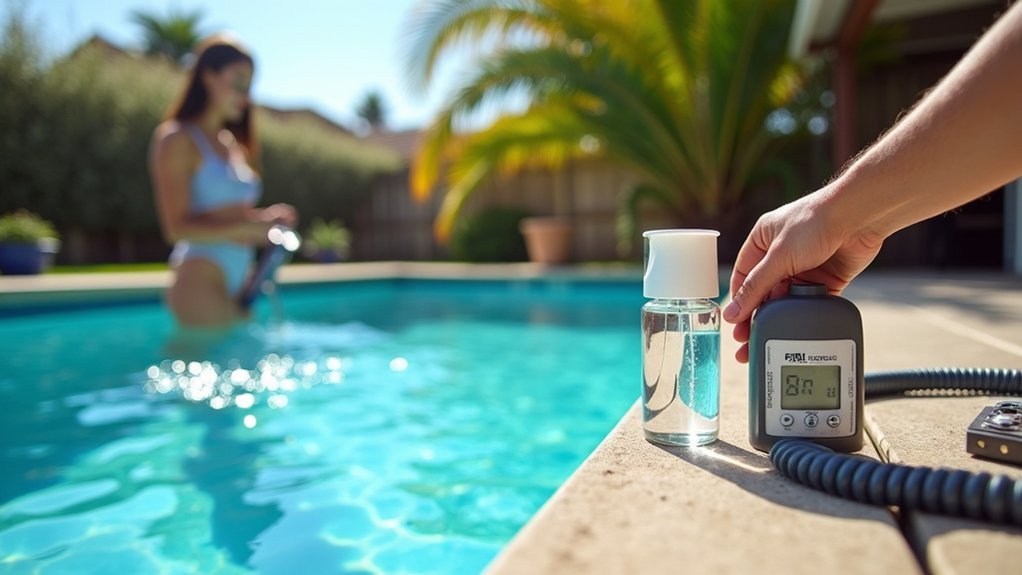
To keep your saltwater pool in top shape, you’ll need to test water chemistry weekly, maintain salt levels between 2,700–3,400 ppm, and keep pH balanced at 7.2–7.6. Clean your salt cell every three months to prevent scale buildup, and don’t forget to skim debris daily while brushing surfaces weekly. Check stabilizer levels monthly and winterize your system before temperatures drop below 60°F. Each of these tips plays a vital role in extending your pool’s lifespan.
Test Your Salt Levels and Water Chemistry Weekly

Regularly testing your salt levels and water chemistry forms the foundation of proper saltwater pool maintenance. You’ll want to check your salt concentration weekly, aiming for levels between 2,700 and 3,400 parts per million. When salt drops too low, your chlorine generator can’t produce enough sanitizer to keep your water clean.
Beyond salt, you should monitor pH, alkalinity, and stabilizer levels each week. Your pH should stay between 7.4 and 7.6, while alkalinity works best at 80 to 120 ppm. Don’t forget to test your free chlorine—it should read between 1 and 3 ppm.
Invest in a quality digital test kit or test strips designed for saltwater pools. These tools give you accurate readings quickly, helping you catch imbalances before they become costly problems.
Clean and Inspect Your Salt Cell Every Three Months
Your salt cell works hard to convert salt into chlorine, but calcium deposits and mineral buildup can gradually reduce its efficiency.
Every three months, remove the cell and inspect the plates for white, flaky scale accumulation.
If you notice buildup, soak the cell in a mixture of muriatic acid and water (typically a 4:1 ratio) for 10 to 15 minutes.
Rinse thoroughly with a garden hose before reinstalling. Never use metal tools to scrape the plates, as this damages the coating and shortens the cell’s lifespan.
During inspection, check for cracks or worn connections that might affect performance.
A well-maintained salt cell lasts five to seven years, while neglected ones often fail within two to three years.
Regular cleaning protects your investment and keeps chlorine production consistent.
Monitor and Maintain Proper Ph Balance
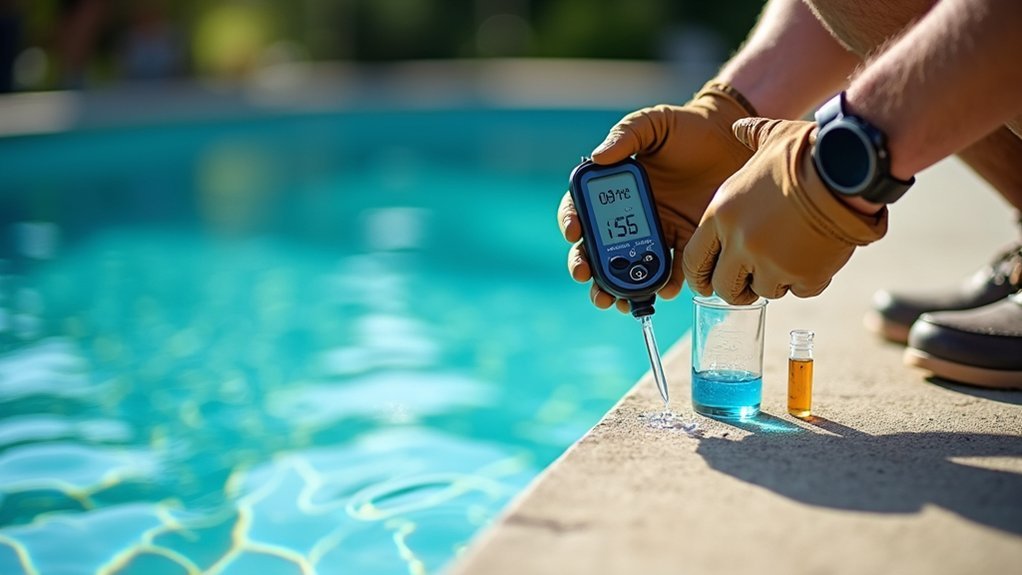
You’ll want to test your pool water at least once a week to keep pH levels in check.
The ideal pH range for saltwater pools falls between 7.2 and 7.6, which guarantees swimmer comfort and peak chlorine effectiveness.
When levels drift outside this range, you can use pH increasers or decreasers to bring your water back into balance quickly.
Test Water Weekly
Testing your saltwater pool water weekly forms the foundation of effective pool maintenance. You’ll want to check chlorine levels, pH, and salinity using reliable test strips or a digital tester. Consistent testing catches imbalances before they damage equipment or irritate swimmers’ skin and eyes.
| Parameter | Ideal Range |
|---|---|
| Free Chlorine | 1-3 ppm |
| pH Level | 7.4-7.6 |
| Salt Level | 2700-3400 ppm |
Don’t skip weeks, even when your pool looks crystal clear. Water chemistry shifts quickly due to rainfall, heavy use, or temperature changes. Keep a log of your readings to identify patterns and predict when adjustments are needed. This proactive approach saves you money on chemicals and prevents costly repairs to your salt cell and other equipment.
Ideal Ph Range
Maintaining proper pH balance in your saltwater pool directly impacts both swimmer comfort and equipment longevity. You’ll want to keep your pH levels between 7.2 and 7.6, with 7.4 being the sweet spot. This range matches the natural pH of human eyes and skin, preventing irritation during swimming.
When pH drifts too high, you’ll notice cloudy water and scale buildup on your salt cell. Too low, and the acidic conditions corrode metal fixtures and damage pool surfaces. Your chlorine also works less effectively outside this range.
To adjust pH, add muriatic acid or sodium bisulfate to lower it, or soda ash to raise it. Make small adjustments and retest after four hours. This prevents overcorrection and keeps your pool water perfectly balanced.
Adjusting Ph Levels
Understanding the ideal pH range gives you a target, but knowing how to hit that target requires practical adjustment techniques. You’ll need to test your water weekly and make corrections based on your readings.
When pH drifts too high or low, use these common adjusters:
| Problem | Solution | Application Method |
|---|---|---|
| pH too high | Muriatic acid | Add to deep end |
| pH too high | Dry acid | Broadcast over surface |
| pH too low | Soda ash | Dissolve first, then add |
| pH too low | Baking soda | Sprinkle directly |
| Unstable pH | Borates | Add as stabilizer |
Always add chemicals in small increments, wait four hours, then retest. You’ll prevent overcorrection and maintain stable water chemistry throughout the season.
Keep Your Pool Filter Clean and Functioning
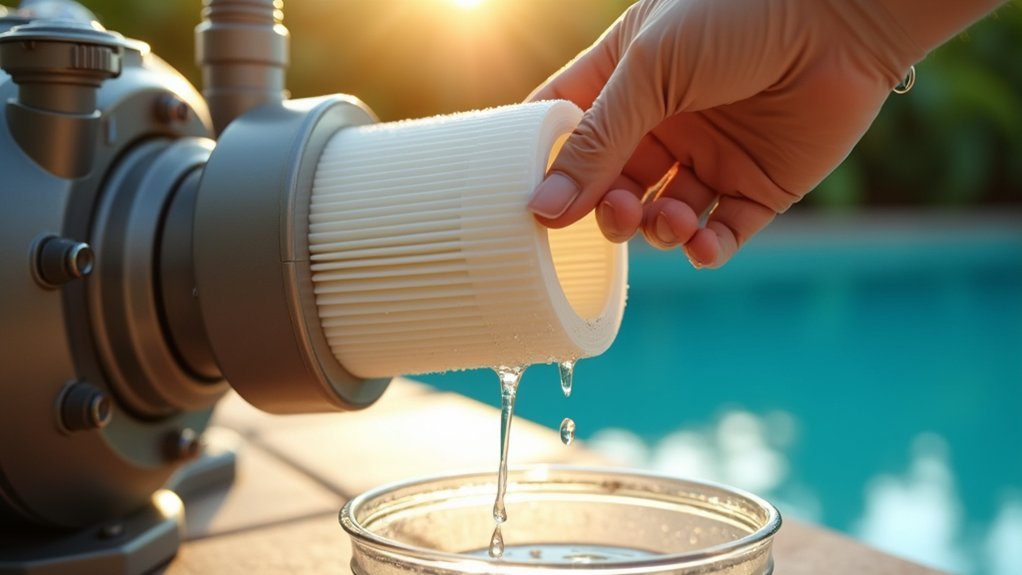
Your pool filter works hard to remove debris and contaminants, so you’ll want to check the pressure gauge weekly to guarantee it’s operating efficiently.
When the pressure rises 8-10 PSI above normal, it’s time to backwash your filter to clear out accumulated dirt.
Plan to replace filter cartridges annually, even if they appear functional, to maintain peak filtration performance throughout the swimming season.
Check Filter Pressure Regularly
Regularly checking your filter pressure gauge helps you catch problems before they escalate into costly repairs or murky water. Your gauge displays the internal pressure in pounds per square inch (PSI), and understanding these readings keeps your filtration system running efficiently.
Establish your baseline PSI when the filter is clean. Record this number for future reference. When pressure rises 8-10 PSI above your baseline, it’s time to clean or backwash your filter. High pressure indicates debris buildup restricting water flow.
Low pressure signals different issues—a clogged pump basket, air leak, or malfunctioning pump. Don’t ignore sudden pressure drops, as they often indicate serious problems requiring immediate attention.
Check your gauge weekly and after heavy pool use or storms. This simple habit extends your equipment’s lifespan and maintains crystal-clear water.
Backwash When Needed
When your pressure gauge climbs 8-10 PSI above that clean baseline you’ve established, backwashing becomes your next step in maintaining peak filtration.
For sand and DE filters, you’ll reverse the water flow to flush out trapped debris. Turn off your pump, set the multiport valve to “backwash,” and run the system until the sight glass shows clear water—typically two to three minutes.
Follow with a 30-second rinse cycle before returning to normal filtration.
Don’t backwash too frequently. Doing so wastes water and actually reduces filtration efficiency since a slightly dirty filter catches finer particles.
However, waiting too long strains your pump and compromises water clarity.
After backwashing DE filters, remember to add fresh diatomaceous earth through your skimmer to restore proper filtration capacity.
Replace Cartridges Annually
Cartridge filters eventually lose their effectiveness no matter how diligently you clean them, which is why annual replacement keeps your saltwater pool’s filtration system performing at its best.
Over time, the filter fabric breaks down and develops microscopic tears that allow debris to pass through. You’ll notice decreased water clarity and increased pump strain when your cartridge nears the end of its lifespan.
- Track your replacement schedule by writing the installation date directly on the cartridge with permanent marker
- Purchase the correct size by matching the model number from your existing filter
- Keep a spare cartridge on hand for emergencies during peak swimming season
- Inspect for damage monthly to catch deterioration before it affects water quality
Don’t wait until filtration problems arise—proactive replacement saves you time and money.
Skim Debris and Brush Pool Surfaces Regularly
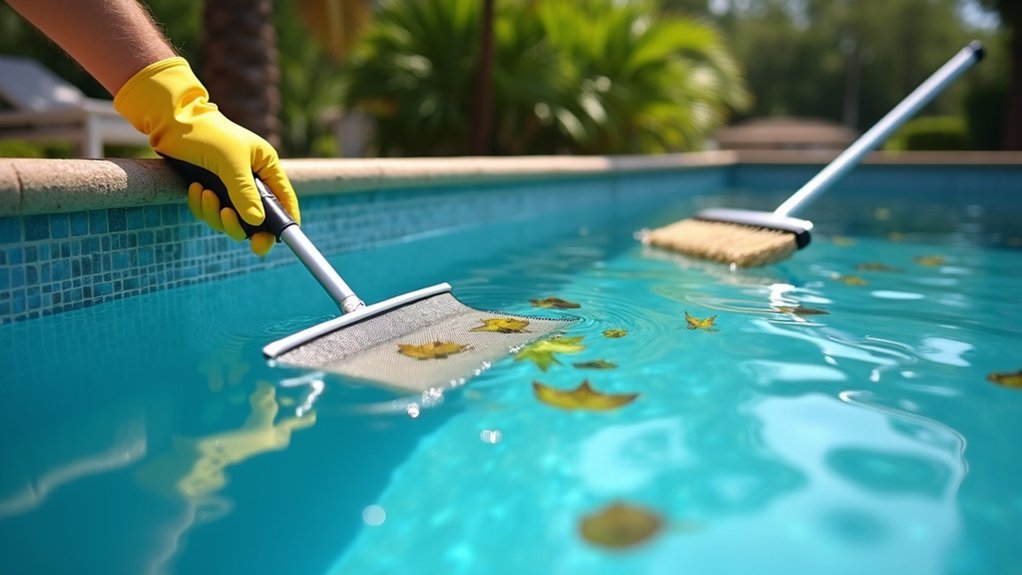
Skimming debris from your saltwater pool’s surface should become part of your daily routine. Leaves, insects, and other floating matter break down quickly, affecting water chemistry and clogging your filtration system. A simple five-minute skim each day prevents bigger problems down the road.
Brushing your pool surfaces weekly is equally important. Saltwater pools aren’t immune to algae growth, and brushing disrupts algae before it takes hold. Focus on walls, steps, corners, and areas with poor circulation. Use a brush appropriate for your pool’s surface—nylon bristles work well for vinyl and fiberglass, while stainless steel brushes suit concrete and plaster.
Don’t neglect the waterline, where oils and minerals accumulate. Regular brushing here prevents unsightly buildup and keeps your pool looking pristine throughout the swimming season.
Check Your Stabilizer Levels to Protect Against Sun Damage
Although your salt chlorine generator produces a steady supply of sanitizer, sunlight rapidly destroys chlorine unless you’ve added a protective buffer to your water. Cyanuric acid, commonly called stabilizer or conditioner, shields chlorine molecules from UV degradation. Without adequate levels, you’ll waste salt and overwork your generator.
Test your stabilizer levels monthly using a reliable test kit. For saltwater pools, maintain cyanuric acid between 70-80 ppm for peak protection.
- Add stabilizer gradually through your skimmer or dissolve it in a bucket before pouring
- Never add stabilizer and shock treatments simultaneously
- Reduce levels only through partial water replacement since cyanuric acid doesn’t evaporate
- Store stabilizer in a cool, dry location away from direct sunlight
Proper stabilizer management extends your cell’s lifespan and reduces operating costs greatly.
Winterize Your Saltwater System Before Cold Weather Arrives
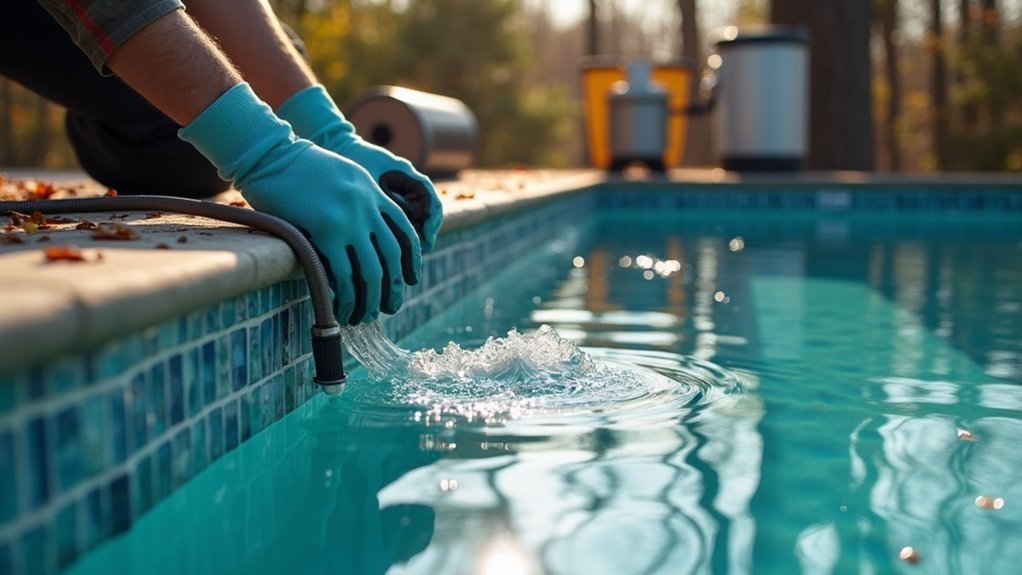
When temperatures drop below 60°F consistently, your salt chlorine generator can’t produce chlorine effectively and risks damage from freezing water. You’ll need to remove the salt cell and controller, then store them in a dry location away from extreme cold.
Before closing your pool, lower the water level below the skimmer and return jets. Drain all water from the salt cell, pump, filter, and plumbing lines to prevent ice expansion damage. Add a winterizing chemical kit to maintain water quality during the off-season.
Install winter plugs in all return fittings and cover your pool securely. Don’t add salt during winter months since it won’t dissolve properly in cold water. Inspect your salt cell for scale buildup and clean it before storage.
Frequently Asked Questions
How Much Does It Cost to Convert a Traditional Chlorine Pool to Saltwater?
You’ll typically spend between $1,000 and $2,500 to convert your traditional chlorine pool to saltwater. This includes purchasing a salt chlorine generator, installation costs, and the initial salt you’ll need to add.
Can I Use a Saltwater Pool if I Have Sensitive Skin?
Yes, you can! Saltwater pools typically feel gentler on sensitive skin because they contain lower chlorine levels than traditional pools. You’ll likely experience less dryness, irritation, and that harsh chemical smell after swimming.
How Long Does a Saltwater Pool System Typically Last?
Your saltwater chlorine generator typically lasts 3-7 years, depending on usage and maintenance. You’ll extend its lifespan by keeping salt levels balanced, cleaning the cell regularly, and running it during prime hours.
Is Saltwater Pool Water Safe for Pets to Drink?
You shouldn’t let your pets drink saltwater pool water regularly. While it’s less harmful than ocean water, the salt and chlorine can cause stomach upset, diarrhea, and dehydration if they consume too much.
Do Saltwater Pools Damage Surrounding Landscaping or Outdoor Furniture?
Yes, saltwater can damage your landscaping and outdoor furniture over time. You’ll want to rinse plants after splashes, choose salt-tolerant vegetation, and select corrosion-resistant furniture materials like aluminum, teak, or resin to prevent deterioration.



Leave a Reply