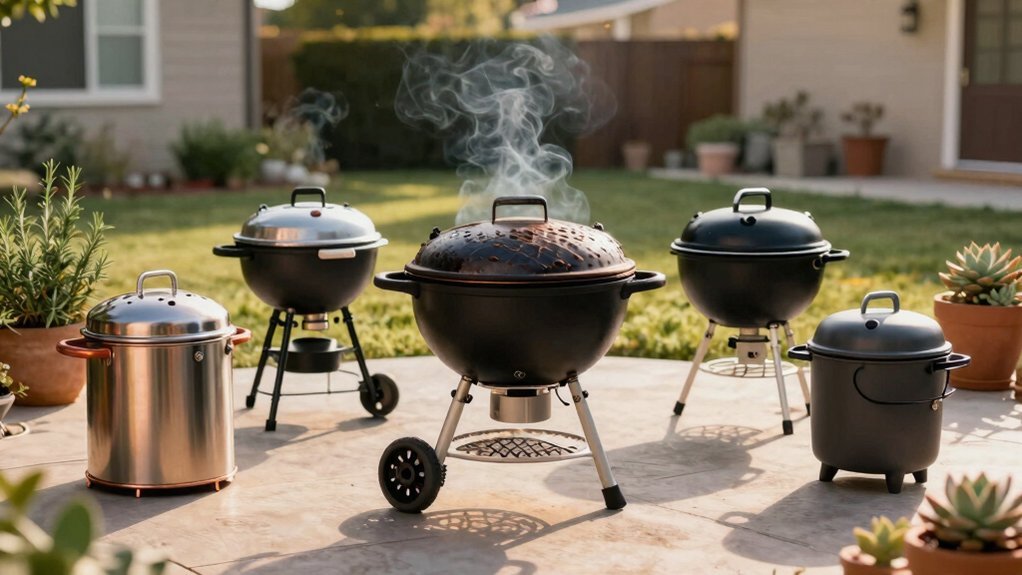

Silicone grilling tools prevent food sticking thanks to their non-porous, low surface energy polymer structure. You’ll notice food releases more easily as the flexible material creates gentle, even pressure when lifting delicate items. Unlike metal utensils, silicone won’t scratch grill surfaces, absorb odors, or conduct excessive heat. They maintain these non-stick properties even at temperatures up to 482°F. Discover why the right silicone tool shapes can transform your grilling experience.
The Science Behind Silicone’s Non-Stick Properties
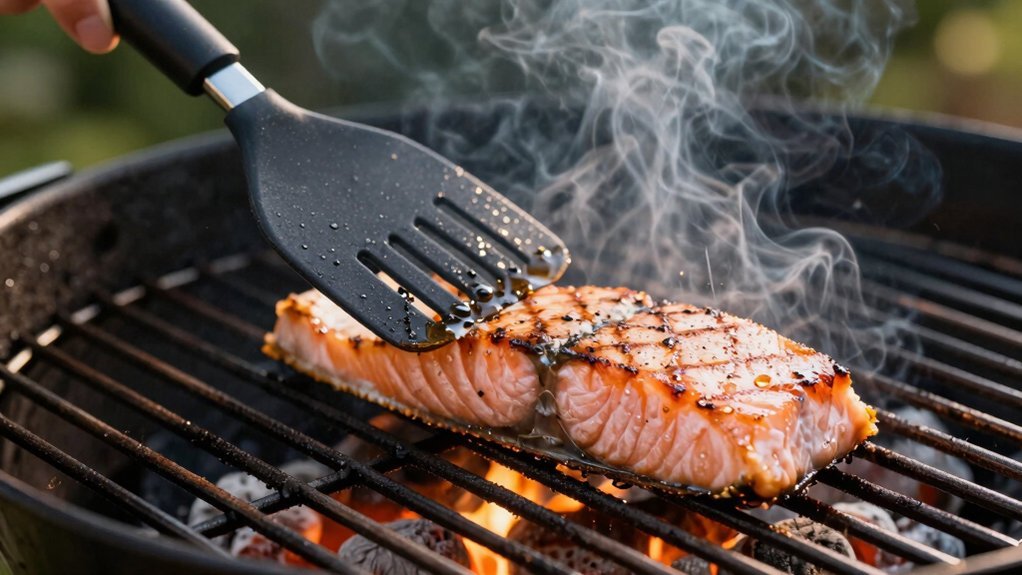
Why does food slide off silicone tools when it sticks to many other materials? The secret lies in silicone’s uniquely low surface energy and smooth, non-porous polymer structure. Unlike metal or wood utensils, silicone creates minimal adhesion with food particles.
When you’re flipping burgers or turning vegetables, silicone’s high coefficient of slip against proteins and sugars lets your spatula glide effortlessly. The flexible, elastic network forms a temporary, low-friction interface between your food and the tool, enhancing release performance.
You’ll get even better results when using silicone tools with well-seasoned or non-stick cooking surfaces. The temperature stability—up to 482°F (250°C) or higher—means silicone maintains its smooth, non-porous surface throughout your grilling session, resisting both staining and sticking.
How Heat Distribution Affects Food Release When Grilling
When you’re grilling with silicone tools, their even thermal transfer properties help maintain consistent cooking temperatures that prevent proteins from binding aggressively to surfaces. Unlike metal utensils that conduct heat rapidly, silicone’s moderate conductivity allows you to manage distinct heat zones on your grill without transferring excessive heat to delicate foods.
You’ll find that silicone spatulas and tongs distribute pressure more uniformly across food surfaces compared to metal alternatives, creating ideal conditions for clean food release even at varying grill temperatures.
Even Thermal Transfer Properties
Although many grillers focus primarily on marinade and seasoning choices, the thermal properties of your grilling tools markedly impact how easily food releases from the cooking surface.
Silicone’s low thermal conductivity is a hidden advantage—it heats more gradually than metal alternatives, preventing the sudden temperature spikes that cause proteins to bond with grill surfaces.
When you’re using silicone tools with reinforced cores, you’ll benefit from the perfect balance of heat transfer and non-stick performance.
The slightly flexible heads conform to uneven grill surfaces, maintaining consistent contact that promotes uniform cooking.
This even heat distribution eliminates hot spots that can cause sticking and tearing when flipping delicate foods.
Unlike metal tools that conduct heat aggressively, silicone’s more controlled thermal properties give you greater precision while keeping food intact during cooking.
Heat Zone Management Techniques
Mastering heat zone management transforms your grilling from hit-or-miss to consistently perfect results. When you properly preheat your grates and use silicone tools to flip food before crusts fully form, you’ll minimize sticking and abrasion.
| Zone Type | Tool Technique | Temperature Effect | Food Release Result |
|---|---|---|---|
| Direct Heat | Quick flips with silicone spatula | High surface contact | Clean separation |
| Indirect Heat | Gentle sliding with reinforced tools | Gradual caramelization | No tearing |
| Hot Spots | Silicone tongs for precise movement | Concentrated heat control | Prevents burning |
| Cool Zones | Silicone brushes for oil application | Maintains moisture | Smooth release |
Even heat distribution across your grilling surface is crucial. Silicone’s non-porous quality resists oil absorption, creating smoother food release as juices caramelize uniformly. You’ll maintain better control with reinforced silicone tools, especially in high-heat areas where food sticking risks are greatest.
Material Conductivity Comparisons
How exactly does material conductivity influence your grilling success? When you’re flipping burgers or turning delicate fish, your tool’s heat transfer properties significantly impact food release. Silicone conducts heat slowly and evenly, creating a balanced thermal profile that prevents the hot spots commonly found in metal utensils.
Unlike wood or plastic, silicone maintains uniform heat distribution across its surface. This thermal consistency means less protein browning will bond to your spatula when you slide it under food. The material’s non-porous structure further reduces sticking points while its flexibility allows it to conform to irregular grill surfaces.
You’ll notice the difference when working with temperature-sensitive foods – silicone’s controlled conductivity keeps the tool at an ideal temperature that separates cleanly from your perfectly grilled creations without tearing.
Comparing Silicone Tools to Traditional Metal Alternatives
When it comes to grilling tools, the battle between silicone and metal alternatives often boils down to functionality and performance. You’ll find that silicone offers significant advantages over traditional metal options, especially when preventing food from sticking to your grill.
- Surface properties – Silicone’s non-porous, non-stick surface actively resists food adhesion, while metal tools can develop scratches that trap food and cause sticking.
- Heat tolerance and flexibility – Quality silicone withstands temperatures up to 482°F while maintaining flexibility to scrape and flip effectively, unlike metal tools that may warp or dent.
- Safety and protection – Silicone tools won’t scratch your expensive non-stick grill grates, feature insulated grips for safer handling, and don’t transfer heat like metal, reducing burn risk while you’re flipping those perfect steaks.
The Flexibility Factor: Why Bendable Tools Reduce Sticking
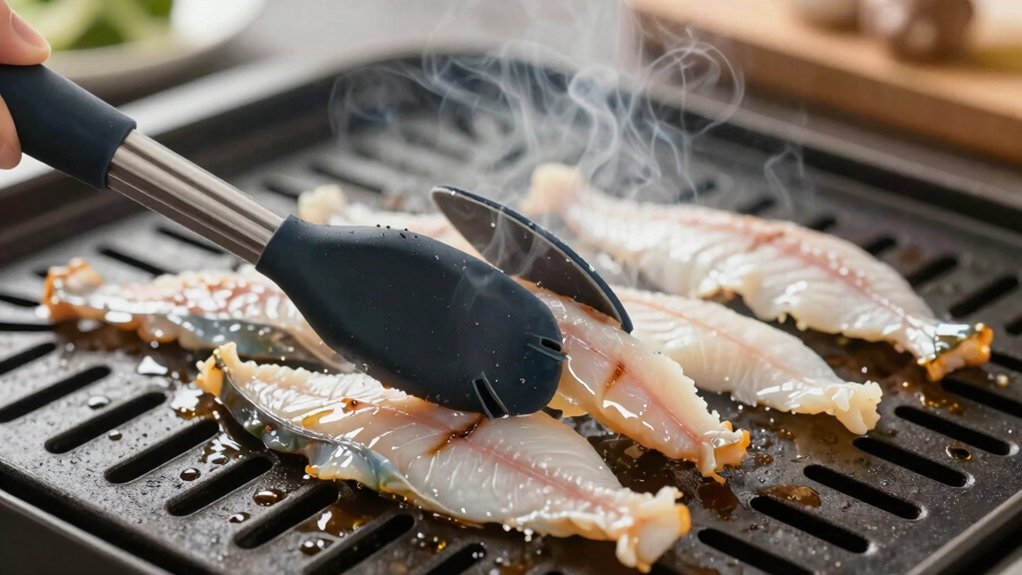
One of silicone’s most valuable attributes for grilling enthusiasts is its remarkable flexibility—a property that directly contributes to food release. Unlike rigid metal tools, silicone spatulas and tongs conform to your grill’s curved surfaces and food shapes, maintaining consistent contact without gaps where food can stick.
This bendability allows you to apply gentle, even pressure against delicate items without damaging them or scratching non-stick coatings. As you flip a fish fillet or slide under a burger, the silicone head bends just enough to create a smooth lifting motion that helps break surface tension. The heat-resistant material (typically handling up to 482°F) won’t deform during use, maintaining its non-porous, low-friction surface that prevents food from gripping the tool itself.
Silicone’s Role in Preserving Delicate Foods on the Grill
When grilling delicate fish or marinated vegetables, your silicone tools offer a non-stick surface that prevents frustrating tearing and sticking.
You’ll notice these flexible implements can slide smoothly under food, maintaining the integrity of even the most fragile items on your grill.
The food-grade material won’t absorb flavors or odors, ensuring your carefully seasoned dishes retain their intended taste profiles.
Non-Stick Surface Benefits
Why do delicate foods like fish fillets and thin vegetable slices seem to fall apart on traditional grill surfaces? It’s because porous metal surfaces create strong adhesion points where proteins and sugars bond. Silicone’s non-porous, smooth surface minimizes this adhesion, allowing you to flip delicate items without tearing.
Silicone offers distinct advantages for non-stick grilling:
- Temperature Stability – High-quality food-grade silicone maintains its non-stick properties across extreme temperature ranges, preventing sticking even at high heat
- Gentle Release – The flexible, non-scratch contact preserves the shape and presentation of fragile foods
- Reduced Residue – Silicone’s non-absorbent surface minimizes flavor carryover and buildup, ensuring consistent non-stick performance over multiple grilling sessions
Gentle Food Handling
How many times have you watched your perfect salmon fillet crumble when attempting to flip it on the grill? The culprit might be your tools, not your technique. Silicone grilling tools excel at preserving delicate foods during cooking.
The flexible yet sturdy heads of silicone spatulas and tongs distribute pressure evenly, maintaining your food’s shape and moisture content. Unlike metal tools that can tear through tender items, silicone’s slick, non-porous surface creates minimal friction, allowing fish, burgers, and vegetables to release cleanly.
You’ll appreciate how silicone’s reinforced cores provide the stability needed for controlled movements while the gentle surface protects your food. The non-scratch quality also preserves your grill’s non-stick coating, preventing rough spots that cause sticking in the future.
Temperature Resistance: How Silicone Performs Under Fire
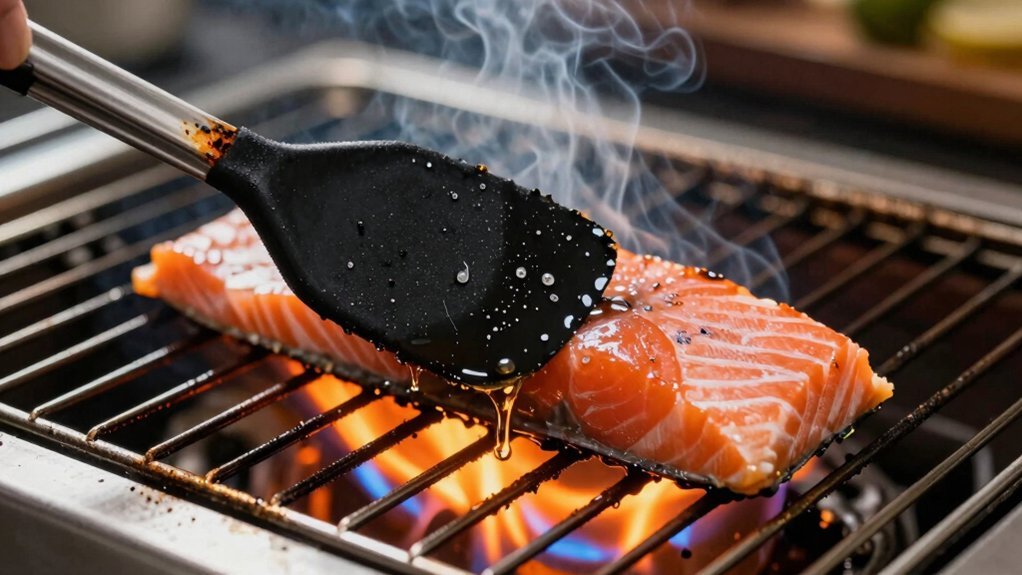
The extreme heat of a blazing grill presents a formidable challenge for any cooking tool. Silicone grilling implements stand up to the test, withstanding temperatures up to 482°F (250°C) while maintaining their shape and non-stick properties when lesser materials would fail.
When others melt away, silicone tools remain steadfast, conquering the inferno of your grill without compromise.
What makes silicone your ideal grilling companion:
- Maintains flexibility and structure even with direct flame exposure, unlike plastic alternatives that warp and deteriorate
- Non-porous surface prevents food from sticking at high temperatures, ensuring clean food release every time
- Safe for basting and marinade application during cooking without risk of melting or contaminating your food
For best results with prolonged high heat, choose tools with reinforced cores and avoid constant direct flame contact.
Best Silicone Grilling Tool Shapes for Minimal Food Adhesion
When choosing silicone grilling tools to minimize food sticking, look for spatulas with tapered edges that slide easily under delicate foods without tearing.
Multi-angled brushing tools help you apply oils and marinades evenly, creating a natural non-stick surface that prevents food adhesion.
Slotted flexible turners are your best option for flipping fish and other fragile items, as they allow moisture to escape while providing enough support to keep food intact.
Spatulas With Tapered Edges
Why are tapered edges so essential for your silicone spatulas? The physics behind this design innovation drastically improves your grilling experience. A tapered edge reduces surface area at the tip, creating less contact and friction when sliding under food.
When you’re flipping delicate items on the grill, these specialized edges offer:
- Concentrated pressure distribution along the thinner edge, helping release burgers without tearing
- Minimized food suction by creating a smoother entry under foods, particularly when paired with silicone’s naturally non-stick surface
- Improved efficiency on high-heat surfaces while preserving those perfect grill marks you’ve worked hard to achieve
The most effective designs combine silicone’s flexible, non-stick properties with a sturdy core for the precise control you need when lifting and spreading.
Multi-Angled Brushing Tools
How exactly does a multi-angled brushing tool prevent food from sticking to your grill? These specialized tools feature angled bristles or silicone tips that reach underneath and around food items where sticking typically occurs. They maintain a thin, even coating of oil on irregular surfaces—precisely where you need it most.
Unlike standard brushes, multi-angled designs distribute marinades and oils more evenly across grill grates. The flexible silicone bristles conform to your grill’s contours, eliminating gaps where food might otherwise cling and tear during flipping.
When you choose high-temperature-safe silicone versions, you’ll avoid transferring unwanted flavors or residues to your food. The multiple angles ensure superior lubrication coverage compared to straight-edge alternatives, ensure reducing the risk of tearing delicate foods when it’s time to flip.
Slotted Flexible Turners
Among all silicone grilling tools, slotted flexible turners stand out as champions at preventing food adhesion. Their thin, bendable heads conform perfectly to curved grill grates while minimizing contact with your food. The strategic slots drain away fats and juices that would otherwise create suction when lifting delicate items.
These turners prevent sticking in three key ways:
- Heat-resistant silicone (up to 482°F/250°C) creates a natural non-stick barrier between your spatula and food
- Flexible design maintains even, light pressure that lifts delicate fish fillets without tearing
- Rounded edges with reinforced cores provide scraping power while preventing the turner’s tip from catching or sticking
You’ll appreciate how these turners slide effortlessly under burgers and fish, eliminating the frustration of torn food stuck to your tools.
Maintenance Tips to Maximize Non-Stick Performance
To preserve the non-stick magic of your silicone grilling tools, proper maintenance becomes essential. Wash your tools thoroughly after each use, preferably in the dishwasher, to prevent residue buildup that can compromise their non-stick properties.
Though silicone naturally resists stains and odors thanks to its non-porous surface, regular cleaning ensures this advantage persists over time. You’ll maintain that slick surface that makes food release effortlessly and requires less oil during cooking.
Keep your tools away from direct flames for extended periods, as extreme heat can degrade silicone’s non-stick integrity. For tools with reinforced cores or stainless steel inserts, inspect these components regularly to ensure they’re intact, maintaining the tool’s rigidity during scraping and turning tasks. These simple steps will extend your silicone tools’ non-stick performance for years.
Real-World Testing: Silicone vs. Other Materials for Sticky Foods
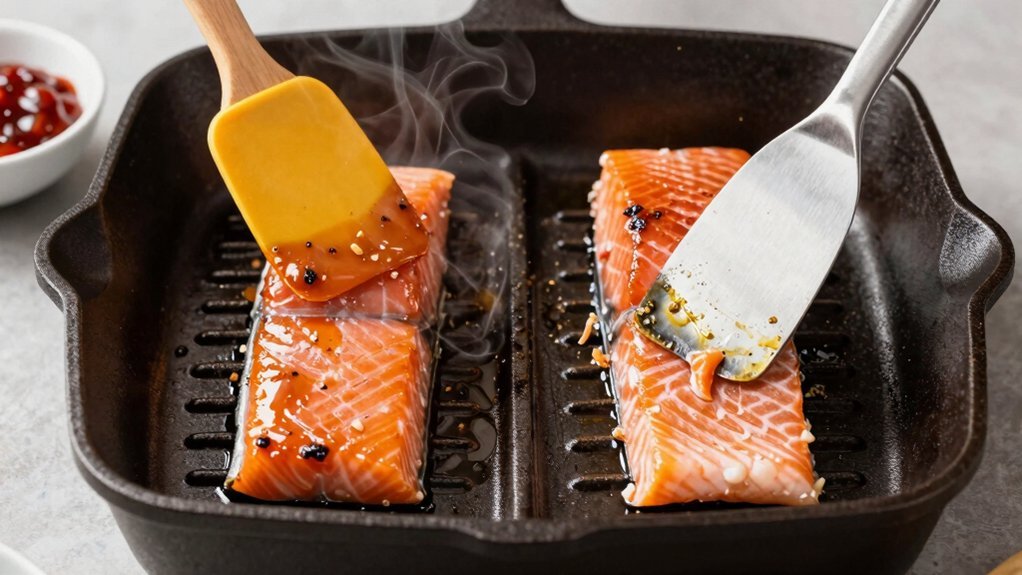
While maintenance preserves your silicone tools’ performance, actual testing reveals their true superiority. When pitted against metal and plastic alternatives in real-world grilling scenarios, silicone consistently outperforms competitors for preventing food adhesion.
Testing demonstrates three key advantages:
- Silicone’s non-porous surface maintains a smoother contact area than metal tools, preventing food from tearing and sticking during flips
- Unlike nylon or polypropylene, silicone won’t warp under high heat, eliminating hot spots that cause sticking
- The material’s flexibility creates better surface contact without scratching non-stick grill coatings, making it easier to release delicate foods like fish or sticky glazed items
You’ll notice silicone tools maintain these non-stick properties over time, while other materials deteriorate with repeated use.
Pairing Silicone Tools With Different Grill Types for Optimal Results
Different grill types demand specific tools for the best cooking experience, and silicone implements shine uniquely across various grilling platforms. When you’re working with nonstick-coated grates on gas grills or hibachi-style griddles, silicone tools prevent scratching while maintaining proper contact with cooking surfaces.
For cast-iron or bare steel grates, you’ll appreciate how silicone heads conform to the contours of your grill, easily releasing those flavorful caramelized bits that might otherwise stick. The flexibility of silicone—which maintains its integrity up to 482°F—creates a superior scraping action without damaging surfaces.
Choose silicone tools with reinforced cores or stainless-steel handles for the perfect balance of flexibility and rigidity. This combination ensures you’ll get consistent scraping power while enjoying the non-stick benefits that make silicone ideal for all grill types.
Frequently Asked Questions
What Are the Disadvantages of Silicone Utensils?
You’ll find silicone utensils lack rigidity for heavy tasks, can warp near open flames, won’t work above 482°F, and aren’t easily recyclable when you’re done with them.
How to Prevent Food From Sticking to the Grill?
Preheat your grill thoroughly, oil the grates with high-heat oil, and don’t flip food too early. You’ll need patience—proteins release naturally once they’ve developed a crust.
Will Food Stick to Silicone?
Food generally won’t stick to high-quality silicone. You’ll find it’s naturally non-stick due to its smooth, non-porous surface. For best results, lightly oil it before cooking high-sugar foods.
Can You Use Silicone Tools on a Grill?
Yes, you can use silicone tools on your grill. They’ll withstand temperatures up to 482°F, won’t melt, and their non-stick surface makes flipping food easier. Just avoid direct flame contact.