
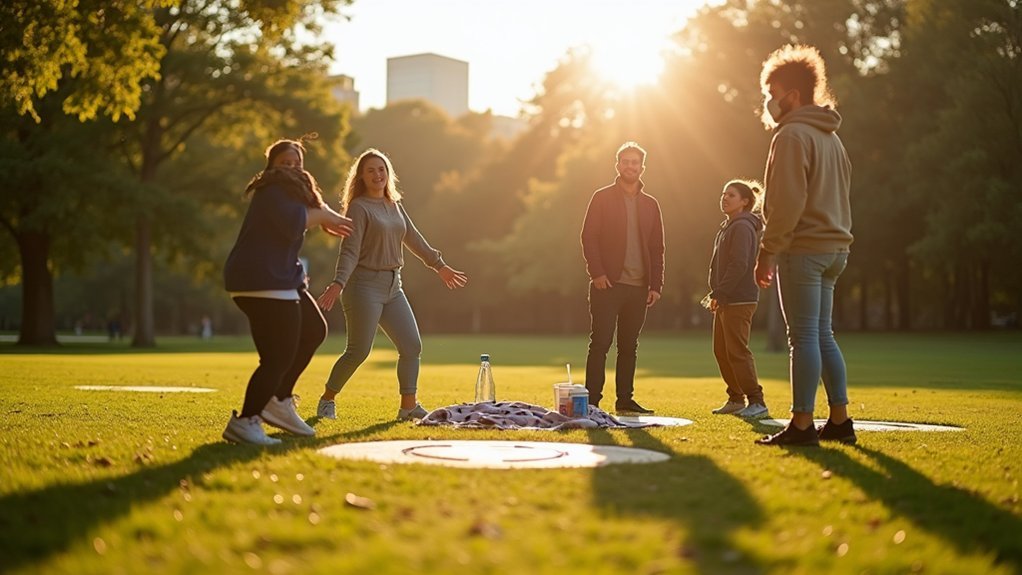
You can enjoy outdoor group games while social distancing by marking individual play zones at least six feet apart using chalk, cones, or hula hoops. Assign each player their own color-coded equipment to prevent sharing, and set up hand sanitizer stations near activity areas. Use staggered start times and parallel station arrangements to control traffic flow. From frisbee golf to scavenger hunts, you’ll find plenty of creative ways to keep everyone safely entertained below.
Setting Up Your Backyard for Safe Group Play
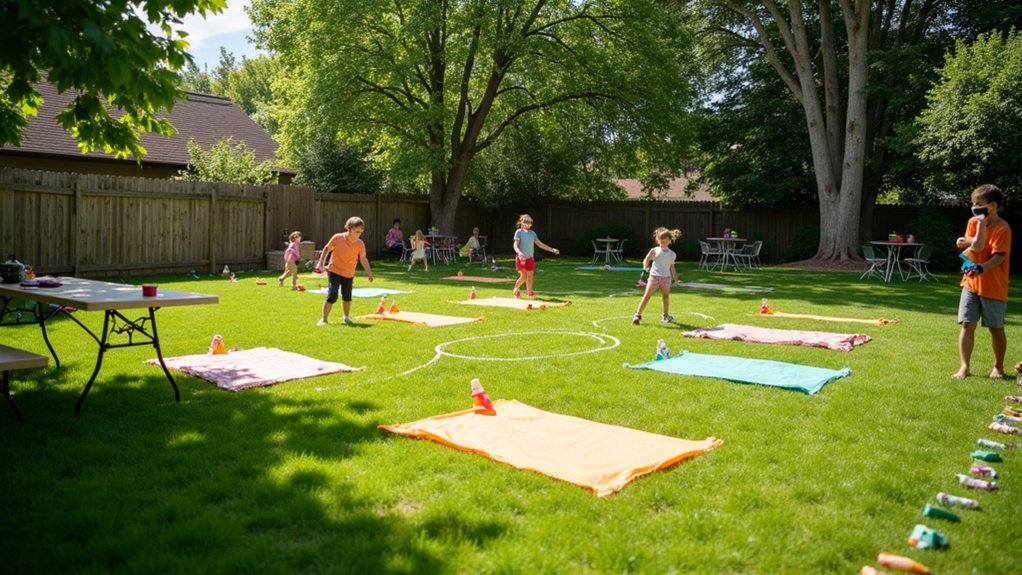
Before you invite friends over for socially distanced fun, you’ll want to transform your backyard into a space that naturally encourages safe distances between players.
Start by marking individual play zones using chalk, rope, or hula hoops placed six feet apart. These visual boundaries help everyone maintain proper spacing without constant reminders. Set up hand sanitizing stations at entry points and near shared equipment.
Create clear visual boundaries with chalk or hula hoops to keep everyone safely spaced while having fun.
Designate specific areas for different activities. Create a snack zone where guests can grab individually wrapped treats without crowding. Position chairs and blankets in spread-out clusters rather than grouped seating.
Remove any items that encourage close contact or frequent touching. Consider adding physical barriers like pool noodles or cones to define pathways. With thoughtful setup, your backyard becomes a safe, enjoyable space where everyone can play freely.
Frisbee Golf With Designated Throwing Zones
You can transform your backyard into a fun frisbee golf course while keeping everyone at safe distances by establishing designated throwing zones. Mark each tee-off area with cones or spray chalk, ensuring players stand at least six feet apart while waiting for their turn.
Create clearly visible waiting spots near each “hole” so participants know exactly where to stand when they’re not actively throwing.
Setting Up Throwing Zones
When setting up throwing zones for frisbee golf, you’ll want to create clearly marked areas that keep players safely distanced throughout the course. Use spray chalk, cones, or rope to designate each throwing station at least six feet apart from the next player’s position.
Create waiting zones behind each tee area where players can stand while others take their shots. Mark these spots with bright flags or stakes so they’re visible from a distance.
Stagger your throwing order so players move through the course in waves rather than clusters. Assign each participant a specific color-coded zone to eliminate confusion about positioning.
Consider installing hand sanitizer stations at each hole’s starting point. You’ll also want to designate one-way walking paths between holes to prevent players from crossing paths unnecessarily.
Marking Safe Waiting Areas
Beyond establishing your throwing zones, you’ll need to create designated waiting areas that keep spectators and queued players at safe distances. Use bright cones, flags, or spray chalk to mark individual standing spots at least six feet apart. Position these areas where players can watch the action without crowding the thrower.
| Marker Type | Best Use | Visibility |
|---|---|---|
| Orange cones | Grass fields | High |
| Spray chalk | Paved areas | Medium |
| Ground flags | Uneven terrain | High |
| Rope boundaries | Large groups | Medium |
| Painted circles | Permanent courses | High |
You’ll want to place markers in shaded spots when possible, as players may wait several minutes between throws. Consider adding directional arrows to guide traffic flow and prevent path crossing.
Lawn Bowling With Individual Equipment Sets
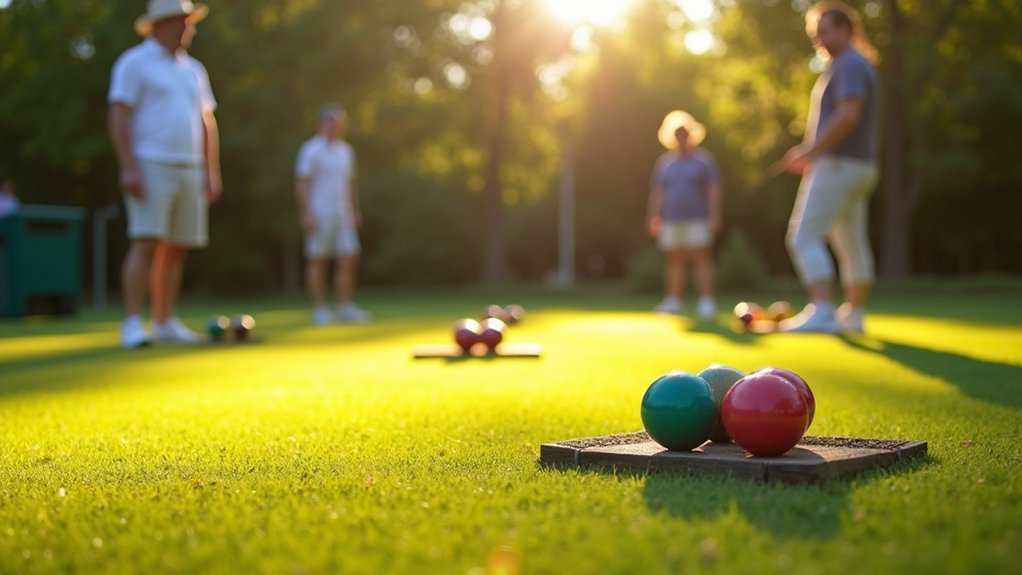
Have you ever considered how lawn bowling offers an ideal way to enjoy friendly competition while maintaining safe distances between players? This classic game naturally spaces participants apart as they take turns rolling balls toward a target jack.
Lawn bowling delivers friendly competition with built-in social distancing—players naturally space apart while taking turns toward the jack.
To set up safe play, assign each person their own equipment set:
- Give each player a distinctively colored set of bowling balls they’ll use exclusively throughout the game
- Provide individual measuring tools so players can check distances without sharing
- Supply personal hand sanitizer stations at each throwing position
- Mark individual standing zones at least six feet apart along the bowling lane
You’ll find that lawn bowling’s turn-based format eliminates crowding concerns. Players wait in their designated areas while others complete their throws, creating natural social distancing without disrupting gameplay.
Giant Yard Dice Games for Separated Players
You can enjoy giant yard dice games while staying safely apart by establishing clear dice rolling zones at least six feet from other players.
Set up designated throwing areas marked with cones or chalk so everyone maintains proper distance during their turns.
Use a large whiteboard or digital scorekeeping app that all players can see from their positions, eliminating the need to crowd around a shared scorecard.
Dice Rolling Distance Rules
Giant yard dice games occasionally require some creative rule modifications when players need to stay spread apart. You’ll want to establish clear boundaries for each player’s rolling zone to maintain safe distances throughout the game.
- Designate individual 6-foot squares where each player must stay during their turn
- Use pool noodles or rope to mark throwing lanes that keep participants separated
- Assign one person as the official scorer who reads results from a central, distanced position
- Require players to roll dice toward a shared viewing area rather than passing them directly
These simple adjustments keep everyone safe without sacrificing the competitive fun. You can also color-code dice sets so each player handles only their own equipment, eliminating the need for sanitizing between turns.
Scorekeeping From Afar
Tracking scores across a spread-out playing field doesn’t have to slow down your game. Designate one person as the official scorekeeper, positioned where everyone can hear announcements. After each roll, they’ll call out the updated totals so all players stay informed without crowding together.
You can also set up individual whiteboards at each player’s station. Write your own score after every turn, holding it up for others to verify. This keeps everyone accountable and eliminates the need to share pens or paper.
For tech-savvy groups, create a shared digital document or use a free scorekeeping app. Players update their scores on their phones, and everyone sees real-time results. This method works especially well when players are positioned too far apart for easy verbal communication.
Badminton and Volleyball With Extended Court Boundaries
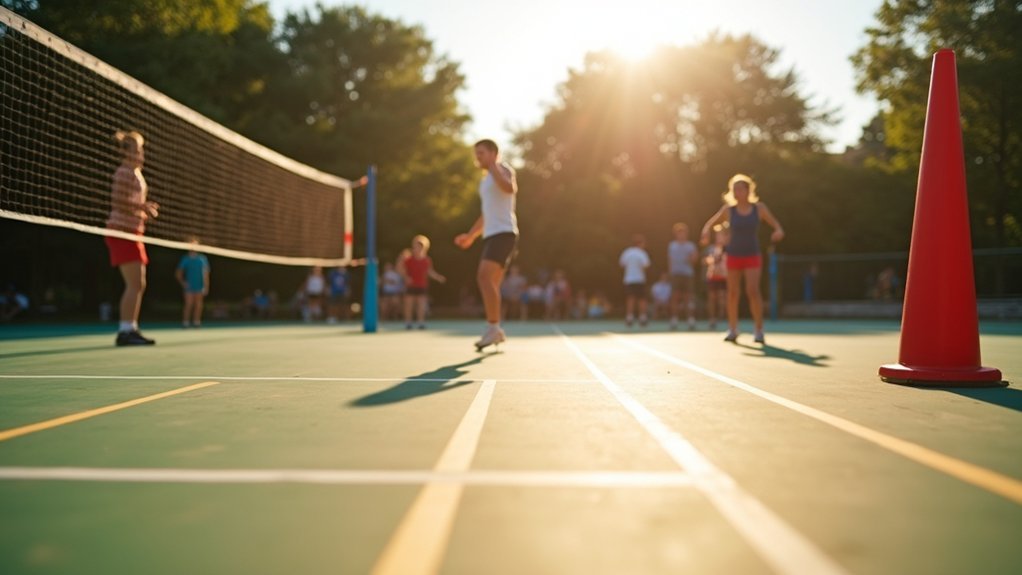
When you’re looking for ways to enjoy classic net sports while maintaining safe distances, expanding the court boundaries for badminton and volleyball offers a simple solution.
You’ll simply extend your standard court lines by six to eight feet on all sides, giving players more room to spread out during play.
Here’s how to set up your modified court:
- Mark new boundary lines using chalk, tape, or cones placed at wider intervals
- Position players in designated zones rather than allowing free movement
- Assign specific rotation patterns that maintain distance between teammates
- Use a slightly higher net to encourage longer, more predictable shots
These adjustments keep the competitive spirit alive while reducing close contact.
You’ll find rallies become longer and more strategic with the expanded playing area.
Scavenger Hunts Across Spacious Outdoor Areas
Across large parks, nature reserves, and open fields, scavenger hunts transform into ideal social distancing activities that keep participants engaged without crowding. You’ll want to design your hunt with items spread across a wide area, ensuring players naturally maintain distance as they search different zones.
Create individual or household team lists with unique items assigned to each group. This prevents everyone from converging on the same spots simultaneously. You can use photo-based verification instead of collecting physical objects, allowing participants to prove their finds through a shared messaging app.
Set staggered start times five to ten minutes apart, and assign different starting points around the perimeter. Consider using GPS coordinates or detailed directional clues that guide teams along separate paths toward the same endpoint.
Ring Toss and Horseshoes With Personal Stations
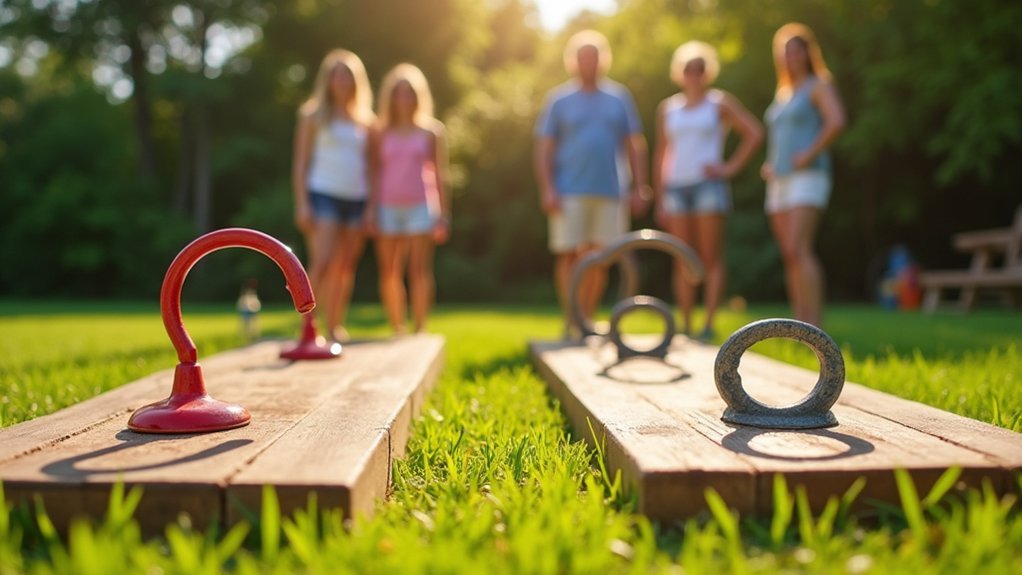
With minimal setup adjustments, classic tossing games like ring toss and horseshoes become perfect social distancing activities.
You’ll want to create individual throwing stations spaced at least six feet apart, giving each player their own designated area.
Here’s how to set up your personal stations:
- Mark individual throwing lines with chalk or tape for each participant
- Assign color-coded rings or horseshoes to prevent equipment sharing
- Position multiple targets in a row so players toss in parallel rather than toward each other
- Place hand sanitizer at each station for use between rounds
You can rotate players through different stations after sanitizing equipment.
This setup lets everyone enjoy friendly competition while maintaining safe distances throughout the game.
Water Balloon Games That Keep Everyone Apart
Summer heat calls for something more invigorating than ring toss, and water balloon games offer the perfect cool-down while maintaining safe distances.
Set up individual launching stations at least six feet apart, giving each player their own bucket of filled balloons. You can create a target-based competition where participants aim at hula hoops, buckets, or painted circles on the ground from their designated spots.
Try “distance dodgeball” where players stand in marked zones and lob balloons at opponents who can only move within their squares. Another option involves relay-style challenges where teammates toss balloons to each other across gaps, earning points for successful catches.
Assign one person to fill and distribute balloons using tongs or gloves. This keeps shared contact minimal while everyone stays refreshed and entertained throughout your gathering.
Frequently Asked Questions
How Many People Can Safely Participate in Outdoor Group Games During Social Distancing?
You can safely include any number of participants as long as everyone maintains at least six feet of distance from others. You’ll want to choose games that don’t require physical contact or shared equipment.
What Cleaning Supplies Should I Have on Hand Between Game Rotations?
You’ll want to keep disinfectant spray or wipes, hand sanitizer with at least 60% alcohol, disposable gloves, and trash bags nearby. Clean all shared equipment like balls, frisbees, and cones between each rotation.
Should Players Wear Masks While Playing Outdoor Group Games?
You should follow your local health guidelines regarding masks. If you can’t maintain six feet of distance during games, you’ll want players to wear masks. Choose breathable, moisture-wicking options that won’t restrict breathing during physical activity.
How Do I Handle Shared Snacks and Refreshments During Socially Distanced Games?
You should assign one person to serve snacks using tongs or gloves. Pre-portion treats into individual bags, provide bottled drinks instead of shared pitchers, and set up separate stations so players don’t crowd together.
What Indoor Alternatives Exist if Weather Suddenly Forces the Group Inside?
You can move indoors to spacious areas like gyms or large living rooms. Try charades, trivia contests, or dance-offs where players stay in designated spots. You’ll maintain distance while keeping everyone entertained and active.


Leave a Reply