
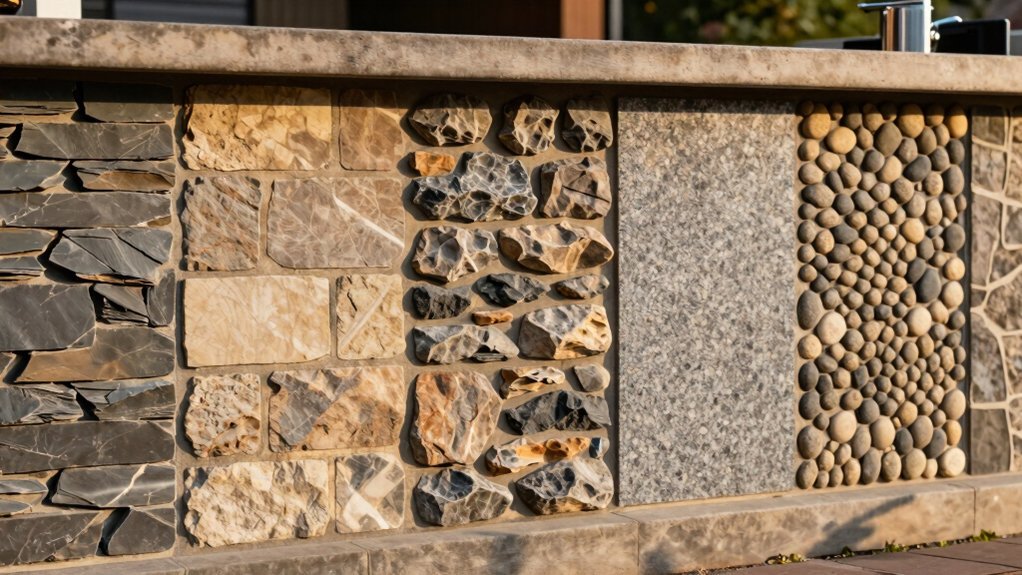
If you want a durable outdoor bar, you’ve got five proven techniques to choose from. Start with hand-laid natural stone for an old-world look and lifetime durability, though it’s labor-intensive. Or use a CMU core with stone veneer for a strong backbone without full hand-work. Consider Ready-To-Finish veneer bars, or Ready-To-Assemble faux-stone islands for a DIY-friendly option. Finally, plan finishing and maintenance to seal joints and protect surfaces long-term. More tips await as you explore.
Hand-Laid Natural Stone Bars
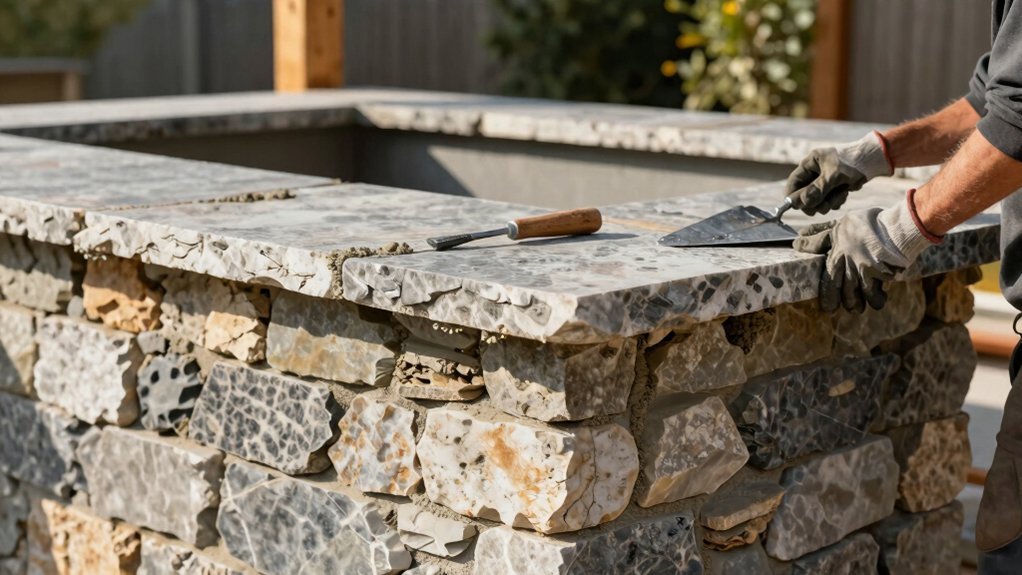
Hand-laid natural stone bars deliver an old-world look and exceptional durability when properly mortared. You’ll see that it’s labor-intensive and needs skilled pros to set, level, and joint correctly. Stone choices are limitless, letting you tailor color, texture, and pattern, but expect higher costs from sourcing and craft. These bars are built for longevity, often reaching a lifetime-scale lifespan when you build them right.
Compared with veneer or RTF, they demand more time, more labor, and more safety planning. You’ll coordinate subcontractors, verify mortar mix, and ensure proper drainage so joints remain watertight for decades. Because durability hinges on technique, you’ll prioritize meticulous layout, clean tolerances, and compliant safety practices during every stage. In the end, you gain a timeless feature that ages well.
CMU Bars With Stone Veneer
Why settle for plain blocks when you can add stone veneer to a CMU bar for instant, lasting appeal? A CMU core gives you a durable, stable backbone with a lifespan measured in decades. Then you apply stone veneer—cultured or natural—to the exterior to achieve the look you want without full hand-laid stone work. This setup offers substantial durability, though it isn’t fully DIY-friendly because heavy lifting and manual finishing are involved. If you’re integrating a grill, ventilation requirements and safety considerations become important. The final exterior finish can vary in appearance through veneer options, while the CMU core provides long-term performance and structural stability you can rely on for years. That combination keeps maintenance predictable and the look timeless for your space.
Ready-To-Finish (RTF) Stone Veneer Bars
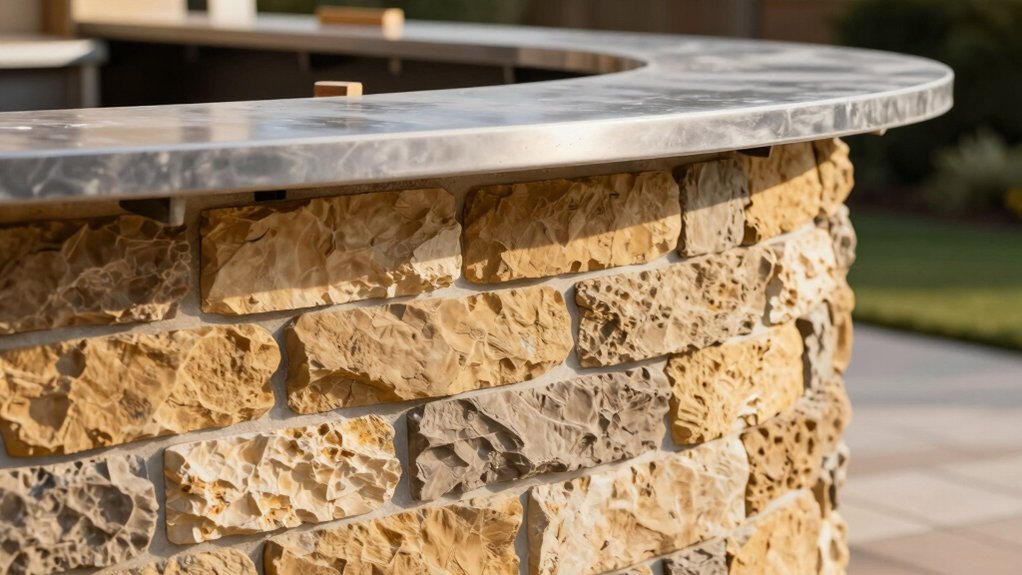
Ready-To-Finish stone veneer bars offer a simpler path to a stone look by using pre-assembled frames—metal or wood—with exterior veneer applied to finish the surface. You still need skilled finishing and careful assembly to ensure durability and proper alignment. If your unit includes cooking appliances, plan ventilation and exhaust clearances ahead of time. After installation, finish steps involve securing countertops and appliances, while veneer options expand your stone appearances. Moisture and harsh climates can affect RTf bars, so treat and maintain materials to prevent rust, corrosion, or veneer detachment.
Ready-To-Finish stone veneer bars simplify stone looks with pre-assembled frames; proper finishing, ventilation, and maintenance ensure durability.
- Pre-assembled frames simplify framing but require accurate site preparation.
- Proper ventilation and clearance are essential for appliance-equipped setups.
- Secure countertops and appliances as part of assembly.
- Regular maintenance protects veneer and frame from damage.
Ready-To-Assemble (RTA) Bar Islands With Faux Stone Finish
Curious how to get a faux-stone look fast? Ready-To-Assemble bar islands come with pre-assembled frames (metal or wood) and a ready-to-finish exterior. You’ll cut cement board, apply stone veneer, and achieve the faux-stone look. Finishes include five options: stacked stone in three colors and modern stone in two colors, chosen via an online 5-step design tool. RTA installations are the DIY-friendly option, featuring quick assembly by unpacking panels, bolting them together, and inserting appliances. If you include cooking appliances, ventilation and safety matter because interior spaces can be cavernous. For maintenance, ensure proper moisture sealing and use weather-resistant materials to prevent veneer detachment in harsh climates. You’ll also find the tool-assisted setup minimizes waste and delivers a clean, professional-looking finish that lasts outdoors reliably.
Finishing, Sealing, and Maintenance for Stone Bar Setups
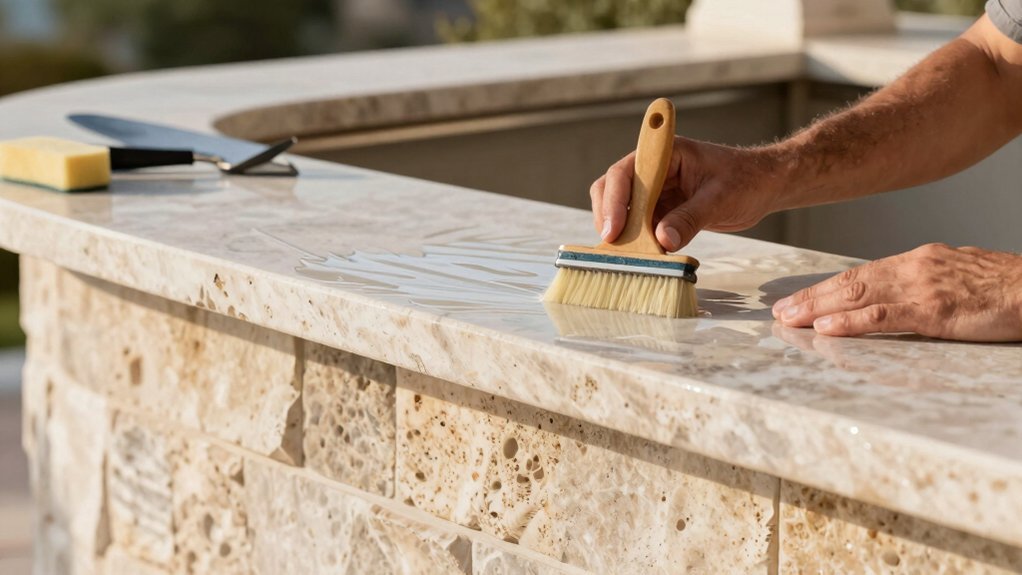
How you finish, seal, and maintain a stone bar setup directly affects its durability and appearance. Mortared natural stone bars need proper mortaring to stay stable over time, while stone veneer on CMU or RTF bases offers varied looks but still requires finishing and sealing to guard against moisture. For bar tops, seal joints with clear caulk and use breathable exterior sealants. Finishing steps often involve spar varnish or weather-resistant stains on trim and exposed wood, to resist moisture and UV. Ongoing maintenance means periodic cleaning, checking for loose veneer stones or deteriorating grout, and re-sealing as the manufacturers advise.
- Ensure joints and mortar stay intact, re-point as needed
- Seal stone tops with clear, breathable caulk
- Finish trim with spar varnish
- Follow manufacturer guidance
Frequently Asked Questions
What Material Is Best for an Outdoor Bar?
Choose RTA bars with stone finish for the best balance of DIY friendly install, durability, and variety. You’ll get weather-resistant panels, quick assembly, and lasting aesthetics—perfect for climates with freeze-thaw and moisture concerns year round.
How to Build an Outdoor Bar?
Build an outdoor bar by planning a design, choosing durable materials, assembling frame, installing countertops, applying stone veneer or panels, wiring outlets, ensuring it’s ventilated for grill, and sealing joints to keep moisture in check.
What Is the Best Countertop for an Outdoor Bar?
Granite is the best countertop for an outdoor bar, because it’s durable and heat-resistant, and seals well against stains; you’ll need to seal it regularly, and consider stainless steel for sanitation and easy maintenance too.
How Do I Weatherproof a Garden Bar?
Seal joints with exterior-grade sealant, use weather-resistant framing, and choose moisture-proof countertops. Apply outdoor finishes to wood, seal metal, ensure proper drainage, slope away from foundation, add shading and ventilation to reduce moisture buildup overall.

Leave a Reply