

You can create safe backyard fun for toddlers by choosing age-appropriate toys without small parts, sharp edges, or long strings. Set up sensory stations like sand bins and water tables with large accessories that won’t pose choking hazards. Soft balls, fabric tunnels, and chunky sidewalk chalk encourage active play while minimizing injury risks. Before playtime, inspect your yard for hidden dangers like sharp rocks, toxic plants, and standing water. Below, you’ll discover specific activities and setup tips to transform your backyard into a toddler-safe adventure zone.
Choosing Age-Appropriate Outdoor Toys for Toddlers
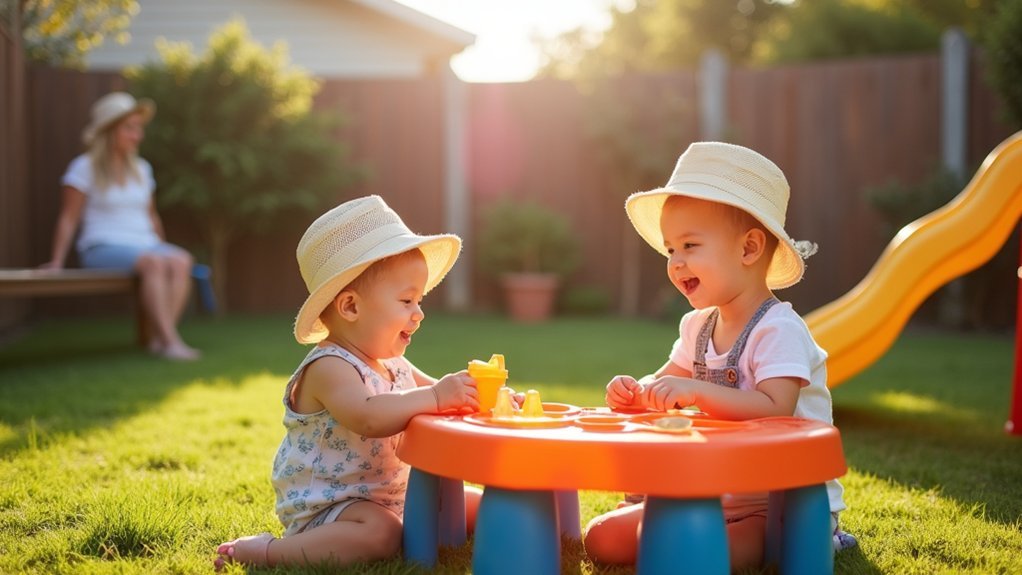
When you’re selecting outdoor toys for your toddler, safety and developmental stage should guide every choice you make. Look for toys labeled for ages 1-3, as these meet specific safety standards for small hands and curious mouths. Avoid items with small parts, sharp edges, or long strings that pose choking or strangulation hazards.
Choose sturdy plastic or wooden toys that can withstand rough play without breaking into dangerous pieces. Push toys, large balls, and sandbox equipment encourage gross motor development while keeping risk low. Water tables and bubble machines offer sensory exploration without requiring close supervision near deeper water.
Always check toys regularly for wear, cracks, or loose components. Remove damaged items immediately. Store outdoor toys in a dry location to prevent mold growth and material degradation between play sessions.
Setting Up a Safe Sandbox Play Area
Creating a safe sandbox area starts with choosing the right location in your backyard. Pick a shaded spot to protect your toddler from harmful UV rays and keep sand cool during hot days.
Position it where you can easily supervise from inside or your patio.
Select a sandbox with a secure cover to keep animals, insects, and debris out when not in use. Use play sand specifically designed for children, as it’s washed and screened for safety.
Check the sand regularly for sharp objects or contamination.
Install soft borders around the sandbox using rubber edging to prevent injuries from falls. Keep the sand depth at six inches for ideal play.
Replace the sand every one to two years to maintain hygiene and freshness.
Water Table Activities Without Small Parts
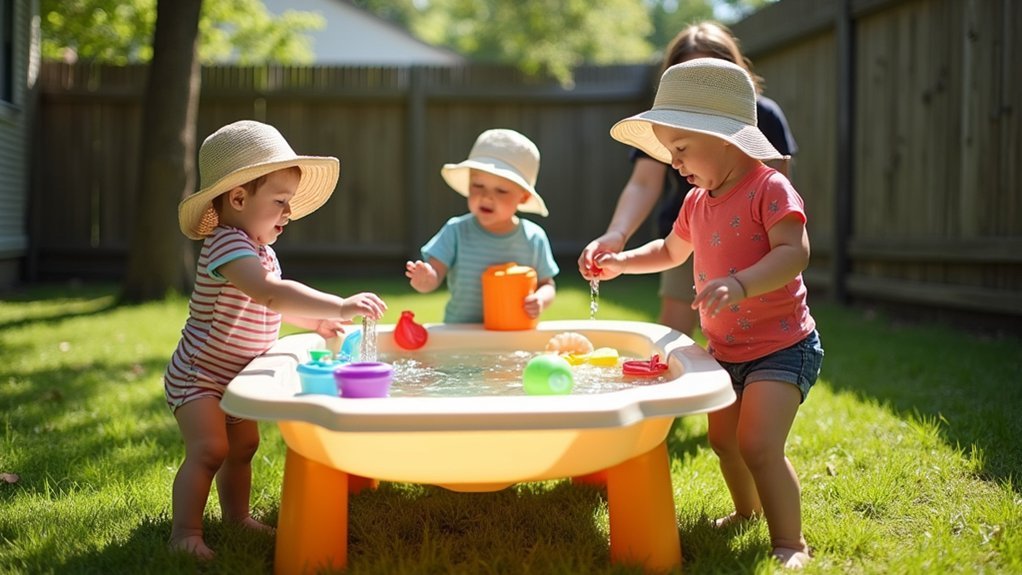
Water tables offer toddlers endless sensory exploration, but many accessories pose choking hazards for young children. You’ll want to skip the small rubber ducks, tiny boats, and marble-sized balls that come in standard water table sets.
Instead, fill your water table with large plastic cups, measuring scoops, and wide funnels that can’t fit through a toilet paper tube. Add floating pool noodle pieces cut into thick sections or large silicone molds for safe scooping fun.
You can enhance sensory play by dropping in food coloring, biodegradable glitter, or frozen fruit chunks. Large kitchen utensils like ladles and slotted spoons work perfectly for pouring and transferring water. Always supervise your toddler during water play, even with safe accessories, since drowning risks exist in shallow water.
Bubble Play Ideas for Little Ones
Bubbles bring just as much joy to toddlers as water play, and they’re naturally safe since most bubble solutions are non-toxic. You can create magical moments by blowing bubbles for your little one to chase and pop across the yard.
Try these engaging bubble activities:
- Giant bubble wands let you create oversized bubbles that float slowly, giving toddlers time to catch them
- Bubble machines provide hands-free entertainment while you supervise play
- Colored bubbles add visual excitement without staining grass or clothing
- Bubble snakes made from water bottles and socks create fascinating foam clusters
- Catch-and-release games teach hand-eye coordination as toddlers try to hold bubbles gently
You’ll find bubble play encourages physical movement, develops motor skills, and sparks wonder—all while keeping your toddler safely entertained outdoors.
Creating a Toddler-Friendly Obstacle Course
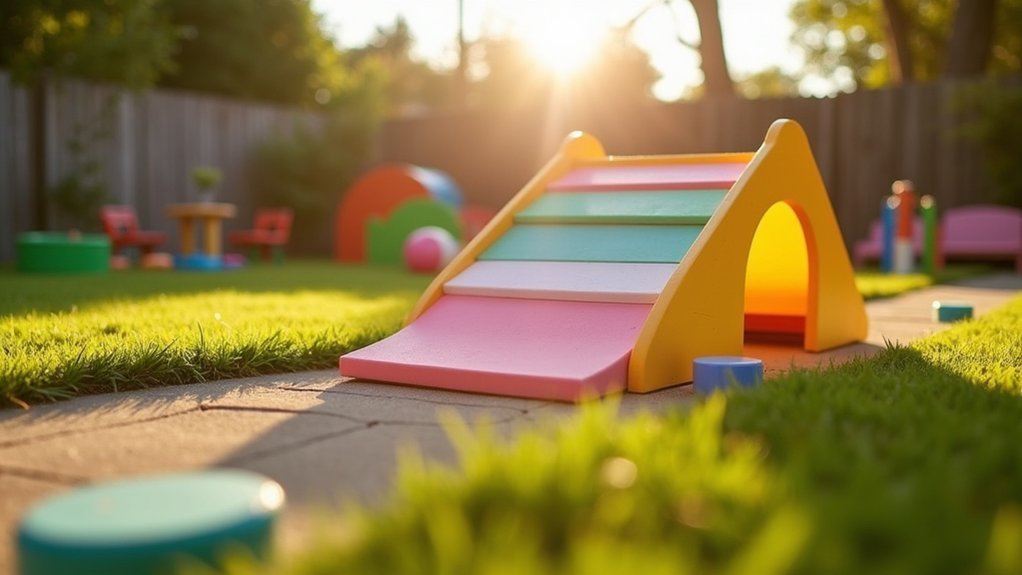
You can transform your backyard into an exciting obstacle course that challenges your toddler’s growing motor skills while keeping safety front and center.
Start by setting up soft landing zones with thick foam mats or cushioned grass areas, then add age-appropriate climbing elements like low platforms or sturdy stepping stones.
Finish your course with colorful fabric tunnels that encourage crawling and help develop your little one’s coordination and spatial awareness.
Soft Landing Zone Setup
Setting up a soft landing zone is essential when you’re creating a backyard obstacle course for your toddler. You’ll want to cushion areas where falls are likely to happen, especially beneath climbing structures and balance beams.
You’ll want to choose materials that absorb impact effectively and stay in place during active play. Your landing zone should extend at least three feet beyond each obstacle’s edges.
- Rubber mulch provides excellent shock absorption and doesn’t attract insects
- Foam interlocking tiles offer easy cleanup and consistent cushioning
- Thick grass mats create natural-looking protection that blends with your yard
- Sand pits give soft landings while adding sensory play opportunities
- Crash pads work well for temporary setups and store easily
Check your landing zones regularly for displacement, wear, and hidden hazards underneath.
Age-Appropriate Climbing Elements
When you’re selecting climbing elements for toddlers, stick to structures no taller than two feet off the ground. This height limit guarantees falls remain manageable while still providing genuine climbing challenges. Look for equipment with wide, sturdy steps and handholds sized for small fingers.
Natural climbing options work wonderfully for this age group. Stack stable tree stumps at varying heights or create gentle mounds from packed soil. These elements teach balance without introducing dangerous drops.
Consider plastic climbing domes or low A-frame structures designed specifically for toddlers. Check that all surfaces have texture for grip and that gaps between bars won’t trap little heads or limbs. Anchor everything securely to prevent tipping when enthusiastic climbers shift their weight unexpectedly. Inspect joints and connections regularly for wear.
Tunnel Crawling Activities
Crawling through tunnels builds core strength, spatial awareness, and problem-solving skills that toddlers need for physical development. You’ll find that fabric pop-up tunnels work best for beginners since they’re lightweight and collapse safely if bumped.
Position tunnels on flat, grassy surfaces away from hard objects. Stay at the exit end to encourage your toddler forward with smiles and verbal cues. Keep sessions short—five to ten minutes prevents frustration.
Benefits of tunnel play:
- Develops bilateral coordination as arms and legs work together
- Strengthens shoulder stability needed for future writing skills
- Teaches cause and effect when movements create tunnel sounds
- Builds confidence through achievable physical challenges
- Encourages independent exploration in a contained, safe space
Rotate tunnel configurations weekly to maintain your toddler’s curiosity and engagement.
Safe Ball Games for Young Children
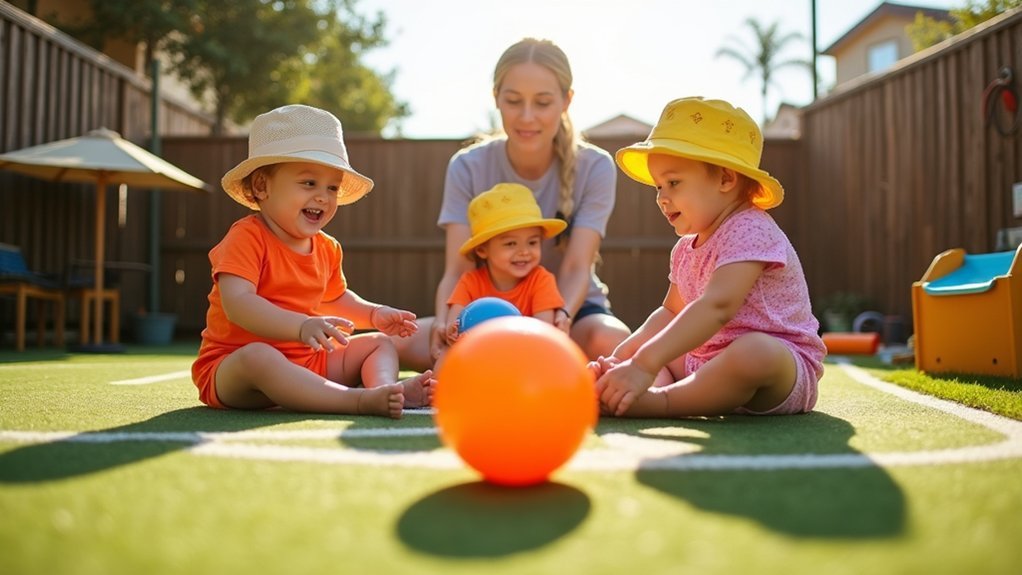
When it comes to ball games with your toddler, you’ll want to stick with soft, lightweight balls that won’t cause injury if they hit little faces or knock into outdoor furniture.
Start with age-appropriate throwing activities like tossing balls into a large basket or bucket placed just a few feet away.
You can also organize supervised rolling games where you sit across from your child and gently roll the ball back and forth, which builds coordination while keeping playtime safe.
Soft Balls Only
Toddlers love chasing and throwing balls, but you’ll want to stick with soft options like foam balls, beach balls, or fabric-covered balls to prevent injuries. Hard balls can hurt little ones when thrown or kicked unexpectedly. Soft balls let your child develop coordination and motor skills without the risk of bumps or bruises.
Choose age-appropriate sizes that small hands can grip easily. Supervise play to teach gentle throwing techniques.
- Foam balls bounce unpredictably, creating exciting chase games
- Beach balls move slowly, giving toddlers time to react
- Fabric balls won’t damage windows or outdoor furniture
- Lightweight options reduce fatigue during extended play
- Textured surfaces help develop sensory awareness and grip strength
You’ll find soft balls encourage longer, safer play sessions in your backyard.
Age-Appropriate Throwing Activities
Once you’ve selected the right soft balls for your toddler, you can introduce simple throwing games that match their developmental stage. Start with basic underhand tosses into a large basket or laundry bin placed just a few feet away. This builds hand-eye coordination without frustration.
You’ll want to demonstrate the motion first, then guide your child’s arm through the throwing action. Keep distances short—two to three feet works best for children under three. Celebrate every attempt, not just successful throws.
Try rolling games as an alternative when throwing becomes overwhelming. Sitting face-to-face and rolling a ball back and forth teaches turn-taking while developing motor skills. As your toddler gains confidence, gradually increase the challenge by moving targets slightly farther away or using smaller containers.
Supervised Rolling Games
Beyond the throwing activities mentioned earlier, supervised rolling games offer toddlers a gentler way to develop coordination while keeping playtime safe and engaging.
You’ll find that rolling balls back and forth creates meaningful interaction while reducing injury risks associated with airborne objects.
Set up simple bowling games using plastic bottles, or create gentle ramps for your toddler to explore cause and effect.
These activities strengthen core muscles as your child sits, reaches, and tracks moving objects.
Benefits of supervised rolling games:
- You control the pace and intensity of play
- Your toddler learns turn-taking and patience naturally
- Soft balls eliminate impact injuries common with throwing
- Ground-level play reduces fall risks markedly
- You stay actively engaged, catching teachable moments instantly
Always position yourself within arm’s reach during these activities.
Nature Exploration Activities With Supervision
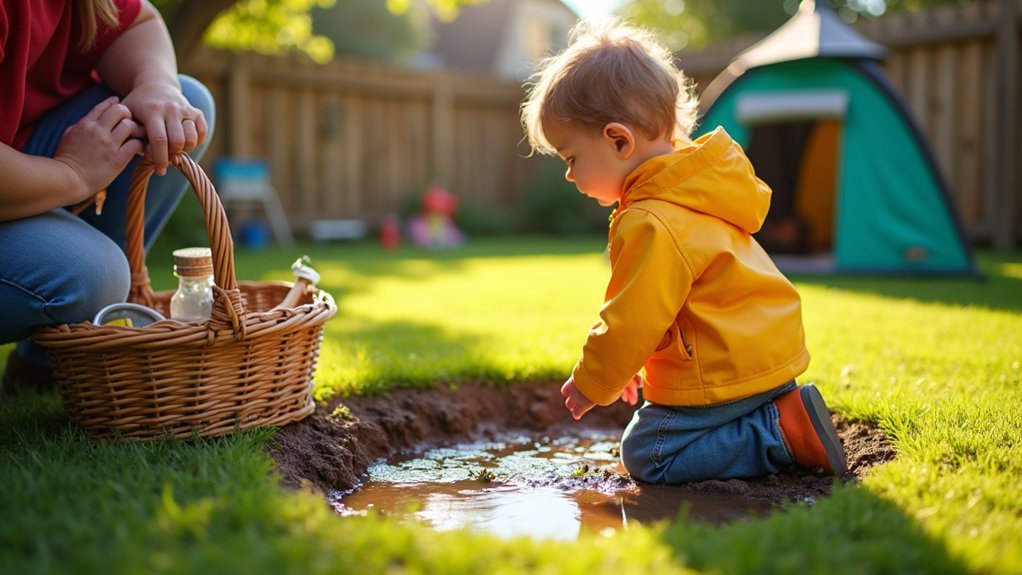
Exploring nature with your toddler transforms your backyard into a living classroom full of wonder. Guide your child to touch different leaf textures, smell flowers, and listen to bird songs. These sensory experiences build cognitive connections while keeping little ones engaged.
Create a simple scavenger hunt with safe items like pinecones, smooth rocks, or fallen petals. Stay within arm’s reach as your toddler investigates bugs crawling on tree bark or watches butterflies flutter past. Bring a magnifying glass to examine grass blades and tiny insects up close.
Teach gentle handling by demonstrating how to cup a ladybug or stroke a fuzzy caterpillar. Always supervise closely to prevent your child from putting found objects in their mouth. Nature exploration builds curiosity while strengthening your bond through shared discovery.
Sidewalk Chalk Fun on Patio Surfaces
While nature offers endless discoveries, your patio provides another canvas for creative play. Sidewalk chalk transforms ordinary concrete into a toddler’s art studio, encouraging fine motor development and self-expression without mess worries.
Sidewalk chalk turns your patio into a pressure-free art studio where creativity flows and rain erases all mistakes.
Choose chunky, easy-grip chalk designed for small hands. Let your toddler scribble freely, trace shapes, or help you draw simple games like hopscotch paths. The temporary nature of chalk art removes pressure—rain washes everything clean for tomorrow’s masterpiece.
- Develops hand-eye coordination through gripping and controlled mark-making movements
- Encourages color recognition as toddlers select and name different chalk shades
- Promotes imaginative storytelling when drawing simple figures or scenes together
- Builds confidence since mistakes simply wash away naturally
- Creates bonding opportunities through collaborative drawing sessions with caregivers
Planting Gardens With Toddler-Safe Materials
You can create a magical gardening experience for your toddler by choosing non-toxic plants like sunflowers, snapdragons, and cherry tomatoes that won’t harm curious little ones who touch or taste them.
Pair these safe plant choices with child-friendly gardening tools featuring short handles, rounded edges, and lightweight materials designed for small hands. With the right plants and tools, your toddler can dig, plant, and water alongside you without safety concerns.
Non-Toxic Plant Choices
When planning a toddler-friendly garden, selecting non-toxic plants becomes essential since young children naturally explore their world by touching and tasting everything within reach. You’ll want to research every plant before adding it to your space. Stick with varieties known for their safety around curious little ones.
Consider these toddler-safe options for your garden:
- Sunflowers – bright, engaging, and completely harmless if touched or tasted
- Snapdragons – fun interactive blooms that capture children’s attention
- Marigolds – colorful, sturdy plants that withstand toddler handling
- Herbs like basil and mint – safe, fragrant additions that teach sensory exploration
- Petunias – vibrant flowers with no toxic properties
You should always verify plant safety through reliable sources before purchasing.
Remove any existing toxic plants like foxglove, oleander, or lily of the valley immediately.
Child-Friendly Gardening Tools
Equipping your toddler with the right gardening tools transforms outdoor time into safe, hands-on learning.
Choose tools made from rounded plastic or smooth wood with no sharp edges or small parts. Look for lightweight options sized for small hands, typically 12-18 inches long.
Select shovels, rakes, and trowels with thick, easy-grip handles. Avoid metal tools that can pinch fingers or cause cuts.
Watering cans should hold minimal water to prevent tipping hazards and stay manageable for little arms.
Skip tools with pointed tips entirely. Opt for flat-edged diggers and soft-bristle brushes instead.
Store all gardening supplies in a designated bin your toddler can access independently. Check tools regularly for cracks or loose pieces that could break off.
Replace damaged items immediately to maintain a safe gardening experience.
Music and Movement Games on the Lawn
Music and movement games naturally capture a toddler’s attention while helping develop coordination, rhythm, and gross motor skills.
You’ll find that outdoor spaces provide the perfect setting for active play without worrying about bumping into furniture or breaking household items.
Set up a portable speaker and watch your child explore different ways to move their body.
You can lead simple activities that encourage listening and following directions while burning energy.
- Freeze dance teaches impulse control when the music stops
- Animal walks strengthen muscles through crawling, hopping, and stomping
- Ribbon dancing improves bilateral coordination and spatial awareness
- Follow the leader builds social skills and body awareness
- Musical instruments like shakers develop fine motor control and rhythm recognition
These activities require minimal equipment while maximizing developmental benefits.
Building With Large Outdoor Blocks
Large outdoor blocks offer a completely different type of physical engagement, shifting your toddler from rhythmic movement to purposeful construction.
These oversized blocks develop gross motor skills as children lift, carry, and stack them into towers and structures.
Choose lightweight foam or plastic blocks designed specifically for outdoor use.
They’re durable, easy to clean, and won’t cause injuries when towers inevitably tumble.
Look for blocks with rounded edges and non-toxic materials.
You’ll notice your toddler building spatial awareness and problem-solving skills while playing.
They learn about balance, gravity, and cause-and-effect relationships through hands-on experimentation.
Encourage creative building by sitting nearby and narrating their efforts without taking over.
Store blocks in a weather-resistant bin to prevent sun damage and keep them ready for spontaneous building sessions.
Sensory Play Stations for Backyard Entertainment
Beyond structured activities like block building, sensory play stations transform your backyard into an exploration zone that engages all of your toddler’s senses. You’ll create meaningful learning experiences while your child discovers textures, sounds, and movements in a safe outdoor environment.
Set up dedicated stations using household items and natural materials. Your toddler will develop fine motor skills, cognitive abilities, and emotional regulation through hands-on discovery.
- Water tables with cups and funnels teach cause-and-effect relationships
- Sand bins strengthen hand muscles needed for future writing skills
- Nature trays featuring leaves, pinecones, and smooth stones introduce scientific observation
- Musical stations with pots and wooden spoons encourage rhythm exploration
- Bubble zones develop visual tracking and gross motor coordination
Rotate materials weekly to maintain your toddler’s curiosity and engagement.
Tips for Inspecting Your Yard for Hidden Dangers
Before letting your toddler loose in the backyard, you’ll want to scout out potential hazards that aren’t always obvious at first glance. Get down to your child’s eye level and crawl around the space to spot dangers you’d otherwise miss.
| Hazard Type | What to Check |
|---|---|
| Ground Level | Sharp rocks, broken glass, animal waste, mushrooms |
| Plant Life | Toxic plants, thorny bushes, bee-attracting flowers |
| Structures | Loose fence boards, splintered wood, rusty nails |
Check for standing water in containers, buckets, or low spots after rain. Remove any small objects that pose choking risks. Inspect outdoor furniture for stability and sharp edges. Secure garden tools and chemicals in locked storage. Perform these inspections weekly, as conditions change rapidly with weather and wildlife activity.
Frequently Asked Questions
What Time of Day Is Safest for Toddlers to Play Outside?
You should take your toddler outside during early morning or late afternoon hours. You’ll want to avoid the midday sun between 10 a.m. and 4 p.m. when UV rays are strongest and heat poses dehydration risks.
How Long Should Outdoor Play Sessions Last for Toddlers?
You should aim for 30 to 60 minutes of outdoor play per session for your toddler. Watch for signs of fatigue or overstimulation, and you’ll know when it’s time to head back inside.
What Sunscreen Is Best for Protecting Toddlers During Backyard Play?
You should choose a mineral sunscreen with zinc oxide or titanium dioxide that’s SPF 30 or higher and labeled “broad spectrum.” These sit on your toddler’s skin rather than absorbing, making them gentler and safer.
How Can I Keep Insects Away From My Toddler Outdoors?
You can protect your toddler by using DEET-free insect repellents designed for children, dressing them in light-colored long sleeves, avoiding scented products, and eliminating standing water where mosquitoes breed in your yard.
What Should Toddlers Wear for Safe Backyard Playtime?
You’ll want to dress your toddler in lightweight, long-sleeved clothing and closed-toe shoes to protect against scrapes and bug bites. Don’t forget a wide-brimmed hat and sunscreen for sun protection.


Leave a Reply