
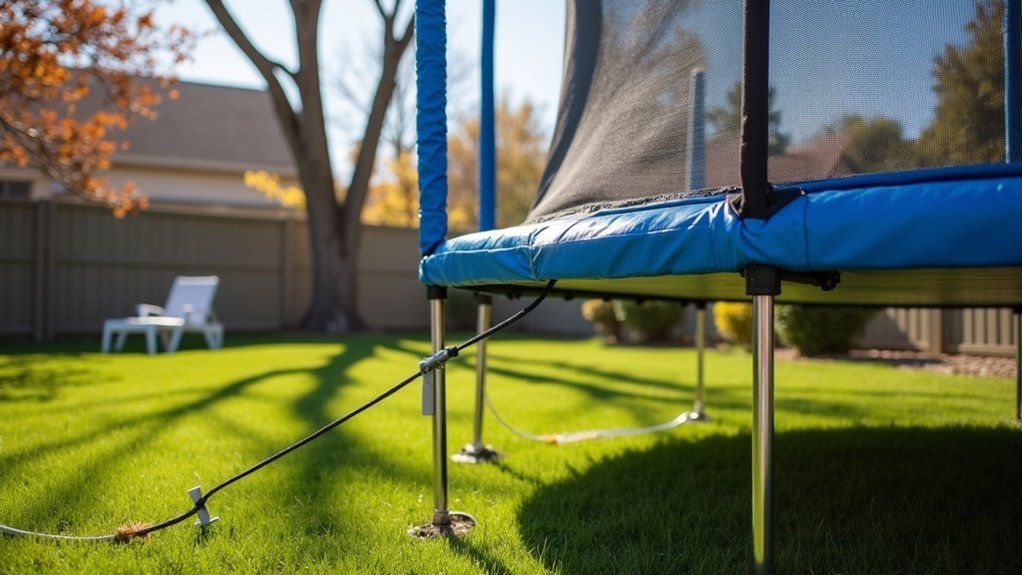
Trampolines need wind anchor kits because their large, flat surfaces act like sails, catching wind and potentially becoming dangerous projectiles. Even moderate breezes of 15-20 mph can lift or flip an unsecured trampoline, causing significant property damage and safety hazards. By installing proper anchors at each leg with heavy-duty straps, you’ll distribute wind stress evenly across the frame and prevent your trampoline from becoming airborne. The small investment in anchoring protects both your property and your neighbors.
The Hidden Dangers of Untethered Trampolines
How often have you considered what happens to your trampoline when the wind picks up? Your trampoline’s flat, expansive surface acts like a sail, capturing wind and converting it into dangerous lift force. This physics phenomenon isn’t just theoretical—it’s why trampolines become airborne projectiles during storms.
Even moderate breezes pose significant risks as wind pressure increases logarithmically with velocity. What feels like a gentle breeze can exert enough force to tip, shift, or completely flip your trampoline. The consequences extend beyond just repair costs: an untethered trampoline can damage your property, neighboring fences, vehicles, or house siding.
Proper anchoring distributes wind stress across the frame and into ground anchors, dramatically reducing the likelihood your trampoline will migrate or break loose during unexpected weather events.
How Wind Transforms Trampolines Into Flying Hazards
Your backyard trampoline becomes an unexpected aerial hazard when wind catches its large surface area, creating powerful lift similar to an airplane wing. Wind speeds as low as 40 mph can send a 100-pound trampoline airborne, as evidenced by numerous documented cases where trampolines crashed through windows, landed on roofs, or struck vehicles. You’ll find countless viral videos showing these recreational devices tumbling across neighborhoods during storms, demonstrating the urgent need for proper anchoring systems to prevent both property damage and potential injuries.
Wind Physics Explained
Three natural forces transform an ordinary backyard trampoline into a potential flying hazard during windy conditions. First, the sail effect occurs when wind catches the large, flat surface of your trampoline, creating significant lift. Second, pressure differential develops as air flows over and under the mat at different speeds, generating upward force similar to an airplane wing.
Wind’s impact intensifies logarithmically—doubling wind speed quadruples the pressure. This means even moderate 20 mph winds can generate enough force to move your trampoline, while 40 mph gusts can easily flip it airborne.
Your unsecured trampoline becomes a dangerous projectile during strong winds, potentially causing thousands in property damage to fences, vehicles, or neighboring structures. This physics explains why proper anchoring isn’t optional—it’s essential for preventing both injuries and property damage.
Real-Life Trampoline Incidents
Despite seeming harmless in your backyard, trampolines frequently become dangerous projectiles during windy conditions. A notable 2022 incident demonstrates this risk perfectly—strong winds lifted a trampoline onto nearby train tracks, causing a two-hour commuter delay and significant disruption.
The science behind these incidents is straightforward: trampolines act like wings when tilted slightly by wind, creating lift that can send them airborne if not properly anchored. Your unsecured trampoline can damage fences, cars, and home siding when it becomes a wind-driven projectile.
Don’t be fooled by moderate winds either—they still pose serious injury risks without proper anchoring. Even outside storm seasons, unexpected wind gusts can catch you off guard, turning your family’s recreational equipment into a neighborhood hazard within seconds.
Understanding Wind Physics and Trampoline Design
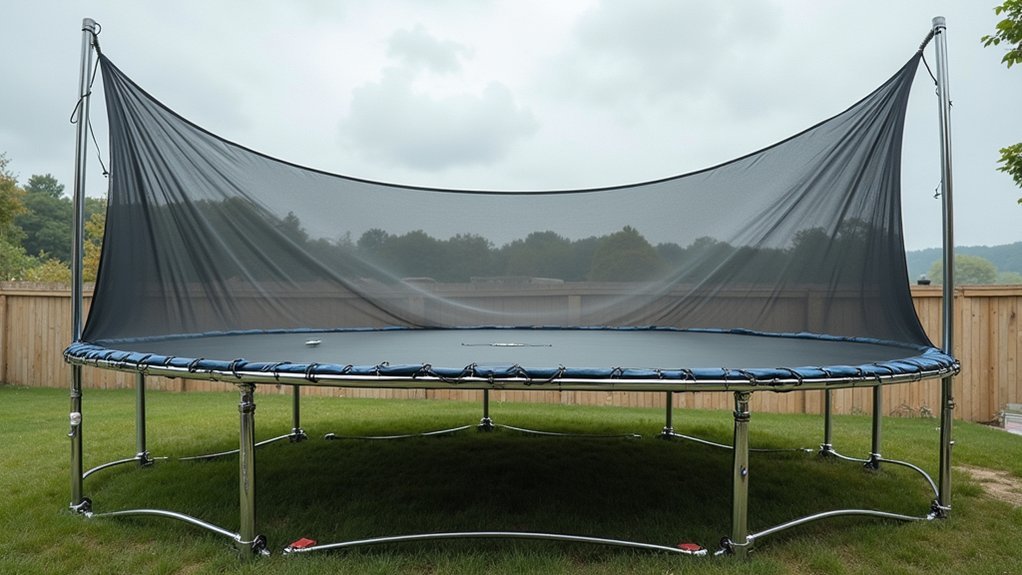
How does a seemingly heavy backyard trampoline become an airborne hazard during windy conditions? The answer lies in basic physics. Trampolines function like sails when exposed to wind—their large, flat surfaces capture air pressure, converting it into lift force that can shift or completely elevate your trampoline.
What makes this particularly dangerous is the logarithmic relationship between wind velocity and pressure. As winds intensify, the pressure against your trampoline increases disproportionately, meaning even moderate gusts can generate significant lifting power. Despite sturdy metal frames weighing hundreds of pounds, this sail effect can overcome gravity’s pull.
Without proper anchoring that distributes stress across both the frame and ground, your trampoline can transform from backyard fun into a destructive projectile, threatening nearby structures, vehicles, and people.
Preventing Property Damage With Proper Anchoring
The airborne trampoline phenomenon represents a serious threat to your property and surrounding areas. When strong winds catch your trampoline mat, it essentially becomes a sail that can lift and launch the entire structure into nearby homes, vehicles, or fences.
| Anchoring Benefits | Property Protected | Protection Level |
|---|---|---|
| Prevents flipping | Homes | High |
| Stops airborne movement | Vehicles | Very high |
| Distributes wind stress | Fences | Moderate |
| Stabilizes during gusts | Windows | High |
| Secures during storms | Landscaping | Moderate |
Installing four anchors (one per leg) provides basic protection, while additional anchors offer extra security for exposed yards. This affordable safety measure complements your regular maintenance routine and proper setup practices, ensuring your trampoline stays put where it belongs—even when powerful winds blow through your neighborhood.
Types of Wind Anchor Kits Available on the Market
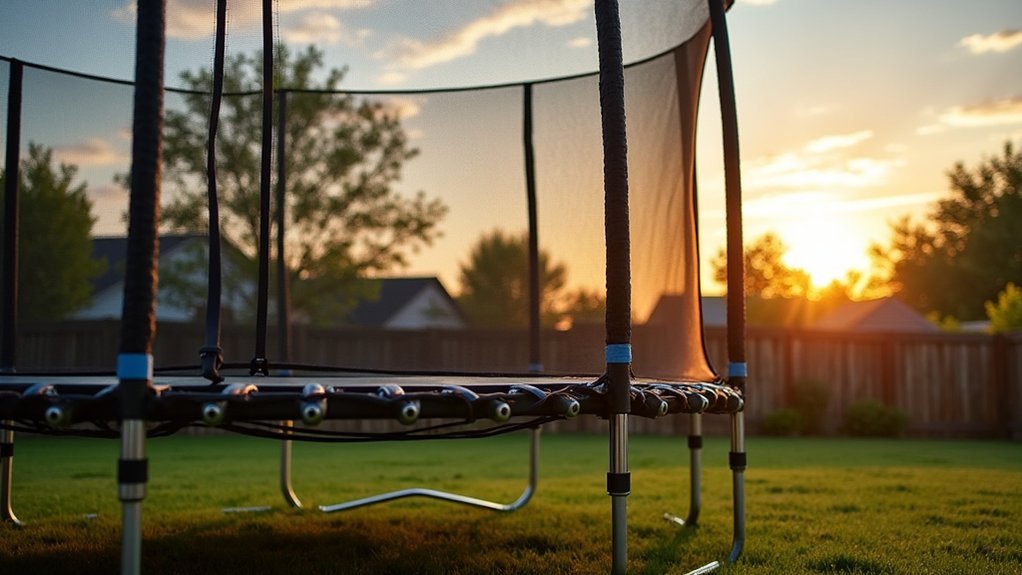
When shopping for trampoline wind anchors, you’ll encounter several distinct options designed to keep your bouncing investment firmly planted during stormy weather. Most kits are designed with your trampoline’s specific needs in mind.
- Standard four-anchor kits distribute wind stress evenly across each leg of your trampoline
- Spiral ground stakes and auger-style anchors (12-20 inches long) provide strong ground penetration with galvanized finishes to prevent corrosion
- Heavy-duty connecting straps maintain taut tension between frame and anchors, preventing lift during high winds
- Soil-specific options including augers for soft ground and ballast alternatives for harder soils
- Size and shape compatibility varies by manufacturer, with specific kits for round, oval, or rectangular trampolines
Choose an anchor system that matches your trampoline’s dimensions and your yard’s soil conditions.
Installation Guide for Maximum Wind Protection
Properly installing your chosen wind anchors transforms a vulnerable trampoline into a secure outdoor fixture that can withstand nature’s strongest gusts. Start by selecting a level area free from obstacles where your trampoline will sit.
For standard setups, install four anchors—one at each leg—using zinc-plated or galvanized corkscrews that measure 12-20 inches long. Larger trampolines or particularly windy locations benefit from six to eight anchors for enhanced stability.
Attach heavy-duty straps near key frame points, then drive each anchor into the soil using a mallet until the strap is taut but not overstressed. The corkscrew design ensures optimal soil grip while resisting corrosion.
Don’t forget to inspect your anchoring system regularly, especially after storms or seasonal changes, to maintain maximum protection.
Seasonal Considerations for Trampoline Security
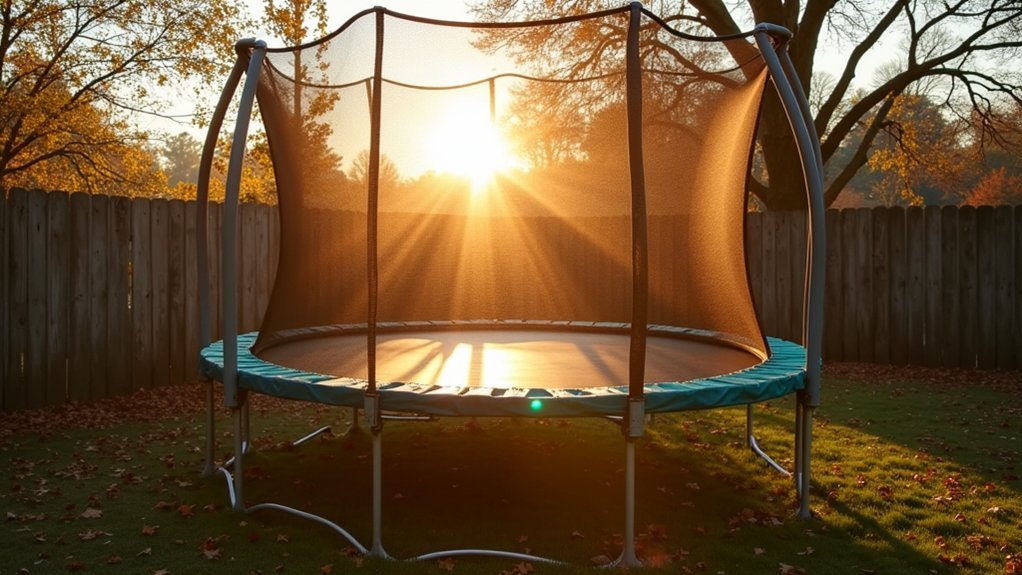
Different seasons bring unique challenges for trampoline owners, requiring specific security approaches throughout the year. Wind patterns shift dramatically with the changing calendar, making your anchor strategy a year-round concern rather than a one-time installation.
Spring and fall often bring unpredictable wind gusts that can turn your trampoline into a dangerous sail
Summer thunderstorms may create sudden microburst risks even on otherwise calm days
Winter’s sustained winds require extra vigilance and possibly additional anchoring
After any severe weather event, inspect your anchors and straps for damage or loosening
Consider upgrading to season-specific anchors rated for your region’s maximum wind velocities
Don’t wait until you see your neighbor’s trampoline tumbling down the street—seasonal planning keeps your investment secure and your yard safe.
Real-Life Stories: When Anchors Made the Difference
Your neighbors’ trampoline disaster stories aren’t just urban legends—just ask the commuters who faced a two-hour delay when winds launched an unsecured trampoline onto train tracks in 2022. You’ll hear countless tales from families who’ve watched their trampolines sail over fences during storms, compared with relieved homeowners whose anchor kits kept their investments firmly grounded during the same gusts. These real-world experiences highlight the stark difference between properly secured trampolines that weather the storm and those that become dangerous projectiles when Mother Nature flexes her muscles.
Near-Miss Neighborhood Tales
What happens when trampolines aren’t properly secured? Just ask the neighbors who witnessed a rogue trampoline land on train tracks in 2022. Without proper anchoring, your backyard fun can quickly become a neighborhood hazard.
- A slight tilt during windy conditions can turn your trampoline into an impromptu aircraft
- Wind stakes distribute stress across the frame, preventing dangerous movement
- Even everyday gusts can displace unsecured trampolines, not just extreme storms
- Regular maintenance ensures your anchor system remains effective year-round
- Properly secured trampolines stay put while unanchored ones become dangerous projectiles
While no anchor system is foolproof in extreme weather, they’re essential for preventing the all-too-common “flying trampoline” stories that circulate after windstorms. Don’t let your trampoline become the next cautionary tale.
Storm Survival Stories
When Category 2 hurricane winds tore through the Collins family’s Florida neighborhood in 2021, dozens of trampolines took flight—except theirs. “We’d installed the heavy-duty anchor kit just three weeks earlier,” recalls Sarah Collins. “While our neighbors’ trampolines ended up in trees, on rooftops, and even half a mile away in a retention pond, ours shifted only a few inches.” This stark contrast highlights what proper anchoring can accomplish even in challenging conditions.
Compare this to the 2022 incident where an unsecured trampoline landed on train tracks, causing significant delays and safety hazards. Even in less extreme weather, your trampoline acts like a wing when wind catches it at the right angle. Proper anchoring with corkscrew ground anchors and straps distributes wind stress throughout the frame, keeping your investment—and your neighborhood—safe.
Choosing the Right Anchor Kit for Your Trampoline Model
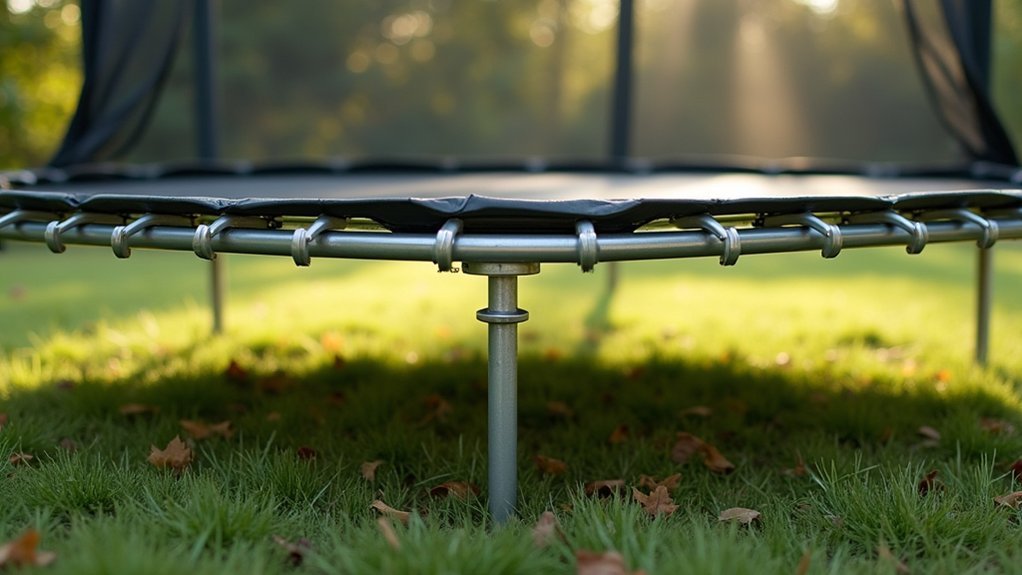
How effectively your trampoline stays anchored during high winds largely depends on selecting a compatible anchor kit for your specific model. Most standard kits work with round backyard trampolines, but you’ll need to verify compatibility before purchasing.
Consider these factors when selecting your anchor kit:
- Check if the kit’s straps can properly reach your trampoline’s frame attachment points
- For oval or rectangular trampolines, you’ll likely need longer straps or additional anchors
- Most manufacturers recommend four anchors (one per leg) for standard conditions
- In particularly windy or exposed locations, install six to eight anchors for maximum security
- Verify that the kit’s hardware matches your trampoline model’s specifications to avoid installation issues
Maintenance Tips for Long-Lasting Wind Protection
Why bother with anchor kits if you’re not going to maintain them properly? Your trampoline’s wind resistance depends on regular upkeep of its anchoring system.
Conduct yearly inspections of your entire anchor setup, checking for loose components, corrosion, and wear on straps, buckles, and ground anchors. Don’t wait to replace damaged parts—doing so immediately maintains optimal wind resistance during unexpected storms.
Keep all hardware clean and free from debris that could compromise effectiveness. When upgrading or relocating your trampoline, verify that your existing anchors remain compatible with the new setup.
Always follow manufacturer instructions precisely during installation and maintenance. Document all your maintenance activities—this record keeping proves invaluable during safety audits and may be required for warranty claims or insurance purposes.
Combining Anchors With Strategic Placement for Ultimate Safety
Strategic trampoline placement in sheltered areas works hand-in-hand with properly installed wind anchors to create a comprehensive safety system.
You’ll need to match your anchor type to your specific soil conditions and trampoline model for maximum effectiveness.
Combining these physical anchors with additional protective measures, like removing the jumping mat during severe weather warnings, creates a multi-layered approach that significantly reduces wind-related risks.
Strategic Placement Fundamentals
Location wisdom combined with proper anchoring creates the ultimate defense against trampoline flight risks. Before you secure those anchor straps, consider where your trampoline sits on your property for maximum wind resistance.
- Choose sheltered areas near walls or trees that act as natural windbreaks
- Avoid open fields and elevated areas where wind velocity increases
- Ensure a level footprint free of obstacles that could compromise anchoring
- Stay clear of slopes and power lines that increase lift potential
- Regularly reassess placement after storms or seasonal changes
The ideal setup combines strategic positioning with appropriate anchoring—at least four anchors for exposed yards, one per leg. This two-pronged approach significantly reduces the risk of your trampoline becoming an unplanned neighborhood visitor during the next windstorm.
Anchor Types Matter
When selecting trampoline anchors, the ground beneath your feet dictates your safest option. Screw-in anchors and augers perform admirably in soft soil but struggle in rocky terrain, while U-shaped stakes offer versatility in mixed conditions. For sandy areas, ballast bags provide stability where traditional stakes fail.
Don’t rely on a single anchor style—combining types strategically distributes wind stress across your trampoline’s frame.
Manufacturers typically recommend four anchors (one per leg) in moderately windy areas, but larger trampolines or exposed yards benefit from additional reinforcement.
Install anchors with care, ensuring straps remain taut but not overly tight. This prevents your trampoline from acting like a sail during unexpected gusts.
Multi-Protection Approach
While selecting the right anchor types establishes your foundation for safety, a multi-protection approach amplifies your trampoline’s wind resistance substantially. This strategy combines proper anchoring with strategic placement decisions to create comprehensive protection against powerful gusts.
- Position your trampoline away from open fields and near natural windbreaks
- Install at least four anchors (one per leg) to distribute wind stress evenly
- Add extra anchors in particularly windy locations or exposed yards
- Maintain regular checks of your anchor system after storms or seasonal changes
- Reduce the trampoline’s wind surface by placing it in sheltered areas when possible
This combined approach works because anchors secure the frame while strategic placement minimizes the wind forces your trampoline faces in the first place. You’ll create multiple layers of protection that work together to keep your trampoline firmly grounded.
Cost Comparison: Anchor Kits vs. Trampoline Replacement
How much would you rather spend—$30 on an anchor kit or $300+ on a new trampoline? This simple question highlights the economic advantage of preventive measures against wind damage.
Most anchor kits include four anchors and heavy-duty straps that distribute wind stress evenly across your trampoline frame. They’re particularly valuable if you live in a windy area where trampolines can become dangerous projectiles, potentially causing costly property damage.
The effectiveness of your anchors depends on your ground conditions—softer soil typically requires longer or stronger anchors for secure hold. To maximize your investment, perform regular maintenance checks, especially before storm seasons, ensuring all anchors remain tight and properly positioned.
This small investment provides significant financial protection by preventing the much higher costs of trampoline replacement and potential property repairs.
Weather Warning Signs: When to Take Extra Precautions
You’ll need to watch for specific wind speed thresholds, with most trampolines becoming dangerous at just 20-25 mph winds. Weather apps and local storm warning systems can alert you to approaching conditions that require immediate action for trampoline security.
Spring and fall typically pose higher risks due to seasonal weather patterns, making these essential periods to maintain vigilant anchor monitoring.
Wind Speed Thresholds
When should you take action to secure your trampoline against wind? Understanding specific wind speed thresholds helps you make informed decisions about trampoline safety. While local conditions vary, here are general guidelines to follow:
- 15-20 mph (24-32 km/h): Begin monitoring your trampoline closely
- 25 mph (40 km/h): Secure with additional anchors if not already in place
- 30-40 mph (48-64 km/h): Consider removing the jumping mat to reduce sail effect
- 40+ mph (64+ km/h): Relocate smaller trampolines indoors if possible
- Any severe weather warning: Take immediate precautionary measures
Your location matters significantly—trampolines in open, exposed areas or storm-prone regions face greater risks at lower wind speeds. Remember that even heavy-framed trampolines can become dangerous projectiles during strong gusts, making proper anchoring essential year-round.
Storm Warning Systems
While understanding wind speed thresholds provides general guidance, recognizing specific storm warning signs can help you protect your trampoline before severe weather hits. Official weather alerts serve as your first line of defense, giving you critical time to implement safety measures.
When you receive severe weather warnings or observe rapidly changing conditions, you’ll need to act quickly. Monitor local weather forecasts daily and set up mobile alerts to provide advance notice of approaching storms. These warnings allow you to determine whether additional anchoring is sufficient or if you should remove the jump mat entirely to reduce the sail effect.
Develop a pre-storm plan that outlines specific actions based on warning types – from adding extra anchors during mild wind advisories to complete disassembly during tornado warnings. This proactive approach prevents your trampoline from becoming an airborne hazard.
Seasonal Risk Periods
Understanding when your trampoline faces the highest risk from wind damage can substantially improve your safety preparations.
Your vigilance should increase during storm seasons and when high-wind advisories are issued, particularly if your trampoline is positioned near beaches, coastlines, or open fields where gusts can create dangerous lifting forces.
- Watch for sustained winds over 20–25 mph or gusts exceeding 40 mph
- Monitor approaching tropical storm or hurricane advisories
- Pay attention to pre-storm indicators like dark skies and sudden wind shifts
- Be alert to rapidly changing barometric pressure readings
- Increase caution during seasonal storm periods in your region
Perform regular seasonal maintenance before high-wind periods arrive, including thorough inspection of anchors and straps to ensure they’re ready to withstand challenging weather conditions.
Legal and Insurance Implications of Unsecured Trampolines
How often do homeowners consider the legal ramifications of their backyard equipment? When your unsecured trampoline becomes airborne during high winds, you’re potentially liable for any damage it causes to neighboring property, including fences, vehicles, or siding.
Your insurance company may deny claims related to trampoline damage if you haven’t taken proper precautions. Many policies specifically require appropriate anchoring systems as a condition of coverage. By installing wind anchor kits, you’re not only protecting your property but also demonstrating due diligence.
Historical incidents of trampolines landing on train tracks or under structures have led to increased scrutiny by insurers. Additionally, trampoline warranties often require proper anchoring for validity. Remember to regularly inspect and maintain your anchor hardware to maintain compliance with safety standards—a small investment that can prevent significant financial and legal headaches.
Frequently Asked Questions
Do You Need an Anchor Kit for a Trampoline?
Yes, you need an anchor kit for your trampoline. It prevents wind from lifting or tipping it, protecting your property from damage and reducing injury risks during storms and everyday windy conditions.
How to Keep a Trampoline From Blowing Away?
You’ll need to install a wind anchor kit with corkscrew stakes at each leg. Secure straps tightly but not overly so. In extreme weather, remove the jumping mat to reduce the sail effect.
Do I Have to Tell My Insurance Company I Got a Trampoline?
Yes, you should tell your insurance company about your trampoline. Many policies require disclosure of trampolines as they’re considered liability risks. Failure to report it could affect your coverage if an accident occurs.
How Strong Do Winds Have to Be to Lift a Trampoline?
Winds as low as 15-20 mph can start lifting trampolines, while 40+ mph winds will almost certainly send yours airborne. You’ll need proper anchoring even in moderate breezes to keep it grounded.



Leave a Reply