
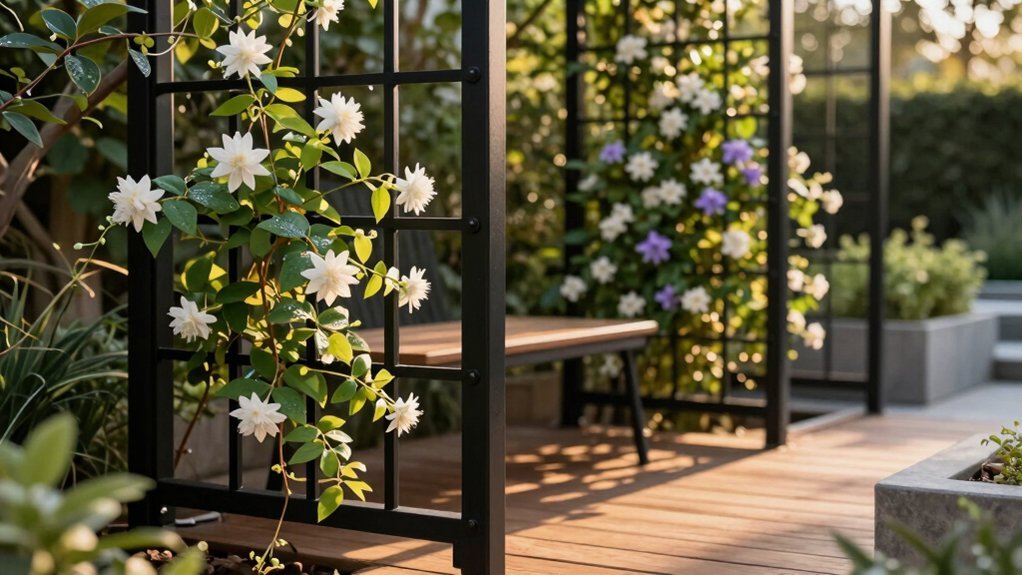
Trellis privacy screens offer dual benefits you won’t find with traditional fencing—they support climbing plants while creating natural boundaries. You’ll save space by growing vertically, perfect for small patios or balconies. These modular structures can be customized to conceal eyesores, define outdoor rooms, and reduce noise. With proper installation and plant selection, your trellis screen evolves into a living wall that provides year-round privacy and habitat for pollinators.
The Dual-Purpose Appeal of Trellis Privacy Screens
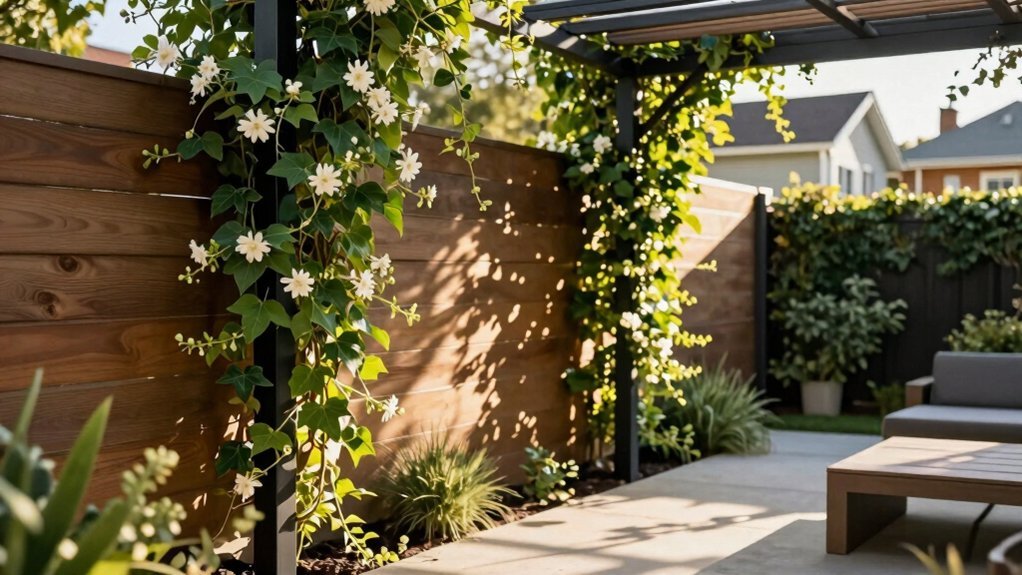
Why settle for a single-function garden feature when you can have two? Trellis privacy screens offer the perfect combination of seclusion and plant support. You’ll create an intimate outdoor space while simultaneously providing structure for your climbing plants to flourish vertically.
These versatile screens excel in awkward spaces—you can easily cut them to fit around existing features without major garden renovations. Need to hide that weathered shed or crumbling wall? A trellis screen instantly transforms eyesores into green showcases.
For maximum functionality, position two screens at right angles to create a dedicated reading nook or meditation space. Modern wood composite options resist moisture and aging, ensuring your private retreat remains beautiful while supporting plant growth year after year. Your garden deserves this elegant dual-purpose solution.
Creating Living Walls: Best Climbing Plants for Privacy
When transforming your trellis screen into a verdant privacy barrier, selecting the right climbing plants makes all the difference. Vigorous climbers like clematis, honeysuckle, and various vines establish quickly, creating effective vertical screening as they weave through the trellis structure.
For year-round privacy with seasonal interest, combine flowering vines with plants that maintain dense foliage or interesting stems even after blooming. You’ll need to position your screens where plants receive adequate sunlight while still allowing air to circulate freely through the foliage.
To maintain your living wall’s effectiveness, regularly train new stems through the trellis framework and prune as needed. This ongoing care ensures your green barrier remains dense and functional, providing the privacy you desire while enhancing your outdoor space with natural beauty.
Space-Saving Solutions for Small Gardens and Patios
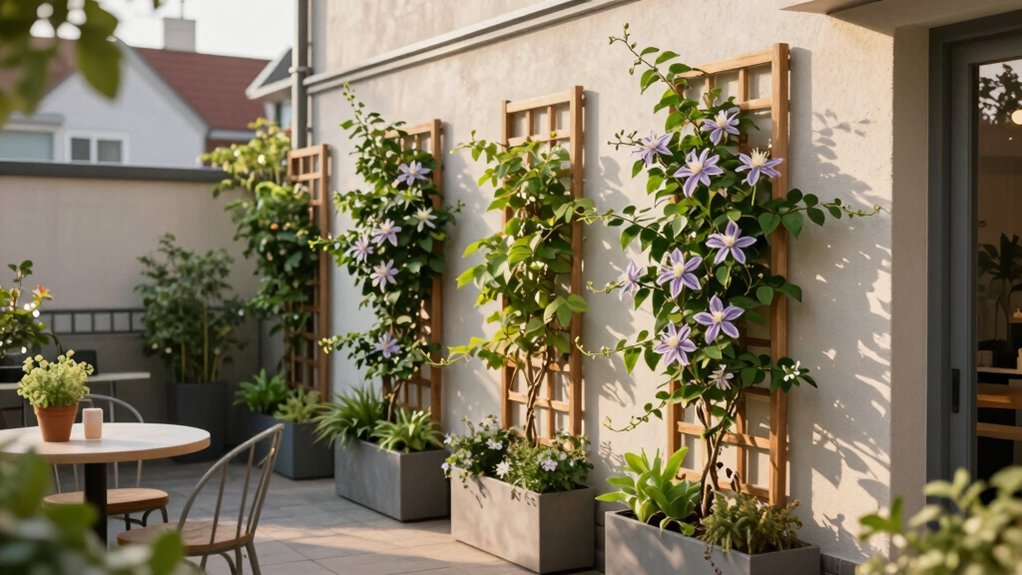
In small gardens or patios, trellis privacy screens let you grow upward instead of outward, effectively doubling your planting space without expanding your footprint. You’ll find container-friendly trellises perfect for apartment balconies, where floor space is at a premium but walls offer untapped gardening potential. These vertical solutions transform tight corners into lush green sanctuaries while maintaining precious room for your outdoor furniture and activities.
Vertical Growth Maximizes Space
How often have you struggled with limited garden space, wishing for more room to grow your favorite plants?
Trellis privacy screens offer the perfect solution by transforming your horizontal limitations into vertical opportunities.
By guiding climbing plants upward, you’re effectively expanding your garden without increasing its footprint.
Your plants reach higher toward sunlight, creating lush greenery overhead rather than sprawling across precious ground space.
This vertical approach is particularly valuable in urban settings where every square foot matters.
The modular design of trellis screens allows you to position them strategically for optimal sun exposure and air circulation around your climbing crops.
As a bonus, elevating plants reduces their contact with soil, minimizing their exposure to ground-dwelling pests and soil-borne diseases.
Compact Solutions for Apartments
Living in an apartment doesn’t mean sacrificing your green sanctuary. Trellis privacy screens offer perfect solutions for balconies and small patios where neighbors might overlook your outdoor space. You’ll create a private enclosure for relaxing or entertaining while giving climbing plants a place to thrive.
These modular screens can be cut to fit awkward corners and unusual dimensions—ideal for urban settings with space constraints. Combine them with low-lying potted hedges to further reduce visibility while maintaining airflow and light.
Position screens around your seating or dining area to enhance comfort during social gatherings. You’ll appreciate the quick transformation these cost-effective solutions provide, improving both privacy and aesthetics in one go. Your compact outdoor space will feel like an extension of your apartment—intimate, green, and distinctly yours.
Container-Friendly Trellis Options
The perfect container-friendly trellis transforms your small garden or patio into a vertical paradise without sacrificing precious floor space. By enabling plants to grow upward rather than outward, you’ll maximize your planting area in even the most confined settings.
Freestanding designs offer versatility you’ll appreciate—simply reposition as your plants develop or when light conditions change. For even more efficiency, consider wall-mounted options or trellises that attach directly to planters, creating ideal support for climbing vegetables and flowering vines.
Look for lightweight yet durable materials like treated wood or powder-coated metal that can withstand frequent watering and support plant weight. Beyond their practical benefits, container trellises create defined growing zones and privacy screens while maintaining easy access for harvesting and maintenance.
Weather-Resistant Materials for Long-Lasting Privacy Screens
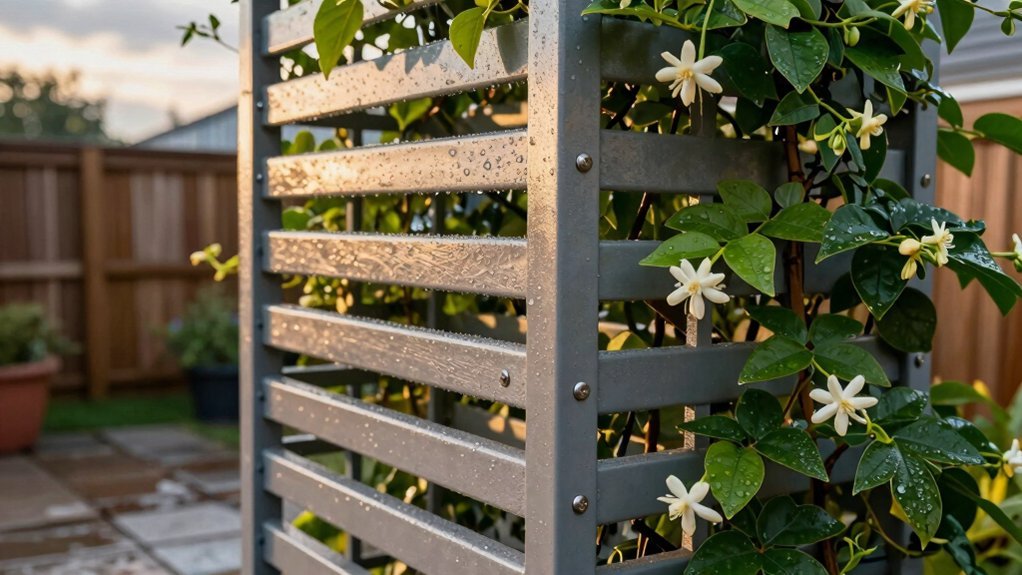
When British weather unleashes its notorious rain and humidity, your garden privacy screen needs materials that can withstand the challenge. Traditional wooden trellises quickly succumb to water damage, making weatherproof alternatives essential for durability in the UK climate.
Withstand Britain’s persistent wet climate with weatherproof privacy screens—where traditional wood fails, modern alternatives endure.
For long-lasting privacy screens that support climbing plants, consider:
- Advanced wood composites that resist rot while maintaining visual appeal
- Galvanized or powder-coated steel frames that withstand years of moisture exposure
- Properly spaced installations with air circulation gaps to prevent moisture buildup
- Securely anchored posts, either buried deeply or fixed to concrete footings for stability
These weatherproof solutions extend your screen’s lifespan significantly, allowing your climbing plants to flourish while your privacy barrier stands strong against frequent rainfall, persistent mist, and chilly winds.
DIY Installation Guide for Trellis Privacy Systems
You’ll need to anchor your trellis privacy screen properly to prevent costly damage from strong winds or storms.
Bury freestanding posts at least 24 inches deep in the ground and use weather-resistant hardware that won’t rust or deteriorate over time.
Maintaining several inches of clearance from walls will improve air circulation and extend the lifespan of both your trellis and the supporting structure.
Secure Anchoring Matters
Why do so many beautiful trellis installations fail within a year? The culprit is almost always inadequate anchoring that can’t withstand wind loads and the weight of mature climbing plants.
To ensure your trellis privacy screen stands strong for years:
- Bury freestanding trellis posts at least 24 inches deep, using concrete for taller installations
- Mount wall trellises with proper spacers to maintain several inches of air circulation between the trellis and wall
- Choose durable anchoring materials like galvanized steel, treated wood, or rot-resistant composites
- Secure all fastening points to prevent wobbling, which damages both the structure and plants
Proper anchoring not only extends the life of your trellis system but also makes maintenance easier and provides the stable support your climbing plants need to thrive.
Weather-Resistant Installation Techniques
With your trellis firmly anchored, it’s time to focus on installation techniques that can withstand years of weather exposure. Choose composite materials over untreated wood for significantly extended longevity against moisture and aging effects. These modern options resist rot while maintaining an attractive appearance.
For freestanding designs, bury posts at least 24 inches deep—go deeper or add concrete for taller screens or windy locations. Wall-mounted options require secure fastening with spacers that maintain several inches of air circulation between the trellis and supporting structure, preventing moisture buildup.
Consider modular designs that can be customized to fit awkward spaces. This adaptability lets you transform unsightly areas quickly while ensuring proper installation. Remember, a properly installed trellis not only supports climbing plants but also creates habitat for beneficial pollinators, enhancing your garden’s overall health.
Seasonal Considerations for Year-Round Privacy
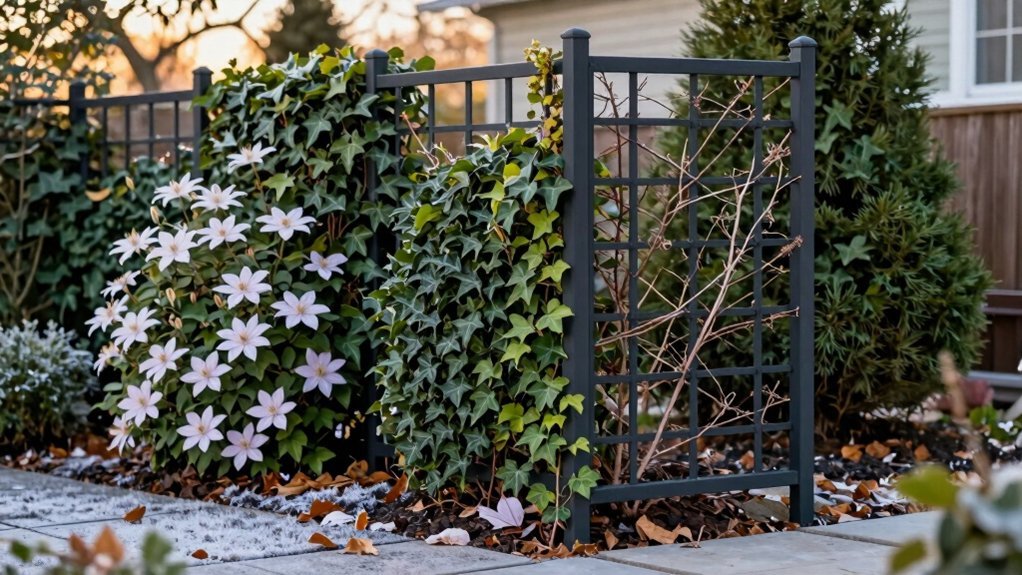
How effectively your trellis privacy screen serves its purpose depends largely on the seasons. You’ll need to plan strategically for year-round coverage while adapting to nature’s cycles.
- Deciduous flexibility: Choose deciduous climbers for adjustable privacy—lush greenery in summer and welcoming openness in winter when sunlight is precious.
- Spring growth advantage: Benefit from rapid new shoot growth in spring that quickly increases your screen height and density within weeks.
- Evergreen reliability: Install evergreen varieties for consistent sight line blocking regardless of season or temperature fluctuations.
- Maintenance rhythm: Develop a seasonal pruning schedule to maintain optimal density—preventing overgrowth that might block desired views while preserving privacy where needed.
Perimeter screens offer consistent concealment, with seasonal plant growth adding dynamic texture as vines fill out during warmer months.
Enhancing Backyard Entertainment Areas With Green Barriers
Trellis privacy screens create natural boundaries that define your outdoor entertainment zones without making guests feel boxed in. You’ll transform awkward backyard spaces into inviting gathering areas where conversations flow freely without neighbor oversight. By combining these modular screens with climbing plants, you’re establishing green barriers that enhance both privacy and aesthetic appeal for your summer parties and family gatherings.
Natural Gathering Zones
Why should your backyard entertaining spaces remain exposed when you can create intimate social areas with strategic trellis privacy screens? You’ll transform ordinary patios into secluded retreats where conversations flow freely without the feeling of being observed.
Position your screens to establish natural boundaries that define distinct gathering zones within your garden:
- Combine screens with low hedges to maintain a natural aesthetic while maximizing privacy
- Cut and arrange modular screens to fit awkward spaces, creating cozy nooks even in challenging layouts
- Integrate climbing plants that add density and visual interest throughout the seasons
- Place screens strategically around seating areas to maintain an intimate atmosphere during gatherings with friends and family
Screened Garden Entertaining
Outdoor entertaining takes on a new dimension when you incorporate trellis privacy screens as green barriers around your backyard spaces. These versatile structures create intimate entertainment zones while blocking neighbors’ views, allowing you to host gatherings with complete privacy.
Your guests will appreciate the secluded atmosphere as climbing plants intertwine with the screens, forming lush green walls that enhance both aesthetics and function. You’ll transform mundane areas into elegant entertainment spaces while concealing eyesores like old sheds or weathered fences.
The screens provide immediate architectural interest even before plants mature, elevating your garden’s design appeal. As your climbers flourish on these structures, they’ll benefit from improved airflow and sun exposure, growing more vigorously than on solid barriers. For cost-effective, quick-to-install entertainment spaces that work in awkward areas, privacy screens deliver unmatched versatility.
Noise Reduction Benefits of Plant-Covered Trellises
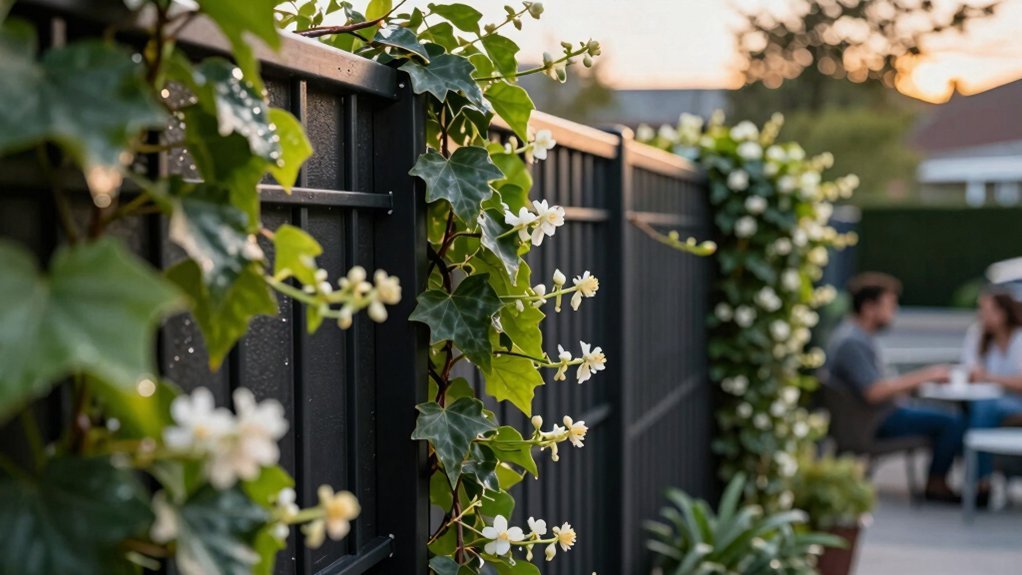
How often have you wished for a peaceful outdoor sanctuary away from urban noise? Plant-covered trellises offer a natural solution by absorbing and diffusing sound through their dense foliage. As your climbing plants mature, their effectiveness at dampening nearby conversations and traffic noise increases substantially.
Transform your garden into a natural sound barrier, where lush foliage creates tranquility amid urban chaos.
You’ll enjoy these acoustic benefits:
- Dense leaf mass absorbs sound waves that would otherwise bounce around your outdoor space
- Varied leaf textures and surfaces diffuse remaining noise, reducing its intensity
- Evergreen climbers provide year-round noise reduction while maintaining privacy
- The combination of trellis structure and plants creates multiple layers of sound barriers
For optimal noise reduction, choose plants with thick, abundant foliage and ensure they cover your trellis completely for maximum sound-dampening effect.
Aesthetic Design Options for Modern Outdoor Spaces
When designing a modern outdoor retreat, trellis privacy screens offer nearly endless aesthetic possibilities to elevate your space. You’ll find modular options that can be custom-cut for awkward corners and irregular layouts, creating sleek, tailored solutions that transform your garden’s appearance.
| Style | Material | Best For | Visual Effect |
|---|---|---|---|
| Lattice | Cedar | Climbing roses | Romantic, classic |
| Horizontal slats | Composite | Contemporary yards | Clean, minimalist |
| Diamond pattern | Metal | Small spaces | Elegant, airy |
| Woven | Bamboo | Tropical gardens | Natural, textured |
Pair your trellis with climbing plants to create a living wall that blends into your landscape while concealing unsightly elements like aging sheds or crumbling walls. You’ll enjoy both architectural interest and practical screening that complements existing hedges for year-round seclusion and beauty.
Supporting Heavy Climbers: Structural Considerations
Robust trellises demand careful planning when supporting heavy climbing plants like wisteria, grapes, or mature clematis. When designing your privacy screen for substantial vines, you’ll need reinforced materials that won’t buckle under the weight and growth patterns of these ambitious plants.
Vigorous climbers require sturdy foundations—today’s delicate saplings become tomorrow’s structural challengers.
- Choose galvanized or powder-coated steel supports for maximum strength and longevity
- Install wall-mounted trellises with proper spacers to ensure air circulation and prevent moisture damage
- Select structures that accommodate your plant’s mature height—many vigorous climbers reach 8-10 feet
- Opt for deeper footprints with arches or obelisks for plants that develop woody stems or extensive foliage
Don’t underestimate a heavy climber’s potential weight when fully mature—what looks manageable as a young plant can overwhelm inadequate supports within a few growing seasons.
Maintenance Tips for Thriving Privacy Plants
While selecting the right trellis structure sets the foundation for your privacy screen, proper maintenance guarantees your climbing plants thrive year after year. Advanced wood composite screens offer significant advantages here, as they resist water damage and aging far better than traditional wood options. This means you’ll spend less time replacing deteriorated supports and more time enjoying your private garden space.
For optimal growth, position your screens strategically—creating right-angled nooks not only maximizes privacy but also provides ideal microclimates for certain plant varieties. As your climbers develop, they’ll naturally soften the screen’s appearance while increasing density for better seclusion. Remember to guide new growth appropriately across the structure to conceal any unattractive garden elements like crumbling walls or weathered sheds, transforming eyesores into verdant features.
Comparing Trellis Screens to Traditional Fence Options
How do trellis privacy screens stack up against traditional fencing solutions? While solid fences create complete visual barriers, they also block natural light from flowing through your garden spaces. Trellis screens offer a more versatile alternative that balances privacy with openness.
- Light permeability – Trellis designs allow sunlight to filter through, creating dappled shade rather than harsh shadows
- Living integration – Unlike solid fences, trellises welcome climbing plants to become part of your privacy solution
- Adaptable installation – Their modular nature means they can be customized for awkward spaces around patios or entrances
- Lighter footprint – Made from wood lattice or composite materials, trellises are typically easier to install and relocate than traditional fence panels
Transforming Eyesores Into Garden Features With Trellis Screens
Every garden has those problem areas you’d rather not see—perhaps it’s a crumbling wall, an aging shed, or an unsightly utility box. Trellis privacy screens offer a quick solution, transforming these eyesores into attractive garden features. Their modular design allows you to cut and position them precisely where needed, even in awkward spaces.
| Eyesore | Trellis Solution |
|---|---|
| Crumbling wall | Cover with screen, add climbing roses |
| Aging shed | Attach screens to façade, plant clematis |
| Utility box | Surround with L-shaped screen, add jasmine |
| Compost area | Enclose with screens, grow cucumber vines |
Frequently Asked Questions
What Type of Trellis Is Best for Climbing Plants?
Choose lattice-style or grid trellis for lighter vines, while sturdier plants need robust panels with wider openings. You’ll want weather-resistant materials like cedar or vinyl for longevity.
What Are the Benefits of a Trellis Frame?
Your trellis frame maximizes garden space, improves plant health, provides structure for climbers, enhances air circulation, reduces disease, creates privacy, and adds visual interest to your outdoor area.
What’s the Difference Between Lattice and Trellis?
Lattice is a crisscross pattern of thin strips, while trellis is a sturdier framework structure. You’ll find lattice often used as decorative panels and trellis designed specifically to support climbing plants.
Does Trellis Netting Work?
Yes, trellis netting works effectively. You’ll find it’s flexible, lightweight and provides excellent support for climbing plants while being easy to install and adjust to your specific garden needs.


Leave a Reply