

Don’t let unpredictable weather ruin your garden party. Prepare with these seven strategies: create flexible indoor-outdoor spaces, secure sturdy shelter options like tents with anchored sides, monitor forecasts 7-10 days ahead, stock comfort essentials (blankets, umbrellas, misting fans), develop a clear communication plan, design adaptable activities that work indoors or out, and implement safety protocols for severe conditions like lightning. These preparations ensure your guests stay comfortable while you maintain the celebration’s charm regardless of Mother Nature’s plans.
Build a Flexible Indoor-Outdoor Venue Setup

Why limit your garden party to the whims of weather when you can design for adaptability? Seek venues offering both indoor and outdoor spaces that allow seamless transition during sudden rain, wind, or heat waves.
A versatile covered patio with enclosed sides creates the perfect balance—maintaining outdoor ambiance while providing indoor protection. Position tables and chairs strategically so they’re easily moved under shelter when needed. Install clear sides that can be opened for air flow or closed against wind and rain while preserving views of your garden setting.
Don’t forget to establish and clearly mark quick access routes between outdoor areas and sheltered spaces. Your staff should know exactly where to direct guests when weather shifts, ensuring everyone stays comfortable regardless of what Mother Nature delivers.
Secure Weather-Resistant Shelter Options
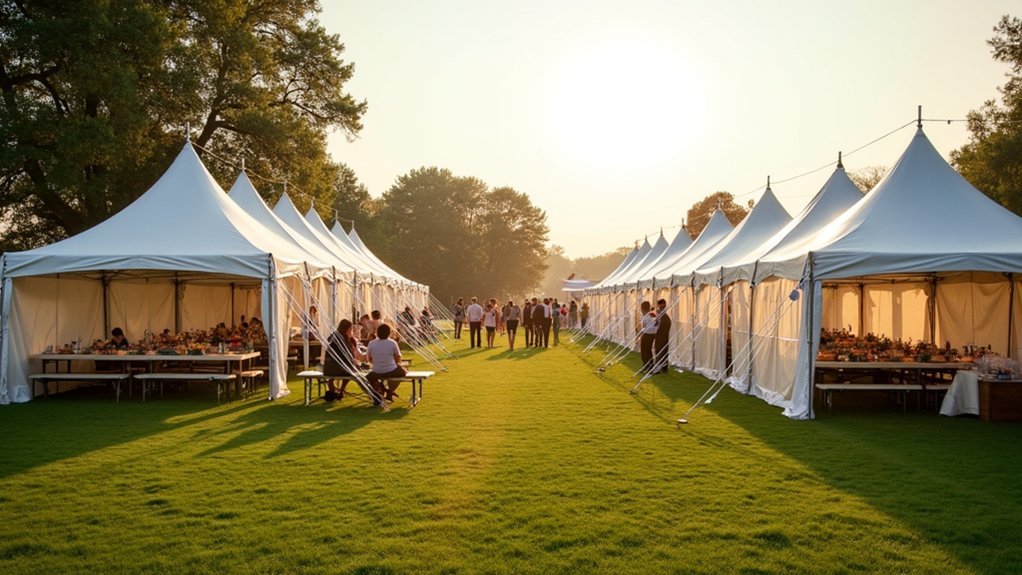
How confidently can you declare your garden party “weatherproof” without proper shelter? Invest in sturdy tents or marquees with properly anchored stakes or weights to handle unexpected wind gusts. Ensure all sides are fitted to create a truly weather-resistant environment.
Whenever possible, opt for shelter options with enclosed sides and climate control, giving guests an indoor-like experience while maintaining the outdoor charm. Don’t forget to establish plan B sheltered paths and indoor transfer routes for safe movement during sudden downpours.
Deploy waterproof flooring or covered walkways under tents to prevent mud in high-traffic areas like dining and dance spaces. Finally, develop a quick-change protocol for efficiently relocating key activities under shelter, including dining, stage, and seating areas, when weather threatens your celebration.
Monitor Forecasts and Create Decision Timelines

While shelter preparation forms your physical defense, smart weather prediction creates your strategic advantage. Begin tracking forecasts 7-10 days ahead, then increase to hourly checks during the critical 48-72 hour window before your garden party.
Cross-reference at least two reliable sources like the National Weather Service and local radar apps to compare precipitation probability, temperature, and wind conditions. Establish clear decision triggers—when rain probability hits your predetermined threshold (60-70% is recommended), immediately activate your backup plan.
Set a firm timeline for these decisions, allowing 24-48 hours to notify all stakeholders. Secure your alternate venue with a refundable deposit 1-2 weeks in advance. Communicate these weather contingency plans to vendors, staff and guests through scheduled updates via email or your event app.
Prepare Guest Comfort Essentials for Any Weather
What transforms a successful garden party into an exceptional one? Your ability to keep guests comfortable regardless of weather surprises. Stock your event with essentials that tackle any meteorological challenge.
| Weather Condition | Essential Items | Guest Experience |
|---|---|---|
| Rain | Branded ponchos, umbrellas, towels | Dry and protected |
| Cold | Portable heaters, blankets | Cozy and warm |
| Heat | Water stations, misting fans | Cool and hydrated |
| Wind | Sturdy tents with anchoring | Secure and sheltered |
| Mud | Extra coverings, dry seating | Clean and comfortable |
Rent waterproof canopies with enclosable sides to create flexible sheltered areas that maintain your outdoor ambiance. Designate cozy guest zones equipped with appropriate furnishings where people can retreat while still enjoying the event. These thoughtful preparations ensure your garden party thrives despite weather challenges.
Develop a Clear Weather Communication Plan
When unexpected weather threatens your garden party, your communication strategy becomes as critical as the event itself. Create a pre-scripted plan that informs guests through email, social media, and your event app, with messages tailored for both light rain and significant delays.
Establish a notification timeline—initial alerts 48 hours before, with follow-ups at 24 and 6 hours—to announce location changes, timing shifts, and safety instructions. Designate a single point person or small team to ensure consistent messaging across all channels.
Include actionable details like indoor meeting points, revised maps, parking guidance, and weather-resistant amenities. Pre-approve alternative layouts and contingency signage so your team can immediately implement and communicate exact revised plans to guests.
Design Adaptable Activities for Rain or Shine
How seamlessly your entertainment flows through sudden weather changes often determines your garden party’s success. Plan activities that transition effortlessly between outdoor and indoor spaces—like a DIY photo booth that works equally well on the patio or under a covered terrace.
Pre-design your entertainment with modular components that adapt to different settings. Weather-responsive scheduling allows you to shift outdoor demonstrations to sheltered areas without disrupting guest enjoyment. Invest in versatile equipment such as portable lighting and foldable stages that reconfigure quickly as conditions change.
- Create excitement with quick-change activity cues that transform challenges into memorable moments
- Build anticipation by revealing indoor “surprise” spaces when weather shifts
- Inspire confidence in guests when they see your seamless transitions during unexpected rain
Create Specialized Solutions for Different Weather Challenges

You’ll need targeted solutions for each weather scenario to protect your garden party. Prepare a heat-wave response kit with portable fans, cooling stations, and UV-protective canopies, while establishing cold weather warming stations featuring portable heaters, hot beverage service, and wrapped blankets. Don’t forget to implement lightning safety protocols that include designated shelter locations, a communication system for weather alerts, and guidelines for safely shutting down electrical equipment.
Heat-Wave Response Kit
Scorching temperatures needn’t derail your garden party plans if you’ve prepared a thorough heat-wave response kit. Install UV-blocking canopies with ceiling fans to create cool shaded zones where guests can escape direct sun. Position misting fans along walkways to lower ambient temperatures without saturating furniture or food areas.
Ensure you’ve arranged:
- Abundant water stations (one per 20 guests) with electrolyte options to keep everyone properly hydrated
- Heat-variant seating areas under light-colored, breathable fabrics away from heat-reflecting surfaces
- Flexible scheduling with contingency indoor spaces for when temperatures peak
Your heat-wave plan should include clear communication protocols so guests understand temporary relocations if necessary. With these preparations, you’ll transform potentially dangerous conditions into a comfortable, enjoyable experience for everyone.
Cold Weather Warming Stations
When temperatures drop unexpectedly, cold weather warming stations become essential lifelines for your garden party’s success. Deploy propane heaters and fire pits at least 10 feet from seating areas to maintain safety while maximizing warmth.
Create wind breaks using sidewalls or clear panels around dining areas to reduce heat loss. Position warming stations centrally with clear access and proper signage, ensuring all equipment meets safety compliance standards.
Offer heated blankets and warm beverages like hot cider or cocoa to keep guests comfortable. When the wind chill drops below 40°F/4°C, be prepared to shift high-energy activities indoors. This temperature-appropriate scheduling prevents discomfort while maintaining your event’s flow.
Well-positioned warming options transform a potentially uncomfortable situation into a cozy, memorable gathering.
Lightning Safety Protocols
Lightning storms present serious safety risks that demand immediate action during garden parties. Establish a lightning safety protocol that can be implemented within 30 seconds of detecting strikes within 6 miles. Use the “flash-to-bang” method (count seconds between lightning and thunder, then divide by 5) to determine proximity in miles.
- Your guests’ lives depend on your preparation—designate indoor safe zones away from plumbing, electrical outlets, and metal objects
- Feel confident knowing you’ve created a secure environment—require a mandatory 30-minute waiting period after the last thunder before resuming outdoor activities
- Rest assured your temporary structures are safe—ensure all tents and shelters are properly grounded and certified lightning-safe
Always prioritize indoor, fully enclosed buildings as your primary shelter option during electrical storms.
Frequently Asked Questions
How to Save an Outdoor Party When It Rains?
Have a backup indoor venue or enclosed marquee ready. Secure standby deposits, monitor weather forecasts, create sheltered routes, and communicate changes clearly to guests via email or social media.
How to Host an Outdoor Event in the Rain?
You’ll need waterproof shelters, secure flooring, and adequate lighting. Provide guests with umbrellas and blankets, create covered pathways, and ensure all electrical equipment is protected from moisture.
What to Do if It Rains at an Outdoor Concert?
Move everyone to your standby tent with enclosed sides, secure stage equipment, communicate changes via your alert system, and keep walkways dry with waterproof flooring. You’ll avoid disruption with quick action.
What to Do if It Rains on an Outdoor Wedding?
Have a Plan B with indoor options. You’ll need to quickly move guests along marked routes, protect food areas, provide rain gear, and communicate changes promptly to maintain everyone’s comfort.



Leave a Reply