
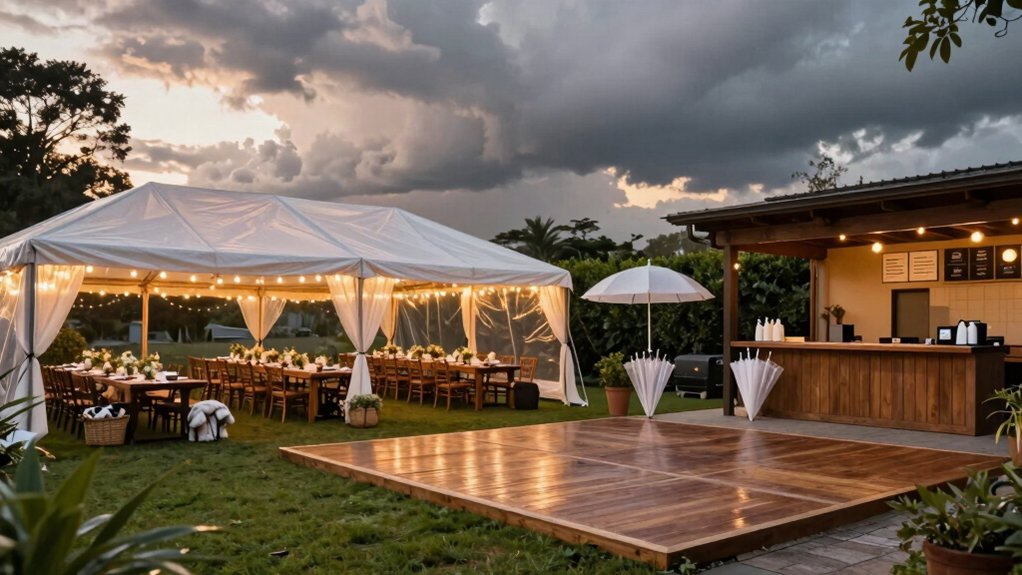
Protect your backyard wedding from unexpected weather with seven proven backup plans: invest in a well-secured tent with proper flooring, create pop-up covered spaces with modular structures, establish seamless indoor-outdoor flow for quick transitions, use weather-resistant décor anchored with weighted bases, prepare guest comfort essentials like blankets and ponchos, coordinate with vendors for contingency execution, and implement real-time weather monitoring. These strategies ensure your special day shines brilliantly, no matter what the forecast holds.
Tented Reception Areas: Creating Elegant Weather Shelter
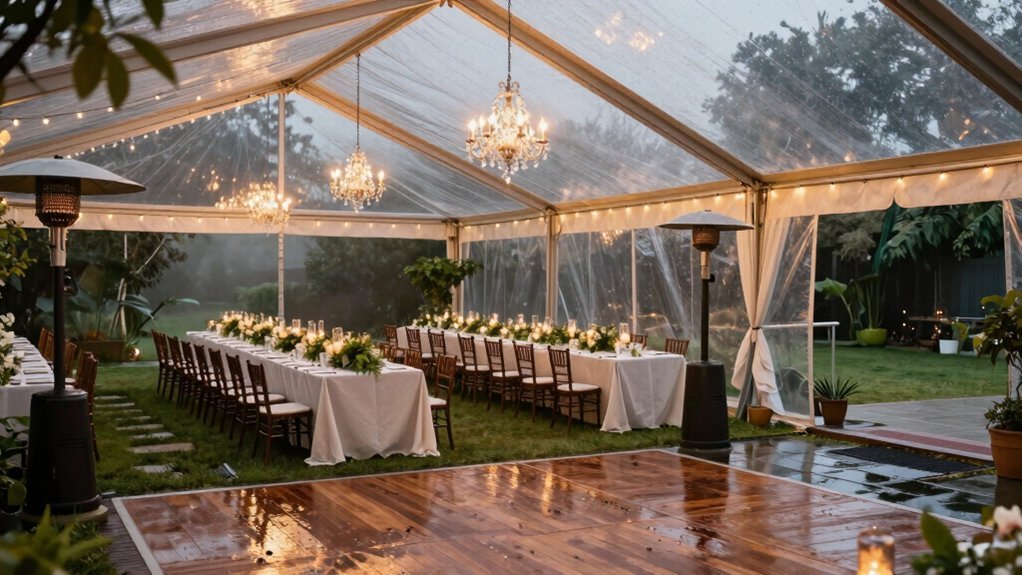
A tented reception area transforms your backyard wedding from a weather liability into an elegant, protected celebration space. Consider frame tents for unobstructed views without center poles, or choose pole tents for classic aesthetics if you have ample setup space.
Don’t overlook the ground beneath your feet. Install solid flooring or raised platforms to keep guests comfortable on damp or uneven terrain and prevent mud tracking. Add side panels or clear walls that shield from wind and rain while preserving scenic views.
Ensure proper ventilation and lighting throughout your tent. Coordinate directly with your venue and rental company for smooth setup. Plan for climate control options and create convenient entry and exit points. Always maintain a contingency plan to move guests indoors should weather forecasts suddenly change.
Pop-Up Covered Spaces for Flexible Protection
While permanent tent structures require significant planning, pop-up covered spaces offer nimble weather protection that can adapt to changing conditions. Pop-up canopies and frame tents with side panels maintain visibility while shielding guests from unexpected weather shifts.
Consider banded or modular structures that you can quickly deploy and reconfigure to create sheltered pathways between your ceremony and reception areas. For guest comfort on damp ground, install portable interlocking tiles or raised platforms underneath these temporary structures.
Clear vinyl walls preserve natural light and scenic views while blocking wind and rain. You’ll also want to incorporate temperature control—portable heaters for chilly evenings or fans for warmer days can be rented alongside your pop-up setup, ensuring comfort regardless of what the forecast brings.
Indoor-Outdoor Flow: Utilizing Home Interiors
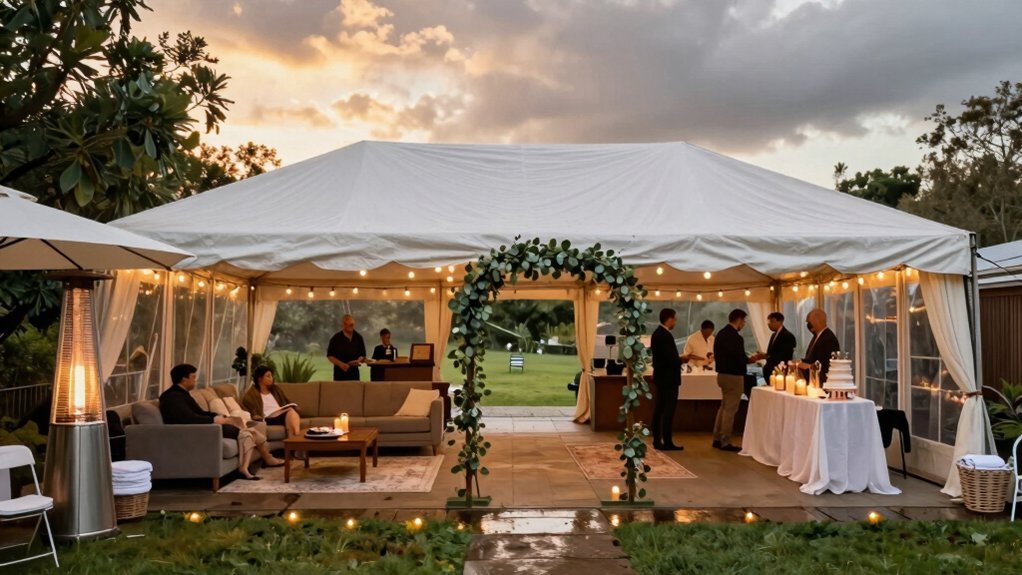
When planning your backyard wedding, you’ll want to choose a home with easily accessible indoor spaces that complement your outdoor setup. Create clear pathways between zones so guests can move smoothly from garden ceremonies to living room receptions if rain begins to fall.
Designate specific areas of your home for different weather scenarios, ensuring each space maintains your wedding’s aesthetic while offering practical shelter from unexpected elements.
Maximize House Space
The heart of any backyard wedding contingency plan lies in maximizing your home’s interior spaces. Prioritize areas that offer seamless transitions to the outdoors, like living rooms that open to patios through French doors or sliding glass panels. This creates natural flow between both environments while providing quick shelter when needed.
Ensure your interior can accommodate your full guest list if weather turns. Map out how ceremony seating or reception lounges can extend indoors with minimal disruption. Install weatherproofing at entry points with mats and protected walkways to prevent mud tracking.
Choose décor that works in both settings—weighted centerpieces, LED candles, and neutral color schemes that complement indoor-outdoor aesthetics. Create a clear route map for guests highlighting available indoor spaces and update it in real-time as conditions change.
Create Seamless Transitions
With your indoor spaces mapped and ready, let’s now focus on creating fluid movement between outdoor celebrations and indoor sanctuaries. Prioritize a designated indoor option adjacent to your yard—like a greenhouse or conservatory—to enable quick transitions without guests leaving the property.
| Transition Element | Outdoor Setup | Indoor Alternative |
|---|---|---|
| Guidance | Weatherproof signage | Staff coordinator |
| Visual Flow | Marked pathways | Matching decor |
| Comfort | Shade structures | Climate control |
| Key Features | Original arbor | Relocatable setup |
| Timing | Regular schedule | Rehearsed contingency |
Create clearly marked routes between spaces and maintain cohesive aesthetics in both areas. This preserves your ceremony’s ambiance during any weather-forced switch. Schedule a brief rehearsal with vendors to practice the indoor-outdoor flow, ensuring everyone knows their role if conditions change suddenly.
Designate Weather Zones
Successful weather-ready backyard weddings depend on strategically designated zones that create a seamless indoor-outdoor experience. Keep your main ceremony and seating outdoors while designating connected indoor spaces like your living room or greenhouse for overflow or quick transitions when weather shifts.
Connect these zones with covered walkways or verandas so guests can move between areas without encountering rain or mud. Ensure all entry points between your home and yard are accessible, clearly marked, and equipped with mats to prevent water tracking indoors.
Configure your lighting and sound systems to work consistently across both environments, eliminating the need to reconfigure equipment mid-event. Don’t forget to maintain comfortable temperatures throughout with portable heaters or fans, ensuring guests experience a consistent climate as they move between your carefully designated weather zones.
Weather-Resistant Décor and Setup Strategies
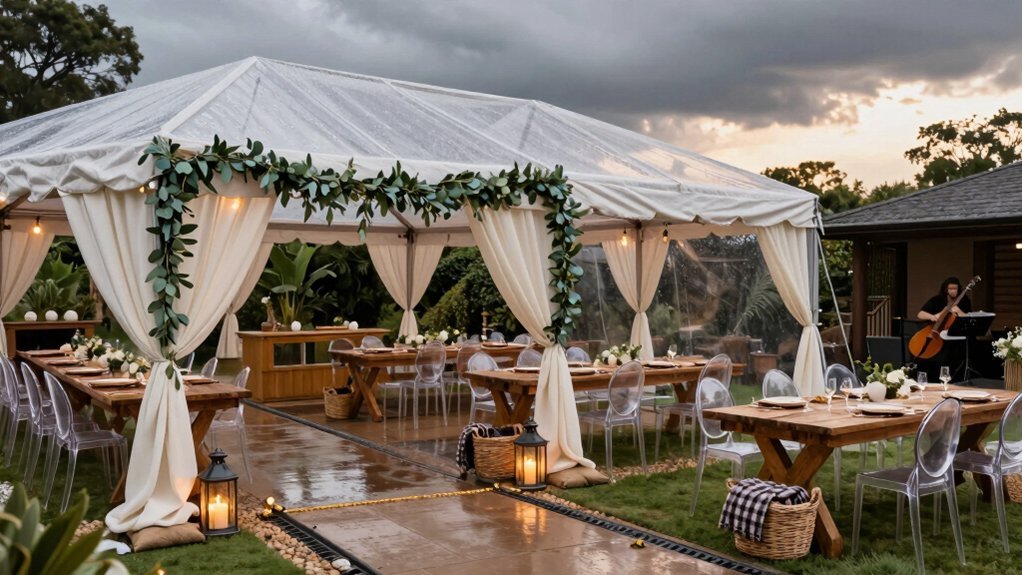
When planning your backyard wedding, you’ll need sturdy anchoring systems for all décor elements, including weighted bases for arches and stakes for signage that can withstand unexpected gusts. Wind-resistant floral designs featuring low-profile arrangements with sturdy blooms like calla lilies and orchids will maintain their beauty despite weather challenges. Waterproof your important signage by choosing acrylic materials over chalkboards and applying protective sealants to wooden displays, ensuring your directional and decorative elements remain pristine regardless of moisture levels.
Anchoring Décor Elements
Every beautiful backyard wedding element needs proper anchoring to withstand unexpected weather shifts. Select waterproof tablecloths and weighted centerpieces to prevent bunching or toppling in damp, windy conditions. Add weight to floral arrangements featuring humidity-tolerant blooms like calla lilies and orchids to keep them secure during light gusts.
Secure fabric decorations and drapes with Velcro or clips after testing for potential sagging. Choose moisture-resistant materials like acrylic for signage instead of chalkboards that may smudge or warp. For lighting, opt for weather-resistant options such as string lights or battery candles protected under glass.
Design your décor setup to be easily movable between indoor and outdoor spaces, maintaining cohesive aesthetics that allow for quick transitions if weather suddenly changes.
Wind-Resistant Floral Designs
Designing wind-resistant floral arrangements requires strategic planning to guarantee your backyard wedding decor remains picture-perfect regardless of weather conditions. Choose blooms with thin petals like calla lilies or orchids that offer minimal wind resistance, and opt for compact centerpieces that won’t catch the breeze.
- Use hurricane-tested floral supports and weighted bases to prevent toppling in gusty conditions
- Secure arrangements with hidden weights—mineral-filled vases work perfectly while maintaining aesthetics
- Anchor garlands and hanging elements with fishing line or clear threaded wire
- Select weatherproof containers like glass or acrylic vases paired with waterproof floral foam to withstand humidity
For additional protection, consider adding clear tent walls or canopy side panels that shield your flowers while preserving visibility and the outdoor atmosphere you desire.
Waterproof Signage Solutions
Creating waterproof signage solutions stands as a critical element of any backyard wedding contingency plan. Select moisture-friendly materials like acrylic for your displays, as traditional chalkboards will smear in humidity. When directing guests, opt for clear-panel signs with UV-resistant ink that won’t fade in sun or rain.
For table décor, choose waterproof tablecloths and weighted centerpieces that won’t wrinkle or shift in damp conditions. Secure fabric drapes with Velcro or clips to prevent moisture-induced sagging. Don’t forget to position all signage under cover to maintain readability.
| Sign Type | Weather Challenge | Weatherproof Solution |
|---|---|---|
| Welcome Signs | Rain exposure | Acrylic with sealed edges |
| Seating Charts | Humidity warping | Laminated or plastic-coated |
| Directional Signs | Sun fading | UV-resistant ink printing |
| Menu Displays | Moisture damage | Clear waterproof sleeves |
Guest Comfort Essentials for Changing Conditions
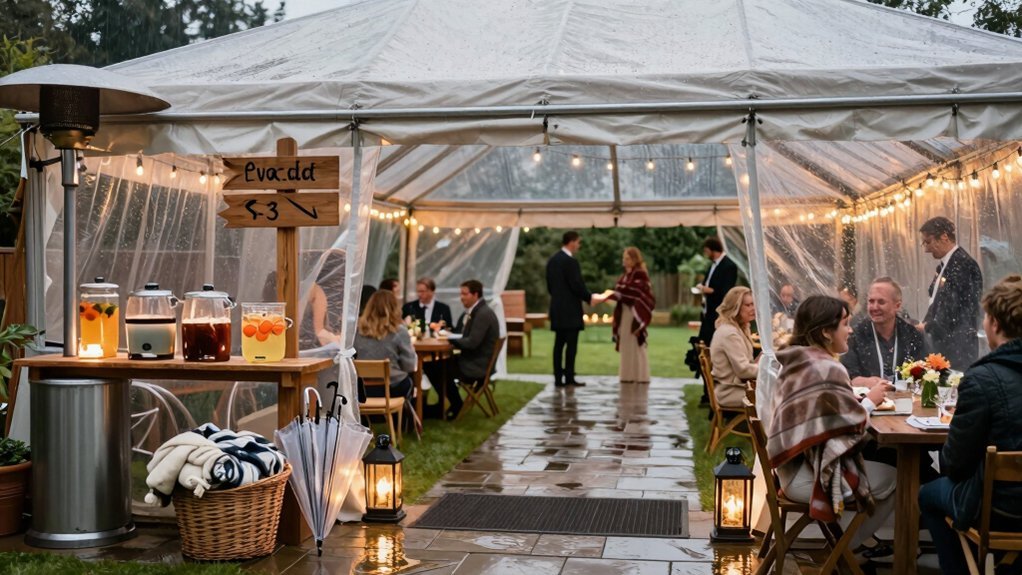
Weather uncertainty can quickly transform a dreamy backyard celebration into a challenging experience for your guests. Preparing comfort essentials ensures everyone stays happy regardless of sudden changes.
- Set up a warm beverage station with coffee, tea, and hot cider to combat unexpected chilly conditions or light rain
- Stock the welcome table with ponchos and extra umbrellas, along with clear signage directing guests to indoor spaces
- Create covered walkways between key areas to protect formal attire from rain and prevent muddy shoes
- Provide blankets or throws for outdoor seating areas and have towels available for wiping down damp chairs
Communicate your weather contingency plans in advance through your invitations or wedding website, so guests arrive prepared and know exactly where to go if conditions change.
Vendor Coordination for Quick Weather Transitions
Successful backyard weddings depend on how effectively you coordinate with vendors when weather threatens to change your plans. Share your complete contingency plan with all vendors beforehand and designate one point of contact for quick decision-making.
Meet with each vendor to confirm their specific adaptation strategies—whether it’s your caterer relocating food stations, photographer preparing indoor lighting setups, or florist creating weather-resistant arrangements. Schedule a practice run with your team to rehearse transitions between spaces and verify timing.
Ensure vendors have proper access to backup areas with necessary power, climate control, and lighting requirements. Establish a clear communication protocol for real-time updates, including emergency contact lists and directional signage for guests. This preparation will enable seamless transitions regardless of what Mother Nature delivers.
Tech Solutions for Real-Time Weather Monitoring
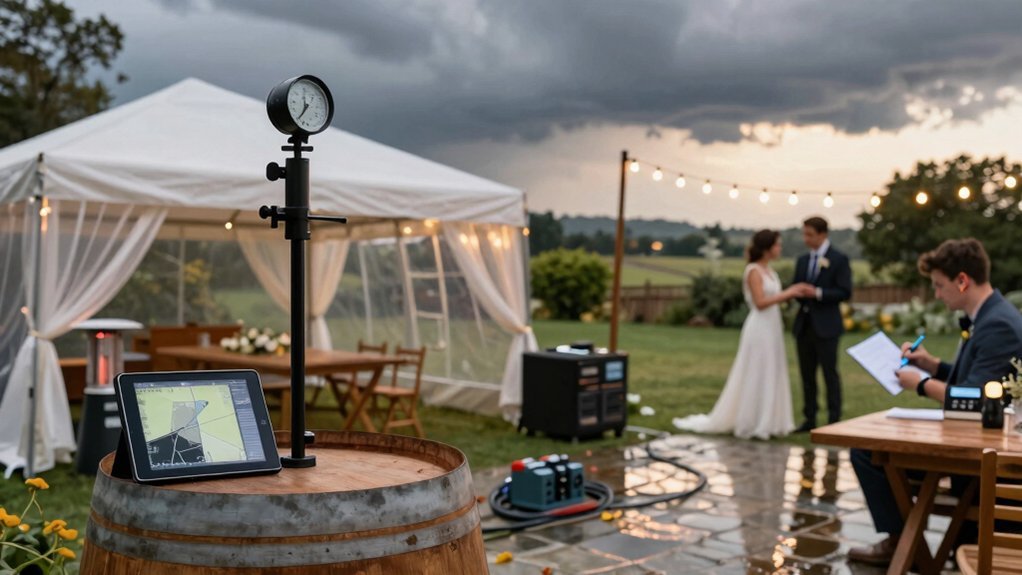
- How effectively you track changing weather conditions can make or break your backyard wedding. Implementing technology-driven solutions ensures you’re never caught off guard when skies threaten to change.
- Designate a dedicated weather lead who receives alerts, communicates changes to vendors, and makes decisions within your predetermined 24-48 hour window.
- Monitor multiple forecast sources daily, starting a week before your event and continuing through the wedding day for the most accurate predictions.
- Install real-time weather apps with push notifications on mobile devices and share access with key team members for consistent updates.
- Display a live forecast board at your venue or embed it on your wedding website so guests can check conditions and dress appropriately.
Frequently Asked Questions
What Is the 50 30 20 Rule for Weddings?
You’ll allocate 50% of your budget for essential expenses, 30% for flexible items you’d like, and 20% for savings or unexpected costs during wedding planning.
What if It Rains at a Backyard Wedding?
If it rains, you’ll need your backup plan. Set up tents with solid flooring, move guests to your indoor option, and ensure everyone knows the contingency arrangements beforehand.
What Is the 30 5 Rule for Weddings?
The 30/5 Rule means you’ll finalize your weather backup plan 30 days before your wedding and make the final call on using it within 5 hours of your outdoor ceremony.
Is $5000 a Good Budget for a Wedding?
$5,000 isn’t a typical full wedding budget—it’s more appropriate for contingency planning. You’ll need to prioritize essentials and may face tough choices about venue, food, and guest count.



Leave a Reply