
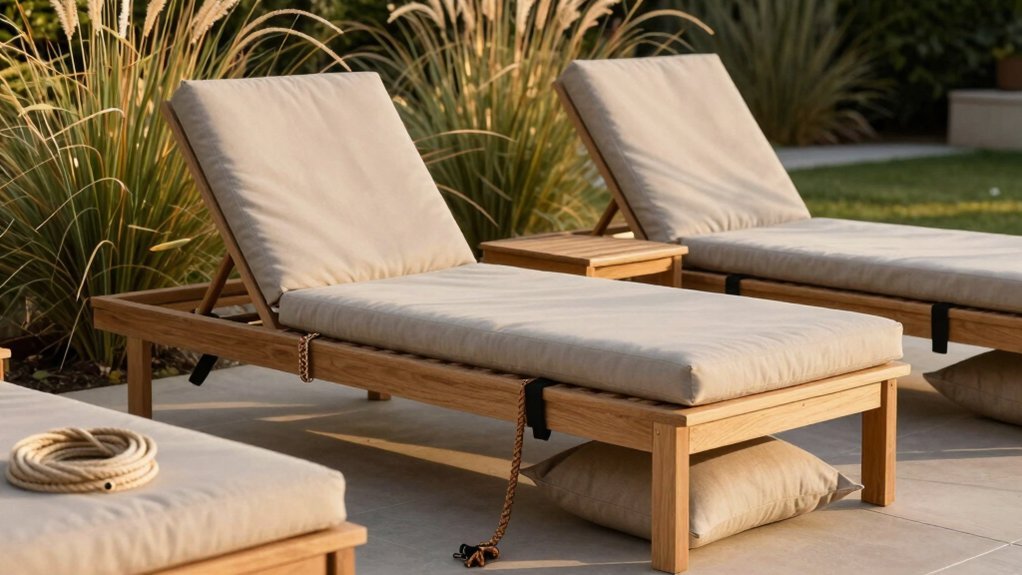
To secure outdoor cushions in windy conditions, attach them using Velcro strips that match your furniture color, or sew UV-resistant corner ties onto cushions and anchor to furniture. Non-slip mats increase friction on smooth surfaces, while zip ties work well with slatted furniture. For added stability, insert removable weighted pouches into cushion corners. Position furniture strategically, with heavier pieces blocking wind and creating sheltered arrangements. These techniques ensure your patio remains picture-perfect even on breezy days.
Best Attachment Methods for Windy Patios
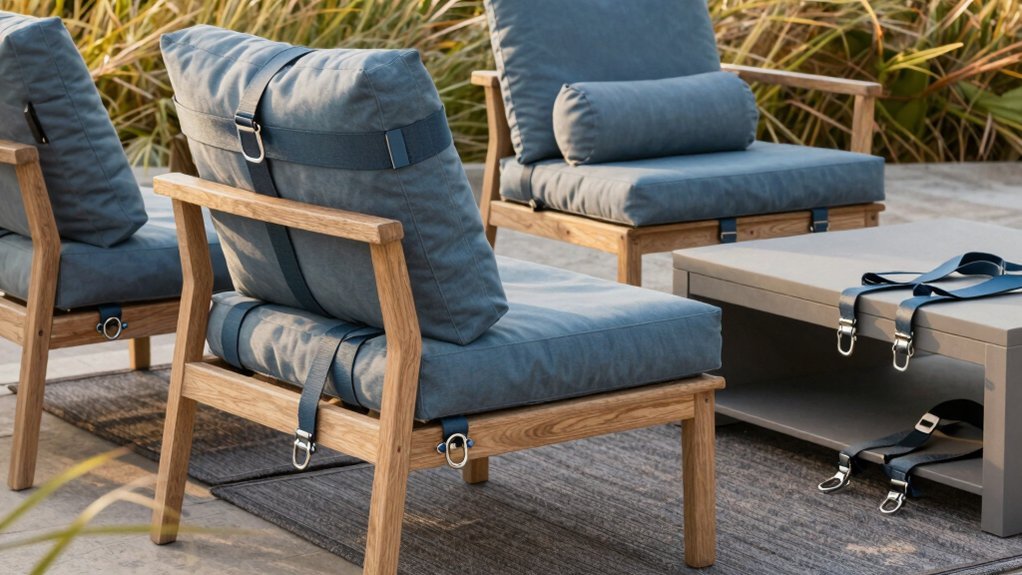
Why struggle with cushions that constantly blow away when you’re trying to relax? Secure them with these proven techniques for breezy environments.
Velcro strips offer an excellent solution by creating a strong bond between your cushion and furniture base without compromising design. They’re weather-resistant and require no visible alterations.
For maximum security, sew UV-resistant corner ties or loops onto cushions, then attach them to armrests or chair backs. This method works particularly well on wicker or metal furniture with natural attachment points.
If you prefer a non-permanent option, place non-slip mats underneath cushions to increase friction on smooth surfaces. For furniture with slats, zip ties provide sturdy anchoring, while elastic bungee cords offer flexibility when you need to quickly remove cushions for storage.
Velcro and Hook-and-Loop Solutions for Cushion Security
How exactly can you keep your outdoor cushions firmly in place when the wind picks up? Hook-and-loop fasteners like Velcro offer a practical solution that’s both effective and easy to implement.
Choose adhesive-backed Velcro strips that match your furniture’s color and size. Apply them to clean surfaces, firmly pressing both the cushion side and furniture base for maximum adhesion. For added security, consider sewing strips inside cushion covers while stapling matching pieces to the chair base.
Before committing to a full installation, test your Velcro solution on one or two cushions during breezy days to confirm it works effectively. If the adhesive weakens over time, you can always switch to sewn-on strips for a more permanent attachment method.
Creating DIY Ties and Straps for Outdoor Pillows
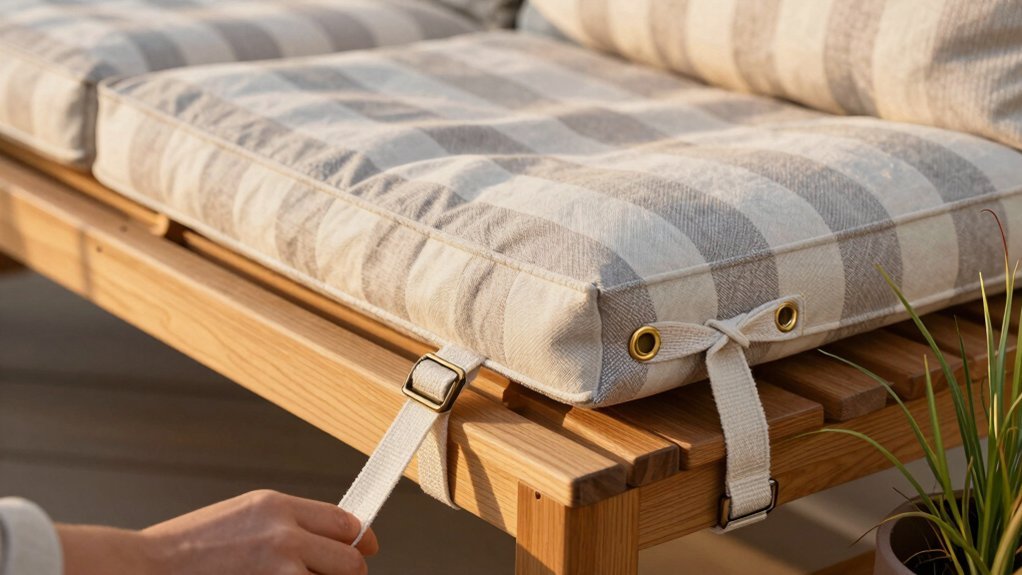
You can transform ordinary outdoor cushions into wind-resistant fixtures by creating your own fabric ties from weather-resistant materials like nylon webbing or marine-grade polyester. Attach these sturdy ties at each corner of your pillows, ensuring they’re long enough to wrap around furniture posts or through slats for maximum security. For a cohesive look, choose tie materials in complementary colors to your cushions, allowing these functional elements to double as decorative accents.
DIY Tie Solutions
When outdoor breezes threaten to send your cushions flying, DIY tie solutions offer an affordable and customizable way to keep them in place. Sew matching fabric strips onto your cushions to create ties that secure to armrests or chair backs without altering your furniture’s design.
| Material | Durability | Best For |
|---|---|---|
| UV-resistant cord | High | Year-round exposure |
| Fabric strips | Medium | Matching aesthetics |
| Pre-made corner ties | High | Quick installation |
For cushions without built-in ties, create your own by attaching strips that complement your cushion fabric. Ensure your ties are secure yet easy to undo when it’s time for cleaning or storage. Remember to check your ties regularly, as weather exposure and regular use can cause loosening over time.
Choosing Durable Materials
Durability stands as the cornerstone of effective outdoor cushion ties and straps. When selecting materials, opt for UV-resistant thread that won’t deteriorate under harsh sunlight, paired with matching fabric for a cohesive look. This combination ensures your cushions remain securely attached to furniture without unsightly slipping.
For maximum wind resistance, choose sturdy materials that can withstand repeated tying and untying. Consider using contrasting fabrics for your ties—they’re easier to spot when they need retying or maintenance. The ideal length allows for a complete knot or bow with enough slack for easy handling.
Remember to reinforce areas where ties pass through cushion fabric, as these points often experience the most wear. Add extra stitching or periodically re-sew ties to maintain their strength and functionality throughout the outdoor season.
Stylish Attachment Methods
Stylishly securing outdoor cushions doesn’t require professional upholstery skills—just a few creative attachment methods that blend function with aesthetics. Choose fabric strips that either complement or intentionally contrast with your cushion colors for a designer touch while providing practical wind resistance.
| Attachment Style | Best For |
|---|---|
| Corner ties | Windy locations |
| Looped straps | Chair backs/armrests |
| Matching ribbons | Decorative appeal |
| Hidden Velcro | Clean appearance |
| Convertible ties | Multi-purpose furniture |
For cushions without existing ties, sew coordinating fabric strips along the edges that can secure to furniture handles or bases. If you’re working with removable covers, add compatible fabric strips during the next wash cycle. Remember to check your ties regularly, as sun exposure and washing will eventually weaken even the sturdiest attachments.
Storage Options to Protect Cushions During Extreme Weather
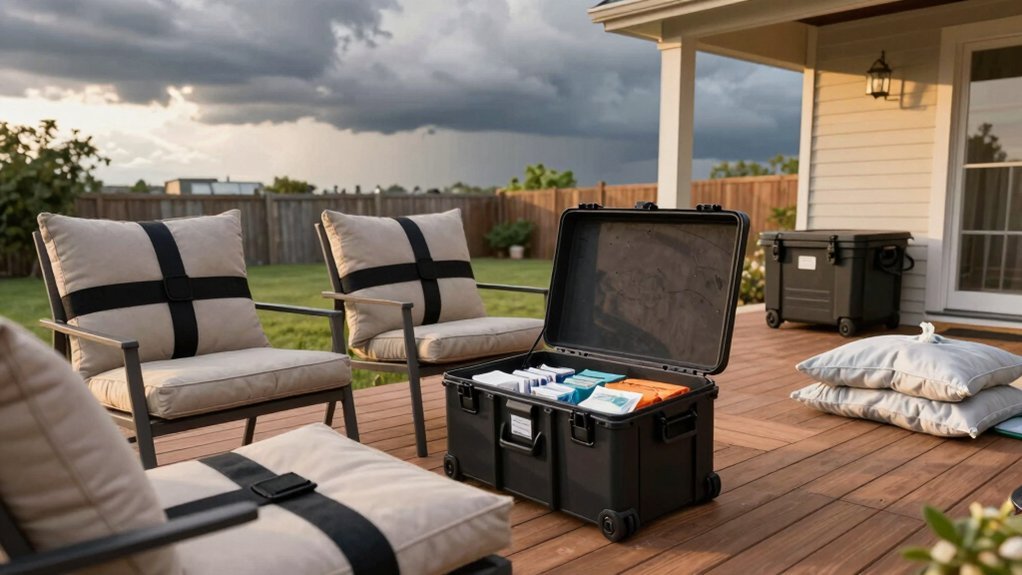
Protecting your outdoor cushions from extreme weather requires more than just securing them in place. When severe conditions threaten, storing cushions properly becomes essential for extending their lifespan.
Choose a dry, covered storage area like a deck box, garden shed, or garage to prevent moisture damage. Your storage container should accommodate all cushions at once and feature a secure, lockable closure. Before storing, ensure cushions are completely dry to prevent mildew growth.
For long-term storage, occasionally air out your cushions to prevent odors and discourage mold. Consider lining storage bins with cedar chips to naturally repel pests. Opt for ventilated storage solutions that allow airflow while protecting from the elements.
With these precautions, you’ll keep your outdoor cushions in excellent condition through extreme weather events and extend their usable life considerably.
Weatherproof Materials That Resist Wind Damage
While proper storage safeguards your cushions during extreme weather events, selecting the right materials from the start can prevent wind damage altogether. Choose furniture with wrought iron frames rather than lightweight plastic or hollow metal tubes that catch wind easily. Low-profile designs with solid, dense construction offer less surface area for gusts to push against.
| Material | Wind Resistance | Emotional Benefit |
|---|---|---|
| Wrought Iron | Exceptional | Peace of mind during storms |
| Solid Wood | Very Good | Natural beauty that stays put |
| Dense Polyresin | Good | Worry-free relaxation time |
For cushions, opt for those with built-in Velcro attachment points that secure to both the cushion and furniture frame. When combined with protective covers featuring adjustable straps and elastic hems, you’ll create a wind-resistant seating area that remains in place even on breezy days.
Weight-Adding Techniques for Lightweight Cushions
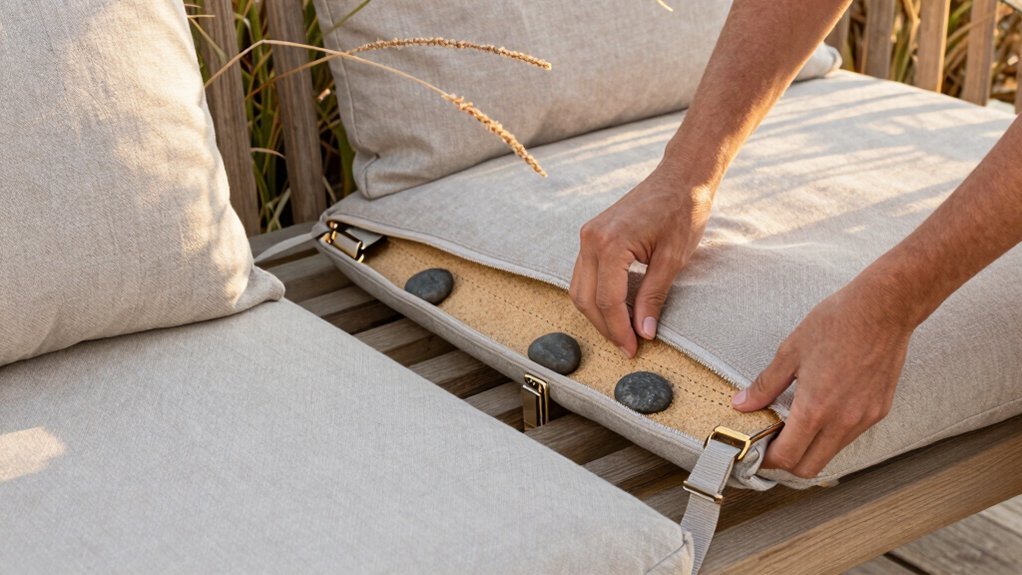
You’ll find hidden weighted pouches sewn into cushion corners provide resistance without compromising comfort or appearance. Removable weight inserts offer flexibility, allowing you to adjust ballast based on weather conditions or when cleaning covers. These discrete solutions maintain your cushions’ aesthetic appeal while preventing them from becoming airborne during unexpected gusts.
Hidden Weighted Pouch
Ever wondered how to keep those lightweight outdoor cushions from becoming airborne during a gentle breeze? A hidden weighted pouch is your solution.
Create a discreet pouch filled with sand, small pebbles, or fishing sinkers, then place it inside your cushion’s zippered cover. This adds substantial mass without changing the cushion’s appearance. Position the weight centrally for balanced distribution and optimal stability.
For convenience, use reusable, sealable pouches that you can remove when cleaning or drying after rain. Sew or securely close the pouch to prevent leakage that could damage your cushions or patio.
Remember to inspect your pouches regularly for signs of wear. If you notice thinning fabric, replace the weights immediately to prevent punctures that could ruin your cushion.
Removable Weight Inserts
For those who prefer more flexibility than permanent weighted solutions, removable weight inserts offer the perfect balance between stability and convenience. These weights can be placed inside cushion covers or linings to add ballast without changing your outdoor décor’s appearance.
Common insertion methods include:
- Small fabric sandbags that tuck discreetly into corner pockets
- Zippered compartments containing moisture-resistant weight materials
- Sealed pouches filled with dry sand or pebbles that slip into interior pockets
When adding these weights, distribute them evenly across multiple cushions or along seams to prevent tipping. You’ll want to choose materials that resist moisture and rust for longevity. The best part? You can still easily remove the cushion covers for laundering or replacement while maintaining that perfect wind-resistant weight.
Maintaining Cushion Fasteners Throughout the Season
Why invest time securing your outdoor cushions if you won’t maintain their fasteners? Regular inspection of Velcro, ties, and zip ties is essential for preventing wind disasters. When you notice wear, promptly re-sew or replace these components to ensure reliable attachments.
The difference between secured cushions and windblown disasters often comes down to simple fastener maintenance.
After cleaning or periods of heavy use, take a few minutes to re-tighten all straps and ties. If adhesive-backed Velcro begins failing, upgrade to sewn-on hook-and-loop strips for superior longevity.
Before your outdoor entertainment season peaks, test your securing methods on particularly windy days. This proactive approach helps identify weak points before they become problems.
Keep a small maintenance kit with spare Velcro, thread, and zip ties accessible for quick repairs. These simple maintenance habits will extend the life of your fasteners and keep cushions firmly in place.
Strategic Furniture Placement to Minimize Wind Exposure
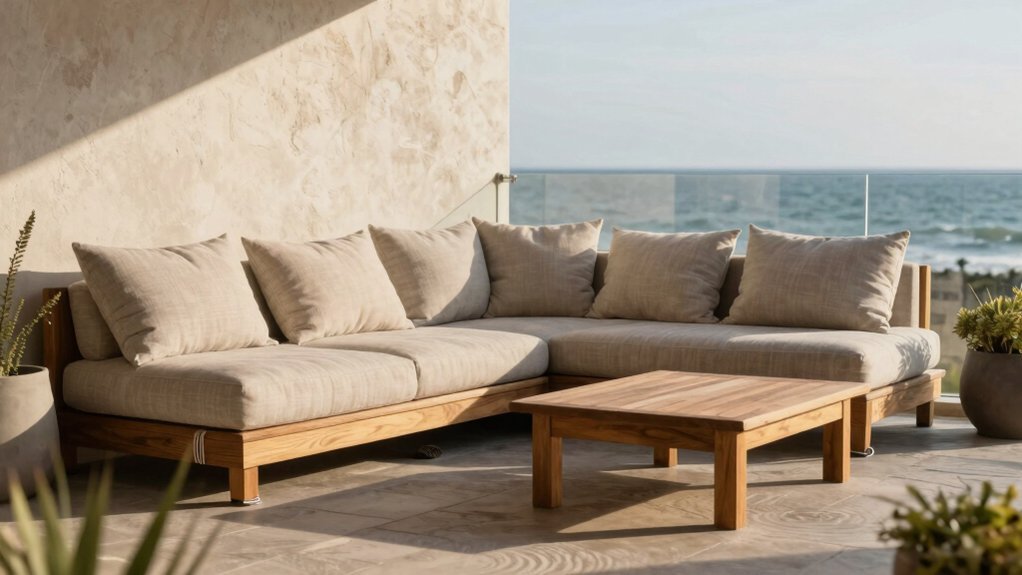
Even the most secure cushion fasteners can’t fully protect against powerful gusts if your furniture is poorly positioned. Consider your patio layout as your first line of defense against wind damage.
Place heavier furniture pieces on the windward edge to create a natural windbreak for lighter cushioned items. You’ll get better protection by aligning chairs to face away from prevailing winds, reducing the sail effect of backrests.
- Tuck furniture into sheltered corners near walls or planters to block direct wind impact
- Create nesting or corner-stacking arrangements that minimize exposed surface area
- Position cushions on the leeward side of your outdoor setup, under protective overhangs when possible
This strategic positioning works alongside your fastening systems to keep cushions in place during breezy conditions.
Frequently Asked Questions
How to Keep Outdoor Patio Cushions From Blowing Away?
Secure your cushions with Velcro strips, corner ties, or non-slip mats underneath. You can also add removable weights inside covers or use zip ties through the fabric as needed.
How Do I Get My Outdoor Cushions to Stay in Place?
Attach Velcro strips to cushions and chairs, sew corner ties to secure to furniture, use zip ties through cushion bottoms, place non-slip mats underneath, or add discreet weights inside covers.
How to Secure Outdoor Furniture From Wind?
Anchor your furniture with weights, ground stakes, or deck anchors. Choose low-profile designs with solid frames. Secure cushions using Velcro or ties and store them indoors during extreme weather.
How to Weigh Down Outdoor Pillows?
You can weigh down outdoor pillows by adding internal weights inside zippered covers, using non-slip mats beneath them, or securing them with decorative straps to furniture legs.

Leave a Reply