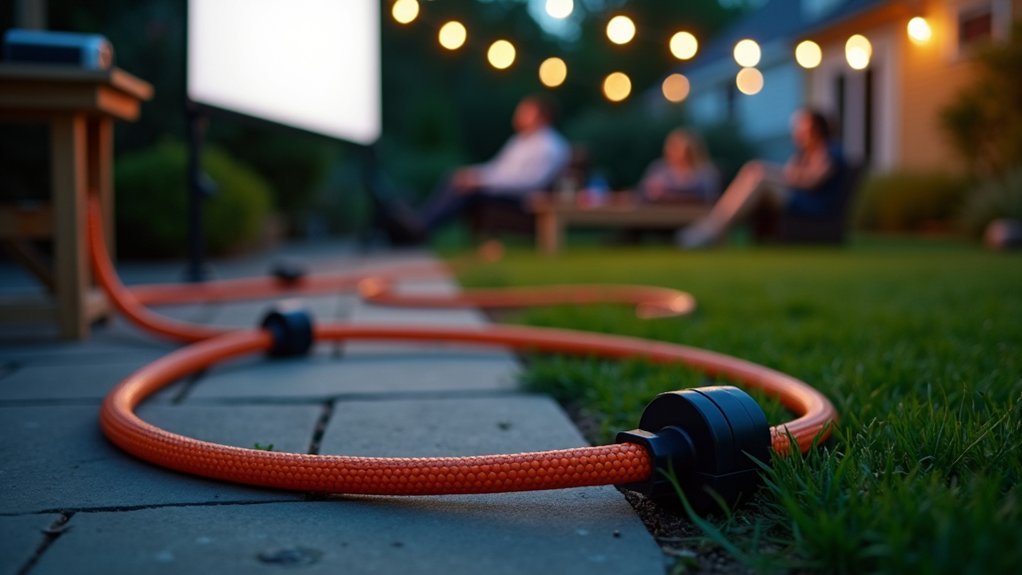
When setting up an outdoor projector, you’ll want to choose the right gauge extension cord—use 14-gauge for runs over 50 feet or projectors drawing more than 300 watts. Keep all connections protected from moisture with weatherproof covers, and measure your actual cord path before purchasing. Secure cords along pathway edges rather than across walking areas, and never daisy-chain multiple cords together. Each of these tips plays a critical role in keeping your setup safe.
Choose the Right Gauge Extension Cord for Your Projector’s Wattage
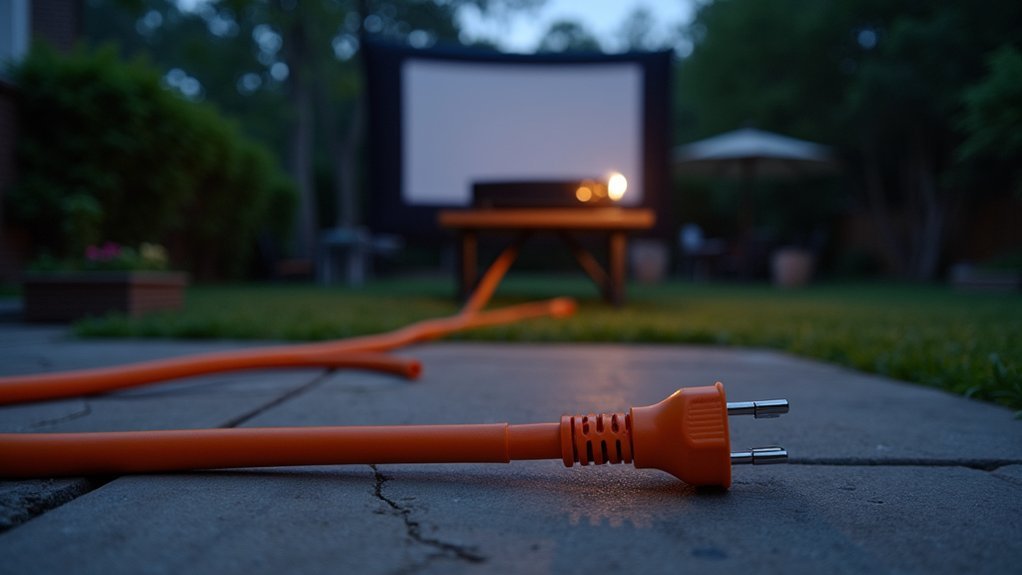
Matching your extension cord’s gauge to your projector’s wattage prevents overheating, voltage drops, and potential fire hazards. Check your projector’s power specifications, typically found on the label or in the manual. Most projectors draw between 200 and 400 watts.
For runs under 50 feet with projectors under 300 watts, a 16-gauge cord works well. If you’re powering a higher-wattage projector or running cable beyond 50 feet, step up to 14-gauge. For distances exceeding 100 feet, use 12-gauge to maintain safe power delivery.
Remember that lower gauge numbers indicate thicker wires capable of handling more current. Don’t assume any cord will do—an undersized extension cord can damage your projector, trip breakers, or create dangerous heat buildup in the cable itself.
Protect Your Outdoor Extension Cord Connections From Moisture
When you’re setting up an outdoor projector, moisture poses one of the biggest threats to your extension cord connections. Even light dew can cause electrical shorts or create dangerous shock hazards.
Use weatherproof cord covers or connection boxes designed for outdoor use. These plastic enclosures seal the junction where your cords meet, keeping water out while allowing proper ventilation.
If you don’t have a dedicated cover, elevate connections off the ground using bricks or hooks. Never let plugs rest in puddles or on wet grass.
Apply electrical tape around connection points for an extra moisture barrier. Wrap it tightly, overlapping each layer by half.
After your movie night, disconnect everything and store cords indoors to prevent long-term moisture damage and extend their lifespan.
Measure the Distance Between Your Power Source and Projector Location
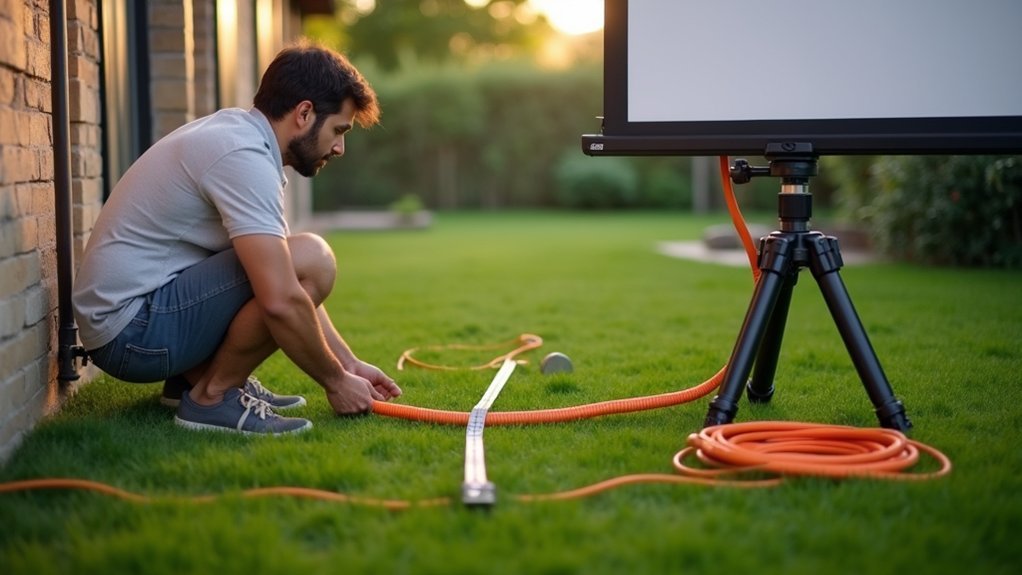
Before you grab the first extension cord you find, you’ll need to know exactly how far your projector sits from the nearest outlet. Grab a measuring tape and map the actual path your cord will travel—not just the straight-line distance. Account for routing around furniture, along fences, or across walkways.
- Add 10-15% extra length to your measurement for slack and unexpected obstacles
- Avoid daisy-chaining multiple cords, which creates fire hazards and voltage drops
- Consider elevation changes if your cord runs up steps or over landscaping features
Once you’ve calculated the total distance, you can select the appropriate cord gauge. Longer runs require thicker wires to maintain proper voltage delivery and keep your projector running safely at full brightness.
Secure Extension Cords Safely Along Your Backyard Pathway
Along your backyard pathway, loose extension cords create serious tripping hazards for guests finding their way to their seats after dark. You’ll want to secure every inch of cable before your movie night begins.
Run cords along pathway edges rather than across walking areas. Use outdoor-rated cord covers or stake them down with garden staples every few feet. If you must cross a walkway, bury the cord under a rubber cord protector designed for foot traffic.
Avoid wrapping cords around trees or metal objects, which can damage insulation. Keep connections elevated off damp ground using cord connection covers or simple plastic containers with cutouts.
Check your secured cords before each use, as weather and lawn maintenance can dislodge them between screenings.
Avoid Daisy-Chaining Multiple Extension Cords Together
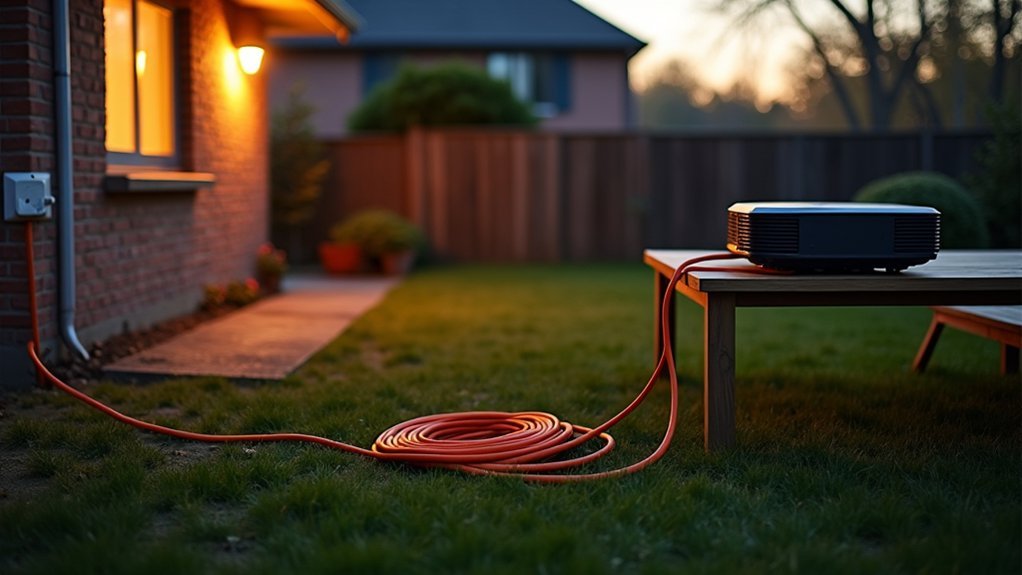
Though it might seem convenient to connect several shorter extension cords to reach your projector setup, this practice creates dangerous electrical risks you shouldn’t ignore.
Daisy-chaining increases resistance, causes voltage drops, and generates excess heat that can melt insulation or spark fires.
Why you should avoid daisy-chaining:
- Overloaded connections can overheat and cause electrical fires in dry outdoor conditions
- Voltage drops reduce your projector’s performance and may damage internal components
- Multiple connection points increase the chance of cords disconnecting during your movie night
Instead, invest in a single heavy-duty extension cord that’s long enough to reach from your outlet to your projector.
Choose a cord rated for outdoor use with the appropriate gauge for your projector’s power requirements.
You’ll protect your equipment and keep your family safe.
Frequently Asked Questions
Can I Leave My Outdoor Extension Cord Plugged in Overnight After Movie Night?
You shouldn’t leave your outdoor extension cord plugged in overnight. Unplug it after each use to prevent moisture damage, reduce fire risks, and extend its lifespan. Store it in a dry location until your next movie night.
What Is the Maximum Length Extension Cord Safe for Outdoor Projector Use?
You should use a 12-gauge extension cord no longer than 100 feet for most outdoor projectors. If you’re running a longer distance, you’ll need a thicker 10-gauge cord to prevent voltage drop.
Are Flat Extension Cords Better Than Round Ones for Outdoor Projector Setups?
Flat extension cords aren’t necessarily better than round ones for your outdoor projector setup. You should prioritize proper gauge, outdoor rating, and length over shape. However, flat cords do lay flatter, reducing tripping hazards.
How Do I Store Extension Cords Properly to Extend Their Lifespan?
You should loosely coil your extension cords in large loops, avoiding tight bends that damage internal wiring. Store them in a cool, dry place away from direct sunlight, and hang them rather than leaving them on floors.
Can I Use an Indoor Extension Cord Outside if the Weather Is Dry?
You shouldn’t use indoor extension cords outside, even in dry weather. They lack weatherproof insulation and grounding features, making them fire and shock hazards. Always choose cords rated for outdoor use to stay safe.