

You can make your deck safer for elderly family members by focusing on five key upgrades. Start with slip-resistant composite decking and keep board gaps under 1/4 inch. Install sturdy handrails at 34–38 inches high on both sides of stairs. Add gentle ramps with a 1:12 slope ratio instead of steps. Use motion-activated lighting along walkways and stairs. Finally, choose seating with 17–19 inch seat heights and sturdy armrests—each improvement builds toward a more accessible outdoor space.
Install Wide and Slip-Resistant Deck Surfaces
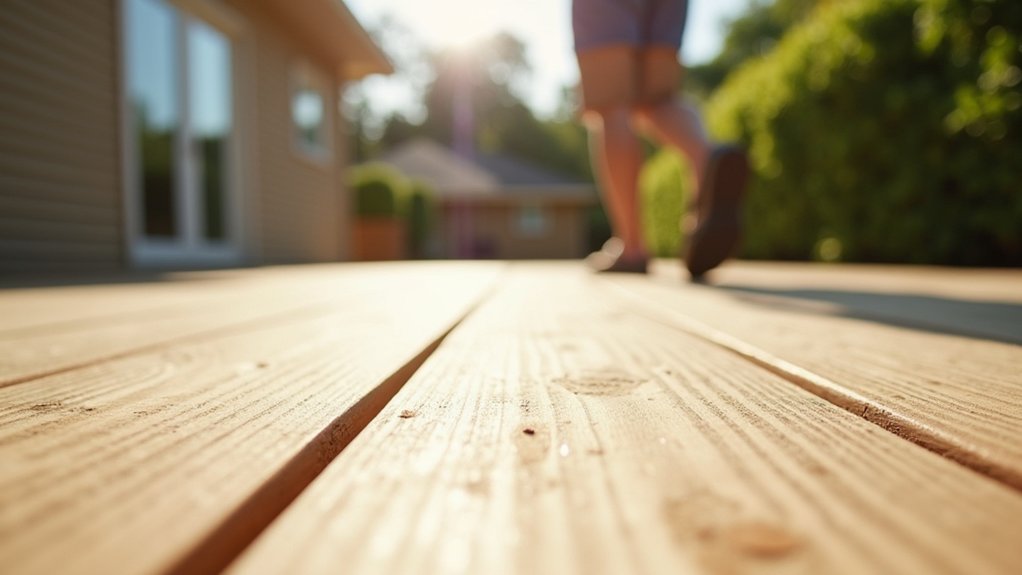
When you’re designing a deck for elderly users, surface selection makes all the difference between confident movement and dangerous falls. You’ll want to choose composite decking or textured wood with slip-resistant coatings that maintain traction even when wet.
Aim for deck boards at least six inches wide to create a stable walking surface. Narrower boards create more gaps and seams that can catch walkers, canes, or unsteady feet. Keep gaps between boards under a quarter inch to prevent mobility aids from getting stuck.
Apply anti-slip strips or textured paint in high-traffic areas, especially near doorways and stairs. You should also consider matte finishes over glossy ones, as they reduce glare that can disorient elderly users with vision challenges. Regular maintenance removes moss and algae that create slippery conditions.
Add Sturdy Handrails and Grab Bars Throughout
Sturdy handrails and grab bars consistently rank among the most critical safety features you’ll add to an age-friendly deck. Install handrails on both sides of stairs and ramps, ensuring they’re between 34 and 38 inches high for ideal grip. Choose rails with rounded profiles that measure 1.25 to 1.5 inches in diameter—this width allows elderly users to wrap their fingers securely around the bar.
Position grab bars near doorways, seating areas, and any elevation changes where balance support becomes essential. Anchor all hardware directly into structural framing, not just surface boards, to withstand significant weight and force. Select materials that stay cool in summer heat and provide texture for wet conditions. Contrast rail colors against deck surfaces so users with visual impairments can locate them easily.
Incorporate Gentle Ramp Access Instead of Stairs
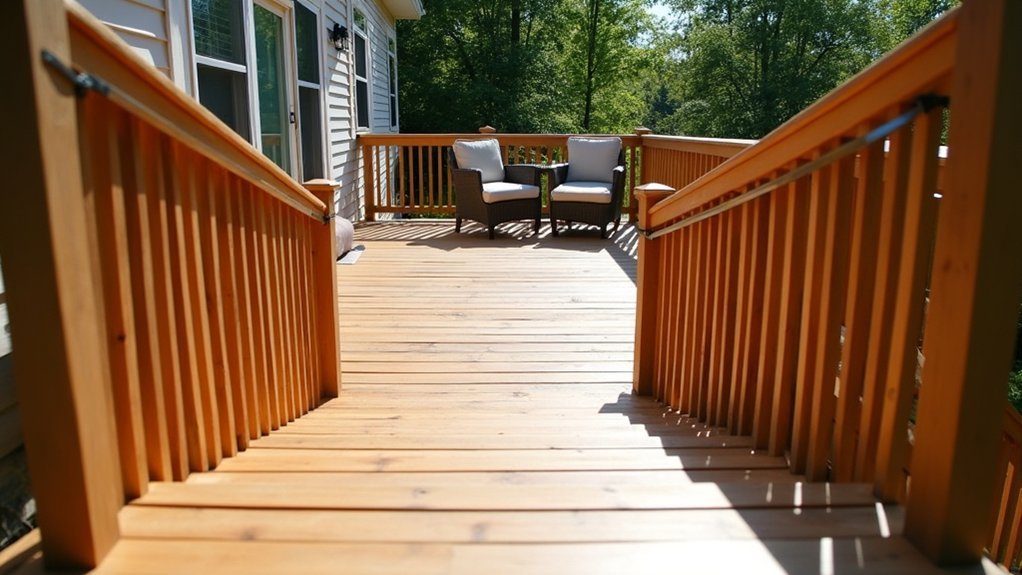
Because stairs present significant fall risks for elderly individuals with mobility challenges, replacing them with gentle ramps offers a safer, more accessible entry point to your deck.
You’ll want to follow ADA guidelines, which recommend a 1:12 slope ratio—meaning one inch of rise for every twelve inches of ramp length.
- Install non-slip surfaces using textured materials or grip strips to prevent falls during wet conditions
- Ensure minimum width of 36 inches to accommodate wheelchairs and walkers comfortably
- Add edge protection with raised borders to prevent wheels from slipping off
- Include level landing platforms at top and bottom for safe approaches
- Choose durable, weather-resistant materials like composite decking or treated lumber for longevity
You should also add handrails on both sides for additional stability and confidence.
Ensure Proper Lighting for Safe Navigation
Adequate lighting often makes the difference between a safe deck experience and a dangerous fall for elderly users. You’ll want to install lights along all walkways, stairs, and connection points where surfaces change. Motion-activated fixtures work particularly well since they eliminate the need to fumble for switches in the dark.
Consider adding LED strip lighting beneath railings and along step edges. These low-profile options create clear visual boundaries without causing glare that can temporarily blind aging eyes. You should also place lights at consistent intervals to prevent confusing shadow patterns.
Don’t forget about light switches—position them at accessible heights and consider illuminated switches that you can find easily. Solar-powered path lights offer an economical solution for areas where running electrical wiring proves difficult.
Choose Low-Maintenance Seating With Comfortable Heights
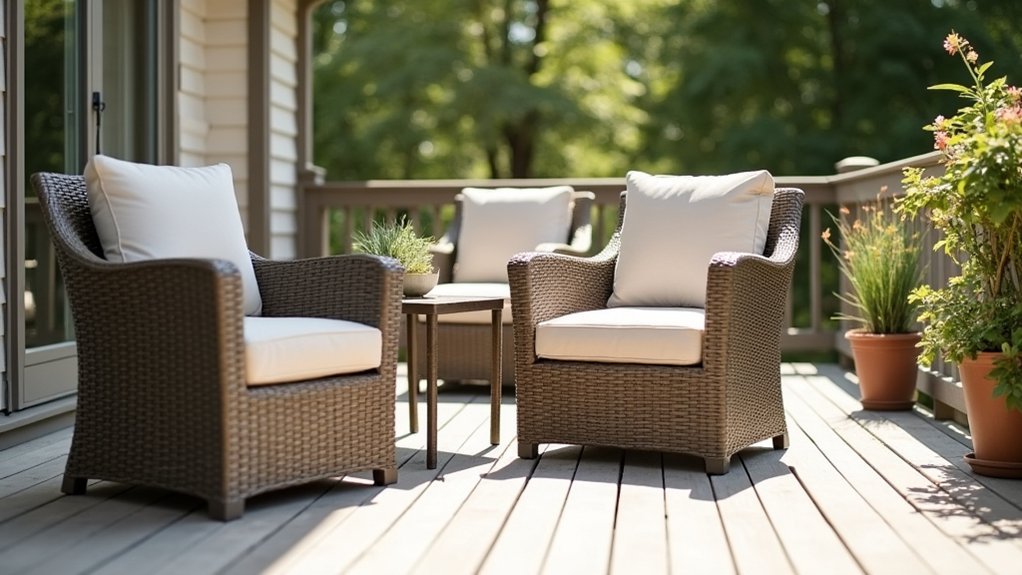
Once you’ve addressed lighting concerns, you’ll want to turn your attention to seating—another key factor in deck safety and comfort for elderly users. The right seating makes it easier to sit down and stand up without strain or risk of falling.
Select chairs with seat heights between 17-19 inches, which align with standard wheelchair heights and reduce joint stress. Opt for materials that won’t require constant upkeep or become slippery when wet.
Consider these essential features when choosing deck seating:
- Sturdy armrests that support getting up and sitting down
- Weather-resistant materials like powder-coated aluminum or resin wicker
- Non-slip surfaces to prevent sliding
- Firm cushions that don’t sink too deeply
- Stable bases without rocking or swiveling mechanisms
Frequently Asked Questions
What Is the Ideal Deck Size for Elderly Users With Mobility Aids?
You’ll want a deck that’s at least 5 feet wide to accommodate wheelchairs and walkers comfortably. Aim for a minimum of 60 square feet of clear space so you can turn and maneuver your mobility aid easily.
How Much Does It Typically Cost to Make a Deck Accessible?
You’ll typically spend $1,500 to $5,000 to make your deck accessible. Costs vary based on adding ramps, widening doorways, installing grab bars, and choosing slip-resistant decking materials. Permits may add extra expenses.
Are There Tax Credits Available for Elderly Accessibility Home Modifications?
You can claim federal tax credits for accessibility modifications through the Medical Expense Deduction if costs exceed 7.5% of your adjusted gross income. Some states offer additional credits, so you’ll want to check local programs.
What Permits Are Required for Deck Accessibility Renovations?
You’ll typically need a building permit for deck accessibility renovations, especially when adding ramps, widening doorways, or modifying structural elements. Contact your local building department to determine specific requirements, as regulations vary by municipality.
How Often Should Accessibility Features Be Inspected for Wear and Safety?
You should inspect accessibility features every three to six months for wear and safety. Check handrails, ramp surfaces, non-slip coatings, and hardware regularly. After severe weather, you’ll want to perform additional inspections to catch any damage.