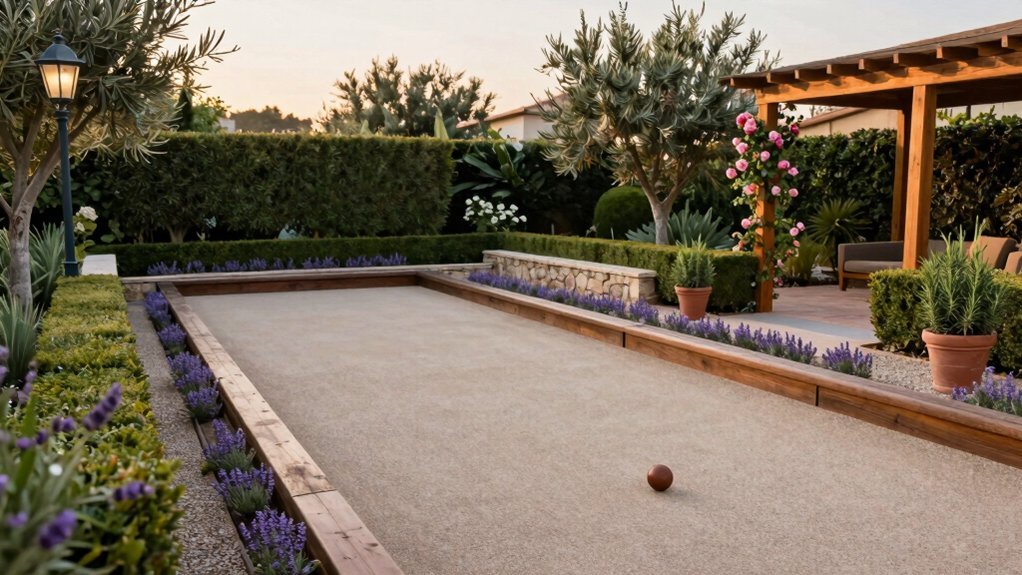
Design a long, narrow bocce court that anchors sightlines from your house and threads into patios, shade, and edible gardens. Choose proportions like 10 by 60 to fit the site, then align borders with stone, wood, or block. Pick a durable, neutral surface such as oyster shell or decomposed granite. Add low‑water plantings, integrated lighting, seating, and pathways. Include signage, storage, and subtle branding. Curious how these elements work together? you’ll discover more soon.
Location and Site Integration
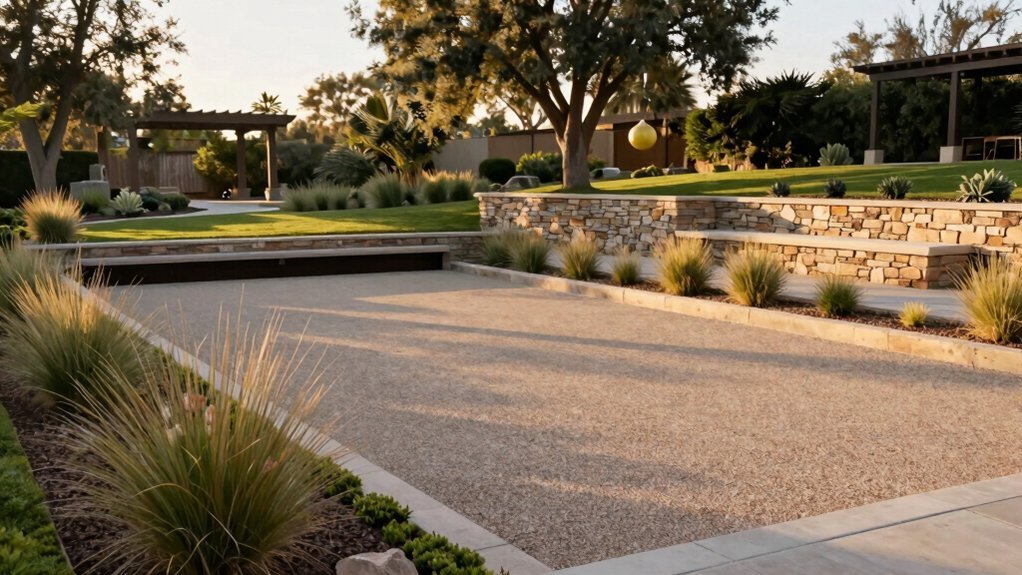
Where should you place a bocce court to blend it with the landscape and daily life? You pick flat ground with a long, narrow footprint—about 50 to 100 feet long and 15 feet wide—to keep true ball rolls. Position it near patios or bars to boost social play and seamless indoor-outdoor circulation. Align the court with your views or landscape features so it reads as a central design element rather than a tucked-away feature. Tie it into existing site elements like shade from trees, retaining walls, and nearby edible gardens for cohesive aesthetics. Plan daily-use flow by keeping easy access from primary gathering zones while preserving sightlines from indoors. This approach supports comfort, conversation, and a natural, inviting landscape rhythm for years of enjoyment.
Court Size and Proportion With the Home
How big should your bocce court be to complement your home rather than compete with it? Aim for proportion, not sheer size. Official courts run 13 by 91 feet, but most yards fit 10–13 feet wide and 40–91 feet long. For many suburban lots, a 10 by 60 court hits a balanced, space-efficient middle ground that respects surrounding architecture. Keep the court long and narrow to align sightlines from the house toward views, so it sits between social areas and the landscape backdrop. Scale matters: match the court to your house and adjacent features to avoid overwhelming or underutilizing space.
In Denver-area designs, a compact 8 by 40 or even 6 by 30 can still provide functional play while integrating with house layouts beautifully.
Surface Material Options and Playability
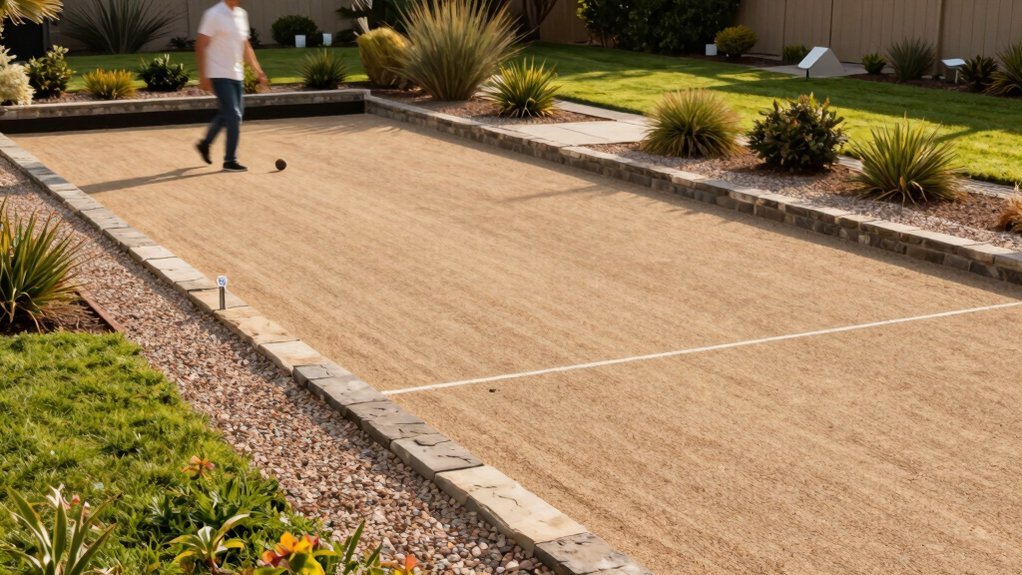
You’re weighing oyster shell surfaces for playability, because they’re durable and highly porous, giving natural drainage that keeps bocce interesting.
The pros are drainage and a traditional feel, but the cons are higher cost and more maintenance in some regions. As you compare, consider climate, maintenance capacity, and budget to see if oyster shells fit your court.
Oyster Shell Pros
Why are oyster shells the pros’ surface of choice for bocce courts? You get a durable, professional finish that keeps a consistent, smooth roll under foot and ball. The natural porosity delivers reliable drainage, minimizing puddles and mud after rain and keeping play predictable.
An oyster-shell court delivers an authentic aesthetic that fits desert or landscape palettes, pairing nicely with stone walls and plantings for a cohesive landscape design. The light, natural tones blend with surrounding materials, helping the court look timeless rather than engineered.
Players notice the precision underfoot and the familiar feel that seasoned bocce crews expect, supporting true bocce etiquette and turn-taking rhythm. In short, they perform beautifully.
Oyster Shell Cons
Are oyster shells worth the extra cost and ongoing upkeep, given their durability and authentic feel? Yes, but you’ll face trade-offs. The primary drawbacks are higher price and limited regional availability, which can complicate sourcing for distant sites. The may also deal with more maintenance than some alternatives to keep the surface level and free of ruts after rain or heavy use.
Shipping is another hurdle, often expensive and logistically challenging, adding to long‑term costs and planning needs. Compared with other surfaces, oyster shells deliver authentic play feel and drainage, but you must accept ongoing care and a reliable supply chain to avoid interruptions. If sourcing fluctuates or downtime occurs, you’ll need contingency plans, alternative materials, and a clear maintenance schedule to stay level.
Color Palette and Material Harmony
Choose a color palette that harmonizes with surrounding architectural materials and plantings, using neutral court surfaces like decomposed granite or oyster shell and border tones in stone, wood, or landscape-block colors. You’ll also use contrasting ball and accent colors to stand out against desert or landscape palettes, enhancing visual clarity during play.
Integrate the court as a central landscape element by aligning its placement with views and situating it between the house and social spaces like patios or edible gardens. Match the court’s surface and border materials to surrounding textures—stone walls and planting beds—to create a seamless indoors-outdoors transition.
Balance scale so the court feels integrated, aiming for a typical width of 10–13 ft and length of 40–91 ft, that suit your site well.
Border and Edge Treatments
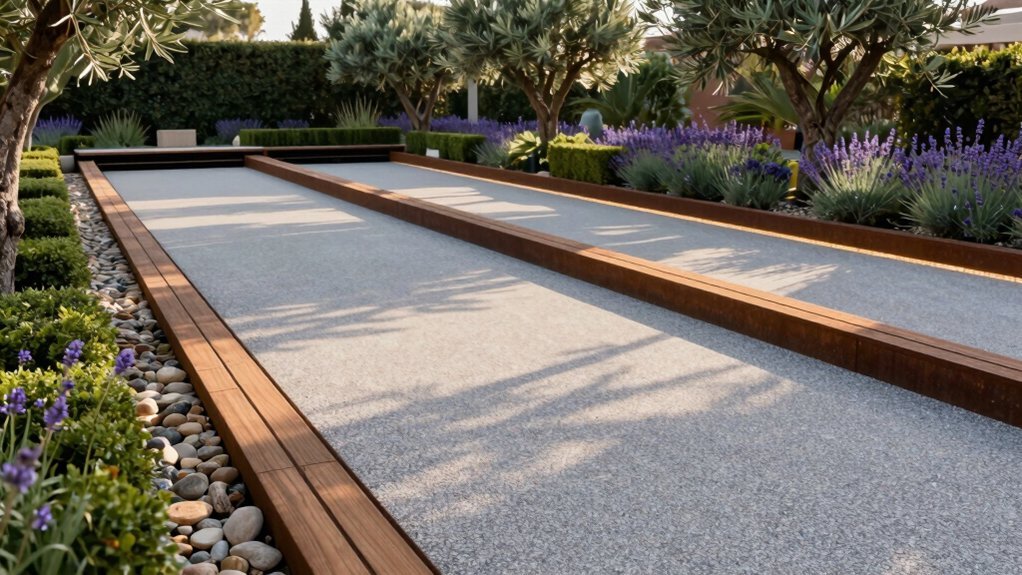
Border and edge treatments complete the look by containing the playing surface and tying the court to the surrounding landscape.
Borders are 6–8 inches high and can be concrete, wood, timbers, or block to match your surrounding style. Wood borders offer a natural, warm look but require sealing to prevent weathering. Landscape timbers provide a cost-effective, lightweight border that’s easier for DIY. A flush or slightly above-surface border contains playing materials and defines a crisp edge. Border design coordinates with adjacent hardscape to create a seamless transition between court and landscape.
| Border Type | Key Benefit |
|---|---|
| Concrete | Durable and finishes flush with the surface well |
| Wood | Warm look but needs sealing and regular upkeep today |
| Timbers | Lightweight, cost-effective, easy for DIY projects overall today |
| Block | Seamless with landscape walls and edges and durable |
| Flush Edge | Defines a crisp perimeter and contains materials properly |
Landscaping Integration: Plants and Textures
Start by choosing a plant palette that harmonizes with your court’s colors and surrounding hardscape, using drought-tolerant options like agave, lavender, and yucca for texture without crowding play. Layer textures with gravel, mulch, and ornamental grasses, and pair groundcovers with a gravel base to keep a cohesive desert or Mediterranean theme.
Add vertical interest—palm trees or mesquite—near the court to frame views and create shade without overhangs that interfere with play.
Plant Palette Harmony
To ensure a cohesive bocce setting, select a plant palette that echoes the court’s materials—cool gray stone, warm wood borders, and the oyster shell or DG surface—so the surrounding landscape reads as one space. Choose a palette that complements those tones, balancing cool neutrals with warm accents. Introduce drought-tolerant textures like ornamental grasses, yucca, and lavender to add movement and color without extra maintenance.
Place taller plants or sculptural elements behind or to the sides of the court to frame it as a focal feature while preserving clear rolling space. Use low-growing groundcovers or mulch around the perimeter to suppress weeds and define borders without competing with the court’s surface.
Add evergreen backbone plants with flowering accents for seasonal color shifts year-round and depth.
Texture and Materials
How can you weave texture and material into a cohesive bocce setting? Choose materials and textures that harmonize with surrounding architecture, like stone walls or timber borders, to create a seamless transition between court and landscape. Opt surface finishes that contrast subtly with plant textures, such as smooth oyster shells against coarse gravel or decomposed granite for depth. Place low-maintenance, drought-tolerant plants—agave, lavender, and yucca—to add color and texture without crowding play space. Use border treatments (6–8 inches high) in concrete, wood, or landscape wall blocks that mirror the court’s palette. Add varied ground textures beyond the playing surface—gravel pathways, ornamental grasses, and decorative boulders—for visual interest and defined circulation.
| Column A | Column B |
|---|---|
| Harmony | Texture contrast |
| Shells | Gravel depth |
| Plants | Edges cohesive |
| Pathways | Low-maintenance |
Seating, Dining, and Social Spaces
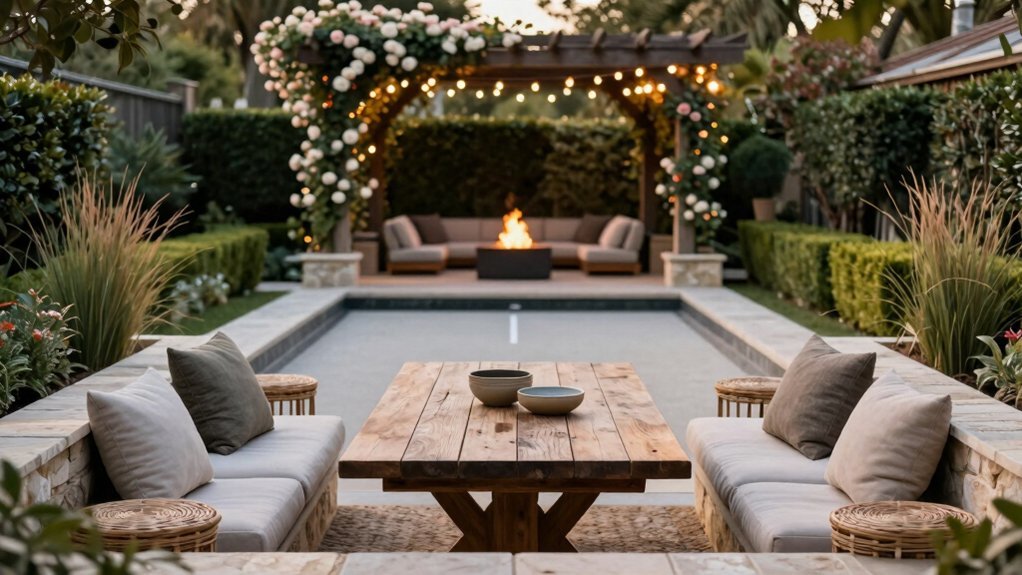
Integrated bocce courts turn seating into a social stage, blending casual play with dining and beverages. You place adjacent patios and dining areas to create a seamless social hub for entertaining and casual play. Building a bocce court near seating invites spectators to participate, socialize, and enjoy beverages during games. The design links the court to a house-view corridor or scenic vista, making it a central feature between indoor and outdoor spaces. Courtyards frequently combine bocce with terraces and edible gardens, forming a multifunctional landscape room. The court remains visually foregrounded, using materials and color accents that echo surrounding stone walls, plantings, and architectural textures. By planning sightlines and seating adjacency, you create inviting moments for conversation, shade, and spontaneous rounds during warm afternoons.
Lighting for Evening Entertaining
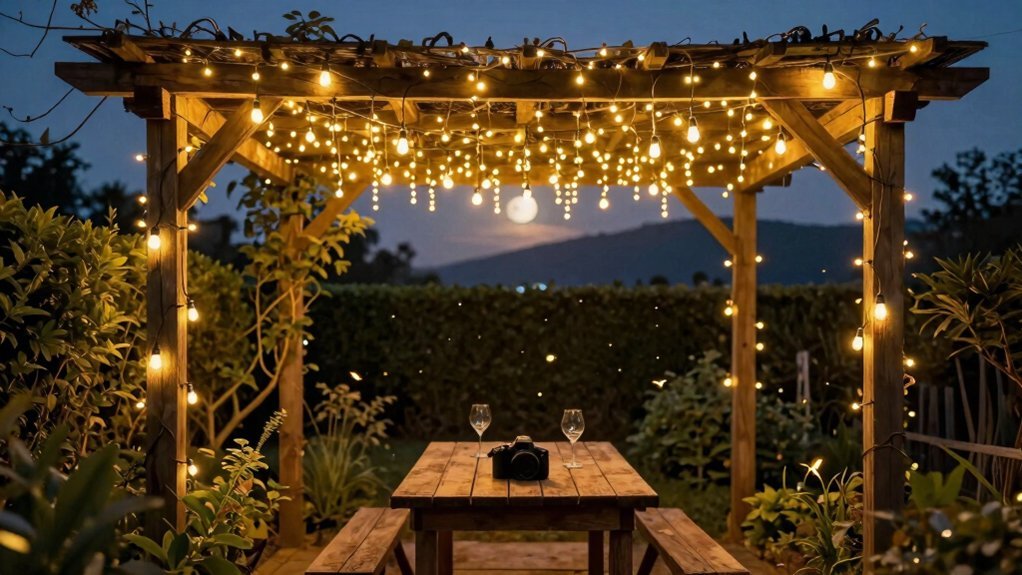
Where do you get even, glare-free illumination for evening bocce play while keeping the scene warm and inviting? In-ground LED uplights along court edges provide steady, low-glare brightness that anchors play, while string lights overhead add ambient charm for gatherings after dark.
For safety and flow, place pathway lighting near the court to guide guests from seating to the playing surface without tripping or crowding the edges.
Choose energy-efficient options, like low-wattage LEDs, to cut operating costs and keep desert nights cool.
Shade structures, such as wooden pergolas or retractable canopies, paired with lighting, maintain comfort and visual appeal during night matches.
A balanced design ensures accurate ball tracking without harsh hotspots, elevating play and mood.
Guests feel invited; the court looks radiant too.
Pathways and Accessibility

Design your pathways to weave 3 to 5 feet wide concrete or flagstone routes that connect the patio, bocce court, and seating areas for seamless indoor-outdoor flow. Place walkways on level ground with a gentle slope to ensure true ball rolls and minimize drainage issues on the court nearby. Use durable, non-slip surfaces for pathways to maintain safety in wet or dusty conditions. Integrate lighting along pathways (low-voltage LED or solar stake lights) to guide movement from dusk to night play. Include accessible transitions at court entrances with level thresholds and minimal steps to accommodate all players. This setup supports everyone, from casual rollers to tournament players, with clear sightlines and even footing. Other features include durable edges and easy cleaning for longevity daily.
| Element | Benefit |
|---|---|
| Level ground with gentle slope | True ball rolls, drainage minimized |
| Non-slip surface | Safety in wet or dusty conditions |
| Low-voltage or solar lighting | Guides movement at dusk to night play |
| Accessible transitions at court entrances | Accommodates all players |
| Level thresholds at entrances | Smooth, step-free access |
Shade Structures and Microclimates
Start by placing shade structures where you’ll maximize comfort and minimize glare, aligning pergolas or retractable canopies with the court’s edges and seating.
These shaded zones create microclimates that lower surface temperatures and protect play during peak sun.
Coordinate materials and style with the border and edging to keep a cohesive look while preserving moisture control.
Shade Structures Placement
To keep players comfortable and the court performing well, place shade structures to shape microclimates around the bocce court by using nearby trees or pergolas to cut surface temperatures and reduce glare on warm afternoons. Position shade to avoid casting long shadows on the playing surface during peak sun hours, ensuring consistent ball roll and visibility.
Integrate shade near adjacent seating and social areas to create a cohesive entertaining zone without blocking access or sightlines. Use retractable canopies or lattice structures with climbing plants to provide flexible shade that can be adjusted seasonally.
Consider local climate drivers, such as high sun exposure and prevailing winds, when sizing and spacing shade elements to maintain court performance and durability. This setup stays comfortable year-round for play.
Microclimate Benefits
Shade structures and thoughtfully placed plantings create comfortable microclimates around your bocce court. Shade structures, such as wooden pergolas or retractable canopies, reduce surface air temperatures around the bocce court, improving play comfort in microclimates. Planting drought-tolerant species like agave or lavender around the court creates climate-tested microclimates that lower surrounding heat load and provide visual cooling cues. Integrating palm trees or mesquite within the landscape adds vertical shading and windbreak benefits, enhancing playability during peak sun hours. Misting systems paired with shade elements can lower court surface temperatures by several degrees, extending usable play time in warm seasons. Strategic court orientation and canopy placement create microclimates that minimize glare on the playing area while preserving views and accessibility from the house or patio.
Material and Style Coordination
Smart material and style coordination ties shade structures, plantings, lighting, and surface choices into one cohesive bocce court aesthetic. You extend play into hotter hours with wooden pergolas and vines or retractable canopies, while seamless landscaping visually anchors the court. Microclimates form through drought-tolerant plantings like agave, lavender, and yucca, offering cooling shade and reducing surface heat. In-ground LED edge lighting and bistro string lights balance usability with atmosphere, avoiding glare. Choose colors and textures that harmonize with nearby stone walls, wood borders, and gravel to maintain a unified landscape.
| Element | Benefit |
|---|---|
| Shade structures | Extend play into heat and integrate with landscape |
| Plantings | Cool shade, reduce reflected heat |
| Lighting | Improve usability, ambiance, glare-free |
| Surfaces | Manage heat, drainage, and maintenance |
Fresh finishes tie it all.
Water Features and Fire Elements
How can water features and fire elements elevate a bocce court experience? Water features near a bocce court provide a calming backdrop and can mask court noise, with options like a small waterfall or a reflecting pool integrated into the landscape. A fire element, such as a linear gas fireplace or a fire pit, extends playability into cooler evenings and creates a social hub adjacent to the court. Place a water feature on the spectator side to offer ambient sound and visual interest without affecting ball trajectories or safety. Choose materials that echo the court’s border and surface, like stone or concrete finishes, and it’s safe with proper clearance, non-slip surrounds, and weatherproof equipment.
- Calming backdrop
- Masks noise
- Extends play
- Spectator-side placement
- Cohesive materials
Seasonal Color and Low-Water Planting
Seasonal color and low-water planting around a bocce court weave beauty with practicality, matching desert climates while keeping play unobstructed. Pair the court with low-water plants like agave, lavender, and yucca for vertical interest. Use seasonally shifting color accents with drought-tolerant perennials around the court—purple statice or orange yarrow—to provide contrasting hues against stone or DG surfaces. Favor deep-rooted, low-maintenance varieties that won’t interfere with play, staying clear of the border and not encroaching on the playing area. Implement a color palette that changes with the seasons: greens and blues in spring, golds and reds in late summer, and tans in winter to reflect the landscape’s palette. Integrate planting beds with irrigation and drip systems to minimize water use while framing the bocce court.
Maintenance and Longevity Considerations
Regular maintenance keeps your bocce court smooth, level, and predictable for every roll. Daily care means removing weeds and ensuring drainage to prevent ruts and standing water that disrupt ball roll. Seasonal tasks address compaction and reapplication in thin, even layers to preserve playability. With simple checks, you protect performance year after year.
- Use cost-effective surface options like crushed oyster shells or stone dust only if you plan more frequent upkeep.
- Rent tools and choose affordable border materials to balance costs without sacrificing stability.
- Focus daily on debris removal and proper drainage to prevent standing water and uneven rolls.
- For longevity, incorporate protective edging and anchored borders to reduce edge erosion.
- Plan seasonal compaction and reapplication routines in thin, even layers for lasting playability.
Personalization: Accessories and Signage
Want your bocce court to feel truly yours? Personalization can start with monogrammed bocce balls and a signature scoreboard that reflect your style. Add custom touches like wall art or integrated plantings around the court to enhance cohesion with the surrounding landscape.
Signage can provide court rules or scoring, helping guests understand play etiquette during gatherings.
You can feature dedicated storage for balls and equipment, keeping the area tidy and ready for use.
Unique branding elements, such as a custom court logo or engraved border accents, reinforce the court as a focal design feature.
With thoughtful details, you create a welcoming space that invites relaxed play and memorable moments. These touches adapt over time, letting your landscape evolve with your gatherings and favorite moments.
Frequently Asked Questions
How to Choose Court Orientation for Wind Patterns?
Position it so the prevailing wind’s across the court, not straight down the length, to minimize gust effects and bounce unpredictability; adjust entrances and planters to shield berms and keep play steady and enjoyable overall.
What Are Cost-Effective Maintenance Hacks?
Use simple, affordable hacks like sweeping weekly, spot-sanding worn areas, and regrading for drainage. Sharpen borders with one-time edging, mulch regularly, and DIY weed control. Tackle irrigation leaks promptly, recycle rainwater, and seal surfaces seasonally.
Can Bocce Court Double as Workout Space?
Yes, a bocce court can double as a workout space. You’ll jog along the sidelines, do lateral shuffles on the surface, and perform light strength moves between throws without harming the court, or disturbing play.
How to Deter Pests Without Chemicals?
Use nonchemical methods: seal entry points, remove standing water, tidy spaces, install physical barriers, and trim vegetation. You encourage beneficial insects, practice height and sanitation, rotate plants, and apply drought-stress strategies to deter pests naturally.
What Historical Bocce Court Styles Influence Design?
Traditional Italian court styles influence design; you’ll see flat-surfaced, long-paved courts from Lombardy, arched-raked variants from Tuscany, and Naples’ pallino-centered layouts, which you adapt with regional materials and simple, rustic landscaping to fit your space.