When you’re designing an outdoor bar that saves space, go stand-up or high-top to boost mingling without crowding. Try a single-sided wall bar or a double-sided setup to maximize seats and flow. Use weatherproof modular pieces—Trex or stainless steel—with integrated shelves and pass-throughs for easy service. Add a pergola shade for comfort and privacy, plus a poolside or garden deck look. If you want more ideas, you’ll find plenty to explore next for entertaining guests.
Stand-Up Bar for Tight Patios
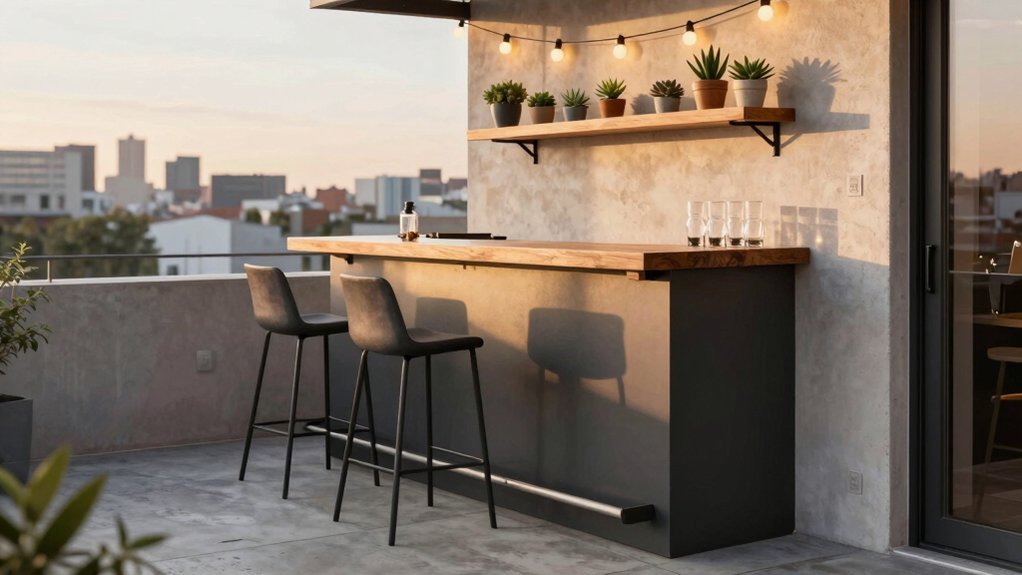
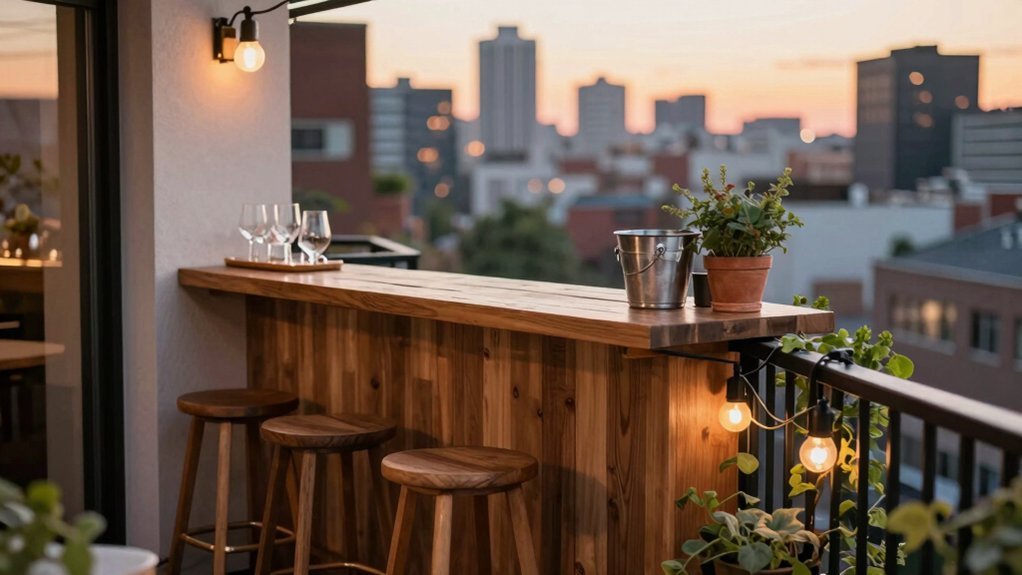
How can you squeeze entertaining into a tiny patio without crowding the space? A Stand-Up Bar is a high-top, space-saving design ideal for patios, featuring a tall surface that encourages mingling while occupying minimal footprint. It provides a dedicated entertaining area without a large footprint, enabling flexible movement around the bar during gatherings. The stand-up format uses a high table or bar counter with bar-height stools or standing readiness, maximizing seating without full chairs. This setup is easy for DIY construction with simple materials and is cost-effective for tight spaces.
You gain social flow because guests stay near the action but don’t crowd conversations. The upright setup keeps sightlines open, makes cleanup quick, and adapts to guest counts. Mount accessories sparingly to maintain airflow.
High-Top Seating to Keep Conversation Flowing
Where conversation stays lively, high-top seating puts guests at eye level with the host while still letting everyone mingle and move easily. With tall stools and a counter height designed for compact spaces, you maintain engagement without crowding. This setup invites mingling while keeping sightlines to cooking or nearby activities, so you stay involved without crowd blocking conversations.
> High-top seating keeps conversations lively and visible without crowding.
A high-sit-down variation preserves eye contact and flow during entertainment, letting seated chats continue smoothly.
Flexibility shines, as you can place high-tops across different outdoor layouts or split-level configurations, adapting to single or double-sided bars. The elevated height keeps guests connected to both the bar and adjacent outdoor vibes, from grilling to poolside lounging.
Practical durability and weather-ready finishes ensure these setups last season after season.
Cozy Low-Profile Bar for Family Gatherings
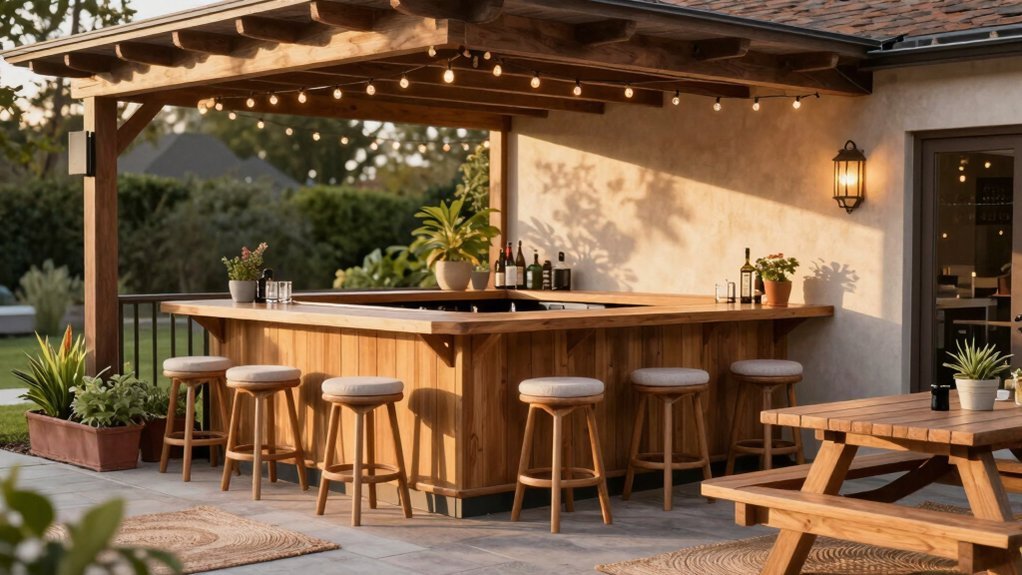
Rethinking the outdoor bar to a cozy, low-profile setup keeps family gatherings comfortable and inclusive. You’ll enjoy a traditional, comfortable height that pairs well with existing patio chairs, making it budget-friendly and accessible for gatherings. You avoid tall stools, focusing on lower bar-top heights to reduce sightline crowding and enhance relaxed conversation. Materials emphasize durability and weather resistance, with options like composite or stone-top surfaces that pair with Trex outdoor furniture. The setup supports seamless social flow by keeping guests at eye level with the host while seated, fostering inclusive family conversations.
Integrating a low bar with adjacent seating, such as a nearby couch or matched lounge chairs, maximizes seating without overcrowding a small patio. This keeps gatherings intimate, relaxed, and easy to supervise.
Maximized Space: Single-Sided Bar Against a Wall
Need more space for guests? A single-sided bar is built as an extension countertop or high table placed against a wall or fence, saving space in compact yards. This design creates room for chairs on the opposite side while the wall provides structural support and a natural backdrop. It’s a space-saving option that lets guests sit and enjoy drinks without needing a second freestanding structure.
Because it occupies only one side, it’s ideal for narrow patios and enhances backside accessibility for servers. The arrangement leverages wall adjacency to minimize footprint while still offering comfortable bar seating. Keep the line uncluttered with stools that tuck under the counter, and choose durable, weather-resistant surfaces that wipe clean. This setup also enhances service flow and timing overall.
Double-Sided Bar: Double Seating, Double Function
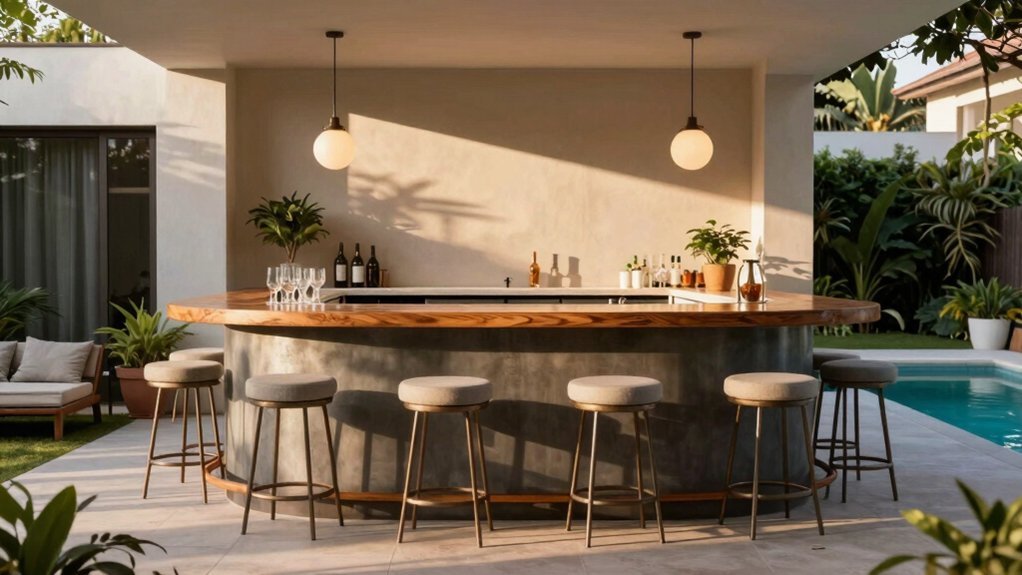
A double-sided bar invites seating on both sides, doubling your usable seating area and expanding hosting capacity. A wide countertop maximizes counter space on each side, letting guests sit and socialize without crowding. It’s adaptable to high-top or low-top configurations, balancing dining and entertaining needs. Double-sided layouts typically support versatile entertainment by providing a substantial work surface for bartending and serving from either side. This configuration optimizes underutilized spaces by turning interior or exterior walls into functional, multi-directional seating hubs.
- Doubled seating area from a single footprint keeps guests circulating without crowding.
- Flexible work surface supports quick service from both sides for efficient hosting.
- Converts underused walls into social, multi-directional hubs that expand capacity. This approach keeps spaces open for conversation.
Split-Level Bar for Multi-Zone Entertaining
Building on the idea of maximizing space with a double-sided bar, a split-level layout introduces distinct zones that keep cooking, seating, and drinks flowing in the same outdoor footprint. A split-level bar uses countertops at different heights to create versatile zones for seating, cooking prep, and entertaining within the same outdoor space. The high-level area can serve culinary prep or entertainment simultaneously, while a lower section accommodates casual seating and drinks. This design supports multi-function use in limited footprints, maximizing seating capacity without crowding. Split-level configurations can adapt to both high-top and low-top concepts, offering flexibility in stool height and sightlines. It enables a cohesive flow between dining, bar, and cooking areas, enhancing social interaction across distinct zones. This setup suits yards and patios.
Corner Bar: L-Shaped Oasis in a Nook
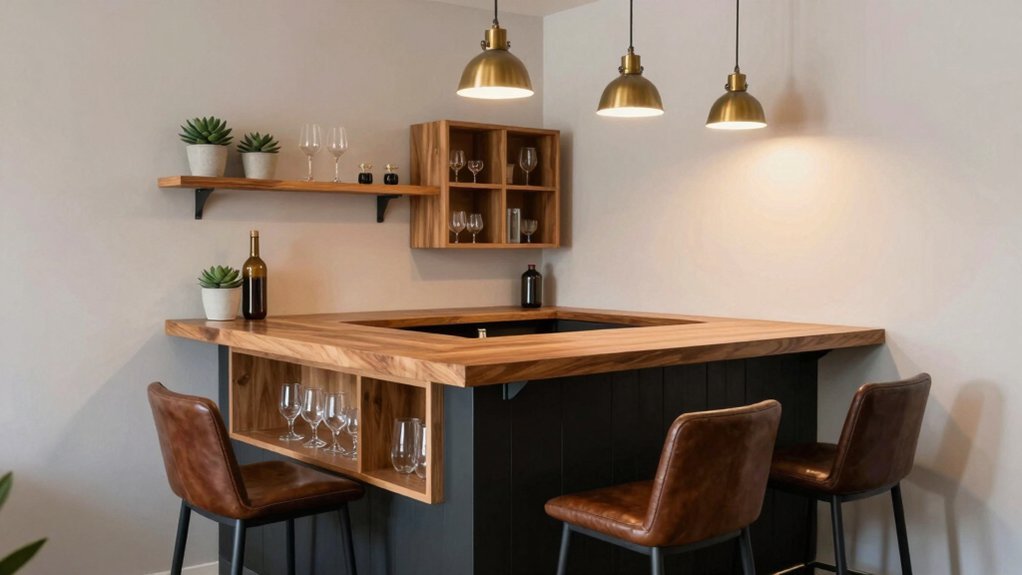
With an L-shaped nook, you create a compact corner bar that fits into tight yards while keeping central floor space open.
This corner bar workflow lets you serve cocktails and bites from one or both sides, anchored to walls or fences for a clean, cohesive setup.
You can tailor heights (high-top or low-top) to balance dining and socializing, making the transition from cooking to entertaining feel seamless.
L-Shaped Nook Layout
Where space is tight, an L-shaped nook turns a corner into a social hub. A corner bar in this layout helps you maximize utility and create an activity area. The nook layout supports space-saving benefits while enabling a functional dining and entertainment zone around the bar. An L-shaped nook pairs with a single- or double-sided bar to optimize seating from interior and exterior viewing angles. Incorporating a corner bar often enhances flow by concentrating activity in one area, leaving other parts of the yard open for lounge or dining.
- Leverage asymmetrical, compact footprints to fit tighter spaces without sacrificing seating.
- Choose a bar to optimize views from indoors and outdoors.
- Concentrate activity in one area to keep spaces elsewhere for everyone and comfort overall.
Corner Bar Workflow
How do you get smooth workflow from a corner bar in a tight yard? A Corner Bar or L-shaped bar optimizes small yards by using a corner nook, freeing central space for seating and movement. Its compact two-wall footprint hosts a bar top, seating, and a dining area without crowding. You can place it against a wall or fence, maximizing underused perimeter space for storage or a small beverage station. This layout encourages integrated zones, pairing dining and lounging around the bar while keeping easy access to grilling or prep areas. Configure it as single- or double-sided, so you can offer seating on one or both sides to boost guest capacity in tight spaces. Efficient circulation ensures staff deliver drinks without bottlenecks at all.
Lookout Bar: A View-Backyard Focal Point
Lookout Bars give you a view-focused outdoor nook that turns your backyard into a scenic focal point.
With an elevated viewpoint for the bar and a pergola for shade, you keep the space open, social, and inviting.
You’ll maximize seating without crowding the view, making every sip feel like a centerpiece.
View-Focused Outdoor Bar
Why settle for a generic backyard bar when you can make the view the star? You position the lookout to maximize sightlines across your lawn and landscape, turning the bar into a focal point that still invites conversation. Elevate comfort with pergola-covered or elevated setups, so sun stays at bay without blocking the panorama. Use modular or free-standing elements to shift angles as the crowd moves, keeping sightlines clear. Choose finishes that echo nature—weather-resistant composites and stone accents blend with the scenery. Seating prioritizes views, with options that let guests face the scenery and the bar simultaneously.
3 design tweaks to maximize impact:
- Orient the bar for double sightlines
- Add a ramp or step-access for all guests
- Choose modular pieces that reconfigure with seating
Scenic Backyard Focal Point
Where should you position a bar to become the scenic centerpiece of your backyard? Aim for a Lookout Bar that overlooks the lawn, landscaping, or a distant vista, so the view frames the gathering. This setup turns the bar into a focal hub that invites lingering and conversation, not just drinks. Use varying heights or tiered surfaces to keep sightlines clear while you seat guests comfortably. Weatherproof materials and shade elements protect against sun and drizzle, preserving the view beautifully year-round. Pair the bar with modular, movable furniture so you can reconfigure for flow and perspective as crowds and light shift.
| Element | Benefit | Tip |
|---|---|---|
| View framing | Focal point | Align to view |
| Tiered surfaces | Clear sightlines | Vary heights |
| Modular furniture | Flexible layout | Moveable pieces |
Elevated Viewpoint for Bar
How does an elevated bar become a view-backed focal point, turning the lawn or hillside into a social stage with 360-degree vistas? You gain a perspective from a raised perch, with hillside or landscape becoming part of the social scenery. Pergolas or sun-shading structures frame the lookout without blocking sightlines, offering relief from sun and wind while preserving the view. Elevated setups use high bar stools along a wraparound or single-sided counter to maximize seating without crowding floor space. Open sightlines and minimal visual clutter enhance spaciousness, inviting guests to linger. Weatherproof materials like stainless steel, composite decking, and stone ensure durability at height.
- Optimize sightlines with a wraparound counter.
- Add a pergola to shade without blocking views.
- Choose weatherproof materials for outdoor durability.
Free-Standing Portable Bar on Wheels
A free-standing portable bar on wheels offers mobility for flexible space layouts and lets you move it as guests gather. Many portable bar carts include built-in shelves and bottle/glass holders to keep essentials organized while staying lightweight for maneuverability. Wheel-equipped portable bars typically feature lockable casters to prevent unintended movement during use.
Foldable or compact designs enhance storage options when the bar isn’t in use, making them ideal for small patios and balconies.
Durable materials like stainless steel, aluminum, or weather-resistant composites ensure longevity for outdoor, wheeled bar setups. You benefit from easy cleaning, quick weather readiness checks, and the option to stage cocktails or service stations along walkways. Choose a finish that withstands sun and rain, and you’ll enjoy performance season after.
Modular Bar Islands for Flexible Layout
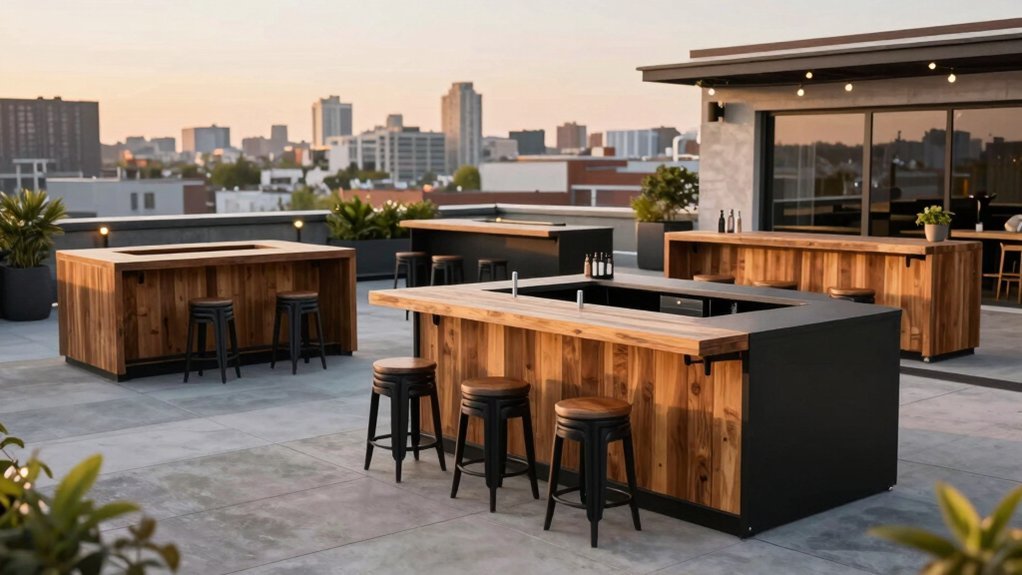
Switching from a portable, wheeled bar to modular islands release(s) even more layout flexibility for outdoor entertaining. You can configure them as galley-style or double-sided setups to maximize seating around a flexible work surface. They support varying heights, with high-top and low-top options that suit different guest interactions and viewing angles. The modular design lets you integrate built-in appliances—sink, ice maker, under-counter fridge—and drop-in features while keeping open seating. Corner, split-level, and look-out variants invite seating on multiple sides and help you optimize underutilized spaces. Movable components let you reconfigure as party sizes shift or space constraints change, without permanent installations.
Integrated Shelving for Efficient Service
Integrated shelving keeps glasses, bottles, and napkins within arm’s reach, freeing the main surface for service.
Use a mix of slim wall-mounted racks and small shelves to maximize vertical space without crowding, and place glass holders or bottle hooks where they’re easy to grab.
Start with shelving layouts that keep essentials within reach for you and your staff, ensuring quick, unobstructed service.
Shelving Layout Best Practices
Looking to maximize efficiency behind a busy outdoor bar? Integrated shelving stores glasses, bottles, and bar tools within reach, helping servers move quickly between seating and service areas. Wall-mounted racks and slim shelves maximize vertical space, freeing counter surfaces for drinks and prep. Shelving should sit next to sinks or refrigeration to streamline cleanup and restocking. Slim surface add-ons and hidden-storage benches optimize storage without encroaching on seating footprints. Durable, weatherproof materials—stainless steel, HDPE, or Trex—ensure longevity in outdoor settings.
- Place units near water and refrigeration to minimize steps.
- Use wall-mounted racks plus slim shelves to keep essentials visible.
- Choose weatherproof, durable finishes for exposure.
Regularly audit spacing to prevent crowding and ensure fast, smooth service during peak shifts and weather.
Accessible Shelves for Service
Accessible shelving lets servers reach glasses, bottles, and tools without leaving the seating area, keeping service fast in tight outdoor bars. Integrated shelving under or around your bar provides accessible storage for glasses, bottles, and bar tools, enabling efficient service without leaving the seating area. Wall-mounted racks and slim shelves maximize vertical space, keeping frequently used items within arm’s reach for both servers and guests. Shelving designs can include built-in wine glass hangers and dedicated bottle storage to streamline bartending while maintaining a clean, compact appearance. Using shelves with open fronts allows quick visibility of stocked items, reducing search time during service and improving flow for small-space setups. Combine storage shelves with movable bar carts to adapt to guest counts. Efficient, flexible, and tidy.
Weather-Protected Bar Area Under a Pergola
How can you keep your outdoor bar usable in any weather? A pergola gives sun protection and mounting points for lighting, curtains, heaters, or fans to extend year-round use. Under a pergola, an L-shaped outdoor kitchen and bar creates a cohesive, shelter-supported entertaining space with defined cooking and dining zones. Curtains offer adjustable privacy and sun control for bar seating, boosting comfort. Trex Pergola adds weatherproofing, pairing with durable composite decking for low maintenance. This setup positions the outdoor bar as a protected, year-round focal point, ready for rain or shine with added UV and rain protection.
- Install curtains for flexible shading and privacy
- Mount heaters or fans to regulate temperature
- Use integrated lighting for evening durability
Your guests will enjoy weather-ready gatherings anytime.
Private Mini-Bar Using Trex Privacy Screen
Need a private, inviting mini-bar that fits your outdoor layout? A Trex privacy screen creates a secluded vibe by blocking sightlines with Trex fencing or privacy screening, turning a corner into an intimate entertaining nook. You can keep it flexible with freestanding, movable privacy elements, so you’re not committed to permanent walls. Trex materials resist weather and blend with your outdoor furniture for a cohesive, durable look that’s low maintenance. You can add curtains or screens for an extra layer of seclusion around the mini-bar area, dialing in privacy as you entertain. The concept pairs smoothly with other Trex features, like pergolas or privacy screens, to boost year-round use and aesthetics. Keep it modular and easy to update as your space evolves over time.
Poolside or Garden Deck Seating Synergy
Ever notice how poolside seating should feel like an extension of your outdoor living room? You design a cohesive entertaining zone that pairs proximity to the water with accessible drinks, often featuring pass-through windows or floating drink holders for ease. A poolside setup can use two-wall or L-shaped configurations to maximize seating around the bar while keeping sightlines to the pool activities. Choose weather-resistant stools and materials compatible with humidity—stainless steel, HDPE, and synthetic wicker—for durability and comfort. When you integrate a poolside bar with additional dining or lounge areas, you expand seating capacity without crowding the bar space.
- Use nearby dining or lounge zones to extend capacity
- Position pass-throughs for quick service
- Select durable, water-friendly materials
This delivers lasting appeal.
Frequently Asked Questions
How to Ensure Wheelchair Accessibility at Compact Outdoor Bars?
Make your compact outdoor bar accessible by keeping a 36-inch path, giving a low bar counter with knee clearance, and providing turning space, ramps that meet ADA guidelines, and accessible seating options you can reach.
What Sustainable Materials Best Withstand Weather in Tight Spaces?
Choose weather‑tested bamboo composite, recycled aluminum, and teak treated for outdoor use; they resist moisture and sun in tight spots. You’ll prioritize sealed fabrics, powder‑coated frames, and modular pieces that resist corrosion and fading well.
How to Integrate Child-Friendly Seating Without Crowding?
Choose compact, accessible seating and flexible pieces you can move. Install low-height stools with rounded edges, add a fold-out bench, and create designated kid zones with matting. Use cushions to invite kids without crowding adults.
What Is the Best Lighting to Avoid Glare on Small Patios?
Use indirect, diffused lighting to avoid glare on small patios; opt warm LEDs, soft lanterns, and dimmable sconces, keep light behind seating, and layer with shaded accents, so you see clearly without harsh reflections tonight.
How to Maintain Privacy With Low-Profile Layouts?
You keep privacy with low-profile layouts by using tall, slim planters, trellises, and screens placed along sightlines, plus strategic furniture placement that blocks views, and subtle landscaping that screens while preserving openness, and comfort too.