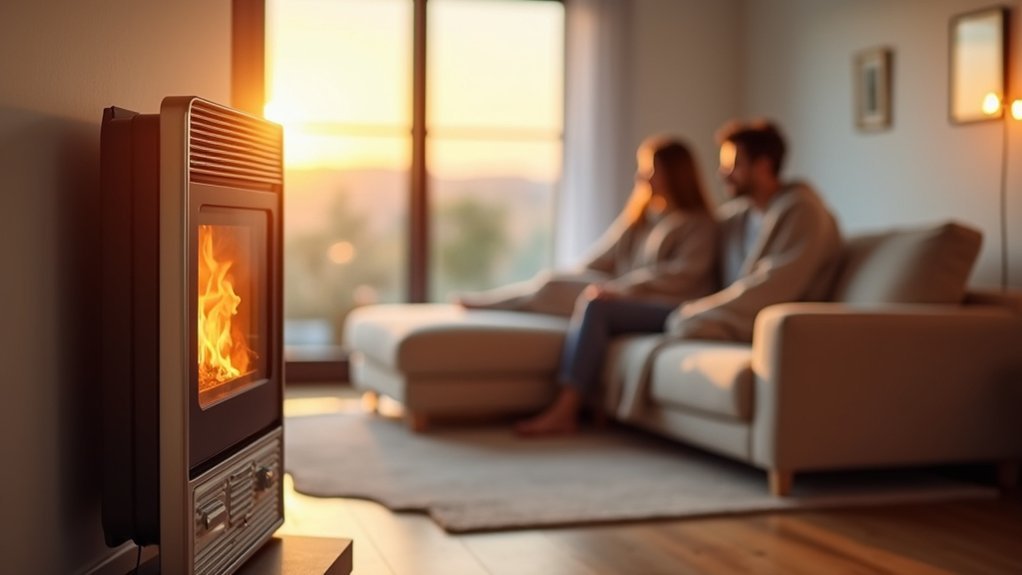
To protect your family from heater hazards, maintain a 3-foot safety zone around all heating equipment. Always plug electric heaters directly into wall outlets, never extension cords. Install carbon monoxide detectors near sleeping areas if using gas heaters. Choose models with automatic shutoff features for tip-over or overheating protection. Inspect cords regularly and schedule annual professional maintenance. Proper placement, vigilant monitoring, and teaching children about safety boundaries create a comprehensive protection plan.
Selecting the Right Outdoor Heater for Your Space
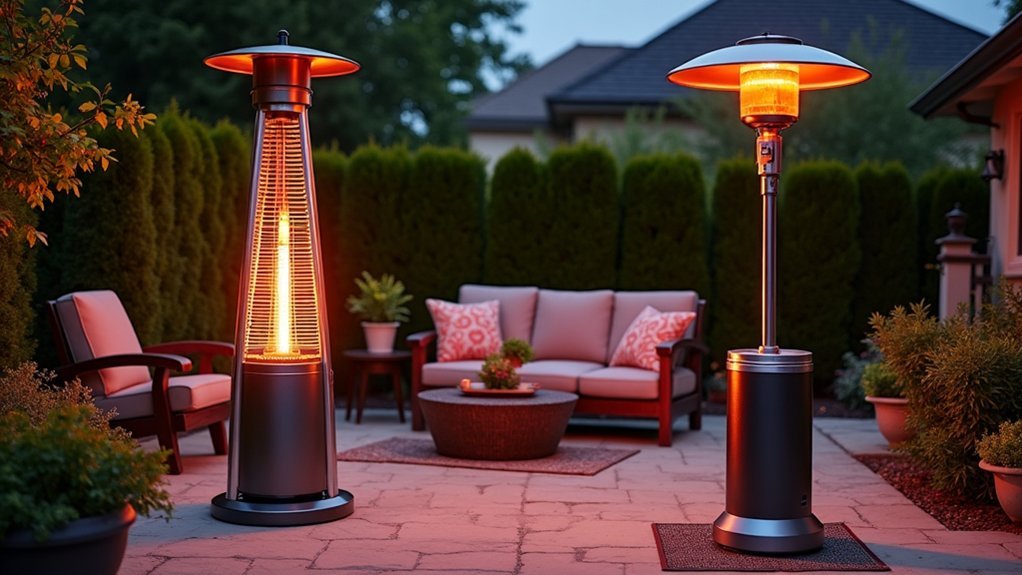
When temperatures drop, choosing the right outdoor heater becomes essential for both comfort and safety. Look for models with appropriate IP ratings—at least IP65 if your heater will be exposed to rain or moisture. This weatherproofing prevents electrical hazards in outdoor conditions.
Always select heaters with automatic safety features, including tip-over protection and overheat shutoff mechanisms. These prevent accidental fires if your heater falls or malfunctions.
Choose radiant gas or electric models specifically designed for outdoor use. Indoor units lack necessary safeguards for open-air spaces. For gas heaters, ensure proper ventilation and follow local codes. Electric options require dedicated outdoor-rated circuits and weatherproof outlets.
Place your heater on stable, nonflammable surfaces with at least 3 feet of clearance from walls, furniture, and decorations to prevent fire hazards.
Proper Placement and Clearance Requirements
Where you position your heater can literally mean the difference between safety and disaster. Always place your heater on a hard, level, nonflammable surface—never on furniture, tables, or carpets. Keep a three-foot safety zone clear of all combustibles including papers, curtains, and bedding.
For optimal safety:
- Position heaters away from high-traffic areas and doorways to prevent trips and burns
- Never use heaters in bathrooms unless they’re specifically ANSI/UL 1278 certified for bathroom use
- Plug your heater directly into wall outlets—never use extension cords or power strips
Avoid placing heaters near water sources, and ensure they remain on the floor rather than elevated surfaces. These simple placement rules significantly reduce fire risks in your home.
Electrical Safety for Powered Warming Devices
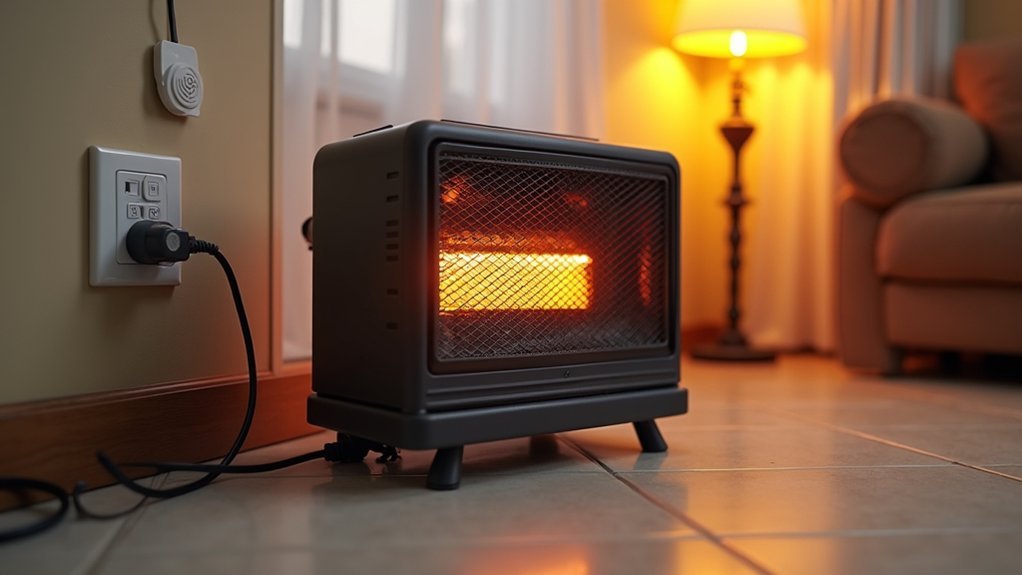
How you connect your space heater matters tremendously for your family’s safety. Always plug space heaters directly into wall outlets—never use extension cords or power strips, as these can overheat and cause fires. Ensure your outlet can handle the heater’s wattage and avoid running other devices on the same circuit to prevent overloads.
Choose heaters with automatic shutoff features that activate if the unit tips over or overheats. Regularly inspect cords and plugs for damage, and never use a heater with worn wiring. Keep your heater unplugged when not in use.
Don’t place heaters in damp areas unless specifically rated for such environments. Never run cords under rugs or through doorways where they can be damaged and create fire hazards.
Gas and Propane Heater Precautions
Why do gas and propane heaters require special precautions? These heating devices pose unique dangers if improperly used—carbon monoxide poisoning and fire hazards top the list. Ensure your family’s safety with proper installation, ventilation, and maintenance.
Follow these critical safety measures:
- Install heaters professionally and schedule annual inspections to check gas lines, connections, and safety features like automatic shutoffs and flame sensors
- Maintain proper ventilation and install CO detectors near sleeping areas—shut off the heater immediately if you detect fuel odors or hissing sounds
- Keep heaters at least three feet from combustibles and never use them near flammable materials—always use manufacturer-approved fuel and never refuel while the unit is hot or operating
Teaching Children About Heater Safety Zones

Teaching your children about heater safety starts with establishing clear “no-go zones” at least three feet around any heating device. You’ll need to consistently enforce this boundary while explaining why heaters can be dangerous when touched or crowded with toys and clothing.
Reinforce these lessons with visual demonstrations that show proper heater placement on flat surfaces and how to safely turn off and unplug the unit.
Establishing “No-Go Zones”
Creating a designated “no-go zone” around your home heating equipment provides critical protection for curious children and pets. Establish a three-foot safety perimeter around all heaters to prevent burns from hot surfaces and eliminate the risk of children touching dangerous moving parts.
For effective safety zones:
- Mark boundaries visually with colored tape on the floor or use a small rug to indicate where children shouldn’t step
- Position furniture strategically to create natural barriers that block access to heaters
- Explain the reasons behind these zones to children, helping them understand that heaters can cause injuries
Always place heaters on level, hard surfaces—never on furniture or carpets—to reduce tipping hazards. When the heater’s in use, maintain active supervision, especially with young children.
Visual Safety Demonstrations
How can you make abstract safety rules concrete for young children? Create physical demonstrations that help them visualize heater danger zones. Mark the floor with colored tape to establish clear safety boundaries that children can understand.
| Zone | Distance | Color | Access | Rule |
|---|---|---|---|---|
| Inner | 0-3 feet | Red | Prohibited | “No touch zone” |
| Middle | 3-6 feet | Yellow | Supervised only | “Ask an adult first” |
| Outer | 6+ feet | Green | General use | “Safe play area” |
| Hot surfaces | Heater casing | Red | Never touch | “Burns skin” |
| Operation | When on | N/A | Adult supervision | “Stay in sight” |
Practice regular walk-throughs of these zones with your children. Use visual cues like cones to reinforce boundaries, and demonstrate which parts of the heater get hot to show why maintaining distance matters.
Weather Considerations When Using Outdoor Heaters
Weather can dramatically impact the safety of your outdoor heater, particularly when precipitation creates electrical hazards. You’ll need to place your heater on level, non-flammable surfaces away from rain exposure unless it’s specifically rated for wet conditions.
During windy weather, ensure your heater is positioned securely at least three feet from any combustible materials like furniture or plants to prevent fire risks.
Weather Safety Concerns
When enjoying outdoor heating solutions, why risk dangerous conditions that could turn comfort into catastrophe? Weather significantly impacts how safely you can operate your outdoor heater. Never use heaters in rain or wet conditions unless specifically rated for damp locations, and always keep electrical connections elevated and dry.
Strong winds pose particular hazards with outdoor heating:
- Gusts can topple freestanding units, creating fire risks and potential damage
- Wind can redirect flames or heat toward flammable materials nearby
- Shifting air currents may cause uneven heating or force the heater to work harder
Position your heater under stable shelter when possible, and follow manufacturer guidelines regarding maximum wind speeds for safe operation. Remember to shut down units during approaching storms or when leaving the area unattended.
Protected Placement Strategies
Strategic placement of your outdoor heater determines both its performance and your family’s safety during changing weather conditions. Always position heaters on level, flat surfaces with at least 3 feet of clearance from flammable materials like curtains, furniture, and decking fabrics.
Choose open, well-ventilated areas to prevent dangerous gas buildup and reduce condensation that can corrode electrical components. Don’t place heaters under overhangs or awnings where heat can accumulate dangerously. During inclement weather, move your heater indoors to prevent rust and electrical faults—only use models specifically rated for outdoor use with weather-resistant housings.
When winds pick up or storms approach, unplug your unit completely. For families, maintain a strict 3-foot safety zone to keep children and pets away from hot surfaces.
Maintenance and Inspection Schedules
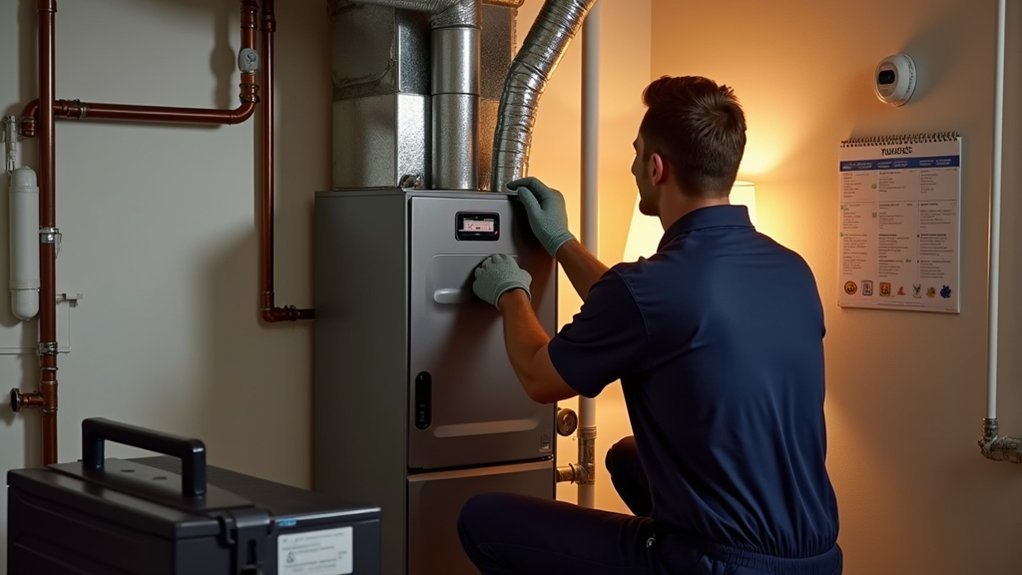
How often do you check your heating equipment for potential hazards? Professional annual inspections are essential for furnaces and heating systems, including cleaning services when recommended by technicians.
Develop a consistent maintenance routine to protect your family:
- Schedule professional inspections at the start of heating season to ensure proper airflow, filtration, and carbon monoxide safety.
- Test smoke alarms monthly and maintain working devices on every level of your home, especially outside sleeping areas.
- Examine space heater cords and plugs regularly for signs of wear, fraying, or damage—replace damaged equipment immediately.
As seasons change, don’t overlook chimney and vent cleaning as part of your maintenance schedule. These simple habits prevent fires and ensure your heating system operates safely all season.
Safe Storage Practices During Off-Seasons
Safely storing your heating equipment during warmer months prevents potential hazards when winter returns. Always unplug space heaters before storing them in a cool, dry location, never leaving them connected when not in use.
Place your heater on a hard, level surface with a three-foot clearance from flammable items like curtains, papers, and bedding, even in storage. Before putting it away, check cords and plugs for damage, and consider using a protective cover to prevent dust accumulation.
Designate a labeled storage spot that children and pets can’t access, keeping heaters separate from everyday tools and fuels. Before using your heater again, follow the manufacturer’s maintenance guidelines, including cleaning or replacing filters as recommended.
Frequently Asked Questions
What Type of Heater Is the Safest?
Heaters with tip-over switches and overheat protection are safest. You’ll want models bearing UL, ETL, or CSA certifications with GFCI plugs for damp areas and proper sizing for your space.
How Likely Is a Space Heater to Start a Fire?
Space heaters cause about 1,700 fires annually. You’ll face significant risk if you leave them unattended, place them near flammables, or use extension cords with them.
How to Protect Your Family From Fire?
Install smoke alarms, create an escape plan, never leave heaters unattended, maintain clearance around them, plug directly into wall outlets, and place on level surfaces away from water.
What Are the Safest Heaters to Leave On?
Heaters with tip-over switches, overheat protection, and UL/ETL/CSA certification are safest. You’ll want models with stable bases and GFCI protection. Never leave any heater unattended, regardless of safety features.