
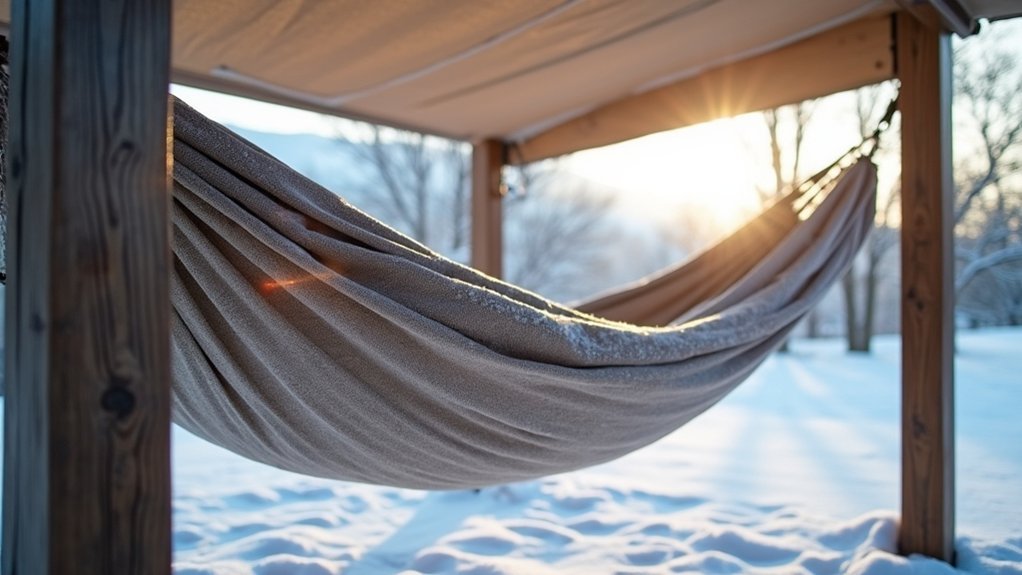
Storing your hammock during winter protects it from damaging weather conditions that accelerate deterioration. Rain, snow, and freezing temperatures weaken all hammock materials—especially cotton, which absorbs moisture and can develop mold and mildew. Indoor storage prevents pest infestations and preserves metal hardware from rust and corrosion. Even synthetic hammocks benefit from winter protection. Proper winter care substantially extends your hammock’s lifespan, ensuring many more seasons of relaxation ahead.
Weather Damage: How Rain and Snow Affect Hammock Materials

Why risk damaging your beloved hammock when winter weather strikes? Persistent rain and snow will gradually deteriorate your hammock’s integrity, regardless of its material. Cotton hammocks suffer most severely, as moisture promotes mildew growth and fabric rot that can render them unusable by spring.
Even your synthetic hammocks aren’t immune. While nylon and polyester resist weather better than natural fibers, they’ll still weaken and fade with prolonged exposure to winter elements. The constant cycle of dampness, freezing temperatures, and wind takes a significant toll on all hammock materials.
You’ll extend your hammock’s lifespan considerably by storing it indoors during winter months. If outdoor storage is your only option, invest in proper weatherproofing to shield it from moisture and temperature fluctuations that accelerate deterioration.
Preventing Mold and Mildew Growth in Fabric Hammocks
A fabric hammock’s worst enemy during winter storage is often invisible until it’s too late: mold and mildew. Cotton hammocks are particularly vulnerable as they absorb moisture and can rot when left damp for extended periods.
Before storing your hammock for winter, ensure it’s completely dry and clean. Hand wash or use a gentle machine cycle to remove dirt and spores that could develop during storage.
| Storage Risk | Prevention Strategy |
|---|---|
| Moisture retention | Thoroughly air dry before packing |
| Hidden dirt/spores | Clean before storage |
| Damp environment | Store in dry, elevated location |
Never fold or pack your hammock while it’s still wet. Choose a secure, dry storage location away from basements or outdoor sheds where dampness could penetrate and foster mold growth.
Proper Cleaning Techniques Before Winter Storage
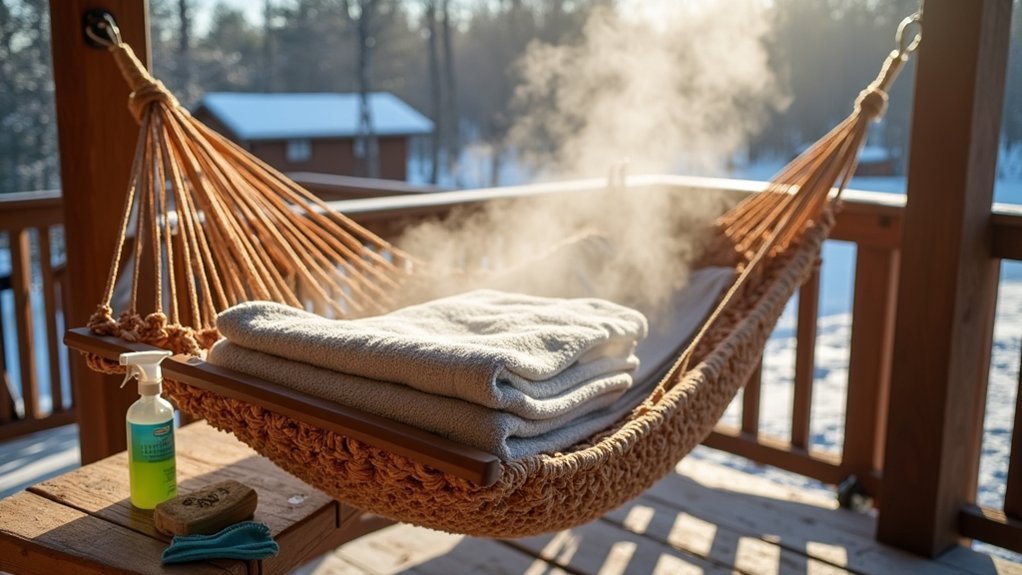
Before storing your hammock for winter, you’ll need to thoroughly clean it using gentle soap that won’t damage the fabric or compromise its structural integrity.
Choose mild, non-bleach detergents for cotton hammocks, while specialized outdoor fabric cleaners work best for synthetic materials.
Allow your hammock to air dry completely in a well-ventilated area, as machine drying can damage fibers and proper drying prevents mold growth during long-term storage.
Pre-Storage Cleaning Steps
Properly cleaning your hammock before winter storage serves as essential protection against mold and mildew damage. Begin by tying end loops together and bundling the strings to prevent tangling during washing.
| Fabric Type | Cleaning Method | Drying Method |
|---|---|---|
| Cotton | Gentle machine wash | Air dry completely |
| Delicate fabrics | Hand wash only | Hang in shade |
| Dyed fabrics | Cold rinse with salt | Air dry flat |
You’ll want to avoid heat when drying your hammock, as this can damage the fibers and affect its structural integrity. Instead, allow it to air dry thoroughly in a well-ventilated area. Make sure you’ve removed all moisture before packing it away—even slight dampness can lead to mold growth during extended storage periods.
Soap Selection Guidelines
Choosing the right soap for your hammock cleaning ritual makes a significant difference in preserving fabric integrity and extending its lifespan.
When preparing your hammock for winter hibernation, select mild, non-detergent soaps that won’t damage delicate fibers or cause premature fading.
- Opt for gentle, biodegradable soaps without bleach or harsh chemicals that could weaken the hammock’s fabric
- Consider specialized outdoor fabric cleaners designed for canvas and cotton materials
- Avoid fabric softeners entirely as they can break down protective coatings on weather-resistant hammocks
- For colorful hammocks, try cold water with a tablespoon of salt in your initial rinse to help set dyes
Remember to thoroughly rinse all soap residue before drying your hammock completely for winter storage.
Drying Methods Matter
How you dry your hammock before winter storage can determine whether it survives until spring in pristine condition or emerges as a moldy, deteriorated mess. Never rush this crucial step by storing your hammock while it’s still damp.
For cotton hammocks, machine wash on a gentle cycle or hand wash thoroughly, then hang to air dry completely. Regardless of material type, ensure your hammock receives adequate air circulation on all surfaces before packing it away.
Even if your hammock appears dry, give it extra time – moisture can hide in woven fibers and seams. Set it up in a sunny, well-ventilated area for at least 24 hours after washing. Avoid damp storage locations like basements or garages that could reintroduce moisture to your clean, dry hammock.
Drying Your Hammock Thoroughly to Prevent Deterioration

Before storing your hammock for the winter, you’ll need to guarantee it’s completely dry to prevent deterioration. Moisture trapped in fabric or rope can lead to mold, mildew, unpleasant odors, and even rot—damaging your hammock beyond repair.
Proper drying isn’t optional—it’s essential protection against the silent destroyers: mold, mildew, and rot.
After washing or if your hammock has been exposed to rain, hang it in a well-ventilated area to air dry completely. This thorough drying process protects both the material and hardware during the winter months.
- Never fold or pack a damp hammock—even slight moisture can cause damage
- Ensure complete dryness by allowing extra drying time in shaded areas
- Avoid storage in naturally damp locations like unheated garages or sheds
- Flip and rotate your hammock while drying for even moisture removal
Indoor Storage Options for Hammock Protection
Bringing your hammock indoors during winter protects it from weather damage while preserving its lifespan. You’ll find space-saving options by rolling rather than balling up your hammock and storing it in a garage, shed, or closet. Proper indoor storage not only saves space but also prevents unwanted pests from making your hammock their winter home.
Space-Saving Storage Solutions
When living space is limited, finding creative ways to store your hammock becomes essential. Instead of balling up your hammock, which leads to tangling and makes spring setup frustrating, try these space-efficient methods:
- Install a simple hook or nail in your garage ceiling or wall where you can hang the hammock without taking up floor space
- Lay your hammock flat on a shelf in your attic or garden shed, ensuring it’s in a dry area to prevent mildew
- Use a storage bag designed specifically for hammocks, then place it in a moisture-free storage unit
- Mount decorative hooks in a spare room and display your hammock as a functional piece of décor during winter
These solutions protect your hammock from dampness while maximizing your available space.
Prevent Weather Damage
Why risk exposing your beloved hammock to harsh winter elements when proper indoor storage can considerably extend its life? Indoor environments shield your hammock from dampness, weathering, and winter conditions that accelerate deterioration.
Your home offers multiple storage options – garages, attics, or even indoor living spaces work well, provided they remain dry. Cotton hammocks particularly benefit from indoor protection, preventing color fading, mold growth, and rot caused by moisture exposure.
Indoor storage also minimizes the chance of rodents and pests accessing your hammock compared to exterior locations. If you’re tight on space, consider using a weather cover indoors or simply hanging your hammock from a hook or nail. This keeps it elevated and protected while taking up minimal room in your storage area.
Pest Prevention Techniques
Pests represent a significant threat to stored hammocks, particularly during the winter months when rodents seek warm, sheltered spaces. Moving your hammock indoors provides essential protection from creatures that might make your beloved relaxation spot their winter home.
For effective pest prevention:
- Store your hammock in dry indoor locations like garages, attics, or inside your home rather than damp basements where pests thrive
- Avoid folding or compressing your hammock into tight balls that create perfect nesting opportunities
- Hang your hammock using hooks in well-ventilated areas to keep fabric off the floor where rodents travel
- Check occasionally throughout winter for any signs of unwanted visitors, especially if stored in less-frequented areas
Indoor storage doesn’t just protect from weather—it’s your hammock’s best defense against becoming a pest hotel.
Using Weather-Resistant Covers for Outdoor Storage
If you’re short on indoor storage space, weather-resistant covers offer a practical solution for protecting your hammock setup throughout winter. These specialized covers shield your hammock and stand from rain, snow, UV exposure, and dust without requiring disassembly.
The Amazonas Hammock Weather Cover, made of 100% polyester, features a guide rope for quick securement. For Globo chairs, tailored Globo covers with front zippers provide custom protection.
Weather covers are particularly valuable when you don’t want to take apart your setup or lack sufficient storage space. They’ll keep moisture at bay and prevent dust accumulation even when your hammock remains outdoors year-round. This approach saves you time and effort while ensuring your hammock stays in excellent condition for the next season.
Specialized Hammock Materials That Withstand Winter Conditions
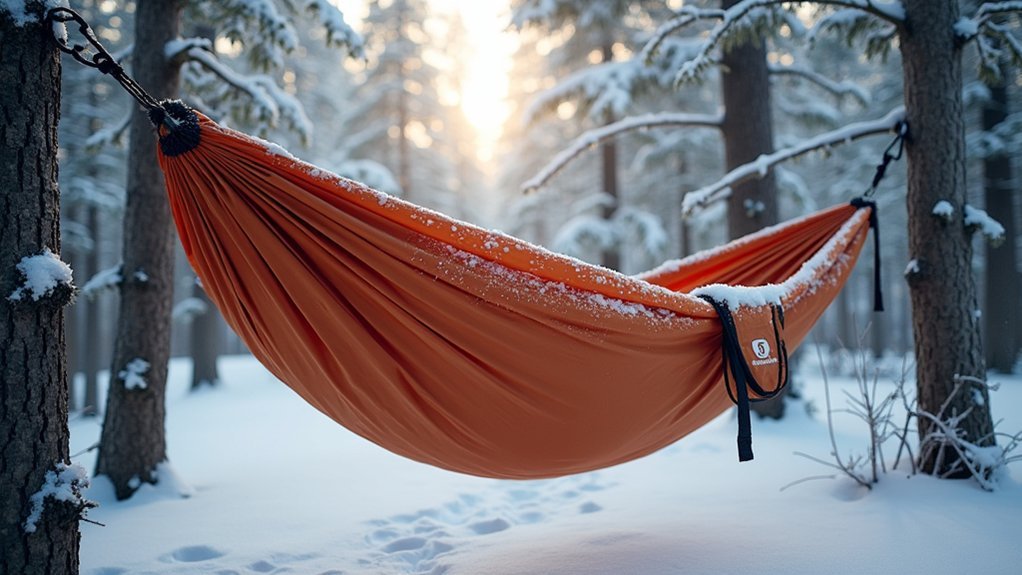
While traditional hammocks require winter storage, several specialized materials now offer remarkable cold-weather resilience. Not all hammocks need to be packed away when temperatures drop, especially those designed with winter-resistant materials.
- EllTex polycotton hammocks provide superior element resistance, making them suitable for year-round outdoor use with minimal maintenance
- Weather-treated synthetic fabrics can withstand moisture and freezing conditions better than natural fibers
- Marine-grade materials originally designed for boating applications offer excellent resistance to dampness and salt air
- UV-stabilized nylon and polyester blends prevent deterioration from winter sun exposure
Even with these durable materials, using a protective hammock cover extends the lifespan of your investment while eliminating the need for complete disassembly and indoor storage each winter.
Waterproofing Treatments to Extend Outdoor Usage
You’ll find that silicone spray creates an effective water barrier on your hammock without affecting breathability. Wax treatments offer a traditional approach—simply rub paraffin or beeswax onto fabric seams and high-exposure areas for enhanced protection. Specialty fabric protectants like Nikwax Cotton Proof penetrate fibers deeply, maintaining your hammock’s comfort while considerably extending its usability during unpredictable weather.
Silicone Spray Benefits
How effectively can you protect your hammock against the elements? Silicone spray offers an excellent solution, creating a water-repellent coating that prevents moisture absorption while maintaining fabric flexibility.
Unlike other treatments, silicone spray:
- Creates a breathable barrier that preserves color and material integrity without stiffening the fabric
- Works effectively on most hammock materials (avoid using on heavily soiled or moldy cotton)
- Provides protection that moves with your hammock’s natural give when in use
- Requires only light, even application from a distance to prevent oversaturation
Remember to reapply periodically, especially after washing or extended exposure to rain and dew. This simple maintenance step significantly extends your hammock’s outdoor lifespan by maintaining consistent waterproofing effectiveness throughout changing weather conditions.
Wax Treatment Methods
When properly applied, wax treatments create an exceptional barrier against moisture while maintaining your hammock’s comfort and flexibility. You’ll find options like Nikwax Cotton Proof particularly effective for cotton, silk, canvas, or polycotton hammocks, as it can be applied either through your washing machine or by hand.
Choose between wash-in, brush-on, or spray-on application methods based on your preference and hammock material. These treatments dry quickly, significantly enhancing your hammock’s resistance to rain and snow while reducing overall moisture absorption.
Though waterproofing extends your hammock’s outdoor usability through harsh weather, you’ll still need to ensure proper drying and storage to prevent mold and rot. Plan to reapply treatments after extended outdoor exposure or whenever you thoroughly clean your hammock to maintain optimal protection.
Specialty Fabric Protectants
Beyond standard wax treatments, specialty fabric protectants offer enhanced protection for hammocks facing challenging weather conditions. Products like Nikwax Cotton Proof can waterproof your cotton, silk, canvas, or polycotton hammock through various application methods.
These waterproofing treatments deliver four key benefits:
- Extend outdoor usage during winter months without full indoor storage
- Enable faster drying after rain exposure, reducing mildew risk
- Create moisture barriers that delay rot and deterioration
- Complement your regular cleaning and maintenance routine
You’ll find these protectants easy to apply as wash-in, brush-on, or spray-on solutions. While they won’t eliminate the need for proper winter care, they’ll significantly prolong your hammock’s life and reduce weather damage. Regular application creates a more resilient outdoor hammock that can withstand challenging conditions longer.
Hardware and Support Systems: Preventing Rust and Corrosion
Your hammock’s hardware deserves as much protection as its fabric during winter storage. Metal components like eye bolts, carabiners, screws, and stand hardware are particularly vulnerable to rust and corrosion when exposed to winter’s freeze-thaw cycles and moisture.
Store your hammock in a dry location such as a garage, shed, or closet to minimize condensation that degrades metal parts over time. Using a breathable storage bag provides additional protection by reducing moisture buildup while deterring pests from nesting in hardware gaps.
Don’t forget to inspect all metal components before storage. This allows you to catch early signs of rust and apply protective coatings as needed. By keeping hardware dry and covered, you’ll extend the life of your hammock’s support system and avoid spring surprises.
Pest Prevention During Long-Term Storage
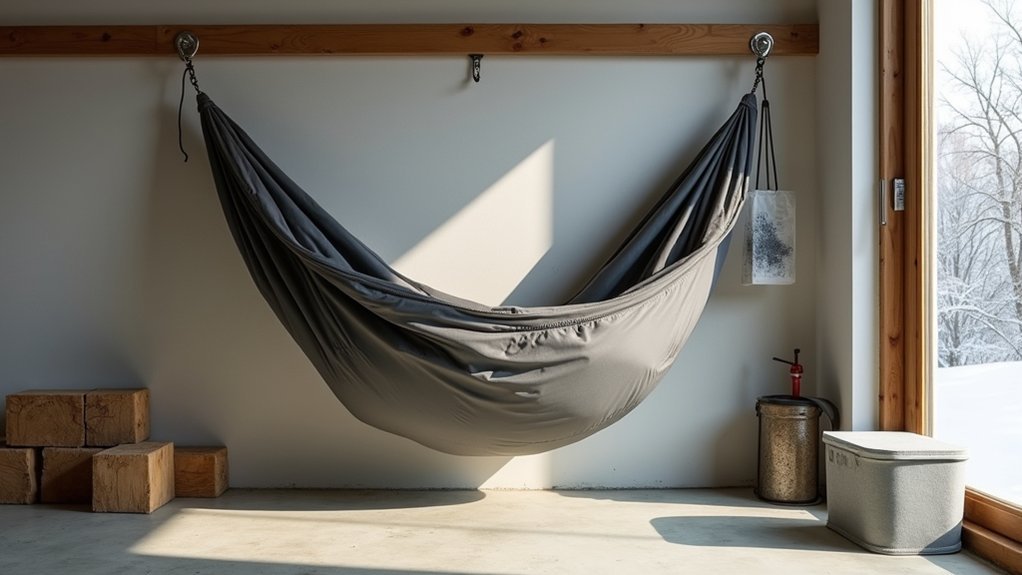
While protecting your hammock’s hardware from rust is important, keeping pests away presents another challenge entirely during winter storage. Small critters seek cozy nesting spots during cold months, and your hammock could become their winter home if not properly stored.
Your beloved hammock can quickly transform into a rodent hotel during winter storage if not properly protected.
To prevent pest damage:
- Store your hammock indoors rather than in sheds or garages where rodents commonly enter
- Use a dedicated storage bag or container with a secure seal to keep your hammock clean and pest-free
- Avoid rolling or folding your hammock into a ball, which creates perfect nesting spaces
- Choose a dry storage area to minimize mildew and insect activity that can degrade fibers
Cotton hammocks are especially vulnerable, so they’ll need extra protection in sealed containers throughout the off-season.
Spring Preparation: Restoring Your Hammock After Winter
When spring finally arrives, it’s time to rescue your hammock from its winter hibernation and prepare it for another season of relaxation. Since you’ve stored your hammock properly—dry and either hanging or laid flat—it should be in excellent condition and almost ready for use.
Begin by inspecting the entire hammock for any signs of mold, mildew, or pest damage that might’ve occurred during storage. If you’ve kept it in a closed container, you’ll likely find it in the same condition as when you packed it away.
Before hanging, give your hammock a gentle cleaning if needed, and ensure all ropes and support points remain structurally sound. Your careful winter storage has paid off, making spring setup quick and easy.
Year-Round Hammock Care for Maximum Longevity
Proper maintenance throughout all seasons is the key to enjoying your hammock for many years. While winter storage is crucial, consistent care regardless of the season will significantly extend your hammock’s life.
- Always ensure your hammock is completely dry before storing it—even for short periods—to prevent mold, mildew, and rot from developing.
- Keep ropes untangled by hanging your hammock indoors or laying it flat during storage periods.
- Protect cotton hammocks from curious critters by using sealed bags or containers when not in use.
- Choose indoor storage locations like your garage, attic, or garden shed to shield your hammock from damaging weather elements.
Remember that proper care isn’t just for winter—it’s a year-round commitment that pays off with a hammock that remains comfortable and sturdy season after season.
Frequently Asked Questions
How to Store a Hammock in Winter?
Clean and dry your hammock thoroughly. Store it in a clean, dry place like your garage or attic. You’ll want to use a bag or container to protect it from moisture and pests.
How Cold Is Too Cold for a Hammock?
You’ll want to bring your hammock inside when temperatures drop below 32°F. Cotton hammocks are especially vulnerable to freezing precipitation, while synthetic materials can handle slightly colder conditions.
Can Hammocks Be Left Outside?
You can leave hammocks outside temporarily, but they shouldn’t stay outdoors long-term. Weather-resistant materials like nylon last longer, but you’ll still need a weatherproof cover for extended protection.
How to Insulate the Bottom of a Hammock?
You’ll need an underquilt, foam sleeping pad, or reflective blanket beneath your hammock. These create a thermal barrier, trapping body heat and blocking cold air from below.