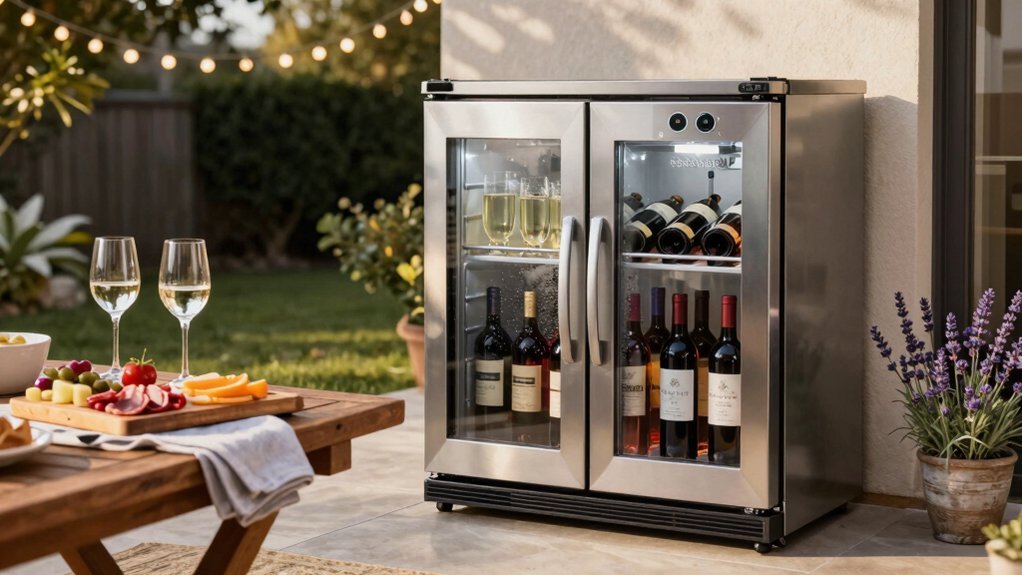
Your patio wine fridge should be set to 55°F (13°C) for ideal long-term storage of all wines. For serving, adjust to 40-50°F (4-10°C) for whites and sparkling wines, or 60-65°F (15-18°C) for reds. Dual-zone fridges let you maintain both storage and serving temperatures simultaneously. Keep the unit shaded from direct sunlight and minimize temperature fluctuations for best results. The right temperature settings will substantially enhance your outdoor wine experience.
Understanding Temperature Zones for Outdoor Wine Storage
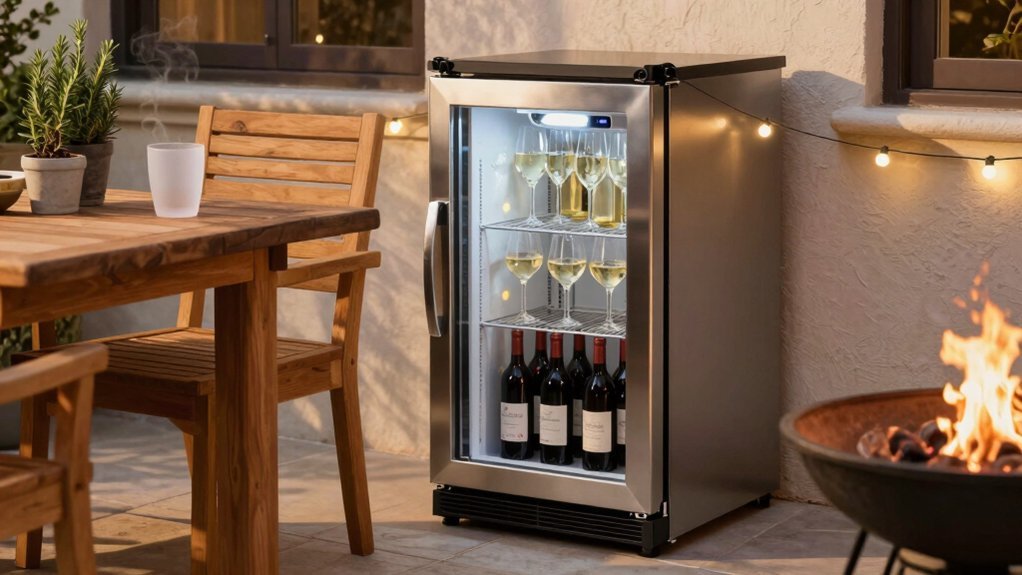
Why does temperature matter so much when storing wine outdoors? Simply put, temperature stability is essential for proper wine aging, even in patio settings. For ideal long-term storage, maintain your outdoor wine fridge at around 55°F (13°C)—the universal sweet spot for preserving wine quality.
Different wines benefit from specific temperature ranges when serving. Red wines do well in the higher range of 60°F–65°F (15°C–18°C), while whites and sparkling varieties need cooler conditions between 40°F–50°F (4°C–10°C) to maintain their freshness and acidity.
If you’ve invested in a dual-zone patio fridge, you’re in luck. You can designate one section for long-term storage at 55°F and another for serving at appropriate temperatures. Just remember to shield your fridge from direct sunlight to prevent damaging temperature fluctuations.
The Science Behind Optimal Wine Cooling Temperatures
Wine’s complex chemical structure reacts dramatically to heat, causing premature aging and spoiled flavors above 70°F.
Your temperature stability matters more than the exact number, as fluctuations break down delicate compounds that create aroma and texture.
You’ll find your ideal balance at around 55°F, which preserves both reds and whites while allowing controlled aging without the damage of warmer temperatures.
Heat Effects Wine Chemistry
How exactly does temperature influence what’s happening inside your wine bottles? Heat accelerates chemical reactions that can dramatically alter your wine’s profile. When temperatures climb, oxidation speeds up, aromatics evaporate more quickly, and your wine’s flavor deteriorates faster.
For reds, warmth hastens aging—sometimes beneficially, but often pushing wines past their prime too quickly by prematurely softening tannins or creating harsh notes. Cork shrinkage becomes a real concern as heat can create gaps that allow air in or wine to seep out, while also encouraging spoilage organisms.
Your whites and rosés are especially vulnerable, as heat dulls their fresh acidity and alters perceived sweetness. For your patio wine fridge, aim for stability around 55°F for storage to protect your collection from these chemistry-altering effects.
Temperature Stability Matters
While many wine enthusiasts focus exclusively on selecting the perfect bottle, temperature stability represents the unsung hero of proper wine storage. Consistent temperatures around 55°F (13°C) protect both reds and whites from premature aging and flavor degradation.
It’s not just about maintaining the right number—it’s about minimizing fluctuations. Sudden temperature changes accelerate oxidation, compromising your wine’s aroma and complexity. Your patio wine fridge should maintain consistent temperatures with minimal variance from top to bottom shelves.
For dual-zone fridges, dedicate one zone to long-term storage at 55°F, while using the second zone for serving temperatures—40-50°F for whites and sparkling wines. Remember that perfect precision isn’t essential; what matters most is keeping your unit within a steady 45-60°F range over time.
Finding Your Balance
Understanding the science behind wine temperature isn’t simply about numbers—it’s about chemistry. Your patio wine fridge needs to balance the aging and serving needs of your collection while combating outdoor temperature fluctuations.
For optimal aging, maintain one zone at a consistent 55°F (13°C) where both reds and whites develop properly. The second zone can be adjusted based on immediate serving plans—cooler for whites (45°F-50°F) or slightly warmer for reds (60°F-65°F).
Remember that your fridge naturally creates a small vertical temperature gradient, with the bottom about 2° cooler than the top. Use this to your advantage in winter by placing whites on lower shelves and reds higher up. This strategic approach protects your wines from oxidation while ensuring they’re ready to enjoy at their flavor peak.
White Wine Temperature Settings for Patio Fridges
When enjoying white wines outdoors, proper temperature control makes all the difference between a crisp, aromatic experience and a flat disappointment. For your patio wine fridge, keep whites in the 45°F–55°F (7°C–13°C) range to maintain their acidity and freshness.
For optimal serving, set your fridge between 45°F–50°F (7°C–10°C). This temperature range perfectly preserves aromatics while ensuring maximum crispness. Never let temperatures drop below 40°F (4°C), as excessive chilling dulls the wine’s aromatic complexity.
Consistency is crucial—fluctuating temperatures accelerate oxidation and diminish vibrancy. If you have a dual-zone patio fridge, dedicate the cooler zone (45°F–50°F) to most whites, while reserving a slightly warmer zone (55°F–60°F) for fuller-bodied white varieties that benefit from warmer service.
Red Wine Temperature Guidelines for Outdoor Units
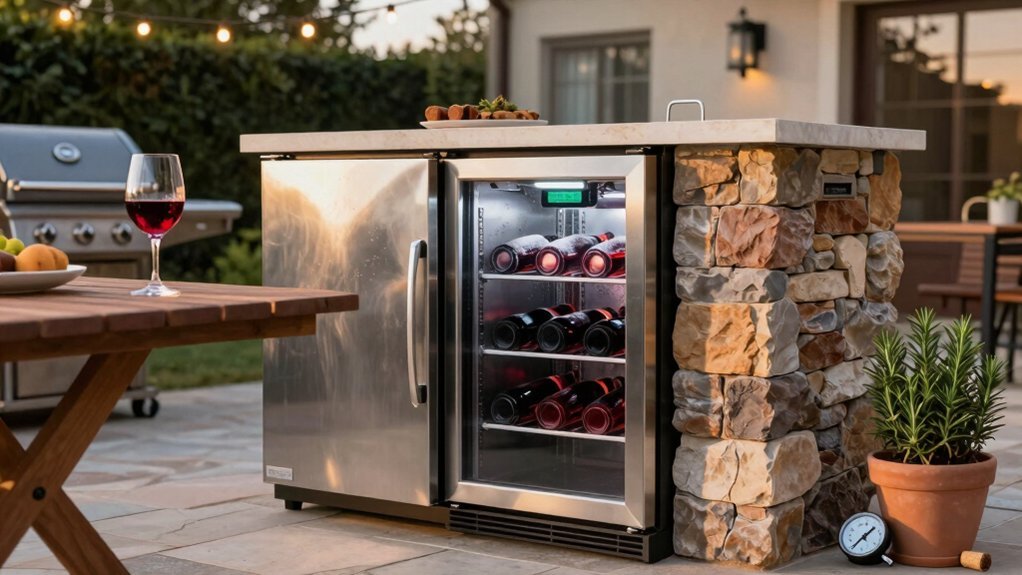
Red wines thrive in your patio wine fridge when stored at a consistent 55°F for aging, though you’ll want to serve them slightly warmer at around 60°F.
During summer, you’ll need to monitor your outdoor unit closely to prevent temperatures from exceeding 65°F, which can accelerate oxidation and compromise flavor profiles.
As seasons change, adjust your fridge settings to maintain that ideal 55°F storage temperature, especially during winter when external temperature fluctuations can affect your unit’s performance.
Ideal Red Ranges
How perfectly should you store your reds in an outdoor wine fridge? For optimal aging and flavor development, maintain temperatures between 55°F and 65°F (13°C-18°C). A stable environment around 60°F (15°C) works well for both storing and serving reds directly from your patio fridge.
If you’ve invested in a dual-zone unit, dedicate one zone to long-term storage at about 55°F (13°C) and use the second zone at a slightly warmer setting when you’re ready to serve. This flexibility ensures your collection develops properly while remaining ready for enjoyment.
Never let temperatures drop below 50°F (10°C) or climb above 70°F (21°C), as this will either stunt flavor development or accelerate aging. Temperature stability is crucial—keep fluctuations within a 2-3°F range for preserving your reds’ quality outdoors.
Heat Impact Management
Managing heat exposure presents the greatest challenge for outdoor wine refrigeration. When temperatures fluctuate on your patio, your red wines risk accelerated aging and flavor deterioration.
| Temperature Issue | Impact on Reds | Solution |
|---|---|---|
| Direct sunlight | Rapid oxidation | Shade your unit completely |
| Summer heat waves | Flavor flattening | Set temp to 55°F during hot periods |
| Internal gradients | Inconsistent aging | Rotate bottles monthly |
| Power fluctuations | Temperature spikes | Install surge protector |
| Seasonal changes | Storage adjustments | Lower settings in summer, higher in winter |
For optimal protection, set your outdoor fridge to the lower end of the red wine range (55-57°F) during warm weather. Always allow bottles to rest 30 minutes before serving to reach the ideal drinking temperature of 60°F, preserving both quality and flavor complexity.
Seasonal Setting Adjustments
Seasonal temperature fluctuations require specific adjustments to your patio wine fridge settings throughout the year. During winter months, when outdoor temperatures naturally drop, maintain your red wine storage at a stable 55°F (13°C) rather than letting it fall to white wine temperatures (45-50°F). This consistency supports proper aging despite external variability.
If your outdoor unit has a temperature gradient of about 2°F between zones, set a single consistent point near 55°F to balance storage conditions throughout the fridge. As outdoor conditions change with seasons, remember that serving temperature differs from storage—pull bottles 30 minutes before drinking to reach the ideal 60°F (15-16°C) serving temperature for reds.
Year-round, prioritize humidity and vibration control alongside temperature management to preserve cork integrity and flavor development during extended patio storage.
Seasonal Adjustments for Your Patio Wine Cooler
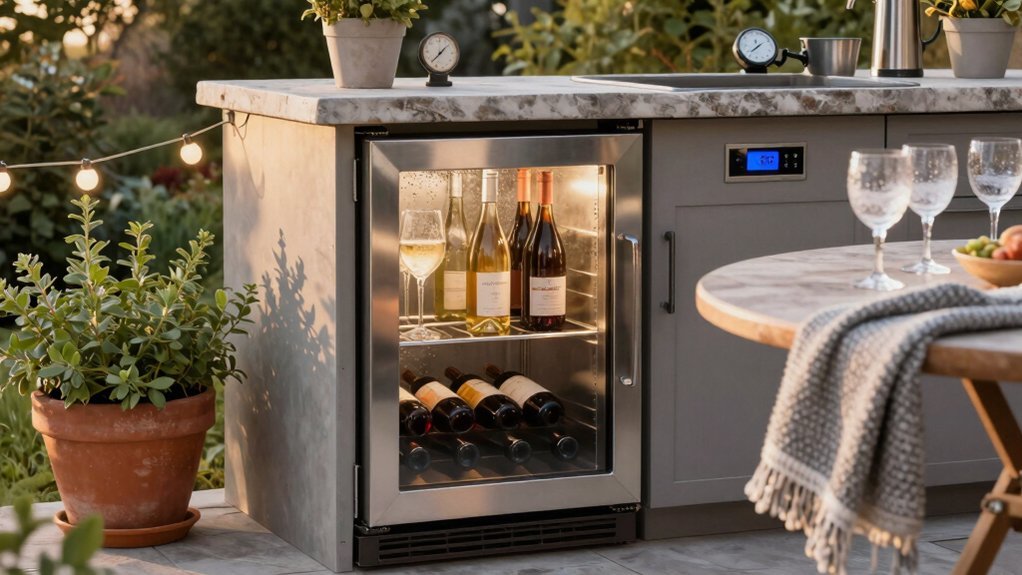
Why should your outdoor wine collection suffer when the weather changes? Adjust your patio wine fridge settings to protect your bottles year-round. During winter, keep delicate whites in a 40-45°F zone to shield them from cold snaps. In summer, ensure reds don’t exceed 65°F to prevent premature aging.
| Season | Temperature Setting | Special Considerations |
|---|---|---|
| Winter | 40-45°F (4-7°C) | Protect whites from ambient cold |
| Summer | 55-65°F (13-18°C) | Prevent oxidation in reds |
| Spring/Fall | 55°F (13°C) | Ideal balance for all wines |
For maximum flexibility, invest in a dual-zone unit: maintain one zone at 55°F for storage while using the other at 40-50°F for serving whites and sparkling wines. Always monitor humidity (50-70%) and minimize vibrations regardless of season.
Dual-Zone Configurations for Backyard Entertaining
Your dual-zone patio wine fridge lets you create the perfect temperature balance for any outdoor gathering, with reds at 60°F in one zone and whites chilled to 40-50°F in the other.
You’ll want to adjust these zones seasonally, keeping your storage area consistently at 55°F while modifying your serving zone based on the outdoor temperature and guest preferences.
During winter entertaining, you can maintain quick access to perfectly chilled wines by ensuring your frequently-used zone stays within its optimal operating range, protected from extreme temperature fluctuations.
Reds vs. Whites Setup
When hosting outdoor gatherings, a dual-zone wine fridge transforms your patio into a sommelier’s station. Dedicate one zone to reds at 60–65°F (15–18°C), perfect for immediate serving, while keeping whites chilled at 40–50°F (4–10°C) to preserve their crisp character.
For long-term storage, maintain a stable 55°F (13°C) baseline that supports both varietals. Remember to pull reds 30–60 minutes before serving to reach ideal temperature, while whites need just a few minutes to slightly warm.
| Wine Type | Storage Temp | Serving Time |
|---|---|---|
| Bold Reds | 55°F/13°C | 60 min ahead |
| Light Reds | 55°F/13°C | 30 min ahead |
| All Whites | 45°F/7°C | 5 min ahead |
Minimize temperature fluctuations between zones—even small changes can dramatically affect your wine’s aroma profiles and aging potential.
Party-Ready Temperature Zones
How effectively can a dual-zone patio wine fridge transform ordinary backyard gatherings into exceptional entertainment experiences? The secret lies in strategic temperature zoning. Set your primary storage zone to 55°F, creating a perfect home for your collection, while configuring the service zone at 40-50°F for whites and sparkling wines that should be enjoyed chilled.
For red wine service, you’ve got options. Either dedicate the warmer zone to 60-65°F for immediate serving, or pull bottles from your 55°F storage zone 15-30 minutes before guests arrive. Remember that temperature naturally stratifies within each compartment—the top runs about 2°F warmer than the bottom, offering micro-zones you can leverage.
Your perfect party setup keeps whites crisp at cooler temperatures while allowing reds to express their full flavor at slightly warmer settings.
Seasonal Temperature Adjustments
Adapting your dual-zone patio wine fridge settings throughout the year ensures perfect wine service regardless of weather conditions. During winter gatherings, set your top zone to 55°F for storage while allowing the bottom zone to drop to 40-45°F for properly chilled whites and sparklers.
In summer months, maintain your serving zone between 40-50°F and keep your storage zone steady at 55°F to balance immediate service needs with long-term preservation. This approach provides consistent access to properly chilled wines during outdoor entertaining.
To combat seasonal fluctuations, verify your fridge has adequate insulation and minimize door openings. Place a thermometer in each zone to confirm temperature stability, aiming for less than 3°F variation. This precision prevents oxidation and preserves delicate flavors, regardless of the backyard temperatures surrounding your unit.
How Humidity Affects Patio Wine Storage Temperature
While temperature control remains the primary focus for wine storage, humidity plays an equally crucial role in preserving your collection on the patio. The relationship between temperature and humidity directly impacts cork integrity and wine quality.
| Humidity Level | Effect on Wine | Recommended Action |
|---|---|---|
| Below 50% RH | Cork shrinkage, oxidation risk | Increase humidity with water tray |
| 50%-70% RH | Optimal cork moisture | Maintain current settings |
| Above 70% RH | Mold growth potential | Reduce humidity with dehumidifier |
| Fluctuating | Inconsistent aging | Install sealed-door fridge |
| Seasonal Changes | Varying preservation needs | Adjust settings quarterly |
For patio setups, you’ll need to be especially vigilant about humidity levels since outdoor conditions fluctuate more than indoor environments. Your wine fridge should maintain 50-70% relative humidity while keeping temperatures between 55-60°F for proper aging.
Temperature Recovery After Frequent Opening
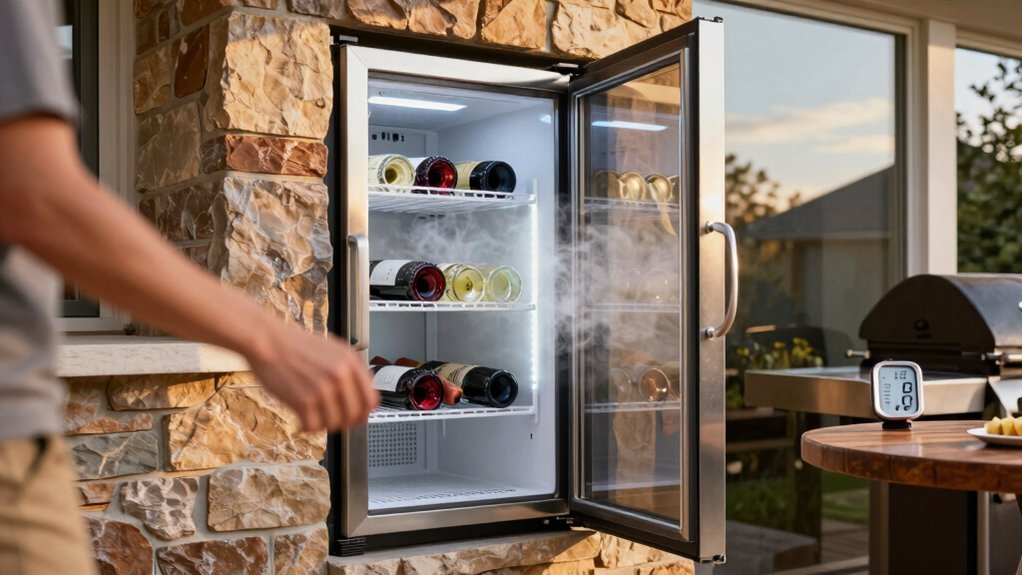
Ever notice how your patio wine fridge struggles to maintain its set temperature when you’re entertaining guests? That’s because each opening introduces warm air that must be cooled again.
To optimize recovery time, set your temperature 2-3°F lower than your ideal serving temperature. This compensates for the inevitable heat gain during frequent access. Allow 15-30 minutes between openings for the unit to stabilize—rushing this process forces your compressor to work overtime.
For serious entertainers, a dual-zone fridge offers the perfect solution: keep your storage zone at 55°F while maintaining a service zone at 40-50°F. This arrangement reduces temperature fluctuations in your long-term storage area.
Place a reliable thermometer inside to monitor actual temperatures rather than relying solely on the thermostat display, especially during busy gatherings.
Protecting Wine From Extreme Outdoor Conditions
When the mercury soars or plummets, your outdoor wine fridge faces its greatest challenge: maintaining that perfect internal temperature despite nature’s extremes. Set your thermostat to 55°F (13°C) for ideal long-term storage stability, regardless of what’s happening outside.
Position your unit away from direct sunlight and heat sources to prevent temperature fluctuations and preserve cork humidity. In hot climates, add insulation and monitor the compressor cycle to prevent overheating and accelerated oxidation. For winter protection, ensure your fridge has a reliable heating system to keep temperatures above 40°F (4°C).
Install a high-quality climate controller or thermometer inside the cabinet to track conditions, allowing you to quickly adjust settings if interior temperatures drift outside the recommended 45–60°F (7–16°C) range.
Energy Efficiency Considerations for Outdoor Cooling
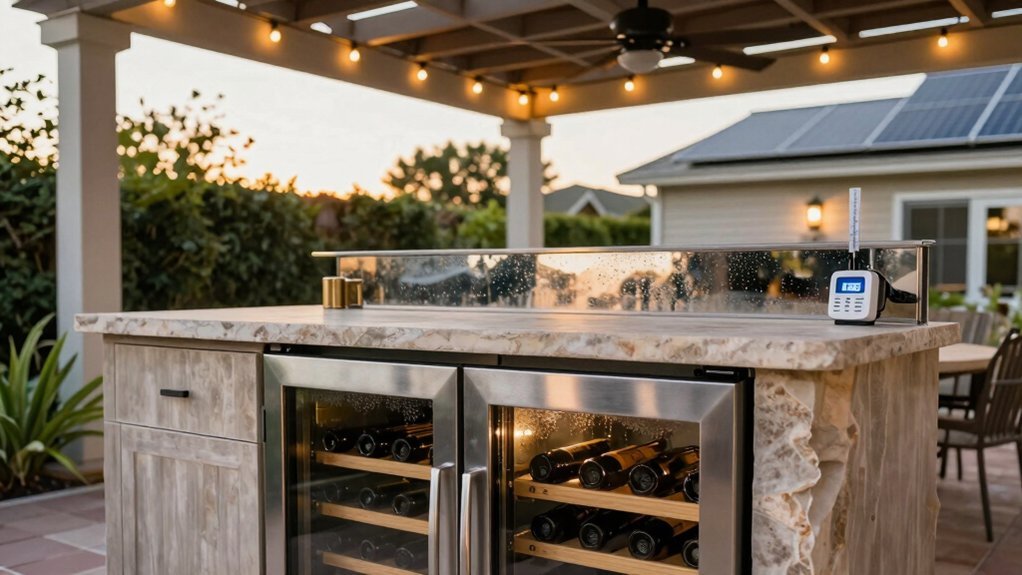
How efficiently your patio wine fridge operates can substantially impact both your electricity bill and the environment. Always prioritize ENERGY STAR-rated units designed specifically for outdoor use, as they’re engineered to handle temperature fluctuations without excessive energy consumption.
Your fridge’s performance depends on proper insulation and compressor quality. Look for models with insulated doors and low-temperature defrost capabilities to prevent energy-wasting cycling. Maintaining a consistent 55°F (13°C) requires reliable temperature stability mechanisms that won’t overwork when outdoor conditions change.
Ensure you’re using an outdoor-rated power source with weatherproof installation to avoid efficiency losses. Limit door openings and consider smart controls that buffer against ambient temperature shifts. These practices will help maintain optimal cooling while keeping energy costs manageable throughout seasonal changes.
Digital vs. Manual Temperature Controls for Patio Units
Which temperature control system you choose for your patio wine fridge can profoundly impact your wine preservation experience. Digital controls offer precision between 39°F and 64°F, displaying real-time temperatures that help maintain stable conditions crucial for wine quality.
You’ll find manual controls more basic, operating through dials that provide less exact temperature settings. While adequate for short-term serving needs, they require more frequent monitoring and adjustment, especially in fluctuating outdoor environments where heat gain is common.
If you’re aging wine long-term at the ideal 55°F (13°C), digital controls deliver the consistency your collection demands. However, if you’re primarily using your patio fridge for short-term storage before serving, a manual system might suffice—though you’ll sacrifice the precision that serious collectors prefer.
Temperature Monitoring Tools and Technologies
Why invest in premium wines only to have them compromised by temperature fluctuations? Your patio wine fridge deserves dedicated monitoring tools to maintain optimal conditions.
A reliable thermometer is essential for verifying both storage (typically 55°F) and serving zones stay within target ranges. Digital cooler controls commonly span 39–64°F, allowing precise setpoints for different beverages. For greater accuracy, consider wireless or external temperature sensors that track both interior conditions and ambient environment changes.
When you need to serve wine quickly, combine quick-chill methods like ice-water salt baths with thermometer checks to reach ideal serving temperatures faster. Regular monitoring helps detect temperature drift caused by weather changes or frequent door openings, preventing oxidation and preserving delicate flavors in your outdoor collection.
Pairing Perfect Wine Temperatures With Outdoor Cuisine
The perfect outdoor dining experience isn’t just about the food—it’s about serving your wines at temperatures that complement your cuisine. For crisp whites, rosés, and sparklers that pair with lighter fare, maintain your patio fridge’s serving zone at 40-50°F to preserve their revitalizing character against outdoor warmth.
When serving robust reds with grilled meats, aim for 60-65°F by removing bottles 30-60 minutes before mealtime. This balances their fruit notes and tannins with your hearty dishes.
Utilize dual-zone fridges strategically: keep immediate-service wines cooler while maintaining a 55°F zone for bottles needing aging. As temperatures fluctuate outdoors, be ready to make quick adjustments—warming a too-cold red with your hands or chilling an overheated white in an ice bucket to ensure each pour enhances your meal.
Frequently Asked Questions
What Is the Best Temperature for a Wine Fridge?
For optimal aging, set your wine fridge at 55°F (13°C). You’ll want to maintain this consistent temperature for both reds and whites, avoiding fluctuations that can damage your collection.
What Is the 30 30 Rule for Wine?
The 30-30 rule means you’ll chill your wine in ice water with salt for 30 minutes to lower its temperature by about 30°F, quickly bringing it to proper serving temperature.
Is a Fridge Colder on 1 or 7?
On most wine fridges, setting 7 is colder than 1. However, you’ll want to check your specific model’s manual as some manufacturers may use reverse numbering systems.
Is 50 Degrees Too Cold to Store Wine?
No, 50°F isn’t too cold for wine storage. It’s actually ideal for many wines, especially whites. You’ll slow aging slightly while preserving acidity and freshness in your collection.