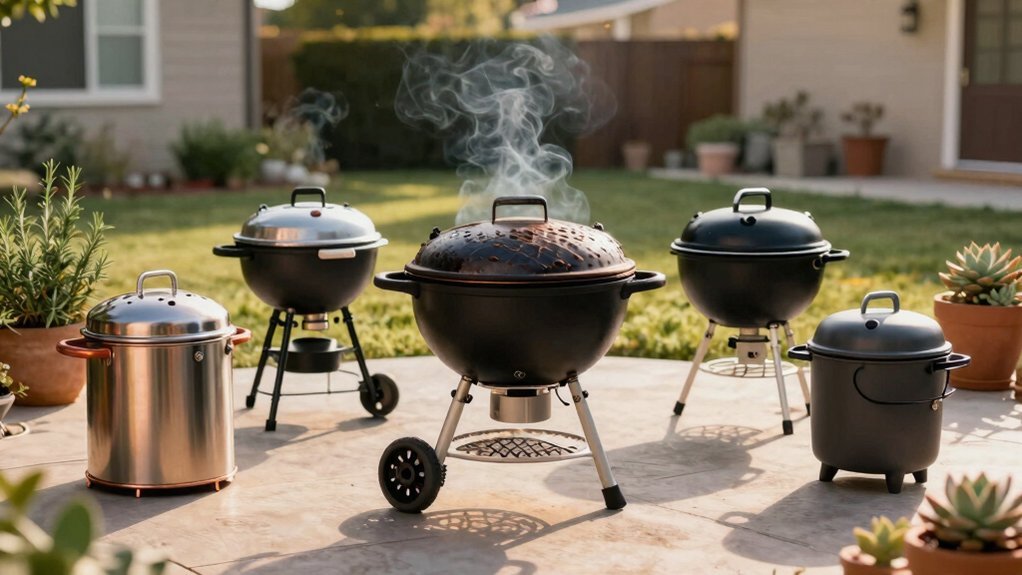

Wireless remote cooking timers transform your outdoor grilling experience by monitoring temperatures from anywhere. You’ll receive real-time alerts when your meat reaches target temperatures, preventing overcooking while freeing you to socialize or prepare sides. With multi-probe capability, you can track different cuts simultaneously, while weather-resistant designs withstand outdoor elements. Whether using Bluetooth for nearby monitoring or Wi-Fi for extended range, these timers offer precision that elevates your barbecue game without constant supervision.
Real-Time Temperature Monitoring From Anywhere
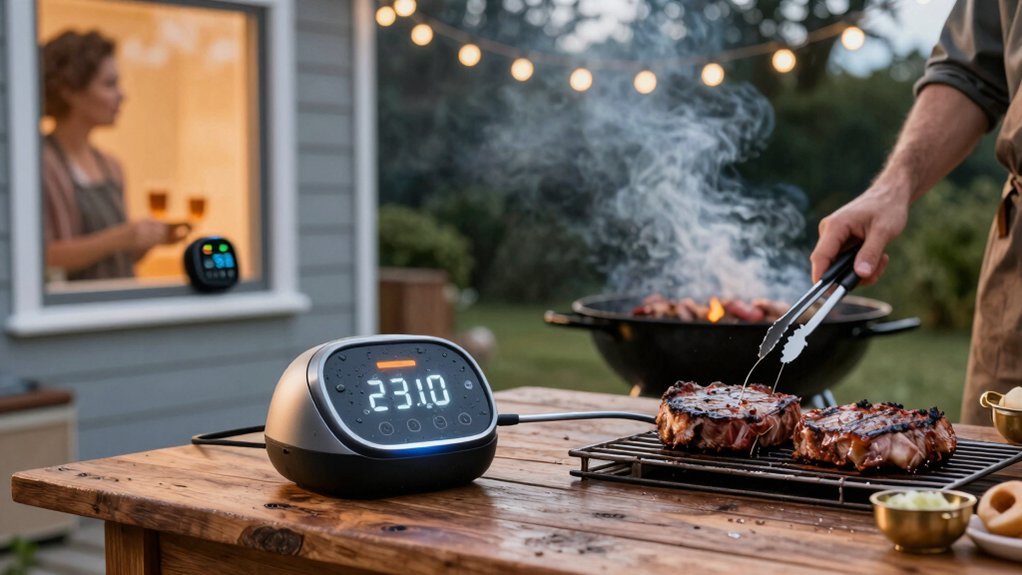
How frustrating is it to constantly run back and forth checking your grill temperatures? Wireless remote cooking timers eliminate this hassle by sending probe readings directly to your phone or base unit.
Wi-Fi-enabled models offer superior range and stability compared to Bluetooth versions, which often lose connection beyond 6 feet or through walls. For reliable outdoor cooking, you’ll want a system that maintains connection even when you’re inside or at a distance from your grill.
The best devices support multiple probes—some handling up to eight simultaneously—letting you track both meat temperatures and ambient cooking conditions. Your app displays current readings, target alarms, and even predicted finish times, though interface quality varies between models. Position probes correctly for accurate readings that ensure perfectly cooked results every time.
Multiple Probe Capability for Complex Meals
When juggling multiple cuts of meat at your backyard cookout, how can you ensure everything finishes perfectly? Multiple probe capability is your answer. You’ll monitor different parts of your meal simultaneously—checking your chicken’s interior while tracking grill temperature and that pork loin.
Models like ThermoPro TP25 offer four probes, while Combustion units provide up to seven internal sensors plus ambient monitoring. This technology lets you compare temperatures across different sections of meat in real time, accounting for uneven cooking and carryover heat.
You’ll reduce guesswork during multi-item cooks by getting distinct readouts for each piece. Just ensure your wireless setup maintains a stable connection—some units lose signal beyond six feet, which could compromise your monitoring reliability during complex outdoor meals.
Preventing Overcooking With Custom Alerts
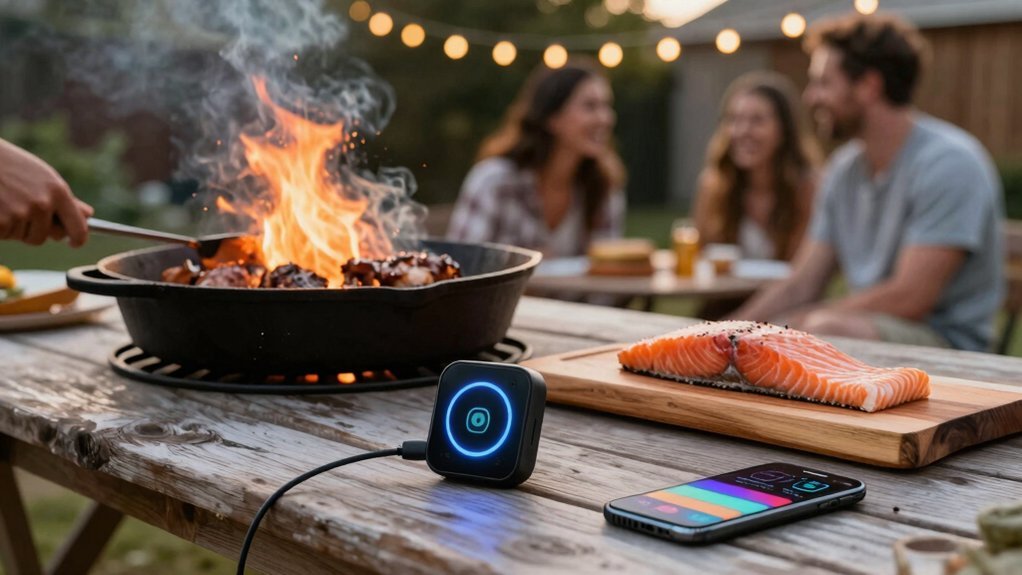
Precisely why do outdoor cooks consistently ruin perfect cuts of meat? Often it’s because they lack real-time temperature monitoring with customizable alerts. Custom threshold settings serve as your vigilant assistant, preventing that dreaded moment when you realize your prime ribeye has turned into shoe leather.
| Alert Type | Benefit | Application |
|---|---|---|
| High/Low Thresholds | Prevents over/undercooking | Set separate targets for different meats |
| Ambient Monitoring | Early warning system | Detects unexpected temperature spikes |
| Carryover Alerts | Accounts for residual cooking | Prompts you to remove meat before it reaches final temp |
You’ll receive notifications via sound, vibration, or push alerts—even when you’re mingling with guests away from the grill. By programming distinct targets for multiple cuts (chicken at 165°F, pork at 145°F), you’ll achieve perfect doneness across your entire outdoor spread.
Extending Your Cooking Range Beyond the Grill
Where’s the freedom in outdoor cooking if you’re chained to your grill? Wireless remote timers liberate you by transmitting probe temperatures to your smartphone or dedicated receiver, letting you monitor your food from anywhere around your home.
Wi-Fi-connected systems offer superior range over Bluetooth models, which often disconnect beyond 6 feet or through walls. For reliable monitoring, position your base unit or gateway within the recommended distance of your grill. Some advanced systems support up to eight probes and include signal repeaters to maintain connection throughout your property.
When setting up your system, consider your home’s layout and potential signal interference. The practical benefit? You’ll receive timely alerts about temperature changes while entertaining guests, watching the game, or preparing sides in your kitchen.
Managing Long Cooks Without Constant Supervision
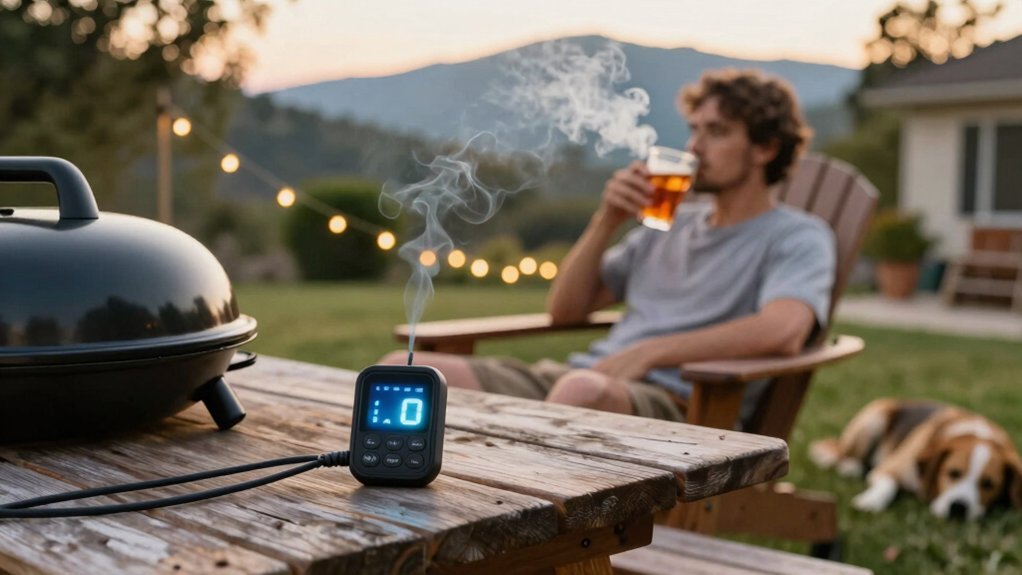
Long, slow cooking methods like smoking and barbecuing demand patience but not your constant presence, thanks to wireless remote cooking timers. With multi-probe models like the ThermoPro TP25, you can simultaneously track internal meat temperatures and ambient grill conditions, giving you reliable doneness predictions without hovering over the pit.
During extended cooks, you’ll notice ambient and internal temperature readings initially differ (sometimes by 35-52°F) but converge over hours. This data helps you anticipate carryover cooking more accurately. The best systems offer time-to-target estimates and programmable alarms that free you from constant checking.
For optimal results, choose a timer with reliable range—look for RFx or Meat Stick setups that maintain connectivity several feet indoors—and clear app displays that distinguish between ambient and internal readings.
Weather-Resistant Design for Outdoor Durability
Your wireless cooking timer’s weather-resistant design ensures reliability through the harshest outdoor conditions, with waterproof probes and cables that withstand rain, splashes, and humidity during extended cooks.
The rugged construction tolerates extreme temperature variations from freezing mornings to scorching afternoons while maintaining accurate readings throughout your cooking session.
Sealed IP-rated housings protect the signal strength between your base unit and remote receiver, preventing moisture and environmental exposure from disrupting your alerts even when you’re away from the grill.
Waterproof Probe Construction
The rugged outdoors demands cooking equipment that can withstand nature’s unpredictable elements. When selecting wireless timers for your outdoor cooking, focus on probes featuring braided metal cables and waterproof housings that stand up to rain, splatter, and intense heat without compromising signal integrity.
Quality waterproof probes come with IP-rated seals and reinforced connectors specifically engineered to endure repeated heating and cooling cycles during your barbecue sessions. You’ll want sensors that maintain accuracy across extreme temperatures (-58°F to 572°F) even when exposed to direct sunlight.
The most durable models have proven their worth through rigorous testing, surviving high-heat cooking rounds and multiple insertion cycles. This weather-resistant construction prevents moisture ingress in probe tips and ambient sensors, ensuring reliable performance during damp conditions or off-grid cookouts.
Extreme Temperature Tolerance
Why settle for standard kitchen timers when outdoor cooking demands exceptional resilience? Your outdoor cooking companion needs to handle temperature extremes that would render ordinary timers useless. Look for devices specifically rated for extended temperature ranges that can withstand the intense heat near your grill and the cool night air during long smoking sessions.
Quality wireless remote timers feature probes and cables that can survive temperatures well above typical grilling heat without failing or delivering inaccurate readings. The best models incorporate braided metal cables that resist melting when brushed against hot grates. Remember that consistent performance across temperature fluctuations is crucial—your timer should deliver reliable measurements whether you’re searing steaks at 600°F or slow-smoking brisket through overnight temperature drops.
Signal Strength Protection
When cooking outdoors, signal strength protection becomes non-negotiable for wireless timers exposed to nature’s unpredictability. Your outdoor cooking companion needs robust long-range transmission capabilities that won’t falter when you’re mingling with guests across the yard.
Look for timers with IP-rated enclosures that shield sensitive electronics from moisture and dust. Quality models feature stable Wi-Fi or RF links engineered specifically to minimize interference from other devices or environmental factors.
You’ll appreciate the difference when your timer maintains a reliable connection despite rain showers or gusty winds. The best outdoor models combine rugged, braided cables with sealed probes that resist corrosion and continue transmitting accurate readings through temperature swings. This protection ensures you’ll get consistent alerts whether you’re grilling in bright sunshine or finishing dinner as evening temperatures drop.
App Integration and Smart Home Compatibility
Modern wireless cooking timers connect seamlessly across iOS, Android, and smart home platforms, letting you monitor your grill from anywhere through intuitive apps. You’ll appreciate how these systems integrate with Alexa or Google Assistant, enabling hands-free temperature checks and timer adjustments while your hands are busy with food prep. The cross-platform compatibility ensures you’re never tethered to a specific ecosystem, while voice commands transform how you manage outdoor cooking sessions.
Cross-Platform Connectivity Features
How effectively your wireless cooking timer functions within your broader tech ecosystem can substantially impact your outdoor cooking experience. When selecting your device, prioritize cross-platform compatibility to ensure seamless integration with your existing technology.
- Wi-Fi enabled models like the Weber Connect 3201 offer superior home network integration, allowing monitoring from anywhere
- Bluetooth-only timers provide basic functionality but limit your movement range to approximately 100-200 feet
- Multi-probe systems (ThermoPro TP25/TP28) connect to apps that centralize control of different meats cooking simultaneously
- Consider whether your timer’s app works across iOS/Android and supports data sharing between household devices
- Look for timers with open APIs or smart home compatibility if you want integration with voice assistants or automation routines
The right connectivity features ensure you’ll never miss a critical temperature alert, regardless of which devices you use.
Voice Control Possibilities
Why limit yourself to manual controls when your outdoor cooking timer can respond to your voice? Many Wi-Fi-enabled timers now integrate with Alexa and Google Assistant, letting you check temperatures, set timers, or receive alerts completely hands-free while grilling.
You’ll appreciate voice commands when your hands are occupied with food prep or tending the grill. Simply ask your smart speaker to start a cook, switch temperature targets, or announce the current probe readings without touching your phone or the device.
For reliable voice control, choose Wi-Fi systems like ThermoWorks Smoke or Weber Connect that offer official smart home integration. Bluetooth-only timers typically lack this functionality. Remember that voice features depend on stable Wi-Fi coverage or proximity to your smart home hub when cooking outdoors.
Mastering Temperature Control for Perfect Results
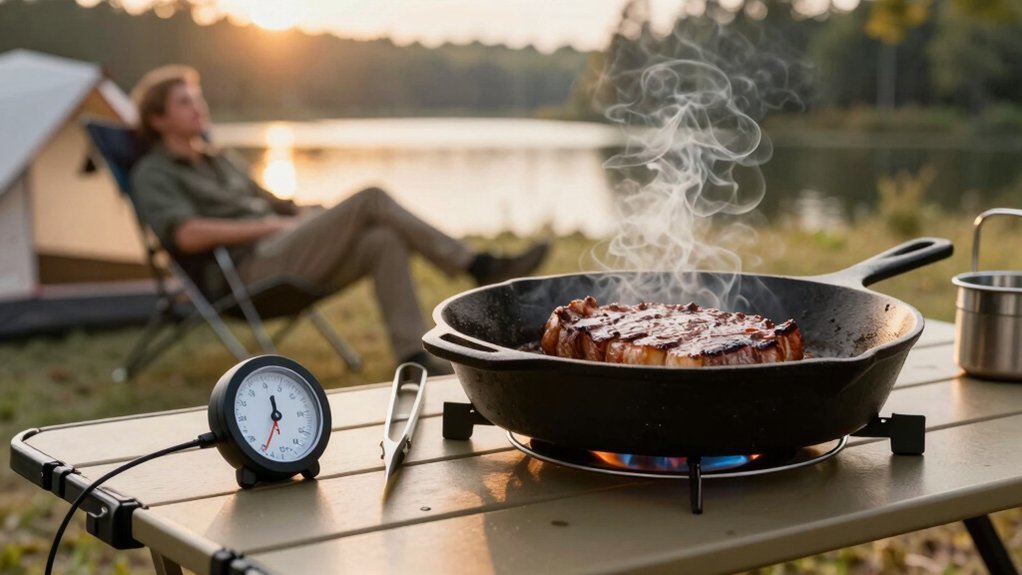
Temperature control stands as the cornerstone of successful outdoor cooking, where wireless remote timers transform guesswork into precision. By leveraging multi-probe capabilities, you’ll monitor both meat and ambient temperatures simultaneously, ensuring perfect doneness every time.
- Insert probes to recommended depth for accurate readings
- Account for carryover heating after removing meat from heat
- Set customizable alerts for target temperatures (165°F for poultry)
- Utilize predictive cook features to anticipate completion times
- Position probes strategically in different zones for comprehensive monitoring
Long-range connectivity options outperform Bluetooth in busy outdoor environments, eliminating the need to hover near your grill. With up to eight probes in premium models, you’ll track different cooking zones with unprecedented accuracy. These capabilities transform your grilling experience from anxious monitoring to confident control, delivering consistently perfect results regardless of weather conditions or cooking complexity.
Battery Life and Power Management Outdoors
Reliable power management stands as the unsung hero behind your perfectly timed outdoor cooking sessions. When selecting a wireless cooking timer, consider how battery types impact performance in extreme temperatures, especially for probes rated to withstand up to 572°F.
Choose models with high-temperature rated batteries for probes and rechargeable options for base units. Be aware that Bluetooth systems often drain power faster than Wi-Fi or dedicated RF receivers when used outdoors. For lengthy smoking or barbecuing sessions, you’ll maximize battery life by using only necessary probes and limiting alerts to essential temperatures.
Don’t compromise on chicken and poultry safety alarms, but disable unnecessary notifications to extend runtime. Remember that features like ambient temperature sensors increase power consumption, so prioritize what you truly need for your cooking style.
Signal Strength Considerations for Large Yards
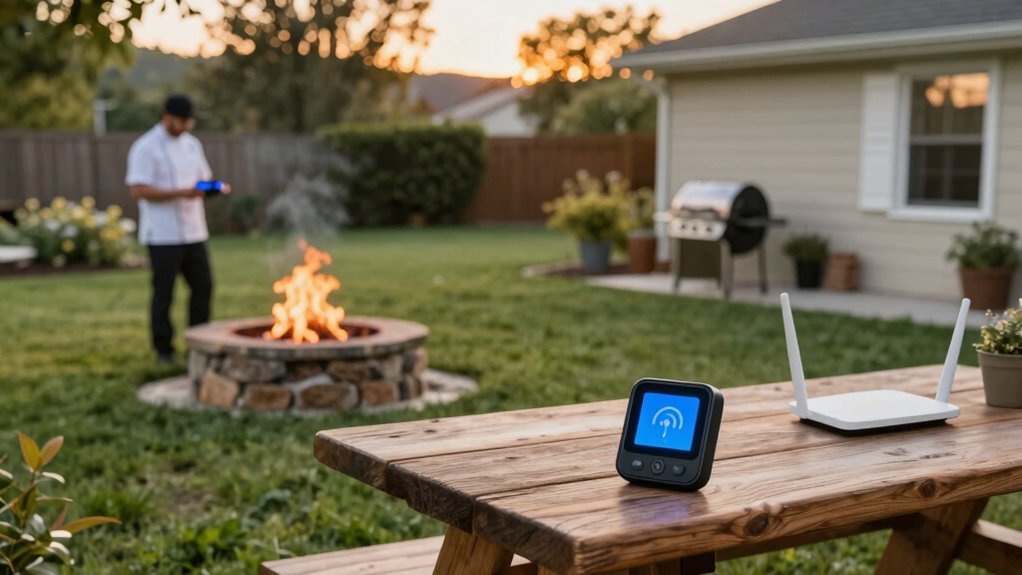
When cooking in expansive outdoor spaces, signal strength becomes your most essential consideration for wireless thermometers. Testing reveals that standard Bluetooth connections typically fail beyond 6 feet, while Wi-Fi and base station models provide more reliable outdoor monitoring.
- Bluetooth-only probes like Meat Stick and Thermo Pro often disconnect at distances exceeding 6 feet
- Cast iron and grill lids don’t completely block signals but can reduce effective range
- Dedicated gateway systems maintain connections across larger properties
- Wi-Fi-enabled options outperform pure Bluetooth models for whole-house distance
- Front porch and yard tests confirm you’ll need signal boosters for expansive setups
For successful remote monitoring in your large yard, prioritize thermometers with Wi-Fi capabilities or dedicated receivers instead of relying solely on Bluetooth connections, which simply can’t maintain stable links at longer distances.
Nighttime Grilling Made Easier With Digital Displays
Ever tried squinting at a traditional thermometer in the dark? Wireless remote timers eliminate this frustration with illuminated digital displays specifically designed for nighttime grilling sessions.
Models like ThermoWorks Smoke and ThermoPro TP25 display real-time internal and ambient temperatures on base units or smartphone apps, letting you monitor doneness without a flashlight. The backlit or high-contrast screens ensure you’ll never miss important readings, while audible alarms alert you when target temperatures are reached—even if you’ve stepped away from the grill.
For enhanced visibility, some units offer dedicated receivers with graphical temperature displays that are easy to interpret in low-light conditions. And since these devices are battery-powered, you’ll enjoy complete portability without needing electrical outlets near your cooking space.
Tracking Temperature History for Recipe Development
Beyond the convenience of nighttime monitoring, wireless remote cooking timers offer a game-changing feature for outdoor chefs: complete temperature history tracking. You’ll see exactly how temperatures evolve throughout your cook, including the critical carryover period after removing food from heat.
Temperature history tracking gives you x-ray vision into your cook, revealing the full story from start to finish—even after the heat stops.
- Compare multiple probe readings simultaneously with time-stamped graphs
- Analyze convergence patterns between ambient and internal temperatures
- Export rich datasets to Excel for detailed accuracy analysis
- Refine recipes using historical data from previous cooks
- Evaluate predictive cook-time features against actual results
This historical temperature data transforms how you develop recipes. When testing shows your ambient probe initially reads 35-52°F off but converges after 4 hours, you’ll understand why your previous cooks varied. For long-duration smoking sessions up to 11 hours, these detailed temperature histories become invaluable for consistent results.
Handling Carryover Cooking With Precision
Wireless remote cooking timers transform your outdoor cooking by precisely managing carryover heat, allowing you to pull meat at the right moment based on predictive alerts rather than guesswork. You’ll enjoy better results by setting alerts 5-10°F below target temperature, giving the residual heat time to finish cooking without drying out your meal. Your remote system’s temperature tracking empowers you to develop pull-temp strategies specific to different cuts and cooking environments, ensuring perfect doneness every time.
Temperature Resting Strategies
How frequently have you pulled your perfectly grilled chicken from the heat, only to find it overcooked minutes later? Mastering temperature resting strategies with your wireless thermometer helps you harness carryover cooking to your advantage instead of letting it ruin your meal.
- Set your target temperature 5°F below final desired temperature (160°F for poultry)
- Configure dual alerts—one for removal temperature and another for final target
- Use multiple probes to monitor both ambient and internal temperatures simultaneously
- Allow at least 4 hours for accurate ambient-to-internal temperature correlation
- Trust the thermometer’s alerts rather than relying solely on app-predicted cook times
With these resting strategies, you’ll confidently remove your meat at precisely the right moment, allowing carryover cooking to bring it to perfection during the rest period rather than pushing it past ideal doneness.
Predictive Alert Settings
While many grilling enthusiasts focus solely on peak cooking temperatures, mastering predictive alert settings on your wireless thermometer transforms your outdoor cooking precision. Set alerts 5°F below your target temperature to account for carryover cooking—for example, configuring a 160°F alert when aiming for the 165°F poultry safety threshold.
Your app’s visual elements matter: watch both the predicted finish line and actual temperature curves as they update in real-time. Most quality thermometers display ambient versus internal readings simultaneously, with advanced models like Fireboard and Meter Pro supporting multiple probe monitoring.
Configure high/low temperature boundaries and enable vibration alerts for immediate notification when it’s time to remove your meat. Remember that ambient probes may initially lag behind internal readings, so trust the meat probe’s data for critical timing decisions.
Pull-Temp Best Practices
Understanding pull-temp best practices builds directly on your mastery of predictive alerts. When cooking outdoors, accounting for carryover cooking will help you achieve perfect doneness every time.
- Remove poultry a few degrees below 165°F, as internal temperature will continue rising after removal
- Compare ambient and internal probe readings to anticipate carryover effects, especially during the first few hours
- Set two alerts: one for your final target and another for 5 minutes before completion to prepare for removal
- Trust internal probe readings after about 4 hours, when they’ve stabilized relative to ambient temperatures
- Place your probe in the thickest part of the meat and adjust predictive cook times based on real-time internal readings
Comparing Bluetooth vs. Wi-Fi Performance Outdoors
Two critical wireless technologies compete for your outdoor cooking connectivity needs, but they don’t perform equally when you step outside. Bluetooth typically loses signal beyond 6 feet in open air, while Wi-Fi maintains more stable connections at greater distances.
| Feature | Bluetooth | Wi-Fi |
|---|---|---|
| Range | Limited (~6ft outdoors) | Extended (with gateway) |
| Heat Resistance | Varies by probe | Generally more stable |
| Signal Reliability | Drops at barriers | Maintains through walls |
For serious outdoor cooking, consider Wi-Fi systems with dedicated gateways and multiple probes. These setups provide redundancy when signals drop and better ambient temperature readings. Cast iron and Dutch oven cooking particularly benefit from Wi-Fi’s superior range and stability, preventing disconnections when you’re furthest from your cooker.
Frequently Asked Questions
What Is the Most Accurate Wireless Meat Probe?
ThermoWorks Smoke offers high accuracy with long-range connectivity, making it your best outdoor choice. While it shows early ambient temperature divergence, internal probe temperatures become highly reliable after four hours.
Do I Need a Wireless Thermometer for a Grill?
Yes, you’ll benefit from a wireless thermometer for your grill. It lets you monitor meat temperatures remotely, prevents overcooking, eliminates constant lid-opening, and helps you multitask while ensuring food safety.
Are Wireless Meat Thermometers Safe?
Yes, wireless meat thermometers are safe. They’re designed with food-grade materials, heat-resistant cables, and radio signals that don’t affect food quality. You’ll get accurate temperature readings without safety concerns.
How Do Wireless Thermometers Compare to Wired?
Wireless thermometers offer mobility and multiple probe options, but have range limitations and cost more than wired models. You’ll gain freedom to move around while cooking, trading simplicity for connectivity features.