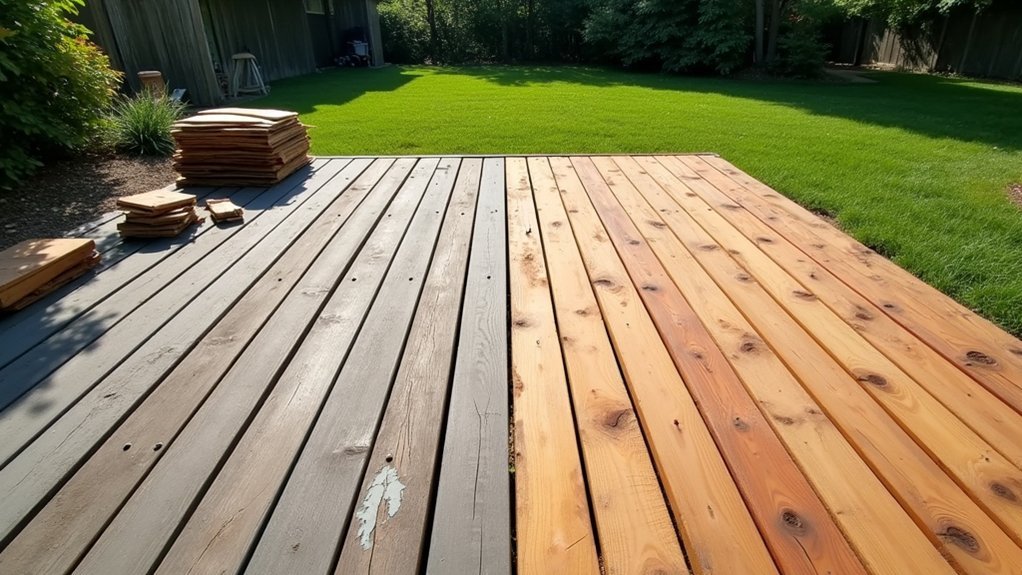
You’ll save 30–50% compared to full replacement while achieving the same fresh, updated look. Resurfacing keeps your structurally sound joists, beams, and posts intact, which cuts labor time, reduces waste, and often avoids permit headaches. The project wraps up in just two to four days instead of weeks. You can even upgrade to premium composite materials for less than a complete rebuild would cost. Below, you’ll discover exactly how to determine if your deck qualifies.
Understanding the True Cost Difference Between Resurfacing and Replacement
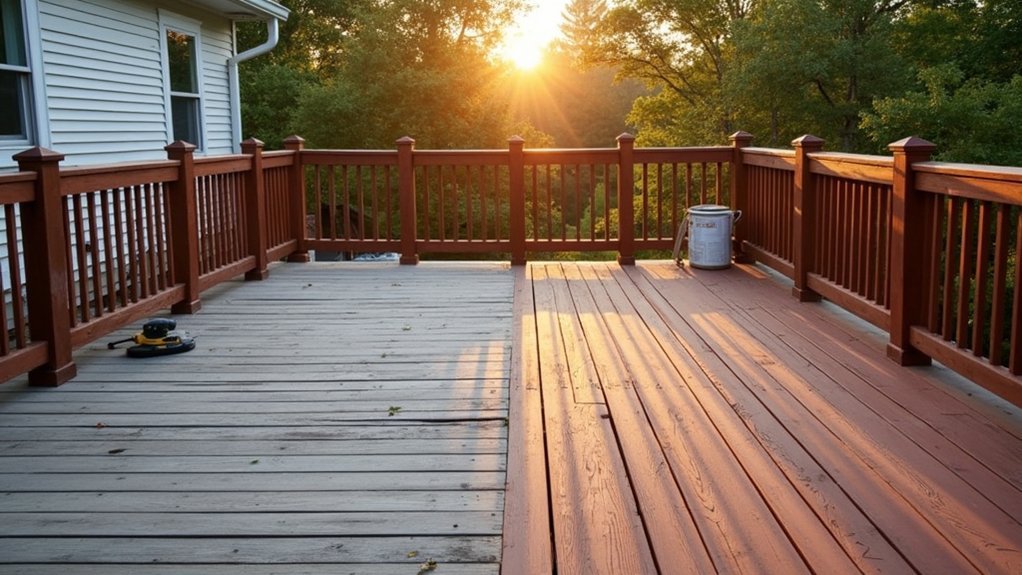
When you’re staring at a weathered deck and weighing your options, the price gap between resurfacing and full replacement can be considerable. Resurfacing typically costs 30-50% less than tearing everything out and starting fresh. You’re keeping the existing structural framework while replacing only the visible deck boards and railings.
A full replacement demands demolition, disposal fees, new framing lumber, and markedly more labor hours. You’ll also face permit costs and potential code upgrades that weren’t required when your original deck was built.
With resurfacing, you’re investing in new walking surfaces without the expense of rebuilding joists, posts, and beams that remain structurally sound. This approach stretches your renovation budget further, letting you potentially upgrade to premium composite materials while still spending less than a complete rebuild would cost.
Signs Your Deck Is a Perfect Candidate for Resurfacing
If your deck’s surface looks tired but its bones remain strong, you’ve likely found an ideal resurfacing candidate.
The key is distinguishing between cosmetic damage and structural failure.
When your joists, posts, and beams pass inspection, resurfacing becomes a smart investment.
Look for these telltale signs that resurfacing will work:
- Surface-level splintering that doesn’t penetrate deep into the boards
- Faded or discolored decking with intact structural integrity underneath
- Minor warping or cupping limited to the top layer only
- Cosmetic stains from mold, mildew, or weathering that affect appearance
- Loose or popped nails in otherwise solid deck boards
You’ll save thousands while getting a fresh, beautiful surface that extends your deck’s life by years.
Popular Deck Resurfacing Materials to Transform Your Outdoor Space
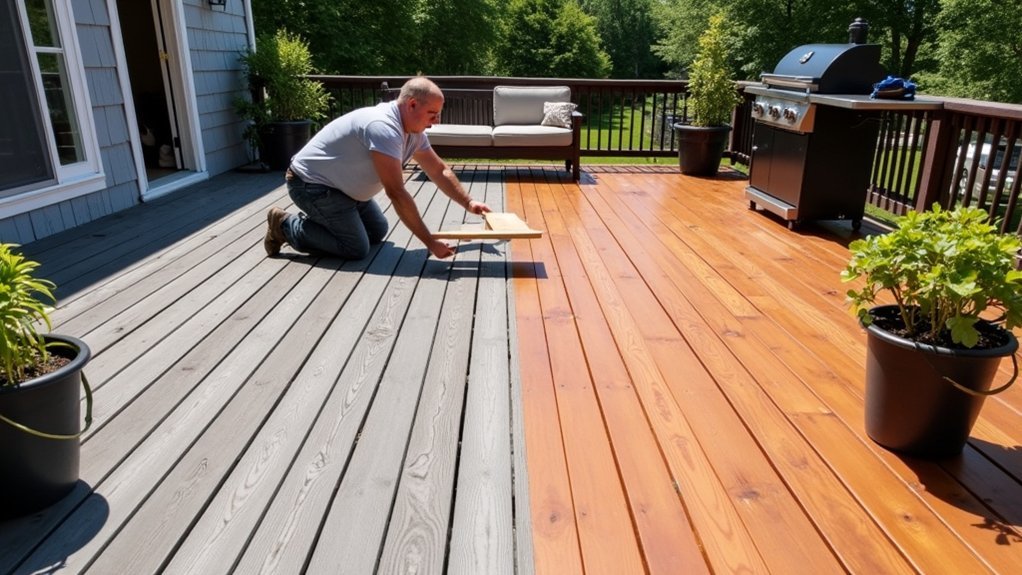
Once you’ve confirmed your deck qualifies for resurfacing, choosing the right material becomes your next big decision. Each option offers distinct advantages that’ll impact your deck’s appearance, durability, and maintenance requirements.
Composite Decking
Composite boards combine wood fibers with plastic polymers, creating a low-maintenance surface that resists fading, staining, and insects. You’ll never need to stain or seal these boards.
PVC Decking
Pure vinyl decking delivers exceptional moisture resistance, making it ideal for poolside installations or humid climates. It won’t rot, warp, or splinter.
Pressure-Treated Wood
This budget-friendly option gives you natural wood aesthetics at lower costs. However, you’ll need regular sealing and staining to maintain its condition.
Tropical Hardwoods
Ipe and tigerwood offer unmatched beauty and natural durability. These premium materials resist decay without chemical treatments.
How Resurfacing Preserves Your Existing Deck Structure
Because your deck’s substructure—the joists, beams, and posts—represents the most labor-intensive and expensive component to install, resurfacing lets you protect this investment while upgrading only the visible surface. When your framing remains structurally sound, you’ll save thousands by avoiding unnecessary demolition and reconstruction.
Resurfacing preserves your existing structure by:
- Maintaining proven load-bearing capacity that’s already passed inspections and weathered years of use
- Eliminating foundation disturbance that could compromise your home’s connection points
- Retaining established drainage patterns your substructure has naturally developed
- Avoiding permit complications often required for complete structural rebuilds
- Protecting treated lumber investments that still have decades of life remaining
You’ll extend your deck’s lifespan markedly while gaining the aesthetic benefits of modern decking materials without sacrificing the solid framework beneath.
Time Savings That Keep Your Backyard Entertainment on Track
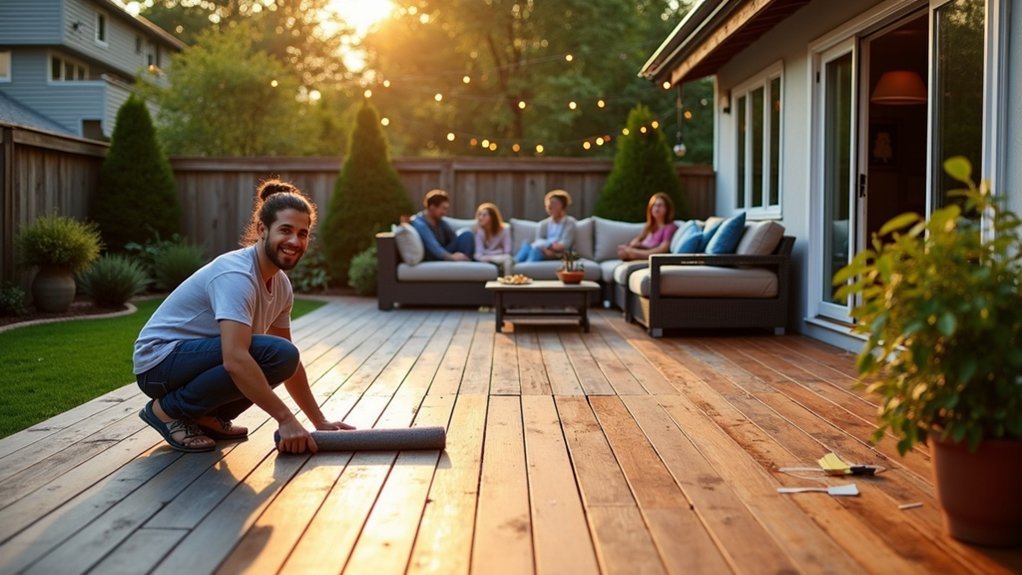
Resurfacing a deck typically wraps up in just two to four days, letting you get back to hosting barbecues and family gatherings almost immediately.
Compare this to a full replacement, which often takes one to three weeks depending on the deck’s size and complexity.
You won’t need to cancel that anniversary party or push back your summer cookout plans.
The streamlined timeline works in your favor because contractors skip the demolition phase and foundation work.
They’re working with your existing structure, which eliminates permit delays common with new construction.
You’ll also avoid the noise and disruption that comes with heavy equipment tearing apart your old deck.
Your neighbors will thank you, and you’ll reclaim your outdoor living space before the season slips away.
Environmental Benefits of Choosing Resurfacing Over Demolition
Beyond the convenience of a faster project timeline, choosing resurfacing over full replacement delivers real environmental wins that matter for your community and beyond.
When you resurface instead of demolish, you’re keeping tons of usable material out of landfills and reducing the demand for new lumber production.
Your decision directly impacts resource conservation in measurable ways:
- Reduced landfill waste – You prevent hundreds of pounds of wood and hardware from entering local dumps
- Lower carbon footprint – Manufacturing new decking materials generates significant emissions you’ll avoid
- Preserved forest resources – Less demand for virgin lumber means fewer trees harvested
- Decreased transportation pollution – Fewer material deliveries and waste hauling trips cut fuel consumption
- Minimized chemical runoff – You’ll avoid the treatment chemicals often applied to new pressure-treated wood
Composite Overlay Systems for Worn Wood Decks
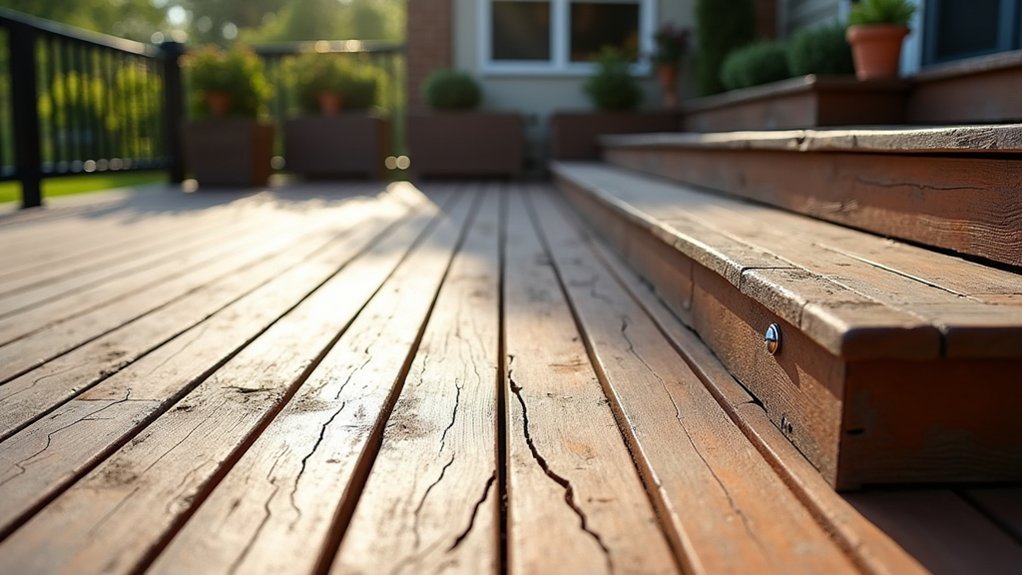
When your deck’s surface boards show wear but the framing remains solid, you can install composite decking directly over your existing joists without tearing everything out. This approach saves you significant labor and disposal costs while upgrading to a material that won’t rot, splinter, or require annual staining.
Waterproof cap stock composites feature a protective polymer shell that resists moisture, fading, and stains far better than traditional wood or first-generation composites.
Composite Over Existing Framing
For homeowners whose wood deck framing remains structurally sound but the surface boards have deteriorated, installing composite decking over the existing substructure offers a practical middle ground between full replacement and simple repairs.
This approach lets you upgrade to low-maintenance composite materials without tearing out joists and beams that still have decades of life remaining. You’ll save markedly on labor and disposal costs while gaining the durability benefits of modern composite technology.
- Inspect framing thoroughly for rot, insect damage, and structural integrity before proceeding
- Verify joist spacing meets composite manufacturer requirements (typically 16 inches on center)
- Replace any compromised boards in the substructure before installation
- Add blocking between joists for enhanced stability
- Ensure proper ventilation underneath to prevent moisture accumulation
Waterproof Cap Stock Benefits
Cap stock composites represent the premium tier of decking materials you can install over existing framing, and they’re worth serious consideration for this type of overlay project. The polymer cap creates an impenetrable barrier against moisture, preventing the swelling and rotting that destroys traditional wood decks.
| Feature | Cap Stock | Standard Composite |
|---|---|---|
| Moisture Resistance | Complete protection | Partial protection |
| Fade Warranty | 25-50 years | 10-25 years |
| Stain Resistance | Excellent | Moderate |
| Scratch Resistance | Superior | Standard |
| Initial Cost | Higher | Lower |
You’ll appreciate how cap stock’s sealed surface repels spills, mold, and mildew without requiring sealants or stains. The material won’t splinter, and it maintains its color despite constant UV exposure. When you’re investing in an overlay, cap stock delivers the longest-lasting results.
Extending Your Deck Lifespan Through Strategic Resurfacing
Timing your deck resurfacing strategically can add decades to your structure’s functional life. When you resurface at the right moment, you’re protecting the underlying framework before damage becomes irreversible. Don’t wait until boards crack or the surface deteriorates completely.
Strategic deck resurfacing timing protects your underlying framework and adds decades of functional life to your outdoor space.
Watch for these key indicators that signal ideal resurfacing timing:
- Surface scratches and minor splintering that haven’t penetrated deep into the boards
- Fading or discoloration that cleaning no longer corrects
- Small soft spots that remain isolated rather than widespread
- Loose fasteners appearing in multiple locations
- Water absorption instead of beading on treated surfaces
You’ll maximize your investment by resurfacing every 10-15 years rather than waiting for complete structural failure. This proactive approach keeps your deck safe, attractive, and functional while avoiding the substantial expense of full replacement.
Design Flexibility and Aesthetic Upgrades Available With Resurfacing
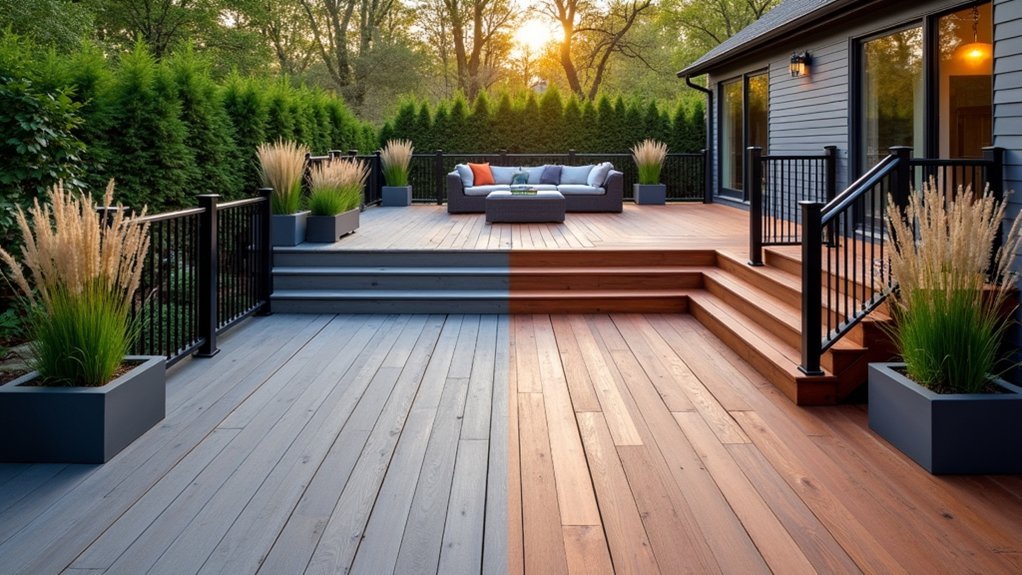
When you choose resurfacing, you’re not limited to matching your old deck’s appearance—you can completely transform its look.
Today’s resurfacing materials come in dozens of modern color options, from rich wood tones to contemporary grays, and you can create custom patterns that add visual interest. You’ll also find updated texture choices that improve grip while giving your deck a fresh, stylish finish.
Modern Color Options
How can resurfacing transform your deck’s appearance without the cost of full replacement? Today’s resurfacing materials offer an impressive palette that rivals brand-new construction.
You’ll find options ranging from classic wood tones to contemporary grays and bold statement colors.
Modern resurfacing products let you completely reinvent your outdoor space while keeping your existing structure intact.
You’re not limited to matching what you’d before—you can choose colors that complement your home’s current style.
Popular color options include:
- Rich walnut and mahogany browns for traditional warmth
- Weathered gray tones for coastal or modern aesthetics
- Multi-tonal blends that mimic exotic hardwoods
- Deep charcoal shades for dramatic contrast
- Light sandy hues that brighten shaded spaces
These color choices remain fade-resistant for years, maintaining your deck’s fresh appearance.
Custom Pattern Possibilities
Beyond color selection, resurfacing opens up creative pattern possibilities that can dramatically change your deck’s visual impact.
You’re not limited to simple horizontal boards anymore. Consider herringbone patterns, diagonal layouts, or picture frame borders that add architectural interest to your outdoor space.
You can mix materials and colors to create distinct zones for dining, lounging, or entertaining.
Inlay designs let you incorporate contrasting accents or geometric shapes that reflect your personal style.
These custom patterns work particularly well for covering existing imperfections in your deck’s surface. Strategic placement of decorative elements draws the eye away from problem areas while adding visual sophistication.
Professional installers can help you design patterns that complement your home’s architecture and landscaping.
You’ll achieve a custom look without the expense of complete structural replacement.
Updated Texture Choices
Texture options frequently make the biggest impact when you’re resurfacing your deck. You’ll discover modern materials that replicate natural wood grain, stone, or slate without the maintenance headaches. Today’s resurfacing products let you customize slip resistance levels, making your deck safer for wet conditions.
Consider these popular texture choices for your project:
- Wood grain embossing that mimics cedar, oak, or exotic hardwoods
- Brushed finishes providing subtle traction and contemporary appeal
- Cool-touch surfaces designed to stay comfortable in direct sunlight
- Anti-slip textures ideal for pool surrounds and high-traffic areas
- Smooth matte finishes offering easy cleaning and modern aesthetics
You’re not stuck with your deck’s original texture. Resurfacing gives you the freedom to upgrade both appearance and functionality simultaneously.
Maintaining Structural Integrity While Refreshing Surface Appearance
When you’re deciding between resurfacing and replacing your deck, the condition of your underlying framework determines which option makes sense. You’ll want to inspect joists, beams, and posts for rot, warping, or pest damage before committing to resurfacing.
| Structural Element | Signs You Can Resurface |
|---|---|
| Joists | No soft spots or visible rot |
| Beams | Solid, level, properly secured |
| Posts | Plumb, no ground-level decay |
| Ledger Board | Firmly attached, no moisture damage |
| Hardware | Minimal rust, tight connections |
If your framework passes inspection, you’ll save markedly by keeping it intact. Resurfacing lets you install new decking boards, update railings, and transform your deck’s appearance without demolishing sound structural components. You’re basically giving your deck a facelift while preserving its bones.
Long-Term Value and Return on Investment for Resurfaced Decks
Once you’ve confirmed your deck’s structural integrity, the financial benefits of resurfacing become clear. You’ll typically spend 50-70% less than full replacement while achieving a refreshed look that lasts 15-25 years with proper maintenance.
Resurfacing delivers strong ROI when you sell your home. Buyers notice updated outdoor spaces, and you’ll recoup a significant portion of your investment at closing.
Key financial advantages of deck resurfacing:
- Lower material costs compared to complete tear-down and rebuild
- Reduced labor expenses with shorter project timelines
- Minimal waste disposal fees since you’re keeping the substructure
- Increased property value without major renovation debt
- Extended deck lifespan that delays future replacement costs
You’re making a smart investment that protects your home’s value while preserving your budget.
Frequently Asked Questions
Can I Resurface My Deck Myself or Should I Hire a Professional?
You can resurface your deck yourself if you’re handy and comfortable with basic tools. However, you’ll want to hire a professional if your deck has structural issues, extensive rot, or you’re unsure about proper techniques.
How Often Will My Resurfaced Deck Need Maintenance After Completion?
You’ll need to maintain your resurfaced deck annually with cleaning and every 2-3 years with a fresh sealant application. Regular sweeping and prompt spill cleanup will extend its lifespan markedly between major maintenance tasks.
Does Deck Resurfacing Require Permits in Most Residential Areas?
You typically won’t need permits for deck resurfacing since you’re not altering the structure. However, you should check your local building codes and HOA requirements before starting, as regulations vary by municipality.
What Weather Conditions Are Best for Scheduling a Deck Resurfacing Project?
You’ll want to schedule your deck resurfacing during mild, dry weather with temperatures between 50-85°F. Avoid rainy periods and extreme heat or cold, as these conditions affect how coatings cure and adhere properly.
Will Resurfacing My Deck Affect My Homeowner’s Insurance Coverage or Rates?
Resurfacing your deck typically won’t affect your homeowner’s insurance rates. However, you should notify your insurer about the improvement, as it may increase your home’s value and require updating your coverage limits.


Leave a Reply