
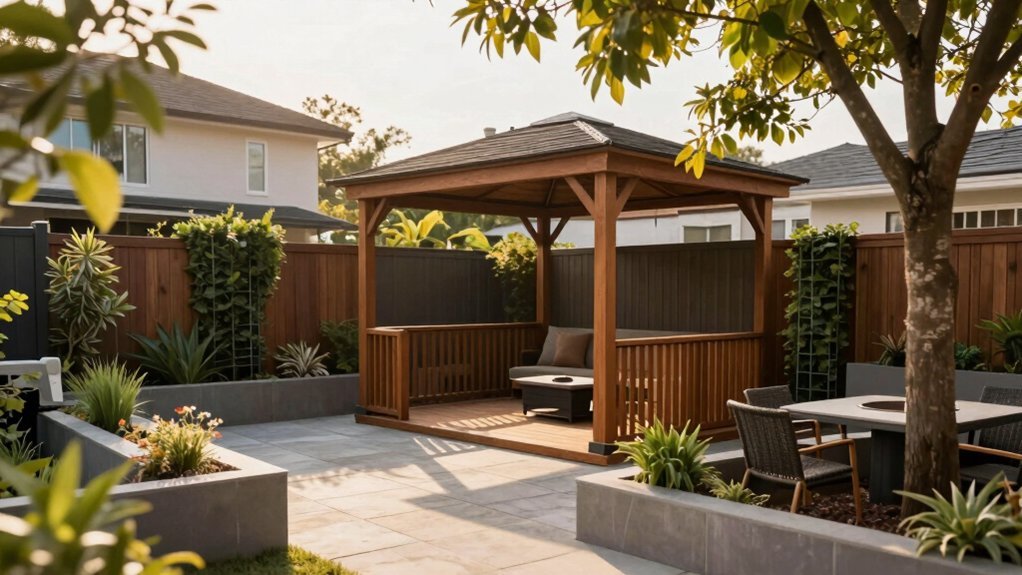
Check local zoning and setback requirements for yards first. Choose the right size and shape to fit your space, aiming 66–1010 sq ft, with 2–3 ft of clear space around. Decide between open-air or enclosed for year-round use. Position near access points like decks. Plan pathways and visual flow for easy movement. Maximize privacy, lighting, and wind protection with greenery and placements. Plan simple maintenance and seasonal prep; more tips await if you keep exploring.
Check Local Zoning and Setback Requirements for Small Yards
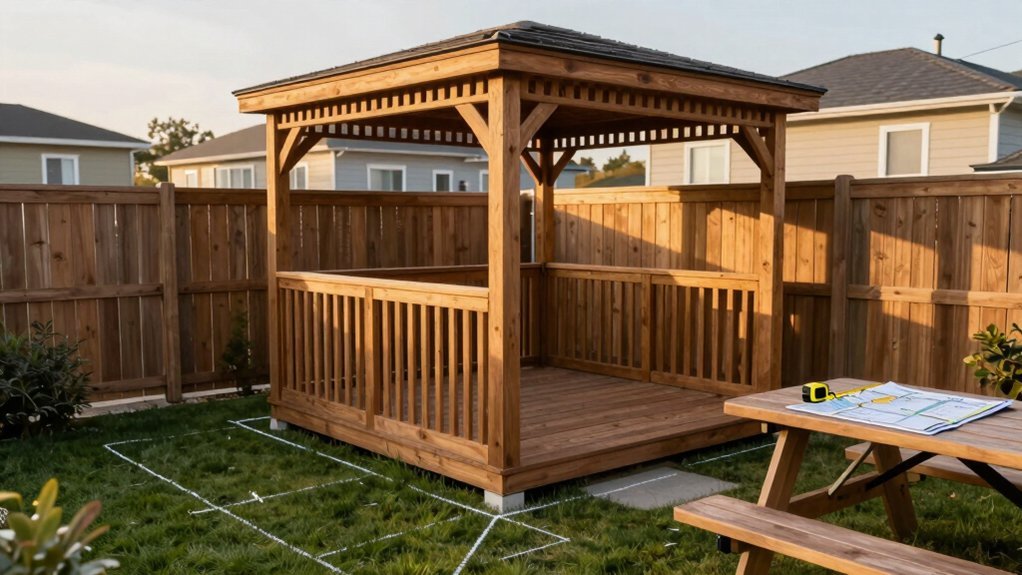
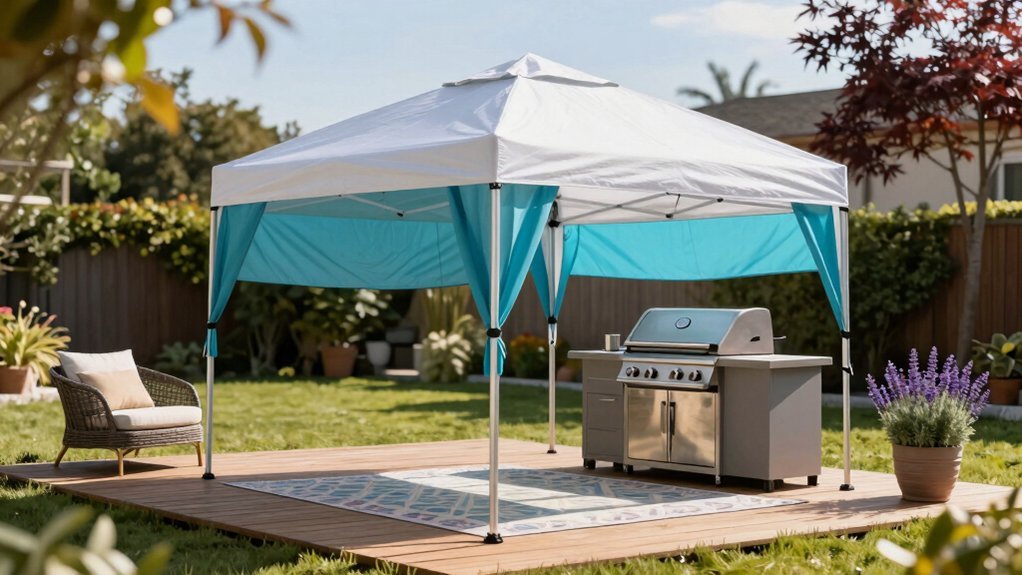
Before you start shopping for a gazebo, check your local zoning and setback rules to avoid surprises later. Most areas have setback rules from property lines, fences, and neighboring homes, so you’ll want to verify them before planning. Residential setbacks usually run 3 to 10 feet from the property line, and detached structures may differ from permanent structures with utilities. Also consider fire safety codes that may require extra distance if you’ll have a grill, fire pit, or wiring nearby. A general rule is to keep 3 to 5 feet from fences to improve air flow and maintenance access. Remember that model specifics, like Sunjoy or deck integrations, can affect anchoring, wiring, and compliance—always verify constraints for your gazebo. Plan permits before ordering anything.
Choose the Right Size and Shape to Fit Your Space
How big should your gazebo be to fit without crowding the yard? For small backyards, aim for about 66 to 1010 square feet.
Square or hexagonal shapes are more space-efficient, while round gazebos soften yard edges.
Plan 2–3 feet of open space around the structure to maintain clearance and easy movement.
Consider proximity to existing structures: detaching from the house generally calls for more space, but compact designs can be anchored closer if local codes permit.
A balance between size and function matters, so your footprint should still support dining, lounging, or a shaded retreat without crowding.
Choose a shape that maximizes flow and access—think corner placement with built-in seating or wall-mounted designs to conserve ground area.
This approach helps you place features thoughtfully.
Decide Between Open-Air and Fully Enclosed Options for Year-Round Use
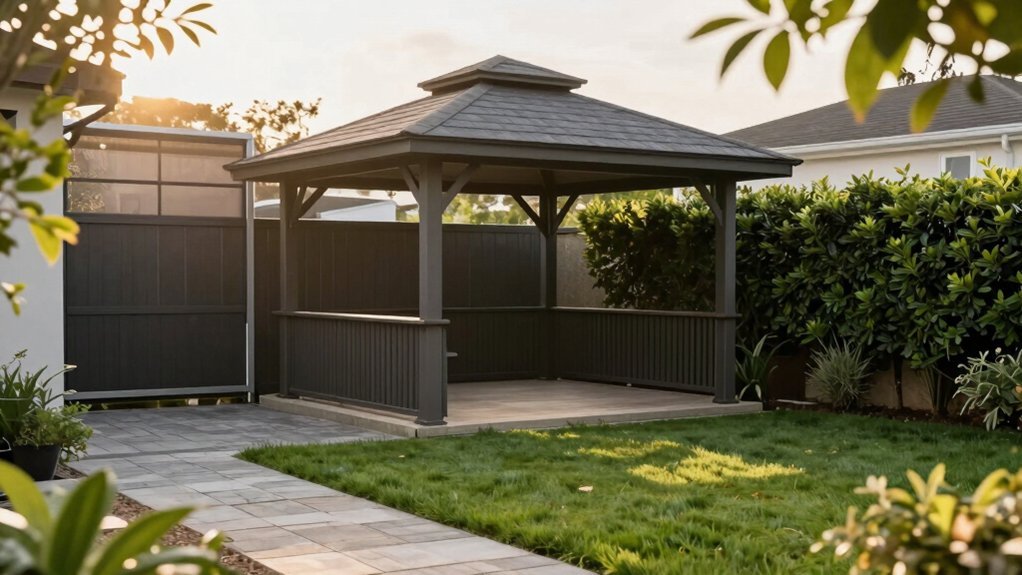
Deciding between open-air and fully enclosed options affects how you handle wind, precipitation, and temperature swings year-round. If you want uninterrupted comfort, go with an enclosed design with insulation and heating; if you value airflow and sunlight, an open-air setup might suit you better. Add privacy features and adjustable shades to keep year-round use flexible.
Open-Air Vs Enclosed
Wondering whether you should go open-air or fully enclosed for year‑round use? Open-air gazebos give you an airy feel with slim posts and open sides, using durable aluminum or wrought iron that stays elegant. They pair well with translucent canopies or fabric coverings, keeping brightness while you enjoy fresh air. You can add retractable curtains, screens, or shades for privacy without sacrificing airflow.
Enclosed gazebos, on the other hand, trap warmth and block wind and snow with solid walls and vinyl windows, making them usable in winter. For true four-season use, consider a fully enclosed room with insulation, heating, and integrated lighting. Roof choice matters: open-air favors bright, light canopies, while enclosed roofs emphasize weatherproofing. Choose based on climate, budget, and airflow needs today.
Year-Round Comfort Considerations
Choosing between open-air and fully enclosed options for year-round use isn’t just about weather—it’s about comfort you can count on every day. Fully enclosed four-season rooms with solid walls and sliding vinyl windows let you extend usability from January blizzards to February chill. Weatherproofing, wind mitigation, a sturdy roof, and corrosion-resistant hardware keep comfort consistent, in extreme Minnesota-like conditions. Integrated lighting and temperature control, plus heat-retaining features, make usable space feel like July outdoors when you want it.
| Aspect | Focus | Notes |
|---|---|---|
| Enclosure choice | Winter usability | Roof strength |
| Weather readiness | Snow load | Wind breaks |
| Comfort balance | Integrated lighting | Temperature controls |
| Practical features | Heated, dry comfort | Open-air ambiance |
Choose the balance that fits your climate, heating options, and desire for freshness without sacrificing comfort.
Position Near Access Points, Decks, and Outdoor Living Areas
Keep the gazebo near entry points or decks to make it easy to move between indoors and outdoors. Position it along easy access routes from the house so entertaining and dining stay seamless near outdoor living areas. By aligning with nearby decks and walkways, you reduce trips and create a natural flow for serving and cleanup.
Proximity to Entry
Where you place your gazebo matters for flow and accessibility: position it near entry points like back doors or patios so guests can grab drinks and utensils without weaving through living spaces, while keeping it away from clutter and noise. Put the structure on a deck or concrete patio when you can, so you leverage existing weight‑bearing surfaces and avoid extra foundation work. Keep a minimum clearance of 4 to 5 feet from doors or fences to maintain safe movement, ventilation, and maintenance access.
Choose a calm, quiet shelter away from heavy yard traffic to boost relaxation and the sense of space in a small yard. If entertaining, place near outdoor living features to boost flow easily.
Easy Access Routes
Position the gazebo near access points—back doors, decks, or outdoor living spaces—to keep refills and entertaining flowing without sending guests through tight spaces. Pick a spot easy to reach from main paths, so guests and service items move along clear routes without crossing high-traffic zones. Plan nearby lighting and outlets so phones, speakers, or climate features work without lengthy cords, and keep sightlines to the house for quick supervision.
Positioning this way also helps you monitor maintenance needs and deliveries with minimal disruption to others. Avoid placing it where utilities or doors create awkward crossings; aim for a clear, shade-friendly approach that invites lingering without crowding the space. Regularly assess routes from entry points to ensure updates stay efficient as your yard changes too.
Near Deck Areas
How close should you place a gazebo to a deck to balance access and airflow between indoors and outdoors? Place the gazebo near doors or decks to streamline serving and improve ventilation between indoor and outdoor living spaces.
If you set it on a deck, ensure the structure can support the gazebo’s weight with proper framing and a weight-bearing foundation.
Use the deck as a footprint for footing alignment to minimize ground disruption and prevent joint misalignment over time.
Maintain clear sightlines and easy access around the gazebo for maintenance, cleaning, and emergencies.
Consider nearby shade from the house or deck overhang to boost comfort without blocking ventilation or sunlight.
This placement supports flow, safety, and year-round enjoyment while keeping paths clear for everyone.
Plan Pathways, Accessibility, and Visual Flow
To plan effective pathways, ensure easy access from your main outdoor areas and nearby paths, and factor in lighting and electrical needs for safe movement. Position the gazebo to balance house sightlines, landscaping, and surrounding features, creating a cohesive yard rhythm. Choose a practical placement that fits its intended use—dining, lounging, or office—while leaving enough clearance for maintenance. Plan routes that minimize trip hazards and align with existing hardscapes, so movement feels natural. Consider sun exposure and wind protection to boost comfort, and keep trees at a respectful distance to maintain airflow. Address drainage and ground stability early, ensuring a solid, long-lasting foundation in small-yard layouts. This approach supports accessibility, visual flow, and lasting enjoyment. Keep materials durable, and plan seasonal adjustments as needed.
Maximize Privacy, Lighting, and Wind Protection Features
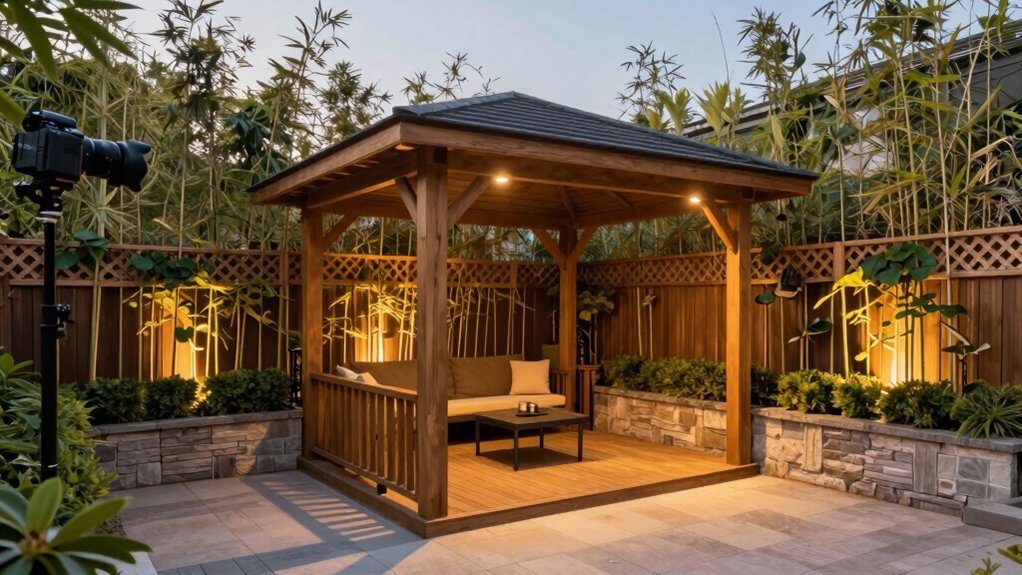
Where privacy matters, you’ll tune lighting and wind protection to match. Privacy curtains, screen kits, vinyl window panels, and retractable shades let you customize seclusion without blocking views. Position your gazebo away from house bustle and near trees to create a calmer, cooler retreat with enhanced privacy. Placing near a fence can provide one-sided privacy and help screen sightlines, but ensure stability and compliance with local setback rules. Soften the enclosure visually by integrating greenery, such as planter boxes, vines, or climbing plants, to boost perceived privacy in small yards. Use compact, modular or open-framed designs (e.g., wall-mounted or pergola-gazebo hybrids) to maximize privacy options while preserving light and airflow. Combine these elements strategically for year-round comfort without sacrificing view. You’ll maintain balance outside.
Plan Simple Maintenance and Seasonal Prep for Small Yards
Want a gazebo that stays inviting year-round without turning into a maintenance headache? Plan simple maintenance and seasonal prep by setting up a cleaning routine, inspecting fasteners, and selecting materials that resist weather. Check local zoning and building codes before installation, since setbacks and permit requirements vary and may restrict gazebo placement near property lines. For efficiency in small yards, go with a compact shape and target 66 to 1010 feet in size, and keep at least 3 to 5 feet from fences to improve air circulation and access. Consider lightweight models with retractable canopies or screens to adapt to seasons and restricted spaces, and schedule seasonal drips, rust checks, and storage of covers when not in use for life and peace of mind.
- Check codes
- Fence clearance
- Retractable canopy
Frequently Asked Questions
Where Should a Gazebo Be Placed in Your Yard?
Place your gazebo away from property lines and fences, respecting setbacks. Keep 3–5 feet from fence, 2–3 feet of clearance around it, and at least 5 feet from deck, while balancing with landscaping for airflow.
What Are Common Gazebo Mistakes?
Common gazebo mistakes include choosing too large a structure for small yard, skipping permits, placing on grass without a foundation, neglecting drainage and wind exposure, and you’re failing to leave 2–3 feet for maintenance access.
How to Maximize Space in a Small Backyard?
Maximize space by placing a small corner gazebo in unused nook, using square/triangular/hex shapes, and keeping 3–5 feet from fences; choose light colors or natural wood, compact designs, and add retractable canopies for versatility too.
How Far Should a Gazebo Be From the House?
Typically you’re keeping 15 feet from the house, though rules may allow as close as 4 feet. Check permits and setbacks, maintain pathways; a placement improves airflow, while closer boosts accessibility for drinks and refills.

Leave a Reply