
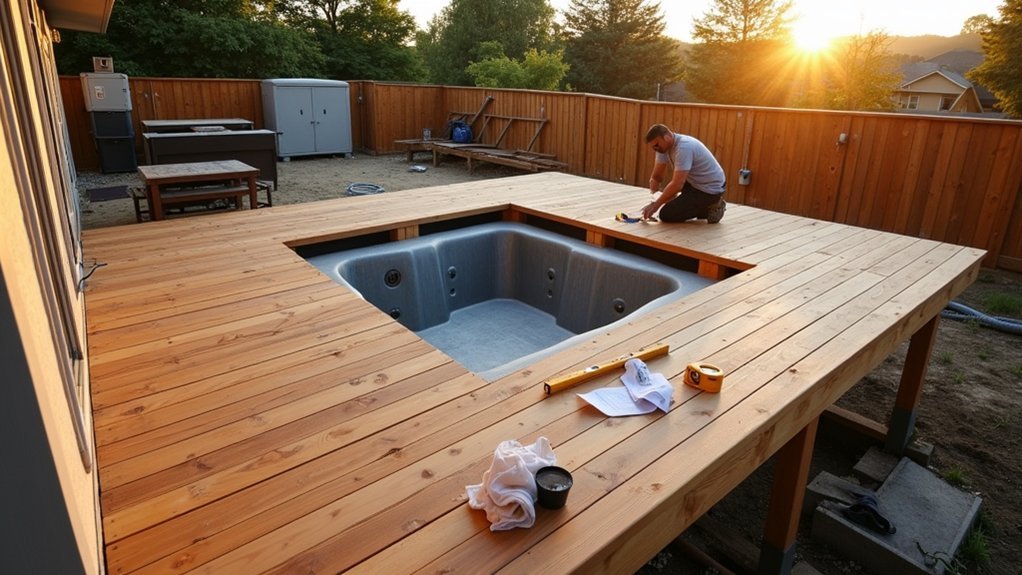
You’ll need to address several critical requirements before installing a hot tub on your deck. First, reinforce your deck’s structure since a filled hot tub with occupants weighs 3,000 to 6,000 pounds. You’ll also need a dedicated 240-volt circuit with GFCI protection, proper permits, and slip-resistant decking materials with adequate drainage. Don’t forget to leave 18 to 36 inches of clearance around the unit for maintenance access. Each of these elements deserves careful consideration.
Structural Support and Weight Capacity Considerations
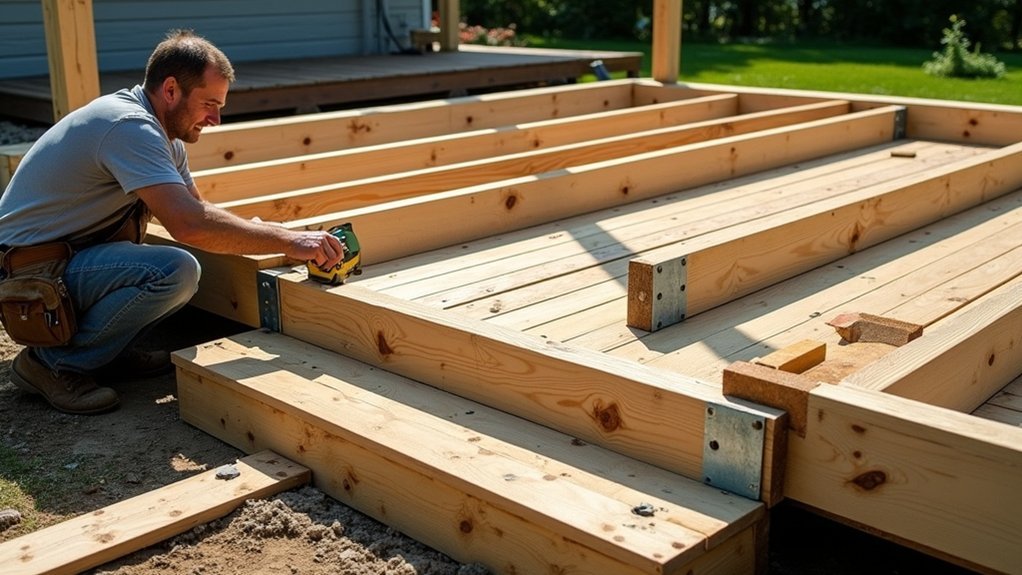
When you’re planning a hot tub deck installation, understanding the weight your structure must support is absolutely critical.
A filled hot tub with occupants can weigh between 3,000 and 6,000 pounds, depending on size and capacity. Your deck must handle this concentrated load without sagging, cracking, or failing.
A loaded hot tub can tip the scales at 6,000 pounds—your deck needs to be ready for it.
You’ll need to consult local building codes and likely obtain permits before construction.
Most standard decks aren’t built to support such weight, so reinforcement is essential.
Consider adding extra joists, reducing joist spacing to 12 inches on center, and using larger beams beneath the tub’s placement area.
Don’t forget to account for additional footings.
Concrete piers should extend below the frost line and be spaced appropriately to distribute the load evenly across the ground.
Electrical Requirements and Wiring Specifications
You’ll need to make certain your hot tub has proper GFCI protection, which is required by code to prevent electrical shock in wet environments.
Your electrician must install a dedicated circuit sized appropriately for your hot tub’s voltage and amperage requirements, typically 240 volts with a 40-60 amp breaker.
Position weatherproof outlets and disconnect boxes within the code-specified distance from your hot tub while maintaining safe clearance from the water.
GFCI Protection Standards
Because hot tubs combine water and electricity, GFCI (Ground Fault Circuit Interrupter) protection isn’t optional—it’s a critical safety requirement mandated by the National Electrical Code. You’ll need GFCI protection for all 120V and 240V hot tub circuits, which detects ground faults and cuts power within milliseconds to prevent electrocution.
Install your GFCI breaker at the main panel or use a GFCI-protected disconnect box located between 5 and 50 feet from the hot tub. Test the GFCI monthly by pressing the test button—if it doesn’t trip immediately, replace it.
Don’t confuse a standard breaker with GFCI protection. Standard breakers protect against overloads but won’t save you from electrical shock. Your local inspector will verify proper GFCI installation before approving your hot tub deck project.
Dedicated Circuit Sizing
Sizing your hot tub’s dedicated circuit correctly prevents dangerous overheating, tripped breakers, and potential fire hazards. Most hot tubs require either a 40-amp or 50-amp dedicated circuit, depending on the manufacturer’s specifications. You’ll need to check your hot tub’s electrical requirements before installation begins.
Here’s what you need to factor in for proper circuit sizing:
- Check the amperage rating on your hot tub’s label or manual
- Use appropriately sized wire (6-gauge for 50-amp, 8-gauge for 40-amp circuits)
- Install a dedicated subpanel if your main panel can’t accommodate the load
- Account for the 80% rule—your circuit should handle 125% of the hot tub’s maximum amperage
- Verify voltage requirements, as most units need 240 volts
Never undersize your circuit to cut costs.
Weatherproof Outlet Placement
Once you’ve got your circuit properly sized, your next step is positioning the weatherproof outlet where it’ll serve your hot tub safely and legally.
National Electrical Code requires your GFCI-protected outlet to sit between 6 and 20 feet from the hot tub’s edge. You can’t place it directly beneath the unit or where splashing water could reach it. Mount the outlet at least 12 inches above the deck surface to prevent water pooling around the connection.
Choose a NEMA 3R or 4X-rated weatherproof box that handles outdoor moisture exposure. Position the outlet on the side of your deck that’s sheltered from prevailing winds and rain when possible. You’ll also want clear access for the disconnect switch, which must remain visible and reachable from the spa.
Deck Material Selection for Hot Tub Installations
When you’re planning a hot tub deck installation, selecting the right decking material becomes one of your most critical decisions.
Your deck must withstand constant moisture exposure, heavy weight loads, and temperature fluctuations without warping or deteriorating.
Consider these top material options for hot tub installations:
- Composite decking – resists moisture, requires minimal maintenance, and won’t splinter
- Pressure-treated lumber – offers affordability and durability when properly sealed
- Cedar or redwood – provides natural rot resistance and attractive aesthetics
- PVC decking – delivers superior water resistance and longevity
- Ipe hardwood – withstands extreme conditions with exceptional strength
You’ll want to evaluate each material’s slip resistance, heat retention, and load-bearing capacity.
Your local climate also plays a significant role in determining which option will perform best long-term.
Drainage and Water Management Planning
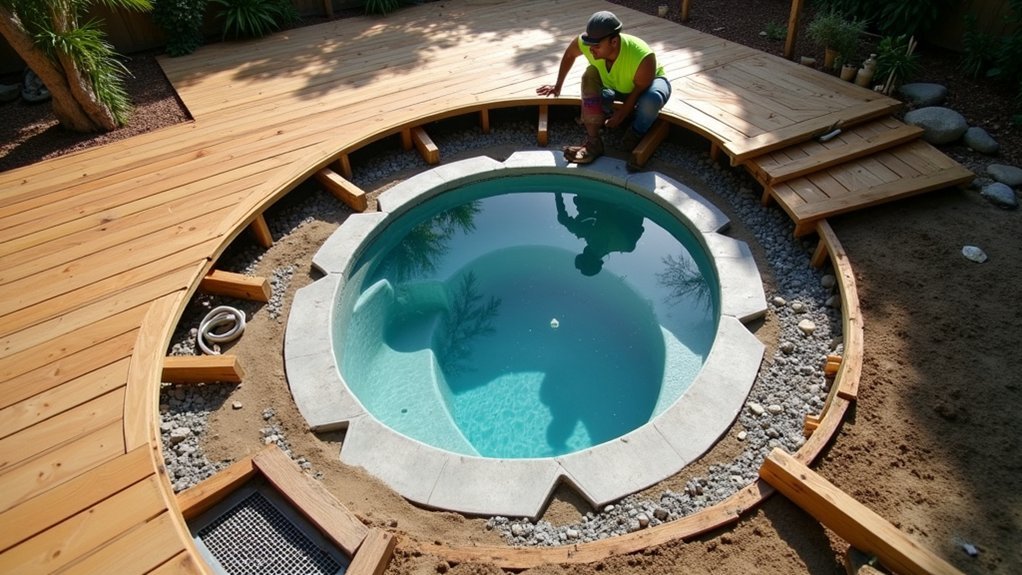
Beyond material selection, your hot tub deck’s longevity depends heavily on how well you manage water flow and drainage. Standing water causes rot, mold growth, and structural damage that can compromise your entire installation.
Install your deck with a slight slope of 1/8 inch per foot, directing water away from your home’s foundation. Position drainage gaps between deck boards at 1/8 to 1/4 inch spacing to allow water to escape.
Consider installing a French drain or channel drain beneath the deck to capture splashed water and rainfall. You’ll also want to place your hot tub’s drain outlet where discharged water won’t pool under the structure.
Don’t forget gutter systems if your deck sits below rooflines. Proper water management prevents costly repairs and extends your deck’s lifespan markedly.
Local Building Codes and Permit Requirements
Before you break ground on your hot tub deck, you’ll need to research your local zoning restrictions and required setbacks from property lines, fences, and structures.
Most municipalities require permits for deck construction, especially when supporting heavy loads like a water-filled hot tub.
Contact your local building department early to understand the permit application process and avoid costly delays or violations.
Zoning Restrictions and Setbacks
Zoning restrictions and setbacks often catch homeowners off guard during hot tub deck projects. Your municipality likely requires specific distances between your hot tub and property lines, structures, and utilities. You’ll need to verify these requirements before breaking ground.
Check with your local zoning office for these common restrictions:
- Property line setbacks: Most areas require 5-10 feet minimum from lot boundaries
- Easement restrictions: Underground utilities may limit where you can build
- Height limitations: Elevated decks often face stricter requirements
- Lot coverage limits: Your deck adds to your property’s total impervious surface
- Neighbor notification: Some jurisdictions require adjacent property owners’ consent
Don’t assume your backyard gives you free rein. Violating setbacks can result in forced removal, fines, or complications when you sell your home.
Permit Application Process
Once you’ve confirmed your project meets zoning requirements, you’ll need to navigate the permit application process itself. Start by visiting your local building department’s website or office to obtain the necessary forms. You’ll typically submit detailed plans showing your deck’s dimensions, structural specifications, and hot tub placement.
| Document Required | Purpose | Typical Timeline |
|---|---|---|
| Site plan | Shows property boundaries and setbacks | Submit with application |
| Structural drawings | Demonstrates load-bearing capacity | Review takes 1-2 weeks |
| Electrical permit | Covers hot tub wiring requirements | Separate application needed |
Expect to pay permit fees ranging from $100 to $500, depending on your location and project scope. Don’t begin construction until you’ve received written approval—working without permits can result in fines and mandatory removal of completed work.
Access and Maintenance Space Guidelines
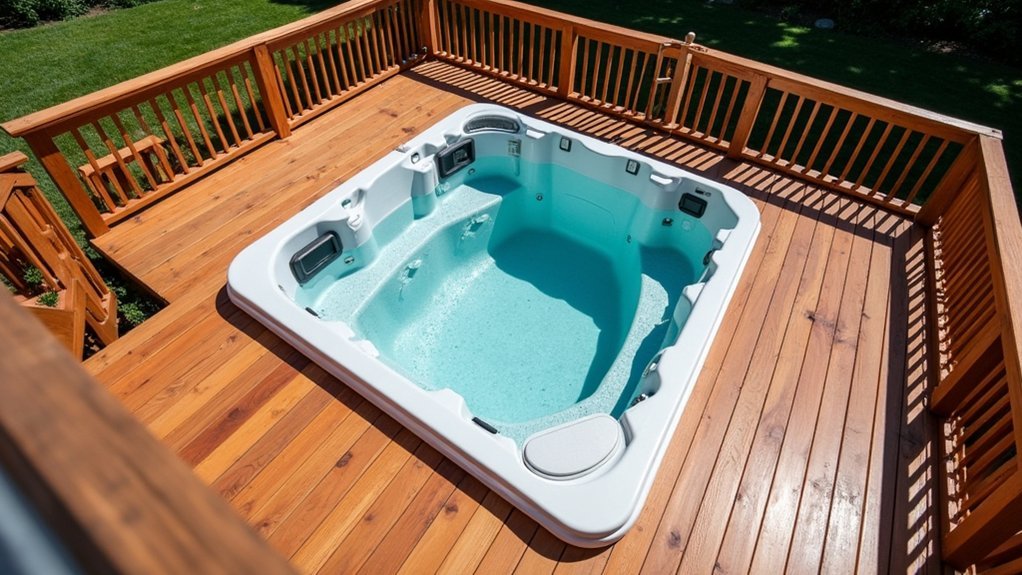
When planning your hot tub deck installation, you’ll need to leave adequate clearance on all sides for future maintenance and repairs.
Most manufacturers require a minimum of 18 to 24 inches of access space around the entire unit. This guarantees technicians can reach pumps, heaters, and control panels without removing deck sections.
Planning for 18 to 24 inches of clearance around your hot tub saves headaches when service technicians need access.
Consider these essential access requirements:
- Leave 36 inches of clearance near the equipment compartment for pump and motor servicing
- Maintain at least 18 inches on remaining sides for filter changes and inspections
- Install removable deck panels or hinged sections for hidden components
- Keep a 4-foot clearance path from your home to the hot tub for emergency access
- Position the unit so electrical disconnects remain easily reachable
Safety Features and Railing Specifications
Because hot tub decks combine elevated surfaces with wet conditions, you’ll need to install proper safety features that meet local building codes. Most jurisdictions require railings when your deck sits 30 inches or more above grade.
| Requirement | Specification |
|---|---|
| Railing Height | 36-42 inches minimum |
| Baluster Spacing | 4 inches maximum |
Your railings must withstand 200 pounds of force applied in any direction. Choose materials that resist moisture damage and provide secure grip when wet. Aluminum, composite, and pressure-treated wood work well in humid environments.
Install slip-resistant surfaces around the hot tub area using textured decking boards or non-skid strips. You should also add adequate lighting along pathways and steps to prevent accidents during nighttime use.
Frequently Asked Questions
How Long Does a Typical Hot Tub Deck Installation Take to Complete?
You’ll typically complete a hot tub deck installation in 3 to 5 days. However, your timeline depends on deck size, complexity, weather conditions, and whether you’re reinforcing the structure to support the hot tub’s weight.
What Is the Average Cost to Install a Hot Tub Deck?
You’ll typically spend between $2,500 and $10,000 to install a hot tub deck. Your final cost depends on deck size, materials you choose, structural reinforcement needs, and local labor rates in your area.
Can I Install a Hot Tub Deck Myself or Hire Professionals?
You can install a hot tub deck yourself if you’ve got carpentry skills and understand load requirements. However, you’ll want to hire professionals for electrical work and to guarantee proper structural support for safety.
How Do I Winterize My Hot Tub Deck in Cold Climates?
You’ll want to drain water from deck boards, apply a waterproof sealant, cover the hot tub when not in use, and clear snow promptly to prevent ice damage and extend your deck’s lifespan.
Will Adding a Hot Tub Deck Increase My Home’s Resale Value?
Yes, a well-designed hot tub deck can boost your home’s resale value. You’ll attract buyers seeking outdoor living spaces, and you’re adding functional square footage that makes your property stand out in competitive markets.




Leave a Reply