
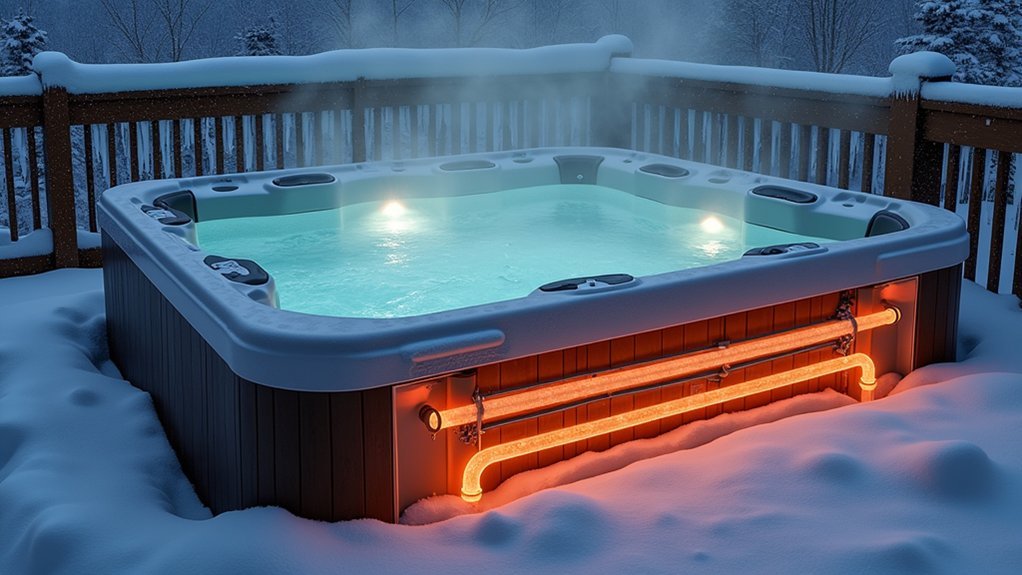
Your hot tub prevents frozen pipes through three key defenses working together. Continuous circulation keeps water moving so it can’t freeze in place, while built-in sensors detect dropping temperatures and automatically activate your heater and pumps within seconds. Strategic insulation—including full-foam cabinets, wrapped pipes, and reflective thermal barriers—traps heat where it’s needed most. Understanding how each system functions helps you maintain reliable protection all winter long.
How Hot Tub Circulation Systems Prevent Ice Formation
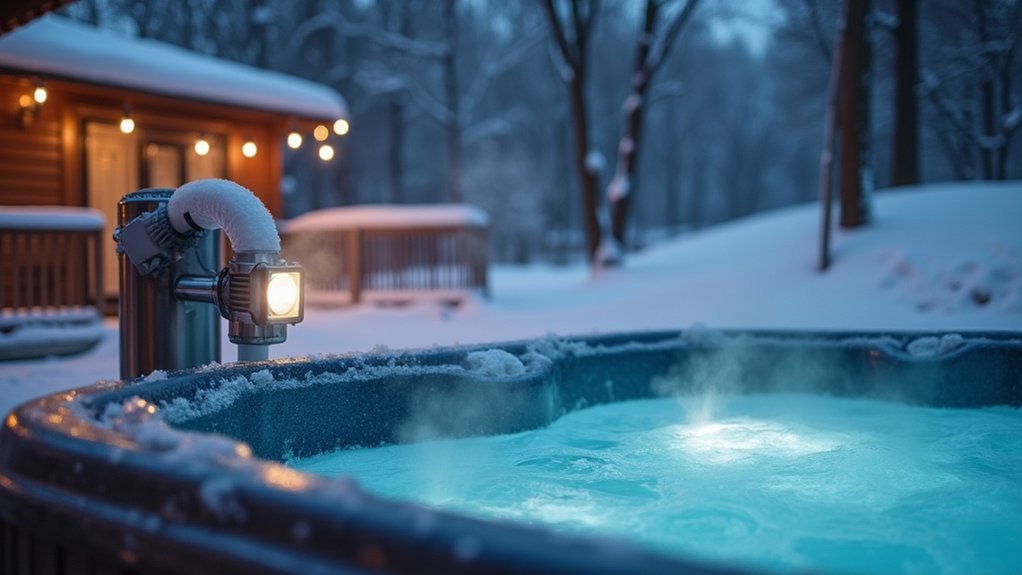
Your hot tub’s circulation system serves as its primary defense against frozen pipes during cold weather. When water moves continuously through the plumbing, it can’t freeze solid like standing water would. The pump pushes heated water through every pipe, fitting, and jet, maintaining temperatures well above freezing.
Most modern hot tubs feature freeze protection modes that automatically activate when temperatures drop below a set threshold. These systems trigger the circulation pump to run, even when you’re not using the tub. Some units also engage the heater simultaneously to warm water that’s cooling too quickly.
You’ll want to make certain your circulation system functions properly before winter arrives. Check that pumps operate smoothly and thermostats respond correctly. A malfunctioning component leaves your pipes vulnerable to ice damage and costly repairs.
The Role of Continuous Water Flow in Freeze Protection
Moving water resists freezing far more effectively than stagnant water, which is why continuous flow serves as your hot tub’s primary defense against ice formation.
When your circulation pump keeps water constantly moving through the pipes, it prevents ice crystals from forming and bonding to pipe walls. Understanding how your pump maintains this protective flow helps you assure your system stays operational during freezing temperatures.
How Water Movement Helps
Constantly circulating water through your hot tub’s plumbing system provides one of the most effective defenses against frozen pipes. Moving water requires markedly lower temperatures to freeze compared to stagnant water. When your pump runs continuously during cold snaps, it prevents ice crystals from forming and expanding inside your pipes.
You’ll want to make sure your circulation pump operates around the clock when temperatures drop below freezing. Most modern hot tubs include freeze protection modes that automatically activate pumps when sensors detect dangerous temperature levels. This keeps water flowing through every pipe, jet, and fitting.
Don’t rely solely on insulation during extreme cold. Even well-insulated pipes can freeze if water sits motionless for extended periods. Your active circulation system works alongside other protective measures to safeguard your investment.
Pump Circulation Basics
Pump circulation forms the backbone of any freeze protection strategy for your hot tub. When water keeps moving through your plumbing system, it can’t freeze solid. Think of a flowing river versus a still pond—the river stays liquid even in bitter cold while the pond ices over.
Your hot tub’s circulation pump pushes water continuously through pipes, jets, and the heater. This constant movement prevents ice crystals from forming and expanding inside your plumbing. Even at low speeds, the pump generates enough flow to distribute heat evenly throughout the system.
You should run your pump around the clock during freezing temperatures. Many modern hot tubs feature freeze protection modes that automatically activate circulation when sensors detect dangerously low temperatures, keeping your investment safe without constant monitoring.
Freeze Protection Sensors and Automatic Heater Activation
Your hot tub’s freeze protection system relies on sensors that continuously monitor water and ambient air temperatures, triggering protective measures when readings approach freezing.
When these sensors detect dangerous temperature drops, they automatically activate your heater and circulation pump to warm the water and keep it moving through the pipes.
This automatic response happens whether you’re home or away, providing round-the-clock protection against costly freeze damage.
How Sensors Detect Cold
Freeze protection sensors monitor water and ambient temperatures around the clock, triggering automatic responses before dangerous conditions develop. These sensors use thermistors—electronic components that change electrical resistance based on temperature fluctuations. When temperatures drop to preset thresholds, typically between 35-40°F, the system activates circulation pumps and heaters automatically.
Your hot tub’s sensors are strategically positioned to detect cold spots:
- Ambient air sensors measure external temperature changes
- Pipe-mounted sensors detect cooling in vulnerable plumbing sections
- Equipment bay sensors monitor the cabinet interior
- Water temperature probes track heat loss in the shell
- Jet pump housing sensors protect critical circulation components
You don’t need to manually intervene when temperatures plummet. The system responds within seconds, maintaining water movement and heat generation to prevent ice formation.
Automatic Heater Activation Process
Once sensors detect temperatures approaching freezing thresholds, the automatic heater activation sequence kicks into gear. Your hot tub’s control system receives the signal and immediately powers up the heating element. This response typically occurs within seconds, ensuring water temperature rises before ice can form in vulnerable pipes.
The system doesn’t just activate the heater—it also engages your circulation pump. Moving water through the plumbing prevents freezing far more effectively than stagnant water. You’ll notice the jets may turn on briefly, even when you’re not using the tub.
This automated process runs independently, protecting your investment whether you’re home or away. The heater cycles on and off as needed, maintaining safe temperatures throughout cold snaps without requiring any manual intervention from you.
Proper Insulation Methods for Hot Tub Plumbing
Properly insulating your hot tub’s plumbing system serves as your first line of defense against frozen pipes during cold weather. You’ll want to focus on exposed pipes, equipment compartments, and connection points where heat escapes most quickly.
Consider these essential insulation methods:
- Closed-cell foam pipe insulation – Wrap all exposed plumbing with this waterproof material for maximum thermal protection
- Insulated cabinet panels – Guarantee your hot tub’s equipment bay has intact, high-density foam barriers
- Heat tape installation – Apply self-regulating heat cables to vulnerable pipe sections
- Spray foam application – Seal gaps around pipe penetrations to eliminate cold air infiltration
- Thermal blankets – Cover your hot tub’s underside to retain heat in the plumbing area
You should inspect insulation annually and replace any damaged sections immediately.
Why Cabinet Design Matters for Winter Protection
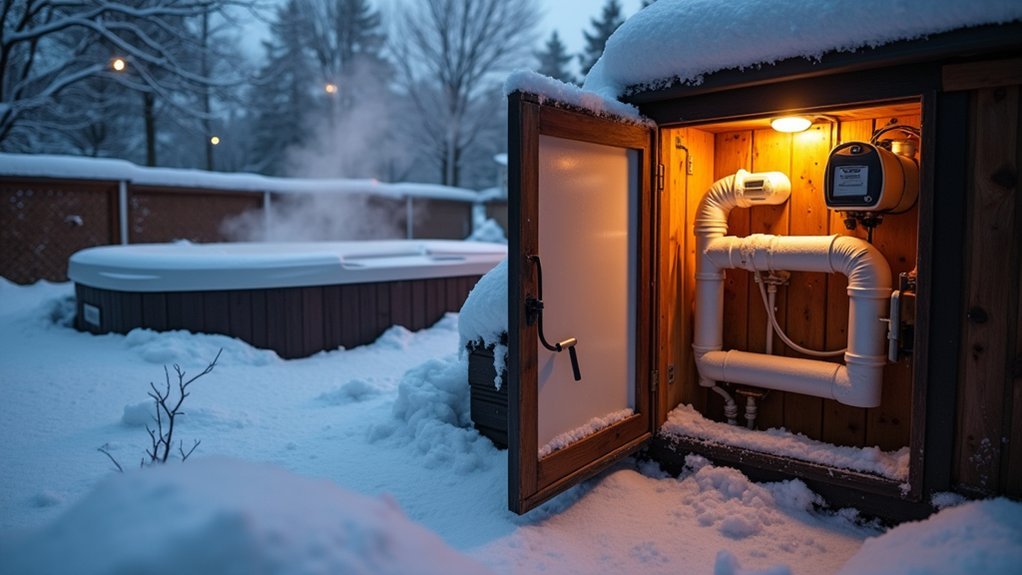
Your hot tub’s cabinet does more than look attractive—it serves as your first line of defense against freezing temperatures.
When you choose a spa with insulated panel construction, sealed airflow control, and advanced heat retention technology, you’re investing in protection that keeps warmth trapped inside where it belongs.
These design features work together to maintain consistent temperatures around your plumbing, even when winter conditions turn severe.
Insulated Panel Construction Benefits
The cabinet surrounding your hot tub serves as the first line of defense against freezing temperatures. Quality insulated panels trap heat inside the cabinet space, keeping your pipes warm even when outdoor temperatures plummet. You’ll find that well-constructed cabinets maintain consistent internal temperatures, reducing the workload on your heater and protecting vulnerable plumbing components.
Modern hot tub cabinets offer several key benefits:
- Full-foam insulation fills gaps between the shell and cabinet walls
- Weather-resistant materials prevent cold air infiltration through cracks
- Sealed access panels maintain thermal barriers during maintenance
- Reflective backing redirects radiant heat toward pipes
- Tight-fitting corners eliminate draft entry points
When you’re shopping for a hot tub, prioritize cabinet construction quality alongside other features to make certain year-round freeze protection.
Sealed Cabinet Airflow Control
Beyond insulation quality, how air moves inside your hot tub’s cabinet directly impacts freeze protection.
A properly sealed cabinet traps warm air generated by your pumps and heater, creating a protective thermal envelope around vulnerable plumbing components.
When gaps exist in your cabinet’s construction, cold outside air infiltrates and displaces this warmth.
Even small openings around access panels or equipment compartments allow heat to escape rapidly during freezing conditions.
Quality hot tubs feature tight-fitting doors with weather stripping and minimal penetrations in the cabinet shell.
Some manufacturers incorporate strategic venting that allows equipment to breathe without creating drafts across pipes.
You should inspect your cabinet’s seals annually before winter arrives.
Replace worn gaskets and address any warped panels that don’t close flush against the frame.
Heat Retention Technology Features
Sealed cabinets work best when paired with advanced heat retention technology built into your hot tub’s overall design.
You’ll find that modern hot tubs incorporate multiple layers of protection that trap warmth where it matters most—around your plumbing components.
These technologies work together to maintain consistent temperatures throughout your cabinet space:
- Full-foam insulation that surrounds pipes and equipment compartments
- Reflective thermal barriers that redirect radiant heat inward
- Insulated covers with locking mechanisms to prevent heat escape
- Multi-density foam layers targeting critical freeze-prone zones
- Thermal wraps specifically designed for pump and heater housings
You should look for hot tubs featuring these integrated systems rather than relying on aftermarket solutions.
Factory-installed heat retention components provide seamless protection and guarantee your pipes stay warm during harsh winter conditions.
Antifreeze Solutions for Winterizing Unused Hot Tubs
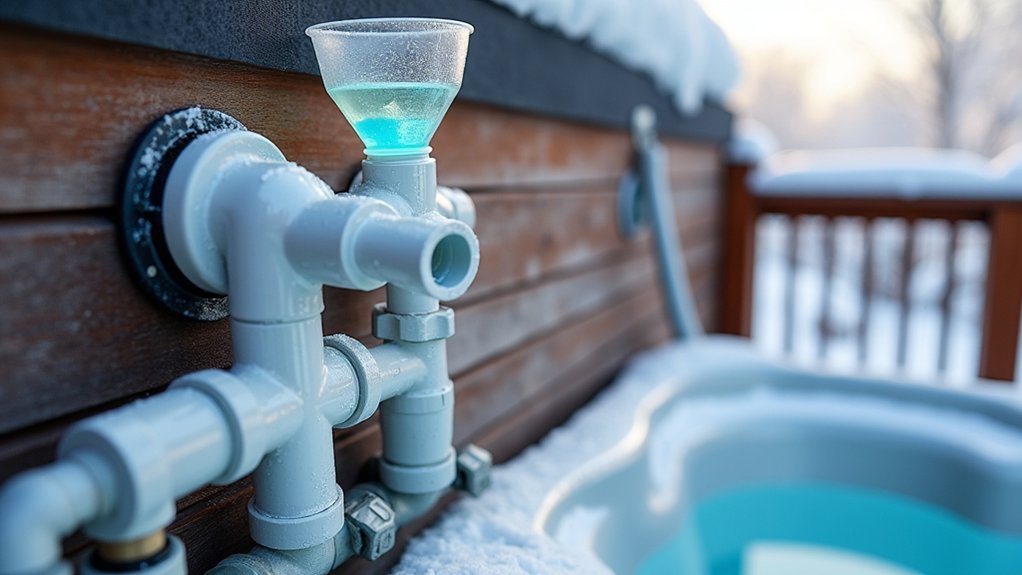
Pour non-toxic propylene glycol antifreeze through your hot tub’s plumbing system when you’re shutting it down for an extended winter period. This food-grade solution protects pipes down to -50°F without harming equipment seals or gaskets.
First, drain your hot tub completely and blow out remaining water with a shop vac or air compressor.
Then add antifreeze directly into each jet, the skimmer, and filter housing. You’ll need approximately two to three gallons depending on your tub’s plumbing complexity.
Never use automotive antifreeze containing ethylene glycol—it’s toxic and damages hot tub components. Always choose products specifically labeled for pools and spas.
Before spring startup, flush the entire system thoroughly with fresh water. This removes all antifreeze residue and prepares your hot tub for safe use again.
Heat Retention Features That Keep Pipes Warm
While antifreeze protects dormant hot tubs, keeping your spa running through winter requires effective heat retention features that maintain consistent warmth in your plumbing.
Your hot tub’s insulation system works continuously to prevent freezing temperatures from reaching vulnerable pipes. Quality spas incorporate multiple protective layers that trap heat where you need it most.
Your hot tub’s insulation creates a protective thermal barrier, keeping vulnerable pipes warm while winter temperatures rage outside.
Key heat retention features include:
- Full-foam insulation surrounding the cabinet and plumbing components
- Thermal covers with tight-fitting seals that prevent heat escape
- Freeze protection mode that automatically circulates water when temperatures drop
- Insulated pipe wraps protecting exposed sections
- Cabinet skirting that blocks cold air infiltration
You’ll find that modern hot tubs combine these features to create a thorough thermal barrier, ensuring your pipes stay warm even during harsh winter conditions.
Low-Flow Circulation Pumps and Their Freeze Prevention Benefits
Low-flow circulation pumps constantly move water through your hot tub’s plumbing system, providing one of the most reliable defenses against frozen pipes.
These pumps operate continuously at minimal energy consumption, typically using only 40-60 watts. Moving water resists freezing far better than stagnant water, so even gentle circulation keeps ice from forming in your lines.
You’ll find these pumps run 24/7, ensuring water never sits motionless long enough to reach freezing temperatures.
They’re designed for quiet operation, so you won’t notice them working. The continuous flow also distributes heat evenly throughout all pipes, including those in vulnerable exterior sections.
If your main pump fails during cold weather, the circulation pump serves as your backup protection.
This redundancy gives you peace of mind during harsh winter conditions.
Underground Plumbing Considerations for Cold Climates
Beyond your hot tub’s internal systems, the pipes running beneath the ground present their own freeze protection challenges. You’ll need to bury supply and drain lines below your region’s frost line to prevent freezing. This depth varies markedly—from 12 inches in mild climates to over 72 inches in northern states.
Underground pipes must be buried below your region’s frost line—ranging from 12 to 72 inches depending on your climate.
Consider these essential underground plumbing strategies:
- Install foam pipe insulation around all buried lines for added protection
- Use heat trace cables on vulnerable sections near the surface
- Slope pipes properly to prevent water from pooling and freezing
- Choose flexible PEX tubing, which handles freezing better than rigid PVC
- Create accessible shutoff valves that let you drain lines completely during extended absences
You should also insulate any exposed pipe sections where lines enter your home or equipment pad.
Power Outage Protocols to Protect Your Hot Tub Pipes
When power outages strike during freezing temperatures, your hot tub’s pipes face immediate danger since the heating and circulation systems can’t function. You’ll need to act quickly to prevent costly damage.
First, keep your hot tub cover secured tightly to retain heat. If you have a backup generator, connect it immediately to maintain circulation. For extended outages lasting more than a few hours, you should drain the pipes completely using the drain valves and blow out remaining water with a shop vac.
Adding extra insulation like blankets around the cabinet provides temporary protection. You can also open the equipment compartment and place a safe, battery-powered heat source inside. Once power returns, inspect all connections before restarting your system to assure no cracks developed during the outage.
Seasonal Maintenance Tips for Year-Round Freeze Prevention
While power outages require immediate emergency action, a proactive year-round maintenance schedule offers the best defense against frozen pipes in your hot tub.
Essential Seasonal Maintenance Tasks:
- Inspect and replace worn insulation around pipes, pumps, and the cabinet before temperatures drop
- Test your freeze protection system monthly during fall and winter months
- Clean filters regularly to guarantee proper water circulation throughout the plumbing
- Check cabinet panels for gaps or damage that could allow cold air infiltration
- Verify thermostat accuracy and recalibrate if readings seem inconsistent
You should also drain and flush your hot tub’s plumbing annually to remove sediment that can restrict flow.
Schedule professional inspections each fall to identify vulnerable components before winter arrives. These preventive measures greatly lessen your risk of costly freeze damage.
Frequently Asked Questions
How Long Can a Hot Tub Sit Without Power Before Pipes Freeze?
Your hot tub pipes can start freezing within 24 to 48 hours without power in cold weather. If temperatures drop below freezing, you’ll want to act quickly to prevent costly damage to your plumbing.
Can I Add Salt to My Hot Tub Water to Prevent Freezing?
You shouldn’t add salt to your hot tub water to prevent freezing. Salt can corrode your equipment and void warranties. Instead, you’ll want to keep your heater running or properly winterize your tub.
What Temperature Should I Set My Hot Tub in Winter?
You should set your hot tub between 80°F and 104°F during winter. Keeping it at least 80°F prevents freezing, but you’ll want higher temperatures around 100-102°F for comfortable soaking in cold weather.
Do Hot Tub Pipes Freeze Faster Than Swimming Pool Pipes?
Hot tub pipes don’t typically freeze faster than swimming pool pipes. Your hot tub’s continuous circulation and higher water temperatures give you better protection against freezing compared to a pool’s often stagnant, unheated pipes.
Will My Hot Tub Warranty Cover Freeze Damage From Equipment Failure?
Your warranty typically covers freeze damage caused by manufacturer defects or equipment failure that’s not your fault. However, you’ll need to check your specific warranty terms, as coverage varies markedly between manufacturers.




Leave a Reply