

Transform your yard into a balanced, year-round outdoor game space by weaving contemplative, social, and active zones with natural materials, multi-purpose features, and modular play elements. Distribute play zones across the yard to invite exploration and reduce clutter, while pairing each area with dual-purpose features like seating walls or reflective pools. Include water, mud, and sensory components, hidden storage, and low-maintenance surfaces for easy keep-up. Ready to explore layouts that suit seasons, ideas await.
Distributed Play Zones Across the Yard

Why keep kids confined to one corner when you can create distributed play zones across the yard? Spread zones across the landscape so exploration feels natural, and use timber and stone to define paths that blend with native plantings, reducing visual clutter.
Design kid-friendly features they can customize over time—adjustable planters, simple obstacle elements, and modular seating—so they gain ownership. Pair each zone with a dual-purpose feature, like a seating wall that doubles as a low retaining edge, or a reflective pool that also serves as wildlife habitat. Include zones for active play, contemplative spaces, and social areas to support different moods throughout the day.
This approach promotes longevity and engagement by distributing attention and resources across the landscape, inviting ongoing customization for families.
Multi-Purpose Features That Double for Adults and Kids
Looking to get more mileage out of every yard feature? Design multi-use zones that blend with the landscape, using double-purpose garden elements and seating areas that serve both adults and kids. Create distributed play opportunities across the yard with low, ground-level features like sunken trampolines, obstacle trails, and modular components to avoid isolating children in one corner. Integrate adult-friendly amenities—outdoor kitchen, seating, and a fire pit—adjacent to kid-friendly areas to encourage shared activity and supervision. Use natural materials and DIY customizable elements, such as a mud kitchen from salvaged sinks, stone water walls, and hedge borders, to ensure lifelong, cohesive integration with the garden. Include different tempos and spaces—contemplative nooks, social gathering zones, active movement areas—to suit varied activities and ages for every season.
Natural Materials and Low-Maintenance Surfaces
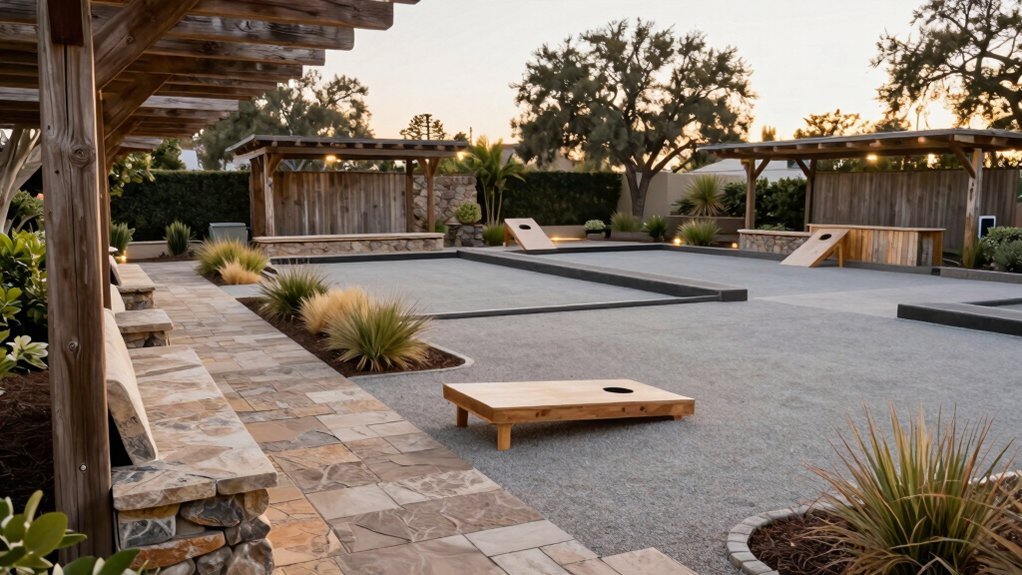
You’re choosing a natural materials palette—think wood, stone, and earth tones that blend with the landscape rather than shout from your play area. Opt for easy-care surfaces like compacted gravel, treated timber, or native groundcovers to keep maintenance low while staying durable. Finish with soft textures such as moss, grasses, and bark around features to dampen glare, boost safety, and invite wildlife.
Natural Materials Palette
How can you create a cohesive play space using a natural materials palette? Use gabion walls, corten steel, rustic timbers, and stone stepping stones to blend play features with garden aesthetics. Choose low-maintenance surfaces like XGrass or durable modular paving to preserve a natural look without constant upkeep. Add soft-edged elements—salvaged sinks, terra cotta pots, wood-beamed structures—to invite interaction while staying simple to maintain. Incorporate terrain-reading features such as mossy rock gardens, hollow stumps, and a shady fern dell to offer tactile, age-friendly play that matures with the landscape. Surround zones with native, drought-tolerant plants and moisture-loving species near water features to support wildlife.
- Gabion walls anchor structures.
- XGrass and modular paving reduce upkeep.
- Salvaged sinks, terra cotta pots, beams invite care-free play daily.
Easy-Care Surfaces
Low-maintenance play zones use timber, stone, and gravel to blend with the landscape while staying durable. textured ground covers like shredded bark, pebble mulch, and mossy stepping stones suppress weeds and cut mowing needs. Pick durable, weather-resistant elements such as cedar playhouses, galvanized hardware, and powder-coated steel to minimize painting and repairs. Design with integrated drainage and sun/shade planning to prevent mud and keep surfaces safe with less upkeep. Modular, multi-use features reduce clutter and cleaning, like benches that double as storage or planting beds that double as seating.
| Material | Benefit | Maintenance |
|---|---|---|
| Timber | Warm appearance; blends with landscape | Minimal upkeep |
| Stone | Durable; good for high-traffic | Occasional sealing or joint check |
| Gravel | Excellent drainage; affordable | Replenish occasionally, rake debris |
Mix textures for look and upkeep.
Contemplative, Social, and Active Tempo Zones
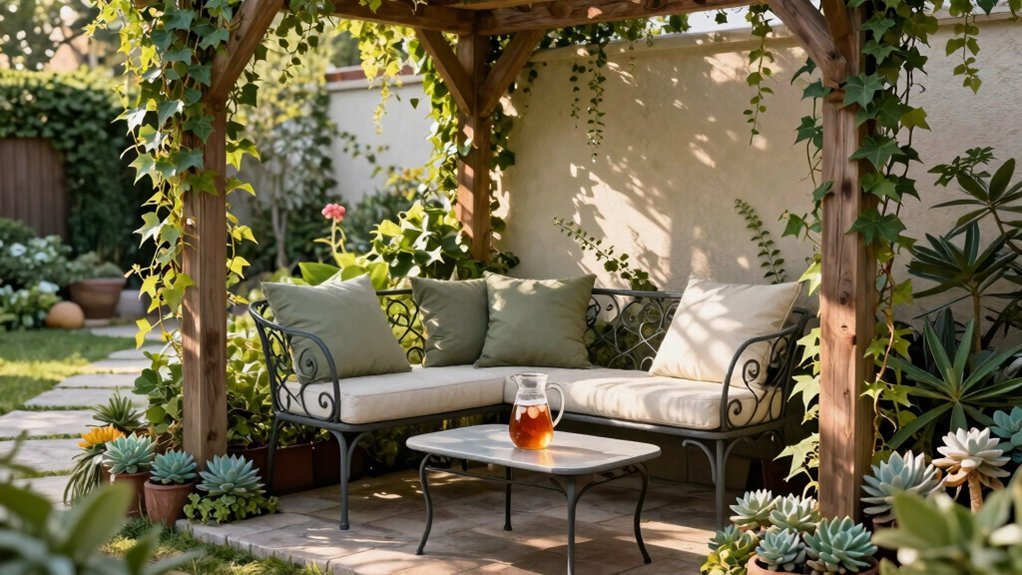
Think of your yard as three tempo zones—contemplative, social, and active—that weave together through sightlines and smooth transition. Contemplative areas offer quiet corners with shaded seating and ponds where stillness invites observation. Social zones host modular seating, outdoor games, and patios that support gatherings without crowding one corner. Active zones bring movement through low obstacle paths, climbing features, and small sport courts for quick play. A balanced plan distributes each tempo across the yard, linking spaces with pathways and plants for seamless flow. Use natural, durable materials—wood, stone, gabion walls—that flex between moods and keep things feeling cohesive.
- Integrate quiet nooks with sightlines to the whole yard
- Use modular seating and multi-use patios for flexible gatherings
- Include short, movement-friendly features that don’t dominate space
Integrated Water, Mud, and Sensory Elements
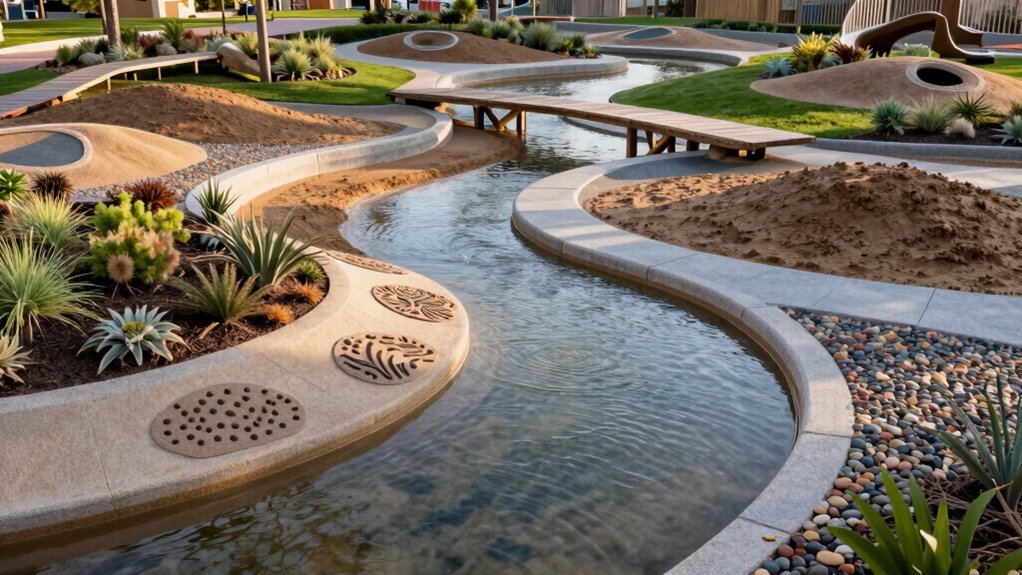
Why settle for a single-use water feature when you can blend calm reflection, hands-on play, and sensory appeal into one cohesive yard?
Guided by a calm-to-active flow, your Water Table can become a Reflecting Pool with smooth boulders and stepping stones, a tranquil multi-use feature. The Mud Kitchen evolves into an Outdoor Rustic Kitchen Garden, using salvaged sinks and terra cotta pots to invite hands-on, material play. The Paddling Pool shifts to a Water Garden with retractable elements, letting play adapt to weather. A Water Wall serves as a Sensory Focal Point, with corten steel or slate delivering acoustic and tactile engagement near seating and planting. Finally, a Climbing Wall is woven into gabion walls or vertical screens, blending sculpture with safe, green ascent.
DIY and Kid-Driven Customization Opportunities
Start by inviting your kids to shape the space with natural or salvaged materials, like tweaking a mud kitchen or reconfiguring stepping-stone paths.
Plan several, distributed play zones so they can explore different environments and activities on their own.
Use double-purpose features and editable components—gabion walls, chalk areas, and climbing greenery—so they can repaint, reposition, or embellish over time.
Kid-Driven Design
Let your yard become a patchwork of kid-led zones, spread across the space to invite varied, uninterrupted play. Distribute zones across the yard rather than concentrating in a single corner to spark different interactions with the landscape. Let features be kid-engineered and customizable, using natural materials, salvaged elements, and DIY tweaks that foster ownership. Double-purpose garden elements invite adults and kids to share space—seating that doubles as stepping-stone paths or planters with play. Create zones with tempo—contemplative, social, and active—so you offer calm, chatty, and energetic moments within one area. Integrate water, earth, climbing, and sensory elements—mud kitchens, reflecting pools, climbing walls—to support exploratory, hands-on play.
- Zone-wide DIY customization with natural materials
- Double-purpose features for all ages alike
- Varied-tempo zones with water and climbing
DIY Customization Play
From kid-led zones, DIY customization lets children shape play across the yard with modular, low-profile features they can move or relocate, such as movable stepping stones, adjustable water or mud stations, and writable chalk surfaces built into garden walls. DIY obstacle courses weave through native planting, using stepping stones, logs, willow arches, and tunnels to create a magical, exploratory trail rather than a single focal play area. Salvaged materials let kids build and integrate—sinks for mud kitchens, cedar shingles for plays houses, gabion walls with greenery—without harming the landscape. Double-purpose garden elements offer kid-friendly function while adults still use the space. A staggered zoning approach spreads play across the yard, letting you design tempo shifts—contemplative, social, active—inside a cohesive, nature-led design.
| Zone Type | Feature | Benefit |
|---|---|---|
| Contemplative | Seating/Mud Kitchen | Quiet, multi-use |
| Active | Stepping Stones | Movement and exploration |
Hidden Storage and Tidy Toy Solutions

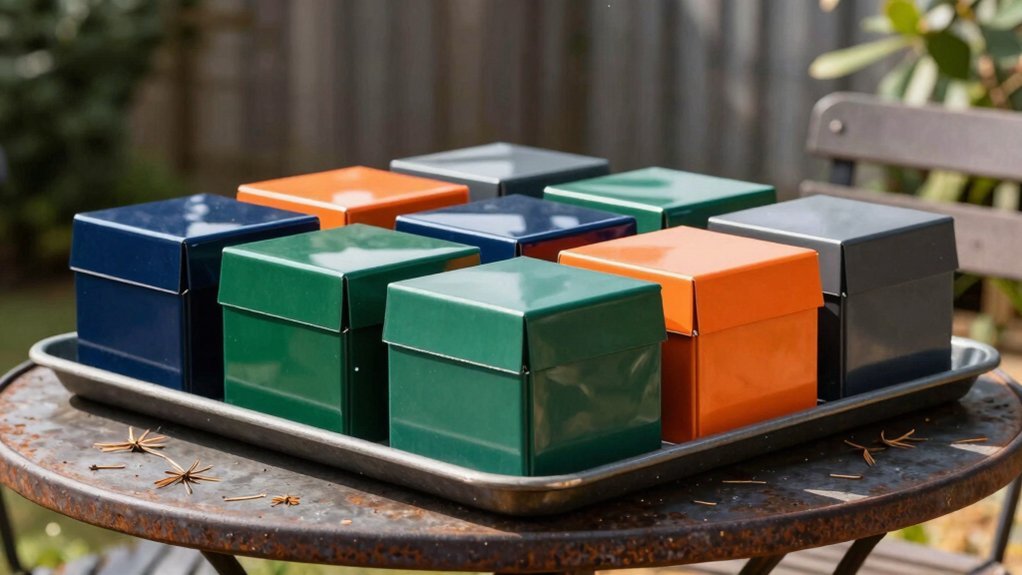
Hidden storage can be built right into your outdoor play area so toys disappear from sight as soon as playtime ends. You can hide gear under-seat benches, behind movable panels, or inside gabion walls, so clutter stays out of view. Weatherproof boxes blend with timber and stone, while low-profile hollow logs preserve sightlines and keep the play area tidy.
- Dual-purpose storage planters and seating integrate bins without sacrificing aesthetics.
- Custom close-lid access and kid-safe latches speed stowaway after play.
- Weatherproof chests and hidden compartments blend with timber, stone, and metal accents.
With these solutions, you keep surfaces clear and the area ready for the next game. You’ll appreciate easier cleanups, safer storage, and better sightlines during every outdoor adventure for kids and caregivers alike.
Pathways, Boundaries, and Safe Sunken Transitions
You’ll sculpt sunken transitions that soften edges between play zones, using low borders and permeable boundaries to guide movement without trapping kids. Pathways weave through native planting with soft edges, linking sunken areas and play nodes in a natural, unsegregated flow. Choose durable, safe materials—earth-toned pavers, stone, timber, and low fencing—to maintain sightlines and encourage exploration as kids move from water to mud to climbing spaces.
Sunken Transition Design
Sunken transitions use ground-level or gently terraced changes to move between play zones, reducing trip hazards while visually integrating paths with surrounding planting and structures. You feel the continuity as textures repeat, guiding foot traffic from active zones to rest and exploration spots with ease.
- Permeable path materials encourage drainage and reduce runoff
- Soft boundaries blend with landscape using low hedges, native grasses, or gabion walls
- Tactile cues and graded slopes support mobility for kids of varying abilities
This design emphasizes safety and visibility, with seating edges for observers, graded slopes, and clear sightlines that welcome every child while preserving landscape harmony. The result is a cohesive transition that invites play, rest, and discovery without interrupting the site’s natural character or disrupting views nearby.
Pathways and Boundaries Flow
How can your pathways weave through multiple play zones without trapping kids in a corner? Design pathways to weave through multiple play zones, avoiding a single corner, so kids can move between water, mud, climbing, and sensory features without feeling boxed in. Use sunken transitions or integrated ground-level features, such as low borders or surrounding plantings, to create cohesive flow between play areas and garden spaces. Incorporate durable, natural materials like boulders, stepping stones, and gabion walls that blend with the landscape while guiding safe, clear routes for children. Pair pathways with double-purpose elements, for example seating walls that double as planters, to maintain longevity and reduce visual clutter between zones. Prioritize accessibility and safety with gentle slopes, non-slip surfaces, and sightlines for adult supervision from a central point. This approach keeps play inviting, organized, and easy to monitor.
Themed Play Areas Linked to Garden Features
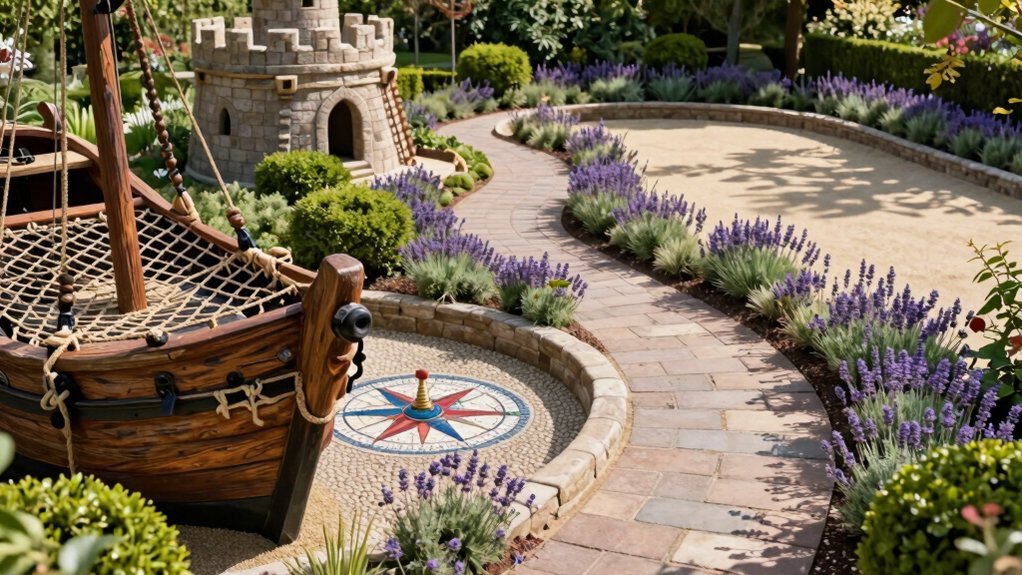
Why settle for a single, isolated play corner when you can weave themed areas throughout the yard that breathe with your garden? Design multiple, distributed zones across the landscape, tying play to garden features for longevity and timeless appeal. Turn water or mud activities into integrated moments—a Water Table becomes a Reflecting Pool with boulders and stepping stones, while a Mud Kitchen upgrades into an Outdoor Kitchen Garden with salvaged sinks and terra cotta pots. Embed a Climbing Wall in a gabion wall, and place a Water Wall near seating and planting as a focal point. Include contemplative seating and a play tree area for exploration.
- Water features linked to ponds and paths
- Climbing walls integrated with greenery
- Dual-purpose seating and active zones together
Seasonal Adaptability and Year-Round Fun Design
To keep outdoor game areas engaging year‑round, design for seasonal adaptability and multi‑use versatility. From there, you embed retractable elements that adapt to weather, like a paddling pool with a hidden plunge pool or a shallow basin you can open or close. You’ll aim for multi‑use spaces that shift between active play, contemplative corners, and social gathering areas, so the area stays inviting beyond one season.
Choose plantings and materials that endure, such as native grasses, gabion walls with greenery, and evergreen shelter for privacy and appeal year‑round. Add weather‑resilient features like moisture‑tolerant planting, water play for warmer months, and protected seating to keep usage steady. Use distributed play zones and modular furniture to reconfigure layouts without major renovations as seasons change. This approach balances excitement, relaxation, and practicality, delivering year‑round value. You’ll enjoy maintenance and flexible use.
Frequently Asked Questions
How Should I Budget for a Complete Outdoor Game Area?
Set a realistic total, then allocate 40% for structure and hardscape, 30% for play features, 20% for lighting and safety, and 10% for contingency. Get quotes, track costs, and adjust plans before you start today.
What Maintenance Schedule Keeps Surfaces Safe Year-Round?
Follow a year-round schedule: sweep and rinse surfaces weekly, inspect for cracks monthly, seal every 1–2 years, repair promptly; remove debris after storms; salt or sand icy areas in winter; dry and reseal by spring.
How to Optimize Sightlines for Supervision Without Clutter?
Keep sightlines clear by trimming hedges, removing obstacles, and storing toys after use. Arrange seating to face play zones, use low borders, conceal cords, and choose lighting with contrast to reduce blind spots and clutter.
Which Lighting Improves Playability and Safety at Night?
Use bright, glare-free LED lighting with coverage around play areas, avoid harsh shadows, and add layered lighting with motion sensors; keep fixtures shielded and angled down, so you’ll see clearly and stay safe at night.
Can Soft Play Zones Double as Drainage Solutions?
Yes, soft play zones can double as drainage solutions when you design them with permeable bases, proper grading, and appropriate materials, ensuring water drains away quickly while still cushioning falls for safe, multisport fun daily.

Leave a Reply