
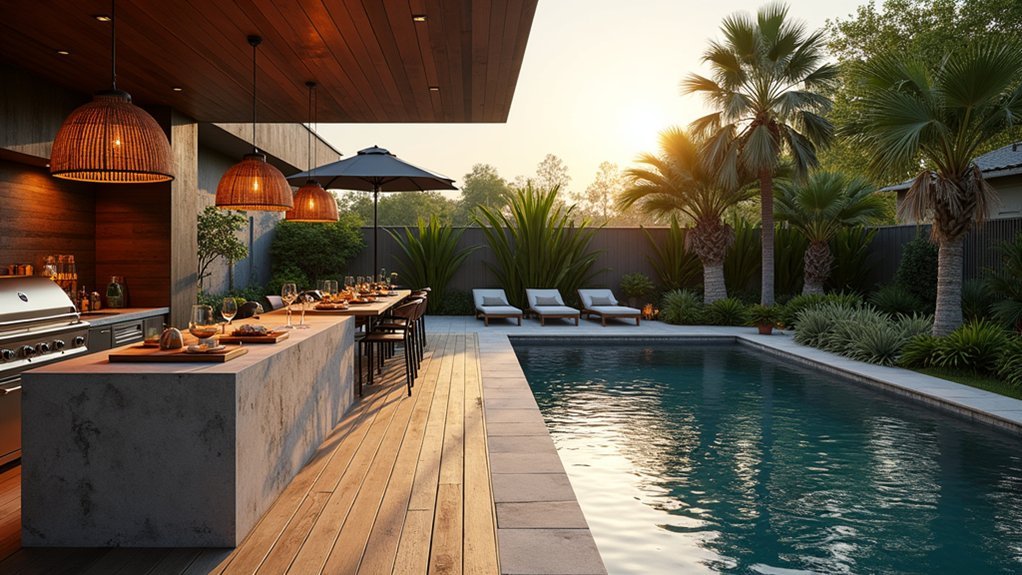
When designing your poolside outdoor kitchen, you’ll want to prioritize an L-shaped or U-shaped layout that keeps you connected to swimmers while maximizing prep space. Choose weather-resistant materials like stainless steel cabinetry, granite countertops, and slip-resistant flooring to handle splashes and sun exposure. Position your grill downwind from the pool and place electrical outlets at least 20 feet from the water’s edge with GFCI protection. Below, you’ll discover how to bring every element together.
Choosing the Perfect Layout for Your Poolside Kitchen
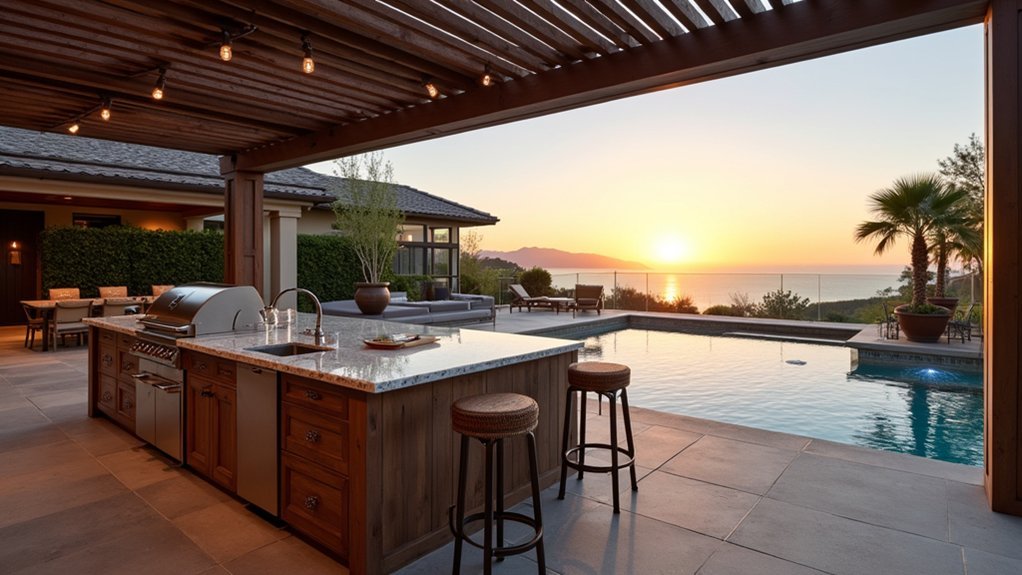
When you’re planning a poolside outdoor kitchen, the layout determines everything from traffic flow to cooking efficiency. Consider how guests will move between the pool, dining area, and cooking station without creating bottlenecks or safety hazards.
Smart poolside kitchen layouts prioritize seamless movement between cooking, dining, and swimming zones for safety and efficiency.
The L-shaped layout works exceptionally well for poolside settings, keeping the cook engaged with swimmers while providing ample counter space. If you have more room, a U-shaped design offers maximum storage and prep area.
Position your grill downwind from the pool to prevent smoke from drifting toward swimmers. Place refrigeration units in shaded spots to reduce energy consumption. You’ll want your sink close to both the prep area and pool for easy cleanup.
Keep electrical components and outlets away from splash zones to guarantee safety.
Essential Appliances and Cooking Stations for Pool-Adjacent Cooking Spaces
A well-equipped poolside kitchen transforms casual swim days into memorable outdoor entertaining experiences.
You’ll want to start with a high-quality built-in grill as your centerpiece, selecting stainless steel models rated for outdoor use to resist humidity and chlorine exposure.
Consider adding a side burner for sauces and a smoker box for versatility.
Your cooking station should include a refrigerator to keep drinks and ingredients cold, eliminating constant trips inside.
A sink with running water proves invaluable for food prep and quick cleanups.
Don’t overlook a pizza oven if you’re serious about entertaining.
Ice makers and beverage coolers keep refreshments accessible for swimmers.
Position electrical outlets strategically for blenders and small appliances, ensuring all components meet outdoor safety standards for wet environments.
Weather-Resistant Materials and Finishes That Withstand Splashes and Sun
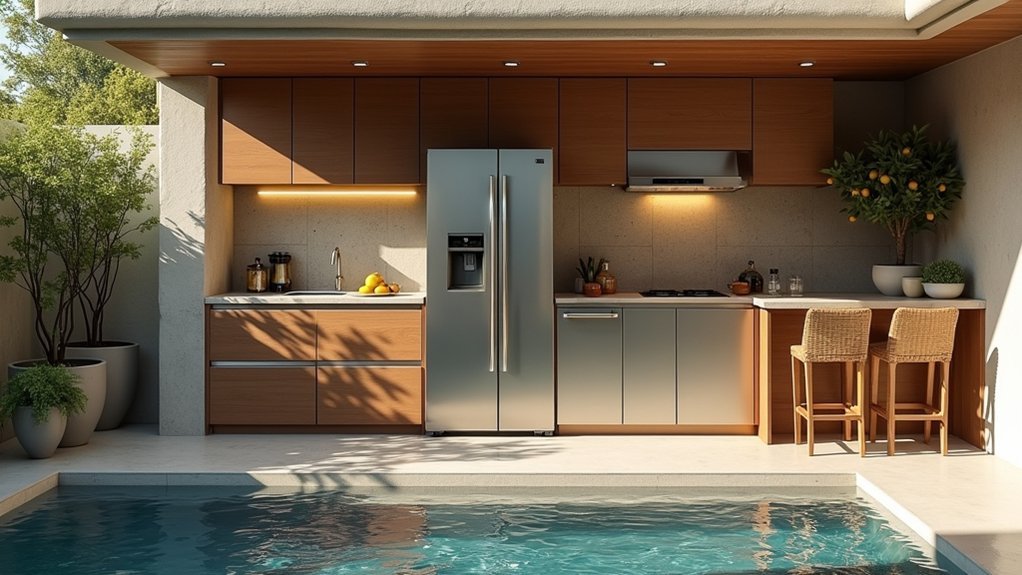
Because your poolside kitchen faces constant exposure to water splashes, chlorine vapors, and intense UV rays, material selection directly determines how long your investment lasts.
Choosing the right materials isn’t just about looks—it’s the difference between a five-year kitchen and a twenty-year kitchen.
Countertop Champions
Granite, quartzite, and porcelain slabs resist fading, staining, and heat damage. Avoid marble—it etches from pool chemicals. Concrete works well when properly sealed every one to two years.
Cabinetry Solutions
Marine-grade polymer and stainless steel outperform wood in wet environments. If you prefer a wood aesthetic, choose teak or ipe with marine-grade finishes.
Framework and Surfaces
Build your base structure with concrete block, aluminum framing, or galvanized steel. For flooring, select slip-resistant porcelain tile or textured natural stone.
Protective Finishes
Apply powder-coated finishes to metal components and UV-resistant sealers to stone surfaces. These protective layers prevent corrosion and sun bleaching.
Creating a Seamless Flow Between Pool Deck and Outdoor Cooking Area
With durable materials in place, your next priority shifts to how your cooking space connects physically and visually to the surrounding pool deck. You’ll want links that feel natural rather than abrupt, allowing guests to move effortlessly between swimming and dining.
Consider these strategies for achieving seamless integration:
- Match or complement your pool deck’s paving material in the kitchen area to create visual continuity
- Eliminate level changes between zones whenever possible, or use gradual ramps instead of steps
- Position your grill and prep stations to face the pool, keeping the cook engaged with swimmers
- Use consistent lighting fixtures across both spaces to unify the overall aesthetic
These design choices encourage natural circulation patterns while maintaining distinct functional zones within your poolside entertainment area.
Lighting and Ambiance Features for Evening Poolside Entertaining
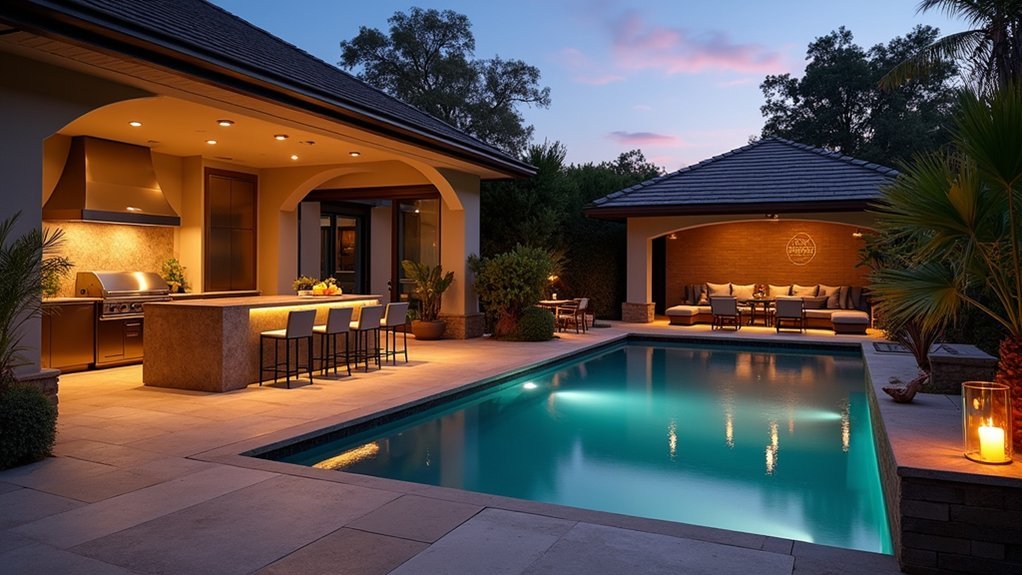
Once the sun sets, your poolside kitchen transforms into an entirely different entertaining space—one that demands thoughtful lighting to maintain both functionality and atmosphere.
Layer your lighting strategically. You’ll want bright task lighting above cooking surfaces while keeping ambient options for dining and lounging areas.
| Lighting Type | Best Location | Purpose |
|---|---|---|
| LED strip lights | Under counters, along pathways | Safety and accent |
| Pendant fixtures | Above prep stations | Task illumination |
| String lights | Pergola, fence line | Ambient warmth |
Don’t overlook dimmers—they’re essential for shifting from food prep to relaxed conversation. Waterproof ratings matter near the pool, so choose fixtures rated IP65 or higher. Solar-powered path lights reduce electrical costs while guiding guests safely between the kitchen and pool deck.
Safety Considerations When Building a Kitchen Near Your Swimming Pool
Beautiful lighting sets the mood, but safety should guide every decision when you’re building a kitchen near your pool. Water and electricity create dangerous combinations, so you’ll need to plan carefully. Position electrical outlets at least 20 feet from the pool’s edge and make certain all circuits have GFCI protection.
Essential Safety Measures:
- Install slip-resistant flooring materials like textured concrete or natural stone with proper drainage
- Use weatherproof, outdoor-rated appliances designed to withstand moisture and humidity
- Create clear pathways between cooking and swimming areas to prevent accidents with hot food or equipment
- Add adequate ventilation for grills and burners to prevent smoke accumulation
You should also consider installing safety barriers between hot cooking surfaces and high-traffic pool areas.
Frequently Asked Questions
How Much Does It Typically Cost to Build a Poolside Outdoor Kitchen?
You’ll typically spend between $5,000 and $20,000 for a basic poolside outdoor kitchen. If you’re adding high-end appliances, custom countertops, and built-in features, expect costs to reach $50,000 or more.
Do I Need a Permit to Install an Outdoor Kitchen Near My Pool?
You’ll likely need a permit for your poolside outdoor kitchen, especially if it involves gas lines, electrical work, or plumbing. Check with your local building department since requirements vary by municipality and project scope.
Can I Add a Poolside Kitchen to a Small Backyard Space?
You can absolutely add a poolside kitchen to a small backyard. You’ll want to choose compact appliances, use vertical storage solutions, and consider a built-in grill with minimal counter space to maximize your area.
How Do I Winterize My Poolside Outdoor Kitchen in Cold Climates?
You’ll need to drain water lines, disconnect gas connections, cover appliances with weatherproof materials, and store removable items indoors. Don’t forget to clean surfaces thoroughly and apply protective sealants to countertops before freezing temperatures arrive.
Will a Poolside Kitchen Increase My Home’s Resale Value?
Yes, a poolside outdoor kitchen can boost your home’s resale value. You’ll attract buyers seeking luxury outdoor living spaces, and you’re likely to recoup a significant portion of your investment when you sell.


Leave a Reply