
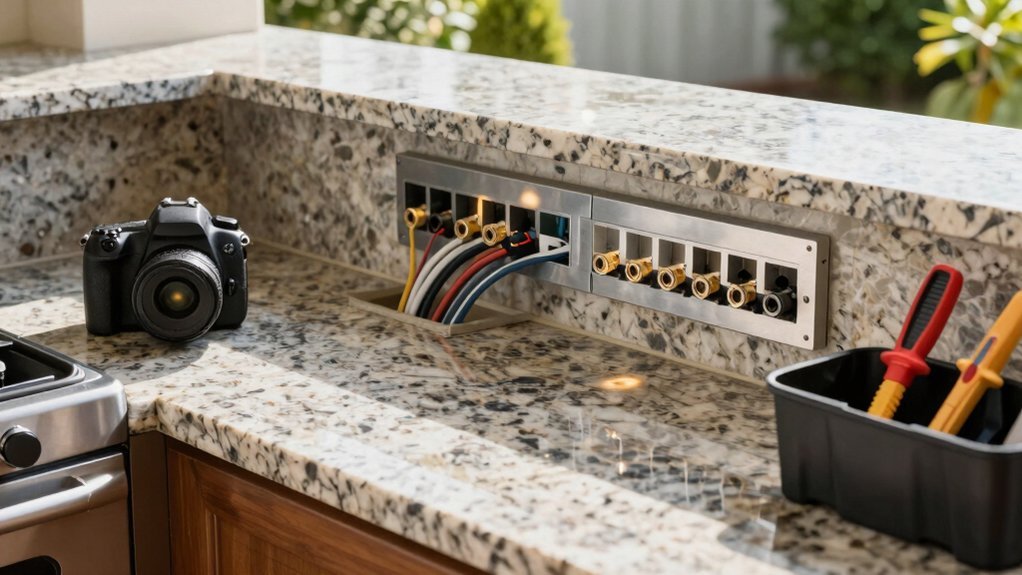
You’ll want to start with GFCI-protected outlets that automatically cut power when water enters the wiring. Use only outdoor-rated, weatherproof cables—never interior-grade wiring. Plan your layout carefully to position outlets away from water sources and high-traffic areas. Install dedicated circuits for major appliances so you don’t overload your system. Seal all exposed wires and connections against moisture intrusion. Skip extension cords and power strips entirely. Finally, hire a licensed electrician to ensure everything meets code and keeps your family safe. There’s much more to discover about protecting your investment.
Invest in GFCI-Protected Outlets
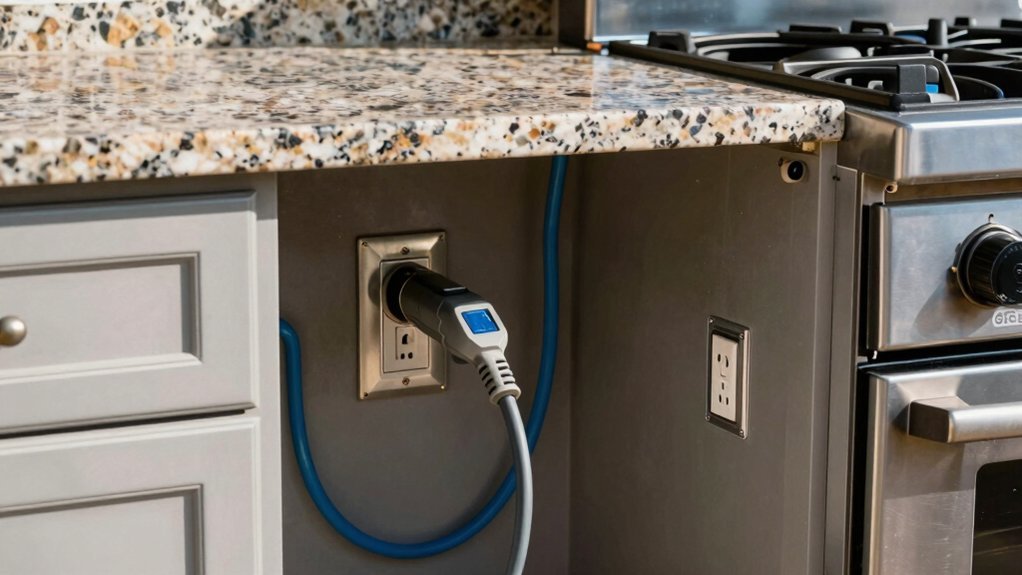
Why do so many outdoor kitchen accidents involve electrical hazards? The answer lies in inadequate protection. You’ll substantially reduce risks by investing in GFCI-protected outlets, which automatically cut power when water or faults enter the wiring.
GFCI protection isn’t optional—it’s fundamental for outdoor installations. When you install these outlets, you’re safeguarding both yourself and your equipment from potentially dangerous situations. Verify functionality during installation to ensure proper operation.
Don’t overlook maintenance. You should regularly test your GFCI outlets and replace faulty components to maintain continuous protection. This proactive approach prevents protection failures that could compromise your outdoor kitchen’s safety.
Combined with weatherproof covers shielding against rain and debris, GFCI-protected outlets create a secure electrical environment for your outdoor cooking space.
Use Proper Wire Insulation and Weatherproof Cables
How critical is wire insulation to your outdoor kitchen’s longevity? It’s essential. You’ll want to invest in outdoor-rated cables specifically designed to withstand moisture, UV exposure, and temperature fluctuations. Interior-grade wiring simply won’t survive outdoor conditions.
Choose weatherproof cables and ensure all connections are properly sealed to prevent moisture intrusion and corrosion. Pay special attention to contact points where interior and exterior wiring meet—these vulnerable spots require extra protection.
For underground runs, bury cables at least 18 inches deep and use protective conduit along the entire route. Verify that all outlets and enclosures carry outdoor ratings with appropriate IP-rated fittings for your exposure level.
Inspect your wiring regularly. Don’t expose interior-grade materials to the elements or place cables where heat and moisture can damage them.
Plan Your Wiring Layout for Appliance Placement and Lighting
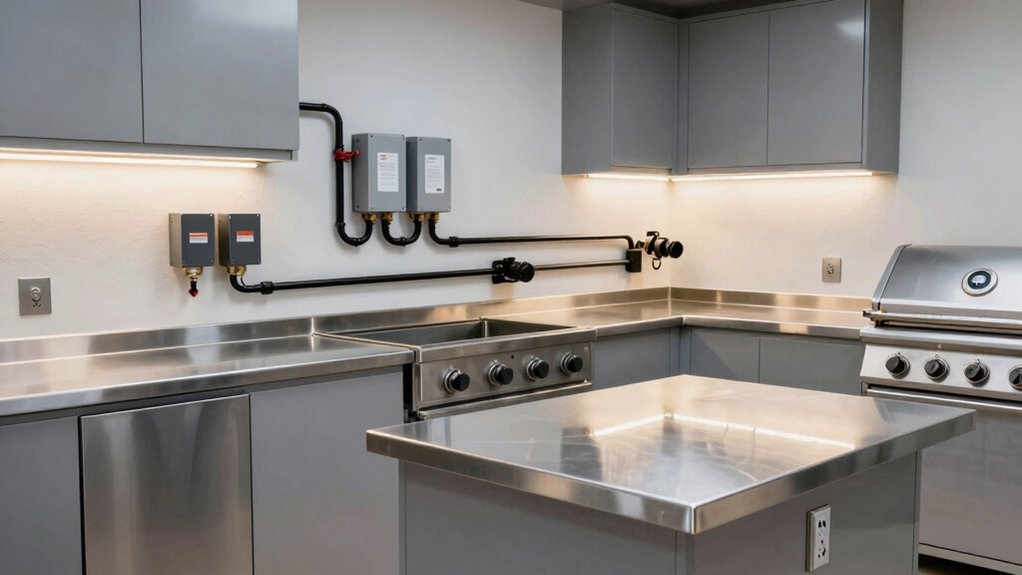
Before you install a single wire, you’ll need to map out exactly where your grill, refrigerator, rotisserie, and lighting will go—because poor planning means inadequate outlets, dangerous cable runs, and expensive retrofitting later.
Start by sketching your outdoor kitchen layout, marking appliance locations and identifying where you’ll need task lighting near prep areas, ambient lighting for the overall space, and accent lighting for ambiance. This blueprint guides your electrical plan and prevents you from running cables across walkways or food preparation zones.
Next, determine how many outlets you’ll need and their placement. Position outlets away from water sources and high-traffic areas. Before wiring, verify your home’s electrical panel can handle the additional load. This upfront planning ensures safe, compliant installation and prevents costly mistakes.
Stay Within Load Capacity Limits and Use Dedicated Circuits
Once you’ve mapped your outdoor kitchen layout, the next critical step is ensuring your electrical system can actually support it. You’ll need to verify your circuit breaker’s load capacity and prevent overloads that cause trips and wiring damage.
- Calculate your total expected wattage from fridges, rotisseries, induction cooktops, and lighting
- Compare this wattage to your circuit’s amp rating to stay within safe limits
- Install dedicated circuits for high-demand cooking equipment instead of sharing outlets with non-essential appliances
- Upgrade your circuit breaker or install a sub-board if your existing panel can’t handle the added load
Avoid daisy-chaining power strips or extension cords for major appliances. Instead, use properly rated outdoor outlets on dedicated circuits to eliminate overload risk and ensure reliable performance.
Cover All Exposed Wires and Seal Connections Against Moisture
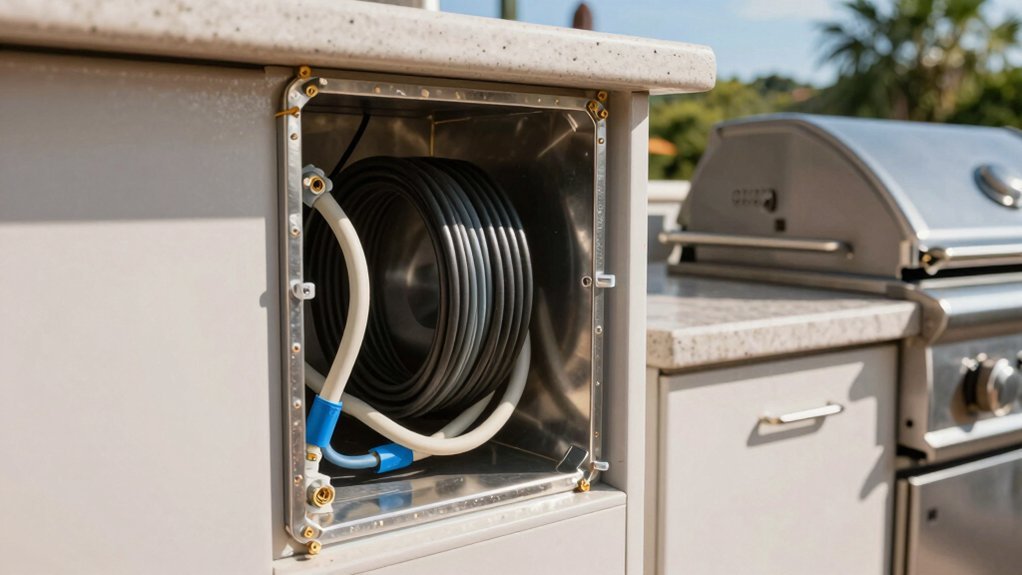
You must cover all exposed wires immediately after installation to prevent electrical shock and conductor damage in your outdoor kitchen.
Moisture sealing techniques like weatherproof gaskets and outdoor-rated conduit are essential to block water intrusion at junction boxes and connection points.
You’ll protect your wiring system by using IP44-rated enclosures and outdoor-certified insulation materials that withstand rain, UV exposure, and temperature fluctuations.
Dangers of Naked Wiring
When outdoor wiring isn’t properly covered, you’re inviting serious hazards into your kitchen space. Naked wires pose significant risks that can compromise your safety and equipment.
- Electric shock – Exposed wiring creates direct contact hazards, especially near switches and outlets where you’d typically work.
- Short circuits – Uninsulated wires touching each other or conductive materials cause dangerous electrical faults and fires.
- Weather damage – Rain, sprinkler spray, and moisture penetrate unprotected connections, degrading insulation and increasing shock risk.
- Equipment failure – Exposed wiring near heat sources deteriorates rapidly, leading to malfunctions and potential fires.
You must cover all exposed wires with appropriate insulation or caps immediately after connecting components. Use weatherproof enclosures with tight seals and gaskets to protect connections from moisture intrusion and debris. This prevents costly repairs and keeps your outdoor kitchen safe.
Moisture Sealing Techniques
Protecting those exposed wires with proper insulation is just the first step—you’ll also need to seal every connection against moisture to keep your outdoor kitchen truly safe. Install weatherproof, outdoor-rated fittings and conduits with IP44 or higher ratings to block water infiltration effectively.
Seal all junction boxes meticulously, maintaining tight covers and gaskets that resist rain and sprinkler spray. For underground cable runs, bury wiring at least 18 inches deep and use protective conduit to shield from moisture and physical damage.
Don’t overlook regular inspections for corrosion, which accelerates when moisture contacts your electrical system. Ensure a continuous ground path throughout your installation, since compromised grounding combined with moisture creates serious safety hazards in outdoor environments.
Wire Protection Materials
Every exposed wire in your outdoor kitchen demands proper covering and sealing to prevent electrical shock and moisture damage. You’ll need to invest in quality materials designed specifically for outdoor conditions.
- Weatherproof conduits shield wires from rain, UV exposure, and temperature fluctuations that degrade standard materials.
- Outdoor-rated cables withstand moisture and environmental stress better than indoor alternatives, ensuring long-term reliability.
- Insulation caps and covers protect connection points immediately after installation, blocking water intrusion before it causes problems.
- Weatherproof junction box covers with gaskets maintain IP-rated protection and moisture barriers at all access points.
Route your wire runs through conduits or within walls rather than leaving them exposed and vulnerable. This approach keeps wires protected from splashes and accidental contact while maintaining your outdoor kitchen’s safety and functionality.
Avoid Extension Cords and Power Strips for Outdoor Kitchen Use
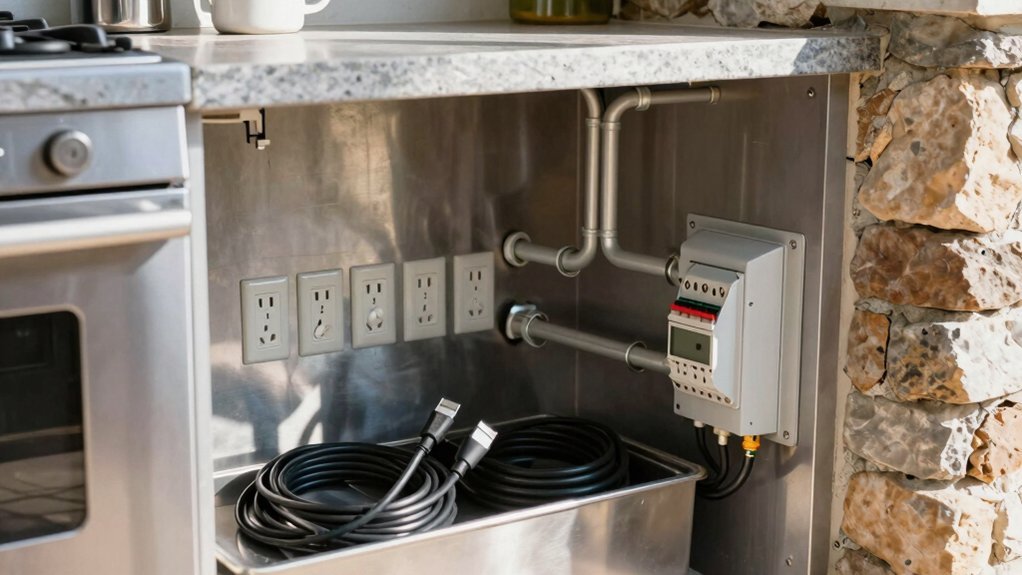
Why do extension cords and power strips pose such serious risks in outdoor kitchens? They can overload circuits and create fire hazards, especially when handling high-powered appliances. Relying on them causes overheating, voltage drop, and potential equipment damage.
If you must use them occasionally, choose GFCI-capable, UL-listed options rated for outdoor use. Never daisy-chain multiple cords or strips together, as this amplifies safety risks. Ensure they’re designed to handle your appliances’ expected load.
For lasting safety and reliability, install dedicated outdoor outlets on appropriately rated circuits instead. This permanent solution eliminates the dangers associated with temporary electrical setups. You’ll protect your investment and your family while enjoying your outdoor kitchen with confidence and peace of mind.
Hire a Licensed Electrician to Ensure Code Compliance and Safety
You’ll want to hire a licensed electrician to navigate the safety standards, permits, and code requirements that govern outdoor kitchen installations in your area. They’ll ensure your wiring meets the National Electrical Code (NEC) and local regulations, protecting you from insurance complications and legal issues down the road.
Professional installation also delivers benefits like proper grounding, weatherproof enclosures, and GFCI protection that keep your outdoor kitchen both compliant and safe.
Safety Standards and Permits
Because outdoor kitchens involve both water and electricity in exposed environments, hiring a licensed electrician isn’t optional—it’s essential. You’ll need professional expertise to navigate complex safety requirements that protect your investment and your family.
- NEC Standards – Your electrician ensures your installation meets National Electrical Code requirements specific to outdoor cooking areas.
- Local Permits – You’ll obtain necessary permits that trigger inspections, verifying code compliance before you use your kitchen.
- GFCI Protection – Dedicated circuits must include Ground Fault Circuit Interrupter outlets in weatherproof enclosures to prevent shock hazards.
- Proper Grounding – Your electrician bonds all components safely and verifies wire insulation rated for outdoor exposure.
These steps reduce fire risk and insurance liability while ensuring your outdoor kitchen operates safely for years.
Code Compliance Requirements
While safety standards and permits form the foundation of outdoor kitchen planning, the actual installation demands strict adherence to specific code requirements that govern every wire, outlet, and connection.
You’ll need to ensure your outdoor circuits meet NEC (National Electrical Code) standards and comply with local building codes.
All outdoor outlets require GFCI protection to prevent electrical shocks, and you must use weatherproof enclosures for exposed installations.
Large appliances like grills and refrigerators need dedicated circuits to prevent overloading and circuit failures.
You should also verify proper grounding and bonding throughout your system, checking for corrosion that could compromise safety.
A licensed electrician will ensure every component meets code requirements and conduct final testing to confirm your installation’s safety and compliance before you use your outdoor kitchen.
Professional Installation Benefits
Why risk installing outdoor kitchen wiring yourself when a licensed electrician can guarantee code compliance and protect your investment? You’ll gain numerous advantages by hiring a professional:
- Dedicated circuits – They’ll install separate circuits for high-load appliances, preventing overloads and tripping issues that compromise your outdoor kitchen’s reliability.
- Proper weatherproofing – Professionals ensure correct GFCI/RCD protection and appropriate grounding, safeguarding against moisture damage and electrical hazards specific to outdoor environments.
- Panel assessment – They’ll evaluate your home’s capacity and install a sub-panel if needed, eliminating strain on your existing electrical system.
- Liability protection – Compliant installations reduce insurance risk and protect you from costly violations or safety incidents down the road.
Frequently Asked Questions
What Is the 2 6 12 Rule for Outlets?
You should space your outlets every 2 meters (6 feet) with no point more than 12 feet from an outlet. This rule helps you minimize extension cord use, reduce overload risks, and guarantee convenient appliance access while improving overall electrical safety.
Do You Need Conduits for Electrical in an Outdoor Kitchen?
You absolutely need conduits for outdoor kitchen electrical wiring. They’re essential for protecting your cables from moisture, UV damage, and physical harm. Conduits keep your installation safe, weatherproof, and compliant with electrical codes.
Is It Better to Wire Outlets in Series or Parallel?
You should wire your outdoor kitchen outlets in parallel, not series. This ensures each receptacle receives full voltage and operates independently. Parallel wiring also allows proper load distribution and prevents voltage drop that’d cause dimming or malfunction.
How to Keep Mice From Chewing on Electrical Wires?
You’ll protect your wiring by installing rodent-resistant conduit and metal sheaths instead of plastic. Seal entry points with hardware cloth, elevate wires off the ground, and use bait stations away from electrical components. Inspect regularly for gnaw marks.



Leave a Reply