
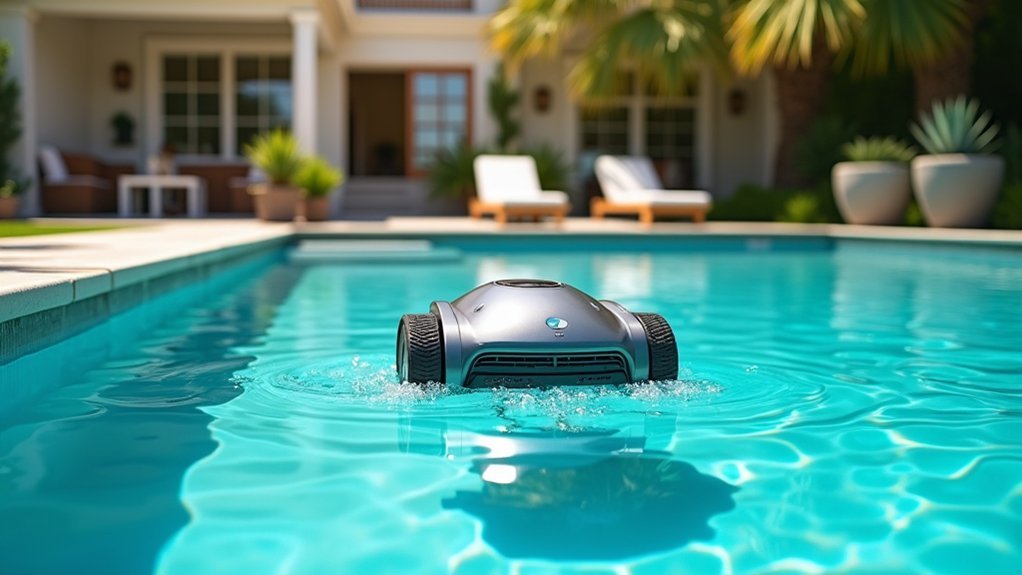
The best outdoor pool cleaning robots depend on your pool type and budget. For above-ground pools, you’ll find the Dolphin E10 and Dolphin Escape deliver powerful scrubbing with easy setup. If you’ve got an in-ground pool, look for premium models with wall-climbing and waterline-scrubbing capabilities. Budget-conscious buyers should consider the Wybot cordless options, while eco-minded homeowners can explore solar-powered models like the Solar Breeze NX2. Below, you’ll discover which features matter most for your specific needs.
Top-Rated Robotic Pool Cleaners for Above-Ground Pools
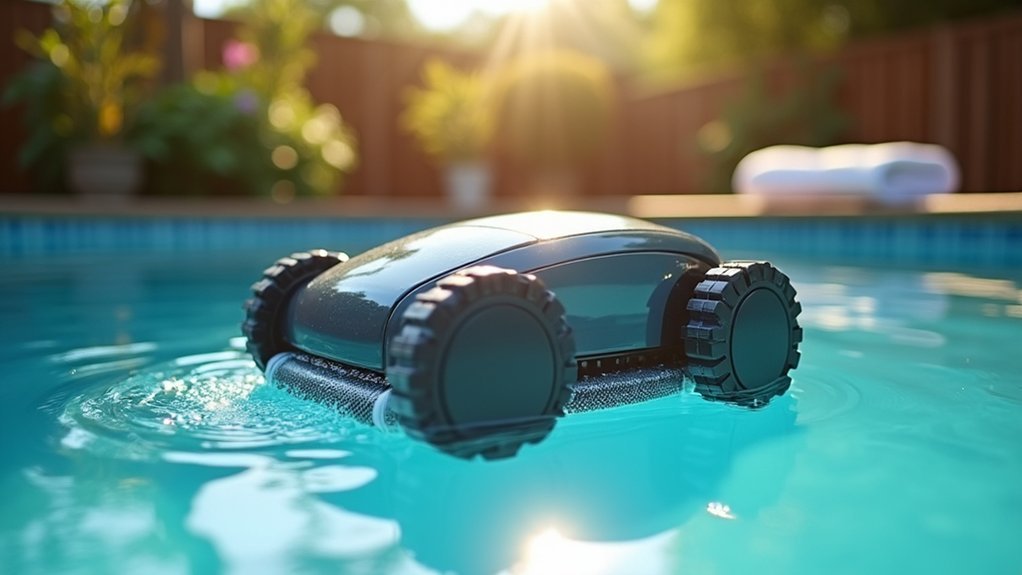
When you’re shopping for a robotic pool cleaner designed for above-ground pools, you’ll find the market offers several standout options that balance performance with affordability.
The Dolphin E10 ranks among the top choices, delivering powerful scrubbing action and efficient filtration for pools up to 30 feet. It’s lightweight and easy to handle, making maintenance simple.
Another excellent option is the Intex ZX300, which offers budget-friendly cleaning without sacrificing quality. This model works well for smaller above-ground setups and requires minimal setup time.
For larger above-ground pools, consider the Dolphin Escape. It features SmartNav technology for systematic coverage and completes cleaning cycles in approximately 90 minutes. The unit’s energy-efficient motor keeps operating costs low while tackling dirt, debris, and algae buildup effectively.
Premium In-Ground Pool Cleaning Robots Worth the Investment
In-ground pools demand more robust cleaning solutions, and premium robotic cleaners deliver the advanced features that justify their higher price tags.
You’ll find these high-end models tackle larger surfaces, deeper floors, and challenging wall configurations with precision.
When investing in a premium in-ground pool robot, look
Budget-Friendly Automatic Pool Cleaners That Deliver Results
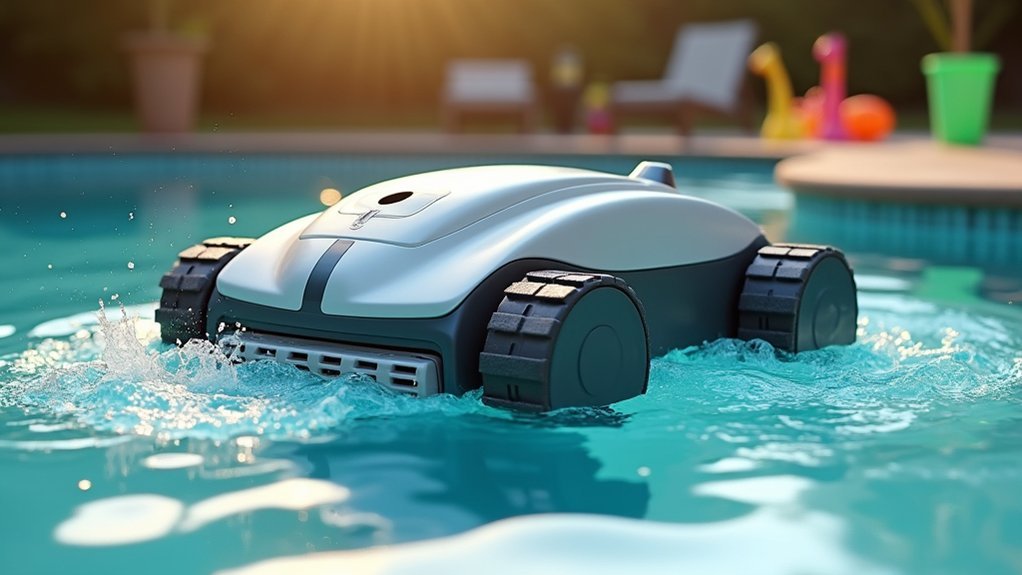
Budget-conscious pool owners don’t always need to spend a fortune to keep their pools sparkling clean. Several affordable robotic cleaners deliver impressive performance without draining your wallet.
The Dolphin E10 stands out as an excellent entry-level option, effectively scrubbing pool floors and filtering fine debris. You’ll appreciate its simple plug-and-play operation and lightweight design for easy removal.
Wybot’s cordless models offer remarkable value, providing cable-free convenience at budget prices. They handle leaves, dirt, and algae with surprising efficiency for their cost.
When shopping for budget cleaners, prioritize models with strong suction, durable brushes, and reliable filtration systems. You may sacrifice some advanced features like smartphone connectivity or wall-climbing capabilities, but these affordable units still tackle everyday cleaning tasks effectively, keeping your pool inviting throughout swimming season.
Key Features to Look for in Outdoor Pool Cleaning Robots
Choosing the right pool cleaning robot requires understanding which features actually matter for your specific needs. Not all robots perform equally, and investing in the wrong model wastes both time and money.
Not all pool robots are created equal—choosing wisely saves you time, money, and endless frustration.
When evaluating outdoor pool cleaning robots, prioritize these essential features:
- Suction power and filtration capacity – Strong motors and fine mesh filters capture debris from leaves to microscopic algae
- Wall and waterline climbing ability – Top models scrub vertical surfaces and tackle stubborn scum lines
- Navigation technology – Smart mapping systems guarantee complete coverage without missing spots
- Battery life and charging time – Longer runtime means thorough cleaning in a single cycle
- Durability and weather resistance – Outdoor pools demand UV-resistant materials and robust construction
You’ll also want easy-access filter baskets and tangle-free swivel cords for hassle-free maintenance.
Solar-Powered Pool Robots for Eco-Conscious Homeowners
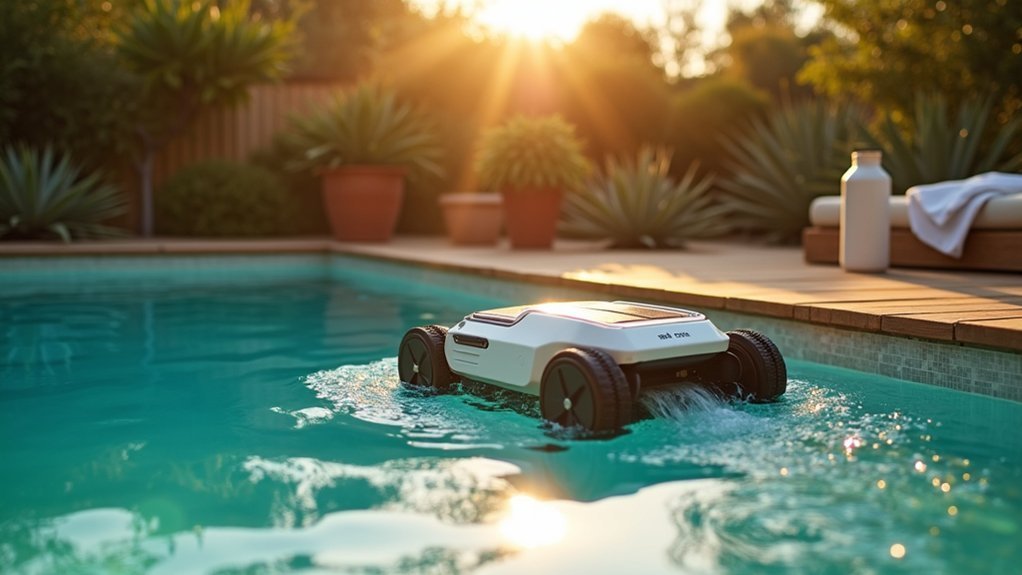
If you’re looking to reduce your environmental footprint while keeping your pool sparkling clean, solar-powered pool robots offer an innovative solution.
These eco-friendly cleaners harness the sun’s energy to power their cleaning cycles, eliminating the need for electricity from your home’s grid.
You’ll discover how these devices work, explore top-rated solar models on the market, and learn about the significant energy savings you can expect over time.
How Solar Robots Work
Solar-powered pool cleaning robots harness energy from the sun through photovoltaic panels mounted on top of the unit, converting sunlight directly into electrical power that drives the motor and filtration system.
These robots operate autonomously, requiring no cords or external power sources. Here’s how they function:
- Photovoltaic cells capture sunlight and generate DC electricity
- Rechargeable batteries store excess energy for cloudy days or shaded areas
- Low-voltage motors propel the unit across the water’s surface
- Built-in filters trap debris, leaves, and pollen as the robot moves
- Sensors guide navigation patterns for complete pool coverage
You’ll find these units work best during peak sunlight hours.
They’re designed to skim the surface continuously, preventing debris from sinking and reducing your overall maintenance workload markedly.
Top Solar Pool Cleaners
For eco-conscious homeowners who want to minimize their pool’s carbon footprint, today’s solar-powered cleaners offer impressive performance without drawing a single watt from your electrical grid.
These robots harness sunlight through integrated panels, storing energy in onboard batteries for continuous operation even on cloudy days. You’ll find they’re particularly effective for surface debris and light sediment removal.
| Model | Run Time | Best For |
|---|---|---|
| Solar Breeze NX2 | 8+ hours | Surface skimming |
| Savior 5000 | 6 hours | Small pools |
| Solar Pool Tech NC22 | 10 hours | Medium pools |
| Aquamoto SX3 | 7 hours | Debris-heavy areas |
You’ll save on electricity costs while keeping your pool pristine. Most solar cleaners require minimal maintenance beyond occasional filter cleaning.
Energy Savings Benefits
Beyond their environmental appeal, these solar-powered pool robots deliver measurable savings on your monthly utility bills. You’ll notice the difference immediately since these units draw zero power from your home’s electrical grid during operation.
Here’s what you can expect from solar-powered pool cleaners:
- Reduced electricity costs by eliminating the need for corded power sources
- Lower long-term maintenance expenses with fewer mechanical components
- Extended cleaning cycles during peak sunlight hours without added costs
- No impact on your energy bill even with daily cleaning sessions
- Decreased carbon footprint while maintaining crystal-clear water
Most homeowners report saving between $50 and $150 annually compared to traditional electric models. These savings compound over the robot’s lifespan, making solar options a smart financial investment for budget-conscious pool owners.
Cordless vs. Corded Pool Cleaning Robots Compared
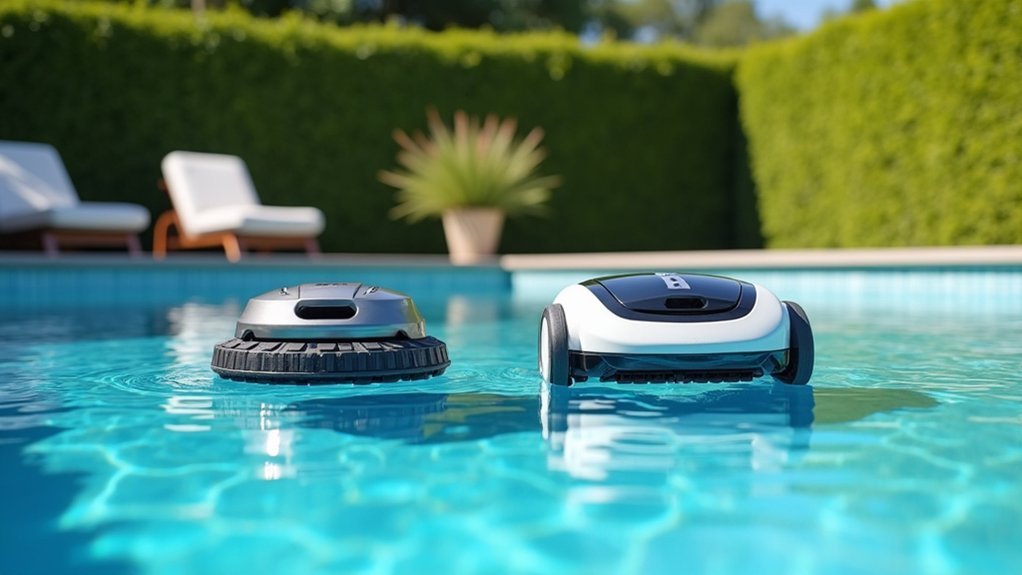
When you’re shopping for a pool cleaning robot, one of the biggest decisions you’ll face is whether to go cordless or corded. Each type offers distinct advantages depending on your pool size and cleaning preferences.
| Feature | Cordless | Corded |
|---|---|---|
| Mobility | Unrestricted movement | Limited by cable length |
| Runtime | 2-3 hours per charge | Unlimited operation |
| Maintenance | Battery replacement needed | Minimal upkeep |
Cordless models give you freedom from tangled cables and easier retrieval. They’re ideal for smaller pools and quick cleanups. However, corded robots deliver consistent power without battery limitations, making them better suited for larger pools or extended cleaning sessions.
Consider your pool’s dimensions and how often you’ll run the cleaner before making your choice.
Maintenance Tips to Extend Your Pool Robot Lifespan
You’ve invested in a quality pool cleaning robot, so proper maintenance guarantees it keeps running smoothly for years.
After each cleaning session, rinse and clean the filters to prevent debris buildup that can strain the motor.
Store your robot in a shaded area away from direct sunlight, and inspect the brushes regularly for wear to maintain peak cleaning performance.
Clean Filters After Use
After each cleaning cycle, taking a few minutes to rinse and clean your robot’s filters makes a significant difference in performance and longevity. Clogged filters force the motor to work harder, reducing suction power and causing premature wear.
Here’s how to properly maintain your filters:
- Remove filters immediately after the robot exits the pool
- Rinse thoroughly with a garden hose to dislodge debris
- Inspect for tears, holes, or deteriorating mesh
- Allow filters to dry completely before storing
- Replace filters every 12-18 months or when visibly worn
You’ll notice your robot runs more efficiently when filters stay clean. Neglecting this simple task can cut your robot’s lifespan in half and compromise cleaning quality. Make filter maintenance part of your regular pool care routine.
Store Away From Sunlight
UV rays break down plastic components and rubber seals faster than most pool owners realize. When you leave your pool robot sitting on the deck or floating in the water between cleanings, you’re shortening its lifespan markedly.
| Storage Location | Effect on Robot |
|---|---|
| Direct sunlight | Cracks, fading, seal damage |
| Shaded area/garage | Preserves components |
| Covered caddy | Peak protection |
Find a cool, dry spot in your garage or shed for your robot. If outdoor storage is your only option, invest in a purpose-built caddy with a UV-resistant cover. Many manufacturers sell these accessories specifically for their models.
You’ll notice the difference after a few seasons—properly stored robots maintain their flexibility and sealing integrity much longer than sun-exposed units.
Inspect Brushes Regularly
Worn brushes can’t grip debris effectively, so you should check them every few weeks for signs of wear.
Most pool robots use PVC or foam brushes that naturally degrade over time from chemical exposure and friction against pool surfaces.
Watch for these warning signs that indicate replacement is needed:
- Bristles appear flattened or bent out of shape
- Foam has become compressed or torn
- Brush no longer rotates smoothly on its axis
- Visible chunks or sections are missing
- Cleaning performance has noticeably declined
You’ll typically need to replace brushes every one to two years, depending on usage frequency.
Keep spare brushes on hand so you’re not waiting for shipping when performance drops.
Regular inspection prevents minor wear from becoming a bigger maintenance headache.
Frequently Asked Questions
Can Pool Cleaning Robots Work in Saltwater Pools?
Yes, you can use most pool cleaning robots in saltwater pools. Many manufacturers design their robots with saltwater-compatible components. However, you’ll want to check the specifications before purchasing to guarantee compatibility with your setup.
How Long Does a Typical Pool Robot Cleaning Cycle Take?
You’ll typically wait between 2 to 3 hours for a standard pool robot cleaning cycle. However, you can adjust this time based on your pool’s size and how dirty it’s become.
Are Pool Cleaning Robots Safe to Use Around Children and Pets?
Yes, pool cleaning robots are generally safe around children and pets. You should still supervise kids near the pool and remove the robot before swimming. Don’t let pets chew on cords or the device itself.
Do Pool Robots Work Effectively in Pools With Irregular Shapes?
Yes, pool robots work effectively in irregular-shaped pools. You’ll find most modern models navigate curves, corners, and unique contours using smart mapping technology. They adapt their cleaning patterns to guarantee you’re getting complete coverage.
Can I Leave My Pool Cleaning Robot in the Water Overnight?
You shouldn’t leave your pool cleaning robot in the water overnight. Extended submersion can damage seals, motors, and cables. Remove it after each cleaning cycle, rinse it off, and store it in a shaded area.


Leave a Reply